Pharmadipine
Ukraine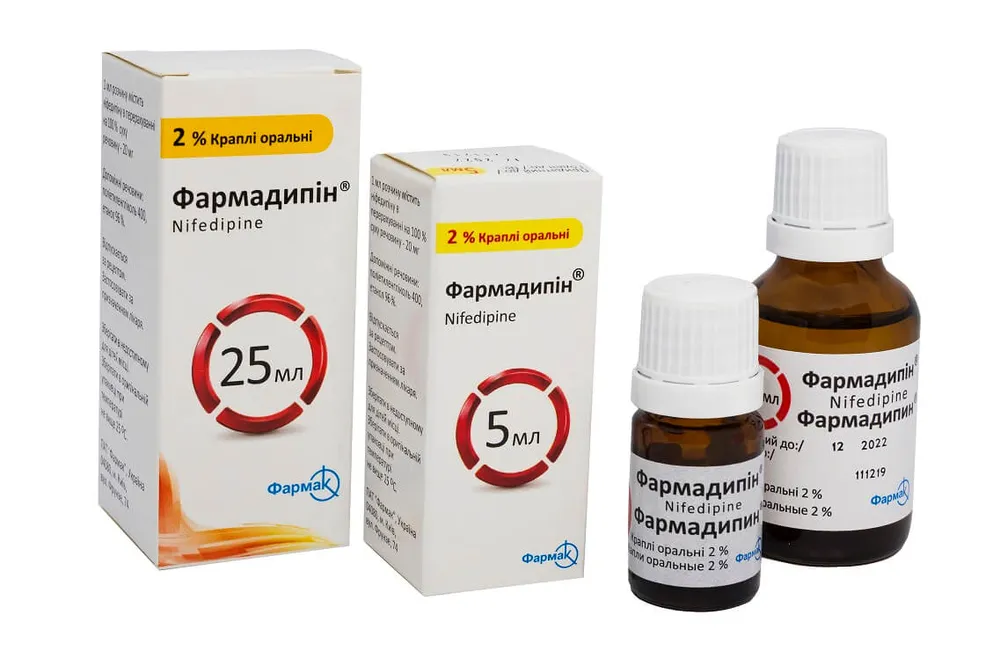
Table of Contents
INSTRUCTION FOR MEDICAL USE OF THE MEDICINAL PRODUCT FARMADIPIN® (FARMADIPIN®)
Composition:
Active substance: nifedipine;
1 ml of solution contains nifedipine, calculated as 100% dry substance, 20 mg (30 drops);
Excipients: polyethylene glycol 400, ethanol 96%.
Pharmaceutical form. Oral drops.
Main physicochemical properties: clear yellow or greenish-yellow viscous liquid with a faint alcoholic odor.
Pharmacotherapeutic group. Selective calcium antagonists with predominant effect on blood vessels. ATC code C08CA05.
Pharmacological Properties
Pharmacodynamics
FarmaDipin® exhibits antianginal and antihypertensive effects. It blocks the influx of calcium ions into cardiomyocytes and smooth muscle cells of coronary and peripheral arteries through slow potential-dependent calcium channels in cell membranes. It relaxes vascular smooth muscles, relieves spasms, and dilates coronary and peripheral arteries, thereby reducing peripheral vascular resistance, arterial pressure, afterload, and myocardial oxygen demand. It slightly decreases myocardial contractility and somewhat reduces platelet aggregation.
Pharmacokinetics
After oral administration, the drug is well absorbed from the gastrointestinal tract, with a bioavailability of 40–60%. The effect develops particularly rapidly (within 5–10 minutes) when administered sublingually. The peak effect is usually observed within 30–40 minutes. Food intake does not significantly affect the rate of drug absorption. The hemodynamic effect lasts for 4–6 hours. Approximately 90% of nifedipine binds to plasma proteins. It is metabolized in the liver and primarily excreted from the body as inactive metabolites. Total clearance of nifedipine ranges from 0.4 to 0.6 L/kg/hour. The elimination half-life is 2–4 hours. In elderly patients and those with liver cirrhosis, nifedipine metabolism is slowed, resulting in nearly a twofold prolongation of the elimination half-life. This requires dose reduction and longer intervals between doses. Nifedipine does not accumulate in the body. It crosses the blood-brain and placental barriers in insignificant amounts and is excreted into breast milk.
Clinical Characteristics.
Indications.
Arterial hypertension (for the treatment of hypertensive crises).
Contraindications.
- Acute myocardial infarction (within the first 4 weeks);
- cardiogenic shock;
- severe aortic and mitral stenosis;
- unstable angina;
- not to be used for the treatment of angina attacks or secondary prevention of myocardial infarction;
- decompensated heart failure;
- arterial hypotension (systolic blood pressure (BP) below 90 mmHg);
- ventricular tachycardias with widened QRS complex;
- sinus node dysfunction syndrome;
- Wolff-Parkinson-White (WPW) syndrome, Lown-Ganong-Levine (LGL) syndrome;
- AV block II and III degree;
- porphyria;
- ileostomy established after proctocolectomy;
- hypersensitivity to nifedipine and other components of the drug;
- hypersensitivity to other dihydropyridines;
- do not take concomitantly with rifampicin.
Interaction with other medicinal products and other types of interactions.
Drugs affecting the efficacy of nifedipine.
Nifedipine is metabolized via the cytochrome P450 3A4 system located in the intestinal mucosa and liver. Therefore, drugs that inhibit or induce this enzyme system may alter the "first-pass" effect (after oral administration) or clearance of nifedipine.
When using nifedipine concomitantly with the following drugs, the extent and duration of interaction should be taken into account.
Rifampicin
Rifampicin significantly induces the cytochrome P450 3A4 system. When administered concomitantly with rifampicin, the bioavailability of nifedipine is markedly reduced, thus weakening its efficacy. Due to this, the combination of nifedipine with rifampicin is contraindicated.
When using nifedipine concomitantly with the following weak or moderate inhibitors of the cytochrome P450 3A4 system, blood pressure should be monitored, and if necessary, a reduction in the dose of nifedipine should be considered.
Macrolide antibiotics (e.g., erythromycin)
Studies on the interaction between nifedipine and macrolide antibiotics have not been conducted. Certain macrolide antibiotics inhibit cytochrome P450 3A4-mediated metabolism of other drugs. Therefore, an increased plasma concentration of nifedipine cannot be excluded when both drugs are used concomitantly.
Azithromycin, structurally similar to macrolide antibiotics, does not inhibit CYP3A4.
HIV protease inhibitors (e.g., ritonavir)
A clinical study investigating the potential interaction between nifedipine and certain HIV protease inhibitors has not yet been conducted. It is known that drugs in this class inhibit the cytochrome P450 3A4 system. In addition, these drugs inhibit in vitro cytochrome P450 3A4-mediated metabolism of nifedipine. When used concomitantly with nifedipine, a significant increase in plasma concentration of nifedipine due to reduced first-pass metabolism and decreased elimination from the body cannot be excluded.
Azole antifungals (e.g., ketoconazole)
A clinical study investigating the potential interaction between nifedipine and certain azole antifungals has not yet been conducted. It is known that drugs in this class inhibit the cytochrome P450 3A4 system. When administered orally concomitantly with nifedipine, a significant increase in systemic bioavailability of nifedipine due to reduced first-pass metabolism cannot be excluded.
Fluoxetine
A clinical study investigating the potential interaction between nifedipine and fluoxetine has not yet been conducted. It is known that fluoxetine inhibits in vitro cytochrome P450 3A4-mediated metabolism of nifedipine. When both drugs are used concomitantly, an increased plasma concentration of nifedipine cannot be excluded.
NeFazodone
A clinical study investigating the potential interaction between nifedipine and nefazodone has not yet been conducted. It is known that nefazodone inhibits in vitro cytochrome P450 3A4-mediated metabolism of other drugs. When both drugs are used concomitantly, an increased plasma concentration of nifedipine cannot be excluded.
Quinupristin/dalfopristin
Concomitant use of quinupristin/dalfopristin and nifedipine may lead to increased plasma concentration of nifedipine.
Valproic acid
A clinical study investigating the potential interaction between nifedipine and valproic acid has not yet been conducted. It is known that valproic acid increases plasma concentration of the structurally similar calcium channel blocker nimodipine due to enzyme inhibition. Therefore, an increased plasma concentration of nifedipine and enhanced efficacy cannot be excluded.
Cimetidine
Due to inhibition of cytochrome P450 3A4, cimetidine increases plasma concentration of nifedipine and may potentiate its antihypertensive effect.
Cisapride
Concomitant use of cisapride and nifedipine may lead to increased plasma concentration of nifedipine.
Antiepileptic drugs inducing the cytochrome P450 3A4 system, such as phenytoin, carbamazepine, and phenobarbital
Phenytoin induces the cytochrome P450 3A4 system. When used concomitantly with phenytoin, the bioavailability of nifedipine is reduced and its efficacy weakened. When both drugs are used concomitantly, clinical response to nifedipine therapy should be monitored, and if necessary, an increase in the dose of nifedipine should be considered. If the dose of nifedipine is increased during concomitant use, upon discontinuation of phenytoin, a reduction in the dose of nifedipine should be considered.
Clinical studies on the potential interaction between nifedipine and carbamazepine or phenobarbital have not been conducted. It is known that both drugs reduce plasma concentrations of the structurally similar calcium channel blocker nimodipine due to enzyme induction. Therefore, a reduction in plasma concentration of nifedipine and decreased efficacy cannot be excluded.
Antihypertensive drugs
Nifedipine may enhance the antihypertensive effect of concomitantly administered antihypertensive drugs such as: diuretics, β-blockers, ACE inhibitors, AT1 receptor antagonists, other calcium antagonists, α-adrenergic blockers, PDE5 inhibitors, α-methyldopa, magnesium sulfate.
Careful monitoring of the patient is required when nifedipine is used concomitantly with β-blockers, as isolated cases of worsening heart failure have been reported.
Digoxin and theophylline
The combination of nifedipine with digoxin and theophylline is generally well tolerated; however, a slight increase in plasma levels of digoxin and theophylline is rarely possible (monitoring of plasma levels is recommended). Therefore, patients should be monitored for signs of digoxin overdose, and if necessary, the dose of glycoside should be reduced, taking into account plasma digoxin concentration.
Amiodarone and quinidine
Amiodarone and quinidine may potentiate the negative inotropic effect of nifedipine. When nifedipine and quinidine are used concomitantly, a decrease in quinidine levels has been observed in individual cases, and upon discontinuation of nifedipine, a sharp increase in plasma concentration of quinidine has occurred. Therefore, when initiating or discontinuing nifedipine, monitoring of plasma quinidine concentration is recommended, and if necessary, the quinidine dose should be adjusted. Some authors have reported increased plasma concentration of nifedipine when both drugs are used concomitantly, while others have not observed changes in nifedipine pharmacokinetics.
Therefore, blood pressure should be carefully monitored when quinidine is added to nifedipine therapy. If necessary, the dose of nifedipine should be reduced.
Tacrolimus
It is known that tacrolimus is metabolized via the cytochrome P450 3A4 system. Published data indicate that in some cases, the dose of tacrolimus may be reduced when used concomitantly with nifedipine. When both drugs are used concomitantly, plasma concentration of tacrolimus should be monitored, and if necessary, a reduction in the dose of tacrolimus should be considered.
Other types of interactions
Grapefruit juice
Grapefruit juice inhibits the cytochrome P450 3A4 system. Consumption of grapefruit juice during nifedipine therapy leads to increased plasma concentration and prolonged duration of action of nifedipine due to reduced first-pass metabolism or decreased clearance. As a result, the antihypertensive effect of the drug may be enhanced. After regular consumption of grapefruit juice, this effect may persist for at least 3 days after the last intake.
Therefore, grapefruit/grapefruit juice should be avoided during nifedipine therapy.
Administration of nifedipine may lead to falsely elevated results in the spectrophotometric determination of vanillylmandelic acid concentration in urine (however, this effect is not observed when using high-performance liquid chromatography).
Special precautions for use.
Caution is required when administering Farmadipine® to patients with significant narrowing of the gastrointestinal tract due to the potential risk of developing obstructive symptoms. Very rarely, bezoar formation may occur, which might require surgical intervention.
In isolated cases, obstructive symptoms have been reported in patients without prior gastrointestinal disorders.
Administration of Farmadipine® may lead to false-positive results during X-ray imaging using barium contrast agents (e.g., filling defects may be misinterpreted as polyps).
Patients with impaired liver function require careful monitoring, and in severe cases, a dose reduction may be necessary.
Nifedipine is metabolized via the cytochrome P450 3A4 enzyme system; therefore, drugs that inhibit or induce this enzyme system may alter the "first-pass" metabolism or clearance of nifedipine.
Medications that are weak or moderate inhibitors of the cytochrome P450 3A4 system and may increase plasma concentrations of nifedipine include: macrolide antibiotics (e.g., erythromycin), HIV protease inhibitors (e.g., ritonavir), azole antifungals (e.g., ketoconazole), the antidepressants nefazodone and fluoxetine, quinupristin/dalfopristin, valproic acid, and cimetidine.
When co-administering Farmadipine® with these drugs, blood pressure should be monitored, and if necessary, a reduction in the nifedipine dose should be considered.
This medication should not be used if there is a known association between prior nifedipine use and ischemic pain. In patients with angina, attacks may become more frequent, and their duration and intensity may increase, particularly at the beginning of treatment.
Nifedipine-containing medications are contraindicated in patients experiencing an acute attack of stable angina.
Extreme caution is advised when prescribing this medication to patients undergoing hemodialysis, or those with malignant hypertension or hypovolemia, as vasodilation may cause a significant drop in arterial blood pressure. Nifedipine use in patients with diabetes mellitus may require adjustment of their treatment regimen.
This medicinal product contains a small amount of ethanol (alcohol), less than 100 mg per dose.
Use during pregnancy or breastfeeding.
Pregnancy.
Nifedipine is contraindicated during pregnancy.
Breastfeeding.
Nifedipine passes into breast milk; therefore, breastfeeding should be discontinued during treatment with this medication.
Fertility.
Some in vitro experiments have demonstrated a reversible association between calcium channel blockers, particularly nifedipine, and biochemical changes in spermatozoa that may impair fertility. In cases of unsuccessful in vitro fertilization without other identifiable causes, calcium channel blockers such as nifedipine may be considered as a possible contributing factor.
Ability to affect reaction speed when driving or operating machinery.
Patients should refrain from potentially hazardous activities requiring heightened attention (such as driving or operating machinery) while taking this medication.
Administration and Dosage.
Pharmadipine® is used for the treatment of hypertensive crises as a fast-acting agent. It is not recommended to use this medicinal product in this dosage form for long-term therapy.
If prolonged antihypertensive therapy is required, the drug and dosage form should be selected by a physician.
In cases of sudden and significant increase in arterial pressure, the initial single dose for adults is 3–5 drops (2–3.35 mg); for elderly patients – no more than 3 drops (2 mg), administered sublingually or applied onto a piece of dry bread or sugar, holding it in the mouth as long as possible. If the effect is insufficient, the dose may be gradually increased until a clinically significant response is achieved. Subsequently, in cases of elevated arterial pressure, this effective dose should be used. If necessary (when arterial pressure rises to 190/100 mm Hg – 220/110 mm Hg), the single dose may be gradually increased in individual cases up to 10–15 drops (6.7–10 mg), taking into account individual changes in the patient's arterial pressure readings.
Individual patient sensitivity to Pharmadipine® must be taken into account. In such cases, the dose should be individually adjusted, starting with 3 drops, and gradually increased by 2–3 drops (1.34–2 mg) until the desired clinical effect is achieved.
Exceeding the initial dose of the drug may lead to a sharp drop in arterial pressure!
Children.
The drug is not intended for use in children (under 18 years of age).
Overdose.
Symptoms of acute nifedipine intoxication: impaired consciousness up to coma, decreased arterial pressure, tachycardia/bradycardia, hyperglycemia, metabolic acidosis, hypoxia, cardiogenic shock accompanied by pulmonary edema.
Treatment. Emergency measures should primarily aim at eliminating the drug from the body and restoring stable hemodynamics.
After oral administration, complete gastric emptying is recommended, if necessary – in combination with irrigation of the small intestine.
Elimination of the drug from the body should be as complete as possible, including from the small intestine, especially in cases of intoxication with sustained-release nifedipine formulations, to prevent absorption of the active substance.
Since nifedipine is highly bound to plasma proteins and has a relatively small volume of distribution, hemodialysis is ineffective; however, plasmapheresis is recommended.
Bradycardia can be treated with beta-sympathomimetics. In cases of life-threatening bradycardia, artificial pacing is recommended.
Hypotension resulting from cardiogenic shock and vasodilation can be managed with calcium preparations (10–20 ml of 10% calcium chloride or calcium gluconate solution administered slowly intravenously, repeated if necessary). Serum calcium levels may reach the upper limit of normal or be slightly elevated as a result. If calcium administration is insufficiently effective, sympathomimetics such as dopamine or noradrenaline should be used. Dosages of these agents should be adjusted according to the therapeutic response achieved.
Additional fluid administration should be approached with extreme caution, as it may increase the risk of cardiac overload.
Side effects.
When following the recommended usage instructions, side effects are usually mild and reversible, and generally do not require discontinuation of therapy.
With frequent and uncontrolled use, adverse reactions typical for drugs of this pharmacological group may occur.
Blood and lymphatic system disorders: leukopenia, agranulocytosis, anemia, thrombocytopenia.
Immune system disorders: allergic reactions, allergic edema/angioedema (including laryngeal edema*), anaphylactic/anaphylactoid reaction.
Psychiatric disorders: anxiety reactions, excitation, sleep disturbances.
Nervous system disorders: headache, vertigo, migraine, dizziness, tremor, hypesthesia, paresthesia, dysesthesia, somnolence, loss of consciousness.
Metabolism and nutrition disorders: hyperglycemia (should be considered in patients with diabetes mellitus).
Eye disorders: visual disturbances, eye pain.
Cardiac disorders: tachycardia, palpitations, chest pain (angina).
Vascular disorders: edema, vasodilation, hypotension.
Respiratory system disorders: epistaxis, nasal congestion, dyspnea.
Gastrointestinal disorders: constipation, gastrointestinal pain and abdominal pain, nausea, dyspepsia, flatulence, dry mouth, gingival hyperplasia, bezoar, dysphagia, intestinal obstruction, intestinal ulcer, vomiting, gastroesophageal sphincter insufficiency.
Liver and biliary disorders: transient increase in liver enzyme activity, jaundice.
Skin and subcutaneous tissue disorders: erythema, toxic epidermal necrolysis, photosensitivity, purpura, pruritus, urticaria, rash.
Musculoskeletal, connective tissue and bone disorders: muscle cramps, joint swelling, arthralgia, myalgia.
Renal and urinary disorders: polyuria, dysuria.
Reproductive system and breast disorders: erectile dysfunction.
General disorders: malaise, non-specific pain, fever.
*May lead to life-threatening consequences.
In patients with malignant hypertension and hypovolemia undergoing hemodialysis, significant reduction in arterial pressure due to vasodilation may occur.
Shelf life. 3 years.
Do not use the medicinal product after the expiry date stated on the packaging.
Storage conditions.
Store in the original packaging at a temperature not exceeding 25 ºC.
Keep out of reach of children.
Packaging.
5 ml or 25 ml in a vial. 1 vial per carton.
Prescription status. Prescription only.
Manufacturer.
JSC "Farmak".
Manufacturer's name and address of place of business.
74 Kyrylivska Street, Kyiv, 04080, Ukraine.