Theophylline
Ukraine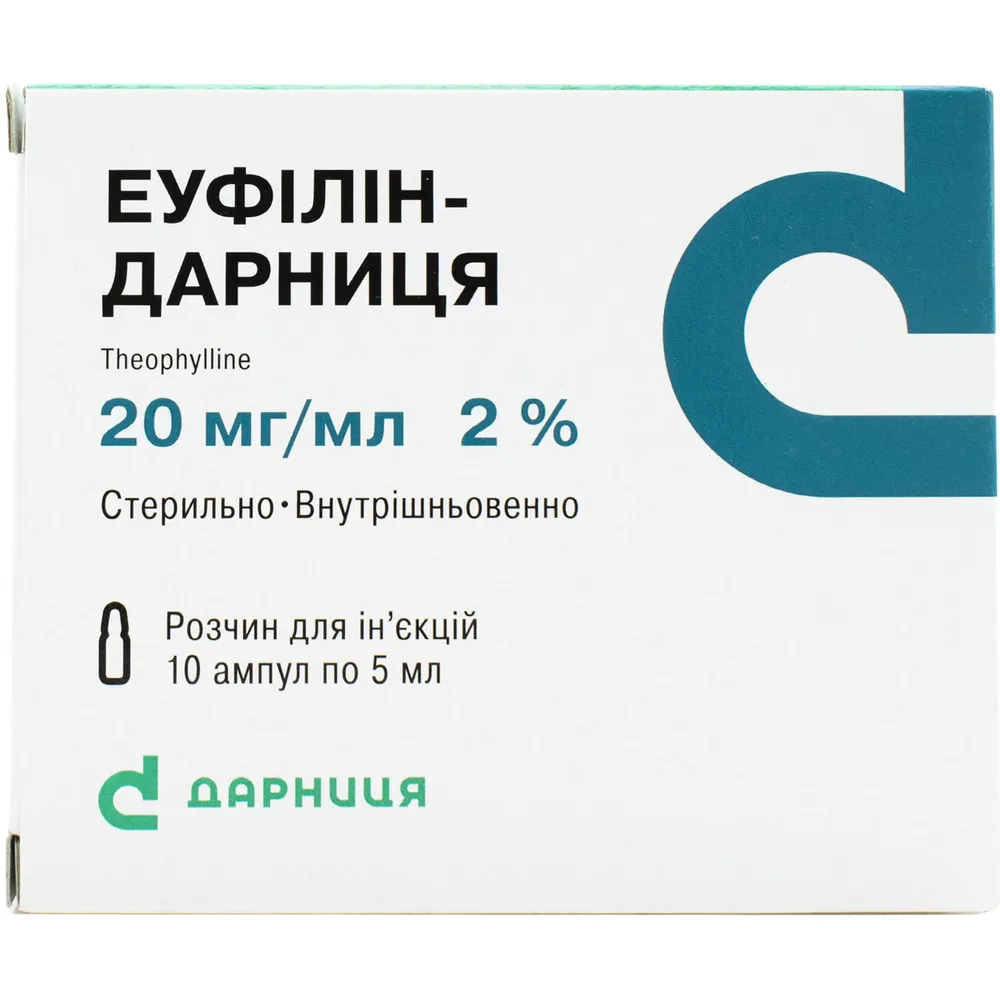
Table of Contents
INSTRUCTION FOR MEDICAL USE OF THE MEDICINAL PRODUCT EUPHYLLIN (Euphyllin)
Composition:
Active substance: theophylline;
1 ml of solution contains 20 mg of theophylline monohydrate, calculated as theophylline;
Excipients: sodium acetate trihydrate, water for injections.
Pharmaceutical form. Solution for injection.
Main physicochemical properties: clear, colorless or slightly yellowish solution.
Pharmacotherapeutic group. Agents for systemic use in obstructive respiratory diseases. Xanthines. Theophylline. ATC code R03DA04.
Pharmacological Properties
Pharmacodynamics
Theophylline is a bronchodilator with spasmolytic and vasodilating properties. The mechanism of bronchodilation is due to theophylline's ability to block adenosine receptors, non-selectively inhibit the enzyme phosphodiesterase, thereby increasing the concentration of cyclic 3',5'-AMP (cAMP) in tissues, inhibit calcium ion transport through "slow" channels of cell membranes, and reduce calcium release from intracellular depots. Theophylline inhibits the release of inflammatory mediators from mast cells, enhances mucociliary clearance, stimulates diaphragmatic contractions, and improves the function of respiratory and intercostal muscles.
It produces a pronounced bronchodilating effect due to direct relaxation of bronchial smooth muscle. The intensity of the bronchospasmolytic effect depends on the concentration of theophylline in the blood. Theophylline also relaxes smooth muscles of the gastrointestinal tract, biliary ducts, and uterus.
It normalizes respiratory function, promotes blood oxygenation and reduces carbon dioxide concentration; stimulates the respiratory center. Enhances lung ventilation under conditions of hypokalemia. Inhibits platelet aggregation (by suppressing platelet-activating factor and prostaglandin F2α), increases erythrocyte resistance to deformation (improves blood rheological properties), reduces thrombus formation, and normalizes microcirculation.
It exerts a stimulatory effect on the central nervous system (CNS) and cardiac activity, increases the force and rate of heart contractions, enhances coronary blood flow and myocardial oxygen demand. Reduces the tone of blood vessels (mainly cerebral, skin, and renal vessels). Reduces perifocal and general cerebral edema, lowers cerebrospinal fluid and, consequently, intracranial pressure. Decreases pulmonary vascular resistance and reduces pressure in the pulmonary circulation. Increases renal blood flow and produces a moderate diuretic effect.
Therapeutic effects develop within 5–15 minutes after intravenous injection.
Pharmacokinetics
Bioavailability is 80–100%. Plasma protein binding is approximately 60%.
Theophylline penetrates through the blood-brain and placental barriers, into cerebrospinal fluid, saliva, sputum, and other body secretions, as well as into breast milk. It is metabolized in the liver (90%) with the involvement of several cytochrome P450 isoenzymes (the most important being CYP1A2). The main metabolites are 1,3-dimethyluric acid (which has pharmacological activity 2–5 times lower than theophylline) and 3-methylxanthine. It is excreted by the kidneys unchanged (in adults – 7–13% of the administered dose, in children – 50%) and as metabolites.
The half-life (T½) in adult patients with bronchial asthma (without pathological changes in other organs and systems) who do not smoke is 6–12 hours; in smokers, it is 4–5 hours; in children, it is 1–5 hours. T½ is prolonged in patients with alcoholism, heart failure, cardiopulmonary insufficiency, "pulmonary heart", and renal insufficiency. Total clearance is reduced in patients with sepsis, severe respiratory, hepatic, and cardiac insufficiency, viral infections, and in patients aged 60 years and older. Optimal therapeutic plasma concentrations of theophylline are: for bronchodilation – 10–20 mcg/mL; for stimulation of the respiratory center – 5–10 mcg/mL. At lower concentrations, therapeutic effects are weak; at higher concentrations, there is no significant increase in therapeutic efficacy, while the risk of adverse effects increases substantially.
Clinical characteristics.
Indications.
Bronchoconstrictive syndrome in bronchial asthma, bronchitis, pulmonary emphysema, respiratory center disorders (nocturnal paroxysmal apnea), "pulmonary heart".
Contraindications.
Hypersensitivity to components of the drug, to other xanthine derivatives (caffeine, pentoxifylline, theobromine); acute heart failure, angina pectoris, acute myocardial infarction, decompensated chronic heart failure, paroxysmal tachycardia, extrasystoles, severe arterial hypertension or hypotension, generalized atherosclerosis of blood vessels, pulmonary edema, hemorrhagic stroke, hemorrhage into the retina, history of bleeding, peptic ulcer of the stomach and duodenum in the stage of exacerbation, gastroesophageal reflux, epilepsy, glaucoma, increased seizure susceptibility, uncontrolled hypothyroidism, hyperthyroidism, thyrotoxicosis, severe hepatic and/or renal insufficiency, porphyria, sepsis, use in children simultaneously with ephedrine.
Interaction with other medicinal products and other forms of interactions.
During treatment, alcoholic beverages and large amounts of food and drinks containing methylxanthines (coffee, tea, cocoa, chocolate, Coca-Cola), as well as drugs related to theophylline (caffeine, theobromine, pentoxifylline), should not be consumed, since these substances may enhance the stimulatory effect of theophylline on the central nervous system.
The effect of theophylline may be enhanced when used concomitantly with allopurinol, acyclovir, carbimazole, zafirlukast, cimetidine, nizatidine, disulfiram, phenylbutazone, fluvoxamine, fluconazole, quinolones, furosemide, imipenem, isoprenaline, interferon alpha, isoniazid, calcium channel blockers (verapamil, diltiazem), lincomycin, macrolides, amiodarone, mexiletine, methotrexate, paracetamol, pentoxifylline, oral contraceptives, probenecid, propafenone, propranolol, ranitidine, tacrine, thiabendazole, ticlopidine, viloxazine, or influenza vaccine. In patients who are taking theophylline concurrently with one or more of the above-mentioned drugs, serum theophylline concentration should be monitored and the dose reduced if necessary. Combination of theophylline with fluvoxamine should be avoided. If this combination cannot be avoided, patients must use half the dose of theophylline and carefully monitor plasma concentrations of the latter.
When ciprofloxacin is taken concomitantly, the dose of theophylline should be reduced by at least 60%, and when enoxacin is taken concomitantly – by 30%.
The effect of theophylline may be reduced when taken concomitantly with antiepileptic agents (e.g., phenytoin, carbamazepine, primidone), barbiturates (especially phenobarbital and pentobarbital), isoproterenol, aminoglutethimide, magnesium hydroxide, moracizine, rifampicin, ritonavir, or sulfinpyrazone. The effect of theophylline may also be reduced in smokers. In patients who are taking theophylline together with one or more of the above-mentioned drugs, serum theophylline concentration should be monitored and the dose adjusted accordingly.
Concomitant use of theophylline with herbal products containing St. John's wort (Hypericum perforatum) should be avoided.
Ephedrine enhances the effect of theophylline.
Theophylline may enhance the effect of β-receptor agonists, diuretics, and reserpine. Theophylline may reduce the effectiveness of adenosine, lithium carbonate, and β-receptor antagonists. Concomitant use of theophylline and β-receptor antagonists should be avoided, as theophylline may lose its efficacy.
Combinations of theophylline with benzodiazepines, halothane, and lomustine should be used with particular caution. Halothane anesthesia may cause serious cardiac arrhythmias in patients taking theophylline.
Concomitant use of theophylline with ketamine may lower the seizure threshold, and with doxapram – may cause stimulation of the central nervous system.
Hypokalemia may occur during theophylline treatment, especially during combined therapy with β-receptor agonists, thiazide diuretics, furosemide, corticosteroids, and also in the presence of hypoxemia; therefore, periodic monitoring of serum potassium levels is recommended.
Special precautions for use.
The solution must be warmed to body temperature before administration.
Use with caution in patients with cardiovascular diseases, liver disorders, viral infections, prolonged hyperthermia, benign prostatic hyperplasia, severe hypoxia, diabetes mellitus, glaucoma, and in elderly patients (aged 60 years and older). The drug should be prescribed with caution only if urgently needed in patients with renal impairment, as well as in those with a history of peptic ulcer disease of the stomach and duodenum. In patients with a history of seizures, theophylline should be avoided and alternative treatments considered. Particular attention is required when administering the drug to patients suffering from insomnia.
Smoking and alcohol consumption may increase theophylline clearance, thereby reducing its therapeutic effect and necessitating higher doses.
Fever, regardless of its cause, may reduce the elimination rate of theophylline.
Theophylline may alter certain laboratory parameters: it may increase levels of free fatty acids and catecholamines in urine.
This medicinal product contains 0.12 mmol (or 2.65 mg) of sodium per 20 mg (1 ml) dose of theophylline.
This medicinal product contains 0.58 mmol (or 13.25 mg) of sodium per 100 mg (5 ml) dose of theophylline, i.e., practically sodium-free.
This medicinal product contains 1.2 mmol (or 26.5 mg) of sodium per 200 mg (10 ml) dose of theophylline. Caution is advised when administering to patients on a sodium-restricted diet.
Use during pregnancy or breastfeeding.
The drug is contraindicated during pregnancy. If use of the drug is necessary, breastfeeding should be discontinued.
Effect on the ability to drive or operate machinery.
Given that adverse reactions (e.g., dizziness, others) may occur in sensitive patients during treatment, patients should refrain from potentially hazardous activities requiring heightened attention and rapid psychomotor responses during therapy.
Method of Administration and Dosage
The drug should be administered intravenously. The dose should be individually adjusted, taking into account possible variations in the rate of administration.
If a patient is taking oral theophylline preparations, the dose of theophylline for parenteral administration should be reduced.
During administration, the patient should be in a supine position; the physician must monitor arterial pressure, heart rate, respiratory rate, and the patient's general condition. The solution should be prepared immediately before use: for intravenous bolus injection, dilute a single dose of the drug in 10–20 mL of 0.9% sodium chloride solution; for intravenous infusion, dilute in 100–150 mL of 0.9% sodium chloride solution.
Intravenous bolus injection should be administered slowly (over no less than 5 minutes); intravenous infusion should be administered at a rate of 30–50 drops/min.
When administering the drug, the dose should be calculated in milligrams of theophylline, bearing in mind that 1 mL of the drug contains 20 mg of theophylline.
Adults: administer intravenously by bolus injection at a daily dose of 10 mg/kg body weight (on average, 600–800 mg), divided into 3 doses. In patients with cachexia or low initial body weight, reduce the daily dose to 400–500 mg; in such cases, the first dose should not exceed 200–250 mg. If tachycardia, dizziness, or nausea occur, the rate of administration should be reduced or switched to intravenous infusion.
Children aged 14 years and older: administer intravenously by infusion at a dose of 2–3 mg/kg body weight. The maximum daily dose for children aged 14 years and older is 3 mg/kg body weight.
Maximum daily doses that can be used without monitoring plasma theophylline concentration: children aged 3–9 years – 24 mg/kg body weight; 9–12 years – 20 mg/kg body weight; 12–16 years – 18 mg/kg body weight; patients aged 16 years and older – 13 mg/kg body weight (or 900 mg).
Maximum doses for adults. Intravenous: single dose – 250 mg; daily dose – 500 mg.
Maximum doses for children. Intravenous: single dose – 3 mg/kg body weight.
Duration of treatment depends on the severity and course of the disease and sensitivity to therapy, but should not exceed 14 days.
Do not use in patients with severe renal and/or hepatic insufficiency (see section "Contraindications").
Children.
The medicinal product should not be used for intravenous administration in children under 3 years of age.
In children aged 3 years and older, the drug may be used under life-threatening indications, but for no longer than 14 days.
Overdose.
Rapid intravenous administration may cause seizures, arrhythmias, severe hypotension, and angina. At plasma theophylline concentrations exceeding 20 mg/L (110 µmol/L), symptoms such as nausea, vomiting (repeated vomiting, sometimes with blood, which may lead to dehydration), diarrhea, restlessness, tremor, arterial hypertension, hyperventilation, supraventricular and ventricular arrhythmias, arterial hypotension, coma, seizures, and metabolic disturbances (hypokalemia, hypercalcemia, hypophosphatemia, hyperuricemia, hyperglycemia, metabolic acidosis, respiratory alkalosis) may occur. Other toxic manifestations include dementia, toxic psychosis, symptoms of acute pancreatitis, rhabdomyolysis with renal failure.
Treatment: depends on the severity of symptoms and includes discontinuation of the drug, correction of hemodynamics, enhancement of theophylline elimination from the body (forced diuresis, hemoadsorption, plasmapheresis, hemodialysis, peritoneal dialysis), administration of symptomatic agents, oxygen therapy, and mechanical ventilation. To terminate seizures, administer diazepam intravenously. The use of barbiturates is not advisable. Avoid using antiarrhythmic agents with anticonvulsant properties, such as lidocaine, in ventricular arrhythmias due to the risk of exacerbating seizures.
For optimal efficacy and safety, serum drug concentration should be maintained within 10–15 mg/L. In the absence of the possibility to measure theophylline concentration in blood, the daily dose should not exceed 10 mg/kg.
Adverse Reactions.
Central and peripheral nervous system disorders: excitation, anxiety, restlessness, agitation, sleep disturbances, insomnia (especially in children), headache, dizziness, tremor, irritability, seizures, hallucinations, delirium, epileptiform seizures, confusion/loss of consciousness, pre-syncopal state.
Cardiovascular system disorders: palpitations, cardialgia, arrhythmias, tachycardia, extrasystoles (ventricular, supraventricular), decreased blood pressure, heart failure, increased frequency of angina attacks, collapse (with rapid intravenous administration), shock.
Urinary system disorders: increased diuresis (due to increased glomerular filtration), in elderly patients – difficulty in urination (due to detrusor relaxation).
Immune system disorders: allergic reactions including rash, urticaria, pruritus, angioneurotic edema (Quincke's edema), exfoliative dermatitis, anaphylactic shock, bronchospasm.
Gastrointestinal disorders: stimulation of gastric acid secretion, stomach pain, decreased appetite, diarrhea, intestinal atony, gastroesophageal reflux, heartburn, exacerbation of peptic ulcer disease, nausea, vomiting.
Metabolic disorders: metabolic acidosis, hypokalemia, hypercalcemia, hyperuricemia, hyperglycemia, acid-base imbalance in blood, rhabdomyolysis.
Local reactions at injection site: swelling, hyperemia, pain, induration.
General disorders: increased body temperature, chills, sensation of heat and facial hyperemia, excessive sweating, weakness, dyspnea.
Shelf life. 2 years.
Storage conditions.
Store at a temperature not exceeding 30 °C. Do not freeze. Keep out of reach of children.
Incompatibility.
Do not mix in the same syringe with other injectable medicinal products, except for 0.9% sodium chloride solution, due to pharmaceutical incompatibility. The drug must not be used with glucose solutions or fructose (levulose) solutions.
The pH of co-administered solutions should be taken into account: the drug is pharmaceutically incompatible with acidic solutions.
Packaging.
5 ml or 10 ml in an ampoule; 5 ampoules in a blister pack; 2 blister packs in a carton.
Prescription category. Prescription only.
Manufacturer. LLC "Yuria-Pharm".
Manufacturer's address and place of business.
108, Kozbirska St., Cherkasy, Cherkasy region, 18030, Ukraine. Tel. (044) 281-01-01.