Etoposide-teva
Ukraine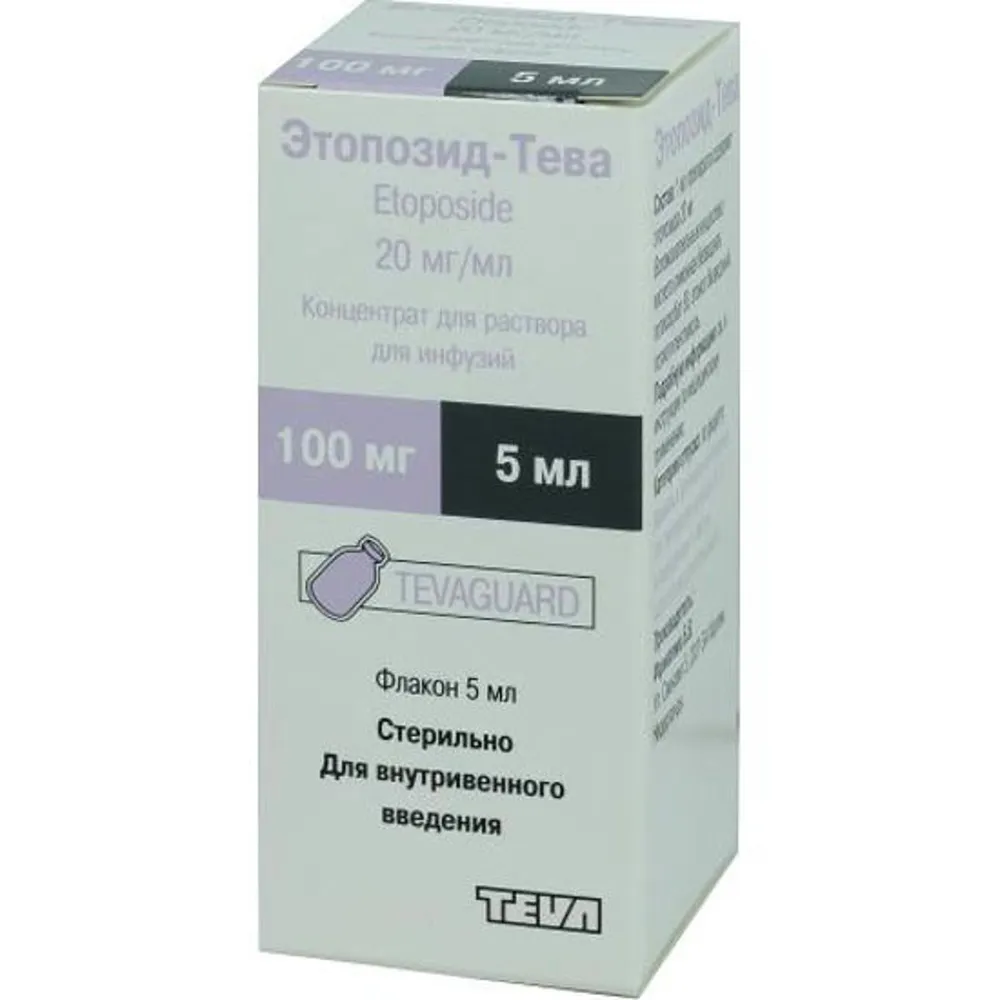
Table of Contents
INSTRUCTIONS FOR MEDICAL USE OF THE MEDICINAL PRODUCT ETOPOSIDE-TEVA
Composition:
Active substance: etoposide;
1 ml of concentrate for infusion solution contains 20 mg of etoposide;
Excipients: anhydrous citric acid, polysorbate 80, anhydrous ethanol, polyethylene glycol.
Pharmaceutical form. Concentrate for solution for infusion.
Main physicochemical properties: clear, slightly viscous yellowish solution, practically free from visible particles.
Pharmacotherapeutic group. Antineoplastic agents. Podophyllotoxin derivatives. ATC code L01C B01.
Pharmacological properties.
Pharmacodynamics.
Etoposide is a semisynthetic derivative of podophyllotoxin. The primary effect of etoposide occurs during late S and early G2 phases of the cell cycle in mammalian cells. Two dose-dependent responses are observed: at high concentrations (10 μg/mL or more), cells entering mitosis undergo lysis; at lower concentrations (0.3–10 μg/mL), entry into prophase is inhibited. Microtubule assembly is not disrupted. The predominant macromolecular effect of etoposide is double-strand breakage via interaction with DNA-topoisomerase II or through the formation of free radicals. Etoposide has been shown to cause metaphase arrest in chick fibroblasts.
Pharmacokinetics.
Absorption. Following intravenous infusion or oral administration of capsules, Cmax and AUC values demonstrated considerable intra- and inter-subject variability.
Distribution. Mean steady-state volumes of distribution range from 18 to 29 liters. Etoposide penetrates poorly into cerebrospinal fluid. In vitro, etoposide is highly bound to human plasma proteins (97%).
The binding coefficient of etoposide correlates directly with serum albumin levels in both cancer patients and healthy volunteers (see section "Special precautions"). The unbound fraction of etoposide significantly correlates with bilirubin levels in cancer patients.
Biological transformation. The hydroxyacid metabolite [4'-demethyl-epipodophyllotoxin-9-(4,6-O-ethylidene-β-D-glucopyranoside)] is formed via opening of the lactone ring and is detected in the urine of adults and children. It is also present in human plasma, likely in the form of a trans-isomer. Glucuronide and/or sulfate conjugates of etoposide are also excreted in human urine. Additionally, the corresponding catechol is formed by O-demethylation of the dimethoxyphenyl ring via the CYP450 3A4 isoenzyme.
Elimination. After intravenous administration, the drug exhibits biphasic pharmacokinetics, with an initial elimination half-life of approximately 1.5 hours and a terminal half-life of 4–11 hours.
Total clearance ranges from 33–48 mL/min or 16–36 mL/min/m² and, like the terminal half-life, is independent of dose within the range of 100–600 mg/m².
Following intravenous administration of 14C-etoposide (100–124 mg/m²), mean recovery of radioactivity in urine was 56% (45% of the dose excreted as unchanged etoposide), and fecal recovery accounted for 44% of the administered dose within 120 hours.
Linearity/Non-linearity. Total clearance and terminal half-life are independent of dose within the range of 100–600 mg/m². Within this same dose range, the area under the plasma concentration-time curve (AUC) and maximum plasma concentration (Cmax) increase linearly with increasing dose.
Renal impairment. In patients with impaired renal function, reduced total clearance, increased AUC, and increased steady-state volume of distribution have been observed (see section "Dosage and administration").
Hepatic impairment. In adult oncology patients with hepatic dysfunction, total clearance of etoposide is not reduced.
Elderly patients. Despite minor differences in pharmacokinetic parameters between patients aged ≤65 years and those aged >65 years, these differences are not considered clinically significant.
Paediatric population. In children, approximately 55% of the dose is excreted in urine as etoposide within 24 hours. Mean renal clearance of etoposide is 7–10 mL/min/m², or about 35% of total clearance within the dose range of 80–600 mg/m². Thus, etoposide is eliminated via both renal and non-renal processes, i.e., through metabolism and biliary excretion. The impact of renal disease on plasma clearance of etoposide in children is unknown. Elevated alanine aminotransferase (ALT) levels in children are associated with reduced total drug clearance. Prior administration of cisplatin may also lead to reduced total clearance in children.
In children, an inverse relationship exists between plasma albumin levels and renal clearance of etoposide.
Gender. Despite minor differences in pharmacokinetic parameters by gender, such differences are not considered clinically significant.
Interaction with other medicinal products. In an in vitro study assessing the effect of other therapeutic agents on the binding of 14C-labeled etoposide to human serum proteins, only phenylbutazone, sodium salicylate, and acetylsalicylic acid displaced protein-bound etoposide at concentrations typically achieved in vivo.
Clinical characteristics.
Indications.
- Testicular cancer. Etoposide is indicated for use in combination with other approved chemotherapeutic agents for the treatment of primary, recurrent, or refractory testicular cancer in adults.
- Small cell lung cancer. Etoposide is indicated for use in combination with other approved chemotherapeutic agents for the treatment of small cell lung cancer in adults.
- Hodgkin’s lymphoma. Etoposide is indicated for use in combination with other approved chemotherapeutic agents for the treatment of Hodgkin’s lymphoma in adults and children.
- Non-Hodgkin’s lymphoma. Etoposide is indicated for use in combination with other approved chemotherapeutic agents for the treatment of non-Hodgkin’s lymphoma in adults and children.
- Acute myeloid leukemia. Etoposide is indicated for use in combination with other approved chemotherapeutic agents for the treatment of acute myeloid leukemia in adults and children.
- Gestational trophoblastic neoplasia. Etoposide in combination with other approved chemotherapeutic agents is indicated for first- and second-line therapy of high-risk gestational trophoblastic neoplasia in adults.
- Ovarian cancer. Etoposide is indicated in combination with other approved chemotherapeutic agents for the treatment of non-epithelial ovarian cancer in adults.
- Etoposide is indicated for the treatment of platinum-resistant/refractory epithelial ovarian cancer in adults.
Contraindications.
Hypersensitivity to etoposide or to any of the excipients of the medicinal product. Concomitant administration of the yellow fever vaccine or other live vaccines is contraindicated in patients with immunosuppression. Breastfeeding (see section "Use during pregnancy or breastfeeding").
Special precautions.
Procedures for proper handling and disposal of anticancer drugs should be followed. General safety rules for handling potentially toxic substances must be observed when working with the drug. As with other potentially toxic compounds, caution is required during handling and preparation of etoposide solutions.
Contact with etoposide should be avoided. Skin reactions may occur if etoposide accidentally comes into contact with the skin.
Medical personnel handling the drug must wear protective clothing (gloves, gown), goggles, and a mask. If the drug comes into contact with skin or mucous membranes, the skin should be washed thoroughly with copious amounts of soap and water, and mucous membranes should be rinsed with water. Pregnant women should not handle the drug. All preparation steps must be performed under laminar airflow conditions. Etoposide solutions should be prepared under aseptic conditions.
Do not sterilize by autoclaving.
Etoposide must not be used undiluted.
Stability after dilution: 8 hours. The infusion is physically and chemically stable for up to 120 hours at 25 °C. However, due to microbiological considerations, it is recommended to prepare the infusion centrally in the hospital pharmacy department and to use it within 8 hours.
After piercing the rubber stopper, the etoposide concentrate for infusion remains stable for 72 hours (3 days) at 25 °C. Therefore, it is suitable for multiple uses.
Turbid solutions, as well as solutions containing a precipitate, are unsuitable for use.
Interaction with other medicinal products and other types of interactions.
Effect of other medicinal products on the pharmacokinetics of etoposide
When etoposide is administered orally in combination with high-dose cyclosporine, where its serum concentration exceeds 2000 ng/mL, an 80% increase in etoposide exposure (AUC) and a 38% reduction in its total clearance are observed compared to etoposide monotherapy.
Combined therapy with cisplatin is associated with reduced total clearance of etoposide.
Concomitant use with phenytoin is associated with increased total clearance of etoposide and reduced efficacy. Other enzyme-inducing antiepileptic drugs may also be associated with increased etoposide clearance and reduced efficacy.
Plasma protein binding of etoposide in vitro is 97%. Phenylbutazone, sodium salicylate, and acetylsalicylic acid may displace etoposide from plasma protein binding sites.
Effect of etoposide on the pharmacokinetics of other medicinal products
Concomitant use of antiepileptic drugs and etoposide may lead to reduced seizure control due to pharmacokinetic interactions between the drugs.
Concomitant therapy with warfarin may cause an increase in the international normalized ratio (INR). Close monitoring of prothrombin time is recommended.
Pharmacodynamic interactions
Administration of the yellow fever vaccine is associated with an increased risk of developing fatal systemic vaccine disease. Administration of live vaccines to immunosuppressed patients is contraindicated.
When etoposide is used in combination with other cytotoxic agents (particularly methotrexate and cisplatin), an additive or synergistic therapeutic effect is observed.
Cross-resistance between anthracyclines and etoposide has been demonstrated experimentally.
Paediatric population
Interaction studies have been conducted only in adults.
Since this medicinal product contains ethanol, potential interactions with other medicinal products may occur. Therefore, if other medicinal products are administered concomitantly, it is necessary to check whether they interact with ethanol.
Concomitant administration with medicinal products containing, for example, propylene glycol or ethanol, may lead to ethanol accumulation and cause adverse effects, particularly in young children with low or immature metabolic capacity.
Special precautions for use
Treatment with Etoposide-Teva should be administered only by an experienced physician who has experience in the use of antineoplastic agents.
In all cases where etoposide is selected for chemotherapy, the physician must evaluate the need for and benefit of the drug relative to the risk of adverse reactions. Most such reactions are reversible if detected early. In the event of severe reactions, the dose of the drug should be reduced or administration discontinued, and corrective measures should be implemented according to the physician's clinical assessment. Re-administration of the drug should be performed cautiously, with appropriate evaluation of the ongoing need for treatment and consideration of the potential for recurrence of toxicity.
Myelosuppression
Dose-limiting suppression of bone marrow function is the most common form of etoposide toxicity. Cases of myelosuppression with fatal outcome have been reported following administration of etoposide. Patients undergoing etoposide therapy should be monitored regularly and carefully for myelosuppression both during and after treatment. Prior to initiating etoposide therapy and before each subsequent administration, a complete peripheral blood count should be performed, including platelet count, hemoglobin, leukocyte count, and differential leukocyte count. If radiotherapy or chemotherapy preceded etoposide treatment, an adequate interval should be ensured to allow for bone marrow recovery.
Etoposide is not recommended for use in patients with an absolute neutrophil count < 1,500/mm³ (1.5 × 10⁹/L) or platelet count < 100,000/mm³ (100 × 10⁹/L), unless the reduction is due to the underlying malignancy.
Dosage modification after the initial dose should be considered if the neutrophil count is less than 500/mm³ (0.5 × 10⁹/L) for 5 or more days, or if the neutropenia is associated with fever or infection; if the platelet count is less than 25,000/mm³ (25 × 10⁹/L); if other grade 3 or 4 toxicities occur; or if renal clearance is less than 50 mL/min.
Severe myelosuppression may occur, leading to infections or hemorrhage. Bacterial infections should be treated prior to initiation of etoposide therapy.
Secondary leukemia
Acute leukemia (with or without myelodysplastic syndrome) has been reported in patients receiving chemotherapy regimens containing etoposide. The cumulative risk and contributing factors for the development of secondary leukemia are currently unknown. Both treatment regimens and cumulative etoposide exposure have been implicated, but not clearly defined.
In some cases of secondary leukemia in patients treated with epipodophyllotoxins, an abnormality of chromosome 11q23 has been observed. This chromosomal abnormality has also been reported in patients with secondary leukemia following chemotherapy regimens that did not include epipodophyllotoxin agents, as well as in de novo leukemia. Another factor associated with secondary leukemia in patients treated with epipodophyllotoxins is a short latency period—the median time to leukemia development was approximately 32 months.
Hypersensitivity
Physicians should be aware of the potential for anaphylactic reactions to etoposide, with symptoms such as chills, fever, tachycardia, bronchospasm, dyspnea, and hypotension, which may be fatal. Treatment is symptomatic. Infusion of the drug should be stopped immediately, and vasopressors, corticosteroids, antihistamines, or plasma expanders should be administered at the physician’s discretion. An increased risk of infusion-related hypersensitivity reactions has been observed when in-line filters are used during etoposide administration (except for etoposide phosphate-containing formulations). In-line filters should not be used.
Arterial hypotension
Etoposide should be administered only by slow intravenous infusion over 30–60 minutes, as hypotension is a potential adverse effect of rapid intravenous injection.
Infusion site reactions
Reactions at the injection site may occur during administration. Due to the risk of extravasation, careful monitoring of the infusion site for possible infiltration is recommended during drug administration.
Low serum albumin
Low serum albumin levels are associated with increased etoposide exposure. Patients with low serum albumin levels are at increased risk of etoposide toxicity.
Acute renal failure
Cases of reversible acute renal failure have been reported, primarily in children who received high-dose etoposide (2220 mg/m² or 60 mg/kg) in combination with total body irradiation for hematopoietic stem cell transplantation. Renal function should be assessed before and after etoposide administration until full recovery.
Renal impairment
Etoposide should be administered at a reduced dose in patients with moderate (creatinine clearance 15–50 mL/min) or severe (creatinine clearance < 15 mL/min) renal impairment, including those undergoing hemodialysis (see section "Dosage and administration"). Hematological parameters should be determined and dosage adjusted in subsequent cycles based on hematological toxicity and clinical response in patients with moderate to severe renal impairment.
Hepatic impairment
In patients with hepatic impairment, liver function should be monitored regularly due to the risk of etoposide accumulation.
Tumor lysis syndrome
Tumor lysis syndrome (sometimes fatal) has been reported following etoposide administration in combination with other chemotherapeutic agents. Careful monitoring is required to detect early signs of tumor lysis syndrome, particularly in patients with risk factors such as bulky, treatment-sensitive tumors and renal impairment. Patients at risk of this complication may require appropriate preventive measures.
Mutagenic potential
Since etoposide may exert mutagenic effects, both male and female patients are advised to use effective contraception during treatment and for 6 months after completion of therapy. Patients wishing to have children after therapy should be offered genetic counseling. Due to the potential for reduced fertility, male patients are advised to consider sperm cryopreservation prior to starting etoposide therapy (see section "Pregnancy and breastfeeding").
The medicinal product contains polysorbate 80. There have been reports that in preterm infants, administration of injectable vitamin E, which also contains polysorbate 80, has caused life-threatening events such as hepatic and renal failure, pulmonary dysfunction, thrombocytopenia, and ascites.
The medicinal product contains 30% v/v ethanol. Each 5 mL ampoule contains up to 1.2 g of alcohol, and each 10 mL ampoule contains up to 2.4 g of alcohol.
Effect of ethanol
Adults. A dose of 120 mg/m² of this medicinal product administered to a 70 kg adult will result in an ethanol exposure of 37.2 mg/kg, which may increase blood alcohol concentration by approximately 6.2 mg/100 mL. For comparison, in an adult consuming a glass of wine or 500 mL of beer, blood alcohol concentration is approximately 50 mg/100 mL. The amount of ethanol in this medicinal product is unlikely to have a significant effect in adults. However, the ethanol content may alter the effects of other medicinal products (see section "Interaction with other medicinal products and other forms of interaction"). This should be considered when prescribing the drug to pregnant women and patients with alcohol dependence.
Paediatric population. A dose of 150 mg/m² of this medicinal product administered to a 17 kg child will result in an ethanol exposure of 75.5 mg/kg, which may increase blood alcohol concentration by approximately 12.6 mg/100 mL. The alcohol content in this medicinal product may affect children weighing ≤ 17 kg. These children may experience drowsiness and behavioral changes. It may also affect their ability to concentrate and participate in physical activities. This should be considered in children with epilepsy or liver disease.
Since this product is usually administered slowly over 30–60 minutes, the ethanol effect may be reduced. The medicinal product is harmful for patients with alcoholism. Caution is advised when administering to pregnant women, children, patients with liver disease, and patients with epilepsy.
Use during pregnancy or breastfeeding.
Women of reproductive potential/contraception in men and women
Women of reproductive potential should use appropriate contraceptive methods to avoid pregnancy during etoposide treatment. Etoposide has been shown to have teratogenic effects in animals.
Since etoposide may exert mutagenic effects, both women and men are advised to use effective contraception during treatment and for 6 months after completion of therapy.
If a patient wishes to have children after completing etoposide therapy, genetic counseling is recommended.
Pregnancy
There are insufficient data on the use of etoposide in pregnant women. Animal studies have demonstrated reproductive toxicity. It is generally known that etoposide may have harmful effects on the fetus when used during pregnancy. Etoposide should not be used during pregnancy except in cases where the woman's clinical condition necessitates treatment with etoposide. Women of reproductive potential should avoid becoming pregnant and use effective contraception during treatment and for 6 months after completion of therapy. If this medicinal product is used during pregnancy or if pregnancy occurs during treatment, the woman should be informed of the potential risk to the fetus.
Breastfeeding
Etoposide is excreted in breast milk. There is a potential risk of serious adverse reactions in breastfed infants due to etoposide. Therefore, a decision should be made whether to discontinue the drug or to discontinue breastfeeding, taking into account the benefits of breastfeeding for the child and the benefits of therapy for the woman (see section "Contraindications").
Fertility
Due to the potential for reduced fertility, male patients are advised to consider sperm cryopreservation prior to starting etoposide therapy.
Ability to drive and use machines
No studies on the effects on the ability to drive or use machines have been conducted. Etoposide may cause adverse reactions that may impair the ability to drive or operate machinery, such as fatigue, drowsiness, nausea, vomiting, cortical blindness, and hypersensitivity reactions with hypotension. Patients experiencing such adverse reactions should be advised to avoid driving and operating machinery.
Method of Administration and Dosage
Etoposide should be administered only under the supervision of a qualified physician experienced in the use of anticancer medicinal products. The drug should be administered only by slow intravenous infusion over 30–60 minutes.
The required dose of etoposide concentrate should be diluted in 5% glucose solution or 0.9% sodium chloride solution to a final etoposide concentration of 0.2 mg/mL.
Adults
The recommended dose of etoposide for adults is 50–100 mg/m2/day on days 1–5 or 100–120 mg/m2 on days 1, 3, and 5 every 3–4 weeks in combination with other medicinal products indicated for the disease being treated.
Etoposide dosage should be adjusted according to the myelosuppressive effects of other concomitant drugs or prior radiotherapy or chemotherapy, which may reduce bone marrow reserve.
Dosage should be reviewed after the initial dose if the neutrophil count is less than 500/mm3 (0.5 × 10⁹/L) for 5 or more days. Furthermore, the dose should be adjusted if fever or infection occurs, or if the platelet count is less than 25,000/mm3 (25 × 109/L) not due to the disease itself, or if other signs of grade 3 or 4 toxicity occur, as well as if renal clearance is less than 50 mL/min. In case of creatinine clearance reduction to 15–50 mL/min, a 25% dose reduction is recommended.
Elderly patients (> 65 years): dose adjustment is not required, except based on renal function.
Children
Hodgkin’s lymphoma, non-Hodgkin’s lymphoma, acute myeloid leukemia
Etoposide has been used in pediatric patients at doses ranging from 75–150 mg/m2/day for 2–5 days in combination with other antineoplastic medicinal products. The appropriate treatment regimen should be selected based on current standard treatment protocols.
Ovarian cancer, small cell lung cancer, gestational trophoblastic neoplasia, testicular cancer
The safety and efficacy of etoposide in children (under 18 years of age) have not been established. Available data are presented in the section "Pharmacokinetics". However, dosage recommendations cannot be provided.
Patients with renal impairment
Dose adjustment of etoposide according to creatinine clearance should be performed in accordance with the recommendations below.
| Creatinine clearance |
Percentage of standard dose of Etoposide-Teva |
| > 50 ml/min |
100 % |
| 15–50 ml/min |
75 % |
For patients with a creatinine clearance of less than 15 mL/min who are undergoing dialysis, further dose reduction will likely be required, as etoposide clearance is further reduced in these patients (see section "Special Instructions"). Further dosing in moderate and severe renal impairment should be based on patient tolerance and clinical response. Since etoposide and its metabolites are not dialyzable, the drug may be administered before and after hemodialysis (see section "Special Instructions").
Children. Etoposide is used in children for the treatment of Hodgkin's lymphoma, non-Hodgkin's lymphoma, and acute myeloid leukemia. The safety and efficacy of etoposide in children (under 18 years of age) have not been established for ovarian cancer, small cell lung cancer, gestational trophoblastic neoplasia, and testicular cancer.
Overdose.
Intravenous administration of etoposide at total doses of 2.4–3.5 g/m² body surface area over three days has resulted in severe mucositis and bone marrow suppression. Severe hepatotoxic effects and development of metabolic acidosis have been reported in patients receiving etoposide at doses exceeding the recommended levels. Similar toxicity can be expected with oral administration. There is no specific antidote for etoposide. In case of overdose, symptomatic and supportive treatment should be administered, and patients should be closely monitored. Etoposide and its metabolites are not dialyzable.
Adverse Reactions
Dose-limiting myelosuppression is the most significant toxic effect associated with etoposide therapy. In clinical studies of etoposide monotherapy at total doses ≥ 450 mg/m², the most commonly reported adverse reactions of any severity were leukopenia (91%), neutropenia (88%), anemia (72%), thrombocytopenia (23%), asthenia (39%), nausea and/or vomiting (37%), alopecia (33%), and chills and/or fever (24%).
The adverse reactions listed below have been reported during clinical trials with etoposide and in the post-marketing period. These adverse reactions are presented by organ systems and frequency categories: very common (≥ 1/10), common (≥ 1/100, < 1/10), uncommon (≥ 1/1000, < 1/100), rare (≥ 1/10,000, < 1/1000), and not known (frequency cannot be estimated from available data).
Benign and malignant neoplasms (including cysts and polyps):
common — acute leukemia.
Infections and infestations:
common — infections (including opportunistic infections such as Pneumocystis jirovecii pneumonia).
Blood and lymphatic system disorders:
very common — myelosuppression (including fatal outcomes), leukopenia, thrombocytopenia, anemia, neutropenia.
Cardiac disorders:
common — myocardial infarction, arrhythmia, hypertension, transient systolic hypotension (with very rapid administration of the drug); uncommon — hemorrhage.
Immune system disorders:
common — anaphylactic reactions (including fatal outcomes); not known — bronchospasm, angioneurotic edema.
Nervous system disorders:
common — dizziness; uncommon — peripheral neuropathy; rare — transient cortical blindness, neurotoxicity (including somnolence, increased fatigue), seizures (sometimes associated with allergic reactions), optic neuritis.
Respiratory, thoracic and mediastinal disorders:
rare — interstitial pneumonitis, pulmonary fibrosis; not known — bronchospasm.
Gastrointestinal disorders:
very common — abdominal pain, anorexia, constipation, nausea, vomiting; common — diarrhea, mucositis (including stomatitis and esophagitis); rare — dysphagia, dysgeusia.
Hepatobiliary disorders:
very common — hepatotoxicity, increased levels of alanine aminotransferase, alkaline phosphatase, aspartate aminotransferase, bilirubin.
Metabolism and nutrition disorders:
not known — tumor lysis syndrome.
Skin and subcutaneous tissue disorders:
very common — alopecia, skin pigmentation changes; common — pruritus, rash, urticaria; rare — radiation recall reaction, Stevens-Johnson syndrome, hand-foot syndrome, toxic epidermal necrolysis.
Renal and urinary disorders:
not known — acute renal failure.
Reproductive and breast disorders:
not known — reduced fertility.
General disorders and administration site conditions:
very common — asthenia, malaise; common — extravasation (post-marketing complications reported with extravasation included soft tissue reactions, swelling, pain, cellulitis, necrosis, including skin necrosis), phlebitis; rare — pyrexia.
Description of selected adverse reactions
The following information describes adverse events, with average frequencies (in percent) calculated based on data from studies using etoposide monotherapy.
Hematologic toxicity
Fatal myelosuppression has been reported following etoposide administration. Myelosuppression is often dose-limiting. Bone marrow recovery typically occurs by day 20, and cumulative toxicity has not been observed. The nadir levels of granulocytes and platelets are usually observed 10–14 days after drug administration, depending on the route and schedule of administration. Nadir levels occur more rapidly after intravenous administration compared to oral administration. Leukopenia and severe leukopenia (less than 1000/mm³) were observed in 91% and 17% of patients, respectively. Thrombocytopenia and severe thrombocytopenia (less than 50,000/mm³) were observed in 23% and 9% of patients, respectively.
Patients with neutropenia receiving etoposide therapy frequently developed fever and infectious diseases. Bleeding events have also been reported.
Gastrointestinal toxicity
Nausea and vomiting were the most common manifestations of gastrointestinal toxicity associated with etoposide. These symptoms are generally manageable with antiemetic agents.
Alopecia
Reversible alopecia, often leading to complete hair loss, was observed in 44% of patients receiving etoposide therapy.
Hypotension
Transient hypotension has been reported following rapid intravenous infusion of etoposide and was not associated with electrocardiographic changes or cardiotoxicity. Hypotension often responds to interruption of etoposide infusion and/or supportive therapy if needed. If infusion is continued, a slower rate is recommended. No cases of delayed hypotension have been reported.
Hypertension
Hypertension has been reported during etoposide therapy. If clinically significant hypertension occurs, appropriate supportive treatment should be initiated.
Allergic reactions
Anaphylactic-type reactions have been reported during or immediately after intravenous administration of etoposide. The role of drug concentration or infusion rate in the development of anaphylactic-type reactions has not been clearly established. Blood pressure usually normalizes within several hours after infusion ends. Anaphylactic-type reactions may occur after the first dose. In 3% of cases (7 out of 245 patients across 7 clinical trials), anaphylactic reactions were observed, manifesting as chills, tachycardia, bronchospasm, dyspnea, diaphoresis, pyrexia, pruritus, arterial hypertension or hypotension, syncope, nausea, and vomiting. Flushing was observed in 2% of patients, skin rashes in 3%. These reactions usually resolve after stopping the infusion and administering pressor agents, corticosteroids, antihistamines, or plasma expanders as needed.
Cases of acute bronchospasm leading to fatal outcomes have also been reported. Apnea with spontaneous recovery after stopping the infusion has also been reported.
Metabolic complications
Tumor lysis syndrome (sometimes fatal) has been reported after etoposide use in combination with other chemotherapeutic agents (see section "Special precautions").
Acute renal failure
Cases of reversible acute renal failure have been reported in the post-marketing period.
Pediatric population
The safety profile in children is expected to be similar to that in adults.
Reporting suspected adverse reactions
All suspected adverse reactions and lack of drug efficacy should be reported via the following link: https://aisf.dec.gov.ua
Shelf life. 3 years.
Storage conditions. Store in the original packaging at a temperature not exceeding 25 °C, protected from light and out of reach of children.
Incompatibilities
Etoposide-Teva solution must not be mixed in the same container with other parenteral drugs, except for the diluents specified in the section "Dosage and administration".
Etoposide-Teva is pharmaceutically incompatible with solutions having alkaline pH values.
Cracking of components of syringes and infusion systems made of acrylic polymers or acrylonitrile-butadiene-styrene (ABS) has been reported upon contact with undiluted Etoposide-Teva 20 mg/mL concentrate for infusion. This effect is not observed with diluted infusion solutions.
Packaging. 5 ml or 10 ml in a vial with TevaGuard protective cap; 1 vial per carton.
Prescription status. Prescription only.
Manufacturer. Farmahem B.V.
Manufacturer's address and location of operations.
Svensweg 5, 2031 GA Haarlem, The Netherlands.