Etoposide "ebewe"
Ukraine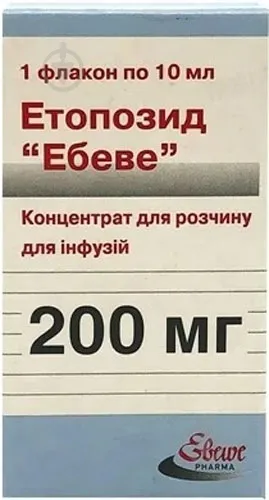
Table of Contents
INSTRUCTION FOR MEDICAL USE OF THE MEDICINAL PRODUCT ETOPOSIDE «EBEWE» (ETOPOSID «EBEWE»)
Composition:
active substance: etoposide;
1 ml of solution contains 20 mg of etoposide;
excipients: citric acid anhydrous, benzyl alcohol, macrogol 300, polysorbate 80, ethanol 96%.
Pharmaceutical form. Concentrate for solution for infusion.
Main physicochemical properties: clear light-yellow solution.
Pharmacotherapeutic group.
Antineoplastic and immunomodulating agents. Alkaloids of plant origin and other natural products. Podophyllotoxin derivatives. ATC code L01CB01.
Pharmacological properties.
Pharmacodynamics.
Etoposide is a semi-synthetic derivative of podophyllotoxin. It exerts a pronounced cytotoxic effect, which largely depends on the dose and treatment schedule. Etoposide affects the function of topoisomerase II (an enzyme that cleaves DNA) and inhibits DNA synthesis in the terminal phase. As a result, single-strand and double-strand breaks in DNA are formed. The cytotoxic effect depends on the concentration and duration of exposure to etoposide. The drug blocks mitosis, causing cell death in the S-phase and early G2-phase of the cell cycle. Unlike other known podophyllotoxins, it does not cause accumulation of cells at the metaphase stage. Etoposide phosphate is metabolized in vivo to etoposide through dephosphorylation. The mechanism of action of etoposide phosphate is considered to be the same as that of etoposide.
Pharmacokinetics.
Absorption. After intravenous infusion, Cmax and AUC values showed marked intra- and inter-subject variability.
Distribution. The mean volume of distribution at steady state is 18–29 liters. Etoposide penetrates poorly into cerebrospinal fluid. In vitro, etoposide is highly bound to human plasma proteins (97%).
In cancer patients, free etoposide correlates significantly with bilirubin levels.
Metabolism. The hydroxyacid metabolite [4'-dimethyl-epipodophyllic acid-9-(4,6-O-ethylidene-β-D-glucopyranoside)] is formed via lactone ring opening and is found in the urine of adults and children. It is also present in human plasma, likely in the form of a trans-isomer. Glucuronide and/or sulfate conjugates of etoposide are also excreted in human urine. Additionally, the corresponding catechol is formed by O-demethylation of the dimethoxyphenyl ring via the CYP450 3A4 isoenzyme.
Elimination. The pharmacokinetics of etoposide after intravenous administration follow a biexponential two-compartment model. The distribution half-life is approximately 1.5 hours, and the terminal elimination half-life ranges from 4 to 11 hours. Etoposide penetrates poorly into cerebrospinal fluid. Approximately 45% of the dose is excreted in urine, two-thirds of which is eliminated within 72 hours as unchanged parent compound.
Linearity/Non-linearity. Total clearance and terminal elimination half-life are dose-independent in the range of 100–600 mg/m². Within this same dose range, the area under the plasma concentration-time curve (AUC) and maximum plasma concentration (Cmax) increase linearly with increasing dose.
Renal impairment.
In patients with impaired renal function, reduced total clearance, increased AUC, and increased volume of distribution at steady state have been observed (see section "Dosage and administration").
Hepatic impairment. In patients with hepatic dysfunction, total clearance of etoposide is not reduced.
Elderly patients. Although minor differences in pharmacokinetic parameters were observed between patients ≤ 65 years of age and those > 65 years of age, these differences are not considered clinically significant.
Children and adolescents. In children, approximately 55% of the etoposide dose is excreted unchanged in urine within 24 hours. The mean renal clearance of etoposide is 7–10 mL/min/m², or about 35% of total clearance, within the dose range of 80–600 mg/m². Therefore, etoposide is eliminated via both renal and non-renal processes, i.e., through metabolism and biliary excretion. The impact of renal disease on etoposide plasma clearance in children is unknown. Elevated alanine aminotransferase (ALT) levels in children are associated with reduced total drug clearance. Prior administration of cisplatin may also lead to reduced total clearance in children.
In children, an inverse relationship exists between plasma albumin levels and renal clearance of etoposide.
Gender. Although minor differences in pharmacokinetic parameters are observed depending on gender, such differences are not considered clinically significant.
Clinical characteristics.
Indications.
- Testicular cancer. Etoposide is indicated for use in combination with other approved chemotherapeutic agents for the treatment of primary, recurrent, or refractory testicular cancer in adults.
- Small cell lung cancer. Etoposide is indicated for use in combination with other approved chemotherapeutic agents for the treatment of small cell lung cancer in adults.
- Hodgkin’s disease (lymphogranuloma). Etoposide is indicated for use in combination with other approved chemotherapeutic agents for the treatment of Hodgkin’s lymphoma in adults and children.
- Non-Hodgkin’s lymphoma. Etoposide is indicated for use in combination with other approved chemotherapeutic agents for the treatment of non-Hodgkin’s lymphoma in adults and children.
- Acute myeloid leukemia. Etoposide is indicated for use in combination with other approved chemotherapeutic agents for the treatment of acute myeloid leukemia in adults and children.
- Malignant gestational trophoblastic disease. Etoposide in combination with other approved chemotherapeutic agents is indicated for first- and second-line therapy of gestational trophoblastic neoplasia in adults.
- Ovarian cancer. Etoposide is indicated in combination with other approved chemotherapeutic agents for the treatment of non-epithelial ovarian cancer in adults.
- Platinum-resistant epithelial ovarian cancer. Etoposide is indicated for the treatment of platinum-resistant epithelial ovarian cancer in adults.
Contraindications.
- Hypersensitivity to etoposide or to any of the excipients of the medicinal product.
- Pregnancy, breastfeeding period.
- Administration of yellow fever vaccine or other live vaccines during treatment with the drug in patients with immunosuppression.
Special safety precautions.
When handling the drug, general safety rules for handling cytotoxic substances must be observed.
Solutions for infusion should be prepared in an isolated cabinet or a biological safety cabinet designated for handling cytostatic agents. Protective clothing (disposable gloves, masks, goggles, gowns, caps, or coveralls) must be used. Measures should be taken to prevent contact of etoposide solutions with skin or mucous membranes. If the drug does come into contact with skin or mucous membranes, the affected area should be immediately washed thoroughly with plenty of water and soap.
Pregnant healthcare personnel must not handle the drug.
Unused drug residues, as well as all instruments and materials used in the preparation and administration of infusion solutions, should be disposed of according to an approved procedure for the disposal of cytotoxic waste.
Interaction with other medicinal products and other forms of interactions.
Etoposide may potentiate the cytotoxic and myelosuppressive effects of other drugs (e.g., cyclosporine). During concomitant therapy with high-dose cyclosporine, when its serum concentration exceeds 2000 ng/mL, an 80% increase in etoposide exposure (AUC) and a 38% reduction in total clearance of etoposide have been observed compared to etoposide monotherapy. The dose of etoposide should be reduced when administered concurrently with high-dose cyclosporine infusions.
Concomitant radiotherapy or chemotherapy with myelosuppressive agents may enhance bone marrow suppression caused by etoposide.
Phenylbutazone, sodium salicylate, and salicylic acid may reduce the plasma protein binding of etoposide.
Cross-resistance between anthracyclines and etoposide has been demonstrated experimentally.
Information on the use of etoposide in combination with phosphatase inhibitors (e.g., levamisole hydrochloride) is lacking.
Combination therapy with cisplatin is associated with reduced total clearance of etoposide. Conversely, concomitant use with phenytoin is associated with increased total clearance of etoposide and reduced efficacy. Use of other enzyme-inducing antiepileptic drugs may also lead to increased clearance and reduced efficacy of etoposide.
Etoposide may potentiate the effect of oral anticoagulants.
Concomitant therapy with warfarin may lead to an increase in the international normalized ratio (INR). Careful monitoring of prothrombin time is recommended.
Vaccination with live vaccines in immunocompromised patients after chemotherapy may lead to the development of severe and fatal infections.
Concomitant use of etoposide with antiepileptic drugs may result in reduced seizure control due to pharmacokinetic interactions.
Administration of the yellow fever vaccine is associated with an increased risk of developing fatal systemic vaccine-related disease. Live vaccines are contraindicated in patients with immunodeficiency.
Potentially favorable interactions.
A synergistic therapeutic effect has been observed when etoposide is used in combination with other cytotoxic agents (e.g., methotrexate and cisplatin).
There have been reports of isolated cases of acute leukemia, with or without a preleukemic phase, in patients treated with etoposide in combination with other antineoplastic agents such as bleomycin, cisplatin, ifosfamide, and methotrexate.
Special precautions for use
Etoposide "Ebewe" concentrate for infusion solution must not be administered undiluted. Etoposide must not be administered intra-arterially or intracavitarily (into pleural, peritoneal, or other cavities).
Only clear infusion solutions practically free from particulate matter should be administered. If discoloration or particulate matter is observed, the prepared solution must be discarded.
Treatment with etoposide must be conducted under the supervision of an oncologist.
In all cases where etoposide is selected for chemotherapy, the physician must assess the need for and benefit of the drug relative to the risk of adverse reactions. Most such reactions are correctable if detected early. In the event of severe reactions, the dose of the drug should be reduced or administration discontinued, and corrective measures implemented according to the physician's clinical assessment. Re-administration of the drug should be performed cautiously, with appropriate evaluation of the continued need for etoposide therapy and consideration of the potential for recurrence of toxicity.
If radiotherapy and/or chemotherapy were administered prior to etoposide therapy, etoposide treatment must not be initiated until normal bone marrow function has been restored.
Reactions at the injection site may occur during administration. When etoposide is administered intravenously, care must be taken to avoid extravasation. Close monitoring of the infusion site for possible infiltration is recommended during drug administration. Specific treatment for extravasation reactions is currently unknown.
Etoposide is not recommended for use in patients with neutrophil counts < 1,500/mm³ (1.5 × 10⁹/L) or platelet counts < 100,000/mm³ (100 × 10⁹/L), unless such reductions are due to malignant disease.
Dosage modification after the initial dose should be considered if neutrophil count is < 500/mm³ (0.5 × 10⁹/L) for 5 or more days or if the reduction is associated with fever or infection, if platelet count is < 25,000/mm³ (25 × 10⁹/L), if other grade 3 or 4 toxicities occur, or if renal clearance is < 50 mL/min.
Acute leukemia, sometimes associated with myelodysplastic syndrome, has been reported in patients undergoing chemotherapy with etoposide-containing regimens.
Severe myelosuppression may occur, leading to infections or hemorrhage. Fatal cases of myelosuppression following etoposide administration have been reported. Patients receiving etoposide therapy must be regularly and carefully monitored for myelosuppression both during and after treatment. Hematological parameters—platelet count, hemoglobin, white blood cell count, and differential leukocyte count—should be determined at the beginning of therapy and before each subsequent dose.
Peripheral blood cell counts and liver function tests should be monitored. Treatment must be suspended if leukocyte count falls below 2,000/mm³ or platelet count falls below 50,000/mm³ (50 × 10⁹/L), until hematological parameters normalize (leukocyte count > 4,000/mm³ (4 × 10⁹/L), platelet count > 100,000/mm³ (100 × 10⁹/L)). The time required for bone marrow function recovery depends on whether etoposide is used as monotherapy or in combination with other chemotherapeutic agents. Hematological parameters usually normalize within 21 days.
In rare cases, acute leukemia (with or without a preleukemic phase) may develop in patients treated with etoposide in combination with other antineoplastic agents. The risk of secondary acute nonlymphocytic leukemia increases with cumulative etoposide doses exceeding 2,000 mg/m² body surface area.
The cumulative risk or contributing factors for secondary leukemia are currently unknown. Both treatment regimens and etoposide accumulation have been implicated but not clearly defined.
In some cases of secondary leukemia in patients treated with epipodophyllotoxins, an 11q23 chromosomal abnormality has been observed. This abnormality has also been reported in patients with secondary leukemia after chemotherapy regimens not including epipodophyllotoxins, and in patients with de novo leukemia. Another factor associated with secondary leukemia in patients treated with epipodophyllotoxins is a short latent period: the median time to leukemia development is approximately 32 months.
Bacterial infections should be treated prior to initiating etoposide therapy.
Physicians should be aware of the potential for anaphylactic reactions to etoposide, with symptoms including chills, fever, tachycardia, respiratory arrest, and hypotension, which may lead to fatal outcomes. Treatment is symptomatic. Infusion of the drug must be stopped immediately, and vasopressors, corticosteroids, antihistamines, or plasma expanders should be administered as deemed appropriate by the physician.
The use of infusion systems with built-in filters for etoposide administration has been associated with an increased risk of infusion-related hypersensitivity reactions. Infusion systems with built-in filters should not be used.
Etoposide should be administered only by slow intravenous infusion (typically over 30–60 minutes), as hypotension is a possible adverse effect of rapid intravenous injection.
Nausea and vomiting may occur in some patients. Antiemetic therapy can reduce the intensity of these adverse reactions.
Etoposide should be used with caution in patients with cardiac arrhythmias, history of myocardial infarction, hepatic or renal dysfunction, peripheral neuropathy, urinary disorders, epilepsy or cerebral lesions, oral mucositis, or in patients previously treated with radiotherapy or chemotherapy.
Patients with low serum albumin levels may have an increased risk of etoposide-related toxicity. Patients with hepatic or renal impairment should undergo regular organ function monitoring due to the risk of etoposide accumulation.
Renal impairment
Etoposide should be administered at reduced doses in patients with moderate (creatinine clearance 15–50 mL/min) or severe (creatinine clearance < 15 mL/min) renal impairment, including those undergoing hemodialysis. Hematological parameters should be monitored, and dose adjustments considered in subsequent cycles based on hematological toxicity and clinical response in patients with moderate to severe renal impairment.
Hepatic impairment
Patients with impaired liver function should undergo regular liver function monitoring due to the risk of etoposide accumulation.
Tumor lysis syndrome
Tumor lysis syndrome (sometimes fatal) has been reported after etoposide administration in combination with other chemotherapeutic agents. Careful monitoring of patients, particularly those with risk factors such as bulky, treatment-sensitive tumors or renal impairment, is required for early detection of tumor lysis syndrome. For patients at risk of these complications, consideration should be given to implementing appropriate additional preventive measures.
1 mL of Etoposide "Ebewe" contains 260.6 mg of ethanol. A patient with a body surface area of 1.6 m² receiving a dose of 120 mg/m² will receive 2.5 g of ethanol. This should be taken into account when prescribing the drug to patients with a history of alcohol dependence or those taking disulfiram. This fact should also be considered when treating pregnant women, breastfeeding mothers, children, and high-risk groups such as patients with liver disease or epilepsy.
The drug contains polysorbate 80. Use of injectable vitamin E containing polysorbate 80 has been reported to cause life-threatening conditions in premature infants, including hepatic and renal failure, pulmonary dysfunction, thrombocytopenia, and ascites.
Since the formulation contains benzyl alcohol, it should not be administered to children under 6 months of age due to the risk of metabolic acidosis. Benzyl alcohol may also cause toxic and allergic reactions in children under 3 years of age.
The minimum amount of benzyl alcohol causing toxic effects is unknown.
Due to the risk of accumulation and toxic effects ("metabolic acidosis"), large quantities should be used only with caution and only when absolutely necessary, especially in individuals with impaired liver or kidney function.
In pregnant women and breastfeeding mothers, large amounts of benzyl alcohol may accumulate in the body and cause adverse effects ("metabolic acidosis").
Etoposide is mutagenic and carcinogenic. This should be considered during long-term therapy.
Since etoposide may exert genotoxic effects, men should use reliable contraception during treatment and for 6 months after completion of etoposide therapy.
Due to the possibility of irreversible infertility, male patients are advised to undergo sperm cryopreservation prior to starting etoposide therapy.
Etoposide "Ebewe" is physically and chemically stable for 24 hours after first opening the container, when stored at room temperature. From a microbiological standpoint, the drug should be used immediately after withdrawal from the vial. If not used immediately, storage duration and conditions should be monitored by medical personnel.
Use during pregnancy or breastfeeding
Pregnancy There is evidence that etoposide may cause severe fetal developmental abnormalities when used during pregnancy; therefore, the drug should not be administered during pregnancy except for life-threatening indications. Women of reproductive potential should use effective contraception during treatment.
If pregnancy occurs, the need for continuing therapy should be carefully evaluated, considering the potential benefit to the woman and the possible risk to the fetus.
Breastfeeding It is currently unknown whether etoposide is excreted in breast milk; therefore, adverse effects in breastfed infants cannot be excluded. A decision should be made whether to discontinue breastfeeding or to discontinue the drug. The use of etoposide is contraindicated during breastfeeding.
Fertility Due to the mutagenic potential of etoposide, both women and men are advised to use effective contraception during treatment and for 6 months after completion of therapy. If a patient wishes to have children after completing etoposide therapy, genetic counseling is recommended. Due to the potential impact of etoposide on fertility, male patients are advised to undergo sperm cryopreservation prior to starting etoposide therapy.
Ability to affect reaction speed when driving or operating machinery
Studies on the effect of etoposide on reaction speed during driving or operating machinery have not been conducted. Since etoposide may cause fatigue and transient cortical blindness, patients are advised not to drive or operate machinery after receiving the drug.
Method of Administration and Dosage
For intravenous use after dilution.
Etoposide should not be diluted with buffer solutions with pH > 8, as it precipitates within this pH range.
Immediately before administration, the required amount of the drug should be diluted with 5% glucose solution or 0.9% sodium chloride solution to a concentration of etoposide of at least 0.1 mg/mL (usually not exceeding 0.1 mg/mL). The diluted solution is then administered by intravenous infusion over a period of not less than 30 minutes. Etoposide "Ebewe" may be diluted only with 5% glucose solution or 0.9% sodium chloride solution. The concentration of etopidide in the infusion solution must not exceed 0.4 mg/mL due to the risk of precipitation.
Precautions must be taken to prevent extravasation.
The recommended dose of etoposide for adults is 50–100 mg/m2/day (etoposide equivalent) on days 1–5 or 100–120 mg/m2 on days 1, 3, and 5 every 3–4 weeks in combination with other medicinal products indicated for the disease being treated. The next course of etoposide therapy should be initiated only after hematological parameters have normalized.
Etoposide dosing should be adjusted according to the myelosuppressive effects of other combination drugs or the effects of prior radiotherapy or chemotherapy, which may reduce bone marrow reserve.
A new course of etoposide therapy should be initiated only if the neutrophil count is at least 1,500/mm3 (1.5 × 10⁹/L) and the platelet count is at least 100,000/mm3 (100 × 109/L), except in cases where these reductions are caused by the tumor itself.
Dosage modification after the initial dose should be considered if the neutrophil count is less than 500/mm3 (0.5 × 10⁹/L) for 5 or more days, or if neutropenia is associated with fever or infection; if the platelet count is less than 25,000/mm3 (25 × 109/L); if other grade 3 or 4 toxicities occur; or if renal clearance is less than 50 mL/min.
Elderly patients: dose adjustment is not required, except based on renal function.
Children
Hodgkin's lymphoma; non-Hodgkin's lymphoma; acute myeloid leukemia
Etoposide has been used in pediatric patients at doses ranging from 75–150 mg/m2/day (etoposide equivalent) for 2–5 days in combination with other antineoplastic medicinal products. The appropriate treatment regimen should be selected based on current local standard treatment protocols.
Ovarian cancer, small cell bronchial carcinoma; gestational trophoblastic neoplasia; ovarian cancer
The safety and efficacy of etoposide in children (under 18 years of age) have not been established. Available data are presented in the "Pharmacokinetics" section. However, no dosage recommendations can be provided.
Patients with renal impairment. In patients with impaired renal function but normal liver function, lower doses should be administered, and key hematological parameters and renal function should be closely monitored. Etoposide dose adjustments based on creatinine clearance should be performed according to the recommendations below.
| Creatinine clearance |
Percentage of standard dose of Etoposide "Ebewe" |
| > 50 ml/min |
100 % |
| 15–50 ml/min |
75 % |
Further dosing should be based on drug tolerance and clinical response. There are currently no data regarding the optimal dosage for patients with creatinine clearance < 15 ml/min; therefore, a further dose reduction is recommended for this patient group. Since etoposide and its metabolites are not dialyzable, the drug can be administered before and after hemodialysis.
Patients with impaired liver function.
Hematological toxicity caused by etoposide has been reported to be more severe in patients with elevated serum bilirubin concentrations. It is also known that total plasma clearance and elimination of etoposide may be reduced in patients with impaired hepatic function. Therefore, etoposide should be used with caution in such patients, and a possible dose reduction should be considered.
Children.
The safety and efficacy of the drug in children have not been sufficiently established. Given the limited experience with use in pediatric patients, the appropriateness of administering the drug to children should be carefully evaluated, taking into account the potential benefit and possible risk.
Overdose.
Acute overdose is accompanied by severe adverse reactions, particularly leukopenia and thrombocytopenia.
Intravenous administration of etoposide at a total dose of 2.4–3.5 g/m² of body surface area over 3 days has caused severe mucositis and bone marrow suppression. Severe hepatotoxic effects and development of metabolic acidosis have been reported in patients who received etoposide at doses higher than recommended. There is no specific antidote for etoposide. In case of overdose, symptomatic and supportive treatment should be administered, including transfusion of packed red blood cells and/or platelets, and antibiotic therapy. In case of hypersensitivity to the drug, antihistamines and intravenous corticosteroids should be administered.
Adverse Reactions
Adverse reactions are classified by frequency of occurrence: very common (≥ 1/10); common (≥ 1/100 and < 1/10); uncommon (≥ 1/1000 and < 1/100); rare (≥ 1/10,000 and < 1/1000).
The frequency and severity of adverse reactions depend on the dose of etoposide and the intervals between administrations. Dose-limiting adverse reactions include leukopenia and thrombocytopenia.
With combination chemotherapy, the frequency and severity of adverse effects increase.
Infections and infestations: common – infections**, including opportunistic infections such as Pneumocystis pneumonia**; rare – typhlitis, sepsis.
Benign and malignant neoplasms (including cysts and polyps): common – secondary acute leukemia (with or without preleukemic phase) in patients treated with etoposide in combination with other antineoplastic agents.
In some patients with secondary leukemia following therapy with epipodophyllotoxins, an abnormality of chromosome 11q23 has been observed. The latent period for secondary leukemia in patients receiving epipodophyllotoxins was short (average 32 months).
Blood and lymphatic system disorders: very common – myelosuppression (with fatal outcome), leukopenia, thrombocytopenia, neutropenia, anemia. Leukocyte counts usually decrease to a minimum 5–15 days after drug administration (granulocytes – 7–14 days). Leukopenia (including WHO grade III or IV) occurs more frequently than thrombocytopenia. Hematological parameters usually return to normal within 24–28 days after the last dose. Cumulative toxicity is not observed with etoposide monotherapy. Hemoglobin levels decrease (by approximately 40%).
Infections and hemorrhages due to severe myelosuppression, as well as anemia, have been observed.
Immune system disorders: common – anaphylactic reactions (with manifestations such as chills, facial flushing, tachycardia, dyspnea, bronchospasm, hypotension, angioedema). Anaphylactic reactions were more frequently observed in children who received infusion solutions with etoposide concentrations higher than recommended. A concentration- or infusion-rate-dependent relationship for anaphylactic reactions has not been established. If anaphylactic reactions occur, the drug should be discontinued and symptomatic treatment initiated with vasopressor agents (e.g., epinephrine), corticosteroids, antihistamines, and, if necessary, plasma expanders. Anaphylactic-type reactions may be fatal.
In isolated cases, hypersensitivity reactions may be caused by benzyl alcohol present in the composition of Etoposide "Ebewe".
Metabolism and nutrition disorders: rare – hyperuricemia, metabolic acidosis.
Nervous system disorders: common – dizziness, neurotoxicity symptoms (including somnolence, increased fatigue); uncommon – peripheral neuropathy; in some patients, effects on the CNS have been observed; rare – seizures (occasionally associated with allergic reactions); confusion, hyperkinesia, akinesia, transient cortical blindness.
Eye disorders: rare – optic neuritis, lacrimation.
Cardiac disorders: common – myocardial infarction, cardiac arrhythmias, chest pain.
Vascular disorders: common – transient systolic hypotension associated with rapid intravenous administration. Blood pressure normalizes when the infusion rate is reduced; hypertension and facial flushing (blood pressure usually normalizes within several hours after completion of drug administration).
Respiratory, thoracic and mediastinal disorders: rare – apnea with spontaneous resumption of breathing after completion of etoposide treatment; sudden fatal reactions associated with bronchospasm; cough, laryngospasm, cyanosis; interstitial pneumonitis/lung fibrosis; rhinitis. In some cases – pneumonia.
Gastrointestinal disorders: very common – abdominal pain, constipation, nausea, vomiting, anorexia; common – mucositis (including stomatitis and esophagitis), dysphagia, dysgeusia, diarrhea.
Hepatobiliary disorders: very common – hepatotoxicity, elevated liver enzymes (since high concentrations of etoposide are achieved in the liver, it may impair liver function due to accumulation); increased urea and creatinine levels, elevated bilirubin levels.
Skin and subcutaneous tissue disorders: very common – reversible alopecia (sometimes complete hair loss), skin pigmentation changes; common – rash, urticaria, pruritus; rare – facial and tongue swelling, increased sweating. One case of recurrence of radiation dermatitis and one case of toxic epidermal necrolysis have been reported; two cases of Stevens-Johnson syndrome have been reported, although a causal relationship with etoposide therapy has not been established; hand-foot syndrome.
Renal and urinary system disorders: since high concentrations of etoposide are achieved in the kidneys, it may impair renal function due to accumulation.
Reproductive system and breast disorders: amenorrhea, anovulatory cycles, reduced fertility, hypomenorrhea, azoospermia.
Below are described adverse events with the average prevalence rate observed during studies of etoposide monotherapy.
General disorders and administration site conditions: very common – asthenia, malaise; common – extravasation (including reactions in adjacent soft tissues, swelling, pain, connective tissue inflammation, skin necrosis), phlebitis.
Description of specific adverse reactions.
Hematological toxicity. Cases of myelosuppression with fatal outcome have been reported after etoposide administration. Myelosuppression was often dose-dependent. Bone marrow recovery usually occurred by day 20, and cumulative toxicity was not observed. The lowest levels of granulocytes and platelets were usually observed 10–14 days after drug administration, depending on the route and treatment regimen. The nadir occurs earlier with intravenous administration compared to oral administration. Fever and infectious diseases were also common in patients with neutropenia undergoing etoposide therapy.
Gastrointestinal toxicity. Nausea and vomiting were the most common manifestations of gastrointestinal toxicity of etoposide. These symptoms were usually managed with antiemetic agents. Diarrhea was also observed.
Alopecia. Reversible alopecia, often leading to complete baldness, was observed in many patients undergoing etoposide therapy.
Hypotension. Cases of transient hypotension occurring after rapid intravenous administration of etoposide have been reported, unrelated to ECG changes or cardiotoxicity. Hypotension often responds to cessation of etoposide infusion and/or supportive therapy. If infusion is continued, the rate should be slowed. No delayed-onset hypotension cases have been recorded.
Hypertension. Cases of hypertension have been reported during etoposide therapy. If clinically significant hypertension occurs, appropriate supportive therapy should be initiated.
Allergic reactions. Anaphylactic-type reactions have been reported during or immediately after intravenous administration of etoposide. The role of concentration or infusion rate in the development of anaphylactic-type reactions has not been established. Blood pressure usually normalizes within several hours after infusion ends. Anaphylactic-type reactions may occur after the first dose of the drug.
Fatal acute reactions with bronchospasm have also been reported.
Metabolic complications. Cases of tumor lysis syndrome (often with fatal outcome) have been reported during etoposide therapy in combination with other chemotherapeutic agents. Careful monitoring of patients is required to detect early signs of tumor lysis syndrome, especially in those with risk factors such as bulky treatment-sensitive tumors and renal insufficiency. Appropriate preventive measures should also be considered in patients at risk of this therapy complication.
If adverse events or undesirable reactions occur, a physician must be informed immediately.
Shelf life. 3 years.
Storage conditions.
Store at temperatures not exceeding 25 °C in a place inaccessible to children.
Incompatibilities.
Etoposide "Ebewe" should not be diluted with buffer solutions with pH > 8, as precipitation may occur.
Etoposide "Ebewe" must not be mixed with other medicinal products in the same infusion bag or vial.
Cracking of components of syringes and infusion systems made of acrylic polymers or acrylonitrile-butadiene-styrene (ABS) has been reported upon contact with the undiluted concentrate for infusion Etoposide "Ebewe" 20 mg/mL. This effect is not observed with diluted infusion solutions.
Packaging.
2.5 mL (50 mg), 5 mL (100 mg), 10 mL (200 mg), or 20 mL (400 mg) in a vial;
1 vial per cardboard box.
Prescription status. Prescription only.
Manufacturer.
FAREVA Unterach GmbH
or
EBEWE Pharma Ges.m.b.H. Nfg. KG.
Manufacturer's address and location of business operations.
Mondsee Strasse 11, 4866 Unterach am Attersee, Austria.
Mondsee Strasse 11, 4866 Unterach am Attersee, Austria.