Etol sr
Ukraine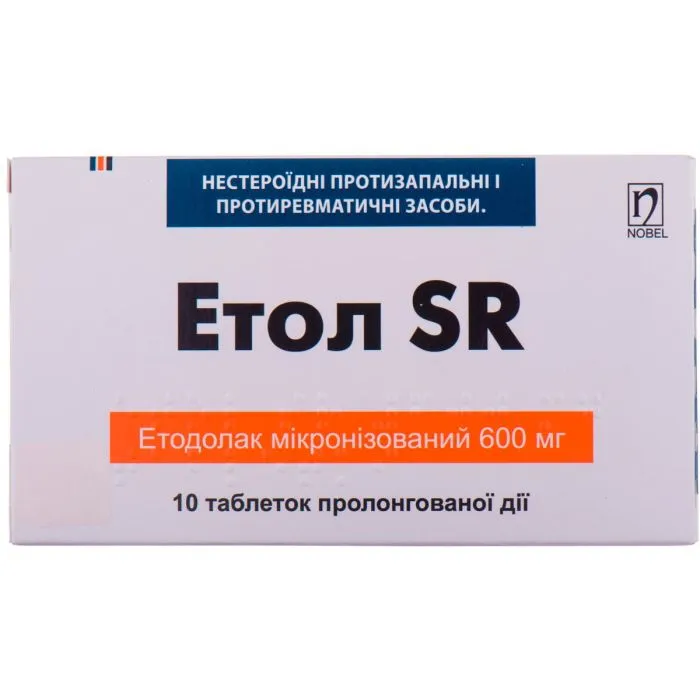
Table of Contents
INSTRUCTIONS FOR MEDICAL USE OF THE MEDICINAL PRODUCT ETOL SR (ETOL SR)
Composition:
Active substance: etodolac;
One tablet contains micronized etodolac 600 mg;
Excipients: hydroxypropylmethylcellulose, lactose monohydrate, sodium hydrogen phosphate dihydrate, ethylcellulose, talc, magnesium stearate;
Coating Opadry White YS-1-7003: titanium dioxide (E 171), hypromellose 3cP, hypromellose 6cP, polyethylene glycol 400, polysorbate 80.
Pharmaceutical form. Prolonged-release tablets.
Main physicochemical characteristics: oval, biconvex tablets coated with a white film coating.
Pharmacotherapeutic group.
Non-steroidal anti-inflammatory and antirheumatic drugs. Acetic acid derivatives and related compounds. ATC code M01AB08.
Pharmacological properties.
Pharmacodynamics.
Etodolac is a non-steroidal anti-inflammatory agent, a derivative of indoleacetic acid, differing from other non-steroidal anti-inflammatory drugs (NSAIDs) by the presence of a tetrahydropyranoindole nucleus. Etodolac possesses anti-inflammatory, analgesic, and antipyretic properties. The drug reduces the synthesis of prostaglandins (PGs) from arachidonic acid by inhibiting the enzyme cyclooxygenase (COX), thereby decreasing the sensitivity of receptors to pain mediators (histamine, bradykinin), reducing exudation, leukocyte migration, as well as the sensitivity of hypothalamic thermoregulatory centers to the action of endogenous pyrogens (interleukin-1). Etodolac has moderate selectivity towards COX-2; therefore, it primarily acts at the site of inflammation.
Pharmacokinetics.
When administered orally, etodolac is rapidly absorbed from the gastrointestinal tract. Maximum plasma concentration is reached within 1 hour and amounts to 18 μg/ml. Plasma protein binding is 95%, with the free fraction being 1.2–4.7%.
The elimination half-life from plasma is approximately 7 hours. Etodolac is metabolized in the liver and primarily excreted by the kidneys (up to 60% as metabolites). Volume of distribution is 0.4 L/kg; plasma clearance is 41 ml/h/kg. The bioavailability of etodolac is at least 80%. Food intake and antacids do not affect bioavailability.
Clinical characteristics.
Indications.
For emergency or long-term treatment of osteoarthritis, rheumatoid arthritis.
Contraindications.
Hypersensitivity to any component of the drug; history of hypersensitivity reactions (e.g., asthma attacks, urticaria, rhinitis, angioedema) due to intake of acetylsalicylic acid, ibuprofen, or other NSAIDs; active or recurrent peptic ulcer/bleeding in history (two or more separate confirmed episodes of ulcer or bleeding); gastrointestinal bleeding or perforation related to previous NSAID therapy in history; severe hepatic, renal, or cardiac insufficiency.
Interaction with other medicinal products and other types of interactions.
Since etodolac is protein-bound, dosage adjustment of other medicinal products that are also highly protein-bound may be required.
Other analgesics, including selective cyclooxygenase-2 inhibitors. Avoid concomitant use of two or more NSAIDs (including acetylsalicylic acid), as this increases the risk of adverse effects (see section "Special precautions for use").
Antihypertensive medicinal products. Reduces antihypertensive effect.
Diuretics. Diuretic effect is reduced. Diuretics increase the risk of NSAID-induced nephrotoxicity.
Cardiac glycosides. NSAIDs may exacerbate heart failure, reduce glomerular filtration rate, and increase blood levels of glycosides.
Lithium. Lithium excretion is reduced.
Methotrexate. Methotrexate excretion is reduced.
Cyclosporine. Cyclosporine-related nephrotoxicity may be increased.
Anticoagulants. NSAIDs may enhance the effect of anticoagulants such as warfarin (see section "Special precautions for use"). Prothrombin time may be prolonged when etodolac is used with other NSAIDs; therefore, when used with warfarin, the risk of bleeding increases.
Antiplatelet agents and selective serotonin reuptake inhibitors. Increased risk of gastrointestinal bleeding (see section "Special precautions for use").
Zidovudine. Increased risk of hematotoxicity when NSAIDs are used concomitantly with zidovudine. Evidence exists of increased risk of hemarthrosis and hematoma in HIV-positive patients with hemophilia who are concurrently taking zidovudine and ibuprofen.
Tacrolimus. Concomitant use of NSAIDs with tacrolimus increases the risk of nephrotoxicity.
Mifepristone. NSAIDs should not be used within 8–12 days after administration of mifepristone, as NSAIDs may reduce the efficacy of mifepristone.
Corticosteroids. Increased risk of gastrointestinal ulceration or bleeding (see section "Special precautions for use").
Quinolone antibiotics. Animal studies show that NSAIDs increase the risk of seizures associated with quinolone antibiotics. Patients receiving both NSAIDs and quinolone antibiotics have an increased risk of developing seizures.
Phenylbutazone. Concomitant use of phenylbutazone and etodolac is not recommended, as phenylbutazone increases (by approximately 80%) the free fraction of etodolac. In vivo studies have not been conducted.
Antacids. When antacids are used concomitantly, there is no effect on overall absorption of etodolac. Antacids may reduce peak concentration of etodolac by 15–20%, but do not have a significant impact on peak concentration.
Special precautions for use.
Adverse reactions can be minimized by using the lowest effective dose for the shortest duration necessary to control symptoms (see section "Dosage and administration" and information on gastrointestinal and cardiovascular risks below).
Concomitant use of etodolac with NSAIDs, including selective cyclooxygenase-2 inhibitors, should be avoided (see section "Interaction with other medicinal products and other forms of interaction").
Laboratory parameters.
False-positive results in bilirubin testing may occur during etodolac use due to the presence of phenolic metabolites of etodolac in urine.
Respiratory disorders.
Caution should be exercised when administering etodolac to patients with bronchial asthma, including those with a history of asthma, as NSAIDs may induce bronchospasm in such patients.
Cardiovascular, renal, and hepatic impairment.
In patients receiving NSAIDs, dose-dependent reduction in prostaglandin formation may occur, which may promote renal function decompensation. Patients at high risk for these reactions include those with impaired renal function, heart failure, hepatic dysfunction, patients taking diuretics and ACE inhibitors, and elderly patients. The dosage should be reduced and renal function monitored in these patients (see section "Contraindications").
Etodolac should be used with caution in patients with fluid retention, arterial hypertension, or heart failure.
Liver function, kidney function, and peripheral blood counts should be monitored regularly during prolonged etodolac therapy.
Platelets.
Although NSAIDs do not have a direct effect on platelets like aspirin, all these medicinal products may inhibit prostaglandin biosynthesis, which may affect platelet function. Patients in whom a negative effect on platelet function is possible should be monitored.
Elderly.
Generally, no dose adjustment is required in elderly patients. However, caution should be exercised when selecting the dose, especially when increasing the dose. The frequency of adverse reactions to NSAIDs, particularly gastrointestinal bleeding and perforations, which may be fatal, is increased in elderly patients (see section "Dosage and administration").
Cardiovascular and cerebrovascular disorders.
Careful monitoring is recommended in patients with arterial hypertension and/or a history of mild to moderate congestive heart failure, as fluid retention and edema have been observed during NSAID therapy.
Clinical trial data and epidemiological evidence suggest that the use of certain NSAIDs (particularly at high doses and during long-term treatment) may be associated with an increased risk of vascular thrombotic events (e.g., myocardial infarction or stroke). There is insufficient data to exclude such a risk with etodolac.
Etodolac therapy in patients with uncontrolled arterial hypertension, congestive heart failure, ischemic heart disease, peripheral arterial disease, and/or cerebrovascular disease should be initiated only after careful consideration.
A similar risk-benefit assessment is required before initiating long-term treatment in patients with cardiovascular risk factors (such as arterial hypertension, hyperlipidemia, diabetes mellitus, smoking).
Gastrointestinal disorders.
As with other NSAIDs, potentially fatal gastrointestinal bleeding, ulceration, or perforation may occur at any time during treatment, regardless of the presence of previous symptoms or serious gastrointestinal disease history.
The risk of gastrointestinal bleeding, ulceration, or perforation is higher with increasing NSAID doses, in patients with a history of peptic ulcer, especially complicated by bleeding or perforation (see section "Contraindications"), and in elderly patients. Such patients should start treatment with the lowest effective dose. For these patients, as well as for patients requiring concomitant use of low-dose acetylsalicylic acid or other medicinal products that increase gastrointestinal risks, combination therapy with protective agents (such as misoprostol or proton pump inhibitors) should be considered (see information below and section "Interaction with other medicinal products and other forms of interaction").
Patients with a history of gastrointestinal toxicity, particularly elderly patients, should be advised to report any unusual abdominal symptoms (especially gastrointestinal bleeding), particularly in the initial stages of treatment.
Caution is required in patients who are concurrently using medicinal products that increase the risk of ulceration or bleeding, such as oral corticosteroids, anticoagulants (e.g., warfarin), selective serotonin reuptake inhibitors (SSRIs), or antiplatelet agents such as acetylsalicylic acid (see section "Interaction with other medicinal products and other forms of interaction").
If gastrointestinal bleeding or ulceration occurs in patients taking etodolac, treatment should be discontinued.
NSAIDs should be used with caution in patients with a history of gastrointestinal disorders (e.g., ulcerative colitis, Crohn’s disease), as these conditions may worsen (see section "Adverse reactions").
Systemic lupus erythematosus and connective tissue diseases.
Patients with systemic lupus erythematosus and connective tissue diseases have an increased risk of developing aseptic meningitis (see section "Adverse reactions").
Skin disorders.
Serious skin reactions, some of which have been fatal, including exfoliative dermatitis, Stevens-Johnson syndrome, and toxic epidermal necrolysis, have very rarely been observed during NSAID use (see section "Adverse reactions"). The highest risk of such reactions occurs early in treatment, with most cases appearing within the first month of therapy. Etodolac should be discontinued at the first appearance of skin rash, mucosal lesions, or other signs of hypersensitivity.
Fertility.
Etodolac may affect reproductive function. The drug is not recommended for women who are trying to become pregnant. For women planning pregnancy or undergoing infertility evaluation, discontinuation of etodolac should be considered.
The product contains lactose and therefore should not be used in patients with hereditary galactose intolerance, Lapp lactase deficiency, or glucose-galactose malabsorption.
Excipients.
This medicinal product contains 27.14 mg of sodium per dose. Caution is advised when administering to patients on a sodium-controlled diet.
Use during pregnancy or breastfeeding.
The drug is contraindicated during pregnancy and breastfeeding.
Ability to affect reaction speed when driving or operating machinery.
Etodolac may cause dizziness, drowsiness, weakness, and visual disturbances (vision disorders). Patients should be aware of this when driving or operating machinery. If such reactions occur, patients should avoid driving or operating machinery.
Administration and Dosage.
Adults: the recommended single dose of Etol SR is 600 mg. The drug should be taken once daily, one tablet during or after a meal. The tablet should be swallowed whole with a glass of water.
To minimize the risk of adverse reactions, the lowest effective dose should be used for the shortest duration necessary.
If lower doses are required, the use of the drug ETOLE FORTE at a dose of 400 mg is recommended.
Children.
The safety and efficacy of etodolac in children have not been established; therefore, it should not be used in pediatric practice.
Overdose.
Symptoms.
Symptoms of overdose include headache, nausea, vomiting, epigastric pain, gastrointestinal bleeding, rarely diarrhea, disorientation, excitement, coma, drowsiness, dizziness, tinnitus, fainting, and sometimes seizures. In cases of significant overdose, acute renal failure and liver damage may occur.
Treatment.
Symptomatic treatment. Within 1 hour after ingestion of a potentially toxic amount of the drug, activated charcoal should be administered. In adults, gastric lavage should be performed within 1 hour after ingestion of a life-threatening amount of the drug. Adequate diuresis should be maintained, and renal and hepatic functions should be monitored. Patients should be observed for at least 4 hours after ingestion of a potentially toxic amount of the drug. In case of frequent and prolonged seizures, intravenous diazepam should be administered. Depending on the patient's clinical condition, other interventions may be necessary.
Side effects.
The most common adverse reactions were gastrointestinal disorders.
Blood system disorders: thrombocytopenia, neutropenia, leukopenia, pancytopenia, agranulocytosis, anemia, aplastic anemia, hemolytic anemia, prolonged bleeding time, lymphadenopathy.
Immune system disorders: hypersensitivity reactions have been reported with the use of NSAIDs: non-specific allergic reactions and anaphylaxis; anaphylactoid reactions; respiratory tract reactivity, including bronchial asthma, exacerbation of bronchial asthma, bronchospasm, and dyspnea; mixed skin disorders, including various types of rashes, pruritus, urticaria, purpura, angioneurotic edema, and less frequently – exfoliative and bullous dermatoses (including epidermal necrolysis and erythema multiforme).
Nervous system disorders: depression, headache, dizziness, insomnia, confusion, altered consciousness, hallucinations, disorientation (see section "Special precautions"), paresthesia, tremor, weakness, nervousness, excitement, convulsions, coma, somnolence, taste alteration, aseptic meningitis (particularly in patients with autoimmune diseases such as systemic lupus erythematosus and connective tissue disorders), with symptoms such as nuchal rigidity, headache, nausea, vomiting.
Eye disorders: visual disturbances, optic neuritis, blurred vision, photophobia, conjunctivitis.
Ear and labyrinth disorders: tinnitus, vertigo, deafness.
Cardiovascular system disorders: edema, arterial hypertension, arrhythmia, palpitations, heart failure, vasculitis, flushing.
Data from clinical trials and epidemiological studies suggest that the use of certain NSAIDs (particularly at high doses and during prolonged treatment) may be associated with an increased risk of thrombotic events (e.g., myocardial infarction or stroke) (see section "Special precautions").
Gastrointestinal disorders: peptic ulcer, gastrointestinal perforation or gastrointestinal bleeding, sometimes fatal, especially in elderly patients (see section "Special precautions"), nausea, vomiting, diarrhea, dyspepsia, epigastric pain, abdominal pain, ulcerative stomatitis, constipation, flatulence, hematemesis, melena, gastrointestinal ulcers, digestive disturbances, heartburn, rectal bleeding, exacerbation of colitis and Crohn's disease (see section "Special precautions"), gastritis, pancreatitis, glossitis, thirst, dry mouth, anorexia, belching, duodenitis, esophagitis with or without strictures or cardiospasm.
Hepatobiliary disorders: liver function abnormalities (bilirubinuria), increased liver enzyme activity, hepatitis, cholestatic hepatitis, jaundice, cholestatic jaundice, liver failure, liver necrosis.
Skin and subcutaneous tissue disorders: bullous reactions, including Stevens-Johnson syndrome and toxic epidermal necrolysis, photosensitivity, increased sweating, hyperpigmentation, alopecia, skin desquamation, ecchymoses.
Renal and urinary disorders: dysuria, increased frequency of urination, various forms of nephrotoxicity, including interstitial nephritis, nephrotic syndrome, renal failure, elevated blood urea levels, elevated creatinine levels, renal papillary necrosis, oliguria/polyuria, proteinuria, hematuria, cystitis, kidney stones.
Respiratory system disorders: pulmonary infiltration with eosinophilia, bronchitis, pharyngitis, rhinitis, sinusitis, respiratory depression, pneumonia, epistaxis.
General disorders: increased fatigue, weakness, asthenia, chills, elevated body temperature, disturbances in water-electrolyte balance, hypernatremia, hyperkalemia.
Other: leukorrhea, irregular uterine bleeding, hyperglycemia in patients with controlled blood sugar levels, changes in body weight, infections, sepsis, fatal cases.
Shelf life. 2 years.
Storage conditions.
Store at temperatures not exceeding 25 °C in the original packaging.
Keep out of reach of children.
Packaging.
10 tablets in a blister. 1 blister in a cardboard box.
14 tablets in a blister. 1 blister in a cardboard box.
Prescription category. Prescription only.
Manufacturer.
NOBEL ILAC SANAYI VE TICARET A.S.
Manufacturer's address and place of business.
Sankaklar Quarter, Eskisehir Yolu Akcakoca Street No: 299, 81100 Duzce, Turkey.