Espa-lipon® 600
Ukraine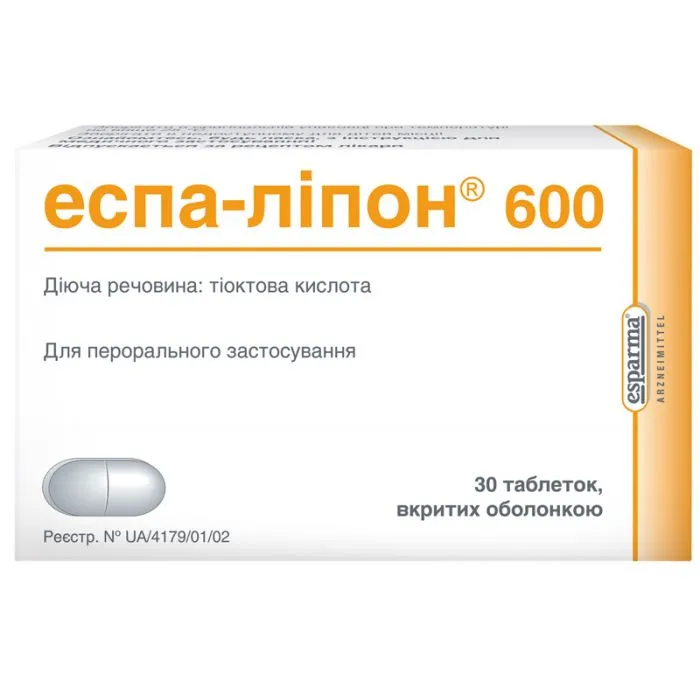
Table of Contents
- INSTRUCTION FOR MEDICAL USE OF THE MEDICINAL PRODUCT ESPA-LIPON® 600 (ESPA-LIPON® 600)
- Composition:
- Pharmacological properties.
- Clinical characteristics.
- Special precautions for use
- Dosage and Administration.
- Adverse reactions.
- Composition:
- Pharmacological properties.
- Clinical characteristics.
- Special precautions for use
- Method of Administration and Dosage
- Adverse Reactions
INSTRUCTION FOR MEDICAL USE OF THE MEDICINAL PRODUCT ESPA-LIPON® 600 (ESPA-LIPON® 600)
Composition:
Active ingredient: thioctic acid (thioctic acid);
One tablet contains 600 mg of thioctic acid;
Excipients: lactose monohydrate, povidone, microcrystalline cellulose, powdered cellulose, highly dispersed silicon dioxide, precipitated silicon dioxide, sodium starch glycolate (type A), magnesium stearate, hypromellose, macrogol 6000, talc, titanium dioxide (E 171), quinoline yellow (E 104).
Pharmaceutical form. Film-coated tablets.
Main physicochemical properties: film-coated, elongated-shaped tablets, yellow in color, with a score line for breaking.
Pharmacotherapeutic group.
Agents affecting the digestive system and metabolic processes. Thioctic acid.
ATC code A16AX01.
Pharmacological properties.
Pharmacodynamics.
Thioctic acid is a substance produced in the body and acts as a coenzyme in the oxidative decarboxylation of α-keto acids. Hyperglycemia caused by diabetes mellitus leads to glucose deposition on vascular matrix proteins and formation of advanced glycation end-products. This process results in reduced endoneurial blood flow and endoneurial hypoxia/ischemia, associated with increased production of free oxygen radicals that damage nerves, as well as depletion of the antioxidant glutathione in peripheral nerves. In 1995, a multicenter, placebo-controlled study was conducted to evaluate the efficacy of thioctic acid in the symptomatic treatment of diabetic polyneuropathy, which demonstrated favorable effects of thioctic acid on studied symptoms such as paresthesia, burning sensations, numbness, and pain.
Pharmacokinetics.
Thioctic acid undergoes a high first-pass effect in the liver. There are significant interindividual differences in the systemic availability of thioctic acid. Biotransformation of thioctic acid occurs via side-chain oxidation and conjugation. Elimination occurs predominantly via the kidneys.
In humans, the plasma half-life is approximately 25 minutes, and total plasma clearance ranges from 10 to 15 mL/min/kg. At the end of a 30-minute infusion of 600 mg, the plasma concentration reaches approximately 20 µg/mL. Radioactive labeling studies in animals (rats, dogs) have shown that 80–90% of the drug is predominantly excreted as metabolites. Similarly, in humans, only a small amount of unchanged substance is excreted in urine. Biotransformation occurs mainly through oxidative shortening of side chains (beta-oxidation) and/or S-methylation of thiol groups.
Clinical characteristics.
Indications.
Symptomatic treatment of diabetic polyneuropathy.
Contraindications.
Hypersensitivity to thioctic acid or to any of the other components of the medicinal product.
Interaction with other medicinal products and other forms of interaction.
The efficacy of cisplatin is reduced when administered concomitantly with this product. Thioctic acid is a metal chelator; therefore, according to basic principles of pharmacotherapy, it should not be administered simultaneously with metal-containing compounds (e.g., dietary supplements containing iron or magnesium, or dairy products, as they contain calcium). If the total daily dose of the product is administered 30 minutes before breakfast, dietary supplements containing iron and magnesium should be taken during the day or in the evening. In diabetic patients receiving thioctic acid, an enhanced glucose-lowering effect of insulin and oral antidiabetic agents may occur; therefore, especially during the initial phase of treatment, careful monitoring of blood glucose levels is recommended. To avoid symptoms of hypoglycemia, in some cases a reduction in the dose of insulin or oral antidiabetic agents may be necessary.
Special precautions for use
The main factor in effective treatment of diabetic polyneuropathy is optimal control of the patient's blood glucose levels. At the beginning of treatment for polyneuropathy, transient intensification of paresthesia with a sensation of "pins and needles" may occur due to regenerative processes. When using thioctic acid, patients with diabetes mellitus require frequent monitoring of blood glucose levels. In some cases, it may be necessary to reduce the doses of antidiabetic medications to prevent the development of hypoglycemia. Regular consumption of alcohol is a significant risk factor for the development and progression of polyneuropathy and may interfere with successful treatment; therefore, alcohol consumption should be avoided during treatment and between treatment courses.
The preparation contains lactose and therefore should not be used in patients with rare hereditary conditions such as galactose intolerance, lactase deficiency, or glucose-galactose malabsorption syndrome.
There has been one reported case of autoimmune insulin syndrome (AIS) during treatment with thioctic acid. Patients with certain HLA (human leukocyte antigen) genotypes, such as HLA-DRB1*04:06 and HLA-DRB1*04:03, are more susceptible to developing AIS when treated with thioctic acid. The HLA-DRB1*04:03 allele (relative risk ratio for AIS – 1.6) is predominantly found among Caucasian populations, with higher prevalence in Southern Europe compared to Northern Europe. The HLA-DRB1*04:06 allele (relative risk ratio for AIS – 56.6) is predominantly found in patients from Japan and Korea. The possibility of developing AIS should be considered in patients receiving thioctic acid when making a differential diagnosis of spontaneous hypoglycemia (see section "Adverse reactions").
Use during pregnancy or breastfeeding
Fertility
Toxicity studies on reproductive function have shown no evidence of effects on fertility.
Pregnancy
Espa-Lipon® 600 may be used during pregnancy only after careful assessment of the benefit-risk ratio.
Lactation
There are no data on the passage of thioctic acid or its metabolites into breast milk. A decision should be made whether to discontinue breastfeeding or to discontinue therapy with Espa-Lipon® 600, taking into account the benefit of breastfeeding for the child and the benefit of therapy for the woman.
Ability to affect reaction speed when driving or operating machinery
During treatment, caution should be exercised when driving or engaging in other potentially hazardous activities that require heightened attention and rapid psychomotor responses.
Dosage and Administration.
Adults.
Dosage
The daily dose is 1 tablet of Espa-Lipon® 600 (equivalent to 600 mg of thioctic acid), taken once daily approximately 30 minutes before the first meal. In cases of severe paresthesia, treatment may be initiated with intravenous thioctic acid therapy.
Administration
Espa-Lipon® 600 tablets should be taken on an empty stomach, swallowed whole with sufficient fluid. Concomitant food intake may impair absorption; therefore, it is particularly important for patients with delayed gastric emptying to take the medication 30 minutes before breakfast. Since diabetic polyneuropathy is a chronic condition, long-term therapy may be required. Optimal glycemic control is the cornerstone of treatment for diabetic polyneuropathy.
Children.
Due to lack of data on safety and efficacy of thioctic acid in pediatric patients, the drug is not recommended for use in this age group.
Overdose.
In cases of overdose, nausea, vomiting, and headache may occur. Following accidental ingestion or in suicide attempts involving oral administration of thioctic acid in doses ranging from 10 g to 40 g in combination with alcohol, severe intoxications have been observed, some resulting in fatal outcomes. In the initial phase, clinical manifestations of intoxication may include psychomotor agitation or impaired consciousness. This may progress to generalized seizures and lactic acidosis. Additionally, high-dose thioctic acid intoxication has been associated with hypoglycemia, shock, acute necrosis of skeletal muscles, hemolysis, disseminated intravascular coagulation syndrome, bone marrow suppression, and multi-organ failure.
Treatment. In suspected cases of severe intoxication, immediate hospitalization is recommended, along with measures in accordance with general principles of acute poisoning management (e.g., induction of emesis, gastric lavage, activated charcoal administration). Management of life-threatening complications such as generalized seizures and lactic acidosis should follow modern intensive care principles and be symptomatic. To date, the benefit of hemodialysis, hemoperfusion, or forced elimination techniques for removing thioctic acid has not been established.
Adverse reactions.
The following classification was used to assess the frequency of adverse events:
very common: ≥ 1/10;
common: ≥ 1/100 – < 1/10;
uncommon: ≥ 1/1000 – < 1/100;
rare: ≥ 1/10000 – < 1/1000;
very rare: < 1/10000;
not known: cannot be estimated based on available data.
Immune system disorders.
Very rare: allergic reactions, including skin rashes, urticaria (hives), pruritus, dyspnea.
Not known: autoimmune insulin syndrome (see section "Special precautions"), eczema.
Metabolism and nutrition disorders.
Very rare: hypoglycemia.
Nervous system disorders.
Common: dizziness.
Very rare: dysgeusia, headache, hyperhidrosis.
Eye disorders.
Very rare: visual disturbances.
Gastrointestinal disorders.
Common: nausea.
Very rare: vomiting, gastrointestinal pain, diarrhea.
General disorders.
Very rare: decreased blood glucose levels associated with improved glucose utilization. Symptoms resembling hypoglycemia: dizziness, sweating, headache, and visual disturbances.
Shelf life.
2 years.
Storage conditions.
Store in the original packaging at a temperature not exceeding 25 °C.
Keep out of reach of children.
Packaging.
10 film-coated tablets in a blister, 3 blisters in a cardboard pack.
Prescription status.
Prescription only.
Manufacturer.
Laboratorios Medicamentos Internacionales, S.A.
Manufacturer's address.
Calle Solana, 26, Torrejón de Ardoz, 28850, Madrid, Spain.
Marketing authorization holder.
Esparma GmbH, Germany.
Address of the marketing authorization holder.
Bielefelder Strasse 1, 39171 Seulingen, Germany.
INSTRUCTIONS
for medical use of the medicinal product
ESPA-LIPON® 600
(ESPA-LIPON® 600)
Composition:
Active substance: thioctic acid (thioctic acid);
One tablet contains 600 mg of thioctic acid;
Excipients: lactose monohydrate, povidone, microcrystalline cellulose, powdered cellulose, highly dispersed silicon dioxide, precipitated silicon dioxide, sodium starch glycolate (type A), magnesium stearate, hypromellose, macrogol 6000, talc, titanium dioxide (E 171), quinoline yellow (E 104).
Pharmaceutical form. Film-coated tablets.
Main physico-chemical properties: yellow, elongated film-coated tablets with a score line.
Pharmacotherapeutic group.
Agents affecting the digestive system and metabolic processes. Thioctic acid.
ATC code A16AX01.
Pharmacological properties.
Pharmacodynamics.
Thioctic acid is a substance produced in the body and acts as a coenzyme in the oxidative decarboxylation of α-keto acids. Hyperglycemia caused by diabetes mellitus leads to glucose deposition on vascular matrix proteins and the formation of advanced glycation end-products. This process results in reduced endoneurial blood flow and endoneurial hypoxia/ischemia, associated with increased production of free oxygen radicals that damage nerves, as well as depletion of the antioxidant glutathione in peripheral nerves. In 1995, a multicenter placebo-controlled study was conducted to evaluate the efficacy of thioctic acid in the symptomatic treatment of diabetic polyneuropathy, which demonstrated favorable effects of thioctic acid on investigated symptoms such as paresthesia, burning sensation, numbness, and pain.
Pharmacokinetics.
Thioctic acid exhibits a high first-pass effect in the liver. There are significant interindividual differences in the systemic availability of thioctic acid. Biotransformation of thioctic acid occurs via side chain oxidation and conjugation. Elimination is primarily renal.
In humans, the plasma half-life is approximately 25 minutes, and total plasma clearance ranges from 10 to 15 ml/min/kg. At the end of a 30-minute infusion of 600 mg, the plasma concentration reaches about 20 μg/ml. Radioactive labeling studies in animals (rats, dogs) have shown that 80–90% of the drug is predominantly excreted as metabolites. Similarly, in humans, only a small amount of unchanged substance is excreted in urine. Biotransformation occurs mainly through oxidative shortening of side chains (beta-oxidation) and/or S-methylation of thiol groups.
Clinical characteristics.
Indications.
Symptomatic treatment of diabetic polyneuropathy.
Contraindications.
Hypersensitivity to thioctic acid or to any of the other components of the medicinal product.
Interaction with other medicinal products and other forms of interaction.
The efficacy of cisplatin is reduced when administered concomitantly with this product. Thioctic acid is a metal chelator; therefore, according to basic principles of pharmacotherapy, it should not be administered simultaneously with metal-containing compounds (e.g., iron- or magnesium-containing dietary supplements, dairy products, which contain calcium). If the total daily dose of the product is administered 30 minutes before breakfast, iron- and magnesium-containing dietary supplements should be taken at midday or in the evening. In diabetic patients, thioctic acid may enhance the glucose-lowering effect of insulin and oral antidiabetic agents; therefore, especially during the initial phase of treatment, careful monitoring of blood glucose levels is recommended. To avoid symptoms of hypoglycemia, in some cases it may be necessary to reduce the dose of insulin or oral antidiabetic agents.
Special precautions for use
The main factor in effective treatment of diabetic polyneuropathy is optimal control of the patient's blood glucose levels. At the beginning of treatment of polyneuropathy, transient intensification of paresthesia with sensations of "crawling ants" may occur due to regenerative processes. When using thioctic acid in patients with diabetes mellitus, frequent monitoring of blood glucose levels is required. In some cases, it may be necessary to reduce the doses of antidiabetic drugs to prevent the development of hypoglycemia. Regular consumption of alcohol is a significant risk factor for the development and progression of polyneuropathy and may interfere with successful treatment; therefore, alcohol consumption should be avoided during treatment and between treatment courses.
The product contains lactose and therefore should not be used in patients with rare hereditary conditions such as galactose intolerance, lactase deficiency, or glucose-galactose malabsorption syndrome.
One case of autoimmune insulin syndrome (AIS) has been reported during treatment with thioctic acid. Patients with certain HLA (human leukocyte antigen) genotypes, such as HLA-DRB1*04:06 and HLA-DRB1*04:03, are more susceptible to developing AIS during treatment with thioctic acid. The HLA-DRB1*04:03 allele (relative risk ratio for AIS – 1.6) is predominantly found in individuals of Caucasian descent, with higher prevalence in Southern Europe than in Northern Europe. The HLA-DRB1*04:06 allele (relative risk ratio for AIS – 56.6) is predominantly found in patients from Japan and Korea. The possibility of developing AIS should be considered in patients receiving thioctic acid when making a differential diagnosis of spontaneous hypoglycemia (see section "Adverse reactions").
Use during pregnancy or breastfeeding
Fertility
Toxicological studies on reproductive function have shown no evidence of effects on fertility.
Pregnancy
Espa-Lipon® 600 may be used during pregnancy only after careful assessment of the benefit-risk ratio.
Lactation
There are no data on the passage of thioctic acid or its metabolites into breast milk. A decision should be made whether to discontinue breastfeeding or to discontinue therapy with Espa-Lipon® 600, taking into account the benefit of breastfeeding for the child and the benefit of therapy for the woman.
Effect on ability to drive and operate machinery
During treatment, caution should be exercised when driving or engaging in other potentially hazardous activities that require increased attention and rapid psychomotor responses.
Method of Administration and Dosage
Adults.
Dosage
The daily dose is 1 tablet of Espa-Lipon® 600 (equivalent to 600 mg of thioctic acid), taken once daily approximately 30 minutes before the first meal. In cases of severe paresthesia, treatment may be initiated with intravenous infusion therapy with thioctic acid.
Method of Administration
Espa-Lipon® 600 tablets should be taken on an empty stomach, swallowed whole with sufficient fluid. Concomitant food intake may impair absorption; therefore, it is especially important for patients with delayed gastric emptying to take the medication 30 minutes before breakfast. Since diabetic polyneuropathy is a chronic condition, long-term therapy may be required. Optimal glycemic control is the cornerstone of treatment for diabetic polyneuropathy.
Children.
As data on the safety and efficacy of thioctic acid in children are lacking, the drug is not recommended for use in this age group.
Overdose.
In cases of overdose, symptoms such as nausea, vomiting, and headache may occur. Following accidental ingestion or suicide attempts involving oral administration of thioctic acid at doses ranging from 0.5 g to 40 g in combination with alcohol, severe intoxications have been observed, in some cases resulting in death. In the initial phase, the clinical picture of intoxication may present as psychomotor agitation or impaired consciousness. This may progress to generalized seizures and lactic acidosis. Additionally, with high-dose thioctic acid intoxication, hypoglycemia, shock, acute necrosis of skeletal muscles, hemolysis, disseminated intravascular coagulation syndrome, bone marrow suppression, and multiorgan failure have been reported.
Treatment. In suspected cases of severe intoxication, immediate hospitalization is recommended, along with measures according to general principles for managing accidental poisoning (e.g., induction of emesis, gastric lavage, administration of activated charcoal). Treatment of life-threatening complications such as generalized seizures and lactic acidosis should be carried out in accordance with modern intensive care principles and should be symptomatic. To date, the benefit of hemodialysis, hemoperfusion, or forced elimination techniques for removing thioctic acid has not been established.
Adverse Reactions
For assessment of the frequency of adverse reactions, the following classification was used:
Very common: ≥ 1/10;
Common: ≥ 1/100 to < 1/10;
Uncommon: ≥ 1/1000 to < 1/100;
Rare: ≥ 1/10000 to < 1/1000;
Very rare: < 1/10000;
Not known: cannot be estimated based on available data.
Immune system disorders
Very rare: allergic reactions, including skin rashes, urticaria (hives), pruritus, dyspnea.
Not known: autoimmune insulin syndrome (see section "Special precautions"), eczema.
Metabolism and nutrition disorders
Very rare: hypoglycemia.
Nervous system disorders
Common: dizziness.
Very rare: dysgeusia, headache, hyperhidrosis.
Eye disorders
Very rare: visual disturbances.
Gastrointestinal disorders
Common: nausea.
Very rare: vomiting, gastrointestinal pain, diarrhea.
General disorders
Very rare: decreased blood glucose levels associated with improved glucose utilization. Symptoms resembling hypoglycemia: dizziness, sweating, headache, and visual disturbances.
Shelf life
2 years.
Storage conditions
Store in the original packaging at a temperature not exceeding 25 °C.
Keep out of reach of children.
Packaging
10 film-coated tablets per blister, 3 blisters per cardboard pack.
Prescription status
Prescription only.
Manufacturer
Advans Pharma GmbH.
Manufacturer's address
Wallenroder Str. 8-14, 13435 Berlin, Germany.
Marketing Authorization Holder
Esparma GmbH, Germany.
Address of the Marketing Authorization Holder
Bielefelder Strasse 1, 39171 Schöningen, Germany.