Ertapenem-vista
Ukraine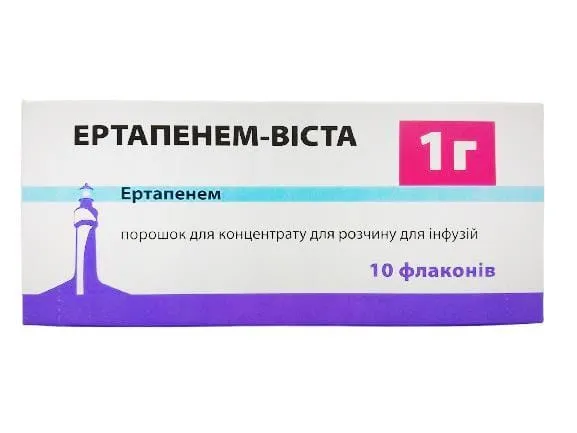
Table of Contents
- INSTRUCTIONS FOR MEDICAL USE OF THE MEDICINAL PRODUCT ERTAPENEM-VISTA (ERTAPENEM-VISTA)
- Composition:
- Pharmacological properties.
- Methicillin-resistant staphylococci (including MRSA) are always resistant to beta-lactams.
- Clinical characteristics.
- Special precautions for use.
- Administration and Dosage.
- Adverse Reactions
INSTRUCTIONS FOR MEDICAL USE OF THE MEDICINAL PRODUCT ERTAPENEM-VISTA (ERTAPENEM-VISTA)
Composition:
Active substance: ertapenem;
1 vial contains ertapenem sodium equivalent to ertapenem 1 g;
Excipients: sodium hydrogencarbonate, sodium hydroxide.
Pharmaceutical form. Powder for concentrate for solution for infusion.
Main physicochemical properties: powder from white to yellowish.
Pharmacotherapeutic group. Antibacterials for systemic use. Beta-lactam antibiotics. Carbapenems. ATC code J01D H03.
Pharmacological properties.
Pharmacodynamics.
Mechanism of action.
Ertapenem inhibits bacterial cell wall synthesis by binding to penicillin-binding proteins (PBPs). In Escherichia coli, it shows stronger binding affinity to PBP 2 and PBP 3.
Mechanism of resistance.
Resistance among strains considered sensitive to ertapenem has been infrequently observed in surveillance studies in Europe. In some resistant strains, cross-resistance to other carbapenem-class antibacterial agents has been noted. Ertapenem is stable against hydrolysis by most classes of beta-lactamases, including penicillinases, cephalosporinases, and extended-spectrum beta-lactamases, but not metallo-beta-lactamases.
Methicillin-resistant staphylococci and enterococci are resistant to ertapenem due to insensitivity of target PBPs; P. aeruginosa and other non-fermenting bacteria are generally resistant, likely due to limited cellular penetration and active efflux.
Resistance among organisms belonging to the family Enterobacteriaceae is rare, and ertapenem is usually active against extended-spectrum beta-lactamases. However, resistance may occur when extended-spectrum beta-lactamases or other potent beta-lactamases (e.g., AmpC-type) are present in combination with reduced permeability due to loss of one or more outer membrane proteins or active efflux mechanisms. Resistance may also arise through acquisition of beta-lactamases with significant carbapenem-hydrolyzing activity (e.g., metallo-beta-lactamases of the IMP, VIM, or KPC types), although this is a rare phenomenon.
The mechanism of action of ertapenem differs from that of other antibiotic classes, such as quinolones, aminoglycosides, macrolides, and tetracyclines. There is no cross-resistance between ertapenem and these agents. However, microorganisms may exhibit resistance to more than one class of antibacterial agents if the resistance mechanism involves impermeability to certain compounds and/or efflux pumps.
Breakpoints.
The minimal inhibitory concentration (MIC) breakpoints established by the European Committee on Antimicrobial Susceptibility Testing (EUCAST) are as follows:
- Enterobacterales: susceptible ≤ 0.5 mg/L and resistant > 0.5 mg/L;
- Streptococcus pneumoniae: susceptible ≤ 0.5 mg/L and resistant > 0.5 mg/L;
- Haemophilus influenzae: susceptible ≤ 0.5 mg/L and resistant > 0.5 mg/L;
- M. catarrhalis: susceptible ≤ 0.5 mg/L and resistant > 0.5 mg/L;
- anaerobic gram-negative microorganisms: susceptible ≤ 0.5 mg/L and resistant > 0.5 mg/L;
- anaerobic gram-positive microorganisms: susceptible ≤ 0.5 mg/L and resistant > 0.5 mg/L;
- Viridans group streptococci: susceptible ≤ 0.5 mg/L and resistant > 0.5 mg/L;
- non-species-related breakpoints: susceptible ≤ 0.5 mg/L and resistant > 0.5 mg/L.
Note: Susceptibility of staphylococci to ertapenem is determined based on methicillin susceptibility, and susceptibility of streptococci groups A, B, C, and G is determined based on benzylpenicillin susceptibility.
Local MIC breakpoints, if available, should also be taken into account. Microorganism susceptibility.
The prevalence of acquired resistance in specific species may vary over time and by geographical region; therefore, information on local resistance patterns is highly valuable, especially when treating severe infections. Localized outbreaks of infections caused by carbapenem-resistant microorganisms have been reported in the European Union. Approximate susceptibility rates of microorganisms to ertapenem are provided below.
Intermediate susceptible strains.
Anaerobic gram-positive microorganisms: methicillin-resistant staphylococci (including Staphylococcus aureus)*, Streptococcus agalactiae*, Streptococcus pneumoniae *†, Streptococcus pyogenes.
Anaerobic gram-negative microorganisms: Citrobacter freundii, Enterobacter aerogenes, Enterobacter cloacae, Escherichia coli*, Haemophilus influenzae*, Haemophilus parainfluenzae, Klebsiella oxytoca, Klebsiella pneumoniae*, Moraxella catarrhalis*, Morganella morganii, Proteus mirabilis*, Proteus vulgaris, Serratia marcescens.
Anaerobic microorganisms: Clostridium strains (except C. difficile)*, Eubacterium strains*, Fusobacterium strains*, Peptostreptococcus strains*, Porphyromonas asaccharolytica*, Prevotella strains*.
Strains that may develop resistance
Aerobic gram-positive microorganisms: methicillin-resistant staphylococci+#. Anaerobic microorganisms: Bacteroides fragilis and other species within the B. fragilis group*.
Organisms with inherent resistance
Aerobic gram-positive microorganisms: Corynebacterium jeikeium, enterococci, including Enterococcus faecalis and Enterococcus faecium.
Aerobic gram-negative microorganisms: Aeromonas strains, Acinetobacter strains, Burkholderia cepacia, Pseudomonas aeruginosa, Stenotrophomonas maltophilia.
Anaerobic microorganisms: Lactobacillus strains.
Others: Chlamydia strains, Mycoplasma strains, Rickettsia strains, Legionella strains.
* Adequate activity observed in clinical studies.
† The efficacy of ertapenem for treatment of community-acquired pneumonia caused by penicillin-resistant Streptococcus pneumoniae has not been established.
- Acquired resistance frequency > 50%.
Methicillin-resistant staphylococci (including MRSA) are always resistant to beta-lactams.
Information from clinical studies.
Studies on efficacy in pediatric practice.
Randomized, comparative, multicenter studies involving patients aged 3 months to 17 years primarily assessed safety, followed by evaluation of efficacy of ertapenem in pediatric practice.
The proportion of patients achieving favorable clinical response at the end of treatment and those who completed treatment is presented in Table 1.
Table 1
| Type of disease† |
Age group |
Ertapenem |
Ceftriaxone |
||
| n/m |
% |
n/m |
% |
||
| Community-acquired pneumonia (CAP) |
From 3 to 23 months |
31/35 |
88.6 |
13/13 |
100.0 |
| From 2 to 12 years |
55/57 |
96.5 |
16/17 |
94.1 |
|
| From 13 to 17 years |
3/3 |
100.0 |
3/3 |
100.0 |
|
| Type of disease |
Age group |
Ertapenem |
Ticarcillin/clavulanate |
||
| n/m |
% |
n/m |
% |
||
| Intra-abdominal infections (IAI) |
From 2 to 12 years |
28/34 |
82.4 |
7/9 |
77.8 |
| From 13 to 17 years |
15/16 |
93.8 |
4/6 |
66.7 |
|
| Acute pelvic infections (API) |
From 13 to 17 years |
25/25 |
100.0 |
8/8 |
100.0 |
† 9 patients in the ertapenem group (7 patients with cIAI and 2 patients with ABSSI) and 2 patients in the ceftriaxone group (2 patients with cIAI) and 1 patient with ABSSI in the ticarcillin/clavulanate group had secondary bacteremia at the time of study entry.
n/m — number of patients with positive assessment / number of patients assessed at the post-treatment visit.
Pharmacokinetics.
Plasma concentrations.
Mean plasma concentrations of ertapenem after a single 30-minute intravenous infusion of 1 g in healthy young adult volunteers (aged 25 to 45 years) were 155 mcg/mL (Cmax) at 0.5 hours after dose administration (end of infusion), 9 mcg/mL at 12 hours after dose administration, and 1 mcg/mL at 24 hours after dose administration.
The area under the plasma concentration-time curve (AUC) of ertapenem in adults increases almost proportionally with dose over the dose range of 0.5 g to 2 g.
No accumulation of ertapenem was observed in adult patients after multiple intravenous doses ranging from 0.5 g to 2 g per day.
Mean plasma concentrations of ertapenem after a single 30-minute intravenous infusion of 15 mg/kg (up to a maximum dose of 1 g) in patients aged 3 to 23 months were 103.8 mcg/mL (Cmax) at 0.5 hours after dose administration (end of infusion), 13.5 mcg/mL at 6 hours after dose administration, and 2.5 mcg/mL at 12 hours after dose administration.
Mean plasma concentrations of ertapenem after a single 30-minute intravenous infusion of 15 mg/kg (up to a maximum dose of 1 g) in patients aged 2 to 12 years were 113.2 mcg/mL (Cmax) at 0.5 hours after dose administration (end of infusion), 12.8 mcg/mL at 6 hours after dose administration, and 3 mcg/mL at 12 hours after dose administration.
Mean plasma concentrations of ertapenem after a single 30-minute intravenous infusion of 20 mg/kg (up to a maximum dose of 1 g) in patients aged 13 to 17 years were 170.4 mcg/mL (Cmax) at 0.5 hours after dose administration (end of infusion), 7 mcg/mL at 12 hours after dose administration, and 1.1 mcg/mL at 24 hours after dose administration.
Mean plasma concentrations of ertapenem after a single 30-minute intravenous infusion of 1 g in three patients aged 13 to 17 years were 155.9 mcg/mL (Cmax) at 0.5 hours after dose administration (end of infusion) and 6.2 mcg/mL at 12 hours after dose administration.
Distribution.
Ertapenem is highly bound to human plasma proteins. In healthy young adult volunteers (aged 25 to 45 years), the plasma protein binding of ertapenem decreases as plasma concentration increases, from approximately 95% binding at a plasma concentration of < 50 mcg/mL to approximately 92% binding at a plasma concentration of 155 mcg/mL (achieving the mean concentration at the end of infusion after intravenous administration of a 1 g dose).
The volume of distribution (Vdss) of ertapenem is approximately 8 liters (0.11 L/kg) in adults, approximately 0.2 L/kg in children aged 3 months to 12 years, and approximately 0.16 L/kg in adolescents aged 13 to 17 years.
Concentrations of ertapenem in blister fluid in adult patients on Day 3 of intravenous administration at a dose of 1 g per day indicate that the ratio of AUC in blister fluid to AUC in plasma is 0.61. In vitro studies indicate that the effect of ertapenem on the protein binding of highly protein-bound drugs (warfarin, ethinyl estradiol, and norethindrone) is minimal. The change in binding is < 12% at the maximum plasma concentration of ertapenem after a 1 g dose. In vivo administration of probenecid (500 mg every 6 hours) reduced the bound fraction of ertapenem in plasma at the end of infusion from approximately 91% to approximately 87% in patients receiving a single 1 g intravenous infusion. This change is considered transient. Clinically significant interaction due to displacement of another drug by ertapenem or displacement of ertapenem by another drug is unlikely.
In vitro studies indicate that ertapenem does not inhibit P-glycoprotein-mediated transport of digoxin and vinblastine and is not a substrate of this transporter.
Metabolism.
In healthy young adult volunteers (aged 23 to 49 years) after intravenous infusion of radiolabeled ertapenem 1 g, plasma radioactivity consisted predominantly of ertapenem (94%). The major metabolite of ertapenem is an open-ring derivative formed by hydrolysis of the beta-lactam ring by dehydropeptidase-I.
In vitro studies using human liver microsomes indicate that ertapenem does not inhibit the metabolism mediated by any of the six major cytochrome isoforms: 1A2, 2C9, 2C19, 2D6, 2E1, and 3A4.
Excretion.
After intravenous infusion of radiolabeled ertapenem 1 g in healthy young adult volunteers (aged 23 to 49 years), approximately 80% is excreted in urine and 10% in feces. Of the 80% excreted in urine, approximately 38% is excreted as unchanged drug and approximately 37% as the open-ring metabolite. In healthy young adult volunteers (aged 18 to 49 years) and patients aged 13 to 17 years receiving a 1 g intravenous infusion, the mean elimination half-life from plasma is approximately 4 hours. The mean elimination half-life from plasma in children aged 3 months to 12 years is approximately 2.5 hours. The mean concentration of ertapenem in urine exceeds 984 mcg/mL during 0–2 hours after dose administration and exceeds 52 mcg/mL during 12–24 hours after dose administration.
Special patient populations.
Gender. Plasma concentrations of ertapenem are similar in males and females.
Geriatric patients. Plasma concentrations after intravenous infusion of ertapenem at doses of 1 g and 2 g are slightly higher (approximately 39% and 22%, respectively) in healthy elderly volunteers (≥ 65 years) compared to younger patients (< 65 years). In the absence of severe renal impairment, dose adjustment in elderly patients is not required.
Pediatric patients. Plasma concentrations of ertapenem are comparable in adolescents aged 13 to 17 years and adults after a single intravenous dose of 1 g.
After administration of 20 mg/kg (up to a maximum dose of 1 g), pharmacokinetic parameters in patients aged 13 to 17 years were generally comparable to those in healthy young adult volunteers.
To evaluate pharmacokinetic data following administration of a 1 g dose to all patients in this age group, pharmacokinetic data were calculated with dose normalization to 1 g and assuming linearity. Comparison of results indicates that administration of ertapenem 1 g once daily achieves a pharmacokinetic profile in patients aged 13 to 17 years comparable to that observed in adult patients. The ratios of area under the curve (patients aged 13 to 17 years vs. adults), concentration at the end of infusion, and concentration during the dosing interval were 0.99, 1.20, and 0.84, respectively.
Plasma concentrations during the dosing interval after a single intravenous dose of ertapenem 15 mg/kg in patients aged 3 months to 12 years are comparable to plasma concentrations during the dosing interval after a single 1 g intravenous dose in adult patients (see "Plasma concentrations" above). The plasma clearance (mL/min/kg) of ertapenem in patients aged 3 months to 12 years is approximately twice that in adults. After administration of a 15 mg/kg dose, the area under the curve and plasma concentration during the dosing interval in patients aged 3 months to 12 years were comparable to those in healthy young adult volunteers receiving a 1 g intravenous dose of ertapenem.
Hepatic impairment. The pharmacokinetics of ertapenem in patients with hepatic impairment has not been established. Due to the limited hepatic metabolism of the drug, impaired liver function is not expected to affect the pharmacokinetics of ertapenem. Therefore, dose adjustment in patients with hepatic impairment is not required.
Renal impairment. After intravenous administration of a single 1 g dose of ertapenem in adults, the AUC of total (bound and unbound) ertapenem and unbound ertapenem is similar in patients with mild renal impairment (Clcr 60–90 mL/min/1.73 m²) and healthy volunteers (aged 25 to 82 years). The AUC of total ertapenem and unbound ertapenem increases approximately 1.5-fold and 1.8-fold, respectively, in patients with moderate renal impairment (Clcr 31–59 mL/min/1.73 m²) compared to healthy volunteers. The AUC of total ertapenem and unbound ertapenem increases approximately 2.6-fold and 3.4-fold, respectively, in patients with severe renal impairment (Clcr 5–30 mL/min/1.73 m²) compared to healthy volunteers. The AUC of total ertapenem and unbound ertapenem increases approximately 2.9-fold and 6-fold, respectively, in patients requiring hemodialysis between dialysis sessions compared to healthy volunteers. After intravenous administration of a single 1 g dose of ertapenem immediately before a hemodialysis session, approximately 30% of the administered dose is recovered in the dialysate. Data on the use of the drug in pediatric patients with renal impairment are lacking. There are insufficient data on the safety and efficacy of ertapenem in patients with end-stage renal disease and patients requiring hemodialysis to provide dosing recommendations. Therefore, ertapenem should not be used in these patients.
Clinical characteristics.
Indications.
Treatment.
Infections caused by susceptible strains of microorganisms:
- complicated intra-abdominal infections;
- community-acquired pneumonia;
- acute gynecological infections;
- complicated skin and skin structure infections, including diabetic foot infections (diabetic foot);
- complicated urinary tract infections, including pyelonephritis;
- bacterial sepsis.
Prophylaxis.
Ertapenem is indicated in adults for the prevention of surgical site infections associated with elective colorectal surgery.
Contraindications.
Known hypersensitivity to any component of the medicinal product or to other drugs of the same class. Severe hypersensitivity reactions (e.g., anaphylactic reactions, severe skin reactions) to any other type of beta-lactam agents (e.g., penicillins or cephalosporins).
When lidocaine hydrochloride is used as a solvent, the medicinal product ER TAPENEM-VISTA for intramuscular injection is contraindicated in patients with hypersensitivity to amide-type local anesthetics and in patients with severe shock or heart block.
Interaction with other medicinal products and other forms of interaction.
Interaction with other medicinal products due to inhibition of drug clearance mediated by P-glycoprotein or CYP is unlikely.
Decreased valproic acid levels below the therapeutic range have been reported with concomitant administration of carbapenems and valproic acid. The reduction in valproic acid levels increases the risk of seizures; therefore, concomitant use of ertapenem and valproic acid / sodium divalproex is not recommended, and consideration should be given to alternative antibacterial or anticonvulsant therapy.
Special precautions for use.
Hypersensitivity.
Serious and occasionally fatal hypersensitivity (anaphylactic) reactions have been reported in patients receiving beta-lactam antibiotics. These reactions are more likely to occur in patients with a history of multiple allergen sensitivity. Severe hypersensitivity reactions have been reported in patients with penicillin hypersensitivity who were treated with other beta-lactam agents. Before initiating therapy with ertapenem, patients should be carefully questioned about previous hypersensitivity reactions to penicillins, cephalosporins, other beta-lactams, and other allergens (see section "Contraindications"). If an allergic reaction to ertapenem occurs, the drug should be discontinued immediately (see section "Adverse reactions"). Serious anaphylactic reactions require immediate emergency treatment.
Superinfection.
Prolonged use of ertapenem may result in overgrowth of non-susceptible microorganisms. Re-evaluation of the patient's condition is important. If superinfection occurs during therapy, appropriate measures should be taken.
Antibiotic-associated colitis.
Antibiotic-associated colitis and pseudomembranous colitis, ranging in severity from mild to life-threatening, have been reported with the use of ertapenem. Therefore, it is important to consider this diagnosis in patients who develop diarrhea after antibiotic administration. Discontinuation of the drug should be considered, along with initiation of appropriate therapy for Clostridium difficile-associated infection. Antiperistaltic drugs should not be administered.
Seizures.
Seizures have been reported during clinical trials in adult patients receiving ertapenem (1 g once daily), either during treatment or within the 14-day follow-up period. Seizures occurred primarily in elderly patients and in patients with a history of central nervous system (CNS) disorders (e.g., structural brain lesions or history of seizures) and/or impaired renal function. Similar effects have been observed during post-marketing use.
Concomitant use with valproic acid.
Concomitant administration of ertapenem and valproic acid/sodium valproate is not recommended (see section "Interaction with other medicinal products and other forms of interaction").
Suboptimal exposure.
Based on available data, it cannot be excluded that during surgical procedures lasting longer than 4 hours, patients may receive ertapenem at concentrations insufficient for therapeutic effect, thus being at risk of treatment failure. Therefore, caution should be exercised in such cases.
Recommendations for use in specific patient populations.
Experience with the use of ertapenem in the treatment of severe infections is limited. In clinical trials evaluating treatment of community-acquired pneumonia in adult volunteers, 25% of evaluable patients receiving ertapenem had severe disease (defined as pneumonia severity score > III). In clinical trials evaluating treatment of acute gynecological infections in adult volunteers, 26% of evaluable patients receiving ertapenem had severe disease (defined as temperature ≥ 39 °C and/or bacteremia); 10 patients had bacteremia. Among evaluable patients in clinical trials evaluating treatment of intra-abdominal infections in adult volunteers, 30% had generalized peritonitis and 39% had infections extending beyond the appendix to the stomach, duodenum, small intestine, large intestine, and gallbladder. The number of evaluable patients included in studies with an APACHE II score ≥ 15 was limited; therefore, efficacy in these patients has not been established.
The efficacy of ertapenem in the treatment of community-acquired pneumonia caused by penicillin-resistant Streptococcus pneumoniae has not been established. The efficacy of ertapenem in the treatment of diabetic foot infections with associated osteomyelitis has not been established.
Experience with the use of ertapenem in children under 2 years of age is limited. Particular caution should be exercised when determining microbial susceptibility to ertapenem in this age group. There is no information on the use of ertapenem in children under 3 months of age.
Care should be taken when administering ER TAPENEM-VISTA intramuscularly to avoid accidental intravascular injection (see section "Method of administration and dosage").
When lidocaine hydrochloride is used as a solvent, safety information regarding lidocaine hydrochloride should be considered.
Encephalopathy.
Encephalopathy has been reported during treatment with ertapenem (see section "Adverse reactions"). If encephalopathy due to ertapenem is suspected (e.g., myoclonus, seizures, altered mental status, depressed level of consciousness), discontinuation of ertapenem should be considered. Patients with renal impairment have an increased risk of developing ertapenem-induced encephalopathy, which may prolong the duration of treatment.
Important information about excipients.
This medicinal product contains 137 mg of sodium per 1 g dose. Caution is advised when administering to patients on a sodium-restricted diet.
Use during pregnancy or breastfeeding.
Pregnancy.
Adequate and well-controlled studies of the use of this medicinal product in pregnant women have not been conducted. Animal studies do not indicate direct or indirect adverse effects on pregnancy, embryonic/fetal development, parturition, or postnatal development. However, ertapenem should be used during pregnancy only if the potential benefit justifies the potential risk to the fetus.
Breastfeeding.
Ertapenem is excreted in breast milk. Due to the potential for adverse reactions in infants, mothers receiving ertapenem should avoid breastfeeding.
Fertility.
Adequate and well-controlled studies to assess the effect of ertapenem on fertility in men and women have not been conducted. Preclinical study results do not indicate direct or indirect adverse effects on fertility.
Ability to affect reaction speed when driving or operating machinery.
Studies on the effect on the ability to drive or operate machinery have not been conducted.
However, particular caution is recommended when driving or operating machinery, considering the potential for adverse nervous system reactions (e.g., dizziness, somnolence).
Administration and Dosage.
For intravenous and intramuscular administration.
Infection treatment.
The usual dose of ER TAPENEM-VISTA for adults and children aged 13 years and older is 1 g once daily administered as an intravenous injection.
The usual dose of ER TAPENEM-VISTA for children aged 3 months to 12 years is 15 mg/kg body weight twice daily (daily dose must not exceed 1 g) administered as an intravenous infusion.
ER TAPENEM-VISTA may be administered either by intravenous infusion or intramuscular injection. When administered intravenously, ertapenem should be infused over 30 minutes.
Intramuscular administration of ER TAPENEM-VISTA can be used as an alternative to intravenous administration.
The usual duration of treatment with ER TAPENEM-VISTA is 3 to 14 days, depending on the type of infection and causative pathogens. If clinical improvement is observed, switching to an appropriate oral antimicrobial therapy is acceptable when clinically indicated.
Prophylaxis.
For prevention of surgical infections associated with elective colorectal surgery, a single intravenous dose of 1 g ertapenem administered 1 hour prior to surgery is recommended.
Patients with renal impairment.
ER TAPENEM-VISTA can be used to treat infections in adult patients with mild or moderate renal impairment. Dose adjustment is not required in patients with creatinine clearance > 30 mL/min/1.73 m². There are insufficient data on the safety and efficacy of ertapenem in patients with severe renal impairment to provide dosing recommendations. Therefore, ertapenem should not be used in these patients. There are no data available for children with renal impairment.
Patients undergoing hemodialysis.
There are insufficient data on the safety and efficacy of ertapenem in patients undergoing hemodialysis to provide dosing recommendations. Therefore, ertapenem should not be used in these patients.
Patients with hepatic impairment.
Dose adjustment is not required in patients with hepatic dysfunction.
Elderly patients.
The recommended dose of ertapenem should be used, except in cases of severe renal impairment.
INSTRUCTIONS FOR PREPARING THE SOLUTION.
Preparation of ertapenem solution for intravenous administration in adults and children aged 13 years and older
DO NOT MIX OR ADMINISTER CONCOMITANTLY WITH OTHER MEDICINAL PRODUCTS. DO NOT USE DILUENTS CONTAINING DEXTROSE.
ER TAPENEM-VISTA must be reconstituted and then diluted before administration.
- Reconstitute the contents of a vial containing 1 g of ER TAPENEM-VISTA with 10 mL of one of the following diluents: Water for Injections, 0.9% Sodium Chloride Injection, or Bacteriostatic Water for Injections.
- Shake well to dissolve and immediately transfer the reconstituted solution into 50 mL of 0.9% Sodium Chloride Injection.
- The prepared solution is stable for up to 6 hours after reconstitution. The infusion duration is 30 minutes.
Preparation of ertapenem solution for intramuscular administration in adults and children aged 13 years and older.
ER TAPENEM-VISTA must be reconstituted before administration.
- Reconstitute the contents of a vial containing 1 g of ER TAPENEM-VISTA by adding 3.2 mL of 1% or 2% Lidocaine Hydrochloride Injection (without epinephrine). Shake the vial well to dissolve.
- Immediately withdraw the solution into a syringe and administer by deep intramuscular injection into a large muscle (e.g., gluteal or lateral thigh muscle).
- The reconstituted solution for intramuscular injection must be used within 1 hour after preparation.
Note. This reconstituted solution must not be administered intravenously.
Preparation of ertapenem solution for intravenous administration in children aged 3 months to 12 years.
DO NOT MIX OR ADMINISTER CONCOMITANTLY WITH OTHER MEDICINAL PRODUCTS. DO NOT USE DILUENTS CONTAINING DEXTROSE.
ER TAPENEM-VISTA must be reconstituted and then diluted before administration.
- Reconstitute the contents of a vial containing 1 g of ER TAPENEM-VISTA with 10 mL of one of the following diluents: Water for Injections, 0.9% Sodium Chloride Injection, or Bacteriostatic Water for Injections.
- Shake well to dissolve and immediately withdraw the required volume based on 15 mg/kg body weight (daily dose must not exceed 1 g), then dilute in 0.9% Sodium Chloride Injection to a final concentration of 20 mg/mL or less.
- The prepared solution is stable for up to 6 hours after reconstitution. The infusion duration is 30 minutes.
Preparation of ertapenem solution for intramuscular administration in patients aged 3 months to 12 years.
ER TAPENEM-VISTA must be reconstituted before administration.
- Reconstitute the contents of a vial containing 1 g of ER TAPENEM-VISTA by adding 3.2 mL of 1% or 2% Lidocaine Hydrochloride Injection (without epinephrine). Shake the vial well to dissolve.
- Immediately withdraw the required volume based on 15 mg/kg body weight (daily dose must not exceed 1 g) into a syringe and administer by deep intramuscular injection into a large muscle (e.g., gluteal or lateral thigh muscle).
- The reconstituted solution for intramuscular injection must be used within 1 hour after preparation.
Note. This reconstituted solution must not be administered intravenously.
Stability of reconstituted solutions and injection solutions.
The reconstituted solution, once diluted in 0.9% Sodium Chloride Injection, may be stored at room temperature (25°C) and used within 6 hours, or stored in a refrigerator (2–8°C) for up to 24 hours and used within 4 hours after removal from the refrigerator. Do not freeze.
The reconstituted solution for intramuscular injection must be used within 1 hour after preparation.
The solution of ER TAPENEM-VISTA must not be frozen.
Compatibility has been observed between ertapenem and intravenous solutions containing sodium heparin and potassium chloride.
Parenteral medicinal products should always be visually inspected for particulate matter and discoloration prior to administration, whenever solution and container permit. The color of ER TAPENEM-VISTA solution may vary from colorless to pale yellow. Variability within this range does not affect the potency of the medicinal product.
Children.
Due to lack of data, ertapenem is not recommended for use in children under 3 months of age.
Overdose.
There is no specific information on the treatment of ertapenem overdose. Overdose with ertapenem is unlikely.
Symptoms. Intravenous administration of 3 g daily for 8 days in healthy adult volunteers did not result in significant toxic effects. Accidental administration of up to 3 g daily in adult patients during clinical trials did not lead to clinically significant adverse events. In pediatric clinical studies, intravenous administration of single doses up to 40 mg/kg body weight (maximum dose 2 g) did not result in toxic effects.
Treatment. In case of ertapenem overdose, the drug should be discontinued and general supportive therapy should be initiated until the drug is eliminated by the kidneys. Ertapenem can be partially removed from the body by hemodialysis. However, there is no information on the use of hemodialysis for treating overdose.
Adverse Reactions
Adults.
The total number of patients who received ertapenem during clinical studies was over 2200, of whom more than 2150 received ertapenem at a dose of 1 g. Adverse reactions (considered by the investigator as possibly, probably, or definitely related to the study drug) were observed in approximately 20% of patients receiving ertapenem. Treatment was discontinued due to adverse reactions in 1.3% of patients. An additional 476 patients received a single 1-g dose of ertapenem prior to undergoing surgery in a clinical study evaluating the efficacy of surgical site infection prophylaxis following colorectal surgery.
The most commonly reported adverse reactions observed in patients during treatment with ertapenem alone and during the 14-day follow-up period after treatment discontinuation included diarrhea (4.8%), venous complications at the infusion site (4.5%), and nausea (2.8%).
The most commonly observed laboratory abnormalities in patients receiving ertapenem alone during treatment and during the 14-day follow-up period after treatment discontinuation included increased alanine aminotransferase (ALT) (4.6%), increased aspartate aminotransferase (AST) (4.6%), increased alkaline phosphatase (3.8%), and increased platelet count (3%).
Children (aged 3 months to 17 years).
The total number of patients who received ertapenem during clinical studies was 384. The overall safety profile was comparable to that observed in adult patients. Adverse reactions were reported in approximately 20.8% of patients receiving ertapenem. Treatment was discontinued due to adverse reactions in 0.5% of patients.
The most commonly observed adverse reactions in patients during treatment with ertapenem alone and during the 14-day follow-up period after treatment discontinuation included diarrhea (5.2%) and infusion site pain (6.1%). The most common laboratory abnormalities included decreased neutrophil count (3%), increased ALT (2.9%), and increased AST (2.8%).
The adverse reactions listed below were observed in patients receiving ertapenem alone during treatment and during the 14-day follow-up period after treatment discontinuation. Frequency categories are defined as follows: common (≥ 1/100 to < 1/10); uncommon (≥ 1/1000 to < 1/100); rare (≥ 1/10,000 to < 1/1000); very rare (< 1/10,000); not known (cannot be estimated from available data).
Table 2
| Organ Systems |
Adults (from 18 years) |
Children from 3 months of age |
|
| Infections and infestations |
Uncommon: oral candidiasis, candidiasis, fungal infection, pseudomembranous enterocolitis, vaginitis. Rare: pneumonia, dermatomycosis, postoperative wound infection, urinary tract infection. |
||
| Blood and lymphatic system disorders |
Rare: neutropenia, thrombocytopenia. |
||
| Immune system disorders |
Rare: allergy. Not known: anaphylaxis, including anaphylactoid reactions. |
||
| Metabolism and nutrition disorders |
Uncommon: anorexia. Rare: hypoglycemia. |
||
| Psychiatric disorders |
Uncommon: insomnia, confusion. Rare: anxiety, restlessness, depression. Not known: change in mental status (including aggression, delirium, disorientation, altered mental state). |
Not known: change in mental status (including aggression). |
|
| Nervous system disorders |
Common: headache. Uncommon: dizziness, somnolence, taste disturbances, seizures. Rare: tremor, syncope. Not known: decreased level of consciousness, hallucinations, dyskinesia, myoclonus, gait disturbance, encephalopathy (see section "Special Warnings and Precautions for Use"). |
Uncommon: headache. Not known: hallucinations. |
|
| Eye disorders |
Rare: scleral development abnormalities. |
||
| Cardiac disorders |
Common: venous complications at injection site, phlebitis/thrombophlebitis. Uncommon: sinus bradycardia, arterial hypotension. Rare: arrhythmia, tachycardia, hemorrhages, increased blood pressure. |
Uncommon: flushing, arterial hypertension. |
|
| Respiratory, thoracic and mediastinal disorders |
Uncommon: dyspnea, discomfort during swallowing. Rare: nasal congestion, cough, epistaxis, wheezing/stridor, whistling respiration. |
||
| Gastrointestinal disorders |
Common: diarrhea, nausea, vomiting. Uncommon: constipation, acid regurgitation, dry mouth, dyspepsia, abdominal pain. Rare: dysphagia, fecal incontinence, pelvic peritonitis. Not known: tooth discoloration. |
Common: diarrhea. Uncommon: change in stool color, melena. |
|
| Hepatobiliary disorders |
Rare: cholecystitis, jaundice, liver disease. |
||
| Skin and subcutaneous tissue disorders |
Common: rash, pruritus. Uncommon: erythema, urticaria. Rare: dermatitis, desquamation, hypersensitivity vasculitis. Not known: acute generalized exanthematous pustulosis, drug reaction with eosinophilia and systemic symptoms (DRESS syndrome). |
Common: diaper dermatitis. Uncommon: erythema, rash, petechiae. |
|
| Musculoskeletal and connective tissue disorders |
Rare: muscle cramps, shoulder pain. Not known: muscle weakness. |
||
| Renal and urinary disorders |
Rare: renal failure, acute renal failure |
||
| Pregnancy, puerperium and perinatal conditions |
Rare: abortion |
||
| Reproductive system and breast disorders |
Rare: vaginal bleeding |
||
| General disorders and administration site conditions |
Uncommon: extravasation, asthenia/fatigue, fever, swelling/edema, chest pain. Rare: induration at injection site, malaise |
Common: infusion site pain. Uncommon: burning at infusion site, itching at infusion site, erythema at infusion site, erythema at injection site, warmth sensation at infusion site. |
|
| Laboratory findings |
|||
| Biochemical parameters |
Common: increased ALT, AST, alkaline phosphatase levels. Uncommon: increased total bilirubin, direct and indirect bilirubin, creatinine, urea, and serum glucose concentrations. Rare: decreased serum bicarbonate, creatinine or potassium concentration, increased lactate dehydrogenase (LDH) level, increased serum phosphorus or potassium concentration. |
Common: increased ALT and AST levels |
|
| Hematological parameters |
Common: increased platelet count. Uncommon: decreased blood leukocyte, platelet, segmented neutrophil counts, decreased hemoglobin and hematocrit levels, increased eosinophil count, activated partial thromboplastin time, prothrombin time, increased segmented neutrophil and leukocyte counts. Rare: decreased lymphocyte count, increased band neutrophils, lymphocytes, metamyelocytes, monocytes, myelocytes, atypical lymphocytes. |
Common: decreased neutrophil count. Uncommon: increased platelet count, activated partial thromboplastin time, prothrombin time, decreased hemoglobin level |
|
| Urinalysis |
Uncommon: increased bacteria, leukocytes, epithelial cells and erythrocytes in urine, presence of yeast fungi in urine. Rare: increased urinary urobilinogen excretion |
||
| Other |
Uncommon: positive test for Clostridium difficile toxins |
||
Reporting of suspected adverse reactions.
Reporting adverse reactions after marketing authorization of a medicinal product is of great importance. It enables continuous monitoring of the benefit-risk balance of the medicinal product. Healthcare professionals and patients or their legal representatives are requested to report all suspected adverse reactions and lack of efficacy of the medicinal product to the State Expert Center of the Ministry of Health of Ukraine via the following link: https://aisf.dec.gov.ua
Shelf life. 2 years.
Storage conditions. Store in the original packaging to protect from moisture at a temperature not exceeding 25 °C.
Keep out of reach and sight of children.
Incompatibilities. Do not use solvents or infusion fluids containing glucose for reconstitution or administration of ertapenem.
Since compatibility studies have not been conducted, this medicinal product (ERTAPENEM-VISTA) must not be mixed with other medicinal products except those specified in the section "Directions for use and dosage. Preparation of solution."
Packaging. 1 g of powder in a vial. 1 or 10 vials per cardboard box.
Prescription status. Prescription only.
Manufacturer.
ACS Dobfar S.p.A.
Manufacturer's address and site of operations.
NUCLEO INDUSTRIALE S. NICOLÒ A TORDINO, 64100 TERAMO (TE), Italy.