Eridon®
Ukraine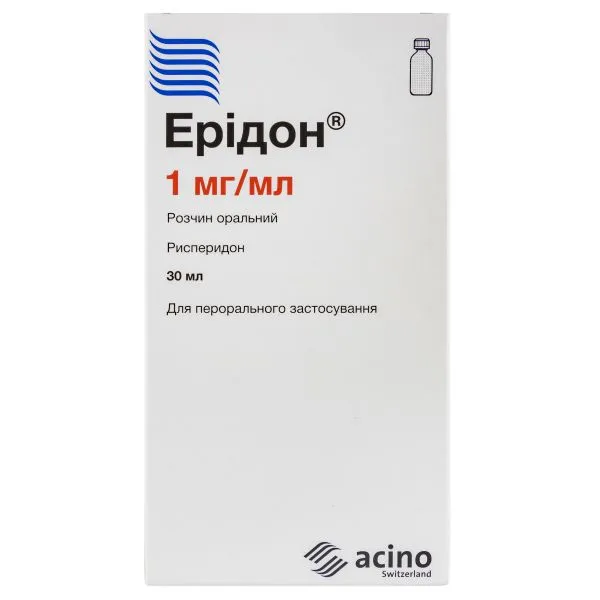
Table of Contents
INSTRUCTION FOR MEDICAL USE OF THE MEDICINAL PRODUCT ERIDON® (ERIDON)
Composition:
Active substance: risperidone;
1 ml of solution contains 1 mg of risperidone;
Excipients: tartaric acid, benzoic acid (E 210), hydrochloric acid, purified water.
Pharmaceutical form. Oral solution.
Main physicochemical properties: clear, colorless solution.
Pharmacotherapeutic group.
Antipsychotic agents. ATC code N05AX08.
Pharmacological properties.
Pharmacodynamics.
Mechanism of action. Risperidone is a selective monoaminergic antagonist with unique properties. It exhibits high affinity for serotonergic 5-HT2 and dopaminergic D2 receptors. Risperidone also binds to α1-adrenergic receptors and, to a lesser extent, to H1-histaminergic and α2-adrenergic receptors.
Risperidone has no affinity for cholinergic receptors. Although risperidone is a potent D2 antagonist, which contributes to its efficacy against the positive symptoms of schizophrenia, it does not cause significant motor suppression and induces catalepsy to a lesser extent compared to typical antipsychotics.
The balanced central antagonism of serotonin and dopamine reduces the likelihood of extrapyramidal side effects and broadens the therapeutic effect of the drug, enabling it to influence negative and affective symptoms of schizophrenia.
Pharmacokinetics.
Risperidone is metabolized to 9-hydroxyrisperidone, which exerts a pharmacological effect similar to that of risperidone (see section "Metabolism and elimination" below).
Absorption. Food does not affect drug absorption; therefore, risperidone can be administered regardless of food intake. Absolute bioavailability is 66% in rapid metabolizers and 82% in poor metabolizers. After oral administration, risperidone is completely absorbed and reaches maximum plasma concentration (Cmax) within 1–2 hours, or within 2–3 hours in elderly patients. The absolute bioavailability of risperidone after oral administration is 70% (CV = 25%).
Distribution. Risperidone is rapidly distributed in the body. The volume of distribution is 1–2 L/kg. In plasma, risperidone binds to albumin and α1-acid glycoproteins. Approximately 90% of risperidone is protein-bound, of which 77% corresponds to 9-hydroxyrisperidone.
Steady-state concentration of risperidone in the body is achieved within 1 day in most patients. Steady-state concentration of 9-hydroxyrisperidone is reached within 4–5 days.
Metabolism and elimination. Risperidone is metabolized by CYP2D6 to 9-hydroxyrisperidone, which has a pharmacological effect similar to risperidone. Risperidone and 9-hydroxyrisperidone together form the so-called active antipsychotic fraction. CYP2D6 is subject to genetic polymorphism. Rapid metabolizers convert risperidone to 9-hydroxyrisperidone quickly, whereas poor metabolizers do so much more slowly. Although rapid metabolizers have lower concentrations of risperidone and higher concentrations of 9-hydroxyrisperidone than poor metabolizers, the overall pharmacokinetic effect of risperidone and 9-hydroxyrisperidone results from their combined action, as these two compounds together constitute the active antipsychotic fraction. After single or multiple dosing, the active antipsychotic fraction is equivalent in both poor and rapid CYP2D6 metabolizers. Another metabolic pathway of risperidone is N-dealkylation. In vitro studies using human liver microsomes indicate that risperidone, at clinically relevant concentrations, does not significantly inhibit the metabolism of drugs metabolized by cytochrome P450 isoenzymes, including CYP1A2, CYP2A6, CYP2C8/9/10, CYP2D6, CYP2E1, CYP3A4, and CYP3A5. One week after drug administration, 70% of the dose is excreted in urine and 14% in feces. The concentration of risperidone and 9-hydroxyrisperidone in urine accounts for 35–45% of the administered dose. The remainder consists of inactive metabolites. After oral administration in psychotic patients, the elimination half-life of the drug is approximately 3 hours. The elimination half-life of 9-hydroxyrisperidone and the active antipsychotic fraction reaches 24 hours, and in elderly patients, 34 hours.
Linearity. Plasma concentrations of risperidone are dose-proportional within the therapeutic dose range.
Age, renal or hepatic impairment. Pharmacokinetic studies of single-dose oral risperidone administration showed, on average, 43% higher plasma concentrations of the active antipsychotic fraction, a 38% longer elimination half-life, and a 30% reduction in clearance of the active antipsychotic fraction in elderly patients.
In adult patients with moderate renal impairment, clearance of the active antipsychotic fraction was approximately 48% of that observed in young healthy volunteers. In adult patients with severe renal impairment, clearance of the active antipsychotic fraction was approximately 31% of that in young healthy volunteers. Elimination half-life of active metabolites was 16.7 hours in adult patients, 24.9 hours in patients with moderate renal impairment (approximately 1.5 times longer than in adults), and 28.8 hours in patients with severe renal impairment (approximately 1.7 times longer than in adults). Plasma concentrations of risperidone were normal in patients with hepatic impairment, but the mean free fraction of risperidone in plasma was increased by 37.1%.
Oral clearance and elimination half-life of risperidone and its active metabolites in adult patients with moderate or severe hepatic impairment did not differ significantly from those in healthy volunteers.
Children. The pharmacokinetics of risperidone, 9-hydroxyrisperidone, and the active antipsychotic fraction in children are similar to those in adults.
Gender, race, and smoking. Population pharmacokinetic analysis did not reveal any influence of gender, race, or smoking on the pharmacokinetics of risperidone or the active antipsychotic fraction.
Clinical characteristics.
Indications.
For the treatment of schizophrenia.
For the treatment of moderate to severe manic episodes in bipolar disorders.
For short-term treatment (up to 6 weeks) of marked aggression in patients with moderate to severe Alzheimer's type dementia when there is a threat of harm to self or others and when there is no response to non-pharmacological treatment methods (see sections "Dosage and administration" and "Special precautions").
For symptomatic short-term treatment (up to 6 weeks) of marked aggression in behavioral disorders in children aged 5 years and adolescents with below-average intellectual development or intellectual disability diagnosed according to DSM-IV criteria, in whom the severity of aggressive or other destructive behavior requires pharmacological treatment. Pharmacological treatment should be an integral part of a comprehensive treatment program including psychological support and educational interventions. It is recommended that the medicinal product Eripdon**®** be prescribed by a specialist in pediatric neurology, child and adolescent psychiatry, or a physician experienced in treating behavioral disorders in children and adolescents.
Contraindications.
Hypersensitivity to the active ingredient or to any of the excipients of the medicinal product. Dementia and symptoms of Parkinson's disease (rigidity, bradykinesia, and parkinsonian postural disturbances). Dementia and suspected dementia with Lewy bodies (at least two of the following symptoms in addition to dementia: parkinsonism, visual hallucinations, gait instability).
Interaction with other medicinal products and other forms of interaction.
Pharmacodynamic interactions
Medicinal products capable of prolonging the QT interval
As with other antipsychotics, caution should be exercised when administering risperidone with medicinal products that prolong the QT interval, for example, antiarrhythmic agents (such as quinidine, disopyramide, procainamide, propafenone, amiodarone, sotalol), tricyclic antidepressants (particularly amitriptyline), tetracyclic antidepressants (particularly maprotiline), certain antihistamines, other antipsychotics, some antimalarial agents (quinine, mefloquine), agents causing electrolyte imbalance (inducing hypokalemia, hypomagnesemia), agents causing bradycardia, or agents inhibiting hepatic metabolism of risperidone. This list is indicative and not exhaustive.
Central-acting agents and alcohol
Risperidone should be used cautiously in combination with other centrally acting substances, including alcohol, opioids, antihistamines, and benzodiazepines, due to an increased risk of sedation.
Levodopa and dopamine agonists
Risperidone may exhibit antagonistic effects to levodopa and other dopamine agonists. If such a combination is considered necessary, particularly in the terminal stage of Parkinson's disease, the lowest effective doses of each agent should be prescribed.
Medicinal products with hypotensive effects
Clinically significant hypotension has been observed in the post-marketing period during concomitant use of risperidone and antihypertensive medicinal products.
Psychostimulants
Concomitant use of psychostimulants (e.g., methylphenidate) with risperidone may lead to the emergence of extrapyramidal symptoms after dose adjustment of one or both agents (see section "Special precautions").
Paliperidone
Concomitant oral administration of risperidone with paliperidone is not recommended, as paliperidone is an active metabolite of risperidone, and their combination may result in additive effects of the active antipsychotic fraction.
Pharmacokinetic interactions
Food intake does not affect the absorption of risperidone.
Risperidone is predominantly metabolized via CYP2D6 and to a lesser extent via CYP3A4. Risperidone and its active metabolite, 9-hydroxyrisperidone, are substrates of P-glycoprotein (P-gp). Substances altering CYP2D6 activity or acting as potent inhibitors or inducers of CYP3A4 and/or P-gp activity may affect the pharmacokinetics of the active antipsychotic fraction of risperidone.
Potent CYP2D6 inhibitors
Concomitant use of risperidone with potent CYP2D6 inhibitors may increase plasma concentrations of risperidone, although the concentration of the active antipsychotic fraction increases less significantly. When high doses of a potent CYP2D6 inhibitor are used, an increase in the concentration of the active antipsychotic fraction of risperidone may occur (e.g., paroxetine, see below). Other CYP2D6 inhibitors, such as quinidine, are also expected to similarly affect plasma concentrations of risperidone. At the initiation or discontinuation of concomitant use of paroxetine, quinidine, or another potent CYP2D6 inhibitor, especially at high doses, the physician should review the risperidone dosage.
Inhibitors of CYP3A4 and/or P-gp
Concomitant use of risperidone with potent inhibitors of CYP3A4 and/or P-gp may significantly increase plasma concentrations of the active antipsychotic fraction of risperidone. At the initiation or discontinuation of concomitant use of itraconazole or other potent inhibitors of CYP3A4 and/or P-gp, the physician should review the risperidone dosage.
Inducers of CYP3A4 and/or P-gp
Concomitant use of risperidone with potent inducers of CYP3A4 and/or P-gp may decrease plasma concentrations of the active antipsychotic fraction of risperidone. At the initiation or discontinuation of carbamazepine or other potent inducers of CYP3A4 and/or P-glycoprotein, the physician should review the risperidone dosage. The effect of CYP3A4 inducers is time-dependent, with maximum effect achieved at least 2 weeks after initiation of treatment. Similarly, after discontinuation of treatment, CYP3A4 induction may persist for at least 2 weeks.
Medicinal products highly bound to plasma proteins
When risperidone is used concomitantly with agents highly bound to plasma proteins, there is no clinically significant displacement of one medicinal product by another from plasma protein binding sites.
When multiple medicinal products are used concomitantly, it is necessary to consult the instructions for medical use regarding their metabolic pathways and possible need for dose adjustment.
Children
Interaction studies have been conducted only in adult patients. It is unknown whether the results obtained can be applied to children.
Concomitant use of psychostimulants (e.g., methylphenidate) with risperidone in children and adolescents did not alter the pharmacokinetics or efficacy of risperidone.
Effect of other medicinal products on the pharmacokinetics of risperidone
Antibacterial agents
- Erythromycin, a moderate inhibitor of CYP3A4 and an inhibitor of P-gp, does not alter the pharmacokinetics of risperidone or its active antipsychotic fraction.
- Rifampicin, a potent inducer of CYP3A4 and an inducer of P-gp, reduces the plasma concentration of the active antipsychotic fraction.
Cholinesterase inhibitors
- Donepezil and galantamine, both substrates of CYP2D6 and CYP3A4, have no clinically significant effect on the pharmacokinetics of risperidone or the active antipsychotic fraction.
Antiepileptic agents
- Carbamazepine, a potent inducer of CYP3A4 and an inducer of P-gp, reduces the plasma concentration of the active antipsychotic fraction of risperidone. A similar effect may be observed with, for example, phenytoin and phenobarbital, which are also inducers of CYP3A4 and P-gp.
- Topiramate moderately reduces the bioavailability of risperidone but does not affect the bioavailability of the active antipsychotic fraction. Therefore, it is unlikely that this interaction may cause a clinically significant effect.
Antifungal agents
- Itraconazole, a strong inhibitor of CYP3A4 and an inhibitor of P-gp, at a dose of 200 mg/day increases the plasma concentration of the active antipsychotic fraction of risperidone, administered at 2–8 mg/day, by approximately 70%.
- Ketoconazole, a potent inhibitor of CYP3A4 and an inhibitor of P-gp, at a dose of 200 mg/day increases the plasma concentration of risperidone and decreases the plasma concentration of 9-hydroxyrisperidone.
Antipsychotics
- Phenothiazines may increase the plasma concentration of risperidone but do not affect the concentration of the active antipsychotic fraction.
Antiviral agents
- Protease inhibitors: there are no official study data on this issue; however, since ritonavir is a potent inhibitor of CYP3A4 and a weak inhibitor of CYP2D6, ritonavir and protease inhibitors boosted with ritonavir may increase the concentration of the active antipsychotic fraction of risperidone.
Beta-adrenergic blockers
- Some beta-adrenergic blockers may increase the plasma concentration of risperidone without affecting the concentration of the active antipsychotic fraction.
Calcium channel blockers
- Verapamil, a moderate inhibitor of CYP3A4 and an inhibitor of P-gp, increases plasma concentrations of risperidone and the active antipsychotic fraction.
Agents for gastrointestinal tract treatment
- H2-histamine receptor antagonists: cimetidine and ranitidine, weak inhibitors of CYP2D6 and CYP3A4, increase the bioavailability of risperidone with a slight increase in the bioavailability of the active antipsychotic fraction.
SSRIs and tricyclic antidepressants
- Fluoxetine, a potent inhibitor of CYP2D6, increases plasma concentrations of risperidone and slightly increases the concentration of the active antipsychotic fraction.
- Paroxetine, a potent inhibitor of CYP2D6, increases plasma concentrations of risperidone, but at doses up to 20 mg/day causes only a slight increase in the plasma concentration of the active antipsychotic fraction. However, higher doses of paroxetine may lead to increased concentrations of the active antipsychotic fraction of risperidone.
- Tricyclic antidepressants may increase plasma concentrations of risperidone but do not affect the concentration of the active antipsychotic fraction. Amitriptyline does not affect the pharmacokinetics of risperidone or the active antipsychotic fraction.
- Sertraline is a weak inhibitor of CYP2D6, and fluvoxamine is a weak inhibitor of CYP3A4; therefore, when used at doses up to 100 mg/day, these agents do not cause clinically significant changes in the concentration of the active antipsychotic fraction of risperidone. However, doses of sertraline or fluvoxamine exceeding 100 mg/day may lead to increased concentrations of the active antipsychotic fraction of risperidone.
Effect of risperidone on the pharmacokinetics of other medicinal products
Antiepileptic agents
- Risperidone has not demonstrated clinically significant effects on the pharmacokinetics of valproate or topiramate.
Antipsychotics
- Aripiprazole, a substrate of CYP2D6 and CYP3A4: risperidone in tablet or injectable form does not affect the pharmacokinetics of aripiprazole or its active metabolite, dehydroaripiprazole.
Cardiac glycosides
- Risperidone has not demonstrated clinically significant effects on the pharmacokinetics of digoxin.
Lithium
- Risperidone has not demonstrated clinically significant effects on the pharmacokinetics of lithium.
Concomitant use of risperidone with furosemide
See section "Special precautions", which contains information regarding increased mortality in elderly patients with dementia who concurrently receive furosemide.
Special precautions for use.
Geriatric patients with dementia.
Increased mortality rate
An increased mortality rate has been observed in elderly patients with dementia treated with atypical antipsychotic agents, compared to placebo-treated patients, as shown by results of a meta-analysis of 17 studies of atypical antipsychotics, including risperidone.
In a placebo-controlled trial in patients receiving risperidone, the mortality rate was 4.0% compared to 3.1% in the placebo group. The odds ratio (95% confidence interval) was 1.21 (0.7; 2.1). The mean age of patients who died was 86 years (range: 67–100 years). Data from two observational studies demonstrated that elderly patients with dementia receiving treatment with typical antipsychotics also have a slightly increased risk of fatal outcomes compared to those not receiving treatment. Based on available study data, the exact level of this risk cannot be determined, and the reason for the increased risk is unknown.
Concomitant use with furosemide
In a placebo-controlled study in elderly patients with dementia, an increased number of fatal cases was observed when risperidone was used concomitantly with furosemide (7.3%; mean age: 89 years, range: 75–97 years), compared to patients treated only with risperidone (3.1%; mean age: 84 years, range: 70–96 years) or only with furosemide (4.1%; mean age: 80 years, range: 67–90 years). An increased number of fatal cases among patients treated concomitantly with risperidone and furosemide was observed in two out of four clinical trials. No pathophysiological mechanisms have been established to explain this observation. It should be noted that concomitant use of risperidone and furosemide was not the sole cause of mortality. Given the above, particular caution should be exercised when prescribing the drug in such cases, and a risk-benefit assessment of this combination or combination with other diuretics should be performed before prescribing. However, no increased mortality rate was observed in patients who received risperidone together with other diuretics. Dehydration, regardless of treatment, was a common risk factor for mortality and should be carefully monitored in patients with dementia.
Cerebrovascular adverse reactions
In placebo-controlled clinical trials, patients with dementia treated with risperidone experienced a threefold higher rate of cerebrovascular adverse events (strokes and transient ischemic attacks) with fatal outcomes compared to those receiving placebo (mean age: 85 years; range: 73–97 years).
Combined data from six placebo-controlled trials involving elderly patients with dementia (aged 65 years and older) demonstrated cerebrovascular (CBV) disorders (serious and non-serious, combined) in 3.3% (33/1009) of patients treated with risperidone, compared to 1.2% (8/712) of patients receiving placebo.
The ratio between the risperidone and placebo groups (odds ratio; 95% CI) was 2.96 (1.34; 7.50). The mechanism of this increased risk is unknown. An increased risk of developing CBV adverse reactions (ARs) with other antipsychotic agents or in other patient groups cannot be ruled out. Risperidone should be used with caution in patients with risk factors for stroke. The risk of CBV AEs is significantly higher in patients with mixed or vascular dementia compared to Alzheimer’s dementia. Therefore, patients with types of dementia other than Alzheimer’s should not be prescribed risperidone.
All risks and benefits of prescribing risperidone to elderly patients with dementia should be carefully weighed, especially the risk of stroke.
Patients and caregivers should be instructed to immediately report signs of possible cerebrovascular disorders, such as sudden weakness, facial, arm, or leg numbness, and speech or vision disturbances.
All possible treatment options, including discontinuation of risperidone therapy, should be promptly considered. Risperidone should be used only for short-term treatment of persistent aggression in patients with Alzheimer’s disease (moderate to severe stages), in addition to non-pharmacological approaches whose effectiveness is absent or limited, and when there is a potential risk of harm to self or others. The patient’s condition should be regularly assessed and the need for continued treatment re-evaluated.
Orthostatic hypotension
Due to risperidone’s ability to block α1-adrenergic receptors, orthostatic hypotension may occur, especially at the beginning of treatment. Clinically significant hypotension has been observed during post-marketing use when risperidone was used concomitantly with antihypertensive agents. Risperidone should be used with caution in patients with cardiovascular disorders (such as heart failure, myocardial infarction, conduction disorders, dehydration, hypovolemia, or cerebrovascular disorders). In such cases, the dose should be gradually adjusted (see section "Dosage and administration"). If hypotension occurs, dose reduction should be considered.
Leukopenia, neutropenia, agranulocytosis
Cases of leukopenia, neutropenia, and agranulocytosis have been reported during treatment with antipsychotic agents, including risperidone. Agranulocytosis has been reported very rarely (< 1/10,000 patients) during post-marketing surveillance. Patients with a history of significant leukocyte reduction or drug-induced leukopenia/neutropenia should be closely monitored during the first few months of treatment, and risperidone should be discontinued if signs of significant leukocyte reduction occur in the absence of other causes. Patients with clinically significant neutropenia should be monitored for fever and other signs of infection and treated appropriately if symptoms develop. In cases of severe neutropenia (< 1 × 10⁹/L), risperidone treatment should be discontinued, and leukocyte counts should be monitored until recovery.
Tardive dyskinesia / extrapyramidal symptoms
Tardive dyskinesia, characterized by involuntary rhythmic movements (predominantly of the tongue and/or face), has been reported during treatment with dopamine receptor antagonists. The occurrence of extrapyramidal symptoms is a risk factor for the development of tardive dyskinesia. If signs or symptoms of tardive dyskinesia appear, discontinuation of all antipsychotic agents should be considered.
Caution is required when using psychostimulants (e.g., methylphenidate) concomitantly with risperidone, as extrapyramidal symptoms may occur when the dosage of one or both drugs is changed (see section "Interaction with other medicinal products and other forms of interaction"). Gradual withdrawal of psychostimulant therapy is recommended.
Neuroleptic Malignant Syndrome (NMS)
Rare cases of NMS have been reported with atypical antipsychotics, characterized by hyperthermia, muscle rigidity, autonomic instability, altered consciousness, and elevated creatine phosphokinase levels. Additional features include myoglobinuria (rhabdomyolysis) and acute renal failure. If neuroleptic malignant syndrome develops, all antipsychotic agents, including risperidone, must be discontinued.
Parkinson’s disease and dementia with Lewy bodies
Physicians should be aware of the risks associated with using antipsychotic agents, including risperidone, in patients with Parkinson’s disease or dementia with Lewy bodies. Risperidone use may worsen the course of Parkinson’s disease. Patients with either of these conditions have an increased risk of NMS and heightened sensitivity to antipsychotics (e.g., confusion, reduced pain sensitivity, unsteady gait with frequent falls, in addition to extrapyramidal symptoms).
Hypoglycemia and diabetes mellitus
Hyperglycemia, diabetes mellitus, and exacerbation of pre-existing diabetes have been reported during risperidone treatment.
In some cases, prior weight gain was reported, which could be a risk factor.
Very rarely, ketoacidosis has been associated with risperidone use; rarely, diabetic coma.
Appropriate clinical monitoring is recommended according to standard antipsychotic use guidelines.
Patients receiving any atypical antipsychotics, including risperidone, should be monitored for symptoms of hyperglycemia (e.g., polydipsia, polyuria, polyphagia, weakness). Patients with diabetes should also be monitored for worsening glucose control.
Weight gain
Significant weight gain has been reported with risperidone use. Weight monitoring is recommended.
Hyperprolactinemia
Hyperprolactinemia is a commonly observed adverse reaction during risperidone treatment. Patients with pre-existing adverse effects potentially related to plasma prolactin levels (e.g., gynecomastia, menstrual disorders, anovulation, fertility disorders, decreased libido, erectile dysfunction, galactorrhea) should have their prolactin levels monitored when risperidone is prescribed. Tissue culture studies indicate that prolactin may stimulate the growth of human breast tumor cells.
Although a clear link with antipsychotic use has not been established by clinical and epidemiological studies, risperidone should be prescribed with caution in patients with relevant medical history. Risperidone should be used cautiously in patients with hyperprolactinemia and in those with prolactin-dependent tumors.
QT interval prolongation
In the post-marketing period, very rare cases of QT interval prolongation have been reported. Risperidone, like other antipsychotics, should be used with caution in patients with cardiovascular disorders, electrolyte imbalances (hypokalemia, hypomagnesemia), bradycardia, or a family history of QT prolongation, as these increase the risk of arrhythmogenic effects. Caution is also required when risperidone is used concomitantly with other medicinal products that prolong the QT interval.
Seizures
Risperidone should be used with caution in patients with a history of seizures or other conditions that may potentially lower the seizure threshold.
Priapism
Priapism may occur during risperidone treatment due to its α-adrenergic blocking effect.
Body temperature regulation
Antipsychotic agents may impair the body’s ability to reduce body temperature. Appropriate monitoring is recommended for patients receiving risperidone who are exposed to factors that may increase body temperature, such as intense physical exercise, exposure to high ambient temperatures, concomitant therapy with anticholinergic agents, or dehydration.
Anti-emetic effect
Preclinical studies have shown that risperidone has anti-emetic properties. This property may mask symptoms of overdose of certain drugs or conditions such as intestinal obstruction, Reye’s syndrome, or brain tumors.
Renal and hepatic impairment
In patients with renal impairment, the ability to eliminate the active antipsychotic fraction of risperidone is reduced compared to individuals with normal renal function. In patients with hepatic impairment, an increased concentration of the free fraction of risperidone in plasma is observed.
Thromboembolism
Cases of venous thromboembolism have been reported with antipsychotic agents. Since patients treated with antipsychotics often have acquired risk factors for venous thromboembolism, all possible risk factors for thromboembolism should be identified before and during risperidone treatment, and appropriate preventive measures taken.
Intraoperative floppy iris syndrome (IFIS)
IFIS has been reported during cataract surgery in patients treated with α1-adrenergic blockers, including risperidone. IFIS may increase the risk of ocular surgical complications during and after surgery. The ophthalmic surgeon should be informed about past or current use of antipsychotic agents. The potential benefits of discontinuing α1-adrenergic blockers before surgery have not been established, and the risks of discontinuing antipsychotic therapy should also be considered.
Children
Before prescribing risperidone to children or adolescents with behavioral disorders, a careful risk-benefit assessment should be performed, and physical and social causes of aggressive behavior (e.g., pain stimuli or inappropriate response to environment) should be evaluated.
The sedative effect of risperidone should be carefully monitored in pediatric patients due to potential effects on learning ability. Adjusting the time of risperidone administration may improve the impact of sedation on children’s and adolescents’ attention.
Risperidone use is associated with mean increases in body weight and body mass index (BMI). Baseline body weight measurement is recommended before starting treatment, with regular monitoring throughout therapy. Growth changes observed in long-term open-label extension studies were within expected age-related norms. The impact of long-term risperidone treatment on sexual maturation and growth has not been adequately studied.
Due to the potential impact of prolonged hyperprolactinemia on physical and sexual development in children and adolescents, regular clinical assessments of endocrine status are required, including height, body weight, evaluation of sexual development, monitoring of menstrual cycles, and other potential prolactin-related effects.
Results from a small post-marketing observational study showed that patients aged 8 to 16 years treated with risperidone were on average 3.0–4.8 cm taller than patients treated with other antipsychotics. However, data from this study are insufficient to determine whether risperidone affects final adult height, whether the measurements directly depend on risperidone’s effect on bone growth, whether the underlying disease affects bone growth, or whether this is a result of better disease control leading to greater height gain.
Regular examinations are required during risperidone treatment to detect extrapyramidal symptoms and other movement disorders. Dosage recommendations for children are provided in the section "Dosage and administration".
Excipients.
The medicinal product contains benzoic acid (E 210). Increased bilirubinemia may lead to neonatal jaundice, which may progress to kernicterus (deposition of unconjugated bilirubin in brain tissue).
Use during pregnancy or breastfeeding.
Pregnancy. Controlled studies in pregnant women have not been conducted. Although teratogenic effects were not observed in animal studies, other signs of reproductive toxicity were observed. The potential risk in humans is unknown.
Newborns whose mothers used antipsychotics (including risperidone) during the third trimester of pregnancy are at risk of developing reversible extrapyramidal symptoms and/or withdrawal syndrome. These symptoms include agitation, abnormally increased or decreased muscle tone, tremor, somnolence, respiratory disorders, or feeding difficulties. These complications may vary in severity. Therefore, newborns should be closely monitored.
Risperidone is not recommended during pregnancy except in life-threatening situations. If risperidone treatment needs to be discontinued during pregnancy, it should not be stopped abruptly.
Lactation period. In animal studies, risperidone and 9-hydroxyrisperidone were excreted in breast milk. Observational data indicate that risperidone and 9-hydroxyrisperidone may also be excreted in human breast milk. There are no data on adverse reactions in breastfed infants. Therefore, the benefits of breastfeeding should be weighed against the potential risks to the infant.
Fertility. Like other dopamine D2-receptor antagonists, risperidone increases prolactin levels. Hyperprolactinemia may suppress gonadotropin-releasing hormone production in the hypothalamus and lead to decreased pituitary gonadotropin secretion. This may inhibit reproductive function by disrupting gonadal steroidogenesis in both women and men.
Such effects were not observed in clinical studies.
Ability to affect reaction speed when driving or operating machinery.
Risperidone may have a slight or moderate effect on the ability to drive due to its potential impact on the nervous system and visual organs (see section "Adverse reactions"). During treatment, patients should refrain from driving or operating machinery until their individual sensitivity to the drug is known.
Method of Administration and Dosage
Dosage
Schizophrenia
Adults
Erydon® may be taken once or twice daily.
Treatment should be initiated at 2 mg once daily. On day 2, the dose may be increased to 4 mg. Thereafter, the dose may be maintained unchanged or, if necessary, further individual dose adjustments may be made. The recommended dose for most patients is 4–6 mg daily. Some patients may require gradual dose escalation or a reduced initial dose.
Doses exceeding 10 mg daily have not demonstrated greater efficacy compared to lower doses but may lead to the emergence of extrapyramidal symptoms. The safety of doses exceeding 16 mg daily has not been studied.
Elderly patients (aged 65 years and older)
The recommended initial dose is 0.5 mg twice daily. If necessary, the dose may be increased to 1–2 mg twice daily, increasing by 0.5 mg twice daily.
Children
The use of the medicinal product is not recommended in children (under 18 years of age).
Manic episodes in bipolar disorder
Adults
The recommended initial dose of Erydon® is 2 mg once daily. The dose may be individually increased by increments of 1 mg daily, no more frequently than every 24 hours. The recommended dose range is 1–6 mg daily. The use of risperidone in doses exceeding 6 mg daily in patients with manic episodes has not been studied.
As with other forms of symptomatic treatment, the dosage of Erydon® should be periodically reviewed and adjusted throughout the treatment period.
Elderly patients (aged 65 years and older)
The recommended initial dose is 0.5 mg twice daily. If necessary, the dose may be increased to 1–2 mg twice daily, increasing by 0.5 mg twice daily. Due to limited experience with the use of the drug in elderly patients, caution is recommended.
Children
The use of the medicinal product is not recommended in children (under 18 years of age).
Short-term treatment of marked aggression in patients with Alzheimer's type dementia
The recommended initial dose is 0.25 mg twice daily. If necessary, the dose may be increased by increments of 0.25 mg twice daily, no more frequently than every other day. For most patients, the optimal dose is 0.5 mg twice daily. However, in some patients, the effective dose may be increased to 1 mg twice daily. Risperidone should not be used for longer than 6 weeks in patients with marked aggression associated with Alzheimer's disease.
As with other forms of symptomatic treatment, the use of Erydon® should be periodically reviewed and adjusted throughout the treatment period.
Short-term symptomatic treatment (up to 6 weeks) of marked aggression in behavioral disorders
Children and adolescents aged 5 to 18 years
Patients with body weight ≥ 50 kg. The recommended initial dose is 0.5 mg once daily. If necessary, the dose should be adjusted by increments of 0.5 mg once daily, no more frequently than every other day. The optimal dose for most patients is 1 mg once daily. However, some patients may achieve a positive effect with no more than 0.5 mg once daily, while others may require 1.5 mg once daily.
Patients with body weight < 50 kg. The recommended initial dose is 0.25 mg once daily. If necessary, the dose may be adjusted by increments of 0.25 mg once daily, no more frequently than every other day. The optimal dose for most patients is 0.5 mg once daily. However, some patients may require no more than 0.25 mg once daily to achieve a positive effect, while others may require 0.75 mg once daily.
As with other forms of symptomatic treatment, the use of risperidone should be periodically reviewed and adjusted throughout the treatment period.
Children under 5 years of age
The use of the medicinal product is not recommended in children under 5 years of age.
Patients with hepatic and renal impairment
In patients with impaired renal function, the active antipsychotic fraction is eliminated more slowly than in patients with normal renal function. In patients with impaired hepatic function, plasma concentrations of the free fraction of risperidone are increased.
Regardless of the indication, these patients should receive half the initial and maintenance doses, and dose titration should be slower.
Risperidone should be used with caution in this patient population.
Method of Administration
Erydon® is intended for oral administration. Food intake does not affect the absorption of risperidone.
At the end of treatment, gradual discontinuation of the medicinal product is recommended. After abrupt discontinuation of high doses of antipsychotics, isolated cases of acute withdrawal symptoms have been observed, manifesting as nausea, vomiting, sweating, and insomnia (see section "Adverse Reactions"). Psychotic symptoms may also recur, and cases of involuntary movements (such as akathisia, dystonia, and dyskinesia) have been reported.
Switching from therapy with other antipsychotic agents
If clinically justified, it is recommended to gradually discontinue previous antipsychotic therapy when initiating treatment with risperidone. When switching from depot antipsychotic formulations, treatment with Erydon® should be initiated instead of the next scheduled depot injection. The need for continued antiparkinsonian therapy should be periodically evaluated.
Erydon® oral solution is incompatible with most types of tea, including black tea.
Instructions for self-opening the bottle and using the dosing pipette
Bottle 30 mL
To open the bottle and use the dosing pipette, perform the following steps (see Figures 1–3):
| Fig. 1. The bottle has a child-resistant cap and opens as follows: press the plastic cap down firmly and turn it counterclockwise. Remove the cap. Fig. 2. Insert the dosing pipette into the bottle. While holding the lower rim of the dosing pipette, pull the pipette plunger to the appropriate mark in millilitres or milligrams. Fig. 3. While holding the lower rim, remove the dosing pipette from the bottle. Empty the contents of the dosing pipette into any non-alcoholic beverage, except tea, by pressing the pipette plunger. Close the bottle and rinse the dosing pipette with water. Place the dosing pipette in a convenient place for storage. |
Children.
Risperidone is used for the treatment of severe aggression associated with behavioral disorders in children aged 5 years and older.
Overdose.
Symptoms. Signs and symptoms observed in overdose are the known adverse reactions of the drug, manifested in an intensified form: somnolence and sedation, tachycardia and arterial hypotension, as well as extrapyramidal symptoms. QT interval prolongation and seizures have been reported in cases of overdose. Atrial flutter/fibrillation has been reported in association with risperidone overdose in combination with paroxetine. In cases of acute overdose, the possibility of multiple drug ingestion should be evaluated.
Treatment. Airway patency must be ensured and maintained to provide adequate ventilation and oxygenation. Administration of activated charcoal together with a laxative should be considered if less than one hour has passed since drug ingestion. Cardiovascular monitoring, including continuous ECG recording to detect possible arrhythmias, is indicated.
Risperidone has no specific antidote. Therefore, appropriate supportive measures should be implemented. In cases of acute overdose, potential drug interactions due to multiple drug ingestion should be assessed. Arterial hypotension and vascular collapse should be treated with measures such as intravenous fluids and/or sympathomimetic agents. In the event of acute extrapyramidal symptoms, anticholinergic medications should be administered. Continuous medical observation should be maintained until the patient has fully recovered.
Adverse Reactions
The most commonly reported adverse reactions (incidence ≥ 10%) are parkinsonism, sedation/somnolence, headache, and insomnia. Parkinsonism and akathisia are dose-dependent adverse reactions.
The adverse reactions listed below include those reported during clinical trials and in the post-marketing period. Frequency of adverse reactions: very common (≥ 1/10), common (≥ 1/100 to < 1/10), uncommon (≥ 1/1,000 to < 1/100), rare (≥ 1/10,000 to < 1/1,000), very rare (< 1/10,000), and not known (frequency cannot be estimated from available data).
Within each category, adverse reactions are listed in order of decreasing severity.
Infections and infestations: common — pneumonia, bronchitis, upper respiratory tract infections, sinusitis, urinary tract infections, ear infections, influenza; uncommon — respiratory tract infections, cystitis, eye infections, tonsillitis, onychomycosis, cellulitis, localized infection, viral infection, acrodermatitis; rare — infection.
Blood and lymphatic system disorders: uncommon — neutropenia, decreased leukocyte count, thrombocytopenia, anemia, decreased hematocrit, increased eosinophils; rare — agranulocytosis.
Immune system disorders: uncommon — hypersensitivity; rare — anaphylactic reaction.
Endocrine disorders: common — hyperprolactinaemia; rare — disturbance in antidiuretic hormone secretion, glycosuria.
Metabolism and nutrition disorders: common — weight increased, appetite increased, appetite decreased; uncommon — diabetes mellitusb, hyperglycaemia, polydipsia, weight decreased, anorexia, increased cholesterol level; rare — water intoxication, hypoglycaemia, hyperinsulinaemia, increased blood triglycerides; very rare — diabetic ketoacidosis.
Psychiatric disorders: very common — insomniad; common — sleep disorders, agitation, depression, anxiety; uncommon — mania, confusion, decreased libido, restlessness, night terrors; rare — catatonia, somnambulism, sleep-related eating disorder, blunted affect, anorgasmia.
Nervous system disorders: very common — sedation/somnolence, parkinsonismd, headache; common — akathisiad, dystoniad, dizziness, dyskinesiad, tremor; uncommon — tardive dyskinesia, cerebral ischaemia, unresponsiveness, loss of consciousness, depressed level of consciousness, seizuresd, syncope, psychomotor hyperactivity, balance disorder, coordination abnormality, postural dizziness, attention disturbance, dysarthria, taste disturbances, hypoesthesia, paraesthesia; rare — CNS, cerebrovascular disorders, diabetic coma, rhythmic head bobbing.
Eye disorders: common — blurred vision, conjunctivitis; uncommon — photophobia, dry eyes, increased lacrimation, eye redness; rare — glaucoma, eye movement disorders, rotatory nystagmus, eyelid crusting, intraoperative floppy iris syndrome.
Ear and labyrinth disorders: uncommon — vertigo, tinnitus, ear pain.
Cardiac disorders: common — tachycardia; uncommon — atrial fibrillation, atrioventricular block, cardiac conduction disorders, QT interval prolongation on ECG, bradycardia, ECG abnormalities, palpitations; rare — sinus arrhythmia; not known — postural orthostatic tachycardia syndrome.
Vascular disorders: common — arterial hypertension; uncommon — arterial hypotension, orthostatic hypotension, flushing; rare — pulmonary embolism, venous thrombosis.
Respiratory, thoracic and mediastinal disorders: common — dyspnoea, pharyngolaryngeal pain, cough, epistaxis, nasal congestion; uncommon — aspiration pneumonia, pulmonary congestion, worsening of airway conductance, wheezing, stridor, dysphonia, respiratory disorders; rare — sleep apnoea syndrome, hyperventilation.
Gastrointestinal disorders: common — abdominal pain, abdominal discomfort, vomiting, nausea, constipation, diarrhoea, dyspepsia, dry mouth, toothache; uncommon — faecal incontinence, faecaloma, gastroenteritis, dysphagia, abdominal distension; rare — pancreatitis, gastrointestinal obstruction, tongue oedema, cheilitis; very rare — intestinal obstruction.
Hepatobiliary disorders: uncommon — increased transaminases, increased gamma-glutamyl transferase, increased liver enzymes; rare — jaundice.
Skin and subcutaneous tissue disorders: common — rash, erythema; uncommon — urticaria, pruritus, alopecia, hyperkeratosis, eczema, dry skin, skin discoloration, acne, seborrhoeic dermatitis, skin disorder, skin injury; rare — drug eruption, dandruff; very rare — angioneurotic oedema; not known — Stevens-Johnson syndrome / toxic epidermal necrolysis.
Musculoskeletal and connective tissue disorders: common — muscle spasms, musculoskeletal pain, back pain, arthralgia; uncommon — increased creatine phosphokinase, abnormal posture, joint stiffness, joint swelling, muscle weakness, neck pain; rare — rhabdomyolysis.
Renal and urinary disorders: common — urinary incontinence; uncommon — polyuria, urinary retention, dysuria.
Pregnancy, puerperium and perinatal conditions: very rare — neonatal withdrawal syndromec.
Reproductive system and breast disorders: uncommon — erectile dysfunction, ejaculation disorder, amenorrhoea, menstrual disorderd, gynaecomastia, galactorrhoea, sexual dysfunction, breast pain, vaginal discharge; rare — priapismc, menstrual delay, breast engorgement, breast enlargement, breast discharge.
General disorders and administration site conditions: common — oedemad, pyrexia, chest pain, asthenia, fatigue, pain; uncommon — facial swelling, chills, increased body temperature, gait disturbance, thirst, chest discomfort, hot flush, unusual sensations, discomfort; rare — hypothermia, decreased body temperature, cold extremities, drug withdrawal syndrome, induration.
Injury, poisoning and procedural complications: common — fall; uncommon — pain after surgical procedures.
a Hyperprolactinaemia may in some cases lead to gynaecomastia, menstrual disorders, amenorrhoea, galactorrhoea, anovulation, fertility disorders, erectile dysfunction, and decreased libido.
b During placebo-controlled studies, diabetes mellitus was observed in 0.18% of patients receiving risperidone compared to 0.11% in the placebo group. The overall incidence across all clinical trials was 0.43% in patients taking risperidone.
c Identified during post-marketing surveillance.
d Extrapyramidal disorders include: parkinsonism (hypersalivation, muscle rigidity, parkinsonism, sialorrhoea, cogwheel phenomenon, bradykinesia, hypokinesia, mask-like face, muscle tension, akinesia, nuchal rigidity, muscle rigidity, parkinsonian gait, impaired glabellar reflex, parkinsonian tremor), akathisia (akathisia, restlessness, hyperkinesia, restless legs syndrome), tremor, dyskinesia (dyskinesia, muscle twitching, choreoathetosis, athetosis, myoclonus), dystonia. Dystonia includes dystonia, arterial hypertension, torticollis, involuntary muscle contractions, myogenic contractures, blepharospasm, eye movement disorders, tongue paralysis, tic (facial area), laryngospasm, myotonia, opisthotonus, oropharyngeal spasm, pleurotonus, tongue spasm, trismus. A broader list of symptoms is included, not all necessarily of extrapyramidal origin. Insomnia includes: sleep onset disorder, intrasomniac disorder. Seizures include: grand mal epileptic seizure. Menstrual disorders include: irregular menstruation, oligomenorrhoea. Oedema includes: generalized oedema, peripheral oedema, pitting oedema.
Adverse reactions of paliperidone
Paliperidone is the active metabolite of risperidone; therefore, the adverse reaction profiles of these substances are similar. In addition to the above-mentioned adverse reactions, postural orthostatic tachycardia syndrome has been reported with paliperidone, which may also occur with risperidone.
Adverse reactions associated with antipsychotic medicinal products
QT interval prolongation. As with other antipsychotics, QT interval prolongation has been reported during post-marketing use of risperidone. Other cardiac adverse reactions associated with QT prolongation have also been reported with antipsychotics, including ventricular arrhythmia, atrial fibrillation, ventricular tachycardia, sudden death, cardiac arrest, and flutter-fibrillation.
Venous thromboembolism. Cases of venous thromboembolism, including pulmonary embolism and deep vein thrombosis, have been observed during treatment with antipsychotics.
Weight gain. A comparison of the number of patients treated with risperidone versus placebo who experienced ≥7% weight gain in placebo-controlled studies showed a statistically significant difference in the frequency of weight gain in the risperidone group (18%) compared to the placebo group (9%). In 3-week placebo-controlled studies in adult patients with acute mania, the frequency of ≥7% weight gain was comparable between the risperidone group (2.5%) and the placebo group (2.4%), and slightly higher in the active control group (3.5%).
In paediatric patients with behavioural disorders, body weight increased on average by 7.3 kg after 12 months of treatment. The expected annual weight gain for children with normal body weight aged 5–12 years is 3–5 kg. From age 12 onwards, annual weight gain remains 3–5 kg for girls, while boys gain on average 5 kg per year.
Special patient populations
Adverse reactions reported more frequently in elderly patients with dementia or in children compared to adult patients are described below.
Elderly patients with dementia. Transient ischaemic attack and cerebrovascular disorders were adverse reactions reported during clinical studies with frequencies of 1.4% and 1.5%, respectively, in elderly patients with dementia. In addition, the following adverse reactions occurred with a frequency ≥ 5% in elderly patients with dementia and at least twice as high as in other adult patient groups: urinary tract infections, peripheral oedema, lethargy, and cough.
Children. Expected adverse reactions in children are similar to those in adults in terms of frequency, type, and severity.
Adverse reactions observed in children (aged 5 to 17 years) with a frequency ≥ 5% and at least twice as high as in adult patients: somnolence/sedation, fatigue, headache, increased appetite, vomiting, upper respiratory tract infections, nasal congestion, abdominal pain, dizziness, cough, pyrexia, tremor, diarrhoea, and enuresis.
The long-term impact of risperidone treatment on sexual maturation and growth has not been sufficiently studied (see section "Special precautions for use").
Reporting suspected adverse reactions
Reporting suspected adverse reactions after authorization of the medicinal product is important. It allows continued monitoring of the benefit-risk balance of the medicinal product. Healthcare professionals, pharmacists, patients, and their legal representatives should report all suspected adverse reactions and lack of efficacy via the Automated Pharmacovigilance Information System at: https://aisf.dec.gov.ua/.
In case of adverse reactions or questions regarding the safety and efficacy of the medicinal product, please contact the Pharmacovigilance Department of ASINO UKRAINE LLC at: 8 Vatslava Havela Boulevard, Kyiv, 03124, Tel/Fax: +38 044 281 2333.
Shelf life
3 years.
Shelf life after first opening of the bottle — 4 months.
Storage conditions
Store in the original packaging. Keep out of reach of children. No special storage conditions required. Do not freeze.
Packaging
30 ml in a bottle; 1 bottle with a dosing pipette in a cardboard box.
Prescription status
Prescription only.
Manufacturer
Shanel Medical Limited Company
Manufacturer's address and location of its operations
Dublin Road, Loughrea, Co. Galway, H62 FH90, Ireland