Epirubicin - vista
Ukraine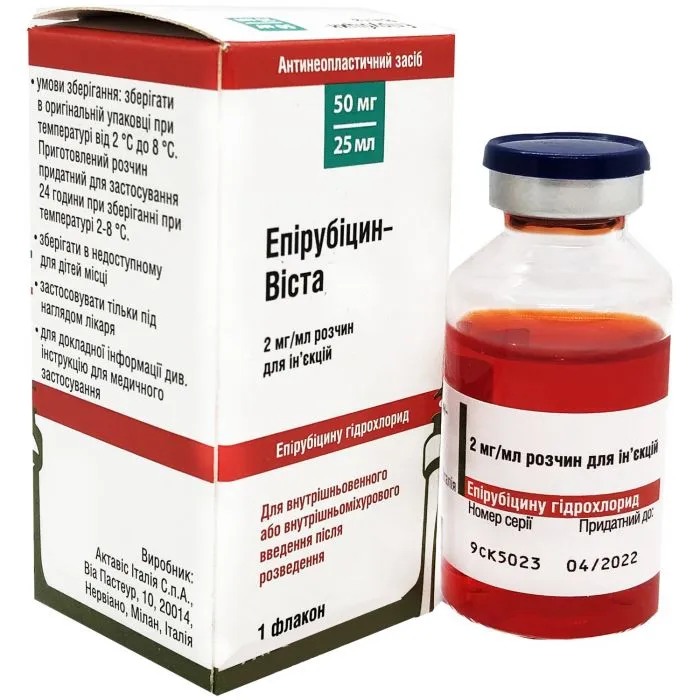
Table of Contents
INSTRUCTIONS FOR MEDICAL USE OF THE MEDICINAL PRODUCT Epirubicin-Vista (Epirubicin-Vista)
Composition:
Active substance: epirubicin;
1 ml of solution contains 2 mg of epirubicin hydrochloride;
Excipients: sodium chloride, hydrochloric acid 0.1 M, water for injections.
Pharmaceutical form. Solution for injection.
Main physicochemical properties: clear red-colored solution.
Pharmacotherapeutic group.
Antineoplastic agents. Anthracyclines and related compounds. ATC code L01D B03.
Pharmacological properties.
Pharmacodynamics.
Epirubicin is an anthracycline cytotoxic agent. The mechanism of action of epirubicin is explained by its binding to DNA. Cell culture studies have shown that epirubicin rapidly penetrates cells, localizes in nuclei, and inhibits nucleic acid synthesis and mitosis. Epirubicin is active against a broad spectrum of experimental tumors, including L1210 and P388 leukemias, SA180 sarcomas (solid and ascitic forms), B16 melanoma, mammary carcinoma, Lewis lung carcinoma, and colon carcinoma 38. Activity of epirubicin has been demonstrated against human tumors transplanted into athymic nude mice (melanomas, mammary, lung, prostate, and ovarian carcinomas).
Pharmacokinetics.
After intravenous administration of the drug at doses of 60−150 mg/m², the decline in epirubicin plasma concentration in patients with normal liver and kidney function follows a triphasic exponential pattern. The first phase is very short, and the terminal half-life is approximately 40 hours. These doses fall within the range of pharmacokinetic linearity with respect to both plasma clearance and metabolism parameters. The main identified metabolites of epirubicin are epirubicinol (13-OH epirubicin) and glucuronides of epirubicin and epirubicinol.
4'-O-glucuronidation distinguishes epirubicin from doxorubicin and explains its faster elimination and lower toxicity. The plasma concentration of the main metabolite, the 13-OH derivative (epirubicinol), is lower than that of epirubicin and decreases approximately proportionally to the concentration of the parent compound.
Epirubicin is primarily eliminated via the liver. High plasma clearance values (0.9 L/min) indicate that the slow elimination of the drug is due to extensive tissue distribution. Approximately 9−10% of the dose is excreted in urine within 48 hours.
Approximately 40% of the dose is excreted in bile within 72 hours, which represents the main route of drug elimination. Epirubicin does not cross the blood-brain barrier.
Clinical characteristics.
Indications.
Treatment of a broad spectrum of neoplastic diseases, including breast cancer, ovarian cancer, gastric cancer, lung cancer, colorectal cancer, malignant lymphomas, and leukemias.
Intravesical administration for the treatment of superficial bladder cancer (transitional cell carcinoma, in situ carcinoma) and for prevention of recurrences following transurethral resection.
Contraindications.
- Hypersensitivity to epirubicin, other anthracyclines or anthracenediones, or to any excipients of the medicinal product.
- Breastfeeding.
Contraindications for intravenous administration:
- Persistent myelosuppression due to prior chemotherapy or radiotherapy.
- Active bone marrow suppression due to previous treatment cycles with other antineoplastic agents or radiotherapy.
- Prior administration of the maximum cumulative dose of other anthracyclines (e.g., doxorubicin or daunorubicin).
- Cardiac disorders, including those in medical history (particularly NYHA Class IV heart failure, acute myocardial infarction, or myocardial infarction in history causing NYHA Class III or IV heart failure, acute inflammatory heart diseases, arrhythmias with severe hemodynamic disturbances).
- Cardiomyopathy.
- Unstable angina pectoris.
- Acute systemic (generalized) infections.
- Severe hepatic impairment.
Contraindications for intravesical administration:
- Urinary tract infections;
- Invasive tumors that have penetrated through the bladder wall;
- Bladder inflammation;
- Hematuria;
- Catheterization difficulties (i.e., urethral obstruction caused by significant intravesical neoplasm).
Special safety measures.
Intravenous administration
Epirubicin-Vista is recommended to be administered using an infusion set with continuous flow of physiological saline. To minimize the risk of thrombosis or perivenous extravasation, the infusion should last from 3 to 20 minutes, depending on the dose and volume of the infusion solution. Rapid bolus injection is not recommended due to the risk of extravasation, which may occur even with adequate blood return upon needle aspiration.
Intravesical administration
The epirubicin solution should be administered via a catheter and must remain in the bladder for 1 hour. During the procedure, the patient should periodically turn from side to side to ensure maximum contact of the bladder mucosa with the solution. To avoid dilution of the solution by urine, the patient should refrain from drinking any fluids for 12 hours prior to instillation. After completion of the procedure, the patient should empty the bladder.
Prior to instillation, Epirubicin-Vista should be diluted with sterile water for injection or sterile 0.9% sodium chloride solution.
The injectable/perfusion solution contains no preservatives; therefore, any unused portion of the vial must be immediately discarded.
Recommendations for safe handling and storage.
- The solution should be prepared only by qualified medical personnel under aseptic conditions in a specially designated area.
- Personnel handling Epirubicin-Vista must wear appropriate protective clothing (disposable gloves, goggles, gowns, and masks).
- All necessary precautions should be taken to prevent epirubicin solutions from entering the eyes. If this occurs, the eyes should be immediately flushed with copious amounts of water and/or 0.9% sodium chloride solution for at least 15 minutes, and medical advice should be sought.
- If epirubicin solution contacts the skin, the affected area should be washed with water or sodium bicarbonate solution with soap. However, the skin should not be scrubbed with a brush. Hands should always be washed after removing gloves.
- In case of spillage or splashing of epirubicin solution, the contaminated area must be treated with diluted sodium hypochlorite solution (with 1% active chlorine concentration), preferably by soaking, then rinsed with water. All materials used for cleanup must be disposed of as described below.
- Pregnant healthcare workers must not handle cytotoxic drugs.
- Unused drug residues and all instruments and materials (syringes, needles, etc.) used during reconstitution and/or handling of cytotoxic medicinal products must be disposed of in accordance with local regulations.
Interaction with other medicinal products and other forms of interactions.
Epirubicin is predominantly used in combination with other cytotoxic agents. Additive toxic effects may occur, particularly affecting the bone marrow/blood and gastrointestinal tract. The risk of cardiotoxic damage is higher in patients receiving concomitant therapy with potentially cardiotoxic agents (such as 5-fluorouracil, cyclophosphamide, cisplatin, taxanes) or radiotherapy (concurrent or in history) to the mediastinal area. When epirubicin is used in combination with other cardioactive agents (e.g., calcium channel blockers), cardiac function should be monitored regularly during therapy.
Epirubicin is predominantly metabolized in the liver; therefore, concomitant therapy with drugs affecting liver function may alter the metabolism, pharmacokinetics, efficacy, and/or toxicity of epirubicin.
Anthracyclines, including epirubicin, may be administered in combination with other cardiotoxic agents only with careful monitoring of cardiac function. Patients receiving anthracyclines after discontinuation of other cardiotoxic agents, particularly those with long elimination half-lives (e.g., trastuzumab), may also have an increased risk of cardiotoxicity. The elimination half-life of trastuzumab is variable and it may circulate in the blood for up to 7 months. Therefore, whenever possible, anthracycline-based therapy should be avoided within 7 months after discontinuation of trastuzumab treatment. If anthracyclines are administered earlier, cardiac function must be monitored very closely.
Live vaccines should be avoided in patients receiving epirubicin. Inactivated and killed vaccines may be administered, but the immune response may be weak.
Dexverapamil may alter the pharmacokinetics of epirubicin and possibly enhance bone marrow suppression.
In one study, increased plasma concentrations of epirubicin metabolites were observed when docetaxel was administered immediately after epirubicin.
Concomitant use with interferon-α2b may reduce the terminal elimination half-life and total clearance of epirubicin.
Paclitaxel may increase the plasma concentration of unchanged epirubicin and its metabolites (e.g., epirubicinol). However, epirubicinol is neither toxic nor active. Concurrent administration of paclitaxel or docetaxel does not affect the pharmacokinetics of epirubicin if epirubicin is administered before the taxanes. One study demonstrated that epirubicin reduces the clearance of paclitaxel.
This drug combination can be used provided the dosing interval is respected. Infusions of epirubicin and paclitaxel should be administered with at least a 24-hour interval.
Quinine may accelerate the initial distribution of epirubicin from blood into tissues and may also affect the distribution of epirubicin into erythrocytes.
When epirubicin was administered at a dose of 100 mg/m² every 3 weeks following treatment with cimetidine 400 mg twice daily, a 50% increase in epirubicin AUC and a 41% increase in epirubicinol AUC (p-value <0.05 for the latter) were observed. Since no changes in AUC of 7-deoxydoxorubicinol aglycone were detected and hepatic blood flow was not reduced, this phenomenon cannot be explained by reduced activity of cytochrome P450 enzymes. Cimetidine should be discontinued during epirubicin therapy.
When prescribing epirubicin, one must consider the possibility of pronounced hematological toxicity following prior (or concomitant) therapy with agents that suppress bone marrow function (cytostatics, sulfonamides, chloramphenicol, phenytoin, aminopyrine derivatives, antiretroviral agents).
Patients receiving anthracyclines and dextrazoxane concomitantly have an increased risk of developing myelosuppression.
Special precautions for use.
Treatment with Epirubicin-Vista should be carried out under the supervision of a qualified physician experienced in the use of cytotoxic therapy. Diagnostic equipment and facilities for managing possible complications due to myelosuppression, especially during high-dose epirubicin therapy, must be available.
Before initiating epirubicin treatment, patients should have recovered from acute toxic effects (such as stomatitis, mucositis, neutropenia, thrombocytopenia, and generalized infections) caused by prior chemotherapy.
Since high doses of epirubicin (e.g., ≥90 mg/m² every 3–4 weeks) generally cause similar adverse effects as standard doses (<90 mg/m² every 3–4 weeks), worsening of stomatitis/mucositis or neutropenia may occur. High-dose epirubicin therapy requires special attention due to the increased risk of clinical complications associated with profound myelosuppression.
Cardiac function
Anthracycline therapy is associated with the risk of cardiotoxicity, which may manifest as early (acute) and late (delayed) effects.
Early (acute) effects: Acute cardiotoxicity related to epirubicin administration is primarily manifested by sinus tachycardia and/or ECG abnormalities such as non-specific ST-T wave changes. Cases of tachyarrhythmias, including premature ventricular contractions, ventricular tachycardia, bradycardia, atrioventricular block, and bundle branch block, have also been reported. These effects are usually not predictive of subsequent development of delayed cardiotoxicity, rarely have clinical significance, and generally do not warrant discontinuation of epirubicin therapy.
Late (delayed) effects: Delayed cardiotoxicity typically develops at the end of the treatment course or within 2–3 months after treatment cessation, although adverse events have been reported later (months or even years after therapy completion). Delayed cardiomyopathy is characterized by reduced left ventricular ejection fraction (LVEF) and/or symptoms of congestive heart failure (CHF), such as dyspnea, pulmonary edema, peripheral edema, cardiomegaly, and hepatomegaly, oliguria, ascites, pleuritis, and gallop rhythm. Life-threatening CHF is the most severe form of anthracycline-associated cardiomyopathy, reflecting dose-dependent cumulative toxicity of the drug. Heart failure unresponsive to specific medical therapy may develop several weeks after discontinuation of epirubicin.
When determining the maximum recommended cumulative dose of epirubicin, concomitant therapy with other potentially cardiotoxic agents should be considered. Cumulative doses exceeding 900 mg/m² should be administered with extreme caution in both standard and high-dose regimens, as the risk of irreversible congestive heart failure increases sharply above this threshold.
ECG monitoring is recommended before initiation and after completion of each treatment cycle. ECG changes such as flattening or inversion of the T wave, ST segment depression, or arrhythmias (usually transient and reversible) are not grounds for discontinuing epirubicin therapy.
Cardiac function should be assessed before starting epirubicin treatment and monitored throughout therapy to minimize the risk of serious cardiac damage.
Anthracycline-induced cardiomyopathy is associated with persistent reduction in QRS complex amplitude, prolonged systolic time interval (increased PEP/LVET ratio), and reduced ejection fraction. Regular monitoring (preferably non-invasive) of cardiac function in patients receiving epirubicin is essential. ECG changes may be indicative of anthracycline-induced cardiomyopathy, but ECG is not sufficiently sensitive or specific for monitoring anthracycline-related cardiotoxicity.
To reduce the risk of serious cardiac complications during treatment, regular monitoring of left ventricular ejection fraction (LVEF) is recommended, and epirubicin should be discontinued immediately upon the first signs of cardiac dysfunction. Optimal monitoring of cardiac function includes periodic LVEF assessment using multigated radionuclide angiography (MUGA) or echocardiography (ECHO). Initial evaluation should include ECG and MUGA or ECHO, particularly in patients at increased risk of cardiotoxicity. Subsequent LVEF assessments using MUGA or ECHO should be performed, especially when high doses are used or when approaching the maximum cumulative anthracycline dose. The same LVEF assessment method should be used throughout the monitoring period. Careful cardiac monitoring is particularly important in patients at risk of cardiotoxicity, including those previously treated with anthracyclines or anthracenediones.
Due to the risk of cardiomyopathy, exceeding the cumulative epirubicin dose of 900 mg/m² should be done only with extreme caution.
Risk factors for cardiotoxicity include pre-existing active or latent cardiovascular disease, prior or concomitant radiotherapy to the pericardial or mediastinal area, previous treatment with other anthracyclines or anthracenediones, concomitant use of other drugs with potential negative inotropic or cardiotoxic effects (e.g., trastuzumab), and advanced age.
Congestive heart failure (NYHA class II–IV) has been observed in patients receiving trastuzumab in combination with anthracyclines such as epirubicin. CHF may be moderate to severe and may even result in fatal outcomes.
Trastuzumab and anthracyclines such as epirubicin should not be used in combination except in controlled clinical trials with cardiac function monitoring. Patients previously treated with anthracyclines are also at risk of cardiotoxicity when treated with trastuzumab, although the risk is lower than with concurrent trastuzumab and anthracycline therapy.
Since trastuzumab has a variable half-life, it may circulate in the blood for up to 7 months after discontinuation of trastuzumab therapy. Whenever possible, anthracycline therapy should be avoided for 7 months after stopping trastuzumab. Patients who have received anthracyclines (including epirubicin) should undergo careful cardiac monitoring.
Standard therapy should be administered in cases of symptomatic heart failure developing during trastuzumab treatment or following epirubicin therapy.
Cardiac function should be monitored particularly carefully in patients receiving high cumulative doses and in those at risk of cardiotoxicity. However, cardiotoxicity due to epirubicin may occur even at lower cumulative doses (<900 mg/m²), regardless of the presence of cardiac risk factors. There is a potential for additive toxicity with epirubicin and other anthracyclines or anthracenediones. Epirubicin therapy should be discontinued if heart failure develops.
Reproductive system
Since epirubicin may exert genotoxic effects, men should use effective contraception. Due to the potential for infertility resulting from epirubicin therapy, male patients who wish to have children in the future are advised to undergo sperm cryopreservation before starting treatment.
Women must not become pregnant during epirubicin therapy. Both men and women should use effective contraceptive methods. Patients wishing to have children after completing therapy are advised to seek genetic counseling.
Local adverse effects at the injection site
Administration into small-diameter veins or repeated injections into the same vein may cause venous sclerosis. Adherence to administration recommendations can minimize the risk of phlebitis/thrombophlebitis at the injection site.
Extravasation
Extravasation of epirubicin during intravenous injection may cause local pain, severe tissue damage (blistering, severe subcutaneous inflammation), and necrosis. If signs of extravasation occur during intravenous administration, the infusion should be stopped immediately. This anthracycline-related adverse effect (extravasation) can be prevented or mitigated by immediate specific treatment, such as with dexrazoxane (see the relevant product information). Pain at the injection site may be reduced by skin cooling, cold retention, hyaluronic acid, and topical dimethyl sulfoxide application. The patient should continue to be monitored, as tissue necrosis may develop several weeks after extravasation. Surgical consultation may be necessary for possible excision of the affected area.
Hematological toxicity
As with other cytotoxic agents, epirubicin therapy may cause myelosuppression. Complete blood counts (erythrocytes, leukocytes, neutrophils, and platelets) should be determined before and during each treatment cycle. Dose-dependent, reversible leukopenia and/or granulocytopenia (neutropenia) are the main manifestations of hematological toxicity and the most common dose-limiting toxicities of epirubicin.
Leukopenia and neutropenia associated with epirubicin therapy are generally more pronounced with high-dose regimens and reach their nadir 10–14 days after injection. These effects are usually transient, with leukocyte/neutrophil counts returning to normal by day 21 in most cases. Thrombocytopenia (<100,000 platelets/mm³) and anemia may also occur. Clinical consequences of severe myelosuppression include fever, infection, sepsis/septicemia, septic shock, hemorrhage, tissue hypoxia, and death.
Secondary leukemia
Cases of secondary leukemia, with or without a pre-leukemic phase, have been reported in patients treated with anthracyclines, including epirubicin. Secondary leukemia occurs more frequently when these agents are used in combination with DNA-damaging antineoplastic agents, radiation therapy, previous intensive cytotoxic therapy, or high-dose anthracyclines. Such leukemias may have a latency period of 1 to 3 years.
Tumor lysis syndrome
Hyperuricemia may develop during cytotoxic therapy, particularly with epirubicin, due to significant purine catabolism associated with rapid tumor cell lysis (tumor lysis syndrome). Therefore, serum levels of uric acid, potassium, phosphate, calcium, and creatinine should be monitored after treatment initiation. To prevent hyperuricemia and minimize complications of tumor lysis syndrome, hydration, urine alkalinization, and prophylactic allopurinol are recommended.
Immunosuppressive effect/increased susceptibility to infections
Administration of live or live attenuated vaccines to patients with chemotherapy-induced immunosuppression, particularly due to epirubicin, may result in severe or fatal infections. Patients receiving epirubicin should avoid live vaccines. Inactivated or killed vaccines may be used, but the immune response may be diminished.
Gastrointestinal disorders
Epirubicin may cause vomiting. Mucositis or stomatitis may develop early in treatment and, in some cases, progress within a few days to mucosal ulceration. These adverse effects typically resolve by the third week of therapy in most patients.
Liver function
Epirubicin is primarily eliminated via the liver. Liver function tests (ALT, AST, alkaline phosphatase, and serum total bilirubin) should be performed before and, if possible, during epirubicin therapy. In patients with impaired liver function, drug clearance may be reduced, leading to increased overall toxicity. Dose reduction of epirubicin is recommended in such patients. Epirubicin should not be administered to patients with severe hepatic impairment.
Kidney function
Serum creatinine levels should be monitored regularly before and during treatment. Dose reduction is recommended in patients with elevated serum creatinine levels (>5 mg/dL).
Other
Thrombophlebitis and thromboembolic syndrome, including pulmonary embolism (sometimes fatal), have been reported during cytotoxic therapy, including epirubicin.
Epirubicin may turn urine red for 1–2 days after administration.
Additional warnings and safety measures for alternative administration routes
Intravesical administration
Intravesical administration of epirubicin may cause symptoms of chemical cystitis (e.g., dysuria, polyuria, nocturia, urinary retention, hematuria, bladder discomfort, bladder wall necrosis) and bladder spasm. Special attention should be paid to catheterization issues (e.g., urethral obstruction due to massive intravesical tumors).
Intra-arterial administration
Intra-arterial administration of epirubicin (transcatheter arterial chemoembolization for local or regional therapy of primary hepatocellular carcinoma or liver metastases) may cause, in addition to systemic toxicity qualitatively similar to that seen after intravenous epirubicin, local or regional effects including gastric and duodenal ulcers (likely due to reflux into the gastric artery) and bile duct stenosis due to drug-induced sclerosing cholangitis. This route of administration may lead to extensive necrosis of perfused tissues.
Instructions for healthcare personnel
The solution should be drawn from the vial immediately before use.
Vials are for single use only, and any unused portion of the drug must be discarded. From a microbiological standpoint, the medicinal product should be used immediately after the first puncture of the rubber stopper. If not used immediately, the responsibility for storage duration and conditions lies with the user.
Excipients
Epirubicin-Vista contains sodium (1 vial of 5 mL contains 45 mg (1.95 mmol) sodium, 10 mL contains 90 mg (3.91 mmol) sodium, 25 mL contains 225 mg (9.78 mmol) sodium, 50 mL contains 450 mg (19.56 mmol) sodium, 100 mL contains 900 mg (39.13 mmol) sodium), which should be considered when treating patients on a sodium-controlled diet.
Use during pregnancy or breastfeeding
Fertility
It is not definitively known whether epirubicin adversely affects human fertility. Animal studies indicate that fertility in both males and females may be impaired. Epirubicin may cause chromosomal damage in human spermatozoa. Due to the potential for infertility resulting from epirubicin therapy, male patients who wish to father children in the future are advised to undergo sperm cryopreservation before starting treatment.
Epirubicin may cause amenorrhea or premature menopause in premenopausal women.
Patients (both male and female) receiving epirubicin should be informed of the potential risk of adverse effects on reproductive function.
Women of childbearing potential/Contraception in men and women
Women of childbearing potential should be advised to avoid pregnancy during treatment and to use effective contraception during treatment and for at least 6.5 months after the last dose.
Men undergoing epirubicin therapy should be advised to use effective contraception during treatment and for at least 3.5 months after the last dose.
Pregnancy
Clinical trials involving pregnant women have not been conducted. Experimental animal studies indicate that epirubicin may have teratogenic effects when administered during pregnancy, particularly in the first trimester. Patients must be thoroughly informed about the potential fetal harm and the advisability of genetic counseling if epirubicin is administered during pregnancy or if pregnancy occurs during treatment.
Following in utero exposure during the second and/or third trimester, isolated cases of transient fetal/neonatal ventricular hypokinesis, transient elevation of cardiac enzymes, and fetal death due to suspected anthracycline-induced cardiotoxicity have been reported (see section "Special precautions for use"). Fetal and/or neonatal monitoring for cardiotoxicity and appropriate diagnostic evaluation according to local treatment standards are required.
Epirubicin may be used during pregnancy only if the potential therapeutic benefit outweighs the potential risks to the fetus.
Breastfeeding
It is unknown whether epirubicin is excreted in human breast milk. Since many drugs, including other anthracyclines, are excreted in human breast milk and due to the potential for serious adverse effects in infants from maternal epirubicin therapy, breastfeeding should be discontinued during epirubicin treatment and for at least 7 days after the last dose.
Ability to affect reaction speed when driving or operating machinery
No systematic assessment of the effect of epirubicin on the ability to drive or operate machinery has been conducted. Epirubicin may cause nausea and vomiting, which could temporarily impair the ability to drive or operate machinery.
Method of Administration and Dosage
Epiburicin-Vista is intended for intravenous or intravesical administration only. Epirubicin is inactive when taken orally and should not be administered intramuscularly or intrathecally.
Intravenous administration
Epiburicin-Vista is recommended to be administered via infusion with a continuous flow of physiological saline solution; prior to administration, correct placement of the needle in the vein must be verified. This method minimizes the risk of extravasation and ensures that the vein is flushed with physiological saline after drug administration. Extravasation of epirubicin may lead to severe tissue damage, including necrosis. Venous sclerosis may occur as a result of injection into small vessels or repeated injections into the same veins. In case of extravasation, administration should be stopped immediately.
Standard dosing
For monotherapy, epirubicin hydrochloride is recommended to be administered intravenously at a dose of 60–90 mg/m² body surface area. Intravenous administration should last 3–5 minutes. Treatment cycles are repeated at intervals of 21 days, depending on hematological parameters and patient's bone marrow function.
In the event of toxic effects, particularly severe neutropenia/neutropenic fever and thrombocytopenia (which may persist beyond day 21), administration of the drug should be delayed or subsequent doses adjusted.
High-dose therapy
For the treatment of lung cancer, high-dose epirubicin hydrochloride monotherapy should be administered according to the following regimens:
- Small cell lung cancer (previously untreated): 120 mg/m² on day 1 of the cycle, repeated every 3 weeks;
- Non-small cell lung cancer (previously untreated squamous cell carcinoma, large cell carcinoma, and adenocarcinoma): 135 mg/m² on day 1 of the cycle, or 45 mg/m² on days 1, 2, and 3 of the cycle, repeated every 3 weeks.
Breast cancer
For adjuvant therapy of early-stage breast cancer with regional lymph node involvement, epirubicin is recommended to be administered intravenously at doses ranging from 100 mg/m² body surface area (single dose on day 1 of the cycle) to 120 mg/m² body surface area (in two divided doses on days 1 and 8 of the cycle), in combination with intravenous cyclophosphamide and 5-fluorouracil, as well as oral tamoxifen. Cycles should be repeated every 3–4 weeks. For high-dose therapy, epirubicin hydrochloride should be administered via intravenous bolus injections lasting 3–5 minutes or intravenous infusions lasting up to 30 minutes.
Patients with impaired bone marrow function due to advanced age, prior chemotherapy or radiotherapy, or neoplastic bone marrow infiltration should be administered lower doses (60–75 mg/m² body surface area in conventional therapy and 105–120 mg/m² in high-dose therapy). The total cycle dose may be divided and administered over 2–3 consecutive days.
Combination therapy
When epirubicin hydrochloride is used in combination with other cytotoxic agents, dosage reduction is recommended.
Treatment of patients with hepatic impairment
Since epirubicin is primarily eliminated via the hepatobiliary system, dosage must be reduced in patients with impaired liver function depending on serum bilirubin levels.
Table 1
| Level of bilirubin |
Bromsulphthalein (BSP) retention level |
Dose reduction |
| 1.4–3 mg/100 mL |
9–15 % |
By 50 % |
| > 3 mg/100 mL |
> 15 % |
By 75 % |
Renal impairment
Since renal excretion of epirubicin is negligible, dose reduction is not required for patients with mild to moderate renal impairment. However, dose adjustment may be necessary for patients with severe renal impairment (serum creatinine level >5 mg/dl).
Intravesical administration
Epirubicin hydrochloride can be administered intravesically for the treatment of superficial bladder cancer and carcinoma in situ. Epirubicin should not be used intravesically for the treatment of invasive tumors that have penetrated the bladder wall. In such cases, systemic therapy or surgical intervention is more effective. Epirubicin hydrochloride has also been successfully used for intravesical prophylaxis of recurrences following transurethral resection of superficial bladder tumors.
The following solution preparation regimens are recommended for intravesical therapy of superficial bladder cancer.
Table 2
| Dose of epirubicin hydrochloride |
Volume of epirubicin hydrochloride injection 2 mg/ml |
Volume of diluent – sterile water for injection or 0.9% sterile physiological saline |
Total volume of solution for intravesical instillations |
| 30 mg |
15 ml |
35 ml |
50 ml |
| 50 mg |
25 ml |
25 ml |
50 ml |
| 80 mg |
40 ml |
10 ml |
50 ml |
Instillations of 50 mg/50 mL once weekly for 8 weeks (the drug is diluted with physiological saline or sterile distilled water). In case of local toxic effects, the dose should be reduced to 30 mg/50 mL.
Carcinoma in situ: Instillations of 80 mg/50 mL (depending on individual tolerance).
Prophylaxis: Weekly instillations of 50 mg/50 mL for 4 weeks, followed by monthly instillations at the same dose for 11 months.
The solution should remain in the bladder for 1 hour. To prevent dilution of the solution by urine, the patient should refrain from drinking any fluids for 12 hours before instillation. During the procedure, the patient should periodically turn from side to side, and after completion of the procedure, empty the bladder.
Children.
The efficacy and safety of the drug for treatment in children have not been established.
Overdose.
Acute overdose of epirubicin may cause acute myocardial degeneration within 24 hours, severe bone marrow suppression (mainly leukopenia and thrombocytopenia) within 10–14 days, and gastrointestinal toxicity (mainly mucositis). Delayed cardiac failure has been observed several months or years after completion of anthracycline therapy. Patients should be carefully monitored, and if objective signs of cardiac failure appear, treatment should be initiated according to standard recommendations.
Treatment is symptomatic. The aim of treatment is supportive care and measures such as blood transfusions, antibiotic therapy, and maintaining sterile conditions during patient care. Epirubicin is not eliminated by dialysis.
Adverse Reactions
Adverse effects associated with epirubicin treatment are categorized by frequency as follows:
Very common (≥1/10)
Common (≥1/100 to <1/10)
Uncommon (≥1/1,000 to <1/100)
Rare (≥1/10,000 to <1/1,000)
Very rare (≤1/10,000)
Not known (cannot be estimated from available data)
Adverse reactions are expected in more than 10% of patients receiving epirubicin. The most commonly observed adverse reactions include myelosuppression, gastrointestinal reactions, anorexia, alopecia, and infections.
Infections and infestations
Very common: Infections, conjunctivitis.
Uncommon: Sepsis*, pneumonia*.
Benign, malignant and unspecified neoplasms (including cysts and polyps)
Uncommon: Acute lymphoblastic leukemia, acute myeloid leukemia. Secondary acute myeloid leukemia, with or without a preleukemic phase, may occur following treatment with epirubicin in combination with DNA-damaging antineoplastic agents. These leukemias are characterized by a short latency period (1–3 years).
Blood and lymphatic system disorders
Very common: Myelosuppression (leukopenia, granulocytopenia, neutropenia, anemia including febrile neutropenia, thrombocytopenia).
High-dose epirubicin therapy has been safely administered to many patients with various solid tumors. The adverse effects observed were generally similar to those seen with standard-dose therapy. However, reversible severe neutropenia (<500 neutrophils/mm³ for <7 days) was observed in most patients. Nevertheless, only a small number of patients required hospitalization and supportive treatment due to severe infectious complications when high doses were administered.
Immune system disorders
Rare: Anaphylaxis* (anaphylactic/anaphylactoid reactions with or without shock, including skin rashes, pruritus, fever, chills).
Metabolism and nutrition disorders
Common: Anorexia, dehydration*.
Rare: Hyperuricemia* (due to rapid lysis of tumor cells).
Nervous system disorders
Uncommon: Headache.
Rare: Dizziness.
Eye disorders
Very common: Keratitis.
Cardiac disorders
Common: Cardiotoxic effects (ECG changes, tachycardia, arrhythmia, cardiomyopathy), congestive heart failure (manifested by dyspnea, edema, hepatomegaly, ascites, pulmonary edema, pleural effusion, gallop rhythm), ventricular tachycardia, bradycardia, atrioventricular block, bundle branch block.
Vascular disorders
Very common: Flushing, phlebitis*.
Common: Hemorrhage*, erythema*.
Uncommon: Embolism, vascular embolism*, thrombophlebitis*.
Not known: Shock*.
Respiratory, thoracic and mediastinal disorders
Uncommon: Pulmonary embolism*.
Gastrointestinal disorders
Very common: Nausea, vomiting, stomatitis, mucositis (may develop 5–10 days after initiation of treatment and presents as stomatitis with painful erosions, ulcers, and bleeding, predominantly on the lateral surfaces of the tongue and under the tongue), diarrhea (which may lead to dehydration), loss of appetite.
Common: Abdominal pain*, gastrointestinal erosions*, gastrointestinal ulcers*.
Uncommon: Gastrointestinal hemorrhage*.
Not known: Abdominal discomfort, hyperpigmentation of the oral mucosa*.
Skin and subcutaneous tissue disorders
Very common: Alopecia (usually reversible in 60–90% of patients), cessation of beard growth in men, skin toxicity.
Common: Rash, pruritus, nail pigmentation*, skin disorders, skin hyperpigmentation*.
Uncommon: Urticaria*, erythema*.
Not known: Increased skin photosensitivity*.
Renal and urinary disorders
Very common: Red discoloration of urine within 1–2 days after drug administration*.
Reproductive system and breast disorders
Very common: Amenorrhea.
General disorders and administration site conditions
Very common: Malaise, hyperpyrexia*.
Common: Chills*.
Uncommon: Weakness.
Investigations
Very common: Increased transaminase levels.
Common: Asymptomatic decrease in left ventricular ejection fraction.
Injury, poisoning and procedural complications
Very common: Chemical cystitis*, sometimes hemorrhagic, following intravesical administration.
Not known: Increased sensitivity of irradiated skin* (exacerbation of radiation therapy side effects).
*— Adverse reactions reported during the post-marketing period.
Intravesical administration
Due to minimal systemic absorption of the active substance following intravesical instillations, serious systemic adverse reactions and allergic reactions are rarely observed. Common local reactions include a burning sensation and frequent urination (pollakiuria). Isolated cases of bacterial or chemical cystitis have also been reported. In most cases, these adverse effects are reversible.
Shelf life. 3 years.
Storage conditions.
Store in the original packaging at a temperature of 2°C to 8°C.
The prepared solution is stable for 24 hours when stored at 2°C to 8°C. Keep out of the reach and sight of children.
Incompatibilities.
Alkaline solutions (including those containing bicarbonates) cause hydrolysis of epirubicin upon prolonged contact. Only solvents specified in the section "Special precautions for handling" should be used.
Epirubicin must not be mixed with other medicinal products in the same syringe or infusion bottle. Incompatibility of epirubicin with heparin has been reported; precipitation may occur when mixed. Therefore, epirubicin should not be mixed with heparin.
Packaging. 5 ml, 10 ml, 25 ml, 50 ml, or 100 ml in a vial; 1 vial per carton.
Prescription status. Prescription only.
Manufacturer.
- Actavis Italia S.p.A.
- Sindan Pharma S.R.L.
Manufacturer's address and location of operations.
- Via Pasteur, 10 - 20014 Nerviano (Milan), Italy.
- Bulevardul Ion Mihalache, 11, Sector 1, 011171, Bucharest, Romania.