Epirubicin medac
Ukraine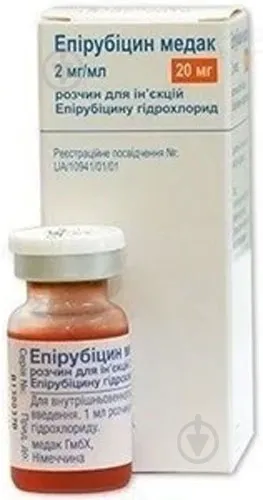
Table of Contents
INSTRUCTIONS FOR MEDICAL USE OF THE MEDICINAL PRODUCT EPIRUBICIN MEDAC (EPIRUBICIN MEDAC)
Composition:
active substance: epirubicin hydrochloride;
1 ml of injection solution contains 2 mg of epirubicin hydrochloride;
excipients: sodium chloride, hydrochloric acid concentrated, water for injections.
Pharmaceutical form. Injection solution.
Main physicochemical properties: clear red-colored solution, free from visible mechanical inclusions.
Pharmacotherapeutic group.
Antineoplastic agents. ATC code L01D B03.
Pharmacological Properties
Pharmacodynamics
Mechanism of action. Epirubicin is an anthracycline antibiotic with cytotoxic activity. The mechanism of action of epirubicin is related to its ability to bind to DNA. Cell culture studies have demonstrated rapid cellular uptake, nuclear localization, inhibition of nucleic acid and protein synthesis, and inhibition of mitosis. Epirubicin has been shown to be active against a broad spectrum of experimental tumors, including L1210 and P388 leukemias, SA 80 sarcomas (both solid and ascitic forms), B16 melanoma, Lewis lung carcinoma, and colon carcinoma 38. Activity of epirubicin has also been demonstrated against human tumors transplanted into athymic nude mice (melanoma, breast, lung, prostate, and ovarian cancers).
Pharmacokinetics
Absorption. In pharmacokinetic studies involving patients with in situ carcinoma of the bladder, low plasma levels of epirubicin are typically detected after intravesical instillation (<10 ng/mL). Thus, significant systemic absorption is unlikely. However, higher absorption rates may be expected in patients with damaged bladder mucosa (e.g., in cases of tumor, cystitis, or surgery).
Distribution. In patients with normal hepatic and renal function, plasma levels following intravenous injection of 60–150 mg/m² of the drug exhibit a triexponential decline model, characterized by a very rapid initial phase, a slow terminal phase, and a mean elimination half-life of approximately 40 hours. These doses fall within the range of pharmacokinetic linearity with respect to both plasma clearance values and metabolic pathways.
Biological transformation. The main identified metabolites are epirubicinol (13-OH epirubicin), as well as glucuronides of epirubicin and epirubicinol.
4`-O-glucuronidation distinguishes epirubicin from doxorubicin and may explain the faster elimination and reduced toxicity of epirubicin. Plasma levels of the main metabolite, the 13-OH derivative (epirubicinol), are correspondingly lower and essentially parallel to those of the unchanged active substance.
Elimination. Epirubicin is primarily eliminated via the liver; high plasma clearance rates (0.9 L/min) indicate that the slow elimination is due to extensive tissue distribution. Urinary excretion within 48 hours accounts for approximately 9–10% of the administered dose.
Biliary excretion is the main route of elimination, with approximately 40% of the administered dose recovered in bile within 72 hours. The active substance does not cross the blood-brain barrier.
Linearity/Non-linearity. A wide range of pharmacokinetic linearity is observed between doses of 60 and 120 mg/m²; the dose of 150 mg/m² lies at the boundary of dose linearity.
Clinical characteristics.
Indications.
Epirubicin is used for the treatment of several neoplastic conditions, including:
- breast cancer;
- ovarian cancer;
- gastric cancer;
- lung cancer;
- malignant lymphomas;
- soft tissue sarcomas;
- liver cancer;
- pancreatic cancer;
- rectal cancer;
- head and neck cancer;
- leukemia.
Epirubicin administered intravesically has been shown to be effective for the treatment of:
- papillary transitional cell carcinoma of the bladder;
- carcinoma in situ of the bladder;
- intravesical prophylaxis of recurrences of superficial bladder carcinoma following transurethral resection.
Contraindications.
- Hypersensitivity to epirubicin or to any excipient of the medicinal product, to other anthracyclines or anthracenediones;
- breastfeeding period.
Intravenous administration of epirubicin is contraindicated in the following conditions:
- persistent myelosuppression due to prior chemotherapy or radiotherapy;
- active bone marrow depression due to previous treatment with other antineoplastic agents or radiotherapy;
- severe hepatic dysfunction;
- cardiac diseases, including those in medical history (particularly NYHA Class IV heart failure, acute myocardial infarction or history of myocardial infarction leading to NYHA Class III or IV heart failure, acute inflammatory heart diseases, arrhythmias with severe hemodynamic disturbances);
- cardiomyopathy;
- unstable angina pectoris;
- prior administration of the maximum cumulative dose of other anthracyclines (e.g., doxorubicin or daunorubicin);
- acute systemic (generalized) infections;
- severe mucositis of the oral cavity and/or gastrointestinal tract.
Contraindications for intravesical administration:
- urinary tract infections;
- invasive tumors penetrating the bladder wall;
- catheterization problems (urethral obstruction caused by significant intravesical neoplasm);
- bladder inflammation;
- hematuria.
Special safety precautions.
Intravenous administration
Epirubicin Medac should be administered using an infusion set with continuous flow of physiological saline. To minimize the risk of thrombosis or perivenous extravasation, the infusion should last from 3 to 20 minutes, depending on the dose and volume of the infusion solution. Rapid bolus injection is not recommended due to the risk of extravasation, which may occur even with adequate blood return upon needle aspiration.
Intravesical administration
The epirubicin solution should be administered via a catheter and retained in the bladder for 1 hour. During the procedure, the patient should periodically turn from side to side to ensure maximum contact of the bladder mucosa with the solution. To avoid dilution of the solution by urine, the patient should refrain from drinking fluids for 12 hours before instillation. After completion of the procedure, the patient should empty the bladder.
Special precautions for handling and disposal. Epirubicin hydrochloride may be further diluted with 5% glucose solution or 0.9% sodium chloride solution and administered intravenously by infusion.
The injection solution contains no preservatives; any unused portion of the solution from the vial must be immediately destroyed according to the institution's internal requirements.
Guidelines for safe handling and disposal of antineoplastic agents
- If preparation of an infusion solution is required, it should be performed by trained personnel under aseptic conditions.
- Preparation of the infusion solution should be carried out in a specially designated aseptic area.
- Appropriate protective gloves, protective eyewear, gown, and mask should be worn.
- Care should be taken to avoid accidental contact of the medicinal product with the eyes. In case of eye contact, rinse eyes thoroughly with large amounts of water and/or 0.9% sodium chloride solution for at least 15 minutes. Then seek medical advice.
- In case of skin contact, thoroughly wash the affected area with soap and water or sodium bicarbonate solution. Do not scrub the skin with a brush. Hands should always be washed after removing gloves.
- In case of spillage or splashing of epirubicin solution, the contaminated area should be treated with diluted sodium hypochlorite solution (containing 1% chlorine), preferably by soaking with this solution, followed by rinsing with water. All used materials must be disposed of as described below.
- Pregnant women should not handle cytotoxic medicinal products.
- Appropriate precautions should be taken when disposing of materials (syringes, needles) used for reconstitution and/or dilution of cytotoxic medicinal products. Any unused product or used materials must be destroyed in accordance with local regulations for disposal of cytotoxic drugs.
Interaction with other medicinal products and other forms of interaction.
Epirubicin is primarily used in combination with other cytotoxic medicinal agents. It is extremely important never to mix epirubicin with these agents in the same syringe.
Additive toxicity may develop, particularly affecting the bone marrow and gastrointestinal tract, and hematological adverse effects are also possible.
The potential risk of cardiotoxicity may increase in patients concurrently receiving cardiotoxic agents (e.g., 5-fluorouracil, cyclophosphamide, cisplatin, taxanes) or concomitant (or prior) radiotherapy to the mediastinal area of the pericardium. When epirubicin is used in combination chemotherapy with other potentially cardiotoxic medicinal products, and when other medicinal products that may cause heart failure (e.g., calcium channel blockers) are used concomitantly, cardiac function should be monitored throughout the treatment period.
Epirubicin is primarily metabolized in the liver. Any medicinal product affecting liver function, when used concomitantly with epirubicin, may also affect epirubicin metabolism, its pharmacokinetics, therapeutic efficacy, and/or toxicity.
Anthracycline derivatives, including epirubicin, should not be used in combination with other cardiotoxic medicinal products unless careful monitoring of cardiac function is performed. Patients receiving anthracycline derivatives after discontinuation of other cardiotoxic medicinal products, particularly those with a long elimination half-life such as trastuzumab, are also at increased risk of developing cardiotoxicity.
The elimination half-life of trastuzumab has been reported to be variable. The substance may remain in the bloodstream for up to 7 months. Therefore, physicians should avoid anthracycline-based therapy for 7 months after discontinuation of trastuzumab, if possible. If anthracyclines are used within this period, careful monitoring of cardiac function is recommended.
Live vaccines should be avoided in patients receiving epirubicin. This also applies for 6 months after discontinuation of chemotherapy. Inactivated or killed vaccines may be administered, although they may be less effective. During epirubicin treatment, patients should also avoid contact with individuals recently vaccinated against poliomyelitis.
Administration of cimetidine resulted in a 50% increase in the area under the curve (AUC) of epirubicin; therefore, cimetidine should be discontinued during epirubicin treatment. When epirubicin was administered at a dose of 100 mg/m² every 3 weeks after cimetidine therapy at a dose of 400 mg twice daily, a 50% increase in epirubicin AUC and a 41% increase in epirubicinol AUC (last p-value <0.05) were observed. Since no changes in AUC of 7-deoxydoxorubicinol aglycone were detected and a reduction in hepatic blood flow was not observed, this phenomenon cannot be explained by reduced activity of cytochrome P450 enzyme system. Cimetidine use should be discontinued during epirubicin treatment.
When paclitaxel is administered prior to epirubicin, paclitaxel may cause increased plasma concentrations of unchanged epirubicin and its metabolites, which are non-toxic and inactive.
Concomitant administration of paclitaxel or docetaxel did not affect the pharmacokinetics of epirubicin when epirubicin was administered before taxane.
This combination can be used with a sequential administration schedule of the two drugs. Infusion of epirubicin and paclitaxel should be administered with at least a 24-hour interval between the administration of these medicinal products.
In one of the studies, it was found that docetaxel may increase plasma concentrations of epirubicin metabolites when administered immediately after epirubicin. Verapamil (racemate) may alter the pharmacokinetics of epirubicin. Dexverapamil (R-enantiomer) may enhance myelosuppressive effects. Quinine may accelerate the initial distribution of epirubicin from blood into tissues and may affect the distribution of epirubicin into erythrocytes.
Concomitant administration of ά2b-interferon may lead to a reduction in the terminal elimination half-life and decreased total clearance of epirubicin.
The possibility of pronounced hematopoietic suppression should be considered in patients previously treated with agents affecting bone marrow (cytostatic agents, sulfonamides, chloramphenicol, phenytoin, amidopyrine derivatives, antiretroviral agents).
Enhanced myelosuppression may occur in patients undergoing combination therapy with an anthracycline and dexrazoxane.
Medicinal products that slow the excretion of uric acid (e.g., sulfonamides, certain diuretics) may lead to increased hyperuricemia when used concomitantly with epirubicin. Epirubicin binds to heparin; a precipitate may form, resulting in loss of efficacy of both agents.
Special precautions and warnings.
General information. Epirubicin should be administered only under the supervision of a physician experienced in the use of chemotherapeutic agents. Diagnostic facilities and conditions for managing possible complications, particularly myelosuppression, must be available, especially during high-dose epirubicin therapy.
Patients should be fully recovered from acute toxicities (e.g., stomatitis, mucositis, neutropenia, thrombocytopenia, and generalized infections) resulting from prior cytotoxic therapy before initiating treatment with epirubicin. High-dose epirubicin therapy (e.g., >90 mg/m² every 3–4 weeks) generally causes similar adverse effects as those observed with standard doses (<90 mg/m² every 3–4 weeks), although the severity of neutropenia and stomatitis/mucositis may increase. High-dose epirubicin therapy requires special attention due to the potential for clinically significant complications associated with severe myelosuppression.
Cardiac function. Cardiotoxicity is a risk associated with anthracycline derivatives, which may manifest as early (acute) or late (delayed) cardiac effects.
Early (acute) effects. Early manifestations of epirubicin cardiotoxicity primarily include sinus tachycardia and/or electrocardiographic (ECG) changes, such as non-specific S–T segment and T-wave abnormalities. Cases of tachycardia, including premature ventricular contractions, ventricular tachycardia, bradycardia, atrioventricular block, and intraventricular conduction defects, have also been reported. These effects are generally not predictive of delayed cardiotoxicity, are rarely clinically significant, and are usually transient and reversible. They should not be considered as indications to discontinue epirubicin therapy.
Late (delayed) effects. Delayed cardiotoxicity typically occurs at the end of or within 2–3 months after completion of epirubicin therapy, although later onset (several months or years after treatment) has been reported. Delayed cardiomyopathy is characterized by a reduction in left ventricular ejection fraction (LVEF) and/or signs and symptoms of congestive heart failure (CHF), such as dyspnea, pulmonary edema, orthostatic edema, cardiomegaly, and hepatomegaly, oliguria, ascites, pleural effusion, and gallop rhythm. Life-threatening CHF is the most severe form of anthracycline-induced cardiomyopathy and represents the dose-limiting toxicity. Heart failure unresponsive to specific medical therapy may develop several weeks after discontinuation of epirubicin.
The risk of developing CHF increases rapidly with cumulative epirubicin doses exceeding 900 mg/m²; exceeding this cumulative dose should be done with extreme caution.
Cardiac function monitoring. ECG monitoring is recommended before and after each treatment cycle. ECG changes such as flattening or inversion of the T wave, S–T segment depression, or arrhythmias (usually transient and reversible) are not a reason to discontinue therapy.
Cardiac function should be assessed before initiating epirubicin therapy and carefully monitored during treatment to minimize the risk of severe heart failure. The risk of severe heart failure can be reduced by regular monitoring of left ventricular ejection fraction (LVEF) during therapy, with prompt discontinuation of epirubicin at the first signs of cardiac dysfunction. Appropriate methods for repeated cardiac assessment include multigated radionuclide angiography (MUGA) or echocardiography (Echocardiography). Baseline cardiac evaluation using ECG and MUGA or echocardiography is recommended, particularly in patients with risk factors for cardiotoxicity. LVEF should be reassessed periodically using MUGA or echocardiography, especially when higher cumulative doses of anthracyclines are administered. The technique used for monitoring should be consistent. Spontaneous reports have described fetal/neonatal cardiotoxicity, including fetal death, following in utero exposure to epirubicin (see section "Special precautions").
Cardiotoxicity in combination with trastuzumab. Heart failure (NYHA class II–IV) has been observed in patients receiving trastuzumab monotherapy or in combination with anthracyclines such as epirubicin. It may range from mild to severe and can be fatal (risk is particularly increased in elderly patients).
Trastuzumab and anthracyclines, such as epirubicin, should not be used concomitantly unless cardiac function is closely monitored within well-controlled clinical trials. Patients previously treated with anthracyclines are also at increased risk of cardiotoxicity when receiving trastuzumab, although the risk is lower than with concurrent use of trastuzumab and anthracyclines.
The half-life of trastuzumab is variable, and the substance may remain in circulation for up to 7 months. Therefore, anthracycline-based therapy should be avoided, if possible, for 7 months after discontinuation of trastuzumab. If anthracyclines are used within this period, careful cardiac monitoring is recommended. Standard heart failure medications should be used if symptoms develop when trastuzumab is administered after epirubicin therapy.
Due to the potential risk of cardiomyopathy, extreme caution is required when the cumulative epirubicin dose exceeds 900 mg/m².
Anthracycline-induced cardiomyopathy is associated with a persistent reduction in Q–R–S amplitude, prolongation of the systolic time interval (pre-ejection period, PEP) beyond normal limits, and reduced ejection fraction (left ventricular ejection time, LVET). ECG changes may suggest anthracycline-induced cardiomyopathy, but ECG is neither sensitive nor specific for detecting anthracycline-related cardiotoxicity.
Risk factors for cardiotoxicity include active or occult cardiovascular disease, concomitant or prior mediastinal/pericardial radiotherapy, prior treatment with other anthracyclines or anthracenediones, and concomitant use of other drugs that may depress myocardial contractility or are cardiotoxic, such as trastuzumab (see section "Interaction with other medicinal products and other forms of interaction").
Elderly patients are at increased risk.
Patients receiving high cumulative doses or those with risk factors should undergo particularly careful cardiac monitoring. However, epirubicin-related cardiotoxicity may occur even at lower cumulative doses, regardless of the presence or absence of risk factors.
The toxicities of epirubicin and other anthracyclines or anthracenediones are likely additive.
Hematological toxicity. Like other cytotoxic agents, epirubicin may cause myelosuppression. Hematological parameters should be evaluated before treatment initiation and during each treatment cycle, including differential white blood cell count. Dose-dependent, reversible leukopenia and/or granulocytopenia (neutropenia) are the predominant manifestations of epirubicin hematological toxicity and represent the most common dose-limiting acute toxicity. Leukopenia and neutropenia are generally more severe with higher doses, reaching their nadir between days 10 and 14 after administration; they are usually transient, with blood cell counts returning to normal by day 21. Thrombocytopenia and anemia may also occur. Clinical consequences of severe myelosuppression include fever, infection, sepsis/septicemia, septic shock, hemorrhage, tissue hypoxia, or death.
Secondary leukemia. Secondary leukemia, with or without a preleukemic phase, has been reported in patients treated with anthracyclines, including epirubicin. The risk is higher when these agents are used in combination with DNA-damaging antineoplastic agents, with radiotherapy, after intensive prior cytotoxic therapy, or at high anthracycline doses.
This type of leukemia may be preceded by a latent period of 1 to 3 years.
Gastrointestinal reactions. Epirubicin is emetogenic. Mucositis/stomatitis typically develops after administration and, in severe cases, may progress over several days, leading to ulceration of the mucous membranes. This adverse effect usually resolves by the third week of treatment.
Hepatic function. The hepatobiliary system is the primary route of epirubicin elimination. Total bilirubin and serum oxaloacetate transaminase levels should be assessed before and during therapy. In patients with elevated bilirubin or transaminase levels, epirubicin clearance may be reduced, leading to increased overall toxicity. Dose reduction is recommended for such patients. Epirubicin should not be administered to patients with hepatic impairment.
Renal function. Serum creatinine levels should be monitored regularly before and during treatment. Dose adjustment is required for patients with elevated serum creatinine (>5 mg/dL).
Injection site reactions. Phlebosclerosis may occur following injection into small vessels or repeated injections into the same vein. Adherence to recommended administration techniques helps minimize the risk of phlebitis/thrombophlebitis at the injection site.
Extravasation. Extravasation of epirubicin during injection may cause local pain, severe tissue damage (blistering, marked cellulitis), and necrosis. If signs or symptoms of extravasation occur during intravenous administration, infusion should be stopped immediately. The risk or severity of extravasation effects can be mitigated by immediate intervention, such as with dexrazoxane (see relevant administration instructions). Pain may be alleviated by cooling the injection site, maintaining a cooled state, applying hyaluronic acid, and topical application of dimethyl sulfoxide. Close monitoring is required, as tissue necrosis may develop weeks later. Surgical consultation for possible resection of the affected area should be considered in cases of extravasation.
Other. As with other cytotoxic agents, isolated cases of thrombophlebitis and thromboembolism, including pulmonary embolism (sometimes fatal), have been reported with epirubicin use.
Epirubicin may discolor urine red for 1–2 days after administration.
Tumor lysis syndrome. Epirubicin may cause hyperuricemia due to extensive purine catabolism resulting from rapid lysis of neoplastic cells (tumor lysis syndrome). Therefore, serum levels of uric acid, potassium, calcium, phosphate, and creatinine should be monitored during treatment. Hydration, urine alkalinization, and prophylactic allopurinol to prevent hyperuricemia may minimize potential complications of tumor lysis syndrome.
Immunosuppression/increased susceptibility to infections. Administration of live or attenuated live vaccines to patients with immune systems weakened by chemotherapeutic agents, including epirubicin, may result in severe or fatal infections. This also applies for 6 months after chemotherapy discontinuation. Patients receiving epirubicin should avoid live vaccines. Inactivated or killed vaccines may be used, but the immune response may be reduced. Contact with individuals recently vaccinated against poliomyelitis should be avoided.
Effects on reproductive function. Epirubicin may cause chromosomal damage in human sperm (genotoxic effect). Men receiving epirubicin should avoid fathering a child during treatment and for 6 months after treatment ends; sperm cryopreservation should be considered before starting epirubicin therapy due to the likelihood of infertility. Men and women receiving epirubicin should use appropriate contraceptive methods. Patients desiring future fertility should consider genetic counseling after completing treatment. Epirubicin may cause amenorrhea or premature menopause in premenopausal women.
Additional warnings and precautions for alternative administration routes
Intravesical administration. Administration of epirubicin may cause symptoms of chemical cystitis (e.g., dysuria, polyuria, nocturia, stranguria, hematuria, voiding disorders, bladder wall necrosis) and bladder shrinkage. Special attention should be paid to catheterization issues (e.g., urethral obstruction due to large intravesical tumors). If vesicoureteral reflux is present, renal function should be monitored regularly.
Intra-arterial administration. Intra-arterial administration of epirubicin (via catheter-based arterial embolization for local or regional treatment of primary malignant hepatic tumors or liver metastases) may cause, in addition to systemic toxicity similar to that seen after intravenous administration, local or regional effects, including gastric and duodenal ulcers (likely due to drug reflux into the gastric artery) and bile duct narrowing due to drug-induced sclerosing cholangitis. This route of administration may lead to extensive necrosis of perfused tissue.
This medicinal product contains 0.154 mmol (or 3.54 mg) of sodium per milliliter of injection solution, which should be considered in patients on a sodium-controlled diet.
Different pack sizes of this medicinal product contain the following amounts of sodium:
- 5 mL vial contains less than 1 mmol sodium (23 mg), i.e., essentially sodium-free.
- 10 mL vial contains 35.42 mg sodium, equivalent to 1.77% of the WHO recommended maximum daily dietary intake of 2 g sodium for adults.
- 25 mL vial contains 88.55 mg sodium, equivalent to 4.43% of the WHO recommended maximum daily dietary intake of 2 g sodium for adults.
- 50 mL vial contains 177.1 mg sodium, equivalent to 8.86% of the WHO recommended maximum daily dietary intake of 2 g sodium for adults.
- 100 mL vial contains 354.21 mg sodium, equivalent to 17.71% of the WHO recommended maximum daily dietary intake of 2 g sodium for adults.
Use during pregnancy or breastfeeding.
Data on the use of epirubicin in pregnant women are lacking or limited. Like most other antineoplastic agents, epirubicin has shown mutagenic and carcinogenic properties in animals (see section "Pharmacological properties"). Animal studies indicate that epirubicin may harm the fetus when administered during pregnancy.
Pregnancy. Epirubicin should be avoided during the first trimester. Available human data do not demonstrate or exclude serious congenital malformations or spontaneous abortions associated with epirubicin use during the second and third trimesters. Women of reproductive potential should be informed about the potential risk to the fetus, and genetic counseling should be considered if pregnancy occurs during epirubicin therapy. Epirubicin should not be administered to pregnant women or women of reproductive potential unless the expected benefit to the mother outweighs the potential risk to the fetus.
Spontaneous reports have described transient fetal and/or neonatal ventricular hypokinesis, transient elevation of cardiac enzymes, and fetal death due to suspected anthracycline-induced cardiotoxicity following in utero exposure to epirubicin during the second and/or third trimesters (see section "Special precautions"). Fetal and/or neonatal monitoring for cardiotoxicity and appropriate testing according to standard care practices are required.
Lactation. Epirubicin has been shown to pass into the milk of rats. It is unknown whether epirubicin passes into human breast milk. Since many drugs, including other anthracyclines, are excreted in breast milk and due to the potential for serious adverse reactions in nursing infants, breastfeeding should be discontinued before starting epirubicin therapy.
Epirubicin Medac is contraindicated during breastfeeding (see section "Contraindications"). Women should be advised not to breastfeed for at least 7 days after the last dose.
Fertility. There are no definitive data on whether epirubicin negatively affects human fertility or has teratogenic effects. Epirubicin may cause chromosomal damage in human sperm. Men receiving epirubicin therapy should seek advice on sperm preservation due to the potential for irreversible infertility. Both men and women receiving epirubicin should be informed of the potential risk to offspring and reproductive function.
Epirubicin may cause amenorrhea and premature menopause in women.
Women of reproductive potential/contraception in men and women. Women of reproductive potential should be informed to avoid pregnancy and to use effective contraception for at least 7 months after the last dose. Men receiving epirubicin should be advised to use effective contraception during treatment and for at least 4 months after the last dose.
Ability to affect reaction speed when driving or operating machinery.
No systemic adverse effects affecting the ability to drive or operate machinery have been reported. However, epirubicin may cause nausea and vomiting, which could temporarily impair the ability to drive or operate vehicles or machinery.
Administration and Dosage
Dosing
To prevent cardiotoxicity of the drug, the total cumulative dose of epirubicin should not exceed 900–1000 mg/m².
Standard Dose.
When epirubicin is used as monotherapy, the recommended dose for adults is 60–90 mg/m² of body surface area. Epirubicin should be administered intravenously over 3–5 minutes. Administration should be repeated every 21 days, depending on the patient's hematological parameters and bone marrow function. If signs of toxicity occur, including severe neutropenia/neutropenic fever and thrombocytopenia (which may persist up to day 21), consideration should be given to dose adjustment or delaying the administration of the next dose.
High Dose.
Epirubicin as a monotherapy for high-dose treatment of lung cancer should be administered according to the following regimens:
- Small cell lung cancer (previously untreated): 120 mg/m² on day 1 every 3 weeks;
- Non-small cell lung cancer (epidermoid, squamous, and adenocarcinoma) in previously untreated patients: 135 mg/m² on day 1 or 45 mg/m² on days 1, 2, and 3, repeated every 3 weeks.
When administered at high doses, epirubicin may be given either as an intravenous bolus over 3–5 minutes or as an infusion lasting up to 30 minutes.
Breast Cancer.
For adjuvant treatment of patients with early-stage breast cancer, intravenous administration of epirubicin at doses ranging from 100 mg/m² (single dose on day 1) to 120 mg/m² (two divided doses on days 1 and 8) every 3–4 weeks is recommended, in combination with intravenous cyclophosphamide and 5-fluorouracil, and oral tamoxifen. Cycles should be repeated every 3–4 weeks. For high-dose treatment, epirubicin hydrochloride should be administered via intravenous bolus injections over 3–5 minutes or via intravenous infusions lasting up to 30 minutes.
Lower doses (60–75 mg/m² for conventional therapy and 105–120 mg/m² for high-dose therapy) are recommended for patients with impaired bone marrow function due to prior chemotherapy or radiotherapy, depending on age or neoplastic bone marrow infiltration. The total dose per cycle may be divided over 2–3 consecutive days. Subsequent doses of epirubicin are typically used either as monotherapy or as part of combination chemotherapy for various tumors (see Table 1).
Table 1
| Oncological indications |
Dosage of epirubicin (mg/m2)* |
|
| Monotherapy |
Combination therapy |
|
| Ovarian cancer |
60−90 |
50−100 |
| Gastric cancer |
60−90 |
50 |
| Bladder cancer |
Intravesical administration 50 mg/50 ml or 80 mg/50 ml (in situ carcinoma). Prophylaxis: 50 mg/50 ml weekly for 4 weeks, then monthly for 11 months. |
|
* General doses administered on the first day or on the first, second, and third days at 21-day intervals.
Combination therapy. When epirubicin is used in combination with other cytotoxic agents, the dose should be reduced accordingly. Usually recommended doses are given in the table above.
Treatment of patients with impaired liver function. The main route of elimination of epirubicin from the body is primarily via the hepatobiliary system. In patients with impaired liver function, the dose should be reduced according to the serum bilirubin level as indicated below:
| Serum bilirubin level |
Serum glutamate-oxaloacetate transaminase (SGOT) level |
Dose reduction |
| 1.4–3 mg/100 ml |
more than 4 times |
50% |
| >3 mg/100 ml |
75% |
In general, if bilirubin levels are within the range of 1.4–3 mg/100 mL and bromsulphthalein (BSP) retention is 9–15%, it is recommended to administer half the usual dose. If bilirubin levels and BSP retention exceed these values, it is recommended to administer one-quarter of the usual dose.
Mild renal impairment is not a reason to alter the recommended doses due to the low level of epirubicin excretion via the kidneys.
Renal impairment. Moderate renal impairment does not require dose reduction in terms of limiting the amount of epirubicin excreted by this route. However, dose adjustment may be necessary for patients with serum creatinine levels >5 mg/dL.
Method of administration.
Epirubicin should be administered only intravenously or intravesically. Epirubicin is ineffective when administered orally; it must not be administered intramuscularly or intrathecally.
Intravenous administration.
Intravenous infusion should last 5–10 minutes through an intravenous infusion set (ensure the needle is properly placed in the vein), with a bottle of 0.9% sodium chloride solution already connected. This technique reduces the risk of drug extravasation and allows for flushing the vein with 0.9% sodium chloride solution at the end of administration. Leakage of epirubicin from the vein during infusion may lead to tissue damage and even necrosis. Venous sclerosis may occur as a result of injection into small vessels or repeated injections into the same vein. In case of extravasation, administration should be stopped immediately.
Intravesical administration. Epirubicin may be administered intravesically for the treatment of superficial bladder cancer and in situ carcinoma. This drug should not be used intravesically for the treatment of invasive tumors penetrating through the bladder wall; in such cases, systemic therapy or surgical intervention is more appropriate. Epirubicin has also been successfully used intravesically as a prophylactic measure following transurethral resection of superficial tumors to prevent recurrences. For the treatment of superficial bladder carcinoma, the following regimen is recommended, using the dilution table (see Table 2).
Instillations of 50 mg/50 mL weekly for 8 weeks (the drug is diluted with physiological saline or sterile distilled water). In case of local toxic effects, the dose should be reduced to 30 mg/50 mL.
In situ carcinoma: Instillations of 80 mg/50 mL (depending on individual tolerance).
Prophylaxis: Weekly instillations of 50 mg/50 mL for 4 weeks, followed by monthly instillations at the same dose for 11 months.
Table 2
Dilution table for solutions used in bladder instillation
| Required dose of epirubicin (mg) |
Volume of injectable epirubicin solution 2 mg/ml (ml) |
Volume of diluent (water for injections or sterile 0.9% sodium chloride solution) (ml) |
Total volume for intravesical instillation (ml) |
| 30 |
15 |
35 |
50 |
| 50 |
25 |
25 |
50 |
| 80 |
40 |
10 |
50 |
The solution should be administered intravesically over 1–2 hours. To avoid premature dilution by urine, patients should be instructed not to consume fluids for 12 hours prior to instillation. During instillation, the patient should be repositioned periodically, and should also be advised to empty the bladder after completion of the instillation.
Children.
The safety and efficacy of epirubicin in children have not been established.
Overdose.
Acute epirubicin overdose may cause severe myelosuppression (occurring 10–14 days after administration, primarily leukopenia and thrombocytopenia), gastrointestinal toxicity (primarily mucositis), and acute cardiac complications (within 24 hours). Late cardiac failure associated with anthracycline derivatives may occur several months to several years after completion of therapy.
Treatment.
If signs of intoxication occur, epirubicin administration should be immediately discontinued and symptomatic therapy initiated. In case of cardiac involvement, consultation with a cardiologist is required. In cases of severe myelosuppression, consideration should be given to transfusion of deficient blood components and placement of the patient in a sterile environment. No specific antidote is known. Close monitoring of patients is essential.
Adverse reactions
Over 10% of patients receiving treatment may experience adverse effects.
The most common adverse effects are myelosuppression, gastrointestinal reactions, anorexia, alopecia, and infectious diseases.
The following adverse effects have been observed and reported during epirubicin treatment, with the following frequency.
Table 3
| System organ classes |
Very common (≥1/10) |
Common (≥1/100 to <1/10) |
Uncommon (≥1/1,000 to <1/100) |
Rare (≥1/10,000 to <1/1,000) |
Frequency not known (cannot be estimated from the available data) |
| Infections and infestations |
Infectious disorders, conjunctivitis |
Bacterial cystitis § |
Sepsis*, pneumonia* |
Septic shock, cellulitis |
|
| Benign, malignant and unspecified neoplasms (including cysts and polyps) |
Acute lymphoblastic leukemia, leukemia, acute myeloid leukemia (see section “Special precautions for use”) |
||||
| Blood and lymphatic system disorders |
Myelosuppression (leukopenia, granulocytopenia, neutropenia, anemia, febrile neutropenia, thrombocytopenia) |
||||
| Immune system disorders |
Anaphylactic reactions, including skin rash, pruritus, fever and chills, allergic reactions after intravesical administration, hypersensitivity |
Anaphylactic shock |
|||
| Metabolism and nutrition disorders |
Loss of appetite, dehydration* |
Hyperuricemia (see section “Special precautions for use”) |
|||
| Nervous system disorders |
Headache |
Dizziness |
|||
| Eye disorders |
Keratitis |
||||
| Cardiac disorders |
Cardiotoxic effects (ECG changes, tachycardia, arrhythmia, cardiomyopathy), CHF (with manifestations such as dyspnea, edema, hepatomegaly, ascites, pulmonary edema, pleural effusion, gallop rhythm), ventricular tachycardia, bradycardia, atrioventricular block, bundle branch block (see section “Special precautions for use”). |
||||
| Vascular disorders |
Flushing, phlebitis* |
Bleeding*, erythema* |
Embolism, vascular embolism, thrombophlebitis* |
Shock*, phlebosclerosis, thromboembolism |
|
| Respiratory, thoracic and mediastinal disorders |
Pulmonary embolism* |
Hypoxia due to myelosuppression |
|||
| Gastrointestinal disorders |
Mucositis, stomatitis, vomiting, diarrhea, nausea, which may lead to loss of appetite and abdominal pain |
Esophagitis, gastrointestinal pain*, abdominal pain, erosion of gastrointestinal tract*, gastrointestinal hemorrhage*, gastrointestinal ulcer*, erosion of oral mucosa, oral pain, burning sensation of mucosa |
Pigmentation of oral cavity* |
||
| Skin and subcutaneous tissue disorders |
Alopecia, cessation of beard growth in men, skin toxicity |
Rash, pruritus, hyperpigmentation of nails*, skin disorders, hyperpigmentation of skin*, local tissue toxicity |
Urticaria*, erythema* |
Photosensitization* |
|
| Renal and urinary disorders |
Chromaturia (red discoloration of urine for 1-2 days after administration) |
dysuria§, hematuria§, polyuria§ |
|||
| Reproductive system and breast disorders |
Amenorrhea |
Azoospermia |
|||
| General disorders and administration site conditions |
Malaise, pyrexia |
Chills*, erythema at infusion site |
Asthenia |
Local pain, paravenous administration may cause soft tissue necrosis |
|
| Investigations |
Changes in transaminase levels |
Asymptomatic decrease in left ventricular ejection fraction |
|||
| Injury, poisoning and procedural complications |
Chemical cystitis, sometimes hemorrhagic, observed after intravesical administration (see section “Special precautions for use”) |
Increased sensitivity of irradiated skin (radiation recall reaction) |
§ For intravesical administration.
*Adverse reactions reported during the post-marketing period.
Benign, malignant and unspecified neoplasms (including cysts and polyps).
Secondary acute myeloid leukemia, with or without a preceding preleukemic phase, has been observed in patients receiving epirubicin in combination with DNA-damaging antineoplastic agents. These types of leukemia are characterized by a short latency period (1–3 years).
Blood and lymphatic system disorders. High doses of epirubicin have been safely administered to a large number of patients who had not previously received drug therapy and who had various solid tumors. The use of high doses resulted in adverse effects similar to those observed with conventional doses, except for reversible severe neutropenia (<500 neutrophilic granulocytes/mm³ for <7 days), which was observed in most patients. Hospitalization and supportive therapy due to severe infectious complications were required in only a few patients receiving high doses.
Skin and subcutaneous tissue disorders. Alopecia, usually reversible, occurs in 60–90% of cases during treatment with this medicinal product and is accompanied by absence of beard growth in men.
General disorders and administration site reactions. Mucositis may develop 5–10 days after the start of treatment, usually accompanied by stomatitis with painful erosive areas, ulcer formation, and bleeding, primarily along the tongue and sublingual mucosa. Local pain and tissue necrosis (after accidental paravenous injection) may also occur.
Intravesical administration. Since only a small amount of the active substance is absorbed after intravesical administration, severe systemic adverse reactions as well as allergic reactions to this medicinal product are rare. Local reactions such as burning sensation and increased urinary frequency (polyuria) are usually observed. Bacterial or chemical cystitis may occasionally occur. These adverse reactions are generally reversible.
Reporting of suspected adverse reactions.
Reporting of suspected adverse reactions after authorization of the medicinal product is important. It allows continued monitoring of the benefit-risk balance of the medicinal product. In case of any adverse reactions, healthcare professionals should be informed.
Shelf life. 2.5 years.
Storage conditions.
Store in a refrigerator (2–8 °C). Keep out of the reach of children. Store the vial in its cardboard packaging in a place protected from light.
Storage conditions after reconstitution. When used, the solution may be further diluted under aseptic conditions with 5% glucose solution or 0.9% sodium chloride solution and administered by intravenous infusion. Chemical and physical stability of the diluted solution has been demonstrated for 48 hours when stored at 25 °C in a protected from light environment.
However, from a microbiological standpoint, the solution should be used immediately. If not used immediately, the responsibility for duration and conditions of storage prior to use lies with the user and should generally not exceed 24 hours at 2–8 °C, unless reconstitution was performed under controlled and validated aseptic conditions.
Incompatibilities.
Prolonged contact of this medicinal product with alkaline pH solutions (including sodium bicarbonate solutions) should be avoided, as such contact leads to hydrolysis (decomposition) of the active substance. Only 5% glucose solution or 0.9% sodium chloride solution should be used as diluents.
Reports have been documented regarding physical incompatibility of this medicinal product with heparin. Epirubicin should not be mixed with heparin. This medicinal product must not be mixed with other medicinal products in the same syringe, except as described above.
Packaging.
Epirubicin medac 10 mg/5 mL in a clear glass vial with a capacity of 5 mL. One vial per cardboard box.
Epirubicin medac 20 mg/10 mL in a clear glass vial with a capacity of 10 mL. One vial per cardboard box.
Epirubicin medac 50 mg/25 mL in a clear glass vial with a capacity of 25 mL. One vial per cardboard box.
Epirubicin medac 100 mg/50 mL in a clear glass vial with a capacity of 50 mL. One vial per cardboard box.
Epirubicin medac 200 mg/100 mL in a clear glass vial with a capacity of 100 mL. One vial per cardboard box.
Prescription category. Prescription only.
Manufacturer. medac Gesellschaft für klinische Spezialpräparate mbH.
Manufacturer's address and place of business.
Theaterstraße 6, 22880 Wedel, Germany.