Epirubicin "ebeve"
Ukraine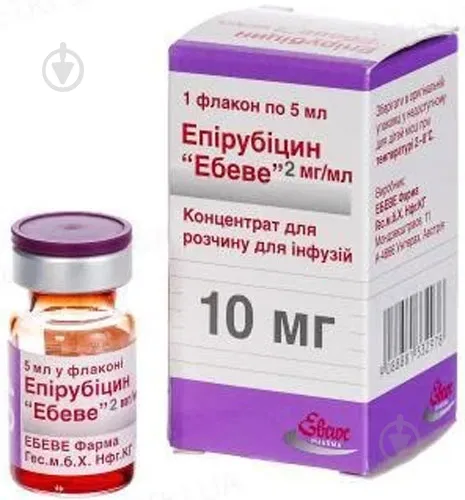
Table of Contents
INSTRUCTIONS FOR MEDICAL USE OF THE MEDICINAL PRODUCT EPIRUBICIN «EBEWE»
Composition:
Active substance: epirubicin;
1 ml of concentrate contains 2 mg of epirubicin hydrochloride;
Excipients: sodium chloride, diluted hydrochloric acid, water for injections.
Pharmaceutical form. Concentrate for solution for infusion.
Main physicochemical properties: clear red solution free from particles.
Pharmacotherapeutic group. Antineoplastic agents. Anthracyclines and related substances.
ATC code L01D B03.
Pharmacological Properties
Pharmacodynamics
Epirubicin is an active substance belonging to the anthracycline group. Its pharmacodynamics are similar to those of other anthracycline cytostatics; its antimicrobial properties are not utilized. Epirubicin negatively affects all phases of the cell cycle and is most active during the S and G2 phases. After intercalating between DNA base pairs, epirubicin stabilizes the "topoisomerase II—DNA" complex, leading to irreversible DNA strand breaks.
Pharmacokinetics
After intravenous administration (40–100 mg/m²), the plasma elimination curve of epirubicin is triphasic: t½∝: 3–4.8 minutes; t½ß: 1.1–2.6 hours; t½γ (terminal half-life): 18–45 hours.
Epirubicin has a large volume of distribution (32–46 L/kg). Plasma clearance ranges from 40 to 75 L/h. In case of impaired liver function, plasma clearance is reduced.
Epirubicin is intensively metabolized in the liver into epirubicinol (13-OH-epirubicin), glucuronides of epirubicin and epirubicinol, and aglycones. 4'-O-glucuronidation differentiates epirubicin from doxorubicin and may explain the faster elimination of epirubicin and its reduced toxicity. Plasma levels of the main metabolite, epirubicinol (13-OH-epirubicin), are lower and practically parallel to the levels of the unchanged active substance.
Biliary excretion of epirubicin and its metabolites accounts for approximately 35% of the administered dose. Renal excretion of 11–15% of epirubicin and its metabolites occurs predominantly via the kidneys; about 5–7% is excreted unchanged in the urine.
After intravesical administration of epirubicin for the treatment of superficial bladder cancer, tumor tissues absorb 2–10 times more epirubicin than healthy tissues.
Clinical characteristics.
Indications.
Epirubicin is indicated for the treatment of a wide range of malignancies, including:
- Breast cancer;
- Malignant lymphomas;
- Soft tissue sarcomas;
- Gastric cancer;
- Liver cancer;
- Pancreatic cancer;
- Rectal cancer;
- Head and neck cancer;
- Lung cancer;
- Ovarian cancer;
- Leukemia.
Intravesical administration of epirubicin is indicated for the treatment of superficial bladder cancer (transitional cell carcinoma, in situ carcinoma) and for the prevention of recurrence after transurethral resection.
Contraindications.
- Hypersensitivity to epirubicin hydrochloride or to any other component of the medicinal product, to other anthracyclines or anthracenediones.
- Breastfeeding period.
Intravenous administration is contraindicated: in persistent myelosuppression, cardiomyopathy, following prior treatment with maximum cumulative doses of epirubicin hydrochloride and/or anthracenediones, recent myocardial infarction, severe arrhythmia, presence of generalized infection, in patients with severe hepatic impairment, unstable angina, severe mucositis of the oral mucosa and/or gastrointestinal tract.
Epirubicin therapy is contraindicated in patients with active bone marrow depression due to previous treatment with other antineoplastic agents or radiotherapy, and in patients who have already received treatment with maximum cumulative doses of epirubicin hydrochloride and/or other anthracyclines (e.g., doxorubicin and daunorubicin).
Cardiac function disorders, including those in medical history, such as: progressive heart failure, myocardial failure grade IV (failure at rest), severe arrhythmia and conduction disturbances with serious hemodynamic impairment, acute inflammatory heart diseases, unstable angina, acute myocardial infarction or myocardial infarction in history leading to grade III–IV heart failure, cardiomyopathy.
Concomitant use with yellow fever vaccine is contraindicated.
Intravesical administration is contraindicated in patients with urinary tract infections, invasive tumor invading the muscular layer of the bladder, bladder inflammation, large volume of residual urine, contracted bladder, and in patients with hematuria. Special caution is required in case of difficulties with catheterization (e.g., urethral obstruction caused by significant intravesical neoplasm).
Special safety precautions.
The infusion solution must be prepared only by specially trained personnel under aseptic conditions. Pregnant healthcare workers must not handle the drug.
During solution preparation, appropriate protective clothing (disposable gloves, goggles, gown, and mask) must be worn in a designated area, preferably with adequate ventilation.
The working area must be suitable for drug reconstitution (preferably equipped with a laminar airflow system); the work surface must be protected with disposable absorbent paper on a plastic backing.
Strict adherence to guidelines for the use and disposal of cytotoxic agents is mandatory.
All materials used during drug administration or cleanup, including gloves, must be collected in disposable bags for toxic waste for subsequent high-temperature disposal.
In case of skin contact, wash the affected area thoroughly with water and soap or sodium bicarbonate solution. Do not scrub the skin with a brush. Always wash hands after removing gloves.
All precautions must be taken to avoid contact of the drug with the eyes. In case of eye exposure, rinse thoroughly with large amounts of water and/or 0.9% sodium chloride solution and seek immediate medical attention. Affected areas must be examined carefully by a specialist.
In case of accidental contamination of surfaces with the drug solution, clean with 1% sodium hypochlorite solution, followed by copious amounts of water.
Epirubicin treatment must be administered only by qualified physicians experienced in the use of antineoplastic agents.
For single use only. Discard any unused portion. Use only freshly prepared, clear solutions.
Interaction with other medicinal products and other forms of interactions.
Epirubicin may be used in combination with other antineoplastic agents, but it is extremely important never to mix it with these agents in the same syringe. Patients should be closely monitored due to the potential for additive toxic effects. Additive toxicity particularly affects the bone marrow, other hematopoietic organs, and the gastrointestinal tract. The use of epirubicin in combination chemotherapy with other cardiotoxic agents, as well as concomitant use of cardioactive drugs (e.g., calcium channel blockers), requires careful monitoring of cardiac function throughout the treatment course.
Epirubicin is extensively metabolized in the liver. Impaired liver function due to concomitant therapy may alter metabolism, pharmacokinetics, therapeutic efficacy, and/or toxicity of epirubicin.
Anthracyclines, including epirubicin, should be used in combination with other cardiotoxic agents only with careful monitoring of cardiac function. Patients receiving anthracyclines after discontinuation of other cardiotoxic agents, particularly those with long elimination half-lives such as trastuzumab, may also be at increased risk of cardiotoxicity.
The half-life of trastuzumab is approximately 28–38 days, and the drug may remain in circulation for up to 27 weeks after discontinuation of trastuzumab therapy. Therefore, physicians should, whenever possible, avoid initiating anthracycline-based therapy within 27 weeks following the end of trastuzumab treatment. If anthracyclines have been administered previously, careful monitoring of cardiac function is recommended.
Severe hematopoietic suppression may occur in patients who have undergone (prior) therapy with agents affecting bone marrow (i.e., cytostatic agents, sulfonamides, chloramphenicol, diphenylhydantoin, amidopyrine derivatives, antiretroviral agents).
Potential interactions of epirubicin hydrochloride with cimetidine, dexverapamil, dexrazoxane, docetaxel, interferon α2b, paclitaxel, and quinine have been observed:
- Administration of cimetidine resulted in a 50% increase in the area under the curve (AUC) of epirubicin; therefore, cimetidine should be discontinued during epirubicin therapy;
- Dexverapamil may alter the pharmacokinetics of epirubicin and enhance bone marrow suppression;
- Administration of paclitaxel prior to epirubicin may lead to increased plasma concentrations of unchanged epirubicin and its metabolites, although these metabolites are neither toxic nor active. When taxanes (paclitaxel or docetaxel) are administered after epirubicin, no changes in epirubicin pharmacokinetics were observed. This combination can be used with multi-step administration of the two drugs. Infusion of epirubicin hydrochloride and paclitaxel should be separated by an interval of at least 24 hours;
- Following high-dose dexrazoxane (900 mg/m² and 1200 mg/m²), increased systemic clearance and reduced AUC of epirubicin hydrochloride were observed. Patients receiving combined therapy with anthracyclines and dexrazoxane may experience myelosuppression more frequently;
- In one study, docetaxel was found to increase plasma concentrations of epirubicin metabolites when administered immediately after epirubicin hydrochloride;
- Concomitant use of interferon α2b may reduce both terminal half-life and total clearance of epirubicin;
- Quinine may accelerate the initial distribution of epirubicin from blood to tissues and affect epirubicin distribution into erythrocytes.
Epirubicin is primarily metabolized in the liver. Impaired liver function due to concomitant therapy may impair metabolism, pharmacokinetics, therapeutic efficacy, and/or toxicity of epirubicin.
Live vaccines should be avoided in patients receiving epirubicin. Inactivated or killed vaccines may be administered, although they may be less effective.
Concomitant use of drugs that cause uric acid retention (e.g., sulfonamides, certain diuretics) with epirubicin may increase the risk of hyperuricemia.
Severe impairment of hematopoiesis should be considered in patients previously treated with agents affecting bone marrow (i.e., cytostatic agents, sulfonamides, chloramphenicol, phenytoin, amidopyrine derivatives, antiretroviral agents).
Enhanced myelosuppression is possible in patients who have undergone combined therapy with an anthracycline and dexrazoxane.
Special precautions for use.
Treatment should be administered exclusively under the supervision of a qualified physician experienced in the use of antineoplastic agents. The drug should be used strictly in accordance with the instructions.
Patients should have recovered from acute toxicity (e.g., stomatitis, neutropenia, thrombocytopenia, and generalized infections) resulting from prior cytotoxic therapy before initiating treatment with epirubicin.
High-dose epirubicin hydrochloride therapy (e.g., ≥ 90 mg/m² every 3–4 weeks) causes adverse effects generally similar to those observed with standard doses (< 90 mg/m² every 3–4 weeks), although the severity of neutropenia and stomatitis/mucositis may increase.
High-dose epirubicin hydrochloride therapy requires special attention due to the potential for clinical complications arising from profound myelosuppression.
Surfaces contaminated with epirubicin should be cleaned using a 10% sodium hypochlorite solution. A color change indicates oxidative inactivation of epirubicin hydrochloride. In case of contact with skin or mucous membranes, the affected area should be thoroughly rinsed with water and soap.
Cardiac function. Cardiotoxicity is a risk associated with anthracycline therapy and may manifest as early (acute) or late (delayed) effects.
Early (i.e., acute) effects. Early manifestations of epirubicin cardiotoxicity primarily include sinus tachycardia and/or electrocardiographic (ECG) changes such as non-specific S-T segment and T-wave abnormalities. Cases of tachycardia, including premature ventricular contractions, ventricular tachycardia, bradycardia, as well as atrioventricular and intraventricular conduction blocks, have also been reported. These effects are usually not predictive of subsequent development of delayed cardiotoxicity, are rarely clinically significant, and generally should not be considered an indication for discontinuation of epirubicin therapy.
Late (i.e., delayed) effects. Delayed cardiotoxicity typically develops at the end of an epirubicin treatment course or within 2–3 months after therapy completion, although later onset (months or years after treatment) has also been reported. Delayed cardiomyopathy is characterized by a reduction in left ventricular ejection fraction (LVEF) and/or symptoms of congestive heart failure (CHF), such as dyspnea, pulmonary edema, orthostatic edema, cardiomegaly, and hepatomegaly, oliguria, ascites, pleural effusion, and gallop rhythm.
Life-threatening congestive heart failure is the most severe form of anthracycline-induced cardiomyopathy and reflects the drug's dose-limiting toxicity.
The risk of developing congestive heart failure increases rapidly in patients receiving cumulative doses of epirubicin hydrochloride exceeding 900 mg/m²; exceeding this cumulative dose should be done only with extreme caution.
Cardiac function should be assessed before initiating epirubicin therapy and carefully monitored throughout treatment to minimize the risk of serious cardiac dysfunction.
The risk can be reduced by regular monitoring of left ventricular ejection fraction during treatment, with prompt discontinuation of epirubicin hydrochloride upon the first signs of cardiac dysfunction. Appropriate methods for repeated cardiac function assessment include evaluation of LVEF using multigated radionuclide angiography (MUGA) or echocardiography (ECHO). Baseline cardiac assessment using ECG and MUGA or ECHO is recommended, particularly in patients with risk factors that increase the likelihood of cardiotoxicity. Repeat LVEF assessment using MUGA or ECHO is advised, especially when higher cumulative doses of anthracyclines are administered. The technique used for monitoring should be appropriate.
Given the potential risk of cardiomyopathy, exceeding a cumulative epirubicin hydrochloride dose of 900 mg/m² should be done with extreme caution.
Risk factors for cardiotoxicity may be present in patients with active or occult cardiovascular disease, in patients who have previously or concurrently received radiotherapy to the mediastinum/pericardial area, in patients previously treated with other anthracyclines or anthracenediones, and in those receiving concomitant medications that may depress myocardial contractility or are cardiotoxic (e.g., trastuzumab) (see section "Interaction with other medicinal products and other forms of interaction"); elderly patients are at increased risk.
Heart failure [New York Heart Association (NYHA) class II–IV] has been observed in patients receiving trastuzumab monotherapy or combination therapy with anthracyclines such as epirubicin. It may range from moderate to severe and may be fatal.
Trastuzumab and anthracyclines, such as epirubicin, should not be used in combination unless cardiac function is carefully monitored within well-controlled clinical trials. Patients previously treated with anthracyclines are also at increased risk of developing cardiotoxicity when treated with trastuzumab, although the risk is lower than with concomitant use of trastuzumab and anthracyclines.
Since the reported half-life of trastuzumab is approximately 28–38 days, trastuzumab may remain in circulation for up to 27 weeks after discontinuation of treatment. Patients receiving anthracyclines, such as epirubicin, after stopping trastuzumab may be at increased risk of developing cardiotoxicity. Therefore, physicians should, whenever possible, avoid anthracycline-based therapy for 24 weeks after discontinuation of trastuzumab. If anthracyclines such as epirubicin are used, careful monitoring of cardiac function is recommended.
If symptoms of heart failure occur during trastuzumab use after epirubicin treatment, standard heart failure medications should be administered.
Particular attention should be paid to monitoring cardiac function in patients receiving high cumulative doses and in those with risk factors. However, epirubicin-related cardiotoxicity may occur even at lower cumulative doses, regardless of the presence or absence of risk factors.
The toxicity of epirubicin hydrochloride and other anthracyclines or anthracenediones is likely additive.
Hematological toxicity. Like other cytotoxic agents, epirubicin may cause myelosuppression. Hematological parameters should be evaluated before and during each treatment cycle with epirubicin, including differential leukocyte count. Dose-dependent, reversible leukopenia and/or granulocytopenia (neutropenia) are the predominant manifestations of hematological toxicity of epirubicin hydrochloride and the most common dose-limiting acute toxicity of this drug.
Leukopenia and neutropenia are generally more severe with high-dose regimens, reaching their nadir between days 10 and 14 after drug administration; these effects are usually transient, with leukocyte and neutrophil counts returning to normal by day 21 in most cases.
Thrombocytopenia and anemia may also occur. Clinical consequences of severe myelosuppression include fever, infection, sepsis/septicemia, septic shock, hemorrhage, tissue hypoxia, or death.
Secondary leukemia. Secondary leukemia, with or without a preleukemic phase, has been observed in patients treated with anthracyclines, including epirubicin. Secondary leukemia occurs more frequently when these drugs are used in combination with DNA-damaging antineoplastic agents, in combination with radiotherapy, after intensive prior cytotoxic therapy, or at higher anthracycline doses. Such leukemias may be preceded by a latent period of 1 to 3 years.
Gastrointestinal reactions. Epirubicin has emetogenic properties. Mucositis/stomatitis may develop early after administration of the active substance and, in severe cases, may progress within a few days to ulceration of the mucous membranes. In most patients, this adverse effect resolves by the third week of treatment.
Liver function. The primary route of elimination of epirubicin hydrochloride is via the hepatobiliary system.
Liver function tests (measurement of alanine aminotransferase [ALT], aspartate aminotransferase [AST], alkaline phosphatase, and bilirubin levels) are recommended before and during epirubicin therapy to rule out hepatic insufficiency.
Reduced drug clearance and increased overall toxicity of epirubicin hydrochloride occur in patients with elevated liver enzymes (bilirubin and AST). Dose reduction is recommended for such patients. Epirubicin should not be administered to patients with impaired liver function.
Renal function. Serum creatinine levels should be regularly monitored before and during treatment. Dose adjustment is required for patients with elevated serum creatinine (> 5 mg/dL).
Injection site reactions. Phlebosclerosis may occur following injection into small vessels or repeated injections into the same vein. Adherence to recommended administration techniques helps minimize the risk of phlebitis/thrombophlebitis at the injection site.
Extravasation. Extravasation of epirubicin hydrochloride during intravenous administration may cause local pain, severe tissue damage (blisters, severe cellulitis), and tissue necrosis. If signs of extravasation occur during intravenous infusion of epirubicin hydrochloride, the infusion should be stopped immediately. The adverse effects of extravasation can be prevented or minimized by immediate application of specific therapy, e.g., dexrazoxane (see relevant instructions for use). Patient discomfort can be alleviated by cooling the injection site and maintaining a cooled state for 24 hours, along with the use of hyaluronic acid and dimethyl sulfoxide (DMSO). Close monitoring of the patient is required, as tissue necrosis may develop weeks later. In case of extravasation, consultation with a plastic surgeon regarding possible resection of the affected area is recommended.
Other. As with other cytotoxic agents, isolated cases of thrombophlebitis and thromboembolism, including pulmonary embolism (some fatal), have been reported with epirubicin hydrochloride.
Tumor lysis syndrome. Epirubicin may cause hyperuricemia as a result of extensive purine catabolism accompanying rapid lysis of neoplastic cells (tumor lysis syndrome). Therefore, serum levels of uric acid, potassium, calcium phosphate, and creatinine should be monitored after initiation of treatment. Fluid replacement, urine alkalinization, and administration of allopurinol to prevent hyperuricemia may reduce the risk of complications associated with tumor lysis syndrome.
Immunosuppression/increased susceptibility to infections. Administration of live or attenuated live vaccines to patients with immune systems weakened by chemotherapeutic agents, including epirubicin, may result in severe or fatal infections (see section "Interaction with other medicinal products and other forms of interaction"). Live vaccines should be avoided in patients receiving epirubicin. Inactivated or killed vaccines may be administered, although they may be less effective.
Effects on the reproductive system. Epirubicin may have genotoxic effects. Men and women receiving epirubicin should use appropriate contraceptive methods during therapy and for 6 months after completion of treatment. Patients wishing to have children after therapy completion are advised to seek genetic counseling (see section "Use during pregnancy or breastfeeding").
Additional warnings and precautions for other routes of administration.
Intravesical administration. Administration of epirubicin hydrochloride may cause symptoms of chemical cystitis (such as dysuria, polyuria, nocturia, difficulty urinating, hematuria, bladder discomfort, bladder wall necrosis) and bladder spasm. Special attention should be paid to catheterization issues (e.g., urethral obstruction due to massive intravesical tumors).
Intra-arterial administration. Intra-arterial administration of epirubicin hydrochloride (transcatheter arterial chemoembolization for local or regional primary hepatocellular carcinoma or liver metastases) may cause, in addition to general toxic effects qualitatively similar to those observed after intravenous administration of epirubicin hydrochloride, local or regional effects such as gastroduodenal ulcers (likely due to drug reflux into gastric arteries) and bile duct stenosis due to drug-induced sclerosing cholangitis.
This route of administration may lead to extensive necrosis of perfused tissues.
Excipients. This medicinal product contains 0.154 mmol (3.54 mg) of sodium per ml. This should be taken into account in patients on a controlled sodium diet.
Epirubicin may cause reddish discoloration of urine for 1–2 days after administration.
Stability of infusion solution after dilution.
The chemical and physical stability of the ready-to-use epirubicin "Ebewe" solution, diluted in an appropriate infusion medium (5% glucose solution, 0.9% sodium chloride solution) to concentrations of 0.1 mg/ml and 1 mg/ml, has been demonstrated for 28 days when stored refrigerated.
When stored at room temperature, these solutions remain stable for 4 days in both light-protected and non-protected conditions.
From a microbiological standpoint, the diluted solution should be used immediately. If not used immediately, storage conditions and duration should be monitored by the responsible personnel. The storage period of the diluted solution should generally not exceed 24 hours at 2–8 °C, unless prepared under controlled and validated aseptic conditions.
For intravesical administration, solutions containing 30–80 mg of epirubicin hydrochloride in 50 ml of physiological saline are recommended.
Risk of microbial contamination exists at all stages of preparation.
Use during pregnancy or breastfeeding.
Pregnancy. Pregnancy should be ruled out in women of reproductive age before initiating treatment, and women should use effective contraception during therapy.
Experimental data from animal studies suggest that epirubicin may cause fetal harm when administered during pregnancy; therefore, it should not be used during pregnancy.
If epirubicin is used during pregnancy or if a patient becomes pregnant while receiving this drug, she should be informed of the potential risk to the fetus.
There are no studies in pregnant women. Epirubicin should be used during pregnancy only if the potential benefit to the woman outweighs the potential risk to the fetus.
Breastfeeding. It is unknown whether epirubicin is excreted in human milk. Given that many drugs, including anthracyclines, are excreted in breast milk and the potential for serious adverse effects in breastfed infants, women should discontinue breastfeeding before starting epirubicin therapy.
Fertility. Epirubicin may cause chromosomal damage in human spermatozoa. Men receiving epirubicin therapy should use effective contraception and, if appropriate and possible, seek advice on sperm preservation due to the potential for irreversible infertility caused by therapy.
Epirubicin may cause amenorrhea and premature menopause in women.
Fertile women / contraception for men and women. Due to the genotoxic potential of epirubicin, fertile women should be advised to avoid pregnancy and use effective contraception during treatment and for at least 6.5 months after the last dose of the drug.
Men undergoing treatment with epirubicin should be advised to use effective contraception and avoid fathering children during treatment and for at least 3.5 months after the last dose of the drug.
Ability to affect reaction speed when driving or operating machinery.
Studies on the effect of the medicinal product on the ability to drive or operate machinery have not been conducted.
Epirubicin may cause acute episodes of nausea and vomiting, dizziness, which may lead to temporary impairment of the ability to drive or operate machinery.
Method of Administration and Dosage
Epirubicin is intended for intravenous or intravesical administration only.
Intravenous administration.
Epirubicin Ebewe is recommended to be administered via a catheter using an infusion system by free-flowing saline solution intravenously, ensuring that the needle is properly inserted into the vein. Care should be taken during infusion to avoid extravasation (see section "Special precautions"). If extravasation occurs, the infusion must be stopped immediately.
Standard dosage regimen.
For monotherapy with epirubicin hydrochloride, the recommended dose for adults is 60–90 mg/m² body surface area. Epirubicin hydrochloride should be administered intravenously over 3–5 minutes. Administration should be repeated every 21 days, depending on hematological/bone marrow status.
In case of development of toxic effects, particularly severe neutropenia/neutropenic sepsis and thrombocytopenia (which may persist up to day 21), administration of the drug should be delayed or subsequent doses reduced.
High-dose regimen.
For high-dose treatment, epirubicin hydrochloride can be administered either as intravenous bolus injections over 3–5 minutes or as intravenous infusions lasting up to 30 minutes.
Lung cancer.
For high-dose monotherapy with epirubicin hydrochloride in the treatment of lung carcinoma, the following regimens are recommended:
- Small cell lung cancer (in patients previously untreated): 120 mg/m² on day 1 every 3 weeks.
- Non-small cell lung cancer (epidermoid, squamous, and adenocarcinoma) in patients previously untreated: 135 mg/m² on day 1 or 45 mg/m² on days 1, 2, and 3 every 3 weeks.
Breast cancer.
Doses up to 135 mg/m² (with monotherapy using Epirubicin Ebewe) and up to 120 mg/m² (in combination therapy), administered every 3–4 weeks, have been effective and well tolerated in patients with breast cancer.
For adjuvant chemotherapy in early-stage breast cancer with regional lymph node involvement, recommended doses of epirubicin hydrochloride range from 100 mg/m² (single dose on day 1 of the cycle) to 120 mg/m² (divided doses on days 1 and 8 of the cycle), in combination with cyclophosphamide and 5-fluorouracil administered intravenously, and tamoxifen administered orally. Cycles should be repeated every 3–4 weeks.
The drug should be administered either as an intravenous bolus injection over 5–10 minutes or as an intravenous infusion lasting no more than 30 minutes.
Lower doses (60–75 mg/m² or 105–120 mg/m² in high-dose regimens) are recommended for patients with reduced bone marrow reserve due to prior chemotherapy and/or radiotherapy, elderly patients, or those with tumor infiltration of the bone marrow. The total dose per cycle may be divided and administered over 2–3 consecutive days.
The table below provides general dosage recommendations for monotherapy and combination chemotherapy in various tumors:
| Oncological disease |
Dose of epirubicin hydrochloride (mg/m2)a |
|
| Monotherapy |
Combined therapy |
|
| Advanced ovarian cancer |
60–90 |
50–100 |
| Gastric cancer |
60–90 |
50 |
| Small cell bronchial carcinoma |
120 |
120 |
| Bladder cancer |
50 mg/50 ml or 80 mg/50 ml (in situ carcinoma) Prophylaxis: 50 mg/50 ml weekly for 4 weeks, then monthly for 11 months |
|
| a Doses are usually administered on day 1 of the cycle, or on days 1, 2, and 3 of the cycle at 21-day intervals. |
||
Combination therapy.
If Epirubicin "Ebewe" is used in combination with other cytostatic agents, the dose should be reduced accordingly. The commonly used doses are given in the table above.
Hepatic impairment.
Epirubicin hydrochloride is eliminated predominantly via the hepatobiliary system. Doses for patients with impaired liver function should be reduced according to the serum bilirubin level as follows:
| Serum bilirubin level |
Dose reduction |
| 24–51 µmol/l |
50 % |
| > 51 µmol/l |
75 % |
Renal impairment.
Since renal excretion of epirubicin hydrochloride is negligible, dose reduction is not required for patients with moderate renal dysfunction. However, dose adjustment may be necessary for patients with serum creatinine levels exceeding 5 mg/dL.
Intravesical administration.
Epirubicin hydrochloride may be administered intravesically for the treatment of superficial bladder cancer and carcinoma in situ. Epirubicin should not be used intravesically for the treatment of invasive tumors that have penetrated through the bladder wall; in such cases, systemic chemotherapy or surgical intervention is more effective (see section "Contraindications"). Epirubicin hydrochloride has also been successfully used for intravesical prophylaxis of recurrences following transurethral resection of superficial bladder tumors.
For the treatment of superficial bladder cancer, the following schedule is recommended, using the dilution table: 8 instillations per week at a dose of 50 mg/50 mL (diluted with physiological saline or sterile distilled water).
If local toxicity occurs: dose reduction to 30 mg/50 mL is recommended.
Carcinoma in situ: up to 80 mg/50 mL (depending on individual patient tolerance).
For prophylaxis: 4 instillations per week at a dose of 50 mg/50 mL, followed by 11 monthly instillations at the same dose.
Route of administration.
Epirubicin Ebewe is ineffective when administered orally and should not be administered intramuscularly or intrathecally.
Intravenous administration.
Intravenous administration should last 5–10 minutes via an intravenous infusion system. It is essential to ensure that the needle is properly placed in the vein, with the 0.9% sodium chloride solution already connected. This technique reduces the risk of drug extravasation and allows for flushing the vein with 0.9% sodium chloride solution at the end of administration. Leakage of Epirubicin Ebewe from the vein during administration may lead to tissue damage and even necrosis. Venous sclerosis may occur as a result of injection into small vessels or repeated injections into the same vein.
Intravesical administration.
The Epirubicin Ebewe solution administered via catheter should remain in the bladder for 1 hour, after which the patient should void the bladder. To avoid premature dilution by urine, the patient should be instructed not to drink fluids for 12 hours prior to instillation. During instillation, the patient should be repositioned periodically from side to side to ensure more uniform exposure of the bladder wall to the drug solution.
Preparation of solution.
Epirubicin Ebewe should be diluted with 0.9% sodium chloride solution or 5% glucose solution.
The product should be used within 24 hours after the first puncture of the vial stopper. Any unused solution should be discarded.
When stored in the refrigerator, the injectable solution may gelatinize. Consistency is restored within 2–4 hours at room temperature (15–25 °C) with gentle shaking of the vial.
Dilution of solutions used for instillation into the bladder.
| Required dose of epirubicin |
Volume of epirubicin hydrochloride solution 2 mg/ml |
Volume of diluent (sterile water for injection or sterile 0.9% sodium chloride solution) |
Total volume for instillation into the urinary bladder |
| 30 mg |
15 ml |
35 ml |
50 ml |
| 50 mg |
25 ml |
25 ml |
50 ml |
| 80 mg |
40 ml |
10 ml |
50 ml |
Children. The efficacy and safety of the drug for the treatment of children have not been studied.
Overdose.
Acute overdose of epirubicin may cause severe myelosuppression (mainly leukopenia and thrombocytopenia), gastrointestinal toxicity (mainly mucositis), and cardiac complications (acute myocardial degeneration within 24 hours). Latent cardiac failure has been observed following anthracycline administration, from several months (up to 6 months) to several years after completion of therapy (see section "Special instructions"). Patients should be carefully monitored. If symptoms of cardiac failure occur, patients should be treated with conventional methods.
Treatment. Treatment is symptomatic; in case of severe myelosuppression, general supportive measures should be implemented, including blood transfusions, administration of antibiotics, and isolation of the patient in a sterile room.
Epirubicin cannot be removed by dialysis.
Adverse Reactions
The frequency of the adverse reactions listed below is classified as follows: very common (≥ 1/10); common (≥ 1/100 to < 1/10); uncommon (≥ 1/1000 to < 1/100); rare (≥ 1/10,000 to < 1/1000); very rare (< 1/10,000); not known (frequency cannot be estimated from the available data).
Adverse reactions are expected to occur in more than 10% of patients undergoing treatment. The most commonly observed adverse reactions are myelosuppression, gastrointestinal disorders, anorexia, alopecia, and infection.
Infections and infestations.
Common: infection.
Not known: septic shock (may result from myelosuppression), sepsis, pneumonia.
Benign, malignant and unspecified neoplasms (including cysts and polyps).
Rare: acute lymphoblastic leukemia, acute myeloid leukemia, secondary acute myeloid leukemia with or without preleukemic phase in patients treated with epirubicin in combination with other DNA-damaging antineoplastic agents. This type of leukemia has a short latency period (1–3 years).
Blood and lymphatic system disorders.
Very common: myelosuppression (leukopenia, granulocytopenia, neutropenia, anemia, and febrile neutropenia). With high-dose therapy, reversible severe neutropenia (< 500 neutrophils/mm³ for < 7 days) may develop.
Uncommon: thrombocytopenia.
Not known: bleeding and tissue hypoxia due to myelosuppression.
Immune system disorders.
Rare: anaphylaxis (anaphylactic/anaphylactoid reactions with or without shock, including rash, pruritus, urticaria, chills).
Metabolism and nutrition disorders.
Common: anorexia, dehydration.
Rare: hyperuricemia.
Nervous system disorders.
Rare: dizziness.
Eye disorders.
Not known: conjunctivitis, keratitis.
Cardiac disorders.
Rare: congestive heart failure (dyspnea, edema, hepatomegaly, ascites, pulmonary edema, pleural effusion, gallop rhythm), cardiotoxicity (ECG changes, arrhythmia, cardiomyopathy), ventricular tachycardia, bradycardia, atrioventricular block, bundle branch block, arterial hypotension.
Vascular disorders.
Common: hot flushes.
Uncommon: phlebitis, thrombophlebitis.
Not known: shock, thromboembolic events, including pulmonary embolism (in isolated cases fatal).
Gastrointestinal disorders.
Common: mucositis (usually develops 5–10 days after initiation of treatment), esophagitis, hyperpigmentation of the oral mucosa, stomatitis, nausea, vomiting, diarrhea (which may lead to dehydration), abdominal pain, ulcerative stomatitis, mouth pain, burning sensation of mucosa, and pigmentation of cheeks.
Not known: erosions, ulcer formation, pain or burning sensation, bleeding from the mouth, hyperpigmentation of the oral mucosa.
Skin and subcutaneous tissue disorders.
Very common: alopecia (occurs in 60–90% of patients; in men, associated with cessation of facial hair growth). Alopecia is dose-dependent and reversible in most cases.
Rare: urticaria, local erythematous reactions along the vein used for injection.
Not known: local toxicity, rash, pruritus, erythema, hot flushes, skin and nail changes (hyperpigmentation), photosensitivity, increased sensitivity of irradiated skin (radiation recall reaction).
Renal and urinary disorders.
Very common: red discoloration of urine for 1–2 days after drug administration.
Reproductive system and breast disorders.
Rare: amenorrhea, azoospermia.
General disorders and administration site conditions.
Common: erythema at the infusion site.
Rare: malaise, asthenia, fever, chills, hyperpyrexia.
Not known: phlebosclerosis, local pain, severe cellulitis, tissue necrosis following accidental paravenous administration.
Investigations.
Rare: changes in transaminase levels.
Not known: asymptomatic decrease in left ventricular ejection fraction.
Injury, poisoning and procedural complications.
Common: chemical cystitis, sometimes hemorrhagic, observed after intravesical administration.
After intravesical administration.
Since only a small amount of the active substance is absorbed following intravesical instillation, severe systemic drug reactions and allergic reactions are very rarely observed.
Local reactions such as burning sensation and increased frequency of urination (polyuria) are frequently reported. Isolated cases of bacterial or chemical cystitis have been reported (see section "Special precautions for use"). These adverse reactions are usually reversible.
Shelf life. 2 years.
Storage conditions. Store in the original packaging, out of the reach of children, at +2 to +8 °C.
Incompatibilities.
Epirubicin "Ebewe" must not be mixed with heparin due to chemical incompatibility. When epirubicin hydrochloride is used in combination with other cytostatic agents, they should not be mixed in the same syringe. Additionally, epirubicin should not be diluted with alkaline solutions (as this causes hydrolysis).
Packaging. 5 ml (10 mg), 25 ml (50 mg), 50 ml (100 mg), or 100 ml (200 mg) in a vial; 1 vial per carton.
Prescription category. Prescription only.
Manufacturer.
FARÉVÁ Unterach GmbH
or
EBEWE Pharma Ges.m.b.H. Nfg. KG
Manufacturer's address and place of business.
Mondseestrasse 11, 4866 Unterach am Attersee, Austria.
Mondseestrasse 11, 4866 Unterach am Attersee, Austria.