Enema-sella single-use enema
Ukraine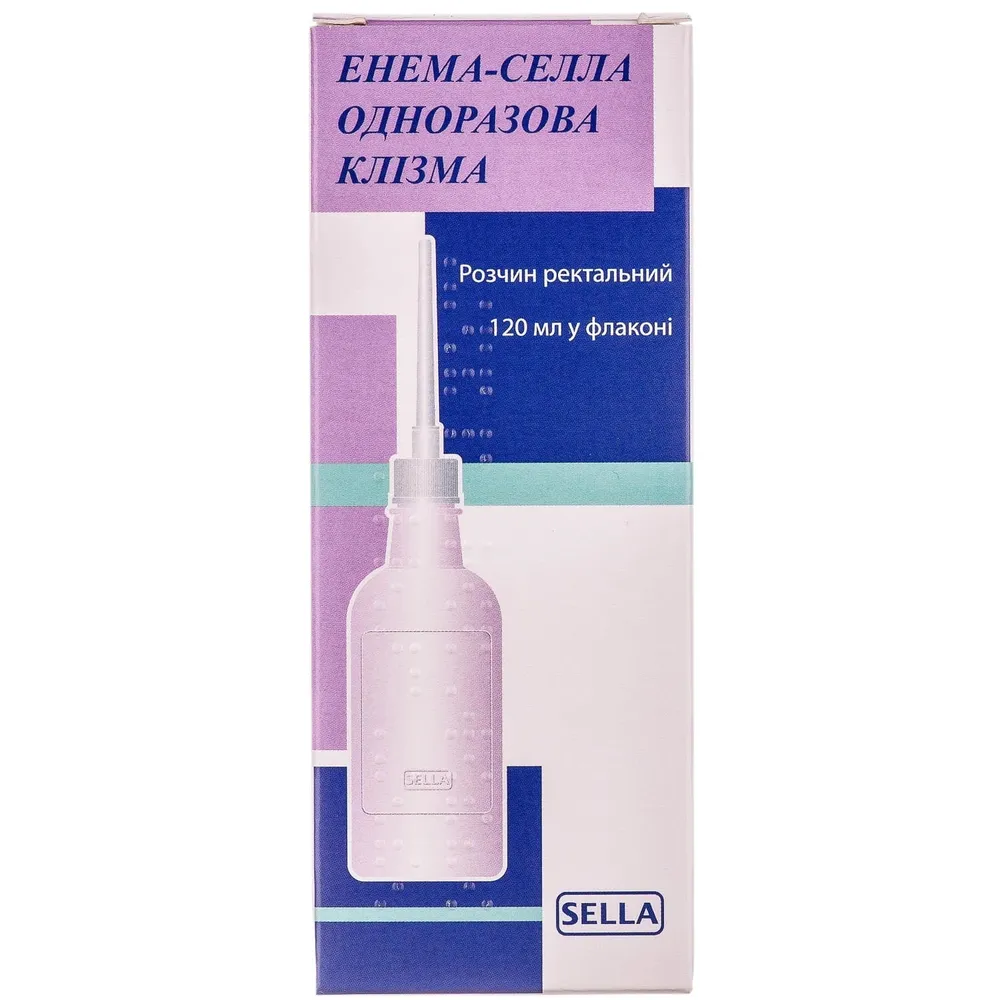
Table of Contents
INSTRUCTION for medical use of the medicinal product Enema-Sella single-use enema
Composition:
Active substances: sodium dihydrogen phosphate dihydrate, disodium hydrogen phosphate dodecahydrate.
100 ml of rectal solution contains: sodium dihydrogen phosphate dihydrate equivalent to sodium dihydrogen phosphate monohydrate 16 g; disodium hydrogen phosphate dodecahydrate equivalent to disodium hydrogen phosphate heptahydrate 6 g;
Excipients: methylparaben (E 218), propylparaben (E 216), purified water.
Pharmaceutical form. Rectal solution.
Main physicochemical characteristics: clear, colorless solution.
Pharmacotherapeutic group.
Agents affecting the digestive system and metabolism. Purgatives. Enemas.
ATC code A06AG20.
Pharmacological properties.
Pharmacodynamics.
The drug acts as a saline laxative when administered rectally. Accumulation of fluid in the lower intestine causes distension and promotes intestinal peristalsis and motility, resulting in evacuation of only the rectum, sigmoid colon, and part or all of the descending colon.
Pharmacokinetics.
Absorption in the colon is minimal; however, asymptomatic hyperphosphatemia, with phosphate levels 2 to 3 times higher than normal, has been reported in approximately 25% of individuals with normal renal function after oral administration of bowel preparations containing sodium phosphate. Under normal conditions, the most intense absorption of phosphorus occurs in the small intestine, which rectally administered preparations do not reach.
Clinical characteristics.
Indications.
Episodic constipation.
Conditions requiring bowel cleansing, such as before and after surgical interventions on the colon, during labor and postpartum, prior to proctoscopy, sigmoidoscopy or colonoscopy, as well as before radiological examination of the colon.
Contraindications.
- Hypersensitivity to the active substances or to any other component of the medicinal product.
- Conditions causing increased absorption capacity or reduced elimination capacity, for example, in the presence of intestinal obstruction or decreased intestinal motility:
- congenital or acquired megacolon;
- anorectal or intestinal stricture;
- partial intestinal occlusion;
- narrowing or incomplete opening of the anus or rectum;
- Hirschsprung's disease;
- suspected intestinal obstruction;
- suspected paralytic ileus;
- ileostomy.
- Undiagnosed gastrointestinal pathology:
- suspicion of: appendicitis; perforation/injury or obstruction of the intestine; active inflammatory bowel disease (e.g. Crohn’s disease or ulcerative colitis);
- undiagnosed rectal bleeding.
- Renal insufficiency.
- Congestive heart failure.
- Recent illness or feelings of weakness or thirst.
- Abdominal pain.
- Nausea or vomiting.
- Acute hemorrhoidal crisis with pain and bleeding.
- Dehydration and conditions where absorption capacity is enhanced or evacuation capacity is reduced.
- Pediatric age.
- Uncontrolled arterial hypertension.
- Hyperphosphatemia.
Concomitant use with other medicinal products containing sodium phosphate.
Interaction with other medicinal products and other forms of interaction.
Patients should inform their physician if they have recently used any other medicinal products, whether prescription or over-the-counter, particularly:
- medications for the treatment of arterial hypertension or angina (calcium channel blockers);
- diuretics;
- certain medications used in psychiatric disorders (lithium);
- any other medications that may cause dehydration or affect electrolyte levels (potassium, sodium, phosphates, or water) in the body.
Use with caution in patients taking the above-mentioned medications, as there is a risk of developing hyperphosphatemia, hypocalcemia, hypokalemia, hypernatremic dehydration, and acidosis.
Patients taking medications that prolong the QT interval may have an increased risk of this adverse reaction when treated concomitantly with sodium phosphate.
Concomitant use of calcium supplements or calcium-containing antacids may increase the risk of ectopic calcification.
The product should not be co-administered with other medicinal products containing sodium phosphate, including oral sodium phosphate solution or tablets (see section "Contraindications").
Since hypernatremia is associated with low lithium levels, concomitant use of this product with lithium therapy may lead to decreased serum lithium levels and reduced efficacy.
Special precautions for use.
Do not use the medicinal product in the presence of nausea, vomiting, or abdominal pain without prior medical advice.
In case of defecation following administration of this medicinal product, drink plenty of fluids to prevent dehydration, especially in conditions that may lead to dehydration or when taking medicinal products that may reduce glomerular filtration rate, such as diuretics, angiotensin-converting enzyme inhibitors (ACE inhibitors, e.g. enalapril, ramipril, lisinopril), angiotensin receptor blockers (ARBs, e.g. losartan, candesartan, eprosartan, irbesartan, olmesartan, telmisartan, valsartan), or nonsteroidal anti-inflammatory drugs (NSAIDs).
Since the medicinal product contains sodium phosphates, there is a risk of increased serum concentrations of sodium and phosphate and decreased concentrations of calcium and potassium, which may lead to hypernatraemia, hyperphosphataemia, hypocalcaemia, and hypokalaemia with clinical signs resembling tetany and renal failure. Electrolyte imbalance is of particular concern in children suffering from megacolon or any other condition involving fluid retention by enema, and in patients with concomitant diseases. For this reason, the medicinal product should be administered with caution in elderly or debilitated patients; patients receiving lithium therapy; patients with ascites, cardiac disorders, rectal mucosal lesions (ulcers, fissures), colostomy; patients taking diuretics or other medicinal products affecting electrolyte balance, drugs that may prolong the QT interval (e.g. amiodarone, arsenic trioxide, astemizole, azithromycin, erythromycin, clarithromycin, chlorpromazine, cisapride, citalopram, domperidone, terfenadine, procainamide), or patients with a history of electrolyte imbalance, as hypocalcaemia, hypokalaemia, hyperphosphataemia, or hypernatraemia may occur. Use with caution in patients taking medicinal products affecting renal perfusion, renal function, or hydration. In case of suspected electrolyte imbalance or in patients with a history of hypophosphataemia, electrolyte levels should be monitored before and after administration of the medicinal product.
The medicinal product should be used with caution in patients with impaired renal function when the benefit outweighs the risk of hyperphosphataemia.
Repeated or prolonged use is not recommended, as it may lead to dependence, chronic constipation, and loss of normal bowel function (intestinal atony). Administration of more than one enema within 24 hours may be harmful. Unless otherwise directed by a physician, the medicinal product should not be used for more than one week.
Frequent or prolonged use, or use of excessive doses, may cause persistent diarrhoea with subsequent loss of fluids, mineral salts (especially potassium), and other essential nutrients.
In more severe cases, there is a risk of developing dehydration or hypokalaemia, which may lead to cardiac dysfunction or neuromuscular disorders, particularly when concomitantly treated with cardiac glycosides, diuretics, or corticosteroids.
Pharmacological treatment of constipation should be considered as an adjunct to dietary and hygienic measures (e.g. increased dietary fibre and fluid intake, physical activity, and restoration of intestinal peristalsis).
Treatment of chronic or recurrent constipation requires medical supervision to ensure proper diagnosis, prescription of appropriate medicinal products, and monitoring during therapy.
Careful medical evaluation is necessary if the need for Enema-Sella single-use enema arises due to a sudden change in bowel frequency and characteristics lasting more than two weeks, or if laxative treatment is ineffective.
Before using the medicinal product, read the instructions for use and administration. Patients should be advised to stop administration immediately if resistance is felt, as forceful insertion may cause local injury. Rectal bleeding after administration may indicate a serious condition. In such cases, discontinue further use and consult a physician.
Defecation usually occurs approximately 5 minutes after administration; therefore, retention of the enema for longer than 5 minutes is not recommended. If defecation does not occur after administration or if retention lasts longer than 10 minutes, serious adverse effects may occur. In such cases, discontinue further use and consult a physician, who will decide whether laboratory tests are needed to detect possible electrolyte disturbances and minimize the risk of severe hyperphosphataemia.
The medicinal product contains methylparaben (E 218) and propylparaben (E 216) and may therefore cause allergic reactions (possibly delayed).
Enema-Sella single-use enema is a solution for rectal administration. DO NOT SWALLOW.
Use during pregnancy or breastfeeding.
There are insufficient data to assess the potential risk of embryotoxic effects or congenital malformations associated with the use of this medicinal product; therefore, it should not be used during pregnancy or if pregnancy is suspected.
The medicinal product may be used only on medical advice during or after childbirth.
Since the active substances contained in the medicinal product may pass into breast milk, it is recommended to express and discard breast milk for 24 hours after administration of the enema and not to use it for breastfeeding.
Ability to influence the speed of reactions when driving or operating machinery.
Enema-Sella single-use enema has no direct effect on the ability to drive or operate machinery. However, some adverse effects may occur after administration of the medicinal product. Therefore, before driving or operating machinery, it is recommended to assess the patient's individual response to the medicinal product.
Method of Administration and Dosage
The medication is intended for rectal use only.
The recommendations below should be followed unless otherwise directed by a physician.
Adults, including elderly patients:
1 bottle no more than once daily, or as prescribed by a physician.
Instructions for administering the enema:
- The patient should remove the protective cap.
- Lie on the left side, bending both knees.
- Gently insert the bottle's nozzle into the rectum with steady pressure, directing it toward the navel.
- Squeeze the bottle until all its contents have been emptied into the bowel.
Administration should be stopped if any resistance is felt. Forced insertion may cause injury.
Note: It is not necessary to completely empty the bottle. The bottle contains more solution than needed to achieve the desired effect; therefore, a small residual amount of liquid is acceptable.
- Carefully withdraw the nozzle from the rectum. Some leakage of liquid from the bottle may occur.
- Remain in the same position until a strong urge to defecate is felt, which usually occurs within 2–5 minutes.
- After use, place the bottle back into the cardboard packaging for proper disposal.
If rectal bleeding is observed, seek immediate medical advice.
Be prepared for the urge to defecate within 5 minutes after using the medication. This is normal and indicates that the medication is working. It is advisable to stay near a toilet until the effect of the medication subsides.
If no urge to defecate occurs within the expected time, consult a physician. Do not use additional doses until advised by a doctor.
It is important to drink plenty of clear fluids, such as water, clear soups, herbal teas, black tea, or black coffee, or fruit juices without pulp (but avoid red or purple juices) to prevent dehydration. In general, drink 250 mL per hour until the effect of the medication has passed. Afterward, continue drinking clear fluids, preferably water, to satisfy thirst following the clinical procedure or as directed by a physician.
Children. Not to be used in pediatric practice.
Overdose.
Fatal cases have been reported when sodium phosphate enemas were used in excessive doses, over prolonged periods, or in patients with intestinal obstruction.
The most commonly observed effects following oral or rectal administration are gastrointestinal irritation (abdominal pain, nausea, vomiting, diarrhea). Persistent diarrhea leads to loss of fluids, mineral salts (especially potassium), and other essential nutrients.
Electrolyte imbalance may manifest as thirst, vomiting, weakness, edema, bone pain (osteomalacia), and hypoalbuminemia.
In more severe cases, there is a risk of developing dehydration or hypokalemia, which may lead to cardiac dysfunction or neuromuscular disorders, particularly if the patient is concurrently treated with cardiac glycosides, diuretics, or corticosteroids.
Fluid and electrolyte levels in the body must be restored.
Usually, appropriate preventive measures are sufficient: ensure adequate fluid intake, especially fruit juices.
See also the section "Special Instructions" in the leaflet regarding repeated or prolonged use of the medication.
Significant absorption of phosphate may cause hyperphosphatemia, hypocalcemia, and hypomagnesemia.
Alterations in fluid and electrolyte balance have been observed following oral, rectal, and intravenous administration.
Severe hyperphosphatemia and hypocalcemia may lead to tetany, seizures, bradycardia, QT interval prolongation, arrhythmias, coma, and cardiac arrest. Severe dehydration, hypernatremia, arterial hypotension, metabolic acidosis, and tachycardia may also occur.
Elderly individuals, children, and patients with renal insufficiency are at increased risk of toxic effects.
Recovery from toxic effects is usually achieved through rehydration. In severe cases, calcium and magnesium salts (10% calcium gluconate) should be administered to correct electrolyte imbalances, along with measures to enhance excretion of exogenous phosphorus, and dialysis may be required.
If more medication than recommended has been used or if the medication has been accidentally swallowed (ingested), seek immediate medical advice. If possible, bring the bottle or cardboard packaging to show the physician.
Side effects.
The undesirable effects listed below are classified using the following frequency categories: very common (≥ 1/10); common (≥ 1/100 to < 1/10); uncommon (≥ 1/1000 to < 1/100); rare (≥ 1/10,000 to < 1/1000); very rare (< 1/10,000); not known (cannot be estimated from the available data):
Very rare (< 1/10,000) cases observed:
Immune system disorders: hypersensitivity reactions (e.g. urticaria).
Skin and subcutaneous tissue disorders: blisters, pruritus, burning sensation.
Metabolic and nutritional disorders: dehydration, hyperphosphatemia, hypocalcemia, hypokalemia, hypernatremia, metabolic acidosis, tetany.
Gastrointestinal disorders: nausea, vomiting, abdominal pain, abdominal spasm, diarrhea with fluid and electrolyte loss, especially in cases of severe constipation, gastrointestinal pain, anal discomfort, proctalgia.
General disorders and administration site conditions: rectal irritation, pain, burning sensation, chills.
Investigations: transient increase in blood phosphorus levels.
If any adverse reactions occur, treatment should be discontinued and medical advice should be sought.
Shelf life. 5 years.
Storage conditions.
Store at temperatures not exceeding 25 °C in the original packaging.
Keep out of reach and sight of children.
Packaging.
120 ml of the preparation in a bottle, with 1 applicator with cap in a cardboard box.
Pharmaceutical category. Over-the-counter.
Manufacturer.
A. SELLА CHEMICAL-PHARMACEUTICAL LABORATORY S.R.L.
Manufacturer's address and location of operations.
Via Vicenza, 67-36015 Schio (VI), Italy.