Eneas
Ukraine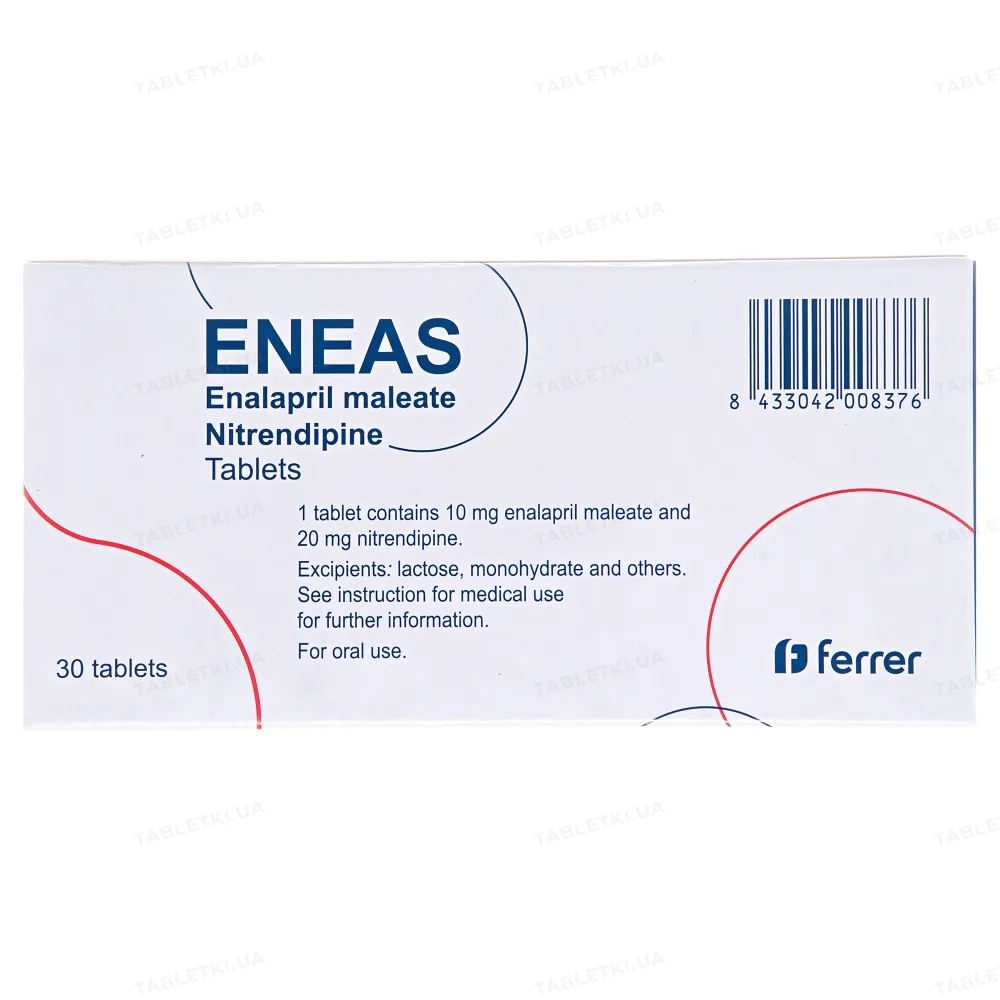
Table of Contents
INSTRUCTIONS FOR MEDICAL USE OF THE MEDICINAL PRODUCT ENEAS
Composition:
Active substances:
enalapril maleate; nitrendipine;
One tablet contains 10 mg of enalapril maleate and 20 mg of nitrendipine.
Excipients:
sodium hydrocarbonate; lactose monohydrate; povidone K25; microcrystalline cellulose; corn starch; magnesium stearate; sodium lauryl sulfate.
Pharmaceutical form.
Tablets.
Main physico-chemical properties:
Yellow, oblong-shaped, biconvex tablets with "E/N" imprint on one side.
Pharmacotherapeutic group.
Agents acting on the renin-angiotensin system. Inhibitors of angiotensin-converting enzyme in combination with calcium antagonists. ATC code C09BB06.
Pharmac ological properties.
Pharmac odynamics.
The active compounds contained in the medicinal product ENEAS exert a mutually complementary effect.
After absorption, enalapril is hydrolyzed to enalaprilat, which inhibits angiotensin-converting enzyme (ACE), the enzyme responsible for converting angiotensin I to angiotensin II. Inhibition of ACE leads to decreased concentrations of angiotensin II, increased plasma renin activity, and reduced aldosterone secretion.
The mechanism of action of enalapril is primarily associated with suppression of the renin-angiotensin-aldosterone system (RAAS), which plays a significant role in blood pressure regulation. Therefore, enalapril may exert antihypertensive effects even in patients with low-renin hypertension. Long-term administration of enalapril to patients with primary arterial hypertension and renal insufficiency may improve renal function by increasing glomerular filtration rate.
Nitrendipine is a calcium antagonist, a derivative of 1,4-dihydropyridine. Its antihypertensive mechanism of action is related to inhibition of calcium ion influx through cell membranes of vascular smooth muscle cells. By reducing intracellular calcium concentration, nitrendipine decreases vascular muscle contractility, leading to peripheral arterial dilation, reduction in total peripheral resistance, and lowering of pathologically elevated arterial pressure. Nitrendipine has a moderate natriuretic effect, particularly at the beginning of treatment.
Pharmac okinetics.
After oral administration, enalapril is rapidly absorbed, and the presence of food in the gastrointestinal tract does not affect its absorption. Peak serum concentration is reached within 1 hour. Plasma protein binding ranges from 50–60%. After absorption, enalapril is rapidly hydrolyzed to enalaprilat. Peak serum concentration of enalaprilat is achieved within 3–4 hours after oral administration. Enalapril is primarily excreted by the kidneys (in unchanged form and 40% as enalaprilat). Apart from conversion to enalaprilat, no significant metabolic transformations of enalapril have been observed. The serum concentration-time profile of enalaprilat is characterized by a prolonged terminal phase, which is associated with binding to ACE. In patients with normal renal function, steady-state concentrations of enalaprilat are reached by the fourth day of treatment. The effective half-life of enalaprilat after multiple oral doses of enalapril is 11 hours. The extent of absorption and hydrolysis of enalapril is similar within the recommended therapeutic range.
Nitrendipine is rapidly and almost completely absorbed (88%). Peak serum concentration is reached within 1–3 hours after administration. Bioavailability is 20–30%. Plasma protein binding of nitrendipine is 96–98%.
Nitrendipine is almost completely metabolized in the liver via oxidation.
The elimination half-life ranges from 8 to 12 hours. No accumulation of the active compound or its metabolites has been observed. In patients with chronic hepatic impairment, increased plasma concentrations of nitrendipine have been reported.
Nitrendipine is primarily excreted by the kidneys as inactive metabolites (approximately 77%) and via the biliary tract.
Concomitant administration of enalapril maleate and nitrendipine may slightly increase the bioavailability of these compounds, but this effect is not clinically significant.
Clinical characteristics.
Indications.
Treatment of essential arterial hypertension in patients requiring combination therapy.
Contraindications.
Eneas should not be used:
- in patients with hypersensitivity to enalapril, nitrendipine, or any other component of the medicinal product;
- in patients with a history of angioedema associated with any angiotensin-converting enzyme (ACE) inhibitor or with hereditary/idiopathic angioedema;
- during the second and third trimesters of pregnancy (see sections "Special precautions for use" and "Use in pregnancy or breastfeeding");
- in patients with unstable hemodynamics, especially following cardiovascular shock, acute heart failure, acute coronary syndrome, or acute stroke;
- in patients with bilateral renal artery stenosis or unilateral renal artery stenosis of a solitary kidney;
- in patients with aortic or mitral valve stenosis with significant hemodynamic impairment and hypertrophic cardiomyopathy;
- in patients with severe renal impairment (creatinine clearance less than 10 mL/min) and patients undergoing hemodialysis;
- in patients with severe hepatic impairment;
- in pregnant women or women who are planning to become pregnant (see section "Use in pregnancy or breastfeeding").
Concomitant use of Eneas with aliskiren is contraindicated in patients with diabetes mellitus or renal dysfunction (glomerular filtration rate < 60 mL/min/1.73 m²) (see sections "Interaction with other medicinal products and other forms of interaction" and "Pharmacodynamics").
Concomitant use with sacubitril/valsartan. Eneas must not be initiated earlier than 36 hours after the last dose of sacubitril/valsartan (see sections "Special precautions for use" and "Interaction with other medicinal products and other forms of interaction").
Interaction with other medicinal products and other forms of interaction.
The antihypertensive effect of Eneas is enhanced when used concomitantly with other antihypertensive agents, particularly diuretics, beta-blockers, and alpha-adrenoreceptor blockers such as prazosin.
Combinations of enalapril maleate with other medicinal products requiring caution.
Medicinal products increasing the risk of angioedema.
Concomitant use of ACE inhibitors with sacubitril/valsartan is contraindicated due to increased risk of angioedema (see sections "Contraindications" and "Special precautions for use").
Concomitant use of ACE inhibitors with racecadotril, mTOR inhibitors (e.g., sirolimus, everolimus, temsirolimus), and vildagliptin may increase the risk of angioedema (see section "Special precautions for use").
Antihypertensive therapy.
Concomitant use of these agents may enhance the hypotensive effect of enalapril. Concomitant use of nitroglycerin, other nitrates, or other vasodilators may additionally reduce blood pressure.
Potassium-sparing diuretics, potassium supplements, or potassium-containing salt substitutes.
ACE inhibitors reduce potassium loss caused by diuretics. When used concomitantly with potassium-sparing diuretics (e.g., spironolactone, eplerenone, triamterene, amiloride), potassium supplements, or agents that increase serum potassium levels (e.g., heparin), an increase in plasma potassium concentration may occur, particularly in patients with impaired renal function. Monitoring of serum potassium levels is required when these agents are used concomitantly (see section "Special precautions for use").
Although serum potassium levels usually remain within normal limits, hyperkalemia may occur in some patients receiving Eneas. Potassium-sparing diuretics (e.g., spironolactone, triamterene, or amiloride), potassium supplements, or potassium-containing salt substitutes may lead to a significant increase in serum potassium levels. Caution should also be exercised when using other medicinal products that increase serum potassium levels, such as trimethoprim and co-trimoxazole (trimethoprim/sulfamethoxazole), as trimethoprim is known to act as a potassium-sparing diuretic similar to amiloride. Therefore, combination of Eneas with the above-mentioned medicinal products is not recommended. If concomitant use is necessary, it should be done with caution and frequent monitoring of serum potassium levels.
Diuretics (thiazide or loop diuretics).
Prior treatment with high-dose diuretics may lead to reduced circulating blood volume and increase the risk of arterial hypotension at the start of enalapril therapy (see section "Special precautions for use"). Hypotensive effects can be minimized by discontinuing the diuretic, increasing dietary salt intake, or initiating therapy with a low dose of enalapril.
Antidiabetic agents.
Epidemiological studies have shown that concomitant use of ACE inhibitors and antidiabetic agents (insulin, oral hypoglycemic agents) may reduce blood glucose levels, increasing the risk of hypoglycemia. This effect is most likely during the first weeks of concomitant use, particularly in patients with renal impairment (see sections "Special precautions for use" and "Adverse reactions").
Lithium.
Concomitant use of ACE inhibitors and lithium has been associated with reversible increases in serum lithium levels and lithium toxicity. Concomitant use of ACE inhibitors with thiazide diuretics may further increase serum lithium levels and increase the risk of lithium intoxication. Concomitant use of enalapril with lithium is not recommended; however, if such a combination is necessary, careful monitoring of serum lithium levels is required (see section "Special precautions for use").
Tricyclic antidepressants/neuroleptics/anesthetics/sedatives.
Concomitant use of certain anesthetics, tricyclic antidepressants, and neuroleptics with ACE inhibitors may lead to additional reduction in blood pressure (see section "Special precautions for use").
Nonsteroidal anti-inflammatory drugs, including selective cyclooxygenase-2 (COX-2) inhibitors.
Nonsteroidal anti-inflammatory drugs (NSAIDs), including selective COX-2 inhibitors, may reduce the effects of diuretics and other antihypertensive agents. Therefore, the antihypertensive effect of angiotensin II receptor antagonists or ACE inhibitors may be attenuated by NSAIDs, including selective COX-2 inhibitors.
Concomitant use of NSAIDs, including COX-2 inhibitors, and angiotensin II receptor antagonists or ACE inhibitors may have an additive effect on increasing serum potassium and may lead to renal dysfunction. These effects are usually reversible. Acute renal failure may rarely occur, particularly in patients with pre-existing renal impairment (e.g., elderly patients or those with reduced circulating blood volume, including those on diuretics). Therefore, such combinations should be used with caution in patients with renal impairment. Patients should maintain adequate hydration and be closely monitored for renal function at the start of concomitant therapy and periodically during treatment.
Dual blockade of the renin-angiotensin-aldosterone system (RAAS).
Dual blockade (e.g., adding an ACE inhibitor to an angiotensin II receptor antagonist) should be limited to specific cases with careful monitoring of blood pressure, renal function, and electrolyte levels. Clinical studies have reported that in patients with established atherosclerotic vascular disease, heart failure, or diabetes with end-organ damage, dual RAAS blockade is associated with a higher incidence of arterial hypotension, syncope, hyperkalemia, and worsening renal function (including acute renal failure) compared to treatment with a single agent affecting the RAAS.
Gold preparations.
Nitritoid reactions (symptoms include facial flushing, nausea, vomiting, and arterial hypotension) have rarely been reported in patients receiving injectable gold preparations (sodium aurothiomalate) concomitantly with ACE inhibitors, including enalapril.
Sympathomimetic agents.
Sympathomimetic agents may reduce the antihypertensive effects of ACE inhibitors.
Alcohol.
Alcohol enhances the hypotensive effect of ACE inhibitors.
Acetylsalicylic acid, thrombolytics, and beta-blockers.
Enalapril can be safely used concomitantly with acetylsalicylic acid (in cardiologic doses), thrombolytics, and beta-blockers.
Baclofen.
Baclofen may enhance the hypotensive effect of the drug. Blood pressure monitoring and dose adjustment are required.
Cyclosporine.
Hyperkalemia may occur when ACE inhibitors are used concomitantly with cyclosporine. Monitoring of serum potassium levels is recommended.
Heparin.
Hyperkalemia may occur with concomitant use of ACE inhibitors and heparin. Monitoring of serum potassium levels is recommended.
Amifostine.
Amifostine enhances the hypotensive effect of the drug.
Concomitant use with allopurinol, cytostatic agents, immunosuppressants, systemic corticosteroids, or procainamide may lead to the development of leukopenia.
Combinations of nitrendipine with other medicinal products requiring caution.
Cimetidine and ranitidine.
Cimetidine (to a lesser extent, ranitidine) may increase plasma concentrations of nitrendipine; however, the clinical significance of this effect is unknown.
Digoxin.
Nitrendipine may increase plasma digoxin concentrations when used concomitantly.
The patient should be under supervision
to detect
signs of digoxin overdose.
Plasma digoxin levels should be monitored.
Muscle relaxants.
Nitrendipine may enhance the effect and duration of muscle relaxants such as pancuronium.
Grapefruit juice inhibits the oxidative metabolism of nitrendipine, increasing its plasma concentration and thereby enhancing the hypotensive effect of Eneas.
Nitrendipine is metabolized in the intestinal mucosa and liver via the cytochrome P450 3A4 system. Agents that induce this system, such as anticonvulsants (phenytoin, phenobarbital, carbamazepine) and rifampicin, may cause a marked reduction in nitrendipine's bioavailability. Agents that inhibit this enzymatic system, such as antifungal agents (e.g., itraconazole), may increase plasma concentrations of nitrendipine.
Beta-blockers.
Nitrendipine and beta-blockers have synergistic effects. This may be particularly relevant in patients whose vascular responses to sympathetic nervous system activity are not modulated by additional beta-blocker use.
Special precautions for use.
Symptomatic hypotension.
Symptomatic hypotension has been observed in patients with heart failure, with or without concomitant renal impairment. Symptomatic hypotension occurs more frequently in patients with more severe forms of heart failure who are receiving higher doses of loop diuretics, have hyponatremia, or impaired renal function. Such patients should begin treatment under medical supervision. Particular caution is required when adjusting doses of enalapril and/or diuretics.
Hypersensitivity/angioedema.
During treatment with ACE inhibitors, especially in the first weeks of therapy, swelling of the face, extremities, eyes, lips, mucous membranes, tongue, glottis, or larynx may occur. However, in rare cases, severe angioedema may develop after prolonged ACE inhibitor therapy. In such cases, treatment must be completely discontinued. Even when only tongue swelling without respiratory compromise is observed, patients require prolonged monitoring, as treatment with antihistamines and corticosteroids may be insufficient. Angioedema of the tongue, glottis, or larynx may be fatal. Immediate emergency treatment should be initiated. The patient should be hospitalized and observed for at least 12–24 hours until symptoms have completely resolved.
Angioedema occurs more frequently in patients of Black race receiving ACE inhibitors compared to patients of other races.
Patients with a history of angioedema unrelated to ACE inhibitor use may have an increased risk of developing angioedema during ACE inhibitor therapy (see section "Contraindications").
Concomitant use of ACE inhibitors with sacubitril/valsartan is contraindicated due to an increased risk of angioedema. Treatment with sacubitril/valsartan must not be initiated earlier than 36 hours after the last dose of the medicinal product Eneas. Treatment with Eneas must not be initiated earlier than 36 hours after the last dose of sacubitril/valsartan (see sections "Contraindications" and "Interaction with other medicinal products and other forms of interaction").
Concomitant use of ACE inhibitors with racecadotril, mTOR inhibitors (e.g., sirolimus, everolimus, temsirolimus), and vildagliptin may increase the risk of developing angioedema (e.g., airway or tongue swelling, with or without respiratory compromise) (see section "Interaction with other medicinal products and other forms of interaction"). Racecadotril, mTOR inhibitors (e.g., sirolimus, everolimus, temsirolimus), and vildagliptin should be used with caution in patients already receiving an ACE inhibitor.
Neutropenia/agranulocytosis.
Cases of neutropenia/agranulocytosis, thrombocytopenia, and anemia have been reported in patients receiving ACE inhibitors. Neutropenia is rare in patients with normal renal function and in the absence of other complicating factors. The medicinal product should be used with caution in patients with collagen vascular diseases (e.g., systemic lupus erythematosus, scleroderma), concomitant therapy with antidepressants, allopurinol, or procainamide, or with a combination of these factors, particularly if renal function is already impaired. Serious infections, sometimes unresponsive to intensive antibiotic therapy, have occurred in some of these patients. If Eneas must be used in such patients, monitoring of white blood cell count is recommended. Patients should be instructed to report immediately any signs of infection. Treatment should be discontinued if neutropenia is detected or suspected (neutrophil count < 1000/mm³).
Renal function impairment.
In patients with impaired renal function (creatinine clearance < 80 mL/min), the initial dose of enalapril should be adjusted according to creatinine clearance (see section "Dosage and administration") and subsequently based on response to treatment. Regular monitoring of serum potassium and creatinine levels is standard medical practice for such patients.
Renal function impairment has been reported during enalapril therapy, primarily observed in patients with severe heart failure or kidney disease, including renal artery stenosis. Renal impairment associated with enalapril therapy is usually reversible with timely detection and appropriate management.
In some patients with hypertension and no pre-existing kidney disease, enalapril in combination with diuretics has caused usually mild and transient increases in serum urea and creatinine. In such cases, dose reduction and/or discontinuation of the diuretic may be necessary. This situation increases the likelihood of underlying renal artery stenosis (see subsection "Renovascular hypertension/renal artery stenosis").
Patients with moderate renal impairment (creatinine clearance > 30 mL/min; serum creatinine < 3 mg/dL) do not require dose adjustment. Data on the use of Eneas in patients with recently transplanted kidneys are lacking.
Proteinuria.
Proteinuria may occur in patients with renal impairment, although rarely. The medicinal product should be used in patients with proteinuria (>1 g/day) only after careful benefit-risk assessment and under close clinical and laboratory monitoring.
Patients with hepatic impairment.
The medicinal product should be used with caution in patients with mild to moderate hepatic impairment due to limited experience with combination therapy. The medicinal product is contraindicated in patients with severe hepatic impairment. In elderly patients with impaired hepatic function, nitrendipine elimination may be delayed, potentially leading to arterial hypotension. If adverse effects (cholestatic jaundice, elevated liver enzymes) occur, which may lead to liver necrosis and sometimes fatal outcomes, treatment should be discontinued and medical advice sought.
Renovascular hypertension/renal artery stenosis.
Treatment with ACE inhibitors in patients with renovascular hypertension and renal artery stenosis (bilateral or unilateral) significantly increases the risk of arterial hypotension and renal impairment, which may lead to loss of renal function even with minimal changes in serum creatinine (see section "Contraindications").
Serum potassium.
ACE inhibitors may increase serum potassium levels, particularly in patients with renal impairment and/or cardiovascular insufficiency. Concomitant therapy with potassium-sparing diuretics and potassium-containing dietary supplements is not recommended. If combination therapy is urgently required, serum potassium concentration must be monitored. The risk of hyperkalemia is increased in patients with renal impairment, worsening renal function, age > 70 years, diabetes mellitus, transient conditions such as dehydration, acute heart decompensation, metabolic acidosis, and concomitant use of potassium-sparing diuretics (e.g., spironolactone, eplerenone, triamterene, or amiloride); use of potassium-containing dietary supplements or salt substitutes; and in patients taking other medications that may increase blood potassium (e.g., heparin). In particular, use of potassium-sparing diuretics, dietary supplements, or potassium-containing salt substitutes in patients with impaired renal function may lead to significant increases in serum potassium. Hyperkalemia may cause serious, sometimes fatal, arrhythmias. If concomitant use of enalapril and any of the above-mentioned medications is considered necessary, they should be used with caution, with regular monitoring of serum potassium levels (see section "Interaction with other medicinal products and other forms of interaction").
ACE inhibitors may cause hyperkalemia because they suppress aldosterone release. In patients with normal renal function, this effect is usually not significant. However, hyperkalemia may occur in patients with impaired renal function and/or in patients taking potassium supplements (including salt substitutes), potassium-sparing diuretics, trimethoprim, or co-trimoxazole (trimethoprim/sulfamethoxazole), and especially aldosterone antagonists or angiotensin receptor blockers. Potassium-sparing diuretics and angiotensin receptor blockers should be used with caution in patients receiving ACE inhibitors, and serum potassium levels and renal function should be monitored (see section "Interaction with other medicinal products and other forms of interaction").
Lithium.
Combination of lithium and enalapril is generally not recommended (see section "Interaction with other medicinal products and other forms of interaction").
Arterial hypotension.
In some cases, Eneas may cause orthostatic hypotension. Patients should be evaluated for clinical signs of volume depletion due to diuretic use, low-salt diet, hemodialysis, diarrhea, or vomiting. As with other antihypertensive agents, symptomatic hypotension may occur in some patients and resolves after placing the patient in a supine position and correcting blood pressure and circulating blood volume. Particular caution is required in treating patients with ischemic heart disease or cerebrovascular disease, as excessive reduction in blood pressure may lead to myocardial infarction or stroke. In case of arterial hypotension, the patient should be placed in a supine position. If necessary, 0.9% sodium chloride solution should be administered intravenously. Transient arterial hypotension that resolves with restoration of blood pressure and circulating volume is not a contraindication for treatment with Eneas.
Aortic or aortic valve stenosis.
ACE inhibitors should be used with caution in patients with aortic or aortic valve stenosis. The medicinal product should not be used in cases of severe hemodynamic disturbances (see section "Contraindications").
Cough.
Cough has been observed during ACE inhibitor therapy. Cough is usually non-productive and persistent and resolves after discontinuation of the drug. Cough occurring during ACE inhibitor therapy should be considered in the differential diagnosis of cough.
Primary hyperaldosteronism.
Patients with primary hyperaldosteronism are usually resistant to antihypertensive agents acting on the renin-angiotensin-aldosterone system; therefore, use of the medicinal product is not recommended.
Patients undergoing hemodialysis.
Due to an increased risk of anaphylactic reactions such as facial swelling, hyperemia, arterial hypotension, and dyspnea, the medicinal product should not be prescribed to patients undergoing hemodialysis with high-flux polyacrylonitrile membranes (e.g., AN 69®). Use of Eneas is contraindicated in patients undergoing hemodialysis.
Hypoglycemia.
Patients with diabetes mellitus receiving oral antidiabetic agents or insulin and starting ACE inhibitor therapy should be advised to closely monitor blood glucose levels, especially during the first few months of concomitant therapy (see section "Interaction with other medicinal products and other forms of interaction").
Anaphylactoid reactions during low-density lipoprotein apheresis/insect venom desensitization.
In some cases, life-threatening anaphylactoid reactions have occurred in patients receiving ACE inhibitors during low-density lipoprotein apheresis using dextran sulfate. Anaphylactoid reactions (e.g., hypotension, dyspnea, vomiting, skin allergy) may occur in patients receiving ACE inhibitors during specific immunotherapy (desensitization) to insect venom (e.g., bee or wasp), which in some cases may be life-threatening. To avoid such reactions during apheresis or specific immunotherapy (desensitization) to insect venom, temporary substitution of ACE inhibitors with other antihypertensive or heart failure medications may be considered.
Surgery/anesthesia.
During major surgical procedures or anesthesia with agents that affect blood pressure, the medicinal product blocks the formation of angiotensin II secondary to compensatory renin release. If arterial hypotension develops, it can be corrected by increasing plasma volume.
Concomitant therapy with an ACE inhibitor and an angiotensin receptor antagonist.
Combination of an ACE inhibitor with an angiotensin II receptor antagonist should be limited to individually determined cases with careful monitoring of renal function, potassium levels, and blood pressure (see section "Interaction with other medicinal products and other forms of interaction").
Fertility.
In isolated cases, nitrendipine may cause reversible biochemical changes in the sperm head during artificial insemination, potentially affecting sperm function. In cases of repeated in vitro fertilization failure without other identifiable causes, calcium channel blockers may be considered a possible contributing factor.
Ethnic differences.
As with other ACE inhibitors, the antihypertensive effect of Eneas is less pronounced in Black patients compared to patients of other races, likely due to the higher prevalence of low-renin hypertension in the Black population.
The medicinal product should not be used in patients with rare hereditary forms of galactose intolerance, glucose-galactose malabsorption, or Lapp lactase deficiency.
Use during pregnancy or breastfeeding.
Pregnancy.
Epidemiological data on teratogenic risk following ACE inhibitor use during the first trimester of pregnancy are inconclusive; however, a small increased risk cannot be excluded. If pregnancy is confirmed during treatment with this medicinal product, use must be immediately discontinued and replaced with another medicinal product with an established safety profile during pregnancy. If pregnancy is diagnosed, ACE inhibitor therapy should be immediately discontinued and, if necessary, alternative therapy initiated. It is known that ACE inhibitor use during the second and third trimesters of pregnancy causes fetotoxicity (impaired renal function, oligohydramnios, delayed skull ossification) and neonatal toxicity (renal failure, hypotension, hyperkalemia). Oligohydramnios, resulting from impaired renal function, may lead to fetal limb contractures, craniofacial deformities, and pulmonary hypoplasia. If ACE inhibitors have been used from the second trimester of pregnancy, ultrasound monitoring of fetal kidneys and skull is recommended. Neonates whose mothers received ACE inhibitors require careful monitoring for arterial hypotension (see sections "Contraindications" and "Special precautions for use").
Breastfeeding.
Limited pharmacokinetic data show excretion of enalapril in breast milk in small amounts (see section "Pharmacokinetics"). The medicinal product should not be used during breastfeeding of preterm infants and during the first few weeks after childbirth due to the theoretical risk of cardiovascular and renal effects in the absence of sufficient clinical experience. Use of Eneas during breastfeeding may be considered if treatment is necessary for the mother and the infant is monitored for any adverse effects.
Ability to affect reaction speed when driving or operating machinery.
In some patients, use of the medicinal product may alter reaction speed, impairing the ability to drive or operate machinery. This is particularly important at the beginning of treatment, when changing medications, and when combined with alcohol.
Dosage and Administration
Swallow tablets whole, without breaking or chewing, with a sufficient amount of water.
Individual dose selection is recommended when initiating combination therapy.
Under medical supervision and according to clinical indications, direct transition from monotherapy to a fixed-dose combination may be possible.
Adults, including elderly patients.
The recommended dose is 1 tablet daily.
Patients with hepatic impairment.
The drug is contraindicated in patients with severe hepatic impairment (see section "Contraindications"). Monotherapy with enalapril and nitrendipine is not contraindicated in patients with mild to moderate hepatic impairment. However, caution should be exercised when administering the drug to patients with mild to moderate hepatic impairment due to the lack of data on its use in this patient group (see section "Special Warnings and Precautions for Use").
Patients with renal impairment.
The drug is contraindicated in patients with severe renal impairment (creatinine clearance less than 10 mL/min) or those undergoing hemodialysis (see sections "Contraindications" and "Special Warnings and Precautions for Use").
Children.
Clinical data on the efficacy and safety of the drug in children and adolescents are lacking; therefore, it should not be used in pediatric patients.
Overdose.
No cases of overdose have been reported with the use of the medicinal product Eneas. The most likely symptom of overdose is arterial hypotension.
Treatment.
Primary detoxification includes gastric lavage and administration of adsorbents and/or sodium sulfate (if feasible within the first 30 minutes). Careful monitoring of vital signs is required. In case of arterial hypotension, the patient should be placed in a supine position and fluid and electrolyte balance should be restored. In severe overdose, intravenous administration of catecholamines and angiotensin II, as well as hemodialysis (blood flow rate 62 mL/min), may be considered (polyacrylonitrile membranes with high permeability should be avoided). Atropine should be administered in case of bradycardia. Artificial cardiac pacing may be used. Serum creatinine and electrolyte concentrations should be closely monitored (see section "Special Warnings and Precautions for Use").
Adverse Reactions
The adverse effects listed below may occur as a result of monotherapy with one of the active substances.
Most common adverse reactions (1–10%): hyperemia, edema, headache, cough.
Uncommon adverse reactions (0.1–1%): dizziness, tachycardia, erythematous rash, nausea, dyspepsia, arterial hypotension.
Very rare adverse reactions (<0.01%), including isolated cases: asthenia, hypothermia, palpitations, peripheral ischemia, hematuria, pharyngitis, tracheitis, dyspnea, abdominal distension, increased levels of liver enzymes, hypokalemia, somnolence, paresthesia, tremor, and convulsions.
The above information on adverse reactions is based on spontaneous post-marketing reports of adverse reactions during use of the drug Enias.
The following adverse reactions have been associated with the use of any drug in monotherapy:
Enalapril
Cardiovascular system.
Uncommon: arterial and/or orthostatic hypotension with symptoms such as dizziness, weakness, visual disturbances; rarely syncope (especially at the beginning of treatment; when increasing the dose of enalapril maleate and/or diuretics in patients with fluid and electrolyte imbalance, heart failure, severe or renal arterial hypertension).
Very rare: due to sudden decrease in blood pressure – tachycardia, palpitations, arrhythmia, bradycardia, atrial fibrillation, chest pain, angina pectoris, myocardial infarction, transient ischemic attack, cerebrovascular accident, stroke, pulmonary artery embolism, lung infarction, pulmonary edema.
Renal and urinary system.
Uncommon: onset or worsening of renal function impairment, renal failure.
Rare: oliguria, proteinuria; in patients with impaired renal function, lumbar pain may occur.
Very rare: acute renal failure.
Respiratory system.
Common: dyspnea.
Uncommon: dry cough, sore throat, wheezing, bronchitis, rhinorrhea.
Rare: dyspnea, sinusitis, rhinitis, allergic alveolitis/eosinophilic pneumonia.
Very rare: bronchospasm/asthma, pulmonary infiltrates, stomatitis, glossitis, dry mouth, pneumonia, angioedema involving the larynx, pharynx and/or tongue, which in individual cases may cause airway obstruction (risk group – non-black race patients).
Gastrointestinal tract and liver.
Uncommon: nausea, upper abdominal pain, digestive disturbances, gastric irritation, peptic ulcers.
Rare: vomiting, diarrhea, constipation, loss of appetite.
Very rare: intestinal angioedema, liver function disorders, hepatocellular or cholestatic hepatitis, hepatitis including necrosis, cholestasis (including jaundice), liver failure, pancreatitis, intestinal obstruction, stomatitis, glossitis.
Endocrine system.
Very rare: gynecomastia.
Unknown: syndrome of inappropriate antidiuretic hormone secretion.
Nervous system.
Uncommon: headache, fatigue, somnolence, insomnia.
Rare: dizziness, sleep disturbances, depression, impotence, peripheral neuropathy with paresthesia, imbalance, muscle cramps, nervousness, confusion, abnormal dreams.
Vascular and skin reactions.
Common: rash.
Uncommon: allergic skin reactions (exanthema).
Rare: erythroderma, pruritus, urticaria, angioedema of the face, extremities, lips, tongue, glottis and/or larynx.
Very rare: severe skin reactions (pemphigus, erythema multiforme, exfoliative dermatitis, Stevens-Johnson syndrome or toxic epidermal necrolysis), photosensitivity, increased sweating, alopecia, onycholysis, and exacerbation of Raynaud's disease. Skin disorders may be accompanied by fever, myalgia/myositis, arthralgia/arthritis, vasculitis, serositis, eosinophilia, leukocytosis, increased erythrocyte sedimentation rate, positive antinuclear antibody test.
Metabolic disorders.
Uncommon: hypoglycemia.
Sensory organs.
Rare: tinnitus, blurred vision, taste disturbances or transient loss of taste, loss of smell, dry eyes, lacrimation.
General disorders and administration site reactions.
Very common: asthenia.
Uncommon: flushing.
Laboratory test abnormalities.
Uncommon: decreased hemoglobin, hematocrit, leukocyte and platelet counts.
Rare: in patients with impaired renal function, collagenosis, or patients receiving allopurinol, procainamide or immunosuppressants: aplastic anemia, thrombocytopenia, neutropenia, eosinophilia (in isolated cases – agranulocytosis, pancytopenia), bone marrow suppression, lymphadenopathy, autoimmune diseases; in patients with impaired renal function, severe heart failure, renovascular hypertension: increased serum urea, creatinine and potassium levels, decreased sodium concentration, hyperkalemia (in diabetic patients), increased urinary albumin excretion.
In isolated cases, hemolysis/hemolytic anemia (associated with G-6-PDH deficiency), increased liver enzymes and bilirubin levels have been reported.
Nitrendipine
General disorders.
Uncommon: asthenia, flu-like symptoms.
Cardiovascular system.
Uncommon: arrhythmia, tachycardia, palpitations, peripheral edema, hyperemia, vasodilation.
Very rare: arterial hypotension, angina pectoris, chest pain.
Gastrointestinal tract.
Uncommon: nausea, diarrhea.
Rare: abdominal pain, constipation, dyspepsia, vomiting.
Very rare: hypertrophic gingivitis.
Endocrine system.
Very rare: gynecomastia.
Blood and lymphatic system.
Very rare: leukopenia, agranulocytosis.
Nervous system.
Uncommon: headache.
Rare: nervousness, paresthesia, tremor, dizziness.
Respiratory system.
Rare: dyspnea.
Skin and muscles.
Rare: pruritus, rash, urticaria, myalgia.
Sensory organs.
Rare: visual disturbances.
Urinary and reproductive system.
Very rare: increased urinary frequency, polyuria.
Laboratory test abnormalities.
In isolated cases, increased liver enzyme concentrations have been reported.
Shelf life.
3 years.
Storage conditions.
No special storage conditions required. Keep out of reach and sight of children!
Packaging.
10 tablets in a blister; 3 blisters in a cardboard box.
Prescription category.
Prescription only.
Manufacturer.
Ferrer Internacional, S.A., Spain.
Manufacturer's address and place of business.
Joan Buscalla, 1-9, Sant Cugat del Valles, 08173 Barcelona, Spain.