Effezel forte
Ukraine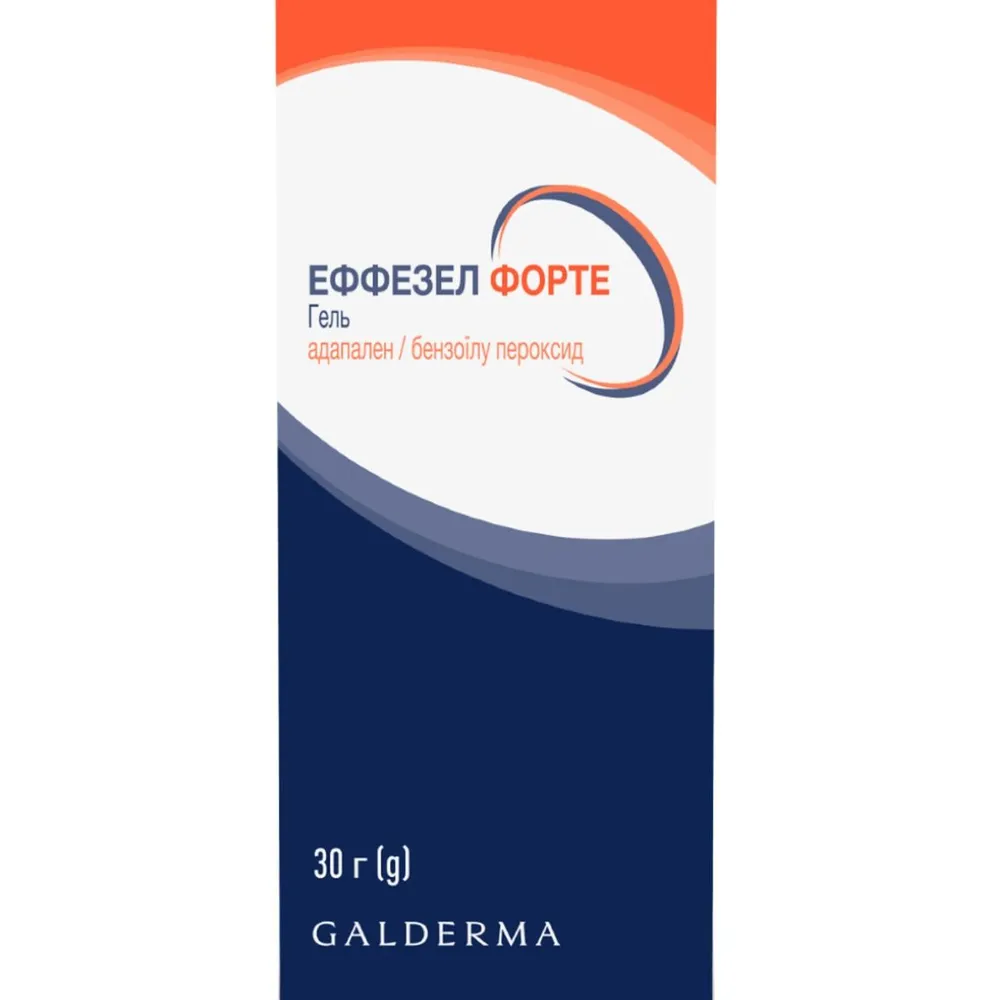
Table of Contents
INSTRUCTIONS FOR MEDICAL USE OF THE MEDICINAL PRODUCT EFFEZEL FORTE (EFFEZEL FORTE)
Composition:
Active substances: adapalene, benzoyl peroxide;
1 g of gel contains 3 mg of adapalene and 25 mg of benzoyl peroxide;
Excipients: Simulgel 600 PNA (copolymer of acrylamide and sodium acryloyldimethyl taurate, isohexadecane, polysorbate 80, sorbitan oleate), sodium docosate, disodium edetate, glycerin, poloxamer, propylene glycol, purified water.
Pharmaceutical form. Gel.
Main physicochemical characteristics: Opaque gel, white to very pale yellow in color.
Pharmacotherapeutic group. Topical anti-acne preparations. Retinoids for topical treatment of acne. Adapalene combinations. ATC code D10AD53.
Pharmacological Properties
Pharmacodynamics
The medicinal product contains two active substances with different but mutually complementary mechanisms of action.
Adapalene is a chemically stable derivative of naphthoic acid with retinoid-like activity. Biochemical and pharmacological profiling studies have demonstrated the activity of adapalene in the disease caused by Acne vulgaris: it is a potent modulator of cellular differentiation and keratinization and also has anti-inflammatory properties. The mechanism of action of adapalene is based on the binding of the compound to specific nuclear receptors of retinoic acid. Current data suggest that, when applied topically, adapalene normalizes the differentiation of follicular epithelial cells, thereby reducing the formation of microcomedones. In in vitro models, adapalene suppresses chemotactic (directed) and chemokinetic (random) responses of human polymorphonuclear leukocytes; it also inhibits the conversion of arachidonic acid into inflammatory mediators. According to in vitro studies, adapalene inhibits AP-1 factors as well as the expression of toll-like receptor 2. This profile indicates that under the influence of adapalene, the inflammatory component of acne mediated by cells is reduced.
Benzoyl peroxide exerts antimicrobial action, particularly against Cutibacterium acnes, which are present in excessive amounts in the affected sebaceous-hair complex.
The mechanism of action of benzoyl peroxide is explained by its high lipophilic activity, which occurs when it penetrates through the epidermis into bacterial and keratinocyte cell membranes in the sebaceous-hair complex. Benzoyl peroxide is considered a highly effective broad-spectrum antibacterial agent in the treatment of acne vulgaris. It has demonstrated bactericidal effects by generating free radicals that oxidize proteins and other essential cellular components in the bacterial cell wall. The minimal inhibitory concentration of benzoyl peroxide has bactericidal properties and is effective against both antibiotic-susceptible and antibiotic-resistant strains of C. acnes.
In addition, benzoyl peroxide has desquamating and keratolytic properties.
Pharmacokinetics
Absorption
A pharmacokinetic study was conducted in 26 adult and adolescent participants (aged 12 to 33 years) with severe acne vulgaris who were treated with Epiduo Forte. Participants received once-daily treatment of all potentially affected areas for 4 weeks, with an average daily dose of 2.3 g (range: 1.6–3.1 g/day). Epiduo Forte was applied as a thin layer to the face, shoulders, upper chest, and upper back. After 4 weeks of treatment, 16 participants (62%) had measurable plasma concentrations of adapalene exceeding the lower limit of quantification (LLOQ of 0.1 ng/mL); the mean Cmax was 0.16 ± 0.08 ng/mL, and the mean AUC0-24h was 2.49 ± 1.21 ng·h/mL. In the participant with the highest exposure, the Cmax and AUC0-24h values for adapalene were 0.35 ng/mL and 6.41 ng·h/mL, respectively.
Pharmacokinetic studies of Epiduo and Epiduo Forte confirmed that transdermal absorption of adapalene does not affect the absorption of benzoyl peroxide.
Skin penetration of benzoyl peroxide is low; when applied to the skin, it is completely converted into benzoic acid, which is rapidly eliminated.
Preclinical Safety Data
Standard preclinical safety pharmacology studies, repeated-dose toxicity studies, genotoxicity, phototoxicity, and carcinogenicity studies revealed no specific risks for humans.
The toxic effects of adapalene on reproductive function were investigated in animals receiving the drug orally and topically. Teratogenic effects were observed at high systemic exposures (oral administration at doses of 25 mg/kg/day), including cleft palate, microphthalmia, encephalocele, and skeletal abnormalities in rats, and umbilical hernia, exophthalmos, and kidney and skeletal abnormalities in rabbits. At lower exposures (topical application at a dose of 6 mg/kg/day), changes in the number of ribs or vertebrae and delayed ossification were observed. Oral administration of adapalene at doses ranging from 0.15 to 5.0 mg/kg/day (up to 8 times the maximum recommended human dose) did not result in developmental malformations in animals.
Animal studies conducted with Epiduo and Epiduo Forte included local tolerance and skin toxicity studies with repeated doses in rats, dogs, and/or minipigs over periods of up to 13 weeks, and demonstrated local irritation and potential for sensitization, as expected for a substance containing benzoyl peroxide. Systemic effects of adapalene after repeated topical application in fixed combination in animals were very low, consistent with clinical pharmacokinetic data. Benzoyl peroxide was rapidly and completely converted into benzoic acid in the skin, then absorbed and excreted in urine, showing limited systemic impact.
Clinical characteristics.
Indications.
Treatment of common acne (acne vulgaris) with comedones, numerous papules and pustules.
Effezeel Forte is intended for use in adults and children aged 12 years and older.
Contraindications.
- Pregnancy.
- Planning pregnancy.
- Hypersensitivity to the active substances or to any of the excipients.
Interaction with other medicinal products and other forms of interaction.
Studies on drug interactions of Effezeel Forte have not been conducted.
Based on previous experience with adapalene and benzoyl peroxide, no interactions with other medicinal products that may be applied to the skin simultaneously with Effezeel Forte have been identified. However, other retinoids or benzoyl peroxide, or medicinal products with a similar mechanism of action, should not be used concurrently. Caution should be exercised when using cosmetic products that have exfoliating, irritating, or drying properties, as this may cause an additive irritating effect when using the medicinal product.
Absorption of adapalene through human skin is low; therefore, interaction with systemic medicinal products is unlikely.
Penetration of benzoyl peroxide through the skin is low; it is completely metabolized to benzoic acid, which is rapidly eliminated from the body. Thus, interaction of benzoic acid with systemic medicinal products is unlikely.
Special precautions for use
Effezel Forte gel should not be applied to damaged, injured (cuts or abrasions), eczematous skin, or skin affected by sunburn.
Contact of the gel with the eyes, mouth, nostrils, or mucous membranes should be avoided. If the product comes into contact with the eyes, they should be rinsed immediately with warm water.
The product contains propylene glycol (E1520), which may cause skin irritation.
If a reaction indicating sensitivity to any component of the product occurs, use of Effezel Forte gel should be discontinued.
Hypersensitivity reactions, including anaphylaxis, angioedema, and urticaria, have been reported with benzoyl peroxide-containing products. If a serious hypersensitivity reaction occurs, Effezel Forte gel should be discontinued immediately and appropriate therapy initiated.
Exposure to sunlight and ultraviolet radiation should be avoided during treatment with Effezel Forte gel. Particular caution should be exercised in patients with high sun exposure or sun sensitivity. It is recommended to use broad-spectrum sunscreens and protective clothing (e.g., a hat) when sun exposure cannot be avoided. Extreme weather conditions such as wind or cold may cause irritation in patients using Effezel Forte gel.
Contact of the product with any colored materials, including hair and dyed fabrics, should be avoided, as this may result in discoloration or bleaching.
The efficacy and safety of Effezel Forte gel in patients with severe nodular or deep nodular-cystic acne have not been studied. Since patients with severe nodular or deep nodular-cystic acne have an increased risk of permanent scarring after acne lesions, use of Effezel Forte gel in such patients is not recommended due to the risk of inadequate therapeutic response.
Use during pregnancy or breastfeeding
Oral retinoids are associated with congenital abnormalities. As a general rule, topical retinoids used according to approved indications are considered to have minimal systemic effect due to limited skin absorption. However, individual factors (e.g., skin damage, excessive use) may increase systemic exposure.
Pregnancy
Effezel Forte is contraindicated in pregnant women and women planning pregnancy.
Clinical experience with topical use of adapalene and benzoyl peroxide in pregnant women is limited. There are insufficient pharmacovigilance data on the use of Effezel Forte gel in pregnant women to establish any drug-related risk of major congenital malformations, miscarriage, or other adverse outcomes in the mother or fetus. Reproductive studies in animals with Effezel Forte gel have not been conducted.
Data on topical use of adapalene in pregnant women are limited or lacking.
In animal studies, oral administration of adapalene resulted in toxic effects on reproductive function at high systemic exposures. Oral administration of adapalene to pregnant rats and rabbits during organogenesis resulted in skeletal and visceral fetal malformations (see section Preclinical safety data).
The systemic effect of benzoyl peroxide is unknown. According to published literature, benzoyl peroxide is rapidly metabolized to benzoic acid (an endogenous substance), which is excreted in urine. Therefore, maternal use of the product is not expected to affect the fetus. The background risk of major congenital malformations and miscarriage in the indicated population is unknown.
If the medicinal product is used during pregnancy or if a patient becomes pregnant while using this medicinal product, treatment should be discontinued.
Breastfeeding
No studies have been conducted on the penetration of the product into animal or human breast milk following topical application of Effezel Forte gel (adapalene and benzoyl peroxide).
Available pharmacokinetic data from rat studies indicate that adapalene is excreted into breast milk following oral or intravenous administration of adapalene.
A risk to the breastfed child cannot be excluded.
The decision whether to discontinue breastfeeding or to discontinue/forego treatment with Effezel Forte should be made taking into account the benefit of breastfeeding for the child and the benefit of therapy for the woman.
To minimize the potential exposure of the infant via breast milk, Effezel Forte gel should be applied to the smallest possible area of skin and for the shortest duration possible during breastfeeding. The product should not be applied directly to the nipple or areola to avoid direct exposure to the infant.
Fertility
No studies on the effect of Effezel Forte gel on human fertility have been conducted.
However, reproductive studies in animals did not reveal any effect of adapalene or benzoyl peroxide on fertility.
Ability to affect reaction speed when driving or operating machinery
The effect of Effezel Forte gel on the ability to drive or operate machinery is absent or negligible.
Dosage and Administration
Dosage
Effezel Forte is recommended to be applied once daily in the evening to all affected areas of the face and trunk, with the skin being clean and dry.
The duration of treatment should be determined by a physician, taking into account the patient's general condition and therapeutic response. Early signs of clinical improvement usually appear within 1–4 weeks of treatment. If no improvement is observed after 4–8 weeks of treatment, the continued use of the product should be re-evaluated.
A lower-dose formulation is available – Effezel. This lower-concentration product is recommended for patients with moderate acne vulgaris.
In patients whose entire facial skin is affected by numerous papulopustular lesions, better clinical outcomes have been observed with Effezel Forte compared to the comparator product (Effezel). Physicians choose between the two available concentrations based on the patient's current clinical status and severity of the disease.
Special Patient Groups
Elderly Patients
The safety and efficacy of Effezel Forte in geriatric patients over the age of 65 have not been established.
Renal and Hepatic Impairment
The use of Effezel Forte gel in patients with renal or hepatic impairment has not been studied.
Administration Instructions
For topical use only.
Apply a thin layer of Effezel Forte gel to affected areas of the face and/or trunk once daily after washing. Apply a pea-sized amount of gel to each facial area (e.g., forehead, chin, each cheek), avoiding contact with eyes and lips.
Patients should be instructed to wash their hands after applying the medication.
Cosmetics may be used only after the medication has completely dried.
If irritation occurs, patients should be advised to use non-comedogenic moisturizers, reduce the frequency of application (e.g., to once every two days), or temporarily or permanently discontinue use.
Pediatric Use
The safety and efficacy of Effezel Forte in children under 12 years of age have not been established.
Overdose
The product is intended for topical application only, once daily.
Excessive use of Effezel Forte gel may cause severe irritation. In such cases, treatment should be discontinued and application resumed only after the skin has recovered.
In case of accidental ingestion, appropriate symptomatic therapy should be administered.
Adverse Reactions
Summary of Safety Profile
Approximately 10% of patients may experience cutaneous adverse reactions. Adverse reactions associated with the use of Effezel Forte medicinal product include application site reactions of mild to moderate severity, particularly skin irritation, typically characterized by desquamation, dryness, erythema, and burning/pain. It is recommended to use a moisturizing agent, temporarily reduce the frequency of application to once every two days, or temporarily discontinue the use of the product until it can be resumed with daily application.
Such reactions usually occur at the beginning of treatment and gradually diminish over time.
Summary Table of Adverse Reactions
Adverse reactions are classified by system organ classes and frequency as follows: very common (≥ 1/10), common (≥ 1/100 to < 1/10), uncommon (≥ 1/1000 to < 1/100), rare (≥ 1/10,000 to < 1/1000), very rare (< 1/10,000), frequency not known (cannot be estimated from the available data). These reactions were recorded during clinical trials.
| Organ systems |
Frequency |
Adverse reactions |
| Eye disorders |
Uncommon |
Eyelid erythema |
| Frequency unknown* |
Swelling of the eyelids |
|
| Immune system disorders |
Frequency unknown* |
Anaphylactic reactions |
| Nervous system disorders |
Uncommon |
Paraesthesia (tingling at application site) |
| Respiratory, thoracic and mediastinal disorders |
Frequency unknown* |
Throat tightness, dyspnoea |
| Skin and subcutaneous tissue disorders |
Common |
Atopic dermatitis, eczema, burning sensation, skin irritation, erythema, skin desquamation (peeling) |
| Uncommon |
Dry skin, rash |
|
| Frequency unknown* |
Allergic contact dermatitis, facial swelling, skin pain (burning pain) and vesicle formation, urticaria, application site burn**, pruritus, sunburn, skin discoloration (hyperpigmentation or hypopigmentation) |
* Post-marketing surveillance data.
** In most cases, the burns were superficial, but cases of second-degree burns or severe burn reactions have also been reported.
Skin-related adverse reactions occurred more frequently with the use of Epiduo Forte gel than with adapalene 0.1 % / benzoyl peroxide 2.5 % gel (Epiduo).
In addition to the above, other adverse reactions associated with the use of adapalene 0.1 % / benzoyl peroxide 2.5 % gel (Epiduo)—a previously approved fixed combination of adapalene and benzoyl peroxide—have been reported.
Clinical trials.
Other adverse reactions associated with the use of Epiduo reported in clinical studies included increased sensitivity, irritant contact dermatitis, and sunburn (see section Special precautions for use).
Reporting of suspected adverse reactions
Reporting suspected adverse reactions after authorization of a medicinal product is important. It allows continued monitoring of the benefit-risk balance of the medicinal product. Healthcare professionals and patients, as well as their legal representatives, are encouraged to report cases of suspected adverse reactions and lack of efficacy to the State Expert Center of the Ministry of Health of Ukraine via the following link: https://aisf.dec.gov.ua.
Shelf life.
2 years. After first opening of the packaging, the product is suitable for use for 3 months.
Storage conditions.
Store at temperatures not exceeding 25 °C. Keep out of the reach and sight of children.
Packaging.
30 g of gel in a container; 1 container in a cardboard box.
Prescription status.
Prescription only.
Manufacturer.
GALDERMA LABORATORIES.
Manufacturer's address and place of business.
Z.I. Mondazir, 74540 ALBY-SUR-CHERAN, France.