Efferalgan
Ukraine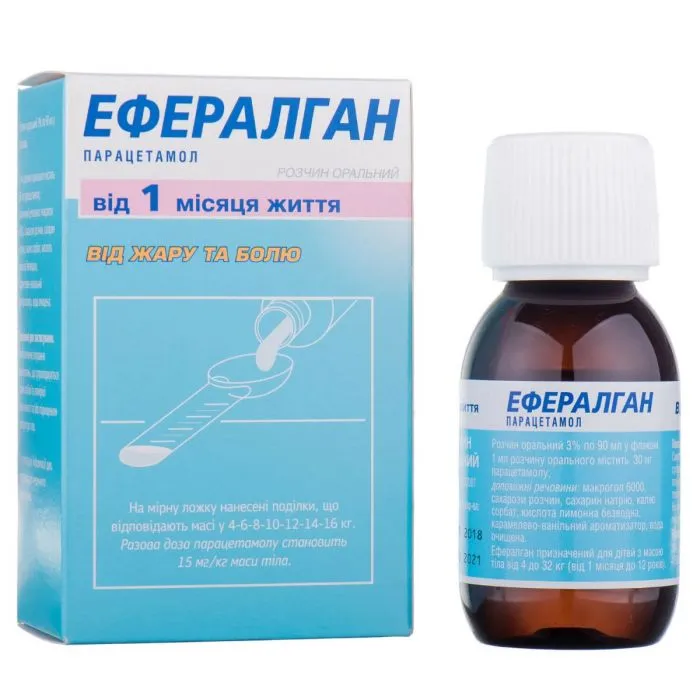
Table of Contents
INSTRUCTIONS FOR MEDICAL USE OF THE MEDICINAL PRODUCT EFERALGAN (EFFERALGAN)
Composition:
Active substance: paracetamol;
1 ml of oral solution contains 30 mg of paracetamol;
Excipients: macrogol 6000, sucrose solution, sodium saccharin, potassium sorbate, citric acid anhydrous, caramel-vanilla flavoring, purified water.
Medicinal form. Oral solution.
Main physicochemical properties: slightly viscous brown solution with a caramel-vanilla odor.
Pharmacotherapeutic group.
Analgesics and antipyretics. Paracetamol. ATC code N02B E01.
Pharmacological properties.
Pharmacodynamics.
Exerts analgesic, antipyretic, and weak anti-inflammatory effects. The mechanism of action is due to inhibition of prostaglandin synthesis and predominant influence on the thermoregulatory center in the hypothalamus.
Pharmacokinetics.
Paracetamol is rapidly and completely absorbed from the gastrointestinal tract after oral administration. Maximum plasma concentration of paracetamol is reached within 30–60 minutes after intake. Paracetamol is predominantly metabolized in the liver, forming inactive compounds with glucuronic acid and sulfates.
It is mainly excreted in the urine. 90% of the administered dose of paracetamol is excreted by the kidneys within 24 hours, primarily as glucuronide and sulfate conjugates. Less than 5% is excreted unchanged. The half-life is approximately 2 hours.
Clinical characteristics.
Indications.
Symptomatic treatment of diseases accompanied by mild to moderate pain and/or elevated body temperature.
Contraindications.
Hypersensitivity to paracetamol or to any other components of the drug.
Severe impairment of kidney and/or liver function, congenital hyperbilirubinemia, glucose-6-phosphate dehydrogenase deficiency, alcoholism, blood disorders, severe anemia, leukopenia.
Special precautions.
Do not administer the drug to children together with other products containing paracetamol.
When treating with paracetamol at a dose of 60 mg/kg/day, concomitant use of another antipyretic is justified only if paracetamol proves ineffective. Recommended doses must not be exceeded.
The drug contains sucrose, which should be taken into account in patients with fructose intolerance, glucose-galactose malabsorption, and/or sucrose-isomaltase deficiency. If signs of illness do not begin to improve within 3 days of treatment with the drug, or if the patient's condition worsens, medical advice must be sought.
Interaction with other medicinal products and other forms of interaction.
When taking maximum doses of paracetamol (4 g/day) for at least 4 days, there is a risk of enhanced effect of oral anticoagulants and an increased risk of bleeding. INR (International Normalized Ratio) should be monitored at regular intervals. If necessary, the dose of oral anticoagulant should be adjusted during paracetamol treatment.
The absorption rate of paracetamol may be increased by metoclopramide and domperidone, and decreased by cholestyramine. Barbiturates reduce the antipyretic effect of paracetamol. Anticonvulsant drugs (including phenytoin, barbiturates, carbamazepine), which stimulate the activity of hepatic microsomal enzymes, may enhance the hepatotoxic effect of paracetamol due to increased conversion of the drug into hepatotoxic metabolites. Concomitant use of paracetamol with hepatotoxic agents increases the hepatotoxic effect of the drug on the liver. Concurrent use of high doses of paracetamol with isoniazid or rifampicin increases the risk of developing hepatotoxic syndrome. Paracetamol reduces the efficacy of diuretics. Do not use concurrently with alcohol.
High concentrations of paracetamol may interfere with laboratory test results for blood glucose measured by the oxidase-peroxidase method, and for uric acid when using the phosphotungstic acid method.
Caution is advised when using paracetamol concomitantly with flucloxacillin, as co-administration has been associated with metabolic acidosis with a high anion gap, particularly in patients at risk (see "Special instructions for use").
Special precautions for use.
In patients with severe infections such as sepsis, which are associated with reduced glutathione levels, administration of paracetamol increases the risk of developing metabolic acidosis.
Symptoms of metabolic acidosis include deep, rapid, or labored breathing, nausea, vomiting, and loss of appetite. Immediate medical attention should be sought if these symptoms occur.
Use with caution in patients with body weight below 50 kg, chronic malnutrition (low hepatic glutathione stores), dehydration, or mild to moderate hepatic impairment.
Treatment should be discontinued if acute viral hepatitis is diagnosed.
Caution is recommended when paracetamol is used concomitantly with flucloxacillin due to an increased risk of developing high anion gap metabolic acidosis, particularly in patients with severe renal impairment, sepsis, malnutrition, and other sources of glutathione deficiency (e.g., chronic alcoholism), as well as in those receiving maximum daily doses of paracetamol. Close monitoring, including measurement of urinary 5-oxoproline levels, is recommended.
Use during pregnancy or breastfeeding.
The medicinal product is intended for use in pediatric practice.
A substantial amount of data from pregnant women does not indicate any developmental abnormalities or fetal/neonatal toxicity. Epidemiological studies on neurodevelopmental outcomes in children exposed to paracetamol in utero have yielded inconclusive results. When clinically necessary, paracetamol may be used during pregnancy at the lowest effective dose, for the shortest duration, with the least possible frequency.
Traditional reproductive and developmental toxicity studies using currently accepted standards are lacking.
Ability to affect reaction rate when driving or operating machinery.
The medicinal product is intended for use in pediatric practice.
Method of administration and dosage.
Efferalgan is intended for children with body weight ranging from 4 to 32 kg (from 1 month to 12 years of age).
The single dose of paracetamol is 15 mg/kg of body weight. The daily dose of paracetamol should not exceed 60 mg/kg of body weight per day. The interval between doses should be at least 6 hours. In cases of severe renal impairment (creatinine clearance less than 10 ml/min), the interval between doses should be at least 8 hours.
Table 1 provides information on drug administration:
Table 1
| Age of child |
Average body weight of a child of the corresponding age is approximately* |
Dose per administration |
Daily dose when administered 4 times a day |
| 1-2 months |
4 kg |
60 mg |
240 mg |
| 3-5 months |
6 kg |
90 mg |
360 mg |
| 6-10 months |
8 kg |
120 mg |
480 mg |
| 11-12 months |
10 kg |
150 mg |
600 mg |
| 2 years |
12 kg |
180 mg |
720 mg |
| 3 years |
14 kg |
210 mg |
840 mg |
| 4-5 years |
16 kg |
240 mg |
960 mg |
| 6-7 years |
20-24 kg |
300-360 mg |
1200-1440 mg |
| 8-9 years |
26-30 kg |
390-450 mg |
1560-1800 mg |
| 10-12 years |
30-32 kg |
450-480 mg |
1800-1920 mg |
* Before administering the medication, the child must be weighed to prevent overdose and avoid toxic effects of the drug.
The dosing spoon is marked with graduations corresponding to body weights of 4-6-8-10-12-14-16 kg.
Additional graduations correspond to intermediate body weights: 3-5-7-9-11-13-15 kg.
The medication may be administered undiluted or diluted in a small amount of liquid (e.g. water, milk, fruit juice).
Fill the dosing spoon according to the child's body weight and adjust the liquid level according to the graduations.
- From 4 to 16 kg: use the dosing spoon with graduations corresponding to the child's body weight or use the graduation closest to the child's body weight.
For example, from 4 kg to 5 kg: fill the dosing spoon up to the 4 kg mark. If necessary, the dose may be repeated after 6 hours.
- From 16 to 32 kg: first fill the dosing spoon completely, then add the required additional amount by filling the spoon a second time to achieve the total dose corresponding to the child's body weight.
For example, from 18 to 19 kg: first fill the dosing spoon up to the 10 kg mark, then fill it a second time up to the 8 kg mark. If necessary, the dose may be repeated after 6 hours.
If pain or fever persists or worsens within 3 days of starting treatment with this medication, the continued use of the medication should be re-evaluated.
Children.
This medication is intended for children with body weight from 4 to 32 kg (from 1 month to 12 years of age).
Overdose.
To avoid overdose, check that other medications do not contain paracetamol.
There is a risk of severe poisoning in elderly individuals, young children, patients with liver disease, chronic alcoholism, or chronic malnutrition. This may lead to fatal outcomes.
In children with body weight less than 37 kg, the total daily dose of paracetamol must not exceed 80 mg/kg/day.
In children with body weight from 38 kg to 50 kg, the total daily dose of paracetamol must not exceed 3 g/day.
In adults and children with body weight over 50 kg, the total daily dose of paracetamol must not exceed 4 g/day.
A single ingestion of 10 g in adults or 150 mg/kg of body weight in children may cause hepatocellular failure, impaired glucose metabolism, metabolic acidosis, hemorrhage, hypoglycemia, encephalopathy, coma, and fatal outcome. Elevated levels of liver transaminases, lactate dehydrogenase, and bilirubin occur, and prothrombin levels decrease within 12–48 hours. Acute renal failure with acute tubular necrosis may manifest as severe lumbar pain, hematuria, proteinuria, and may develop even in the absence of severe liver damage. Cardiac arrhythmias and pancreatitis have also been reported. With prolonged use of high doses, hematological side effects may include aplastic anemia, pancytopenia, agranulocytosis, neutropenia, leukopenia, and thrombocytopenia. Central nervous system effects may include dizziness, psychomotor agitation, and disorientation. Urinary system effects may include nephrotoxicity (renal colic, interstitial nephritis, papillary necrosis). Gastrointestinal effects may include hepatonecrosis. In patients with risk factors (long-term use of carbamazepine, phenobarbital, phenytoin, primidone, rifampicin, St. John's wort, or other drugs that induce liver enzymes; alcohol abuse; glutathione system deficiency, e.g. due to malnutrition, AIDS, fasting, cystic fibrosis, cachexia), administration of 5 g or more of paracetamol may lead to liver damage. Liver injury may become apparent 12–48 hours after overdose. In case of overdose, the patient must be taken to hospital immediately, even if early symptoms of overdose are absent. Symptoms of overdose may appear within the first 24 hours: nausea, vomiting, loss of appetite, pallor, abdominal pain, or may not reflect the severity of overdose or risk of organ damage.
Emergency measures:
− Immediate hospitalization;
− Determination of paracetamol plasma concentration;
− Gastric lavage;
− Administration of the antidote N-acetylcysteine intravenously or oral methionine within the first 10 hours;
− Symptomatic therapy.
Side effects.
Very rare:
Allergic reactions: anaphylaxis, anaphylactic shock, angioedema, erythema, urticaria, pruritus, skin and mucous membrane rashes, erythema multiforme, toxic epidermal necrolysis;
Hematological disorders: anemia, sulfhemoglobinemia and methemoglobinemia (cyanosis, dyspnea, chest pain), hemolytic anemia, thrombocytopenia, leukopenia and neutropenia, bruising or bleeding;
Respiratory system: bronchospasm in patients sensitive to aspirin and other NSAIDs;
Gastrointestinal system: nausea, epigastric pain, liver function disturbances, increased liver enzyme activity (usually without jaundice), hepatonecrosis (dose-dependent effect);
Endocrine system: hypoglycemia, up to hypoglycemic coma.
Occasionally possible malaise and decreased blood pressure, renal colic.
If any adverse reactions occur, discontinue use of the medication and consult a physician immediately.
Shelf life.
3 years. Shelf life after first opening of the bottle: 3 months.
Storage conditions.
Store at temperatures not exceeding 25 °C, in a place inaccessible to children.
Packaging.
90 ml of oral solution in a bottle. 1 bottle with a measuring spoon in a cardboard box.
Availability.
Over-the-counter.
Manufacturer.
UPSA SAS, France.
Manufacturer's address and location of business activity.
304, avenue du Docteur Jean Bru, 47000 Agen, France.