Diprivan® edta
Ukraine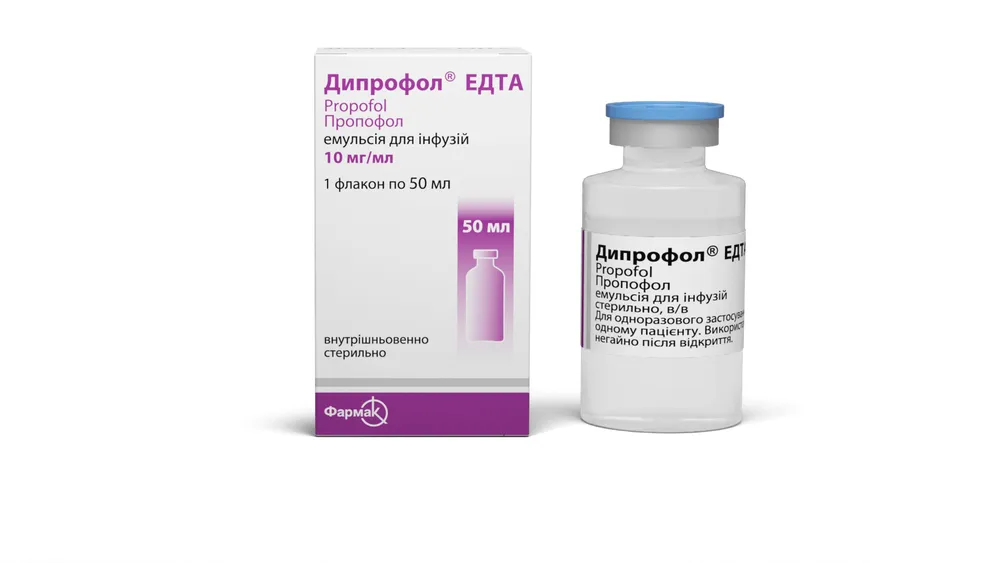
Table of Contents
INSTRUCTIONS for medical use of the medicinal product DIPROFOL® EDTA (Diprofol EDTA)
Composition:
Active substance: propofol;
1 ml of emulsion contains propofol 10 mg;
Excipients: soybean oil, egg phospholipid, glycerol, sodium hydroxide, disodium edetate, water for injections.
Pharmaceutical form. Infusion emulsion.
Main physicochemical properties: white or almost white homogeneous emulsion, practically free from solid particles and large oil droplets. Slight emulsion separation may occur during prolonged standing.
Pharmacotherapeutic group. Anaesthetics. Agents for general anaesthesia.
ATC code N01AX10.
Pharmacological properties.
Pharmacodynamics.
Mechanism of action
Propofol (2,6-diisopropylphenol) is a short-acting general anaesthetic agent with a rapid onset of effect, typically within approximately 30 seconds. Recovery from anaesthesia is usually rapid. The mechanism of action, as with other general anaesthetic agents, is not fully understood. However, it is believed that propofol exerts its sedative and anaesthetic effects by positively modulating the inhibitory function of the neurotransmitter GABA (gamma-aminobutyric acid) through facilitation of the interaction of the latter with ligand-activated GABAA receptors.
Pharmacodynamic properties
When propofol 1 % is used for induction and maintenance of anaesthesia, a reduction in mean arterial pressure and minor changes in heart rate are usually observed. However, haemodynamic parameters remain relatively stable during maintenance of anaesthesia, and the incidence of adverse haemodynamic reactions is low.
Although respiratory depression may occur after administration of propofol 1 %, any such reactions are qualitatively similar to those observed with other intravenous anaesthetic agents and are easily managed in clinical practice.
Propofol 1 % reduces cerebral blood flow, intracranial pressure, and cerebral metabolism. The reduction in intracranial pressure is more pronounced in patients with initially elevated intracranial pressure.
Clinical safety and efficacy
Recovery from anaesthesia is typically rapid and characterized by rapid restoration of cognitive functions, with a low incidence of headache and postoperative nausea and vomiting.
Postoperative nausea and vomiting are generally less frequent with propofol 1 % than with inhaled anaesthetic agents. Evidence suggests this may be related to the reduced emetogenic potential of propofol.
Propofol 1 % does not suppress adrenal cortical hormone synthesis at clinically used concentrations.
Paediatric population
Limited data from studies of anaesthesia using propofol in children indicate that safety and efficacy are maintained for anaesthesia durations up to 4 hours. According to published data, the medicinal product can be used in children undergoing prolonged procedures without changes in safety or efficacy.
Pharmacokinetics.
Absorption
When propofol 1 % is used for maintenance of anaesthesia, blood concentration asymptotically approaches a steady state for a given infusion rate.
Distribution
Propofol is widely distributed and rapidly eliminated from the body (total clearance is 1.5–2.0 L/min).
Elimination
The decline in propofol concentration after a bolus dose or at the end of an infusion can be described by an open three-compartment model, with a very rapid distribution phase (distribution half-life of 2–4 minutes), a rapid elimination phase (elimination half-life of 30–60 minutes), and a slower terminal phase reflecting redistribution of propofol from poorly perfused tissues.
Clearance is achieved via metabolic processes, primarily in the liver, where it is blood flow-dependent, resulting in the formation of inactive conjugates of propofol and the corresponding quinol, which are excreted in urine.
After intravenous administration of a single 3 mg/kg dose, propofol clearance per kg body weight increases with age: mean clearance is significantly lower in neonates aged < 1 month (n = 25) (20 mL/kg/min) compared to older children (n = 36, age range: 4 months – 7 years). In addition, there was considerable inter-patient variability in this parameter among neonates (range: 3.7–78 mL/kg/min). Due to these limited clinical data indicating substantial variability, dosing recommendations cannot be provided for this patient group.
Mean propofol clearance in older children after a single 3 mg/kg bolus dose was 37.5 mL/kg/min (4–24 months) (n = 8), 38.7 mL/kg/min (11–43 months) (n = 6), 48 mL/kg/min (1–3 years) (n = 12), 28.2 mL/kg/min (4–7 years) (n = 10), compared to 23.6 mL/kg/min in adults (n = 6).
Linearity
When propofol 1 % is administered within the recommended infusion rate range, the pharmacokinetics of the medicinal product are linear.
Non-clinical safety data
Published animal studies (including in primates), using doses that produce light to moderate anaesthesia, indicate that administration of anaesthetics during periods of rapid brain growth or synaptogenesis results in neuronal cell loss in the developing brain, potentially leading to long-term cognitive deficits. Based on comparisons across species, the risk of such changes is believed to be associated with exposure during the third trimester of pregnancy and the first few months of life, but may persist with exposure up to approximately 3 years of age in humans. In neonatal primates, anaesthetic exposure of up to 3 hours under conditions producing light surgical anaesthesia did not lead to increased neuronal cell loss; however, anaesthetic regimens lasting 5 hours or longer did result in such increases. The clinical significance of these non-clinical findings is unknown. Therefore, physicians should weigh the benefits of appropriate anaesthesia in children under 3 years of age and in pregnant women requiring surgical intervention against the potential risks indicated by non-clinical data.
Clinical characteristics.
Indications.
As a short-acting general anesthetic agent, the drug is administered intravenously for:
- induction and maintenance of general anesthesia in adults and children aged > 1 month;
- sedation during diagnostic and surgical procedures, either alone or in combination with local or regional anesthetic agents, in adults and children aged > 1 month;
- sedation of patients aged > 16 years who are undergoing mechanical ventilation in intensive care units (ICU).
Contraindications.
Hypersensitivity to the active substance or to any of the excipients of the medicinal product.
Age under 1 month (for induction and maintenance of general anesthesia).
The medicinal product Diprivan® EDTA 1 % contains soybean oil and is not intended for use in patients with hypersensitivity to peanuts or soy.
Diprivan® EDTA 1 % should not be used for sedation in patients aged ≤ 16 years in intensive care units (see section "Special precautions for use").
Interaction with other medicinal products and other forms of interaction.
Propofol 1 % has been used in combination with agents for spinal and epidural anesthesia, as well as commonly used premedication drugs, neuromuscular blocking agents, inhalational anesthetics, and analgesics; no cases of pharmacological incompatibility have been observed. When general anesthesia is used in combination with local anesthetics, lower doses of Diprivan® EDTA 1 % may be required. Cases of pronounced hypotension have been observed when propofol was administered to patients receiving rifampicin.
Concomitant use with other central nervous system (CNS) depressants, such as premedication drugs, inhalational anesthetics, and analgesics, may enhance the sedative and analgesic effects, as well as the depressant effects of Diprivan® EDTA 1 % on cardiovascular and respiratory function (see section "Special precautions for use").
In the presence of fentanyl, blood levels of propofol may increase.
Leukoencephalopathy has been reported in patients receiving cyclosporine and lipid emulsions (such as propofol).
It has been observed that patients receiving midazolam require a lower dose of propofol. Concomitant administration of midazolam with propofol may result in enhanced sedation and respiratory depression. When used concomitantly, consideration should be given to reducing the dose of propofol.
Lower propofol dose requirements have been observed in patients receiving valproate. When used concomitantly, consideration should be given to reducing the dose of propofol.
Special precautions for use.
Diprivan® EDTA 1% should be administered only by a specialist experienced in anesthesia (or, if necessary, by a physician experienced in intensive care unit practice).
Continuous patient monitoring is required. Equipment for maintaining airway patency, artificial ventilation, oxygen delivery, and other resuscitation measures must be immediately available and ready for use. Diprivan® EDTA 1% must not be administered by the same individual performing the diagnostic or surgical procedure.
Cases of abuse and development of drug dependence with 1% propofol have been reported, primarily among healthcare professionals. As with other general anesthetics, administration of Diprivan® EDTA 1% without respiratory support may lead to life-threatening respiratory complications.
When administering Diprivan® EDTA 1% for sedation without loss of consciousness during surgical or diagnostic procedures, continuous monitoring of the patient for early signs of hypotension, airway obstruction, and decreased oxygen saturation is essential.
As with other CNS depressants, administration of Diprivan® EDTA 1% for sedation during surgical procedures may result in involuntary movements. Such movements may pose a risk to the patient during procedures requiring immobilization.
Sufficient time should elapse before discharge to ensure full recovery of physiological functions after administration of Diprivan® EDTA 1%. Very rarely, use of Diprivan® EDTA 1% may be associated with postoperative loss of consciousness, which may be accompanied by increased muscle tone. This condition may be preceded by a period of insomnia. Although this condition resolves spontaneously, appropriate supportive care should be provided to the unconscious patient.
Typically, functional impairments caused by Diprivan® EDTA 1% are no longer evident within 12 hours. The effects of Diprivan® EDTA 1%, the nature of the procedure performed, concomitant medication use, patient age, and patient condition should be considered when advising on:
- the need for the patient to leave the healthcare facility accompanied by another person;
- the time required before resuming activities involving complex or hazardous tasks, such as driving vehicles;
- the use of other CNS depressants (e.g., benzodiazepines, opioids, ethanol).
As with other intravenous anesthetics, Diprivan® EDTA 1% should be used with caution in patients with impaired cardiac, respiratory, renal, or hepatic function, as well as in hypovolemic or debilitated patients. The clearance of Diprivan® EDTA 1% depends on blood circulation; therefore, concomitant use of drugs that reduce cardiac output will lead to decreased clearance of Diprivan® EDTA 1%.
Diprivan® EDTA 1% has no significant vagolytic activity. However, administration of this drug has been associated with cases of bradycardia (in some cases, profound) and asystole. Consideration should be given to the intravenous administration of an anticholinergic agent prior to induction or during maintenance of anesthesia, especially in cases of potential vagal dominance or when Diprivan® EDTA 1% is used concomitantly with other drugs that may cause bradycardia.
As with other intravenous anesthetics and CNS depressants, patients should be advised to avoid alcohol consumption before and for at least 8 hours after administration of Diprivan® EDTA 1%.
Particular caution should be exercised during bolus administration of the drug during surgical procedures in patients with acute respiratory insufficiency or respiratory depression.
Concomitant use with CNS depressants, such as ethanol, general anesthetics, and opioid analgesics, may potentiate CNS depression. When Diprivan® EDTA 1% is used in combination with parenterally administered CNS depressants, severe depression of respiratory and cardiovascular function may occur. It is recommended to administer Diprivan® EDTA 1% after analgesic administration, and the dose should be carefully titrated according to clinical response (see section "Interaction with other medicinal products and other forms of interaction").
During induction of anesthesia, dose-dependent hypotension and transient apnea may occur, depending on the dose, premedication, and concomitant drug use.
In some cases, treatment of hypotension may require intravenous fluid administration and reduction of the infusion rate of Diprivan® EDTA 1% during the maintenance phase.
There is a risk of seizures when administering Diprivan® EDTA 1% to patients with epilepsy.
Appropriate management is required for patients with lipid metabolism disorders or conditions where lipid emulsions should be used with caution (see section "Method of administration and dosage").
Use during electroconvulsive therapy is not recommended.
As with other anesthetic agents, disinhibition, including sexual disinhibition, may occur during emergence from anesthesia.
Before repeated or prolonged (>3 hours) use of propofol in young children (<3 years) or in pregnant women, the benefit-risk ratio of the proposed procedure should be carefully evaluated, as neurotoxicity has been reported in preclinical studies.
Recommendations for use in intensive care unit (ICU) patients
The use of propofol emulsion for infusion for sedation in ICU patients has been associated with various metabolic disturbances and multi-organ failure that may lead to fatal outcomes. Cases of a combination of adverse events have been reported: metabolic acidosis, rhabdomyolysis, hyperkalemia, hepatomegaly, renal failure, hyperlipidemia, cardiac arrhythmia, Brugada-type electrocardiogram (ECG) (elevated ST segment and convex T wave), and rapidly progressive heart failure, usually unresponsive to inotropic support. This combination of events is known as propofol infusion syndrome and typically occurs in patients with severe head trauma and children with respiratory infections who receive doses exceeding the recommended adult sedation doses in the ICU.
Key risk factors for developing these events include: reduced tissue oxygen delivery; severe neurological injury and/or sepsis; and administration of high doses of one or more of the following drugs: vasoconstrictors, steroids, inotropes, and/or Diprivan® EDTA 1% (usually at doses >4 mg/kg/hour for more than 48 hours).
Healthcare professionals should be prepared for the possible occurrence of these events in patients with the above-mentioned risk factors and must discontinue propofol immediately if these signs develop. Doses of all CNS depressants and other drugs used in the ICU should be titrated to ensure adequate oxygen delivery and maintenance of hemodynamic parameters. Patients with elevated intracranial pressure should receive appropriate treatment aimed at maintaining adequate cerebral perfusion pressure during these therapeutic changes.
Doses exceeding 4 mg/kg/hour are not recommended.
Appropriate management is required for patients with lipid metabolism disorders and other conditions where lipid emulsions should be used with caution.
Monitoring of blood lipid concentrations is recommended when administering propofol to patients at particular risk of fat overload. If monitoring results indicate impaired fat clearance, propofol administration should be adjusted accordingly. If other lipid-containing intravenous fluids are administered simultaneously, the dose should be reduced to account for the amount of fat delivered via propofol infusion; 1.0 mL of Diprivan® EDTA 1% contains approximately 0.1 g of fat.
Diprivan® EDTA 1% contains soybean oil. This medicinal product should not be used in patients with known allergy to peanuts or soy.
Diprivan® EDTA 1% contains 0.0018 mmol/mL of sodium. This should be taken into account when treating patients on a sodium-restricted diet.
Additional precautions
Patients with mitochondrial disorders should be treated with caution. Exacerbation of the disease may occur during anesthesia, surgical procedures, or other interventions in the ICU. In such patients, normothermia should be maintained, and adequate carbohydrate and fluid supply should be ensured. Early signs of mitochondrial disorder exacerbation and propofol infusion syndrome may be similar.
Diprivan® EDTA 1% does not contain antimicrobial preservatives and therefore does not prevent microbial growth.
Disodium edetate is a chelator of metal ions, including zinc, and inhibits microbial growth. During prolonged use of Diprivan® EDTA 1%, a decision should be made regarding the need for additional zinc supplementation, especially in patients prone to zinc deficiency, such as those with burns, diarrhea, and/or severe sepsis.
Diprivan® EDTA 1% should be drawn into a sterile syringe or infusion system under aseptic conditions immediately after opening the ampoule or vial. Administration should begin immediately. All procedures involving Diprivan® EDTA 1% and infusion equipment should be performed under aseptic conditions during infusion. Any infusion solutions should be added to the infusion line containing Diprivan® EDTA 1% immediately before the administration site. Diprivan® 1% must not be used with systems containing microbial filters.
Diprivan® EDTA 1% and syringes containing this medicinal product are intended for single-patient, single-use only. According to accepted guidelines for other lipid emulsions, a single propofol infusion should not last longer than 12 hours. At the end of the procedure or after 12 hours, whichever comes first, the container and infusion line should be discarded and replaced with a new one.
The contents of the primary packaging should be shaken before use.
Any unused portion of the medicinal product should be discarded.
Diprivan® EDTA 1% should not be mixed with injectable or infusion solutions except 5% dextrose solution or lidocaine injection solution (see section "Method of administration and dosage").
Use during pregnancy or breastfeeding.
Pregnancy
The safety of Diprivan® EDTA 1% during pregnancy has not been established. Animal studies have demonstrated reproductive toxicity of propofol. Diprivan® EDTA 1% should not be used in pregnant women except in cases of absolute necessity. However, Diprivan® EDTA 1% may be used for induced abortion.
Labour
Diprivan® EDTA 1% crosses the placental barrier and may cause neonatal depression (medication-induced neonatal depression syndrome). This medicinal product should not be used for labor anesthesia except in cases of absolute necessity.
Breastfeeding period
Studies in breastfeeding women have shown that small amounts of 1% propofol are excreted in breast milk. Therefore, women should not breastfeed for 24 hours after administration of Diprivan® EDTA 1%. Milk expressed during this period should be discarded.
Ability to influence reaction speed when driving or operating machinery.
Diprivan® EDTA 1% has a moderate effect on the ability to drive vehicles or operate machinery. Patients should be advised that performance of complex tasks, such as driving vehicles or operating automated systems, may be impaired for some time after general anesthesia.
Typically, functional impairments caused by Diprivan® EDTA 1% are no longer evident within 12 hours (see section "Special precautions for use").
Method of Administration and Dosage
Induction of General Anesthesia
Adults
For patients with or without premedication, the dose of Diprivan® EDTA 1% should be titrated (administered to adult patients as a bolus injection or infusion at approximately 4 mL [40 mg] every 10 seconds) according to clinical response until clinical signs of anesthesia appear. For most adult patients under 55 years of age, a dose of 1.5–2.5 mg/kg of Diprivan® EDTA 1% is generally sufficient. The total required dose can be reduced by decreasing the rate of administration (2–5 mL/min [20–50 mg/min]). For patients aged 55 years and older, the dose required to achieve general anesthesia is generally lower. Patients with an ASA (American Society of Anesthesiologists) physical status score of 3 or 4 should receive the drug at a slower rate of administration (approximately 2 mL [20 mg] every 10 seconds).
Elderly Patients
Elderly patients require smaller doses of Diprivan® EDTA 1% for induction of anesthesia. Dose reduction should take into account the patient's health status and age. The reduced dose should be administered more slowly and titrated according to clinical response.
Pediatric Population
The use of Diprivan® EDTA 1% for induction of anesthesia is not recommended in children under 1 month of age.
For induction of anesthesia in children aged 1 month and older, the dose of Diprivan® EDTA 1% should be slowly titrated until clinical signs of anesthesia appear. The dose should be adjusted according to age and/or body weight. For most patients aged 8 years and older, a dose of approximately 2.5 mg/kg body weight of Diprivan® EDTA 1% is sufficient for induction of anesthesia. Younger children, especially those aged 1 month to 3 years, may require higher doses (2.5–4 mg/kg body weight).
Patients with an ASA score of 3 or 4 are recommended to receive lower doses (see section "Special Warnings and Precautions for Use").
Maintenance of General Anesthesia
Adults
Maintenance of anesthesia can be achieved by continuous infusion or repeated bolus injections of Diprivan® EDTA 1% to maintain an appropriate depth of anesthesia. Recovery from anesthesia is usually rapid; therefore, it is important to continue administration of Diprivan® EDTA 1% until the end of the procedure.
Continuous Infusion
The required infusion rate may vary significantly among patients; however, rates in the range of 4–12 mg/kg/h are generally sufficient to maintain an appropriate depth of anesthesia.
Repeated Bolus Injections
For repeated bolus injections, incremental doses from 25 mg (2.5 mL) to 50 mg (5.0 mL) should be administered according to clinical need.
Elderly Patients
When using Diprivan® EDTA 1% for maintenance of anesthesia, the infusion rate or target concentration should be reduced. Patients with an ASA score of 3 or 4 require further dose and infusion rate reduction. Rapid bolus administration (single or repeated) should be avoided in elderly patients, as it may lead to depression of cardiovascular and respiratory function.
Pediatric Population
The use of Diprivan® EDTA 1% for maintenance of anesthesia is not recommended in children under 1 month of age.
Maintenance of anesthesia in children aged 1 month and older can be achieved by infusion or repeated bolus injections of Diprivan® EDTA 1% to maintain an appropriate depth of anesthesia. The required infusion rate may vary significantly among patients; however, rates in the range of 9–15 mg/kg/h are generally sufficient to achieve an appropriate depth of anesthesia. Younger children, especially those aged 1 month to 3 years, may require higher doses.
Patients with an ASA score of 3 or 4 are recommended to receive lower doses (see also section "Special Warnings and Precautions for Use").
Sedation of Intensive Care Unit Patients
Adults
For sedation of patients in the intensive care unit, Diprivan® EDTA 1% should be administered by continuous infusion. The infusion rate should be determined based on the desired depth of sedation. In most patients, adequate sedation can be achieved with a dose of 0.3–4.0 mg/kg/h (see section "Special Warnings and Precautions for Use").
Diprivan® EDTA 1% should not be used for sedation of patients under 16 years of age in the intensive care unit (see section "Contraindications").
Diprivan® EDTA 1% may be diluted with 5% dextrose solution (see Table 1).
Lipid concentration monitoring in blood is recommended when administering Diprivan® EDTA 1% to patients at particular risk of lipid overload. If monitoring results indicate impaired fat clearance, administration of Diprivan® EDTA 1% should be adjusted accordingly. If other lipid-containing solutions are administered intravenously to the patient simultaneously, the dose should be reduced to account for the amount of fat administered during infusion as a component of the Diprivan® EDTA 1% formulation; 1.0 mL of Diprivan® EDTA 1% contains approximately 0.1 g of fat.
If the duration of sedation exceeds 3 days, lipid concentration monitoring should be performed in all patients.
Elderly Patients
When using Diprivan® EDTA 1% for sedation, the infusion rate should be reduced. Patients with an ASA score of 3 or 4 require further dose and infusion rate reduction. Rapid bolus administration (single or repeated) should be avoided in elderly patients, as it may lead to depression of cardiovascular and respiratory function.
Pediatric Population
Diprivan® EDTA 1% should not be used for sedation of children under 16 years of age who are receiving mechanical ventilation in the intensive care unit.
Sedation Prior to Diagnostic and Surgical Procedures
Adults
To achieve appropriate sedation during diagnostic and surgical procedures, the infusion rate should be individually adjusted and the dose titrated according to clinical response.
In most patients, sedation can be induced by administering the drug at a dose of 0.5–1.0 mg/kg over 1–5 minutes.
Maintenance of sedation is achieved by titrating the dose of Diprivan® EDTA 1% administered as an infusion to the desired depth of sedation. For most patients, a dose of 1.5–4.5 mg/kg/h is sufficient. In addition to infusion, bolus doses of 10–20 mg may be administered if a rapid increase in sedation depth is required. Patients with an ASA score of 3 or 4 may require reduced infusion rates and doses.
Elderly Patients
When using Diprivan® EDTA 1% for sedation, the infusion rate or target concentration should be reduced. Patients with an ASA score of 3 or 4 will require further dose and infusion rate reduction. Rapid bolus administration (single or repeated) should be avoided in elderly patients, as it may lead to depression of cardiovascular and respiratory function.
Pediatric Population
The use of Diprivan® EDTA 1% is not recommended for diagnostic and surgical procedures in children under 1 month of age.
For children aged 1 month and older, doses and infusion rates should be adjusted according to the required depth of sedation and clinical response. In most children, sedation can be induced by administering Diprivan® EDTA 1% at a dose of 1–2 mg/kg body weight. Maintenance of sedation can be achieved by titrating doses during infusion to achieve the desired depth of sedation. Most patients require a dose of 1.5–9.0 mg/kg/h. Infusion may be supplemented with bolus doses of up to 1 mg/kg body weight if a rapid increase in sedation depth is required.
Patients with an ASA score of 3 or 4 may require dose reduction.
Method of Administration
Diprivan® EDTA 1% has no analgesic activity; therefore, concomitant administration of additional analgesic medications is usually necessary.
Diprivan® EDTA 1% may be used for infusion either undiluted from glass containers of Diprivan® EDTA 1% or diluted with 5% dextrose solution (for intravenous infusion) from PVC infusion bags or glass infusion bottles. Dilution, which should not exceed 1 to 5 (2 mg propofol per 1 mL), should be performed under aseptic conditions immediately before administration, and the diluted emulsion should be used within 6 hours after preparation.
It is recommended, when using diluted Diprivan® EDTA 1%, to completely replace the volume of 5% dextrose solution removed from the infusion bag during the dilution process with Diprivan® EDTA 1% emulsion (see Table 1).
Dilution may be performed using various infusion control devices, but using an infusion set alone does not eliminate the risk of accidental uncontrolled infusion of large volumes of diluted Diprivan® EDTA 1%. The infusion line should include a burette, drip counter, or volumetric pump. The risk of uncontrolled infusion should be considered when determining the maximum volume of Diprivan® EDTA 1% in the burette.
When using the undiluted formulation for maintenance of anesthesia, it is recommended to always use equipment such as a syringe or volumetric infusion pump to control the infusion rate.
Diprivan® EDTA 1% may be administered through a Y-connector located immediately before the infusion site of the following solutions:
- 5% dextrose solution for intravenous infusion;
- 0.9% sodium chloride solution for intravenous infusion;
- 4% dextrose with 0.18% sodium chloride solution for intravenous infusion.
Diprivan® EDTA 1% may be pre-mixed with alfentanil injection solution containing 500 mcg/mL alfentanil, at volume ratios from 20:1 to 50:1. Mixtures should be prepared under sterile conditions and used within 6 hours after preparation.
To reduce pain on initial injection, Diprivan® EDTA 1% may be mixed with lidocaine injection solution (0.5% or 1%, without preservatives) (see Table 1).
The following are recommendations for target propofol concentrations. Given the variability in propofol pharmacokinetics and pharmacodynamics among patients, and depending on whether premedication has been administered or not, the target propofol concentration should be titrated according to clinical response to achieve the required depth of anesthesia.
Induction and Maintenance of General Anesthesia
In adult patients under 55 years of age, anesthesia is usually achieved at target propofol concentrations of 4–8 mcg/mL. An initial target concentration of 4 mcg/mL is recommended for patients who have received premedication and 6 mcg/mL for those without premedication. The induction time at these target concentrations is usually 60–120 seconds. A higher rate may allow earlier induction of anesthesia but may be associated with more pronounced depression of cardiovascular and respiratory function.
Patients aged 55 years and older and/or with an ASA score of 3 or 4 should receive a lower initial target concentration. The target concentration may then be gradually increased by 0.5–1.0 mcg/mL each minute to achieve gradual induction of anesthesia.
Additional analgesia will usually be required. In such cases, the degree of reduction in the target concentration for maintenance of anesthesia will depend on the dose of analgesics administered concomitantly. Target propofol concentrations in the range of 3–6 mcg/mL generally provide adequate anesthesia.
The expected propofol concentration at awakening is usually 1.0–2.0 mcg/mL; this value is influenced by the dose of analgesics administered during maintenance of anesthesia.
Table 1
Dilution and Co-administration of Diprivan® EDTA 1% with Other Medicinal Products or Infusion Solutions (see section "Special Warnings and Precautions for Use").
| Method of co-administration |
Excipient or solvent |
Preparation |
Precautions |
| Pre-mixing |
5 % glucose solution for intravenous infusion |
Mix 1 part of Diprivan® EDTA 1 % with 1–4 parts of 5 % glucose solution for intravenous infusion in a PVC infusion bag or a glass infusion bottle. When diluting in a PVC infusion bag, it is recommended that the bag be full and dilution be performed by replacing a certain volume of infusion solution with an equivalent volume of Diprivan® EDTA 1 % |
Prepare under aseptic conditions immediately before administration. The mixture is stable for up to 6 hours. |
| Lidocaine hydrochloride injection solution (0.5 % or 1 %, preservative-free) |
Mix 20 parts of Diprivan® EDTA 1 % with 1 part of 0.5 % or 1 % lidocaine hydrochloride injection solution |
Prepare the mixture under aseptic conditions immediately before administration. Use only for induction. |
|
| Alfentanil injection solution (500 mcg/mL) |
Mix Diprivan® EDTA 1 % with alfentanil injection solution in a volume ratio ranging from 20:1 to 50:1 |
Prepare the mixture under aseptic conditions; use within 6 hours after preparation. |
|
| Co-administration via Y-site connector |
5 % glucose solution for intravenous infusion |
Co-administration via Y-site connector |
Position the Y-site connector immediately before the administration site. |
| 0.9 % sodium chloride solution for intravenous infusion |
As stated above |
As stated above. |
|
| 4 % glucose with 0.18 % sodium chloride solution for intravenous infusion |
As stated above |
As stated above. |
Children.
Diprivan® EDTA is not recommended for use in neonates, as administration of the medicinal product in this patient group has not been fully investigated. Pharmacokinetic data (see section "Pharmacokinetics") indicate that drug clearance in neonates is significantly reduced and exhibits high inter-patient variability. Administration of doses recommended for older children may lead to relative overdosage and development of severe cardiovascular depression.
The use of Diprivan® EDTA 2% is not recommended in children under 3 years of age due to the difficulty in titrating small volumes.
Propofol should not be used in patients aged up to and including 16 years for sedation in intensive care units, as the safety and efficacy of propofol for sedation in this age group are unknown (see section "Contraindications").
Overdose.
Accidental overdose is highly likely to manifest as depression of cardiovascular and respiratory function. Respiratory depression should be treated with artificial ventilation and oxygen administration. In case of cardiovascular depression, the patient should be placed in a supine position with low head elevation, and plasma substitutes and pressor agents should be administered in severe cases.
Adverse reactions.
Systemic
Induction and maintenance of anesthesia or sedation usually proceed normally, with minimal excitation phase. Most commonly reported adverse reactions are pharmacologically predictable side effects of an anesthetic/CNS depressant agent, such as hypotension. The nature, severity, and frequency of adverse reactions in patients receiving Diproföl® EDTA 1% may be related to the patient's condition and the surgical or therapeutic procedures being performed.
In Table 2, the following criteria are used to define the frequency of adverse reactions: very common (≥1/10), common (≥1/100, <1/10), uncommon (≥1/1000, <1/100), rare (≥1/10000, <1/1000), very rare (<1/10000), frequency not known (cannot be estimated from available data).
Table 2
| System organ class |
Frequency |
Adverse reactions |
| Immune system disorders |
Very rare |
Angioneurotic edema, bronchospasm, erythema and hypotension, anaphylaxis including anaphylactic shock |
| Metabolism and nutrition disorders |
Unknown (9) |
Metabolic acidosis (5), hyperkalemia (5), hyperlipidemia (5) |
| Psychiatric disorders |
Unknown (9) |
Euphoria. Abuse and drug dependence (8) |
| Nervous system disorders |
Common |
Headache during emergence |
| Uncommon |
Epileptiform movements, including seizures and opisthotonus during induction, maintenance of anesthesia, and emergence |
|
| Very rare |
Postoperative unconsciousness |
|
| Unknown (9) |
Involuntary movements |
|
| Cardiac disorders |
Common |
Bradycardia (1) |
| Very rare |
Lung edema |
|
| Unknown (9) |
Cardiac arrhythmia (5), cardiac failure (5), (7) |
|
| Vascular disorders |
Common |
Arterial hypotension (2), flushing in children (11) |
| Uncommon |
Thrombosis and phlebitis |
|
| Respiratory system disorders |
Common |
Transient apnea during induction |
| Unknown (9) |
Respiratory depression (dose-dependent) |
|
| Gastrointestinal disorders |
Common |
Nausea and vomiting during emergence |
| Very rare |
Pancreatitis |
|
| Hepatobiliary disorders |
Unknown (9) |
Hepatomegaly (5), hepatitis (12), acute liver failure (12) |
| Musculoskeletal and connective tissue disorders |
Unknown (9) |
Rhabdomyolysis (3), (5) |
| Renal and urinary disorders |
Very rare |
Discoloration of urine with prolonged administration |
| Unknown (9) |
Renal failure (5) |
|
| Reproductive system and breast disorders |
Very rare |
Sexual disinhibition |
| Unknown |
Priapism |
|
| General disorders and administration site conditions |
Very common |
Local pain during induction (4) |
| Common |
Withdrawal symptoms in children (11) |
|
| Very rare |
Tissue necrosis (10) following accidental extravasation |
|
| Unknown (9) |
Local pain, swelling following accidental extravasation |
|
| Investigations |
Unknown (9) |
Brugada-type ECG (5), (6) |
| Injury, poisoning and procedural complications |
Very rare |
Postoperative fever |
- Serious bradycardia is rare. There have been isolated reports of progression to asystole.
- In some cases, intravenous fluids and reduction of the infusion rate may be required to manage hypotension.
- Rhabdomyolysis has been very rarely reported when propofol was administered at doses exceeding 4 mg/kg/h for sedation in intensive care.
- Can be minimized by administration into larger-diameter veins: forearm and antecubital veins; local pain can also be reduced by co-administration of lidocaine.
- The combination of these events is known as propofol infusion syndrome, which may occur in critically ill patients with multiple risk factors for these events (see section "Special precautions for use").
- Brugada-type ECG: ST-segment elevation and convex T-wave on ECG.
- Rapidly progressive heart failure (in some cases with fatal outcome) in adults. Heart failure in these cases was typically unresponsive to supportive therapy with inotropes.
- Abuse and drug dependence on propofol, primarily among healthcare professionals.
- Frequency unknown, as it cannot be estimated from available clinical trial data.
- Necrosis has been reported in cases of compromised tissue viability.
- After abrupt discontinuation of propofol during intensive care treatment.
- After both long-term and short-term treatment, and also in patients without underlying risk factors.
- After abrupt discontinuation of propofol during intensive care treatment.
- Necrosis has been reported in cases of compromised tissue viability.
- Frequency unknown, as it cannot be estimated from available clinical trial data.
- Abuse and drug dependence on propofol, primarily among healthcare professionals.
- Rapidly progressive heart failure (in some cases with fatal outcome) in adults. Heart failure in these cases was typically unresponsive to supportive therapy with inotropes.
- Brugada-type ECG: ST-segment elevation and convex T-wave on ECG.
- The combination of these events is known as propofol infusion syndrome, which may occur in critically ill patients with multiple risk factors for these events (see section "Special precautions for use").
- Can be minimized by administration into larger-diameter veins: forearm and antecubital veins; local pain can also be reduced by co-administration of lidocaine.
- Rhabdomyolysis has been very rarely reported when propofol was administered at doses exceeding 4 mg/kg/h for sedation in intensive care.
- In some cases, intravenous fluids and reduction of the infusion rate may be required to manage hypotension.
Pulmonary edema, arterial hypotension, asystole, bradycardia, seizures, and cases of dystonia/dyskinesia have been reported. Rhabdomyolysis, metabolic acidosis, hyperkalemia, or heart failure, sometimes fatal, have been rarely observed with propofol administration at doses exceeding 4 mg/kg/h for sedative effect in intensive care settings.
Reports on off-label use of propofol for anesthesia induction in neonates indicate that cardiovascular and respiratory depression may occur when pediatric dosing regimens are applied.
Local
Local pain, which may occur during the induction phase with Diprivan® EDTA 1%, can be minimized by concomitant administration of lidocaine (see section "Dosage and administration") and by injection into larger-diameter veins: forearm and antecubital veins. Cases of thrombosis and phlebitis are rare. Accidental extravascular administration and animal studies indicate minimal tissue reaction. Intra-arterial administration in animals did not show local tissue effects.
Reporting of suspected adverse reactions
Reporting of suspected adverse reactions after medicinal product authorization is important. It allows continuous monitoring of the benefit-risk balance of the medicinal product. Healthcare professionals are encouraged to report any suspected adverse reactions via the national reporting system.
Shelf life. 3 years.
The diluted preparation should be used immediately after preparation.
Do not use the medicinal product after the expiry date stated on the packaging.
Storage conditions. Store in the original packaging at a temperature not exceeding 25°C.
Do not freeze. Keep out of reach of children.
Incompatibilities.
Diprivan® EDTA is incompatible with injectable and infusion solutions (including sodium chloride solution, lactated Ringer's solution), and therefore should not be mixed with them prior to administration. If the same venous access is used for other drugs, they should be administered at the end of the infusion line.
Atracurium and mivacurium are incompatible with the medicinal product Diprivan® EDTA. The muscle relaxants atracurium and mivacurium should not be administered through the same intravenous line used for Diprivan® EDTA 1% without prior flushing of the line.
Packaging. 20 ml in a vial. 5 vials per carton. 20 ml in a bottle. 1, 5, or 10 bottles per carton. 50 ml in a bottle. 1 bottle per carton.
Prescription status. Prescription only.
Manufacturer. JSC "Farmak".
Manufacturer's address and place of business.
74 Kyrylivska Street, Kyiv, 04080, Ukraine