Dinorik®-darnitsa
Ukraine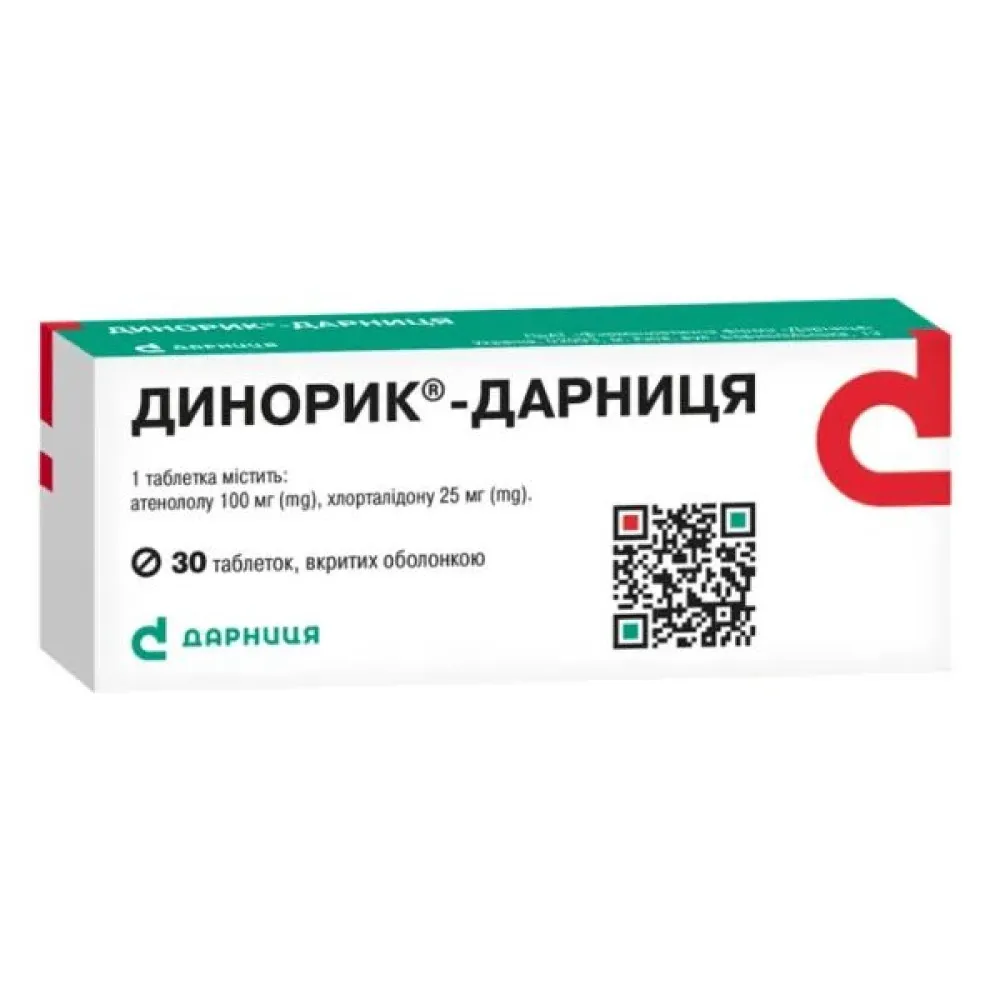
Table of Contents
INSTRUCTIONS FOR MEDICAL USE OF THE MEDICINAL PRODUCT DYNORIC®-DARNYTSIA (DYNORIC-DARNYTSIA)
Composition:
Active substances: 1 tablet contains atenolol 100 mg, chlorthalidone 25 mg;
Excipients: heavy magnesium carbonate, potato starch, hypromellose, colloidal anhydrous silicon dioxide, talc, sodium lauryl sulfate, magnesium stearate, polyethylene glycol (macrogol 1500), titanium dioxide (E 171).
Pharmaceutical form. Film-coated tablets.
Main physicochemical properties: white, biconvex film-coated tablets with a score line.
Pharmacological Properties.
Pharmacodynamics.
Dynoric®-Darnytsia is a combined antihypertensive medicinal product containing atenolol and chlorthalidone.
Atenolol is a cardioselective β1-adrenoblocker. It exerts antihypertensive, antianginal, and antiarrhythmic effects. It has no intrinsic sympathomimetic activity or membrane-stabilizing action. It predominantly blocks cardiac β-adrenergic receptors and reduces the stimulatory effects of the sympathetic nervous system and circulating catecholamines on the heart, resulting in decreased sinoatrial node automaticity, reduced heart rate, slowed atrioventricular conduction, decreased myocardial contractility, and reduced myocardial oxygen demand.
Chlorthalidone is a long-acting thiazide-like diuretic. It inhibits reabsorption of sodium, chloride, and consequently water in the distal tubules of the nephron. It increases excretion of potassium and magnesium ions from the body. It reduces excretion of calcium and uric acid ions. It lowers arterial pressure by reducing circulating blood volume, decreasing cardiac output, and decreasing total peripheral vascular resistance with prolonged use.
The antihypertensive effect of the medicinal product lasts for 24 hours after administration. Therapeutic effect stabilizes after 2 weeks of treatment.
Pharmacokinetics.
Absorption. After oral administration, 50% of the atenolol dose is absorbed from the gastrointestinal tract; food intake does not significantly affect absorption. Maximum plasma concentration is reached within 2–4 hours. Chlorthalidone is absorbed fairly rapidly after oral administration, with bioavailability of approximately 60%.
Distribution. Plasma protein binding of atenolol is about 6–16%. Chlorthalidone is 90% bound to plasma proteins and erythrocytes.
Metabolism and elimination. Atenolol is practically not metabolized in the liver. It is primarily excreted by the kidneys (90%). Elimination half-life is 6–9 hours. Chlorthalidone is excreted in feces and urine. Elimination half-life ranges from 24 to 55 hours and is prolonged in elderly patients and in those with renal insufficiency.
Clinical characteristics.
Indications.
Arterial hypertension.
Contraindications.
Hypersensitivity to the active substances or to any of the excipients of the medicinal product, severe sinus bradycardia, II–III degree AV block, sinoauricular block, sick sinus syndrome, acute heart failure, decompensated chronic heart failure, arterial hypotension, cardiogenic shock, severe peripheral circulatory disorders, metabolic acidosis, hypokalemia, hyponatremia, hypercalcemia, anuria, severe renal and/or hepatic insufficiency, precoma associated with Addison's disease, untreated pheochromocytoma, intoxication with cardiac glycosides, concomitant use of lithium preparations, bronchial asthma, bronchoobstructive syndrome, gout. The medicinal product is contraindicated in patients who have received verapamil within the previous 48 hours.
Interaction with other medicinal products and other forms of interaction.
Concomitant use of the medicinal product with other medicinal agents may result in:
with antihypertensive agents of different classes, tricyclic antidepressants, barbiturates, diuretics, phenothiazines, nitrates, peripheral vasodilators – enhanced hypotensive effect;
with non-selective inhibitors of neuronal reuptake of monoamines – dangerous reduction in arterial pressure; concomitant use without medical supervision is not recommended;
with anesthetic agents, antiarrhythmic agents, blockers of "slow" calcium channels – enhanced negative chronotropic, inotropic, and dromotropic effects. This may lead to severe arterial hypotension, marked bradycardia, and heart failure. Intravenous administration of "slow" calcium channel blockers should not be used within 48 hours after discontinuation of β-blockers. Administration of the medicinal product should be discontinued several days before anesthesia, or an anesthetic agent with minimal negative inotropic effect should be selected;
with cardiac glycosides – development of tachycardia or bradycardia, arrhythmias. Concomitant use with digitalis preparations also enhances hypokalemia; therefore, laboratory monitoring is required. Caution is advised when prescribing the medicinal product to patients receiving digitalis preparations along with an inadequate diet (not meeting the body's potassium requirements), or those with gastrointestinal disorders;
with dihydropyridines – cardiac rhythm disturbances, worsening of heart failure in patients with chronic heart failure;
with systemic glucocorticoids – cardiac rhythm disturbances due to significant potassium loss;
with reserpine, methyldopa, clonidine – development of bradycardia. If Dinoric®-Darnitsya and clonidine are used concomitantly, clonidine may be discontinued only several days after discontinuation of Dinoric®-Darnitsya;
with nonsteroidal anti-inflammatory agents, estrogens, α- and β*-adrenergic agonists, aminophylline, theophylline –* reduced effect of atenolol contained in the medicinal product;
with propafenone – enhanced effect of atenolol contained in the medicinal product;
with nicotine – enhanced effect of atenolol due to reduced metabolism and increased blood levels of the medicinal product;
with MAO inhibitors – enhanced effect of chlorthalidone contained in the medicinal product;
with cholestyramine – reduced effect of chlorthalidone contained in the medicinal product;
with potassium-containing preparations – reduced effect of the latter;
with central nervous system depressants – enhanced sedative effect;
with lithium – enhanced effect of the latter;
with narcotic analgesics – enhanced narcotic effect; dangerous depression;
with adrenaline – enhanced vasoconstrictor effect of adrenaline followed by bradycardia;
with oral hypoglycemic agents, insulin – enhanced effect of the latter;
with anticholinesterase agents, angiotensin-converting enzyme inhibitors (captopril, enalapril, lisinopril) – increased potassium levels in blood;
with quinolones, cimetidine – increased bioavailability of atenolol;
with lidocaine – increased plasma concentration of lidocaine.
Alcohol potentiates the effect of the medicinal product.
Special precautions for use.
Treatment with this medication should be carried out under a physician's supervision.
Dinoric®-Darnytsia is not indicated for the treatment of acute angina attacks.
The antihypertensive effect of the drug may be enhanced in patients after sympathectomy.
When prescribing the drug to patients with pheochromocytoma, α-adrenoreceptor blockers should be administered beforehand to prevent hypertensive crisis.
Dinoric®-Darnytsia must not be used in patients with untreated pheochromocytoma.
Cases of systemic lupus erythematosus exacerbation have been reported.
Prior to surgical intervention involving general anesthesia, discontinuation of the drug may be necessary. In such cases, at least 48 hours should elapse between the last dose of the drug and anesthesia. If treatment must continue, caution should be exercised when using anesthetics—select an anesthetic agent for general anesthesia with minimal negative inotropic effect.
In patients with a history of bronchial asthma who are receiving thiazides, hypersensitivity reactions may occur.
Even in patients without a history of heart failure, prolonged use of β-adrenoblockers may in some cases lead to heart failure. If early signs of worsening heart failure occur, the drug should be discontinued and medical advice sought.
Long-term thiazide therapy has been associated with pathological changes in the parathyroid glands, resulting in hypercalcemia and hypophosphatemia; however, typical complications of hyperparathyroidism such as nephrolithiasis, bone tissue atrophy, or peptic ulcer have not been observed.
Use with caution in patients with chronic heart failure controlled by digitalis preparations and/or diuretics, since digitalis agents and atenolol both slow atrioventricular conduction.
Use with caution in patients with impaired renal function. Renal function should be monitored regularly, as the drug may cause azotemia. Since atenolol is excreted by the kidneys, the dose should be reduced in severe renal impairment. Due to the potential for cumulative effects in patients with reduced renal function, and if worsening renal function occurs, Dinoric treatment should be discontinued.
Use with caution in patients with impaired liver function. In patients with hepatic dysfunction or progressive liver disease, even minor disturbances in fluid and electrolyte balance may precipitate hepatic coma.
Use with caution in patients with first-degree AV block, pulmonary emphysema, fluid and electrolyte imbalances, gastrointestinal disorders, diabetes mellitus, or hypoglycemia.
Concomitant use of calcium channel blockers may lead to bradycardia, increased diastolic pressure, atrioventricular block, or even fatal outcomes. Patients with pre-existing disturbances in intra-atrial conduction or left ventricular dysfunction are particularly sensitive to the drug's effects.
The drug must not be used in patients with bronchoobstructive syndrome or other bronchospastic disorders. However, since the drug is a selective β1-adrenoblocker, it may be used cautiously in such patients if there is no response to or intolerance of other antihypertensive therapies. As the selectivity of β1-adrenoblockers is not absolute, the drug should be administered at the lowest possible doses, with the possibility of using β2-adrenergic agonists. If dose escalation is necessary, the dose should be divided to achieve lower peak plasma concentrations.
The drug should not be used prior to tests assessing parathyroid function, as thiazides reduce calcium excretion.
A decision on whether to discontinue treatment or perform careful monitoring should be made in patients suspected of developing thyrotoxicosis, as β-adrenoblockers may mask certain clinical signs of hyperthyroidism, such as tachycardia. Abrupt discontinuation of the drug may provoke an exacerbation of the disease.
Even in the absence of existing angina, discontinuation of the drug should be carried out gradually under medical supervision, with dose reduction over 7–10 days, and physical exertion minimized.
If withdrawal syndrome occurs, treatment with the drug should be reinstated.
Serum creatinine levels should be monitored periodically in patients with impaired renal function.
Plasma and urinary electrolyte levels should be monitored periodically to detect possible electrolyte imbalance, especially in patients with persistent vomiting or receiving parenteral fluids. Signs or symptoms of fluid and electrolyte imbalance include dry mouth, thirst, weakness, lethargy, drowsiness, restlessness, muscle pain or cramps, muscle weakness, hypotension, oliguria, tachycardia, and gastrointestinal disturbances such as nausea and vomiting.
Serum potassium levels should be monitored periodically, especially in elderly patients, those receiving digitalis for heart failure, patients with unbalanced diets, or those complaining of gastrointestinal disorders. Hypokalemia may develop, particularly in patients with rapid diuresis, severe cirrhosis, or during concomitant use of corticosteroids or adrenocorticotropic hormone. Oral electrolyte supplementation may also contribute to hypokalemia.
Hypokalemia can be corrected or treated by using potassium-containing supplements or foods rich in potassium.
Chloride deficiency during thiazide therapy is usually mild and does not require specific treatment, except in exceptional circumstances (e.g., liver or kidney disease).
Hyperuricemia or acute gout may occur in some patients receiving thiazide therapy.
Dilutional hyponatremia may occur in edematous patients during hot weather. Appropriate management generally involves fluid restriction rather than salt restriction, except in rare cases where hyponatremia is life-threatening.
This medicinal product contains 8 mg of sodium lauryl sulfate. Caution is advised when administering to patients on a sodium-restricted diet.
Use during pregnancy or breastfeeding.
The drug must not be used during pregnancy or breastfeeding.
Ability to affect reaction speed when driving or operating machinery.
During treatment, caution should be exercised when driving vehicles or operating complex machinery. If dizziness occurs, patients should refrain from potentially hazardous activities requiring high attention and rapid psychomotor responses.
Method of Administration and Dosage
The medicinal product is not intended for initial therapy of arterial hypertension. The medicinal product is prescribed when monotherapy has been ineffective.
The dosage of the medicinal product and duration of treatment are determined individually by a physician depending on the therapeutic response achieved.
Dinorik®-Darnytsia tablets are intended for oral administration in adults. They should be taken whole, without chewing, with water, before meals, once daily (in the morning).
The dosing regimen is given in terms of atenolol.
In arterial hypertension, the initial dose is 50 mg (1/2 tablet) once daily. If there is no clinical response, the dose may be increased to 100 mg (1 tablet) once daily. Further dose increases generally do not result in additional blood pressure reduction. If necessary, other antihypertensive agents should be used.
Maximum therapeutic effect is observed within 1–2 weeks of treatment. Discontinuation of the medicinal product should be carried out gradually, since abrupt withdrawal may lead to withdrawal syndrome.
Elderly patients require a lower dose of the medicinal product (based on atenolol), which is determined by the physician.
Patients with renal impairment.
In patients with impaired renal function, the dosing regimen depends on the degree of glomerular filtration rate reduction and creatinine clearance values (see table).
| Creatinine clearance (mL/min) |
Maximum dose |
| 15–35 |
50 mg daily or 100 mg every other day |
| < 15 |
50 mg every other day |
| hemodialysis |
50 mg daily immediately after dialysis |
Children
The medicinal product should not be used in pediatric practice.
Overdose
Symptoms: bradycardia, II–III degree AV block, acute heart failure, arterial hypotension, respiratory depression, arrhythmias, loss of consciousness, hypoglycemia, bronchospasm, seizures, increased drowsiness, dizziness, nausea, hypovolemia, electrolyte disturbances with cardiac arrhythmias and muscle spasms.
Treatment: discontinue the medicinal product. Monitor and correct vital functions. In addition to gastric lavage and administration of adsorbents, the following measures are recommended when necessary: excessive bradycardia may be treated by intravenous administration of 1–2 mg atropine (if ineffective – isoprenaline) and/or implantation of a pacemaker. If necessary, an intravenous bolus of 10 mg glucagon may be administered. This procedure may be repeated if needed, or followed by intravenous infusion of glucagon at a rate of 1–10 mg/hour, depending on the response achieved. If there is no response to glucagon or if glucagon is unavailable, intravenous dobutamine may be administered at a dose of 5–10 mcg/kg/min, or intravenous isoprenaline by slow infusion at a dose of 10–25 mcg, increasing by 5 mcg/min. Due to its positive inotropic effect, dobutamine may also be used to treat arterial hypotension and acute heart failure. The indicated doses may be insufficient to control cardiac symptoms related to β-adrenergic blockade in cases of significant overdose. Therefore, if necessary, the dose of dobutamine may be increased according to the patient's clinical response until the desired effect is achieved.
Maintain normal fluid and electrolyte balance. In case of arterial hypotension, administer plasma or plasma substitutes. Treat bronchospasm with bronchodilators.
In case of significant diuresis, administer fluids and electrolytes.
Adverse Reactions
Eye disorders: conjunctivitis, dry eyes, decreased tear secretion, visual disturbances, xanthopsia.
Respiratory, thoracic and mediastinal disorders: cough, stridor, bronchospasm in patients with bronchial asthma or predisposition to bronchial obstruction, dyspnea.
Gastrointestinal disorders: dyspepsia, nausea, vomiting, constipation, diarrhea, dry mouth, anorexia, abdominal pain, gastric irritation, spasms, mesenteric arterial thrombosis, ischemic colitis.
Hepatobiliary and biliary tract disorders: hepatotoxicity, liver function abnormalities, intrahepatic cholestasis, cholestatic jaundice, pancreatitis, increased levels of liver enzymes, bilirubin.
Renal and urinary disorders: interstitial nephritis.
Endocrine disorders: worsening of diabetes mellitus.
Nervous system disorders: headache, weakness, fatigue, somnolence, lethargy, dizziness, transient memory loss, paresthesia, muscle cramps.
Psychiatric disorders: sleep disturbances, nightmares, mood changes, depression, psychosis, hallucinations, disorientation, confusion, loss of consciousness, excitement, impaired concentration, aggression.
Cardiac and vascular disorders: bradycardia, atrioventricular conduction disturbances, arrhythmia, palpitations, exacerbation of angina attacks in patients with angina pectoris, symptoms of heart failure, cold sensation in extremities, orthostatic hypotension which may be associated with syncope, Raynaud's syndrome, necrotizing vasculitis, sinoatrial node dysfunction, lupus-like syndrome.
Blood and lymphatic system disorders: purpura, thrombocytopenia, leukopenia, aplastic anemia, agranulocytosis, eosinophilia, neutropenia, pancytopenia.
Immune system disorders: hypersensitivity reactions including urticaria, angioedema (Quincke's edema); gout.
Skin and subcutaneous tissue disorders: pruritus, skin rashes, erythematous eruptions, erythema, purpura, alopecia, psoriasiform rashes, exacerbation of psoriasis, photosensitization, toxic epidermal necrolysis, Lyell's syndrome.
Reproductive system and breast disorders: impotence, Peyronie's disease.
General disorders: fever accompanied by pain and throat inflammation, muscle weakness, muscle cramps, leg pain, increased sweating, withdrawal syndrome.
Laboratory findings: hyperuricemia, hyponatremia, hypokalemia, hypercalcemia, hypochloremic alkalosis, hyperglycemia, glucosuria, impaired glucose tolerance, elevated serum transaminase and bilirubin levels, hypercholesterolemia, hypertriglyceridemia, formation of antinuclear antibodies.
Shelf life. 3 years.
Storage conditions.
Store in the original packaging at a temperature not exceeding 25 °C.
Keep out of reach of children.
Packaging.
10 tablets in a blister pack; 1 or 3 blisters per carton.
Prescription category. Prescription only.
Manufacturer. JSC "Pharmaceutical Company "Darnitsya".
Manufacturer's address and place of business.
13, Boryspylska Street, Kyiv, 02093, Ukraine.