Dicloberl® retard
Ukraine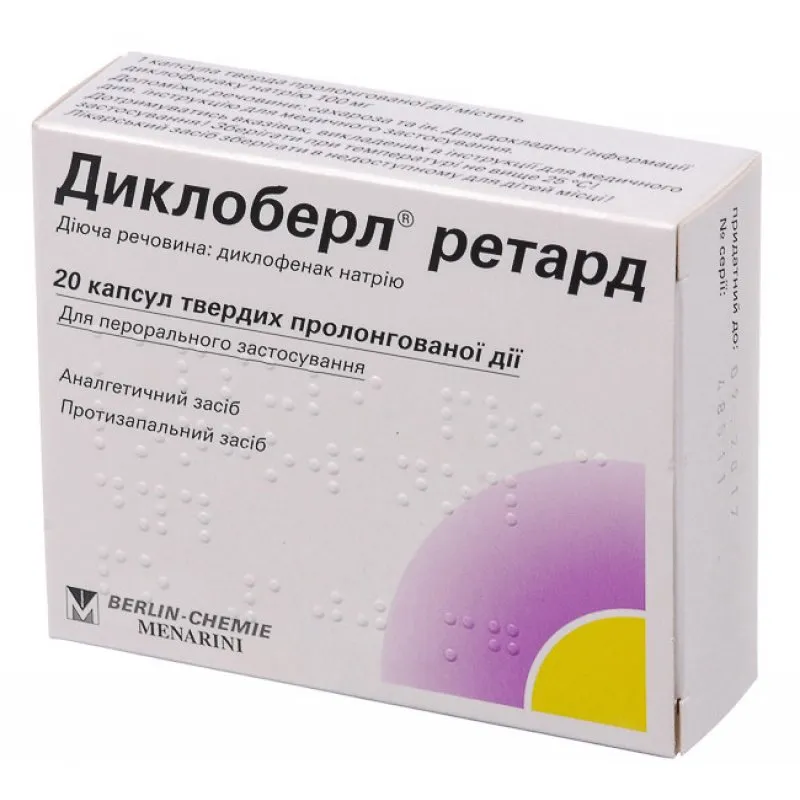
Table of Contents
INSTRUCTIONS FOR MEDICAL USE OF THE MEDICINAL PRODUCT DICLOBERL® RETARD (DICLOBERL RETARD)
Composition:
Active substance: diclofenac;
1 prolonged-release hard capsule contains 100 mg of diclofenac sodium;
Excipients:
Core of the capsule: sucrose, corn starch, talc, shellac, ammonio-methacrylate copolymer (type A), sodium hydroxide;
Capsule shell: gelatin, titanium dioxide (E 171).
Pharmaceutical form. Prolonged-release hard capsules.
Main physicochemical properties: hard gelatin capsules of white to cream color (color intensity not stronger than 9001 according to RAL) (capsule size 2). Contents: spherical granules from white to ivory color (color intensity not stronger than 1014 according to RAL).
Pharmacotherapeutic group. Nonsteroidal anti-inflammatory and antirheumatic agents.
ATC code M01AB05.
Pharmacological Properties.
Pharmacodynamics.
Diclofenac, the active substance in Diclodberl® Retard, is a non-steroidal compound with pronounced anti-rheumatic, antipyretic, analgesic, and anti-inflammatory properties. The primary mechanism of action of diclofenac, established under experimental conditions, is considered to be the inhibition of prostaglandin biosynthesis. Prostaglandins play an important role in the pathogenesis of inflammation, pain, and fever.
In vitro, sodium diclofenac at concentrations equivalent to those achieved during patient treatment does not inhibit proteoglycan biosynthesis in cartilage tissue.
In rheumatic diseases, the anti-inflammatory and analgesic effects of Diclodberl® Retard lead to a significant reduction in pain intensity (both at rest and during movement), morning stiffness, and joint swelling, thereby improving the patient's functional status.
In inflammation caused by trauma or surgical intervention, Diclodberl® Retard rapidly relieves both spontaneous pain and movement-related pain, as well as reduces inflammatory tissue edema and swelling at the surgical wound site. When used concomitantly with opioids for postoperative pain relief, Diclodberl® Retard significantly reduces the need for opioids.
Clinical studies have shown that diclofenac also exerts a strong analgesic effect in moderate to severe pain of non-rheumatic origin.
Pharmacokinetics.
Analysis of unchanged diclofenac and its hydroxylated metabolites excreted in urine showed that the amount of released and absorbed diclofenac is the same as that following administration of an equivalent dose of sodium diclofenac in enteric-coated tablets. However, the systemic bioavailability of diclofenac (released from Diclodberl® Retard) averages 82% of the corresponding value after administration of the enteric-coated Diclodberl® tablet at the same dose. Due to the slow release of the active substance from Diclodberl® Retard, maximum plasma concentrations are lower than those achieved after administration of enteric-coated tablets. The mean peak concentration of 0.4 µg/mL or 0.5 µg/mL (1.25 or 1.6 µmol/L) is reached on average within 5–6 hours after administration of the 75 mg or 100 mg tablet. Food intake does not clinically affect the absorption and systemic bioavailability of Diclodberl® Retard. On the other hand, a mean plasma concentration of 13 ng/mL (40 nmol/L) may be observed 24 hours (16 hours) after administration of 75 mg prolonged-release sodium diclofenac. The amount of absorbed active substance is linearly dependent on the dose of the drug. Since approximately half of diclofenac is metabolized during its first pass through the liver ("first-pass effect"), the area under the concentration-time curve (AUC) after administration of Diclodberl® Retard capsules is nearly half that observed after parenteral administration of an equivalent dose. After repeated administration of Diclodberl® Retard, pharmacokinetic parameters do not change. No accumulation occurs when the recommended dosing intervals are maintained. Corresponding plasma concentrations are 22 ng/mL or 25 ng/mL (70 nmol/L or 80 nmol/L) when 75 mg prolonged-release diclofenac is administered twice daily.
Distribution.
99.7% of diclofenac is bound to plasma proteins, primarily to albumin (99.4%). The volume of distribution is 0.12–0.17 L/kg. Diclofenac penetrates into synovial fluid, where its maximum concentration is observed 2–4 hours later than in plasma. The apparent half-life in synovial fluid is 3–6 hours. Two hours after peak plasma concentrations are reached, the concentration of the active substance in synovial fluid exceeds that in plasma and remains higher for up to 12 hours.
Biotransformation.
Biotransformation of diclofenac occurs partially via glucuronidation of the unchanged molecule, but primarily through single and multiple hydroxylations and methoxylations, leading to the formation of several phenolic metabolites (3’-hydroxy-, 4’-hydroxy-, 5’-hydroxy-, 4’,5-dihydroxy-, and 3’-hydroxy-4’-methoxy-diclofenac), most of which are conjugated with glucuronic acid. Two of these phenolic metabolites are pharmacologically active, but to a much lesser extent than diclofenac.
Elimination.
Total systemic clearance of diclofenac from plasma is 263±56 mL/min. The terminal half-life in plasma is 1–2 hours. The half-life of four metabolites, including two pharmacologically active ones, is also short, lasting 1–3 hours. One metabolite, 3’-hydroxy-4’-methoxydiclofenac, has a longer half-life in plasma. However, this metabolite is completely inactive pharmacologically.
Approximately 60% of the administered dose is excreted in urine as glucuronide conjugates of the intact active substance molecule and as metabolites, most of which are also converted into glucuronide conjugates. Less than 1% of diclofenac is excreted unchanged. The remainder of the administered dose is excreted via bile in feces as metabolites.
Pharmacokinetics in specific patient populations.
The influence of patient age on absorption, metabolism, and elimination of the drug has not been determined.
In patients with impaired renal function receiving therapeutic doses, no accumulation of unchanged active substance was observed. In patients with creatinine clearance less than 10 mL/min, calculated steady-state plasma concentrations of hydroxylated metabolites were approximately four times higher than in healthy subjects. However, ultimately, all metabolites were excreted via bile.
In patients with chronic hepatitis or compensated cirrhosis of the liver, pharmacokinetic parameters and diclofenac metabolism are similar to those in patients without liver disease.
Clinical characteristics.
Indications.
Relief of pain and reduction of inflammation of varying degrees in different conditions, including:
- Joint disorders: rheumatoid arthritis, ankylosing spondylitis, osteoarthritis, acute gout attacks;
- Acute musculoskeletal disorders such as periartitis (e.g., periarthritis of the shoulder), tendinitis, tenosynovitis, bursitis;
- Other pathological conditions caused by trauma, including fractures, low back pain, sprains, dislocations, and minor orthopedic, dental, or other surgical interventions.
Contraindications.
- Hypersensitivity to the active substance or to any other component of the medicinal product.
- Active gastric or intestinal ulcer; gastrointestinal bleeding or perforation; history of gastrointestinal hemorrhage or perforation following use of nonsteroidal anti-inflammatory drugs (NSAIDs); active or recurrent gastric or intestinal ulcer in medical history.
- Diclobene® Retard, like other NSAIDs, is contraindicated in patients who experience asthma attacks, urticaria, or acute rhinitis after taking acetylsalicylic acid or other NSAIDs.
- Inflammatory bowel diseases (Crohn’s disease or ulcerative colitis).
- Severe hepatic insufficiency (Child–Pugh class C, cirrhosis or ascites).
- Severe renal insufficiency (creatinine clearance <30 mL/min).
- Congestive heart failure (NYHA II–IV).
- Treatment of perioperative pain in coronary artery bypass grafting (CABG) surgery (or use of cardiopulmonary bypass).
- Ischemic heart disease in patients with angina pectoris or history of myocardial infarction.
- Cerebrovascular diseases in patients with history of stroke or transient ischemic attacks.
- Peripheral arterial disease.
- Third trimester of pregnancy.
Interaction with other medicinal products and other forms of interaction.
The interactions listed below have been observed during administration of enteric-coated diclofenac tablets and/or other diclofenac formulations.
Litium. Diclobene® Retard may increase plasma lithium concentrations when used concomitantly. Monitoring of plasma lithium levels is recommended.
Digoxin. Diclobene® Retard may increase plasma digoxin concentrations when used concomitantly. Monitoring of plasma digoxin levels is recommended.
Diuretics and antihypertensive agents. Like other NSAIDs, Diclobene® Retard may attenuate the antihypertensive effect of concomitantly administered diuretics or antihypertensive agents (e.g., beta-blockers, angiotensin-converting enzyme (ACE) inhibitors) by inhibiting the synthesis of vasodilatory prostaglandins. Therefore, this combination should be used with caution. Blood pressure should be monitored regularly, especially in elderly patients. Adequate hydration should be ensured, and renal function should be assessed at the beginning of combined therapy and monitored regularly thereafter, particularly due to the increased risk of nephrotoxicity associated with concomitant use of diuretics and ACE inhibitors.
Anticoagulants and antithrombotic agents. Concomitant use is recommended with caution, as it may increase the risk of bleeding.
Although clinical studies have not demonstrated that Diclobene® Retard affects the efficacy of anticoagulants, data indicate an increased risk of bleeding in patients receiving diclofenac and anticoagulants simultaneously. Therefore, careful monitoring of such patients is recommended, and anticoagulant dosage adjustment may be necessary. Like other NSAIDs, diclofenac at high doses may reversibly inhibit platelet aggregation.
Other NSAIDs, including selective cyclooxygenase-2 inhibitors and corticosteroids. Concomitant use of diclofenac and other systemic NSAIDs or corticosteroids may increase the risk of gastrointestinal bleeding or ulceration. Concomitant use of two or more NSAIDs should be avoided. Concomitant use of diclofenac and corticosteroids may increase the frequency of adverse reactions.
Antidiabetic agents. Clinical studies have shown that Diclobene® Retard can be administered together with oral antidiabetic agents (e.g., sulfonylureas) without affecting their clinical efficacy. However, isolated reports of both hypoglycemic and hyperglycemic reactions have been reported after diclofenac administration, requiring adjustment of antidiabetic agent dosage. For this reason, blood glucose levels should be monitored as a precaution during combination therapy.
Methotrexate. Diclofenac may inhibit tubular renal clearance of methotrexate, thereby increasing methotrexate levels. NSAIDs, including diclofenac, should be used with caution when administered less than 24 hours before methotrexate treatment, as methotrexate blood levels may rise and its toxicity may be enhanced. Cases of severe toxicity have been reported when methotrexate and NSAIDs, including diclofenac, were administered with intervals of less than 24 hours. This interaction is mediated by methotrexate accumulation due to impaired renal excretion in the presence of NSAIDs.
Cyclosporine. Diclofenac, like other NSAIDs, may enhance the nephrotoxicity of cyclosporine by affecting renal prostaglandins. Therefore, the drug should be administered at lower doses than in patients not receiving cyclosporine.
Tacrolimus. The risk of nephrotoxicity may increase if NSAIDs are administered concomitantly with tacrolimus. This may be mediated through inhibition of renal prostaglandins by both NSAIDs and calcineurin inhibitors.
Quinolone antibiotics. Seizures may occur due to interaction between quinolone antibiotics and NSAIDs. This may occur both in patients with epilepsy or a history of seizures and in those without such history. Therefore, quinolone antibiotics should be used with caution in patients already receiving NSAIDs.
Phenytoin. Plasma phenytoin concentrations should be monitored when phenytoin and diclofenac are used concomitantly, due to the expected increase in phenytoin exposure.
Probenecid. Medicinal products containing probenecid may inhibit the excretion of sodium diclofenac.
Cholestyramine and colestipol. These agents may delay or reduce the absorption of diclofenac. Therefore, diclofenac should be administered at least one hour before or 4–6 hours after administration of cholestyramine/colestipol.
Cardiac glycosides. Concomitant use of cardiac glycosides and NSAIDs may promote worsening of heart failure, decreased glomerular filtration rate (GFR), and increased plasma glycoside concentration.
Strong CYP2C9 inhibitors. Diclofenac should be used with caution when administered concomitantly with strong CYP2C9 inhibitors (e.g., sulfaphenazole and voriconazole), as this may lead to a significant increase in maximum plasma concentration and exposure to diclofenac due to inhibition of diclofenac metabolism.
Selective serotonin reuptake inhibitors (SSRIs).
Concomitant use of NSAIDs and SSRIs may increase the risk of gastrointestinal bleeding.
Agents whose use may lead to hyperkalemia.
Concomitant use of potassium-sparing diuretics, cyclosporine, tacrolimus, or trimethoprim may lead to increased serum potassium levels, which should be monitored.
| Tenofovir. Concomitant use of tenofovir with NSAIDs may lead to increased plasma blood urea nitrogen and creatinine levels. Renal function should be monitored due to the potential synergistic effect on kidney function. Deferasirox. Concomitant use of deferasirox with NSAIDs increases the risk of gastrointestinal toxicity; therefore, careful clinical monitoring is required. Mifepristone. Due to the theoretical risk that prostaglandin synthetase inhibitors may alter the effectiveness of mifepristone, NSAIDs should not be used within 8–12 days after mifepristone administration. According to some data, concomitant use of NSAIDs on the day of prostaglandin administration does not show a negative effect on the impact of mifepristone and prostaglandin on cervical ripening or uterine contractility, and does not reduce the clinical efficacy of medical termination of pregnancy. Pemetrexed. |
Concomitant use with NSAIDs may reduce the elimination of pemetrexed, so high doses of NSAIDs should be administered with caution. In patients with mild to moderate renal impairment (creatinine clearance from 45 to 79 mL/min), concomitant use of pemetrexed with NSAIDs should be avoided for 2 days before and 2 days after administration of pemetrexed.
Special precautions for use.
Concomitant use of the medicinal product Diclöberl® Retard and systemic nonsteroidal anti-inflammatory drugs (NSAIDs), such as selective cyclooxygenase-2 inhibitors, should be avoided due to the lack of evidence for synergistic effects and the potential for additive adverse effects.
Treatment should be prescribed with caution in patients over 65 years of age according to recommendations for this patient group. In particular, the use of the lowest effective dose is recommended for elderly, debilitated patients or those with low body weight.
As with other NSAIDs, including diclofenac, allergic reactions, including anaphylactic/anaphylactoid reactions, may rarely occur, even upon first exposure to the drug.
Like other NSAIDs, diclofenac, due to its pharmacodynamic properties, may mask the symptoms of infection. Exacerbations of inflammation associated with infections (e.g., development of necrotizing fasciitis) have been reported during systemic use of NSAIDs. This may be due to the mechanism of action of NSAIDs.
Diclöberl® Retard contains sucrose and therefore is not recommended for use in patients with rare hereditary fructose intolerance, glucose-galactose malabsorption, or sucrase-isomaltase deficiency.
Gastrointestinal effects
Gastrointestinal bleeding (hematemesis, melena), ulceration, or perforation, which may be fatal, have been reported during treatment with NSAIDs, including diclofenac, and may occur at any time during therapy, with or without preceding symptoms or a history of serious gastrointestinal events. Such complications are usually more severe in elderly patients. If gastrointestinal bleeding or ulceration occurs in patients receiving diclofenac, the drug should be discontinued.
As with all NSAIDs, careful medical supervision and special caution are required when prescribing diclofenac to patients with symptoms suggesting gastrointestinal disorders, or with suspected ulceration, bleeding, or perforation of the stomach or intestine in their history. The risk of gastrointestinal bleeding, ulceration, or perforation increases with higher NSAID doses, including diclofenac, and in patients with a history of peptic ulcer, particularly if complicated by bleeding or perforation.
Elderly patients have an increased frequency of adverse reactions to NSAIDs, especially gastrointestinal bleeding and perforation, which may be fatal.
NSAIDs, including diclofenac, may be associated with an increased risk of gastrointestinal bleeding. Close monitoring and caution are recommended when using diclofenac after gastrointestinal surgery.
To reduce the risk of gastrointestinal toxicity, treatment with the lowest effective dose should be used in patients with a history of peptic ulcer, especially with bleeding or perforation, and in elderly patients.
Concomitant therapy with protective agents (e.g., misoprostol or proton pump inhibitors) should be considered for such patients, as well as for patients requiring concomitant use of low-dose acetylsalicylic acid (ASA)/aspirin or other medicinal products that may increase gastrointestinal risk.
Patients with a history of gastrointestinal toxicity, particularly elderly patients, require monitoring for unusual abdominal symptoms (especially gastrointestinal bleeding).
Caution should be exercised in patients receiving concomitant therapy with agents that may increase the risk of ulceration or bleeding, such as systemic corticosteroids, anticoagulants (e.g., warfarin), selective serotonin reuptake inhibitors (SSRIs), or antiplatelet agents such as acetylsalicylic acid.
Careful medical supervision and caution are required in patients with ulcerative colitis or Crohn’s disease, as these conditions may worsen.
Hepatobiliary effects
Careful medical monitoring is required if Diclöberl® Retard is prescribed to patients with impaired liver function, as their condition may deteriorate.
As with other NSAIDs, levels of one or more liver enzymes may increase. Regular monitoring of liver function is recommended during prolonged diclofenac therapy as a precautionary measure. If abnormalities in liver function tests persist or worsen, clinical symptoms of liver disease appear, or other signs (e.g., eosinophilia, rash) occur, Diclöberl® Retard should be discontinued. Hepatitis may develop during diclofenac treatment without prodromal symptoms. Caution is required when using diclofenac in patients with hepatic porphyria, as it may trigger an acute attack.
Renal effects
Since fluid retention and edema have been observed during use of NSAIDs, including diclofenac, particular caution is required in patients with impaired heart or kidney function, a history of arterial hypertension, elderly patients, patients receiving concomitant diuretic therapy or drugs that may significantly affect renal function, and patients with substantial reduction in extracellular fluid volume for any reason (e.g., before or after major surgery). In such cases, monitoring of renal function is recommended as a precautionary measure during diclofenac use. After discontinuation of therapy, patients’ condition usually returns to the pre-treatment state.
Skin effects
Serious skin reactions, some of which are fatal, including exfoliative dermatitis, Stevens-Johnson syndrome, and toxic epidermal necrolysis, have been reported very rarely during NSAID use, including Diclöberl® Retard. The highest risk of these reactions occurs early in therapy, and most cases develop within the first month of treatment. Diclöberl® Retard should be discontinued at the first signs of skin rash, mucosal lesions, or any other signs of hypersensitivity.
SLE and mixed connective tissue diseases
Patients with systemic lupus erythematosus (SLE) and mixed connective tissue diseases may have an increased risk of aseptic meningitis.
Cardiovascular and cerebrovascular effects
Diclofenac may be prescribed to patients with significant cardiovascular risk factors (e.g., arterial hypertension, hyperlipidemia, diabetes mellitus, smoking) only after careful clinical evaluation. Since cardiovascular risks of diclofenac may increase with higher doses and longer duration of treatment, it should be used for the shortest possible duration and at the lowest effective dose. The patient’s need for diclofenac and response to therapy should be reviewed periodically.
Patients with hypertension and/or mild to moderate congestive heart failure in their history require appropriate medical monitoring and consultation, as fluid retention and edema have been observed during NSAID use, including diclofenac.
Clinical trial results and epidemiological data suggest that diclofenac use, particularly at high doses (150 mg daily) and during long-term treatment, may be associated with a small increased risk of arterial thrombosis (e.g., myocardial infarction or stroke).
Treatment with Diclöberl® Retard is contraindicated in patients with established cardiovascular disease (congestive heart failure [NYHA II–IV], diagnosed ischemic heart disease, peripheral arterial disease) or uncontrolled hypertension. If necessary, Diclöberl® Retard may be used in patients with established cardiovascular disease, uncontrolled hypertension, or significant cardiovascular risk factors (e.g., hypertension, hyperlipidemia, diabetes mellitus, smoking) only after careful consideration and only at daily doses ≤ 100 mg if treatment lasts longer than 4 weeks.
Patients requiring symptomatic treatment should be examined periodically, especially if treatment lasts longer than 4 weeks.
Patients should be informed about symptoms of serious arterial thrombotic events (e.g., chest pain, shortness of breath, weakness, speech disturbances), which may occur suddenly.
Hematological effects
During long-term diclofenac therapy, as with other NSAIDs, periodic blood tests to determine formed element counts are recommended.
Diclöberl® Retard may reversibly inhibit platelet aggregation. Patients with coagulation disorders, hemorrhagic diathesis, or hematological abnormalities require careful monitoring.
Respiratory effects (in patients with asthma)
In patients with asthma, seasonal allergic rhinitis, nasal mucosal edema (i.e., nasal polyps), chronic obstructive pulmonary diseases, or chronic respiratory tract infections (especially if associated with symptoms resembling allergic rhinitis), reactions to NSAIDs resembling asthma exacerbations (so-called aspirin-induced asthma with analgesic intolerance), Quincke’s edema, and urticaria occur more frequently than in other patients. Therefore, special precautions (readiness for emergency intervention) are recommended for such patients. This also applies to patients with allergic reactions to other substances, such as rash, itching, or urticaria.
General warnings
Acute hypersensitivity reactions (e.g., anaphylactic shock) are rare. If the first signs of hypersensitivity occur after using Diclöberl® Retard, therapy must be discontinued.
Hypersensitivity reactions may also progress to Kounis syndrome, a serious allergic reaction that may lead to myocardial infarction. Symptoms may include chest pain occurring in combination with an allergic reaction to diclofenac.
Prolonged use of analgesics may lead to medication-overuse headache, which should not be treated by increasing the dose of the drug.
Concomitant alcohol consumption may enhance NSAID adverse reactions, particularly those affecting the gastrointestinal tract or central nervous system (CNS).
This medicinal product contains less than 1 mmol sodium (23 mg) per capsule, i.e., it is practically sodium-free.
Use during pregnancy or breastfeeding.
Pregnancy
From the 20th week of pregnancy, use of diclofenac may cause oligohydramnios due to fetal renal dysfunction. This disorder may occur soon after starting treatment and is usually reversible upon discontinuation. Additionally, there are reports of fetal ductus arteriosus constriction after NSAID treatment in the second trimester, which in most cases resolved after stopping treatment. Therefore, during the first and second trimesters of pregnancy, Diclöberl® Retard should be prescribed only if the expected benefit to the pregnant woman outweighs the potential risk to the fetus, and only at the lowest effective dose and for the shortest possible duration. Prenatal monitoring for oligohydramnios and ductus arteriosus constriction may be advisable if diclofenac exposure occurred for several days starting from the 20th gestational week. Diclöberl® Retard should be discontinued if oligohydramnios or ductus arteriosus constriction is detected.
Inhibition of prostaglandin synthesis may adversely affect pregnancy and/or embryonic/fetal development. Epidemiological data suggest an increased risk of miscarriage and/or cardiac defects and gastroschisis after use of prostaglandin synthesis inhibitors in early pregnancy. The absolute risk of cardiovascular malformations increased from less than 1% to approximately 1.5%.
The risk is considered to increase with higher doses and longer duration of therapy. In animal studies, administration of prostaglandin synthesis inhibitors led to increased pre- and post-implantation loss and embryonic-fetal mortality.
Furthermore, in animals treated with prostaglandin synthesis inhibitors during organogenesis, an increased incidence of various developmental abnormalities, including cardiovascular defects, was observed. If Diclöberl® Retard is prescribed to women planning pregnancy or during the first trimester, the dose should be as low as possible and the duration of treatment as short as possible.
During the third trimester of pregnancy, all prostaglandin synthesis inhibitors may affect the fetus as follows:
- Cardio-pulmonary toxicity (premature constriction/closure of the ductus arteriosus and pulmonary hypertension);
- Impaired renal function (see above);
Effects on the mother at the end of pregnancy and on the newborn:
- Possible prolongation of bleeding time, antiplatelet effect, which may occur even at very low doses;
- Inhibition of uterine contractions, leading to delayed or prolonged labor.
Therefore, Diclöberl® Retard is contraindicated during the third trimester of pregnancy (see section "Contraindications").
Breastfeeding
Like other NSAIDs, diclofenac passes into breast milk in small amounts. Therefore, to prevent adverse reactions in infants, this drug is contraindicated during breastfeeding.
Female fertility
Like other NSAIDs, diclofenac may affect female fertility and is therefore not recommended for women planning pregnancy. Discontinuation of diclofenac should be considered in women experiencing infertility and in those undergoing fertility investigations.
Ability to affect reaction speed when driving or operating machinery.
Patients who experience dizziness or other adverse CNS effects, including visual disturbances, while taking Diclöberl® Retard should not drive or operate machinery.
Method of Administration and Dosage
The dose should be individually adjusted, starting with the lowest effective dose, and should be used for the shortest possible duration.
The recommended initial dose of diclofenac for adults is 75–150 mg per day (1 capsule of Dicloberl® Retard 100 mg), depending on the severity of disease symptoms. For long-term therapy, administration of 1 capsule of Dicloberl® Retard 100 mg per day is generally sufficient. If symptoms are most pronounced during the night or in the morning, Dicloberl® Retard should be administered in the evening. The daily dose must not exceed 150 mg. Capsules should be swallowed whole, without chewing, with liquid, preferably during meals.
Elderly patients: No clinically significant changes in pharmacokinetics have been observed with the use of Dicloberl® Retard in elderly patients. However, NSAIDs should be used with particular caution in elderly patients, as they are more prone to adverse reactions. It is recommended to use the lowest effective dose in elderly patients or those with low body weight, as well as in patients requiring close monitoring for possible gastrointestinal bleeding during NSAID therapy.
Existing cardiovascular diseases or significant risk factors.
Treatment with Dicloberl® Retard is generally contraindicated in patients with existing cardiovascular diseases or uncontrolled hypertension. If necessary, Dicloberl® Retard may be administered to patients with existing cardiovascular diseases, uncontrolled hypertension, or significant cardiovascular risk factors only after careful consideration and only at daily doses ≤100 mg, if treatment lasts longer than 4 weeks.
Patients with impaired renal function.
Specific studies in patients with impaired renal function have not been conducted, and there are no recommendations for dose adjustment. Dicloberl® Retard should be prescribed with caution in patients with moderate to severe renal impairment.
Patients with impaired hepatic function.
Specific studies in patients with impaired hepatic function have not been conducted, and there are no recommendations for dose adjustment. Dicloberl® Retard should be prescribed with caution in patients with moderate to severe hepatic impairment.
Children.
Dicloberl® Retard is contraindicated for use in children due to the high content of active ingredient.
Overdose.
Symptoms.
There is no typical clinical picture characteristic of diclofenac overdose. Overdose may cause symptoms such as headache, nausea, vomiting, epigastric pain, gastrointestinal bleeding, diarrhea, dizziness, disorientation, excitement, coma, drowsiness, tinnitus, or convulsions. Acute renal failure and liver damage are possible in cases of severe intoxication.
Treatment.
Treatment of acute poisoning with NSAIDs, including diclofenac, consists of supportive and symptomatic therapy. This includes management of manifestations such as arterial hypotension, renal failure, seizures, gastrointestinal disturbances, and respiratory depression. Specific therapeutic measures such as forced diuresis, dialysis, or hemoperfusion are unlikely to be effective in eliminating NSAIDs, including diclofenac, because these active substances are highly protein-bound and undergo extensive metabolism. Activated charcoal may be administered after ingestion of potentially toxic doses, and gastric decontamination (e.g., induction of emesis, gastric lavage) may be performed after ingestion of potentially life-threatening doses.
Adverse reactions.
The frequency category of adverse reactions is defined as follows: very common (> 1/10); common (≥ 1/100, < 1/10); uncommon (≥ 1/1000, < 1/100); rare (≥ 1/10000, < 1/1000); very rare (< 1/10000); not known, including isolated reports.
The following adverse effects include events associated with administration under conditions of short-term and long-term use.
| From the blood and lymphatic system |
|
| Very rare |
Thrombocytopenia, leukopenia, anemia (including hemolytic and aplastic anemia), agranulocytosis |
| From the immune system |
|
| Rare |
Hypersensitivity, anaphylactic and anaphylactoid reactions (including hypotension and shock) |
| Very rare |
Angioneurotic edema (including facial swelling) |
| Psychiatric disorders |
|
| Very rare |
Disorientation, depression, insomnia, nightmares, irritability, psychotic disorders |
| From the nervous system |
|
| Common |
Headache, dizziness |
| Rare |
Somnolence, increased fatigue |
| Very rare |
Paresthesia, memory impairment, seizures, anxiety, tremor, aseptic meningitis, taste disturbances, cerebral circulation disorders |
| Unknown |
Confusion, hallucinations, sensory disturbances, malaise |
| From the eye organs |
|
| Very rare |
Visual disturbances, blurred vision, diplopia |
| Unknown |
Optic neuritis |
| From the ear and labyrinthine system |
|
| Common |
Vertigo |
| Very rare |
Tinnitus, hearing impairment |
| Cardiac disorders |
|
| Rare |
Palpitations, chest pain, heart failure, myocardial infarction |
| Unknown |
Kounis syndrome |
| From the vascular system |
|
| Very rare |
Hypertension, hypotension, vasculitis |
| Respiratory, thoracic and mediastinal disorders |
|
| Rare |
Asthma (including dyspnea) |
| Very rare |
Pneumonitis |
| From the gastrointestinal tract |
|
| Common |
Nausea, vomiting, diarrhea, dyspepsia, abdominal pain, flatulence, loss of appetite |
| Rare |
Gastritis, gastrointestinal bleeding, hematemesis, hemorrhagic diarrhea, melena, gastric and intestinal ulcers with or without bleeding or perforation (sometimes fatal, especially in elderly patients) |
| Very rare |
Colitis (including hemorrhagic colitis, and exacerbation of ulcerative colitis or Crohn's disease), constipation, stomatitis (including ulcerative stomatitis), glossitis, esophageal disorders, development of diaphragm-like intestinal strictures, pancreatitis |
| From the hepatobiliary system |
|
| Common |
Elevated transaminase activity |
| Rare |
Hepatitis, jaundice, liver function disorders |
| Very rare |
Fulminant hepatitis, liver necrosis, hepatic failure |
| From the skin and subcutaneous tissue |
|
| Common |
Rash |
| Rare |
Urticaria |
| Very rare |
Bullous rash, eczema, erythema, erythema multiforme, Stevens-Johnson syndrome, Lyell's syndrome (toxic epidermal necrolysis), exfoliative dermatitis, alopecia, photosensitivity reactions, purpura, allergic purpura, pruritus |
| From the urinary system |
|
| Very rare |
Acute renal failure, hematuria, proteinuria, nephrotic syndrome, tubulointerstitial nephritis, renal papillary necrosis |
| General disorders |
|
| Rare |
Edema |
| From the reproductive system and breast |
|
| Very rare |
Impotence |
Clinical trial data and epidemiological evidence indicate an increased risk of thrombotic complications (e.g., myocardial infarction or stroke) associated with the use of diclofenac, particularly at high therapeutic doses (150 mg per day) and during long-term treatment.
Reporting of suspected adverse reactions.
Reporting of suspected adverse reactions after marketing authorization of the medicinal product is important. This allows ongoing monitoring of the benefit-risk balance of the medicinal product. Healthcare and pharmaceutical professionals, as well as patients or their legal representatives, should report all cases of suspected adverse reactions and lack of efficacy via the Automated Pharmacovigilance Information System at the following link: https://aisf.dec.gov.ua
Shelf life. 3 years.
Do not use the medicinal product after the expiry date stated on the packaging.
Storage conditions. Store at a temperature not exceeding 25 °C. Keep out of the reach and sight of children.
Packaging. 10 hard capsules per blister; 1, 2, or 5 blisters per cardboard box.
Prescription status. Prescription only.
Manufacturer.
BERLIN-CHEMIE AG.
Manufacturer's address and place of business.
Glienicker Weg 125, 12489 Berlin, Germany.
Marketing Authorization Holder.
BERLIN-CHEMIE AG.
Address of the Marketing Authorization Holder.
Glienicker Weg 125, 12489 Berlin, Germany.