Dichlor-25
Ukraine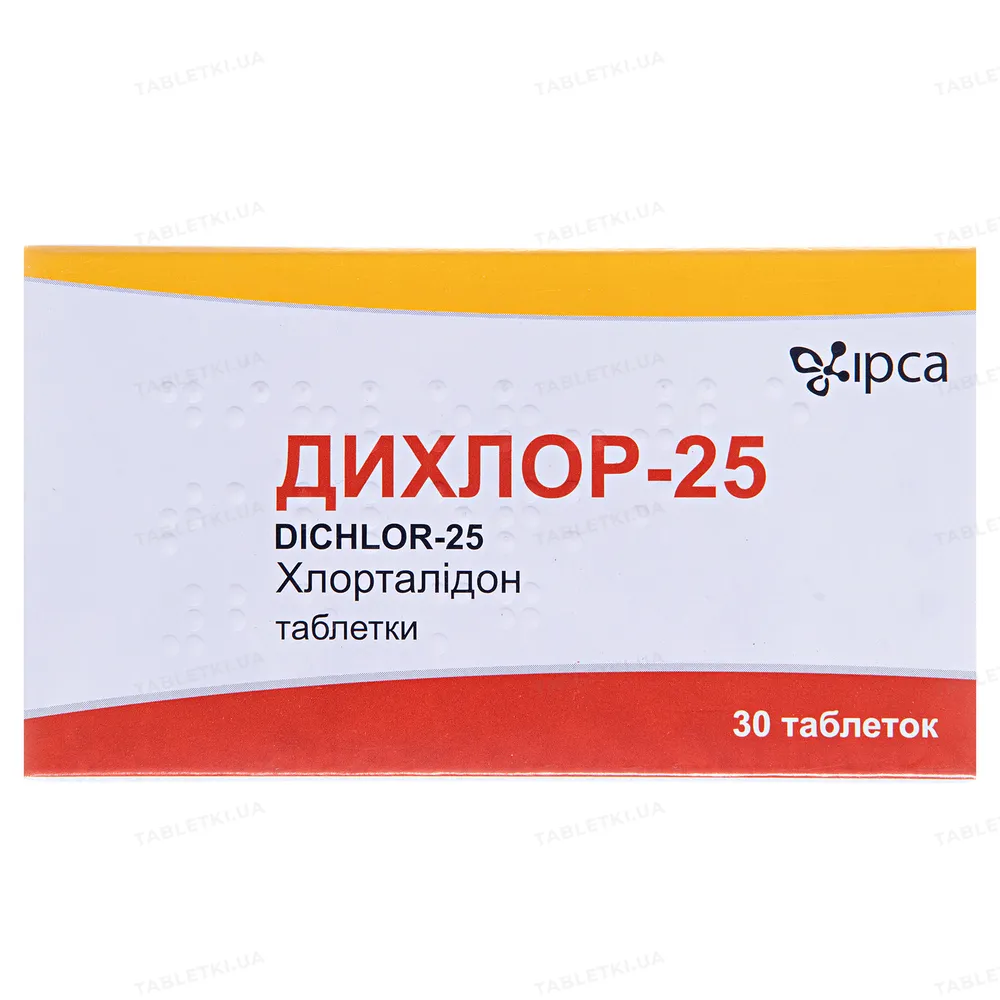
Table of Contents
INSTRUCTIONS FOR MEDICAL USE OF THE MEDICINAL PRODUCT DIHLOR-25 (DICHLOR-25)
Composition:
Active substance: chlortalidone;
1 tablet contains 25 mg of chlortalidone;
Excipients: microcrystalline cellulose, pregelatinized starch, quinoline yellow (E104), sodium starch glycolate, colloidal anhydrous silicon dioxide, stearic acid.
Pharmaceutical form. Tablets.
Main physicochemical characteristics: flat, round, uncoated tablets of yellow color with bevelled edges on both sides.
Pharmacotherapeutic group.
Diuretics. Non-thiazide diuretics with moderately pronounced activity. Simple sulfonamides. Chlorthalidone. ATC code C03B A04.
Pharmacological properties.
Pharmacodynamics.
Chlorthalidone is an oral diuretic with prolonged action and antihypertensive activity. The medicinal product Dikhlor-25 induces diuresis with increased excretion of sodium and chloride ions. It acts on the distal convoluted tubules of the nephron. The diuretic effect of chlorthalidone leads to a reduction in extracellular fluid volume, plasma volume, cardiac output, total exchangeable sodium, glomerular filtration rate, and renal plasma flow.
In patients with arterial hypertension, chlorthalidone gently reduces arterial pressure. Although the mechanism of action of chlorthalidone is not completely understood, the reduction in sodium and water levels appears to underlie its antihypertensive effect. With continued use, the antihypertensive effect persists, likely due to a decrease in peripheral resistance; cardiac output returns to baseline levels, plasma volume is slightly reduced, and plasma renin activity may be increased.
Chlorthalidone increases urinary excretion of bicarbonate, phosphate, and magnesium (mainly via the proximal tubules); it also increases urinary excretion of sodium, chloride, and potassium (primarily via the distal tubules).
The diuretic effect of chlorthalidone begins on average 2.6 hours after administration and lasts up to 72 hours.
Like thiazide diuretics, chlorthalidone causes dose-dependent reduction in serum potassium levels and increases serum uric acid and blood glucose levels, which may lead to decreased levels of sodium and chloride.
Pharmacokinetics.
After oral administration, chlorthalidone is absorbed from the gastrointestinal tract (approximately 65%). However, only a small amount of free chlorthalidone is present in the blood, as the majority is bound to carbonic anhydrase in red blood cells (98%). The concentration in erythrocytes is 50–80 times higher than in plasma or serum.
Metabolites have not been identified. 50–65% of the oral dose is excreted unchanged in the urine. Up to 10% may be found in feces, indicating biliary or intestinal elimination. The mean elimination half-life of chlorthalidone in plasma ranges from 40 to 60 hours. Chlorthalidone elimination is slowed in elderly patients compared to healthy young volunteers, although absorption is similar. Chlorthalidone crosses the placental barrier and is excreted into breast milk.
Clinical characteristics.
Indications.
Treatment of arterial hypertension, essential or nephrogenic, or isolated systolic hypertension.
Treatment of stable, chronic heart failure of mild to moderate severity (functional class II or III according to NYHA classification).
Treatment of edema.
Contraindications.
- Hypersensitivity to chlorthalidone, other thiazides, or sulfonamide derivatives (cross-reactivity possible; use with caution in patients with bronchial asthma) or to any component of the medicinal product.
- Anuria (urine output less than 100 mL/day).
- Severe renal impairment (markedly reduced diuresis, creatinine clearance < 30 mL/min and/or serum creatinine > 1.8 mg/100 mL).
- Severe hepatic insufficiency (hepatic precoma and coma).
- Glomerulonephritis.
- Refractory hypokalemia or conditions associated with increased potassium loss.
- Hypercalcemia.
- Severe hyponatremia.
- Symptomatic hyperuricemia (history of gout or uric acid stones).
- Hypertension during pregnancy.
- Untreated Addison's disease.
- Concomitant therapy with lithium.
- Pediatric age.
- Pregnancy and breastfeeding.
- Intoxication with cardiac glycoside preparations.
Interaction with other medicinal products and other forms of interactions.
Other diuretics, other antihypertensive agents (e.g., beta-blockers, calcium channel blockers, vasodilators, methyldopa, guanethidine), nitrates, barbiturates, phenothiazines, tricyclic antidepressants.
The hypotensive effects of chlorthalidone may be enhanced when these medicinal products are used concomitantly. Patients should be monitored for several hours after administration of the first dose.
Cardiac glycosides.
Concomitant use of chlorthalidone with cardiac glycosides may lead to hypokalemia and/or hypomagnesemia, thereby increasing myocardial sensitivity to cardiac glycosides and enhancing their effects and adverse reactions (see section "Contraindications").
ACE inhibitors (e.g., captopril, enalapril).
Concomitant use of chlorthalidone and angiotensin-converting enzyme (ACE) inhibitors (e.g., captopril, enalapril), especially at the beginning of treatment, may result in a significant drop in blood pressure and impaired renal function. Therefore, diuretic therapy should be discontinued 2–3 days before initiating ACE inhibitor treatment to reduce the risk of developing hypotension at the start of therapy. The antihypertensive effect of ACE inhibitors is potentiated by agents that increase plasma renin activity (diuretics).
Potassium-wasting diuretics (e.g., furosemide), glucocorticoids, adrenocorticotropic hormone (ACTH), carbenoxolone, penicillin G, salicylates, stimulant laxatives, intravenous amphotericin B.
Concomitant use of chlorthalidone with these medicinal products may lead to electrolyte imbalance, particularly increased potassium loss. This is especially important during concomitant treatment with cardiac glycosides. Plasma potassium levels should be regularly monitored and, if necessary, corrected.
Insulin, oral antidiabetic agents, uric acid-lowering agents, sympathomimetics (norepinephrine, epinephrine).
The effects of these medicinal products may be diminished when used concomitantly with chlorthalidone. Insulin requirements in diabetic patients may change. Higher doses of oral hypoglycemic agents may be required.
Non-depolarizing (curare-like) muscle relaxants (e.g., tubocurarine).
The effect of curare-like muscle relaxants may be enhanced or prolonged by chlorthalidone. If chlorthalidone cannot be discontinued prior to administration of curare-like muscle relaxants, the anesthesiologist must be informed about chlorthalidone therapy.
Cytoplastic agents (e.g., cyclophosphamide, fluorouracil, methotrexate).
Chlorthalidone may reduce renal excretion of cytotoxic agents (e.g., cyclophosphamide, fluorouracil, methotrexate). When used concomitantly with cytostatic agents, increased bone marrow toxicity (particularly development of granulocytopenia) may be expected.
Cholestyramine, colestipol.
Concomitant use of cholestyramine or colestipol reduces absorption of chlorthalidone. Therefore, chlorthalidone should be taken at least one hour before or 4–6 hours after administration of these medicinal products.
Nonsteroidal anti-inflammatory drugs (NSAIDs) (e.g., indomethacin, acetylsalicylic acid), including COX-2 inhibitors, salicylates.
NSAIDs (e.g., indomethacin, acetylsalicylic acid), including COX-2 inhibitors and salicylates, may reduce the antihypertensive and diuretic effects of chlorthalidone. When high doses of salicylates are used, enhanced toxic effects of salicylates on the central nervous system may occur. If patients develop hypovolemia during chlorthalidone therapy, concomitant use of NSAIDs may precipitate acute renal failure.
Anticholinergic agents (e.g., atropine, biperiden).
Bioavailability of thiazide diuretics may be increased by anticholinergic agents (e.g., atropine, biperiden), possibly due to reduced gastrointestinal motility and gastric emptying.
Alcohol.
The hypotensive effects of chlorthalidone may be enhanced by alcohol consumption. Patients should be warned that alcohol intake may cause dizziness.
Allopurinol, amantadine, beta-adrenergic blockers, diazoxide, cyclosporine.
Concomitant use of thiazide diuretics may increase the frequency of hypersensitivity reactions to allopurinol, increase the risk of adverse effects caused by amantadine, enhance the hyperglycemic effect of diazoxide or beta-blockers. Concomitant treatment with cyclosporine increases the risk of hyperuricemia and gout-like complications.
Calcium salts, vitamin D.
The pharmacological effects of calcium salts and vitamin D may be increased to clinically significant levels when thiazide diuretics are added. The consequences of hypercalcemia are usually transient but may be persistent and symptomatic (weakness, fatigue, anorexia) in patients with hyperparathyroidism (see section "Contraindications").
Not recommended combinations:
Lithium.
Renal clearance of lithium is reduced by chlorthalidone, increasing the risk of lithium toxicity. Concomitant use of chlorthalidone and lithium leads to enhanced cardio- and neurotoxic effects of lithium due to reduced lithium excretion. Concomitant use of lithium and Dichloru-25 is contraindicated (see section "Contraindications").
Combinations requiring special precautions:
Medicinal products that may cause torsade de pointes:
- Class Ia antiarrhythmics (e.g., quinidine, hydroquinidine, disopyramide);
- Class III antiarrhythmics (e.g., amiodarone, sotalol);
- Certain antipsychotics: phenothiazines (e.g., chlorpromazine, tiaramide, levomepromazine, thioridazine, trifluoperazine), benzamides (e.g., amisulpride, sulpiride, sultopride, tiapride), butyrophenones (e.g., droperidol, haloperidol);
- Others: bepridil, cisapride, difemanel, intravenous erythromycin, halofantrine, mizolastine, pentamidine, sparfloxacin, moxifloxacin, intravenous vinpocetine.
When these medicinal products are prescribed concomitantly with chlorthalidone, especially in the presence of hypokalemia, there is an increased risk of ventricular arrhythmias, particularly torsade de pointes. Before using the above-mentioned medicinal products together with chlorthalidone, serum potassium levels should be determined and corrected. Regular ECG monitoring and plasma electrolyte determinations are required. In the presence of hypokalemia, medicinal products that do not induce torsade de pointes are recommended.
Special precautions for use.
The drug should be prescribed with caution to patients with diabetes mellitus, gout, pronounced atherosclerosis of coronary and cerebral vessels, or impaired renal excretory function. Metabolic and endocrine disorders
Therapy with thiazide and thiazide-like diuretics, including chlorthalidone, may affect glucose tolerance. In patients with diabetes mellitus, metabolic disturbances may occur, thus requiring adjustment of insulin or oral hypoglycemic agent dosage. Latent diabetes mellitus may become apparent during chlorthalidone therapy. Serum uric acid levels may increase during treatment with chlorthalidone, but gout attacks are rarely observed during prolonged therapy. The use of the drug is contraindicated in patients with existing gout (see section "Contraindications").
In patients receiving long-term treatment with thiazide and thiazide-like diuretics, slight and partially reversible increases in total cholesterol, low-density lipoprotein (LDL), or plasma triglycerides have been observed.
Electrolyte disturbances
During diuretic therapy, serum electrolytes (especially potassium, sodium, and calcium) should be monitored at regular intervals.
Continuous monitoring of serum electrolytes is particularly important in elderly patients, patients with ascites due to liver cirrhosis, and patients with nephrogenic edema. Under these conditions, Dichlor-25 may be used only under careful monitoring and only in patients whose serum potassium levels are within normal limits and who show no signs of dehydration.
Thiazide and thiazide-like diuretics, including chlorthalidone, may cause disturbances in water-electrolyte balance (hypokalemia, hyponatremia, and hypochloremic alkalosis). Early signs of water-electrolyte imbalance include dry mouth, thirst, weakness, lethargy, drowsiness, restlessness, muscle pain or cramps, muscle weakness, hypotension, oliguria, tachycardia, and gastrointestinal disturbances such as nausea and vomiting.
As with all thiazide and thiazide-like diuretics, chlorthalidone-induced kaliuresis is dose-dependent, and its extent varies individually. With a daily dose of 25 mg, the average decrease in serum potassium concentration is 0.5 mmol/L. During long-term treatment, serum potassium concentration should be measured at the beginning of therapy and then after 3–4 weeks. Thereafter, if no other factors affecting potassium levels are present (e.g., vomiting, diarrhea, changes in renal function), serum potassium levels may be monitored every 4–6 months.
Hypokalemia may also increase myocardial sensitivity to the toxic effects of cardiac glycosides.
The highest risk of developing hypokalemia occurs in patients with liver cirrhosis, those with increased diuresis, those with insufficient electrolyte intake, and those receiving corticosteroids, ACTH, cardiac glycosides, or laxatives (see section "Interaction with other medicinal products and other types of interactions"). Such patients require close monitoring.
If necessary, especially during prolonged use of Dichlor-25 or concomitant use with cardiac glycosides, glucocorticosteroids, ACTH, potassium-sparing diuretics (e.g., triamterene), or oral potassium supplements are recommended to prevent hypokalemia. During combination therapy, serum potassium levels should be checked. If hypokalemia is accompanied by clinical symptoms (e.g., muscle weakness, paralysis, or ECG changes), chlorthalidone therapy must be discontinued.
The combination of chlorthalidone with potassium supplements or potassium-sparing diuretics should not be used in patients concurrently receiving ACE inhibitors unless such combination is life-saving.
In hot weather, dilutional hyponatremia may occur in patients with edema. Chloride deficiency is usually mild and does not require treatment.
Thiazide and thiazide-like diuretics, including chlorthalidone, may reduce calcium excretion in urine and cause transient, slight elevation of serum calcium without known disturbances in calcium metabolism. Marked hypercalcemia may indicate occult hyperparathyroidism. Chlorthalidone should be discontinued before parathyroid function testing.
It has been shown that thiazide and thiazide-like diuretics enhance magnesium excretion in urine. This may lead to hypomagnesemia.
Renal function impairment
Chlorthalidone should be used with caution in patients with kidney disease. In patients with renal disease, chlorthalidone or similar agents may accelerate azotemia. Cumulative effects of the drug may develop in patients with impaired renal function. If renal insufficiency progresses, characterized by increased blood nitrogen levels without non-protein nitrogen, a decision on the appropriateness of continued treatment should be made. Discontinuation of diuretic therapy should be considered.
Chronic diuretic abuse may lead to pseudohyperaldosteronism (pseudo-Bartter syndrome), accompanied by edema development. Edema is a manifestation of increased renin levels leading to secondary hyperaldosteronism.
The antihypertensive effect of ACE inhibitors is enhanced by drugs that increase plasma renin activity (diuretics). Therefore, diuretic therapy should be discontinued 2–3 days before starting ACE inhibitor treatment to reduce the risk of hypotension at the beginning of therapy.
Hepatic function impairment
Chlorthalidone should be used with caution in patients with impaired liver function or progressive liver disease, as even minor changes in water-electrolyte balance may precipitate hepatic coma (see section "Contraindications").
Choroidal effusion, acute myopia, and secondary angle-closure glaucoma.
Medicinal products containing sulfonamide or sulfonamide derivatives may cause an idiosyncratic reaction leading to choroidal effusion with visual field defects, transient myopia, and acute angle-closure glaucoma. Symptoms include rapid onset of decreased visual acuity or eye pain and typically occur within hours to weeks after starting the drug.
Untreated acute angle-closure glaucoma may lead to irreversible vision loss. The primary treatment is prompt discontinuation of the drug. If intraocular pressure remains uncontrolled, medical or surgical interventions may be required. Risk factors for developing acute angle-closure glaucoma may include a history of sulfonamide or penicillin allergy.
Heart failure
In patients with severe heart failure, absorption of chlorthalidone may be reduced.
Other
Hypersensitivity reactions may develop in patients with a history of allergy or bronchial asthma, as well as in patients without a history of allergic conditions.
Special warnings
During chlorthalidone therapy, regular monitoring of serum electrolytes (especially potassium, sodium, calcium ions), creatinine and urea, serum lipids (cholesterol and triglycerides), uric acid, and blood glucose is required.
During chlorthalidone treatment, patients should consume sufficient fluids and potassium-rich foods (bananas, vegetables, nuts) due to increased potassium loss.
Treatment of high blood pressure with Dichlor-25 requires regular medical check-ups. Dichlor-25 therapy should be discontinued in case of:
- Persistent electrolyte imbalances unresponsive to therapy;
- Hypersensitivity reactions;
- Severe gastrointestinal disturbances;
- Central nervous system disorders;
- Pancreatitis;
- Blood system disorders (anemia, leukopenia, thrombocytopenia);
- Acute cholecystitis;
- Development of vasculitis;
- Worsening of pre-existing myopia;
- Serum creatinine levels above 1.8 mg/100 mL or creatinine clearance below 30 mL/min.
Use for illicit purposes
The use of chlorthalidone may result in positive doping test results. Negative health consequences and serious health risks associated with using chlorthalidone as a doping agent cannot be ruled out.
Use during pregnancy or breastfeeding
Use is contraindicated.
Ability to affect reaction speed when driving or operating machinery
Due to the possibility of dizziness with this medicinal product, patients should refrain from driving vehicles or performing tasks requiring high attention.
The effect on reaction speed is particularly pronounced at the beginning of treatment, when the dose is increased, when combined with other antihypertensive agents, when switching medications, and when taken concomitantly with alcohol.
Method of Administration and Dosage.
Arterial Hypertension.
Monotherapy. The recommended initial dose of chlorthalidone for adults in the treatment of hypertension is 25 mg once daily. This dose is usually sufficient to achieve the maximal antihypertensive effect in most patients. If blood pressure reduction is inadequate at a dose of 25 mg/day, it may be increased to 50 mg/day. When additional antihypertensive therapy is required, increasing the dose beyond 50 mg increases the risk of metabolic complications and rarely provides additional therapeutic benefit.
Combination Therapy. If combination therapy is required for the treatment of arterial hypertension, dosage adjustments should be made primarily based on the individual use of each drug.
Chronic Stable Heart Failure (functional class II or III according to NYHA classification).
The recommended initial dose is 25 to 50 mg/day; in severe cases, the dose may be increased to 100–200 mg/day. The usual maintenance dose is the lowest effective dose, for example, 25 to 50 mg daily or every other day. If the response is inadequate, digitalis preparations and/or ACE inhibitors may be added.
Edema.
The minimum effective dose must be determined by titration and should be administered only for a limited period. Doses exceeding 50 mg per day are not recommended.
Elderly patients and patients with impaired renal function.
For patients with mild renal impairment (creatinine clearance 30–60 mL/min and/or serum creatinine 1.1–1.8 mg/100 mL) and for elderly patients, the lowest effective dose of chlorthalidone is recommended. Chlorthalidone is contraindicated in patients with creatinine clearance < 30 mL/min.
In elderly patients, chlorthalidone is eliminated more slowly than in younger healthy adults, despite similar absorption. Therefore, the usual dose should be reduced. Close clinical monitoring is required when treating elderly patients with chlorthalidone.
Patients with hepatic impairment.
The dose of chlorthalidone should be appropriately titrated in patients with hepatic impairment (see section "Special Warnings and Precautions for Use"). Dichlor-25 should not be used in patients with severe hepatic impairment (see section "Contraindications").
Patients with heart failure.
In patients with decompensated heart failure, chlorthalidone is poorly absorbed.
Children.
Dichlor-25 should not be used in children.
Experience with the use of this medicinal product in the pediatric population is limited.
Overdose.
Symptoms of acute overdose include nausea, weakness, drowsiness, hypovolemia, hypotension, dizziness, and electrolyte imbalances (hypokalemia and/or hyponatremia), which may lead to cardiac arrhythmias, muscle pain, and muscle spasms (e.g., calf muscle cramps), headache, tachycardia, and orthostatic disturbances.
Dehydration and hypovolemia may result in hemoconcentration, seizures, drowsiness, lethargy, confusion, collapse, and acute renal failure.
Hypokalemia may cause fatigue, muscle weakness, paresthesia, paralysis, apathy, flatulence, constipation, or cardiac arrhythmias. Significant potassium loss may lead to paralytic ileus or loss of consciousness up to hypokalemic coma.
The oral 50% lethal dose (LD50) of the drug in mice and rats is greater than 25,000 mg/kg body weight. The minimal lethal dose in humans has not been established.
Treatment. If signs of overdose are present, treatment should be discontinued immediately. In addition to general supportive measures, vital parameters should be monitored and corrected as necessary in an intensive care setting. There is no specific antidote for chlorthalidone. To reduce absorption, gastric lavage, induction of emesis, or administration of activated charcoal may be performed. Intravenous fluids and electrolytes may be required based on clinical indications. Blood pressure and fluid and electrolyte balance should be monitored, and appropriate corrective measures should be implemented.
Adverse Reactions
Adverse reactions have been classified by organ systems and frequency of occurrence. The frequency of adverse reactions is defined as follows: very common (≥ 1/10); common (≥ 1/100 to < 1/10); uncommon (≥ 1/1,000 to < 1/100); rare (≥ 1/10,000 to < 1/1,000); very rare (< 1/10,000); frequency not known (cannot be estimated from the available data).
Gastrointestinal disorders:
Common: loss of appetite, dry mouth, mild gastrointestinal disturbances, nausea, vomiting, abdominal pain and cramps in the upper abdomen, constipation, and diarrhea.
Very rare: anorexia, pancreatitis.
Nervous system disorders:
Common: headache, dizziness, and weakness.
Rare: paresthesia.
Frequency not known: vertigo.
Blood and lymphatic system disorders:
Rare: thrombocytopenia, leukopenia, agranulocytosis, and eosinophilia.
Frequency not known: aplastic anemia.
Skin and subcutaneous tissue disorders:
Common: urticaria and other forms of skin rashes, pruritus.
Rare: photosensitization, allergic vasculitis.
Frequency not known: purpura, necrotizing angiitis, Lyell's syndrome (toxic epidermal necrolysis).
Cardiovascular system disorders:
Common: hypotension, orthostatic hypotension (which may be potentiated by alcohol, barbiturates, or narcotics); palpitations.
Rare: cardiac arrhythmias.
Hepatobiliary disorders:
Rare: intrahepatic cholestasis or jaundice.
Metabolic and nutritional disorders:
Very common: predominantly with high-dose therapy — hypokalemia, hyperuricemia (which may precipitate gout attacks), increased blood cholesterol and triglyceride levels.
Common: hyponatremia, hypomagnesemia, hyperglycemia and glucosuria, worsening of condition in patients with diabetes mellitus, manifestation of latent diabetes mellitus, increased levels of urea and creatinine (especially at the beginning of treatment).
Rare: hypercalcemia.
Very rare: hypochloremic alkalosis.
Eye disorders:
Rare: visual disturbances, decreased tear production.
Frequency not known: xanthopsia, choroidal effusion.
Respiratory, thoracic and mediastinal disorders:
Very rare: idiopathic (allergic) pulmonary edema, dyspnea.
Musculoskeletal and connective tissue disorders:
Common: muscle hypotonia, muscle cramps.
Renal and urinary disorders:
Very rare: allergic interstitial nephritis.
Reproductive system and breast disorders:
Common: impotence.
Other: muscle spasms, restlessness, and fatigue.
If moderate or severe adverse reactions occur, the dose of chlorothalidone should be reduced or therapy discontinued.
Hypersensitivity reactions may occur in patients with a history of allergies or bronchial asthma. Exacerbation or activation of systemic lupus erythematosus has been reported during treatment with thiazide diuretics structurally related to chlorothalidone. However, systemic lupus erythematosus has not been reported during treatment with chlorothalidone. Reporting of suspected adverse reactions.
Reporting of adverse reactions after drug registration is of great importance. It enables ongoing monitoring of the benefit-risk balance of the medicinal product. Medical and pharmaceutical professionals, as well as patients or their legal representatives, should report all suspected adverse reactions and lack of efficacy through the Automated Pharmacovigilance Information System at the following link: https://aisf.dec.gov.ua
Shelf life. 3 years.
Storage conditions.
Store in the original packaging at a temperature not exceeding 25 °C.
Keep out of reach and sight of children.
Packaging.
10 tablets in a blister pack, 3 blisters per cardboard package.
Prescription status.
Prescription-only.
Manufacturer.
Ipca Laboratories Ltd.
Manufacturer's address.
P.O. Segwa, District Ratlam - 457002 (M.P.), India.