Diphereline
Ukraine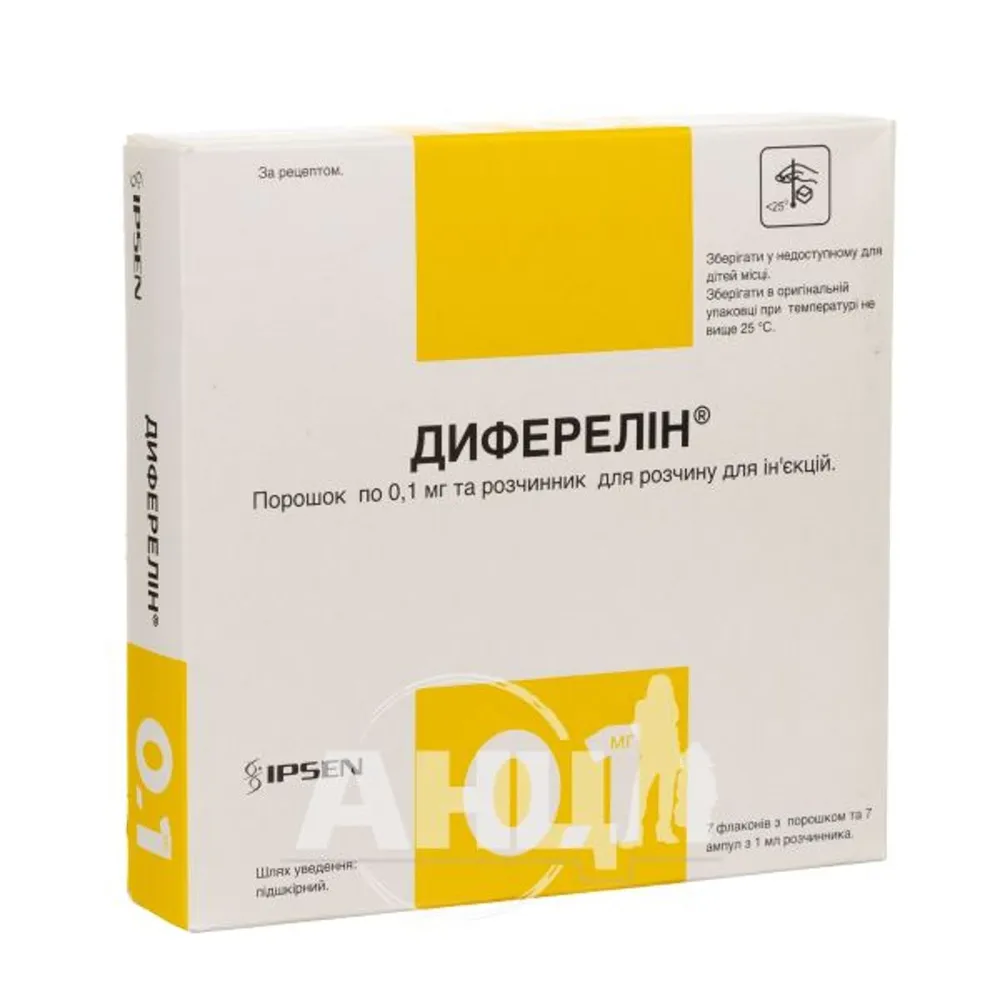
Table of Contents
INSTRUCTIONS FOR MEDICAL USE OF THE MEDICINAL PRODUCT DIPHERELINE® (DIPHERELINE®)
Composition:
Active substance: triptorelin;
1 vial contains triptorelin acetate equivalent to 0.1 mg of triptorelin;
Excipient: mannite (E 421);
Composition of the solvent: 1 ampoule (9 mg/1 ml) contains sodium chloride, water for injections.
Pharmaceutical form. Powder and solvent for solution for injection.
Main physico-chemical properties: powder – practically white, brittle granular powder; solvent – colorless clear solution, practically free from visible particles.
Pharmacotherapeutic group. Agents used in hormonal therapy. Gonadotropin-releasing hormone analogues.
ATC Code: L02A E04.
Pharmacological Properties.
Pharmacodynamics.
Mechanism of action.
Triptorelin is a synthetic decapeptide analogue of the natural gonadotropin-releasing hormone (GnRH, gonadorelin-releasing hormone). Studies conducted in volunteers and animals have shown that following initial stimulation, prolonged administration of triptorelin inhibits the secretion of gonadotropins, leading to subsequent suppression of testicular and ovarian functions. Further animal studies have revealed an additional mechanism of action: a direct effect on the gonads due to reduced sensitivity of peripheral receptors to GnRH.
Female infertility.
Long-term treatment with triptorelin suppresses the secretion of gonadotropins (FSH (follicle-stimulating hormone) and LH (luteinizing hormone)). Thus, treatment prevents the mid-cycle endogenous LH surge, thereby promoting improved folliculogenesis quality and accelerated follicular recovery.
Pharmacokinetics.
Absorption of Diphereline® 0.1 mg after subcutaneous injection occurs rapidly (tmax = 0.63 ± 0.26 hours), with maximum plasma concentration of the drug (Cmax = 1.85 ± 0.23 ng/mL). Elimination occurs with a half-life of 7.6 ± 1.6 hours, following a distribution phase lasting 3–4 hours. Total plasma clearance is 161 ± 28 mL/min. Volume of distribution is 1562 ± 158 mL/kg.
Clinical characteristics.
Indications.
Female infertility.
Adjunctive treatment in combination with gonadotropins (human menopausal gonadotropin (hMG), follicle-stimulating hormone (FSH), chorionic gonadotropin (hCG)) for the stimulation of ovulation with the aim of in vitro fertilization and embryo transfer (I.V.F.E.T).
Contraindications.
Hypersensitivity to gonadotropin-releasing hormone (GnRH), its analogs, or to any of the excipients.
Pregnancy and breastfeeding.
Interaction with other medicinal products and other forms of interaction.
Caution is required when using triptorelin in combination with medicinal products that affect the secretion of pituitary gonadotropic hormones; close monitoring of hormone levels is also recommended.
Since androgen deprivation therapy may prolong the QT interval, concomitant use of triptorelin with medicinal products that prolong the QT interval or are capable of inducing torsades de pointes ventricular tachycardia, such as class IA antiarrhythmics (quinidine, disopyramide, etc.) or class III antiarrhythmics (amiodarone, sotalol, dofetilide, ibutilide, etc.), as well as methadone, moxifloxacin, and antipsychotic agents, requires careful assessment (see section "Special precautions").
Special precautions for use
In rare cases, treatment with GnRH agonists may reveal a previously undiagnosed gonadotropic adenoma of the pituitary gland. In such patients, pituitary apoplexy may occur, presenting with sudden headache, vomiting, visual disturbances, and ophthalmoplegia.
There is an increased risk of depression (which may be severe) in patients undergoing treatment with GnRH agonists, particularly triptorelin. Therefore, patients should be adequately informed about this risk, and appropriate treatment should be initiated if symptoms occur. Patients with depression require careful monitoring throughout treatment.
The medicinal product contains less than 1 mmol of sodium (23 mg) per dose, i.e. it is essentially sodium-free.
Female infertility
Before prescribing Diphereline® 0.1 mg, it is essential to confirm that the patient is not pregnant.
When using GnRH agonists, there is a significant risk of decreased bone mineral density, averaging 1% per month during a six-month course of therapy. A 10% reduction in bone mineral density increases the risk of bone fractures by 2–3 times.
There is currently limited information available regarding patients with diagnosed osteoporosis or risk factors for developing osteoporosis (such as alcohol abuse, smoking, long-term treatment with agents causing decreased bone mineral density, e.g. anticonvulsants or corticosteroids, genetic predisposition to osteoporosis, inadequate nutrition, e.g. anorexia nervosa). Since reduced bone mineralization may be particularly detrimental in such patients, the decision to prescribe triptorelin should be made individually. Therapy may be initiated only if the potential benefits outweigh the risks following careful evaluation. Additional measures should be taken to counteract the reduction in bone mineral density.
Follicular recruitment may be significantly enhanced by administering triptorelin in combination with gonadotropins, particularly in predisposed patients and especially in those with polycystic ovary syndrome. As with other GnRH analogues, cases of ovarian hyperstimulation syndrome have been reported when gonadotropins are used in combination with triptorelin.
Ovarian response to triptorelin in combination with gonadotropins may vary among different patients receiving the same dose, and also in the same patient during different cycles.
During induced ovulation, close medical supervision with strict adherence to regular biological and clinical monitoring is required: rapid plasma estradiol assays and ultrasound examinations (see section "Adverse reactions").
In cases of excessive ovarian response, it is recommended to interrupt the stimulation cycle by discontinuing gonadotropin administration.
In patients with renal or hepatic impairment, the mean elimination half-life is 7–8 hours, compared to 3–5 hours in healthy women. This should be taken into account, as triptorelin should not be present in the blood at the time of embryo transfer.
Use during pregnancy or breastfeeding
Pregnancy
Pregnancy must be excluded before initiating triptorelin therapy. The medicinal product should not be used during pregnancy, as concomitant use of GnRH agonists is associated with a theoretical risk of miscarriage or fetal malformations. Prior to initiating treatment in women of reproductive age, a thorough assessment must be performed to exclude the possibility of pregnancy. During treatment, non-hormonal contraceptive methods should be used until menstruation resumes.
Breastfeeding
The medicinal product should not be used during breastfeeding.
Fertility
Before prescribing triptorelin, the possibility of pregnancy must be excluded, as the drug is used in the treatment of fertility disorders.
With this use of triptorelin, there are no clinical data on any association between its administration and subsequent abnormalities in oocyte development, pregnancy course, or pregnancy outcome.
Ability to affect reaction speed when driving or operating machinery
No studies have been conducted on the effect of triptorelin on the ability to drive or operate machinery. However, the ability to drive or operate machinery may be impaired if the patient experiences dizziness, somnolence, or visual disturbances, which may be adverse reactions to treatment or consequences of the underlying disease.
Method of administration and dosage.
Administer in combination with gonadotropins.
Subcutaneous injection once daily, starting on day 2 of the menstrual cycle (concurrently with the initiation of ovarian stimulation), until the day preceding the planned ovulation induction; thus, the average duration of administration is 10–12 days per treatment cycle.
Children.
The medicinal product is not indicated for use in children.
Overdose.
In cases of overdose, symptomatic treatment is recommended.
Adverse reactions.
General tolerability in women (see section "Special instructions")
As a consequence of reduced estrogen levels, the most common adverse effects (expected to occur in over 10% of women) were headache, decreased libido, sleep disturbances, mood changes, dyspareunia, dysmenorrhea, genital bleeding, ovarian hyperstimulation syndrome, ovarian hypertrophy, pelvic pain, abdominal pain, vulvovaginal dryness, hyperhidrosis, hot flushes, and asthenia.
The frequency of adverse reactions is classified as follows: very common (≥1/10); common (≥1/100, <1/10); uncommon (≥1/1,000, <1/100); rare (≥1/10,000, <1/1,000). The frequency of adverse reactions reported during the post-marketing period cannot be estimated reliably and therefore is classified as "frequency not known".
| System organ classes |
Very common |
Common |
Uncommon |
Frequency not known |
| Immune system disorders |
Hypersensitivity |
Anaphylactic shock |
||
| Metabolism and nutrition disorders |
Decreased appetite, fluid retention |
|||
| Psychiatric disorders |
Sleep disorders (including insomnia), mood changes, decreased libido |
Depression*, restlessness |
Affective lability, anxiety, depression**, disorientation |
Confusion |
| Nervous system disorders |
Headache |
Dizziness |
Dysgeusia, hypoesthesia, loss of consciousness, memory disorders, attention disturbances, paresthesia, tremor |
|
| Eye disorders |
Dry eyes, blurred vision |
Visual disturbances |
||
| Endocrine disorders |
Pituitary apoplexy*** |
|||
| Ear and labyrinth disorders |
Vertigo |
|||
| Cardiac disorders |
Palpitations |
|||
| Vascular disorders |
Hot flushes |
Arterial hypertension |
||
| Respiratory, thoracic and mediastinal disorders |
Dyspnea, nosebleed |
|||
| Gastrointestinal disorders |
Nausea, abdominal pain, abdominal discomfort |
Abdominal distension, dry mouth, flatulence, ulcerative stomatitis, vomiting |
Diarrhea |
|
| Skin and subcutaneous tissue disorders |
Acne, hyperhidrosis, seborrhea |
Alopecia, dry skin, hirsutism, onycholysis, pruritus, rash |
Angioedema, urticaria |
|
| Musculoskeletal and connective tissue disorders |
Arthralgia, muscle spasms, limb pain |
Back pain, myalgia |
Muscle weakness |
|
| Reproductive system and breast disorders |
Breast disorders, dyspareunia, genital bleeding (including vaginal bleeding, withdrawal bleeding), ovarian hyperstimulation syndrome, ovarian hypertrophy, pelvic pain, vulvovaginal dryness |
Breast pain |
Bleeding during sexual intercourse, cystocele, menstrual cycle disturbances (including dysmenorrhea, metrorrhagia and menorrhagia), ovarian cyst, vaginal discharge |
Amenorrhea |
| General disorders and administration site conditions |
Asthenia |
Injection site reactions (including pain, swelling, erythema and inflammation), peripheral edema |
Fever, malaise |
|
| Investigations |
Weight increased |
Weight decreased |
Increased blood alkaline phosphatase, increased blood pressure |
*Long-term use: this frequency is based on the adverse reaction rate common to all GnRH agonists.
**Short-term use: this frequency is based on the adverse reaction rate common to all GnRH agonists.
*** Reporting after initiation of pituitary adenoma treatment
Genital bleeding, including metrorrhagia and menorrhagia, may occur within one month after the first injection.
When treating infertility with gonadotropins, ovarian hyperstimulation syndrome may occur. Ovarian enlargement, dyspnea, pelvic pain and/or abdominal pain may be observed.
Prolonged use of GnRH analogues may lead to loss of bone mass and is a risk factor for the development of osteoporosis.
Reporting of adverse reactions
Reporting suspected adverse reactions after authorization of the medicinal product is important. It allows continued monitoring of the benefit-risk balance of the medicinal product. Healthcare professionals are asked to report any suspected adverse reactions via the national pharmacovigilance system.
Shelf life. 2 years.
Storage conditions. Store in the original packaging at a temperature not exceeding 25 °C. Keep out of reach of children.
Incompatibilities.
Mixing the powder with the solvent should be performed immediately before injection. Only the solvent provided in the package should be used.
Packaging. 7 vials of powder and 7 ampoules with 1 ml of solvent in a cardboard box.
Prescription status. Prescription only.
Manufacturer.
IPSEN PHARMA BIOTECH
Manufacturer's address and place of business.
Parc d’activités du Plateau de Signes, Départementale 402, 83870 SIGNES, France
Marketing Authorization Holder.
IPSEN PHARMA
Address of the Marketing Authorization Holder.
65, quai Georges Gorse - 92100 Boulogne Billancourt, France