Diphenine
Ukraine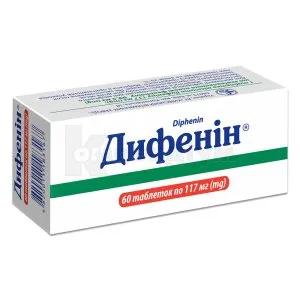
Table of Contents
INSTRUCTION FOR MEDICAL USE OF THE MEDICINAL PRODUCT DIPHENIN® (DIPHENIN)
Composition:
Active substance: 1 tablet contains 117 mg of diphenine, equivalent to 99.5 mg of phenytoin base;
Excipients: sodium hydrocarbonate, potato starch, calcium stearate, talc.
Pharmaceutical form. Tablets.
Main physicochemical properties: flat cylindrical tablets with bevelled edges and a score line, white or almost white in colour.
Pharmacotherapeutic group. Antiepileptic agents. Hydantoin derivatives.
ATC code N03AB02.
Pharmacological Properties.
Pharmacodynamics.
Phenytoin is an anticonvulsant agent used in the treatment of epilepsy. Its primary site of action is the motor cortex, where it suppresses seizure activity. By promoting sodium efflux from neurons, phenytoin is believed to stabilize the neuronal membrane threshold against excessive stimulation or environmental changes that could reduce the sodium membrane gradient. This includes reduction of post-tetanic potentiation at synapses. The absence of post-tetanic potentiation prevents the spread of epileptic foci to adjacent areas of the cerebral cortex. Phenytoin reduces the maximal activity of brainstem centers responsible for the tonic phase of tonic-clonic seizures (grand mal).
Pharmacokinetics.
After oral administration, absorption is variable, and peak plasma concentrations are reached within 3–12 hours. Phenytoin is actively distributed into tissues, including the central nervous system (CNS), penetrates into cerebrospinal fluid, bile, and is excreted in saliva, gastric and intestinal secretions. It passes into breast milk and semen. It crosses the placenta, resulting in equal concentrations of the drug in maternal and fetal plasma. Plasma protein binding ranges from 70% to 95%.
Phenytoin is metabolized by hepatic enzymes into inactive metabolites; approximately 5% of phenytoin is excreted unchanged by the kidneys. The elimination half-life is approximately 24 hours, but depends on the dose and plasma concentration. After prolonged administration, phenytoin is completely eliminated from plasma within 3 days after discontinuation.
Clinical characteristics.
Indications.
Epilepsy, predominantly grand mal seizures. Epileptic status with tonic-clonic convulsions. Treatment and prevention of epileptic seizures in neurosurgery.
In some cases, it may be prescribed for the treatment of cardiac arrhythmias caused by organic CNS lesions or cardiac glycoside overdose.
As a second-line agent or in combination with carbamazepine, it is indicated for trigeminal neuralgia.
Contraindications.
Hypersensitivity to phenytoin or any other components of the drug, as well as to hydantoin anticonvulsants.
Cardiac failure, Adams–Stokes syndrome, second- to third-degree atrioventricular block, sinoatrial block, sinus bradycardia; hepatic or renal insufficiency, cachexia, porphyria.
With caution: in children with rickets, elderly patients, patients with diabetes mellitus, chronic liver or kidney diseases, chronic alcoholism.
Concomitant use of phenytoin with delavirdine is contraindicated due to the potential risk of loss of virological response and possible antagonism between delavirdine and non-nucleoside reverse transcriptase inhibitors.
Interaction with other medicinal products and other types of interactions.
Medicinal products that may increase phenytoin serum levels
Amiodarone, antiepileptic agents (ethosuximide, felbamate, oxcarbazepine, methsuximide, topiramate), azoles (fluconazole, ketoconazole, itraconazole, miconazole, voriconazole), capecitabine, chloramphenicol, chlordiazepoxide, disulfiram, estrogens, fluorouracil, fluoxetine, fluvastatin, fluvoxamine, H2-antagonists (e.g., cimetidine), halothane, isoniazid, methylphenidate, omeprazole, phenothiazines, salicylates, sertraline, succinimides, sulfonamides (e.g., sulfamethizole, sulfaphenazole, sulfadiazine, sulfamethoxazole-trimethoprim), cyclophosphamide, tolbutamide, trazodone, warfarin, as well as single-dose administration of phenytoin with alcohol.
Medicinal products that may decrease phenytoin serum levels
Antineoplastic agents, usually in combination (e.g., bleomycin, carboplatin, cisplatin, doxorubicin, methotrexate), carbamazepine, diazepam, diazoxide, folic acid, fosamprenavir, nelfinavir, reserpine, rifampicin, ritonavir, St. John’s wort, sucralfate, theophylline, vigabatrin, as well as chronic alcohol abuse.
Administration of phenytoin with medicinal products that increase gastric pH (e.g., dietary supplements or antacids containing calcium carbonate, aluminum hydroxide, and magnesium hydroxide) may affect phenytoin absorption. In most cases, this interaction results in reduced plasma phenytoin levels when both agents are administered simultaneously. Therefore, if possible, phenytoin and these medicinal products should not be administered at the same time of day.
Medicinal products that may increase or decrease phenytoin serum levels
Phenobarbital, sodium valproate, and valproic acid. The effect of phenytoin on serum levels of phenobarbital, valproic acid, and sodium valproate is unpredictable.
Dosage adjustment of phenytoin may be necessary when initiating or discontinuing these medicinal products in patients receiving phenytoin therapy to achieve optimal therapeutic outcomes.
Concomitant use of phenytoin and valproate is associated with an increased risk of valproate-associated hyperammonemia. Patients receiving both agents concurrently should be monitored for signs and symptoms of hyperammonemia.
Medicinal products contraindicated during phenytoin therapy: delavirdine (see section "Contraindications").
Medicinal products whose efficacy is reduced during phenytoin therapy
Azoles (fluconazole, ketoconazole, itraconazole, voriconazole, posaconazole), corticosteroids, doxycycline, estrogens, furosemide, irinotecan, oral contraceptives, paclitaxel, paroxetine, quinidine, rifampicin, sertraline, teniposide, theophylline, vitamin D.
The interaction between phenytoin and warfarin may vary; therefore, prothrombin time should be monitored when these drugs are used concomitantly.
Phenytoin reduces plasma concentrations of active metabolites of albendazole, antiviral agents (particularly efavirenz, lopinavir/ritonavir, indinavir, nelfinavir, ritonavir, saquinavir), antiepileptic drugs (carbamazepine, felbamate, lamotrigine, topiramate, oxcarbazepine, quetiapine), atorvastatin, chlorpropamide, clozapine, cyclosporine, digoxin, fluvastatin, folic acid, methadone, mexiletine, nifedipine, nimodipine, nicardipine, praziquantel, simvastatin, and verapamil; direct oral anticoagulants (e.g., rivaroxaban, dabigatran, edoxaban, apixaban), lacosamide, ticagrelor.
Concomitant administration of phenytoin with fosamprenavir may reduce the concentration of amprenavir—the active metabolite of fosamprenavir. When phenytoin is used concomitantly with the combination of fosamprenavir and ritonavir, an increase in plasma amprenavir concentration may occur.
In patients who have received long-term phenytoin therapy, resistance to the neuromuscular blocking effect of non-depolarizing muscle relaxants (pancuronium, vecuronium, rocuronium, and cisatracurium) has been observed. It is unknown whether phenytoin has a similar effect on other non-depolarizing muscle relaxants. Patients with such conditions should be closely monitored by a physician.
Laboratory tests. Phenytoin may reduce serum thyroxine (T4) concentration. This may also reduce dexamethasone and metyrapone levels in testing. Phenytoin administration may lead to increased serum glucose, alkaline phosphatase, and gamma-glutamyl transferase (GGT) levels. Phenytoin is a potent inducer of hepatic enzymes.
Phenytoin is protein-bound in plasma. Caution should be exercised when using immunological methods to measure plasma phenytoin concentration.
Special precautions for use.
Women of childbearing potential
Phenytoin may cause harm to the fetus when administered to a pregnant woman. Prenatal exposure to phenytoin may increase the risk of serious congenital malformations and other adverse developmental outcomes (see section "Use during pregnancy or breastfeeding").
The medicinal product Difeneen® should not be used in women of childbearing potential unless, after careful consideration of alternative treatment options, it has been determined that the benefit outweighs the risks.
Prior to initiating phenytoin therapy in women of childbearing potential, consideration should be given to performing a pregnancy test.
Women of childbearing potential must be fully informed about the potential risk to the fetus if they take phenytoin during pregnancy.
Women of childbearing potential should be advised to consult their physician as soon as they plan a pregnancy to discuss switching to an alternative treatment prior to conception and discontinuation of contraception (see section "Use during pregnancy or breastfeeding").
Women of childbearing potential should be advised to seek immediate medical advice if they become pregnant or suspect they may be pregnant while taking phenytoin.
Women of childbearing potential should use effective contraception during treatment and for one month after discontinuation of therapy. Due to enzyme induction, phenytoin may reduce the therapeutic effect of hormonal contraceptives; therefore, women of childbearing potential should consult their physician regarding the use of other effective contraceptive methods (see sections "Interaction with other medicinal products and other forms of interaction" and "Use during pregnancy or breastfeeding").
Abrupt discontinuation of Difeneen® in patients with epilepsy may precipitate withdrawal syndrome.
For patients with epilepsy requiring abrupt discontinuation of the medicinal product (e.g., due to allergic or hypersensitivity reactions), anticonvulsant therapy with agents not belonging to hydantoin derivatives should be initiated.
During acute alcohol intoxication, plasma concentrations of difeneen may increase, whereas in chronic alcoholism they may decrease.
If the medicinal product is insufficiently effective, another antiepileptic agent should be prescribed.
There have been reports of possible emergence of suicidal behavior or ideation in some patients treated with antiepileptic medicinal products. Therefore, such events cannot be excluded during treatment with Difeneen® and require appropriate monitoring by physicians and caregivers for signs or tendencies toward suicidal behavior.
Monitoring by physicians and caregivers is also required in case of onset or worsening of depression; caregivers or family members of patients with AIDS should be informed about the increased risk of suicidal behavior or thoughts in patients with AIDS, and should seek immediate medical advice if unusual changes in mood or behavior occur.
Elevated plasma phenytoin levels may lead to conditions characterized by delirium, psychosis, or encephalopathy, or rarely, irreversible cerebellar dysfunction. Therefore, in the presence of early signs of acute toxicity, phenytoin plasma levels should be determined. Dose reduction is necessary in case of excessive drug levels in blood; if symptoms persist, discontinuation of therapy is recommended.
Hypericum perforatum (St. John's wort) products should not be used concomitantly with Difeneen®, as there is a risk of reduced phenytoin plasma concentration and decreased efficacy of the medicinal product.
Cases of hyperglycemia due to drug-induced inhibition of insulin secretion have been reported. Phenytoin may also increase glucose levels in patients with diabetes mellitus.
Phenytoin is primarily metabolized in the liver; therefore, dose reduction may be required in patients with hepatic impairment or elderly patients to prevent accumulation and toxicity.
Cases of acute hepatotoxicity, acute liver failure, jaundice, hepatomegaly, elevated transaminase levels, leukocytosis, and eosinophilia have been reported. In case of acute liver failure, the medicinal product should be discontinued immediately and not re-administered.
Antiepileptic drug hypersensitivity syndrome is a reaction that may rarely occur during anticonvulsant therapy. The syndrome may be fatal and is characterized by fever, rash, lymphadenopathy, and other reactions, often involving the liver. The mechanism of this syndrome is unknown. The interval between initial drug exposure and symptom onset is usually 2–3 weeks, although cases have been reported after three or more months of anticonvulsant therapy. High-risk groups include Black patients, patients with a family history of this syndrome, and those with impaired immune function. If diagnosed, the medicinal product must be discontinued and appropriate supportive therapy initiated.
Phenytoin may cause rare but serious skin adverse reactions such as exfoliative dermatitis, Stevens-Johnson syndrome, and toxic epidermal necrolysis. These reactions may occur without warning; however, patients should be warned about symptoms such as rash, blisters, fever, or other signs of hypersensitivity (e.g., pruritus) and should promptly inform their physician if such symptoms occur.
In the event of serious skin adverse reactions, the medicinal product should be discontinued and alternative therapy initiated. If a patient develops a rash, the possibility of DRESS syndrome (Drug Reaction with Eosinophilia and Systemic Symptoms) should be evaluated. It is known that the presence of HLA-B*1502 allele in patients increases the risk of Stevens-Johnson syndrome and toxic epidermal necrolysis.
Genetic factors associated with the risk of serious skin adverse reactions and toxicity.
Based on available literature data (case-control studies in patients from Taiwan, Japan, Malaysia, and Thailand), carriers of the CYP2C9*3 allele have an increased risk of serious skin adverse reactions, and intermediate or poor metabolizers of CYP2C9 substrates are at increased risk of toxicity.
CYP2C9 metabolism
Phenytoin is metabolized by the CYP450 enzyme CYP2C9. Patients who are carriers of the CYP2C9*2 or CYP2C9*3 alleles (intermediate or poor metabolizers of CYP2C9 substrates) may be at increased risk of elevated plasma phenytoin concentrations and subsequent toxicity. Patients known to carry reduced-function CYP2C9*2 or *3 alleles should be closely monitored for clinical response, and plasma phenytoin concentration monitoring may be required.
Phenytoin and other anticonvulsants, through induction of CYP450 enzymes, may affect bone mineral metabolism by indirectly influencing vitamin D metabolism. With long-term use (more than 10 years), this may lead to vitamin D deficiency and increased risk of osteomalacia, fractures, and osteoporosis in patients on chronic therapy. During treatment, especially long-term, UV exposure and a diet sufficient in vitamin D are recommended.
Isolated reports have linked phenytoin use with exacerbation of porphyria; therefore, caution is required in patients with a history of this condition.
Hematopoietic complications, sometimes fatal, including thrombocytopenia, leukopenia, granulocytopenia, agranulocytosis, pancytopenia with or without bone marrow suppression, and lymphadenopathy, have been reported.
Phenytoin is ineffective in petit mal seizures.
Should not be prescribed to patients with seizures associated with hypoglycemia or other metabolic disturbances.
Use during pregnancy or breastfeeding.
Pregnancy. Phenytoin crosses the placenta.
Prenatal exposure to phenytoin may increase the risk of congenital malformations and other adverse developmental outcomes. In humans, fetal exposure to phenytoin during pregnancy is associated with a 2–3 times higher incidence of major congenital malformations compared to the general population, where the baseline rate is 2–3%. Such malformations include cleft lip and palate, cardiac defects, craniofacial abnormalities, hypoplasia of nails and digits, and growth abnormalities (including microcephaly and prenatal growth deficiency), either individually or as part of fetal hydantoin syndrome, in children born to women with epilepsy who used phenytoin during pregnancy. Neurodevelopmental disorders have also been reported in children born to women with epilepsy who used phenytoin alone or in combination with other antiepileptic drugs during pregnancy. Studies on the risk of nervous system disorders in children whose mothers used phenytoin during pregnancy are conflicting, and the risk cannot be excluded.
The medicinal product Difeneen® should not be used during pregnancy, but may be considered in exceptional cases if, after careful evaluation of alternative treatment options, the benefit is judged to outweigh the risks. The woman must be fully informed and understand the risks associated with taking phenytoin during pregnancy.
If, after careful assessment of risks and benefits, no alternative treatment is available and therapy with Difeneen® is continued, the lowest effective dose of phenytoin should be used. If a woman plans to become pregnant, every effort should be made before conception and before discontinuing contraception to switch to an appropriate alternative therapy. If a woman becomes pregnant while taking phenytoin, she should be referred to a specialist to reassess phenytoin therapy and consider alternative treatment options.
Breastfeeding. The medicinal product passes into breast milk in concentrations sufficient to cause adverse effects in the infant; therefore, it is not recommended for use in women during breastfeeding.
Women of childbearing potential. Difeneen® should not be used in women of childbearing potential unless, after careful consideration of alternative appropriate treatment options, it is determined that the potential benefit outweighs the risks. The woman must be fully informed and understand the risk of potential fetal harm if she takes phenytoin during pregnancy, making it essential to plan any pregnancy. Prior to initiating phenytoin therapy, the possibility of performing a pregnancy test should be considered in women of childbearing potential.
Women of childbearing potential should use effective contraception during treatment and for one month after discontinuation of therapy. Due to enzyme induction, phenytoin may reduce the therapeutic effect of hormonal contraceptives; therefore, women of childbearing potential should consult their physician regarding the use of other effective contraceptive methods (see section "Special precautions for use"). At least one effective method of contraception (e.g., intrauterine device) or two additional forms of contraception, including a barrier method, should be used. The choice of contraceptive method should take into account individual circumstances, with the patient involved in the discussion.
Ability to affect reaction speed when driving or operating machinery.
During treatment with difeneen, delayed psychomotor reaction speed may occur. Individuals whose activities require high attention and rapid psychomotor responses should exercise caution when using the medicinal product.
Method of Administration and Dosage
Take orally, during or after meals (to avoid irritation of the gastric mucosa).
Epilepsy (partial and generalized tonic-clonic seizures): the single dose for adults is ½–1 tablet. Administer 2–3 times daily. If necessary, to achieve optimal therapeutic effect, the daily dose may be increased up to 3–4 tablets.
Maximum doses for adults: single dose – 3 tablets, daily dose – 8 tablets.
For children aged 5 to 8 years: ½ tablet twice daily; for children aged 8 years and older: ½–1 tablet twice daily (calculated at 4–8 mg/kg body weight per day).
Arrhythmias: for adults – 1 tablet 4 times daily (therapeutic effect appears on day 3–5); thereafter, the daily dose should be reduced to 3 tablets. To rapidly achieve therapeutic concentration (on days 1–2): 2 tablets 4 times on the first day, 1 tablet 5 times on days 2–3, and 1 tablet 2–3 times daily from day 4 of treatment.
Trigeminal neuralgia: 1–3 tablets daily.
Children.
This medicinal product in this dosage form is indicated for children from the age of 5 years in epilepsy.
Children (especially during periods of growth) should be prescribed Dilantin® in combination with vitamins D and K, as osteopathies resembling rickets, hypocalcemia, and disturbances of blood coagulation may develop.
Overdose.
Symptoms. The lethal dose in children is unknown; the probable lethal dose for adults is 2–5 g. Initial symptoms: nystagmus, ataxia, and dysarthria; other signs of overdose: tremor, hyperreflexia, drowsiness, slurred speech, nausea, vomiting. Coma and hypotension may occur. Fatal outcome may result from respiratory and cardiovascular failure.
There are differences between individual cases of overdose depending on the plasma phenytoin concentration. Thus, nystagmus usually occurs at a plasma concentration of 20 mcg/mL, ataxia at 30 mcg/mL, and dysarthria and lethargy occur at plasma phenytoin concentrations above 40 mcg/mL (no reports of toxicity at 50 mcg/mL). Treatment. Treatment is symptomatic. No specific antidote is available.
If the patient is conscious, gastric lavage and administration of activated charcoal or other sorbents are indicated. Mechanical ventilation may be required in cases of CNS, respiratory, or cardiovascular depression. Hemodialysis may be considered, as phenytoin is not completely protein-bound in plasma.
Adverse reactions.
Nervous system disorders: dizziness, transient nervousness, tremor, paresthesia, ataxia, nystagmus, impaired motor coordination, confusion, insomnia, somnolence, headache, dysarthria; motor twitching, tremors, sensory peripheral polyneuropathy in patients receiving long-term phenytoin therapy; in isolated cases – peripheral neuropathy, dyskinesia (including chorea, dystonia).
Gastrointestinal disorders: nausea, vomiting, toxic hepatitis, gingival hyperplasia, constipation, liver damage.
Blood and lymphatic system disorders: rarely – thrombocytopenia, leukopenia, granulocytopenia, agranulocytosis, pancytopenia (with/without bone marrow suppression), megaloblastic anemia, macrocytosis. A possible association between drug use and development of lymphadenopathy, including benign lymph node hyperplasia, pseudolymphoma, lymphoma, and Hodgkin's disease. Frequency unknown – pure red cell aplasia.
Musculoskeletal and connective tissue disorders: coarsening of facial features, thickening of lips; with prolonged use – decreased bone mineral density (osteopenia, osteoporosis, osteomalacia), bone fractures.
Allergic reactions: skin rash, fever; in isolated cases – bullous, purpuric, or exfoliative dermatitis, systemic lupus erythematosus, Stevens-Johnson syndrome, toxic epidermal necrolysis; DRESS syndrome, anaphylaxis. Dermatological manifestations are sometimes accompanied by scarlatiniform or morbilliform rashes.
Immune system disorders: in isolated cases, hypersensitivity syndrome may develop (may include symptoms such as eosinophilia, fever, hepatic dysfunction, lymphadenopathy, or rash), polyarteritis nodosa, changes in immunoglobulin levels.
Hepatic and hepatobiliary disorders: acute liver failure.
Other: in isolated cases – hypertrichosis, Peyronie's disease; altered taste sensations, including metallic taste in the mouth.
In case of pronounced adverse effects, gradually reduce the dose or discontinue the drug completely.
Shelf life. 4 years.
Storage conditions.
Store in original packaging at a temperature not exceeding 25 °C.
Keep out of reach of children.
Packaging.
10 tablets per blister.
10 tablets per blister; 6 blisters per carton.
Prescription category. Prescription only.
Manufacturer. JSC "KYIV VITAMIN PLANT".
Manufacturer's address and place of business.
38 Kopilivska Street, Kyiv, 04073, Ukraine.
Web-site: www.vitamin.com.ua