Dvace 200 hot drink
Ukraine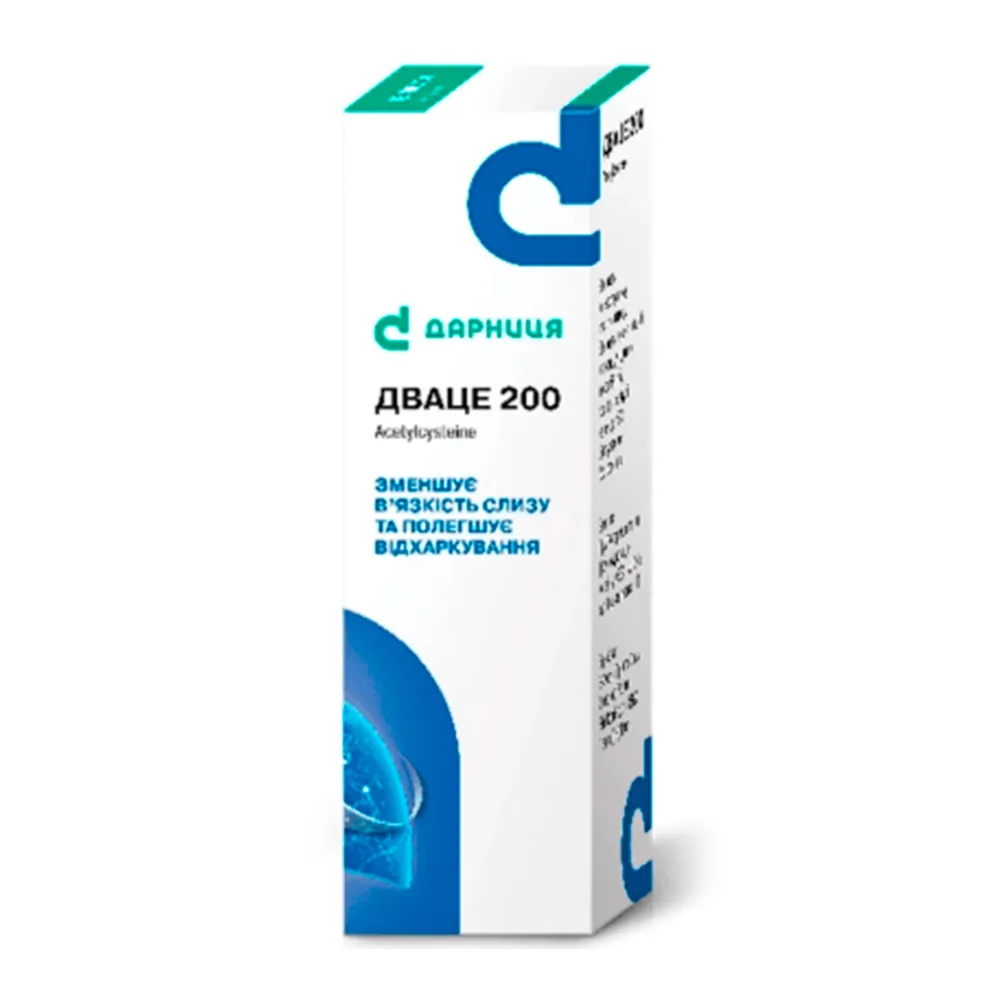
Table of Contents
INSTRUCTIONS FOR MEDICAL USE OF THE MEDICINAL PRODUCT DVATSE 200 HOT DRINK
Composition:
Active substance: acetylcysteine;
One sachet contains 200 mg of acetylcysteine;
Excipients: sorbitol (E 420), acesulfame potassium, orange flavor.
Pharmaceutical form. Granules for oral solution.
Main physicochemical characteristics: granules or powder ranging from white to light yellow in color with a characteristic odor. The presence of agglomerates that easily disintegrate is possible.
Pharmacotherapeutic group. Medicinal products used for cough and colds. Mucolytic agents. Acetylcysteine. ATC code R05C B01.
Pharmacological Properties
Pharmacodynamics
N-acetyl-L-cysteine (NAC) exerts a pronounced mucolytic effect on mucous and mucopurulent secretions due to depolymerization of mucoprotein complexes and nucleic acids that contribute viscosity to the hyaline and purulent components of sputum and other secretions. Additional properties include reduction of induced mucocyte hyperplasia, increased surfactant production via stimulation of type II pneumocytes, and stimulation of mucociliary apparatus activity, thereby improving mucociliary clearance.
NAC also exerts a direct antioxidant effect through the nucleophilic free thiol (SH) group, which can directly interact with electrophilic groups of reactive oxygen species. Of particular interest is the fact that NAC prevents inactivation of α-1-antitrypsin—a protease inhibitor of elastase—by hypochlorous acid (HOCl), a strong oxidant produced by myeloperoxidase in activated phagocytes.
Moreover, the molecular structure of NAC allows it to easily penetrate cell membranes. Inside the cell, NAC is deacetylated to form L-cysteine, an essential amino acid for glutathione synthesis. In addition, as a precursor of glutathione, NAC exerts an indirect antioxidant effect. Glutathione is a highly active tripeptide widely distributed in animal tissues and essential for maintaining cellular functional capacity and morphological integrity. It is, in fact, a key component of the most important intracellular defense mechanism against both exogenous and endogenous reactive oxygen species and certain cytotoxic substances, including paracetamol.
Paracetamol exerts cytotoxic effects by rapidly depleting glutathione levels. NAC plays a crucial role in maintaining adequate glutathione levels, thereby enhancing cellular protection. As a result, NAC serves as a specific antidote in paracetamol poisoning.
In patients with chronic obstructive pulmonary disease (COPD), administration of 1200 mg of NAC per day over 6 weeks led to a significant increase in inspiratory volume and forced vital capacity (FVC), possibly due to reduced air trapping.
In patients with idiopathic pulmonary fibrosis (IPF), oral administration of acetylcysteine at 600 mg three times daily for one year, in combination with standard IPF therapy (prednisolone and azathioprine), helped preserve lung vital capacity (VC) and diffusing capacity of the lungs for carbon monoxide measured by the single-breath method.
When used as inhaled therapy over one year, NAC contributed to a reduction in the rate of disease progression in patients with IPF.
When administered at very high doses (up to 3000 mg daily for 4 weeks), NAC did not produce significant toxic effects in patients with cystic fibrosis.
The antioxidant efficacy of NAC is associated with a marked reduction in elastase activity in sputum, which is the most significant indicator of lung function in patients with cystic fibrosis. In addition, during treatment, a decrease was observed in the number of neutrophils in the airways, as well as in the number of neutrophils actively releasing elastase-rich granules.
Pharmacokinetics
Absorption
In humans, acetylcysteine is completely absorbed after oral administration. Due to metabolism in the intestinal wall and first-pass effect, the bioavailability of acetylcysteine after oral administration is very low (approximately 10%). No differences have been observed among various dosage forms. In patients with various respiratory and cardiovascular diseases, maximum plasma concentration of acetylcysteine is reached within 1–3 hours after administration and remains elevated for up to 24 hours.
Distribution
Acetylcysteine is distributed in the body both in unchanged form (20%) and as metabolites (active) (80%), with predominant detection in the liver, kidneys, lungs, and bronchial secretions. The volume of distribution of acetylcysteine ranges from 0.33 to 0.47 L/kg. Plasma protein binding is approximately 50% at 4 hours after administration and decreases to 20% by 12 hours.
Metabolism and Elimination
After oral administration, acetylcysteine is rapidly and extensively metabolized in the intestinal wall and liver. The metabolite cysteine is considered active. Acetylcysteine and cysteine are further metabolized via the same pathway. Approximately 30% of the dose is excreted by the kidneys. The elimination half-life (T1/2) of acetylcysteine is 6.25 hours.
Clinical characteristics
Indications
Treatment of acute and chronic diseases of the bronchopulmonary system associated with increased mucus production.
Contraindications
Known hypersensitivity to acetylcysteine or to any of the excipients of the medicinal product. Peptic ulcer of the stomach and duodenum in the stage of exacerbation, hemoptysis, pulmonary hemorrhage, severe exacerbation of bronchial asthma.
Interaction with other medicinal products and other types of interactions
It is not recommended to dissolve acetylcysteine together with other medicinal products in the same glass.
Interaction studies were conducted only in adults.
Concomitant use of acetylcysteine with antitussive agents may enhance mucus stasis due to suppression of the cough reflex.
Activated charcoal reduces the effectiveness of acetylcysteine.
When used concomitantly with antibiotics such as tetracyclines (except doxycycline), ampicillin, amphotericin B, cephalosporins, aminoglycosides, interaction with the thiol group of acetylcysteine may occur, leading to reduced activity of both medicinal products. Therefore, the interval between administration of these medicinal products should be at least 2 hours. This does not apply to cefixime and loracarbef.
Significant hypotension and dilation of temporal arteries have been observed when nitroglycerin and acetylcysteine are used concomitantly. If concomitant use of nitroglycerin and acetylcysteine is necessary, patients should be monitored for hypotension, which may be severe; the possibility of developing headache should also be considered.
Synergism of acetylcysteine with bronchodilators has been reported.
Acetylcysteine can act as a cysteine donor and increase glutathione levels, which promotes detoxification of oxygen free radicals and certain toxic substances in the body.
Acetylcysteine reduces the hepatotoxic effect of paracetamol.
Effect on laboratory tests
Acetylcysteine may interfere with colorimetric testing of salicylates and with determination of ketone bodies in urine.
Special precautions for use.
There have been isolated reports of severe skin reactions (Stevens-Johnson syndrome and Lyell's syndrome) associated with the use of acetylcysteine. Therefore, if any changes in the skin or mucous membranes occur, the drug should be discontinued immediately and a physician should be consulted regarding further treatment.
Acetylcysteine should be prescribed with caution to patients with bronchial asthma due to the possible development of bronchospasm. If bronchospasm occurs, treatment with acetylcysteine should be discontinued immediately.
Caution is advised when administering the drug to patients with a history of gastric or duodenal ulcer, especially when used concomitantly with other medicinal products that irritate the gastric mucosa.
Acetylcysteine should be administered with caution in patients with liver or kidney disease to avoid accumulation of nitrogen-containing compounds in the body.
Acetylcysteine affects histamine metabolism; therefore, it should not be used for prolonged periods in patients with histamine intolerance, as this may lead to symptoms of intolerance (headache, vasomotor rhinitis, itching).
The use of acetylcysteine, particularly at the beginning of treatment, may cause liquefaction of bronchial secretions and increase their volume. If the patient is unable to effectively expectorate sputum, postural drainage and bronchoaspiration may be required.
Mucolytic agents may cause bronchial obstruction in children under 2 years of age. Due to physiological characteristics of the respiratory system in this age group, the ability to clear respiratory secretions is limited. Therefore, mucolytics should not be used in children under 2 years of age.
A mild sulfurous odor is not an indication of product deterioration but is characteristic of the active substance.
Important information about excipients.
The medicinal product contains sorbitol; therefore, it should not be used in patients with hereditary fructose intolerance.
Use during pregnancy or breastfeeding.
Pregnancy
Clinical data on the use of acetylcysteine in pregnant women are limited. Animal studies have not shown any direct or indirect adverse effects on pregnancy, embryofetal development, parturition, or postnatal development.
Breastfeeding period
There is no information available on the passage of acetylcysteine into breast milk.
The medicinal product should be used during pregnancy or breastfeeding only after careful assessment of the benefit-risk ratio.
Ability to influence reaction rate while driving or operating machinery.
There is no evidence that acetylcysteine affects the ability to drive or operate machinery.
Method of Administration and Dosage
Adults and children aged 12 years and older
400–600 mg per day, divided into 1–3 doses.
Children
2–6 years: 200–400 mg per day, divided into 1–2 doses;
6–12 years: 400–600 mg per day, divided into 2–3 doses;
from 12 years of age – doses as for adults.
It is recommended to take after meals.
Dissolve the contents of the sachet by stirring in ½ glass of cold water, then add hot, but not boiling water to make up a full glass. The solution should be consumed after cooling to a suitable temperature, but no later than 30 minutes after preparation. The sequence of dissolving the powder (first adding cold water, then hot water) must not be changed.
When dissolving acetylcysteine, glassware should be used; contact with metal and rubber surfaces should be avoided.
Additional fluid intake enhances the mucolytic effect of the drug.
The duration of treatment is determined individually by a physician depending on the nature of the disease. In acute uncomplicated conditions, acetylcysteine should be administered for 4–5 days.
Children
For use in children aged 2 years and older.
Overdose
There are no reported cases of overdose with oral administration of acetylcysteine.
Adult volunteers took 11.6 g of acetylcysteine per day for three months without any serious adverse effects.
Acetylcysteine administered at a dose of 500 mg/kg/day does not cause overdose.
Symptoms
Overdose may manifest with gastrointestinal symptoms such as nausea, vomiting, and diarrhea. In children, there is a risk of hypersecretion.
Treatment
There is no specific antidote in acetylcysteine poisoning; treatment is symptomatic.
Adverse Reactions
The following adverse reactions have been reported after oral administration of acetylcysteine.
All adverse reactions are listed by system organ class and frequency: very common (≥ 1/10), common (≥ 1/100 – < 1/10), uncommon (≥ 1/1000 – < 1/100), rare (≥ 1/10000 – < 1/1000), very rare (< 1/10000), frequency not known (cannot be estimated from available data).
Ear and labyrinth disorders:
Uncommon – tinnitus.
Respiratory, thoracic and mediastinal disorders:
Rare – dyspnea, bronchospasm (mainly in patients with bronchial hyperreactivity associated with bronchial asthma); frequency not known – rhinorrhea.
Gastrointestinal disorders:
Uncommon – heartburn, stomatitis, abdominal pain, nausea, vomiting, diarrhea; rare – dyspepsia; frequency not known – unpleasant mouth odor.
Nervous system disorders:
Uncommon – headache.
Cardiovascular disorders:
Uncommon – tachycardia, hypotension; very rare – hemorrhages.
Blood and lymphatic system disorders:
Frequency not known – anemia.
Immune system disorders:
Uncommon – hypersensitivity; very rare – anaphylactic shock, anaphylactic/anaphylactoid reactions.
Skin and subcutaneous tissue disorders:
Uncommon – pruritus, urticaria, exanthema, rash, angioneurotic edema (Quincke's edema); frequency not known – eczema.
General disorders:
Uncommon – hyperthermia; frequency not known – facial swelling.
In very rare cases, severe skin reactions (e.g., Stevens-Johnson syndrome and Lyell's syndrome) have been reported in association with acetylcysteine use.
In most cases, at least one other medicinal product is more likely to be the cause of the mucocutaneous syndrome. If any new skin or mucosal changes occur, acetylcysteine should be discontinued immediately and medical advice should be sought.
Very rarely, bleeding events have been reported during acetylcysteine use, which were most likely associated with hypersensitivity reactions.
Cases of reduced platelet aggregation have been reported; however, there is no clinical confirmation.
Reporting of suspected adverse reactions.
Reporting suspected adverse reactions after a medicinal product is authorized is important. It allows continued monitoring of the benefit-risk balance of the medicinal product. Healthcare professionals are required to report any suspected adverse reactions via the national reporting system.
Shelf life. 2 years.
Storage conditions.
Store in the original packaging at a temperature not exceeding 25 °C.
Keep out of the reach of children.
Incompatibilities.
Antibiotics and acetylcysteine should not be mixed prior to administration due to the possibility of in vitro inactivation of antibiotics (mainly β-lactam antibiotics).
Packaging. 200 mg/1 g in sachets, 20 sachets in a pack.
Availability. Over-the-counter.
Manufacturer. JSC "Pharmaceutical Company "Darnitsya".
Manufacturer's address and place of business.
13, Borispilska St., Kyiv, 02093, Ukraine.