Docetaxel amaksa
Ukraine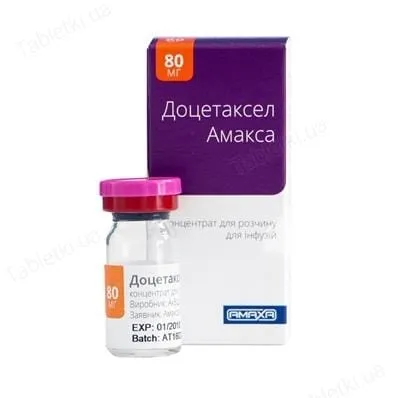
Table of Contents
INSTRUCTIONS FOR MEDICAL USE OF THE MEDICINAL PRODUCT Docetaxel Amaxa
Composition:
Active substance: docetaxel;
1 ml of concentrate contains 20 mg of docetaxel;
Excipients: polysorbate 80, ethanol anhydrous, citric acid (E 330).
Pharmaceutical form. Concentrate for solution for infusion.
Main physicochemical properties: clear, oily liquid of yellow to yellow-brown color.
Pharmacotherapeutic group. Antineoplastic agents. ATC code L01C D02.
Pharmacological properties.
Pharmacodynamics.
Docetaxel Amaksa is an antineoplastic agent whose mechanism of action is based on promoting the accumulation of tubulin in cellular microtubules and preventing their breakdown, leading to a significant reduction in the level of free tubulin. Binding of docetaxel to microtubules does not alter the number of protofilaments.
In vitro studies have demonstrated that docetaxel disrupts the microtubular network within cells, which plays a critical role in essential cellular functions both during mitosis and interphase. In vitro clonogenic assays showed cytotoxicity of docetaxel against various murine and human tumor cell lines, as well as against cells from freshly removed human tumors. Docetaxel Amaksa achieves significant concentrations in the interstitial fluid and ensures high cellular longevity. Furthermore, docetaxel exhibits activity against some (although not all) cell lines expressing P-glycoprotein encoded by the multidrug resistance gene. In vivo studies have shown that the activity of docetaxel is independent of the administration schedule and demonstrates a broad spectrum of antitumor activity against prevalent tumors, including both experimental mouse tumors and implanted human tumors.
Pharmacokinetics.
Absorption. The pharmacokinetics of docetaxel were studied in phase I trials in cancer patients receiving doses of 20–115 mg/m². The pharmacokinetic profile of docetaxel is dose-independent and conforms to a three-compartment pharmacokinetic model, with half-lives of the α-, β-, and γ-phases being 4 minutes, 36 minutes, and 11.1 hours, respectively. The prolonged half-life in the final phase is partly due to relatively slow efflux from the peripheral compartment.
Distribution. After administration of a 100 mg/m² dose infused over 1 hour, the mean peak plasma concentration of the drug was 3.7 µg/mL, with a corresponding AUC of 4.6 µg/mL/hour. Mean values for total clearance and volume of distribution at steady state were 21 L/m²/hour and 113 L, respectively. Inter-individual variability in total clearance reached approximately 50%. Docetaxel is bound to plasma proteins by more than 95%.
Elimination. A study using radiolabeled 14C-docetaxel was conducted in three cancer patients. Following oxidative metabolism of the tert-butyl ether group by cytochrome P450, docetaxel was excreted both in urine and feces over 7 days; urinary excretion accounted for 6% and fecal excretion for 75% of the administered radioactive dose. Approximately 80% of the radioactivity in feces was excreted within the first 48 hours as one major inactive metabolite, three minor metabolites, and a very small amount of unchanged drug.
Special patient populations
Age and sex. Population pharmacokinetic analysis of docetaxel was performed in 577 patients. Pharmacokinetic parameters estimated using this model were very similar to those obtained in phase I studies. Neither age nor sex of patients influenced the pharmacokinetics of the drug.
Hepatic impairment. In a small number of patients (n=23) with mild to moderate hepatic impairment based on biochemical blood tests (alanine aminotransferase (ALT) and aspartate aminotransferase (AST) levels ≥1.5 times the upper limit of normal (ULN) together with alkaline phosphatase levels ≥2.5 times ULN), total clearance of the drug was reduced by an average of 27% (see section "Dosage and administration").
Fluid retention. Clearance of docetaxel was unchanged in patients with mild or moderate fluid retention; there are no data on docetaxel clearance in patients with severe fluid retention.
Combination therapy
Doxorubicin. When used in combination with other agents, docetaxel did not affect the clearance of doxorubicin or plasma levels of doxorubicin (and its metabolites). Concomitant administration of docetaxel, doxorubicin, and cyclophosphamide did not affect the pharmacokinetics of these drugs.
Capecitabine. A phase I clinical trial evaluating the effect of capecitabine on the pharmacokinetics of docetaxel and vice versa showed no effect of capecitabine on the pharmacokinetics of docetaxel (Cmax and AUC), nor any effect of docetaxel on the pharmacokinetics of the corresponding metabolite of capecitabine—5’-DFUR (5’-deoxy-5-fluorouridine).
Cisplatin. The clearance of docetaxel administered in combination with cisplatin was similar to that observed during monotherapy with docetaxel. The pharmacokinetic profile of cisplatin administered immediately after docetaxel infusion is similar to that observed during monotherapy with cisplatin.
Cisplatin and 5-fluorouracil. Combined administration of docetaxel, cisplatin, and 5-fluorouracil in 12 patients with solid tumors did not alter the pharmacokinetics of any of these drugs.
Prednisone and dexamethasone. The effect of prednisone on the pharmacokinetics of docetaxel after standard premedication with dexamethasone was studied in 42 patients. No effect of prednisone on the pharmacokinetics of docetaxel was observed.
Clinical characteristics.
Indications.
Breast cancer. Docetaxel Amaksa in combination with doxorubicin and cyclophosphamide is indicated for adjuvant therapy in patients with:
- operable breast cancer with lymph node involvement;
- operable breast cancer without lymph node involvement.
Adjuvant therapy should be administered to patients with operable breast cancer without lymph node involvement if patients are candidates for chemotherapy according to established international criteria for primary treatment of early-stage breast cancer.
Docetaxel Amaksa in combination with doxorubicin is indicated for the treatment of patients with locally advanced or metastatic breast cancer who have not previously received cytotoxic therapy for this disease.
Docetaxel Amaksa as monotherapy is indicated for the treatment of patients with locally advanced or metastatic breast cancer after ineffective cytotoxic therapy that included an anthracycline or alkylating agents.
Docetaxel Amaksa in combination with trastuzumab is indicated for the treatment of patients with metastatic breast cancer with increased HER-2 expression by tumor cells who have not previously received chemotherapy for metastases.
Docetaxel Amaksa in combination with capecitabine is indicated for the treatment of patients with locally advanced or metastatic breast cancer after ineffective cytotoxic chemotherapy that included an anthracycline.
Non-small cell lung cancer. Docetaxel Amaksa is indicated for the treatment of patients with locally advanced or metastatic non-small cell lung cancer after ineffective chemotherapy.
Docetaxel Amaksa in combination with cisplatin is indicated for the treatment of patients with inoperable, locally advanced or metastatic non-small cell lung cancer who have not previously received chemotherapy for this condition.
Prostate cancer. Docetaxel Amaksa in combination with prednisone or prednisolone is indicated for the treatment of patients with metastatic, castration-resistant prostate cancer.
Docetaxel Amaksa in combination with androgen-deprivation therapy (ADT), with or without prednisone or prednisolone, is indicated for the treatment of patients with metastatic hormone-sensitive prostate cancer.
Gastric adenocarcinoma. Docetaxel Amaksa in combination with cisplatin and 5-fluorouracil is indicated for the treatment of patients with metastatic adenocarcinoma of the stomach, including adenocarcinoma of the gastroesophageal junction, who have not previously received chemotherapy for metastases.
Head and neck cancer. Docetaxel Amaksa in combination with cisplatin and 5-fluorouracil is indicated for induction therapy in patients with locally advanced squamous cell carcinoma of the head and neck.
Contraindications.
Hypersensitivity to the active substance or to any of the excipients of the medicinal product. Baseline neutrophil count <1500 cells/mm³. Severe hepatic impairment (see sections "Special precautions" and "Method of administration and dosage"). Also consider contraindications for other medicinal products used in combination with docetaxel.
Special safety precautions.
Docetaxel Amaksa is an antineoplastic agent; as with other potentially toxic compounds, caution should be exercised in handling and preparing the docetaxel solution. The use of gloves is recommended.
If the docetaxel concentrate, reconstituted solution, or infusion solution comes into contact with the skin, the affected area should be immediately and thoroughly washed with soap and water. If the docetaxel concentrate, reconstituted solution, or infusion solution comes into contact with mucous membranes, the affected area should be immediately and thoroughly rinsed with water.
Preparation for intravenous administration
Preparation of infusion solution
DO NOT USE other medicinal products containing docetaxel consisting of 2 vials (concentrate and solvent) with this medicinal product. Docetaxel Amaksa, concentrate for infusion solution, does NOT REQUIRE dilution with solvent and is immediately ready for addition to the infusion solution. Each vial is for single use only and must be used immediately. If vials are stored in a refrigerator, the box containing Docetaxel Amaksa concentrate for infusion solution should be allowed to stand at 20–25 °C for 5 minutes prior to use.
More than one vial of Docetaxel Amaksa may be used to obtain the dose required for one patient. The required amount of docetaxel should be aseptically withdrawn using a calibrated syringe with a 21-gauge needle. The required volume of docetaxel should be added by a single injection (one push) into an infusion bag or bottle containing 250 ml of 5% glucose solution or 9 mg/ml (0.9%) sodium chloride solution for infusion. If the required dose exceeds 190 mg of docetaxel, a larger volume of infusion fluid should be used so that the concentration of docetaxel does not exceed 0.74 mg/ml. Gently invert the infusion bag or bottle to mix. The infusion solution should be used within 8 hours at a temperature below 25 °C, including one hour of infusion duration. Although the contact time is very short, PVC tubing and administration sets are recommended as a precautionary measure.
As with all parenteral medicinal products, Docetaxel Amaksa should be visually inspected before use. Solutions containing particulate matter or precipitate should be discarded. Any unused medicinal product or waste material must be disposed of in accordance with local regulations.
Interaction with other medicinal products and other types of interactions.
The amount of alcohol contained in this medicinal product may alter the effect of other medicinal products.
In vitro studies have demonstrated that the metabolism of docetaxel may be altered when administered concomitantly with drugs that induce, inhibit, or are metabolized by cytochrome P450-3A (including competitive enzyme inhibitors), such as cyclosporine, ketoconazole, and erythromycin. Therefore, concomitant administration of these drugs should be done with caution, as there is a potential for significant interactions.
When used in combination with CYP3A4 inhibitors, the frequency of adverse reactions to docetaxel may increase due to slowed metabolism. If co-administration with strong CYP3A4 inhibitors (such as ketoconazole, itraconazole, clarithromycin, indinavir, nefazodone, nelfinavir, ritonavir, saquinavir, telithromycin, and voriconazole) cannot be avoided, careful clinical monitoring is required. Dose adjustment of docetaxel may be appropriate during concomitant use of strong CYP3A4 inhibitors (see section "Special precautions"). In a pharmacokinetic study involving 7 patients, concomitant administration of docetaxel and the strong CYP3A4 inhibitor ketoconazole resulted in a significant 49% reduction in docetaxel clearance.
The pharmacokinetic properties of docetaxel in the presence of prednisone were studied in patients with metastatic prostate cancer. Docetaxel is metabolized by CYP3A4, and prednisone is known to induce CYP3A4. No significant effect of prednisone on the pharmacokinetic parameters of docetaxel was observed.
Docetaxel Amaksa demonstrates a high degree of plasma protein binding (>95%). Although potential in vivo interactions of docetaxel with concomitantly administered medicinal products have not been formally studied, in vitro interactions with drugs exhibiting high protein binding, such as erythromycin, diphenhydramine, propranolol, propafenone, phenytoin, salicylates, sulfamethoxazole, and sodium valproate, did not negatively affect docetaxel protein binding. Additionally, dexamethasone did not affect docetaxel protein binding. Docetaxel did not affect the protein binding of digoxin.
Concomitant administration of docetaxel, doxorubicin, and cyclophosphamide did not affect the pharmacokinetics of these medicinal products. Limited data from an uncontrolled study suggested an interaction between docetaxel and carboplatin. When combined with docetaxel, carboplatin clearance was approximately 50% higher than values previously reported with carboplatin monotherapy.
Special precautions for use.
In patients with breast cancer and non-small cell lung cancer, premedication may be administered in the absence of contraindications. Premedication consists of oral corticosteroids such as dexamethasone 16 mg per day (e.g., 8 mg twice daily) for 3 days, starting 1 day before docetaxel administration, which may reduce the frequency and severity of hypersensitivity reactions. In patients with prostate cancer, premedication consists of oral dexamethasone 8 mg administered 12 hours, 3 hours, and 1 hour before docetaxel infusion (see section "Administration and dosage").
Hematological changes during treatment. Neutropenia is the most common adverse reaction during docetaxel therapy. The lowest neutrophil count is typically observed on day 7 of treatment, although the time to reach the nadir of neutropenia may be shorter in patients who have previously received multiple cycles of anticancer therapy. All patients receiving docetaxel require careful monitoring of peripheral blood counts. Patients may resume docetaxel treatment in a new chemotherapy cycle only after neutrophil counts have recovered to ≥1500 cells/mm³ following the previous cycle (see section "Administration and dosage").
If severe neutropenia (<500 cells/mm³ for 7 days or longer) develops during docetaxel treatment, dose reduction in the next chemotherapy cycle or appropriate symptomatic treatment is recommended (see section "Administration and dosage").
In patients receiving combination therapy with docetaxel, cisplatin, and 5-fluorouracil (TCF), febrile neutropenia and neutropenic infections occurred less frequently when granulocyte colony-stimulating factor (G-CSF) was administered. Patients receiving TCF should receive prophylactic G-CSF to reduce the risk of complicated neutropenia (febrile neutropenia, prolonged neutropenia, or neutropenic infections). Patients receiving TCF must be closely monitored (see sections "Administration and dosage" and "Adverse reactions").
In patients treated with docetaxel in combination with doxorubicin and cyclophosphamide (TAC), febrile neutropenia and/or neutropenic infection occurred less frequently when patients received primary prophylaxis with G-CSF. In patients receiving adjuvant TAC therapy for breast cancer, primary prophylaxis with G-CSF should be considered to reduce the risk of complicated neutropenia (febrile neutropenia, prolonged neutropenia, or neutropenic infection). Patients receiving TAC must be carefully monitored (see sections "Administration and dosage" and "Adverse reactions").
Gastrointestinal (GI) reactions. Use with caution in patients with neutropenia, especially those at increased risk of GI complications. Although most cases occurred during the first or second chemotherapy cycle with docetaxel, enterocolitis may develop at any time and may be fatal as early as the first day after onset. Patients should be closely observed for early signs of severe gastrointestinal toxicity (see sections "Special precautions for use" (subsection "Hematological changes during treatment"), "Administration and dosage," and "Adverse reactions").
Hypersensitivity reactions. Patients must be carefully monitored for the development of hypersensitivity reactions, particularly during the first and second infusions. Hypersensitivity reactions may occur within minutes of docetaxel infusion; therefore, equipment and medications necessary for the treatment of hypotension and bronchospasm must be readily available. If mild hypersensitivity reactions such as flushing or localized skin reactions occur, discontinuation of treatment is not required. However, severe reactions such as severe hypotension, bronchospasm, generalized rash/erythema, or, very rarely, potentially fatal anaphylaxis, require immediate discontinuation of docetaxel and initiation of appropriate therapy. Re-administration of docetaxel is contraindicated in patients who have experienced a severe hypersensitivity reaction to this drug. Patients with prior hypersensitivity reactions to paclitaxel are at risk of hypersensitivity reactions to docetaxel, including more severe manifestations. These patients should be closely monitored at the beginning of docetaxel therapy.
Skin reactions. Cases of localized erythema of the skin of the extremities (on palms and soles), associated with edema and subsequent epidermal desquamation, have been reported. Severe symptoms such as widespread skin rash with subsequent desquamation have also been reported, necessitating interruption or permanent discontinuation of docetaxel therapy (see section "Administration and dosage").
Severe cutaneous adverse reactions, including Stevens-Johnson syndrome, toxic epidermal necrolysis, and acute generalized exanthematous pustulosis, have been reported during docetaxel treatment. Patients should be informed about signs and symptoms of serious skin reactions and closely monitored. If signs or symptoms suggestive of these reactions occur, discontinuation of docetaxel should be considered.
Fluid retention. Patients with severe fluid retention, such as pleural effusion, pericardial effusion, or ascites, should be carefully monitored.
Respiratory disorders. Cases of acute respiratory distress syndrome, interstitial pneumonia/pneumonitis, interstitial lung disease, pulmonary fibrosis, and respiratory failure, which may be fatal, have been reported. Radiation pneumonitis has been observed in patients receiving concomitant radiotherapy.
In the event of new or worsening pulmonary symptoms, close monitoring, urgent evaluation, and appropriate treatment are required. Docetaxel therapy should be discontinued until a diagnosis is established. Early supportive treatment may help improve the patient's condition. The benefit of resuming docetaxel therapy should be carefully evaluated.
Patients with hepatic impairment. Patients who develop elevated transaminase levels (ALT and/or AST) >1.5 times the upper limit of normal (ULN) and alkaline phosphatase >2.5 times ULN during monotherapy with docetaxel 100 mg/m² are at increased risk of severe adverse reactions, including fatal outcomes due to drug toxicity (e.g., sepsis, gastrointestinal bleeding), febrile neutropenia, infections, thrombocytopenia, stomatitis, and asthenia. Therefore, the recommended dose of docetaxel in patients with elevated liver enzymes is 75 mg/m²; liver enzyme levels should be assessed before treatment initiation and before each new chemotherapy cycle (see section "Administration and dosage"). In patients with elevated serum bilirubin (>ULN) and/or ALT and AST >3.5 times ULN, associated with alkaline phosphatase >6 times ULN, dose reduction is not recommended; however, docetaxel should not be administered unless there is a compelling need.
In a pivotal clinical trial of docetaxel in combination with cisplatin and 5-fluorouracil in patients with gastric adenocarcinoma, elevated ALT and/or AST >1.5 times ULN associated with elevated alkaline phosphatase >2.5 times ULN and bilirubin >ULN were exclusion criteria; therefore, dose reduction of docetaxel cannot be recommended, and the drug should not be administered to such patients unless there is a compelling need. There are no data on the use of docetaxel in combination therapy for other indications in patients with hepatic impairment.
Patients with renal impairment. There are no data on docetaxel treatment in patients with severe renal impairment.
Nervous system. Severe peripheral neurotoxicity requires dose reduction (see section "Administration and dosage").
Cardiotoxic effects. Heart failure has been observed in patients receiving docetaxel in combination with trastuzumab, particularly after anthracycline-containing chemotherapy (e.g., doxorubicin or epirubicin). Heart failure may be mild or severe and is associated with a high risk of mortality (see section "Adverse reactions"). If docetaxel is to be used in combination with trastuzumab, patients should undergo cardiovascular assessment before starting therapy. Cardiac function should be monitored (e.g., every 3 months) to detect patients who may develop cardiac dysfunction. Further information is available in the trastuzumab product information.
Ventricular arrhythmias, including ventricular tachycardia (sometimes fatal), have been reported in patients receiving combination therapy with docetaxel, doxorubicin, 5-fluorouracil, and/or cyclophosphamide (see section "Adverse reactions"). A baseline cardiac evaluation is recommended before initiating therapy.
Ocular disorders. Cases of crystalline macular edema (CME) have been observed in patients receiving docetaxel. Patients with visual disturbances should undergo urgent and complete ophthalmological examination. If CME is diagnosed, docetaxel should be discontinued and appropriate treatment initiated (see section "Adverse reactions").
Second primary malignancy. Cases of second primary malignancy have been reported with combination therapy including docetaxel and anticancer agents known to be associated with second primary malignancies. Second primary malignancies (including acute myeloid leukemia, myelodysplastic syndrome, and non-Hodgkin’s lymphoma) may occur months or years after docetaxel treatment. Patients should be monitored for the potential development of second primary malignancies (see section "Adverse reactions").
Tumor lysis syndrome. Tumor lysis syndrome has been reported with docetaxel after the first or second treatment cycle (see section "Adverse reactions"). Patients at risk of tumor lysis syndrome (e.g., those with renal impairment, hyperuricemia, bulky tumors, or rapid progression) should be closely monitored. Correction of dehydration and treatment of elevated uric acid levels are recommended before initiating therapy.
Other warnings. Contraceptive measures must be used by both men and women throughout the treatment period, and men should continue contraception for at least 6 months after therapy discontinuation (see section "Use during pregnancy or breastfeeding").
Concomitant use of docetaxel with strong CYP3A4 inhibitors such as ketoconazole, itraconazole, clarithromycin, indinavir, nefazodone, nelfinavir, ritonavir, saquinavir, telithromycin, and voriconazole should be avoided (see section "Interaction with other medicinal products and other forms of interaction").
Additional warnings for adjuvant therapy in breast cancer
Complicated neutropenia. In patients who develop complicated neutropenia (prolonged neutropenia, febrile neutropenia, or infections), the use of G-CSF and dose reduction of docetaxel should be considered (see section "Administration and dosage").
Gastrointestinal reactions. Symptoms such as abdominal pain, tenderness, and abdominal discomfort on palpation, fever, and diarrhea (with or without neutropenia) may be early signs of severe gastrointestinal toxicity and require immediate evaluation and treatment.
Congestive heart failure (CHF). Patients should be monitored for possible signs of CHF during and after treatment. An increased risk of CHF has been demonstrated in patients receiving TAC therapy for node-positive breast cancer during the first year after treatment (see sections "Pharmacological properties" and "Adverse reactions").
Patients with metastases in ≥4 lymph nodes. Since benefits observed in patients with metastases in 4 or more lymph nodes were not statistically significant for disease-free survival (DFS) and overall survival (OS), the benefit-risk ratio of the TAC regimen in these patients has not been fully demonstrated in the final analysis (see section "Pharmacological properties").
Elderly patients. Safety data analysis in patients aged 60 years and older receiving the combination of docetaxel + capecitabine showed increased incidence of treatment-related adverse events of grade 3–4, serious treatment-related adverse events, and early discontinuation due to adverse events compared to patients under 60 years of age.
Warnings regarding use in adjuvant therapy for breast cancer. Data on the use of docetaxel in combination with doxorubicin and cyclophosphamide in patients aged 70 years and older are lacking.
Warnings regarding use in castration-resistant prostate cancer. Among 333 patients receiving docetaxel every three weeks in a prostate cancer study, 209 were aged ≥65 years and 68 were aged ≥75 years. Among patients receiving docetaxel every three weeks, treatment-related nail changes occurred ≥10% more frequently in patients aged ≥65 years compared to younger patients. Treatment-related increases in body temperature, diarrhea, loss of appetite, and peripheral edema occurred ≥10% more frequently in patients aged ≥75 years compared to those under 65 years.
Warnings regarding use in hormone-sensitive prostate cancer. Among 545 patients receiving docetaxel every 3 weeks in a hormone-sensitive prostate cancer study (STAMPEDE [Systemic Therapy in Advancing or Metastatic Prostate Cancer: Evaluation of Drug Efficacy]), 296 were over 65 years of age and 48 were aged ≥75 years. In most patients over 65 years in the docetaxel group, hypersensitivity reactions, neutropenia, anemia, fluid retention, dyspnea, and nail changes were reported compared to patients under 65 years. None of these frequency increases reached a 10% difference compared to the control group. In patients aged ≥75 years compared to younger patients, neutropenia, anemia, diarrhea, dyspia, and upper respiratory tract infections occurred more frequently (at least 10% more).
Warnings regarding use in gastric adenocarcinoma. Among 300 patients (221 in the phase III part and 79 in the phase II part of the clinical study) receiving docetaxel in combination with cisplatin and 5-fluorouracil in a gastric cancer study, 74 were aged ≥65 years and 4 were aged ≥75 years. The incidence of serious adverse reactions was higher in elderly patients compared to younger patients. In patients aged ≥65 years, fatigue, stomatitis, and neutropenic infection occurred ≥10% more frequently (all grades) than in younger patients. Careful monitoring is required when using the TCF combination in elderly patients.
Warnings regarding excipients. This medicinal product contains ethanol, amounting to 50% of the total volume of the concentrate, i.e., up to 0.395 g (0.5 mL) per 1 mL of the medicinal product; in terms of alcohol content, this is equivalent to 10 mL of beer or 4 mL of wine. The product is harmful for patients suffering from alcoholism.
The alcohol content should be considered when prescribing the drug to pregnant women or breastfeeding women, as well as to children and adult patients in high-risk groups, such as patients with liver disease or epilepsy. The potential effect of the drug on the central nervous system should be taken into account.
The amount of alcohol in this medicinal product may affect the efficacy of other medicinal products and the ability to drive or operate machinery.
Use during pregnancy or breastfeeding.
Pregnancy. There are no data on the use of docetaxel in pregnant women. In animal studies, docetaxel showed embryotoxic and fetotoxic effects and reduced fertility in rats. Docetaxel may cause fetal harm when administered to pregnant women; therefore, the drug should not be administered to pregnant women except when clearly needed. Women of reproductive potential receiving docetaxel should avoid pregnancy and inform their physician immediately if pregnancy occurs.
Effective contraceptive methods must be used throughout the treatment period.
Fertility. Preclinical studies showed that docetaxel has genotoxic effects and affects fertility in male animals. Therefore, men receiving docetaxel are advised to use appropriate contraception during treatment and for 6 months after treatment completion, and to consider sperm cryopreservation before starting therapy.
Breastfeeding. Docetaxel is a lipophilic substance, but it is unknown whether it is excreted in breast milk. Because of the potential for adverse reactions in infants, breastfeeding should be discontinued during docetaxel therapy.
Ability to influence the ability to drive and use machines.
No studies on the effect on the ability to drive or operate machinery have been conducted. The amount of alcohol contained in docetaxel may impair patients' ability to drive or operate machinery (see sections "Special precautions for use" and "Adverse reactions"). Therefore, patients should be warned about the potential impact of the alcohol content in the medicinal product and the adverse effects of this drug on the ability to drive or operate machinery, and should not drive or operate machinery if they experience such adverse reactions during treatment.
Method of Administration and Dosage
The use of docetaxel should be restricted to departments specialized in cytotoxic chemotherapy and must be administered exclusively under the supervision of a physician experienced in anticancer chemotherapy (see section "Safety Precautions").
Recommended Doses. For the treatment of breast cancer, non-small cell lung cancer, gastric cancer, and head and neck cancer, premedication with oral corticosteroids such as dexamethasone 16 mg per day (e.g., 8 mg twice daily) for 3 days is recommended, unless contraindicated. The first dose should be given one day prior to the first administration of docetaxel (see section "Special Considerations").
For the treatment of metastatic castration-resistant prostate cancer, considering the concomitant use of prednisone or prednisolone, the recommended premedication regimen consists of oral dexamethasone 8 mg administered 12 hours, 3 hours, and 1 hour before the start of the first docetaxel infusion (see section "Special Considerations").
For the treatment of metastatic hormone-sensitive prostate cancer, the recommended premedication regimen with oral dexamethasone, regardless of concomitant use of prednisone or prednisolone, should include administration of 8 mg of the drug 12 hours, 3 hours, and 1 hour before the docetaxel infusion (see section "Special Considerations").
To reduce the risk of hematological toxicity associated with docetaxel, prophylactic administration of G-CSF may be considered. Docetaxel Amaksa is administered as a 1-hour intravenous infusion every 3 weeks.
Breast Cancer. For adjuvant therapy of operable breast cancer, with or without lymph node involvement, the recommended dose of docetaxel is 75 mg/m², administered 1 hour after doxorubicin (50 mg/m²) and cyclophosphamide (500 mg/m²) every 3 weeks for 6 cycles (TAC regimen) (see subsection "Dose Modifications During Treatment").
For the treatment of patients with locally advanced or metastatic breast cancer, the recommended monotherapy dose of docetaxel is 100 mg/m². As first-line therapy, docetaxel 75 mg/m² is used in combination with doxorubicin (50 mg/m²).
Docetaxel is administered every 3 weeks at the recommended dose of 100 mg/m² in combination with weekly trastuzumab. In the pivotal clinical trial, the first docetaxel infusion began the day after the first trastuzumab dose. If the patient tolerated the previous trastuzumab dose well, subsequent docetaxel doses were administered immediately after completion of trastuzumab infusions. For information on trastuzumab dosing and administration, refer to the "Summary of Product Characteristics" for trastuzumab.
In combination with capecitabine, docetaxel is administered at the recommended dose of 75 mg/m² every 3 weeks; capecitabine is administered at a dose of 1250 mg/m² twice daily (no later than 30 minutes after food intake) for 2 weeks, followed by a 1-week break. For capecitabine dose determination according to body surface area, refer to the "Summary of Product Characteristics" for capecitabine.
Non-Small Cell Lung Cancer. For the treatment of patients with non-small cell lung cancer who have not previously received chemotherapy, the recommended dose of docetaxel is 75 mg/m², followed immediately by cisplatin (75 mg/m²) administered as a 30–60 minute infusion. For patients previously treated with platinum-based chemotherapy that proved unsuccessful, the recommended monotherapy dose of docetaxel is 75 mg/m².
Prostate Cancer
Metastatic Castration-Resistant Prostate Cancer. The recommended dose of docetaxel is 75 mg/m². Prednisone or prednisolone 5 mg orally twice daily should also be administered continuously (see section "Pharmacodynamics").
Metastatic Hormone-Sensitive Prostate Cancer. The recommended dose of docetaxel is 75 mg/m² every 3 weeks for 6 cycles. Prednisone or prednisolone may be administered continuously at 5 mg orally twice daily.
Gastric Adenocarcinoma. The recommended dose of docetaxel is 75 mg/m², administered as a 1-hour infusion, followed by cisplatin 75 mg/m² administered as an infusion over 1–3 hours (both drugs are administered only on Day 1). Immediately after completion of cisplatin infusion, a continuous infusion of 5-fluorouracil (750 mg/m² per day) is initiated and continued for 5 days. Treatment is repeated every 3 weeks. Patients must receive premedication with antiemetics and appropriate hydration (adequate fluid intake) due to cisplatin administration. Prophylactic administration of G-CSF is required to reduce the risk of hematological toxicity (see subsection "Dose Modifications During Treatment").
Head and Neck Cancer. Patients must receive premedication with antiemetic agents and appropriate hydration (before and after cisplatin administration). To reduce the risk of hematological toxicity associated with chemotherapy, prophylactic administration of G-CSF may be considered. In clinical trials within the TAX 323 and TAX 324 groups, all patients receiving docetaxel were prophylactically administered antibiotics.
- Induction chemotherapy followed by radiotherapy (TAX 323). For induction treatment of unresectable locally advanced squamous cell carcinoma of the head and neck (SCCHN), the recommended dose of docetaxel is 75 mg/m² administered as a 1-hour infusion, followed on Day 1 by cisplatin 75 mg/m² infused over 1–3 hours, immediately followed by 5-fluorouracil 750 mg/m² per day administered as a continuous infusion for 5 days. This regimen is repeated every 3 weeks for 4 cycles. After chemotherapy, patients must receive radiotherapy.
- Induction chemotherapy followed by chemoradiotherapy (TAX 324). For induction chemotherapy of locally advanced SCCHN (technically unresectable, with low likelihood of surgical intervention or requiring an organ-preserving approach), the recommended dose of docetaxel is 75 mg/m² administered as a 1-hour infusion. Immediately after docetaxel infusion on Day 1, cisplatin 100 mg/m² is administered as an infusion over 0.5–3 hours, followed by continuous infusion of 5-fluorouracil 1000 mg/m² per day from Day 1 to Day 4. This regimen is repeated every 3 weeks for 3 cycles. After chemotherapy, patients must receive chemoradiotherapy. For dose adjustments of cisplatin and 5-fluorouracil, refer to their respective product information.
Dose Modifications During Treatment
General Principles. Docetaxel Amaksa should be administered only when the neutrophil count is ≥1500 cells/mm³. In patients who develop febrile neutropenia during docetaxel therapy, or whose neutrophil count is <500 cells/mm³ for more than 1 week, or who experience acute severe or progressively worsening cumulative skin reactions, or marked peripheral neuropathy, the docetaxel dose should be reduced from 100 to 75 mg/m² and/or from 75 to 60 mg/m². If such reactions occur at the 60 mg/m² dose level, treatment should be discontinued.
Adjuvant Therapy for Breast Cancer. For patients receiving adjuvant therapy with docetaxel, doxorubicin, and cyclophosphamide (TAC regimen), primary prophylaxis with G-CSF should be considered. Patients who develop febrile neutropenia and/or neutropenic infection should have the docetaxel dose reduced to 60 mg/m² in all subsequent cycles (see sections "Special Considerations" and "Adverse Reactions"). Patients who develop grade 3 or 4 stomatitis should have the docetaxel dose reduced to 60 mg/m².
In Combination with Cisplatin. For patients who received an initial docetaxel dose of 75 mg/m² in combination with cisplatin and whose lowest platelet count during prior treatment cycles was <25,000 cells/mm³, or who experienced febrile neutropenia, or severe non-hematological toxicity, the docetaxel dose should be reduced to 65 mg/m² in subsequent chemotherapy cycles. For dose adjustments of cisplatin, refer to the cisplatin product information.
In Combination with Capecitabine. For dose adjustments of capecitabine, refer to the capecitabine product information.
- Patients who develop grade 2 toxicity that persists until the next cycle of docetaxel/capecitabine therapy should have treatment delayed until toxicity resolves to grade 0–1, then resumed at 100% of the initial dose.
- Patients who experience grade 2 toxicity for the second time or first occurrence of grade 3 toxicity at any time during the treatment cycle should have treatment delayed until toxicity resolves to grade 0–1, then resumed with docetaxel at 55 mg/m².
- In case of any further toxicity or grade 4 toxicity, docetaxel administration should be discontinued.
For trastuzumab dose adjustments, refer to the trastuzumab product information.
In Combination with Cisplatin and 5-Fluorouracil. If febrile neutropenia, prolonged neutropenia, or neutropenia-related infection occurs despite G-CSF use, the docetaxel dose should be reduced from 75 to 60 mg/m². If complicated neutropenia recurs, the docetaxel dose should be further reduced from 60 to 45 mg/m². In case of grade 4 thrombocytopenia, the docetaxel dose should be reduced from 75 to 60 mg/m². Further treatment cycles with docetaxel should not be administered until neutrophil counts recover to >1500 cells/mm³ and platelet counts reach ≥100,000 cells/mm³. If toxic symptoms persist, treatment should be discontinued (see section "Special Considerations").
Table 1
Dose Modifications for Recommended Doses in Patients Receiving Docetaxel in Combination with Cisplatin and 5-Fluorouracil (5-FU)
| Toxicity manifestations |
Dose adjustments |
| Grade 3 diarrhea |
First episode: reduce 5-FU dose by 20%. Second episode: reduce docetaxel dose by 20%. |
| Grade 4 diarrhea |
First episode: reduce both docetaxel and 5-FU doses by 20%. Second episode: discontinue treatment. |
| Stomatitis/mucositis Grade 3 |
First episode: reduce 5-FU dose by 20%. Second episode: discontinue 5-FU in all subsequent cycles. Third episode: reduce docetaxel dose by 20%. |
| Stomatitis/mucositis Grade 4 |
First episode: discontinue 5-FU in all subsequent cycles. Second episode: reduce docetaxel dose by 20%. |
Dose adjustments for cisplatin and 5-fluorouracil should be based on the respective product information.
In the pivotal clinical study of docetaxel, patients who developed complicated neutropenia (including prolonged neutropenia, febrile neutropenia, or infectious complications) during therapy were recommended to receive prophylactic G-CSF (e.g., from day 6 to day 15 of each cycle) in all subsequent chemotherapy cycles.
Special patient populations
Patients with hepatic impairment. Based on pharmacokinetic data from monotherapy studies with docetaxel at a dose of 100 mg/m², the recommended dose of docetaxel for patients with elevated transaminases (ALT and/or AST) greater than 1.5 times the ULN and alkaline phosphatase greater than 2.5 times the ULN is 75 mg/m² (see sections “Pharmacokinetics” and “Dosage and Administration”). For patients with increased serum bilirubin (>ULN) and/or ALT and AST levels greater than 3.5 times the ULN, accompanied by alkaline phosphatase levels greater than 6 times the ULN, dose reduction is not recommended; however, docetaxel should not be administered at all unless there is a compelling need.
In the pivotal clinical study of docetaxel in combination with cisplatin and 5-fluorouracil in patients with gastric adenocarcinoma, one of the exclusion criteria was elevated levels of ALT and/or AST greater than 1.5 times the ULN, accompanied by elevated alkaline phosphatase levels greater than 2.5 times the ULN and bilirubin greater than ULN. Therefore, dose reduction of docetaxel cannot be recommended for such patients, and the drug should not be administered to this patient group unless there is a compelling need.
There are no data on the use of docetaxel in combination therapy for other indications in patients with hepatic impairment.
Elderly patients. Pharmacokinetic data indicate that no special dosage recommendations are required for elderly patients. However, when used in combination with capecitabine for the treatment of patients aged 60 years and older, the initial dose of capecitabine should be reduced to 75% (see the capecitabine product information).
Children.
Docetaxel Amaksa is not recommended for use in children due to limited evidence regarding safety and/or efficacy in this patient population. Efficacy and safety of docetaxel in pediatric patients have not been established.
The safety and efficacy of docetaxel for the treatment of nasopharyngeal carcinoma in children aged 1 month to 18 years have not been established. The use of docetaxel for the treatment of breast cancer, non-small cell lung cancer, prostate cancer, gastric cancer, and head and neck cancers—excluding poorly differentiated nasopharyngeal carcinoma types II and III—has not been studied in pediatric patients.
Overdose.
There have been several reports of docetaxel overdose. There is no known antidote for docetaxel overdose. In case of overdose, the patient should be transferred to a specialized unit and vital signs should be closely monitored. An increase in the frequency and severity of adverse reactions may be expected. The most likely complications include bone marrow suppression, peripheral neurotoxicity, and mucositis. Upon confirmation of overdose, therapeutic doses of G-CSF should be administered to the patient as soon as possible. Symptomatic supportive measures should be implemented as needed.
Adverse Reactions
Short summary of safety profile for all indications
Adverse reactions considered possibly or probably related to docetaxel were observed in:
- 1312 and 121 patients receiving 100 mg/m² and 75 mg/m² of docetaxel as monotherapy, respectively;
- 258 patients receiving docetaxel in combination with doxorubicin;
- 406 patients receiving docetaxel in combination with cisplatin;
- 92 patients receiving docetaxel in combination with trastuzumab;
- 255 patients receiving docetaxel in combination with capecitabine;
- 332 patients (TAX 327), receiving docetaxel in combination with prednisone or prednisolone (clinically significant treatment-related adverse reactions are presented);
- 1276 patients (744 and 532 patients in studies TAX 316 and GEICAM 9805, respectively), receiving docetaxel in combination with doxorubicin and cyclophosphamide (clinically significant treatment-related adverse reactions are presented);
- 300 patients with gastric adenocarcinoma (221 patients from the phase III part of the study and 79 patients from the phase II part), receiving docetaxel in combination with cisplatin and 5-fluorouracil (clinically significant treatment-related adverse reactions are presented);
- 174 and 251 patients with head and neck cancer, receiving docetaxel in combination with cisplatin and 5-fluorouracil (clinically significant treatment-related adverse reactions are presented);
- 545 patients (STAMPEDE study), receiving docetaxel in combination with prednisone or prednisolone and androgen deprivation therapy (ADT).
The reactions were described using the National Cancer Institute (NCI) Common Toxicity Criteria (severity grade 3 = G3; severity grade 3–4 = G3/4; severity grade 4 = G4), COSTART (Coding Symbols for a Thesaurus of Adverse Reaction Terms) coding symbols, and Medical Dictionary for Regulatory Activities (MedDRA) terms. The frequency of adverse reactions is defined as follows: very common (≥1/10), common (≥1/100, <1/10); uncommon (≥1/1000, <1/100); rare (≥1/10000, <1/1000); very rare (<1/10000); frequency not known (cannot be estimated based on available data). Within each frequency group, adverse reactions are listed in order of decreasing severity.
The most frequently observed adverse reactions during docetaxel monotherapy were: neutropenia (reversible and non-cumulative; on average, the nadir of neutrophil count occurs on day 7; the mean duration of severe neutropenia (<500 cells/mm³) is 7 days), anemia, alopecia, nausea, vomiting, stomatitis, diarrhea, and asthenia. The severity of adverse reactions associated with docetaxel may increase when the drug is combined with other chemotherapeutic agents.
When docetaxel was administered in combination with trastuzumab, adverse reactions (of any grade) were observed in ≥10% of patients. Compared to docetaxel monotherapy, this combination increased the frequency of serious adverse reactions (40% vs. 31%) and the frequency of grade IV adverse reactions (34% vs. 23%).
The most common (≥5%) adverse effects of the docetaxel and capecitabine combination observed in a phase III clinical trial in patients with breast cancer previously treated with anthracyclines (which proved ineffective) are presented in the capecitabine product information.
For the combination with ADT and prednisone or prednisolone (STAMPEDE study), adverse reactions occurring during the first 6 cycles of docetaxel treatment and reported at least 2% more frequently in the docetaxel treatment group compared to the control group are presented, using the CTCAE (Common Terminology Criteria for Adverse Events) grading scale.
The following adverse reactions were most commonly observed with docetaxel administration.
Immune system disorders. Hypersensitivity reactions usually developed within minutes after the start of docetaxel infusion and ranged from mild to moderate in severity. The most frequently reported symptoms included skin flushing, rash (with or without pruritus), chest tightness, back pain, dyspnea, fever, or chills. Severe adverse reactions manifested as arterial hypotension and/or bronchospasm or generalized rash/erythema (see section "Special precautions for use").
Nervous system disorders. Development of severe peripheral neurotoxic reactions requires dose reduction of the drug (see sections "Dosage and administration" and "Adverse reactions"). Mild to moderate neurosensory reactions included paresthesia, dysesthesia, or pain sensations, including burning sensations. Neuromotor reactions manifested as generalized weakness.
Skin and subcutaneous tissue disorders. Reversible skin reactions, usually mild or moderate in severity, were observed. These reactions included rash, particularly localized on the palms and soles (including severe palmar-plantar erythrodysesthesia syndrome), as well as on the hands, face, or chest, often accompanied by pruritus. Rash most commonly appeared within one week after docetaxel infusion. Severe manifestations occurred less frequently, such as rash followed by epidermal desquamation, which sometimes necessitated interruption or complete discontinuation of docetaxel (see sections "Special precautions for use" and "Dosage and administration"). Severe nail disorders included hypo- or hyperpigmentation, and in some cases pain and onycholysis.
General disorders and administration site reactions. Reactions at the infusion site were predominantly mild and included hyperpigmentation, inflammation, erythema, dry skin, phlebitis, bruising, and swelling of the vein used for infusion.
Cases of fluid retention included peripheral edema, less frequently pleural or pericardial effusion, ascites, and weight gain. Peripheral edema usually began in the lower limbs and could become generalized, leading to an increase in body weight of 3 kg or more. Fluid retention is cumulative both in terms of the frequency of occurrence and the severity of the reaction (see section "Special precautions for use").
Table 2
Adverse reactions observed in patients receiving monotherapy with the medicinal product Doxetaxel Amaksa at a dose of 100 mg/m² for breast cancer
| MedDRA System Organ Classes |
Very common |
Common |
Uncommon |
| Infections and infestations |
Infections (G3/4: 5.7%, including sepsis and pneumonia, fatal in 1.7% of cases) |
Infections associated with G4 neutropenia (G3/4: 4.6%) |
|
| Blood and lymphatic system disorders |
Neutropenia (G4: 76.4%); anemia (G3/4: 8.9%); febrile neutropenia |
Thrombocytopenia (G4: 0.2%) |
|
| Immune system disorders |
hypersensitivity reactions (G3/4: 5.3%) |
||
| Metabolism and nutrition disorders |
Anorexia |
||
| Nervous system disorders |
Peripheral sensory neuropathy (G3: 4.1%); peripheral motor neuropathy (G3/4: 4%); dysgeusia (severe: 0.07%) |
||
| Cardiac disorders |
Arrhythmia (G3/4: 0.7%) |
Heart failure |
|
| Vascular disorders |
Arterial hypotension; arterial hypertension; hemorrhagic complications |
||
| Respiratory, thoracic and mediastinal disorders |
Dyspnea (severe: 2.7%) |
||
| Gastrointestinal disorders |
Stomatitis (G3/4: 5.3%); diarrhea (G3/4: 4%); nausea (G3/4: 4%); vomiting (G3/4: 3%) |
Constipation (severe: 0.2%); abdominal pain (severe: 1%); gastrointestinal hemorrhage (severe: 0.3%) |
Esophagitis (severe: 0.4%) |
| Skin and subcutaneous tissue disorders |
Alopecia; skin reactions (G3/4: 5.9%); nail changes (severe: 2.6%) |
||
| Musculoskeletal and connective tissue disorders |
Myalgia (severe: 1.4%) |
Arthralgia |
|
| General disorders and administration site conditions |
Fluid retention (severe: 6.5%); asthenia (severe: 11.2%); pain |
Local reactions after drug administration; non-cardiac chest pain (severe: 0.4%) |
|
| Investigations |
G3/4 increased blood bilirubin levels (<5%); G3/4 increased alkaline phosphatase levels (<4%); G3/4 increased AST levels (<3%); G3/4 increased ALT levels (<2%) |
Blood and lymphatic system disorders. Rare: bleeding or hemorrhage associated with grade III/IV thrombocytopenia.
Nervous system disorders. Reversibility of nervous system disorders has been reported in 35.3% of patients who developed such disorders after monotherapy with docetaxel at a dose of 100 mg/m². These disorders spontaneously resolved within 3 months.
Skin and subcutaneous tissue disorders. Very rare: one case of irreversible alopecia at the end of the study. 73% of skin reactions were reversible and resolved within 21 days.
General disorders and administration site reactions. The median cumulative dose at the time of treatment discontinuation was greater than 1000 mg/m², and the median time to reversible fluid retention was 16.4 weeks (range: 0 to 42 weeks). Fluid retention complications occurred later in patients who received premedication (median cumulative dose: 818.9 mg/m²) compared to those who did not receive premedication (median cumulative dose: 489.7 mg/m²); however, cases of fluid retention were reported in some patients at early stages of therapy.
Table 3
Adverse reactions recorded in patients receiving monotherapy for non-small cell lung cancer with Docetaxel Amaksa at a dose of 75 mg/m²
| MedDRA System Organ Classes |
Very common |
Common |
| Infections and infestations |
Infections (G3/4: 5%) |
|
| Blood and lymphatic system disorders |
Neutropenia (G4: 54.2%); anemia (G3/4: 10.8%); thrombocytopenia (G4: 1.7%) |
Febrile neutropenia |
| Immune system disorders |
Hypersensitivity (excluding severe) |
|
| Metabolism and nutrition disorders |
Anorexia |
|
| Nervous system disorders |
Peripheral sensory neuropathy (G3/4: 0.8%) |
Peripheral motor neuropathy (G3/4: 2.5%) |
| Cardiac disorders |
Arrhythmia (excluding severe) |
|
| Vascular disorders |
Arterial hypotension |
|
| Gastrointestinal disorders |
Nausea (G3/4: 3.3%); stomatitis (G3/4: 1.7%); vomiting (G3/4: 0.8%); diarrhea (G3/4: 1.7%) |
Constipation |
| Skin and subcutaneous tissue disorders |
Alopecia; skin reactions (G3/4: 0.8%) |
Nail disorders (severe: 0.8%) |
| Musculoskeletal and connective tissue disorders |
Myalgia |
|
| General disorders and administration site conditions |
Asthenia (severe: 12.4%); fluid retention (severe: 0.8%); pain |
|
| Investigations |
G3/4 increased blood bilirubin level (<2%) |
Table 4
Adverse reactions recorded in patients receiving breast cancer therapy with Doxetaxel Amaksa at a dose of 75 mg/m² in combination with doxorubicin
| MedDRA System Organ Classes |
Very common |
Common |
Uncommon |
| Infections and infestations |
Infections (G3/4: 7.8%) |
||
| Blood and lymphatic system disorders |
Neutropenia (G4: 91.7%); anemia (G3/4: 9.4%); febrile neutropenia; thrombocytopenia (G4: 0.8%) |
||
| Immune system disorders |
Hypersensitivity reactions (G3/4: 1.2%) |
||
| Metabolism and nutrition disorders |
Anorexia |
||
| Nervous system disorders |
Peripheral sensory neuropathy (G3: 0.4%) |
Peripheral motor neuropathy (G3/4: 0.4%) |
|
| Cardiac disorders |
Heart failure; arrhythmia (no severe cases) |
||
| Vascular disorders |
Arterial hypotension |
||
| Gastrointestinal disorders |
Nausea (G3/4: 5%); stomatitis (G3/4: 7.8%); diarrhea (G3/4: 6.2%); vomiting (G3/4: 5%); constipation |
||
| Skin and subcutaneous tissue disorders |
Alopecia; nail disorders (severe: 0.4%); skin reactions (no severe cases) |
||
| Musculoskeletal and connective tissue disorders |
Myalgia |
||
| General disorders and administration site conditions |
Asthenia (severe: 8.1%); fluid retention (severe: 1.2%); pain |
Local reactions after drug administration |
|
| Investigations |
G3/4 increased blood bilirubin levels (<2.5%); G3/4 increased alkaline phosphatase levels (<2.5%) |
G3/4 increased AST levels (<1%); G3/4 increased ALT levels (<1%) |
Table 5
Adverse reactions observed in patients treated with non-small cell lung cancer using the medicinal product Docetaxel Amaksa at a dose of 75 mg/m² in combination with cisplatin
| MedDRA System Organ Classes |
Very common |
Common |
Uncommon |
| Infections and infestations |
Infections (G3/4: 5.7%) |
||
| Blood and lymphatic system disorders |
Neutropenia (G4: 51.5%); anemia (G3/4: 6.9%); thrombocytopenia (G4: 0.5%) |
Febrile neutropenia |
|
| Immune system disorders |
Hypersensitivity reactions (G3/4: 2.5%) |
||
| Metabolism and nutrition disorders |
Anorexia |
||
| Nervous system disorders |
Peripheral sensory neuropathy (G3: 3.7%); peripheral motor neuropathy (G3/4: 2%) |
||
| Cardiac disorders |
Arrhythmia (G3/4: 0.7%) |
Heart failure |
|
| Vascular disorders |
Arterial hypotension (G3/4: 0.7%) |
||
| Gastrointestinal disorders |
Nausea (G3/4: 9.6%); vomiting (G3/4: 7.6%); diarrhea (G3/4: 6.4%); stomatitis (G3/4: 2%) |
Constipation |
|
| Skin and subcutaneous tissue disorders |
Alopecia; nail disorders (severe: 0.7%); skin reactions (G3/4: 0.2%) |
||
| Musculoskeletal and connective tissue disorders |
Myalgia (severe: 0.5%) |
||
| General disorders and administration site conditions |
Asthenia (severe: 9.9%); fluid retention (severe: 0.7%); fever (G3/4: 1.2%) |
Local reactions after drug administration; pain |
|
| Investigations |
G3/4 increased blood bilirubin (2.1%); G3/4 increased ALT (1.3%) |
G3/4 increased AST (0.5%); G3/4 increased alkaline phosphatase (0.3%) |
Table 6
Adverse reactions reported in patients receiving breast cancer therapy with Doxetaxel Amaksa at a dose of 100 mg/m² in combination with trastuzumab
| MedDRA System Organ Classes |
Very common |
Common |
| Blood and lymphatic system disorders |
Neutropenia (G3/4: 32%); febrile neutropenia (including neutropenia associated with fever and antibiotic use) or neutropenic sepsis |
|
| Metabolism and nutrition disorders |
Anorexia |
|
| Psychiatric disorders |
Insomnia |
|
| Nervous system disorders |
Paraesthesia; headache; dysgeusia; hypoaesthesia |
|
| Eye disorders |
Lacrimation; conjunctivitis |
|
| Cardiac disorders |
Heart failure |
|
| Vascular disorders |
Lymphoedema |
|
| Respiratory, thoracic and mediastinal disorders |
Nosebleeds; pharyngolaryngeal pain; nasopharyngitis; dyspnoea; cough; rhinorrhoea |
|
| Gastrointestinal disorders |
Nausea; diarrhoea; vomiting; constipation; stomatitis; dyspepsia; abdominal pain |
|
| Skin and subcutaneous tissue disorders |
Alopecia; erythema; rash; nail disorders |
|
| Musculoskeletal and connective tissue disorders |
Myalgia; arthralgia; limb pain; bone pain; back pain |
|
| General disorders and administration site conditions |
Asthenia; peripheral oedema; pyrexia; fatigue; mucosal inflammation; pain; acute respiratory illness; chest pain; chills |
Lethargy |
| Investigations |
Weight increased |
Blood and lymphatic system disorders. Very common. Hematologic toxicity of combined therapy with trastuzumab and docetaxel increased compared to docetaxel monotherapy (32% incidence of grade III/IV neutropenia versus 22% when using NCI-CTC [National Cancer Institute – Common Toxicity Criteria] criteria). The frequency of this adverse reaction in this patient group may be underestimated, as even with docetaxel monotherapy at a dose of 100 mg/m², neutropenia occurs in 97% of patients according to available data, with 76% experiencing grade IV neutropenia (based on the nadir of neutrophil count in blood). The incidence of febrile neutropenia or neutropenic sepsis also increases in patients receiving the combination of Herceptin and docetaxel (23% versus 17% compared to patients on docetaxel monotherapy).
Cardiac disorders. Symptomatic heart failure was observed in 2.2% of patients receiving the combination of trastuzumab and docetaxel, compared to 0% in patients receiving monotherapy. In the study group receiving the combination of docetaxel and trastuzumab, 64% of patients had previously received anthracyclines as adjuvant therapy, whereas in the docetaxel monotherapy group, 55% of patients had received anthracyclines.
Table 7
Adverse reactions observed in patients treated with docetaxel Amaksa 75 mg/m² in combination with capecitabine for breast cancer
| System organ classes according to MedDRA |
Very common |
Common |
| Infections and infestations |
Oral mucosal candidiasis (G3/4: <1 %) |
|
| Blood and lymphatic system disorders |
Neutropenia (G3/4: 63 %); anaemia (G3/4: 10 %) |
Thrombocytopenia (G3/4: 3 %) |
| Metabolism and nutrition disorders |
Anorexia (G3/4: 1 %); decreased appetite |
Dehydration (G3/4: 2 %) |
| Nervous system disorders |
Dysgeusia (G3/4: <1 %); paraesthesia (G3/4: <1 %) |
Dizziness; headache (G3/4: <1 %); peripheral neuropathy |
| Eye disorders |
Lacrimation |
|
| Respiratory, thoracic and mediastinal disorders |
Pharyngolaryngeal pain (G3/4: 2 %) |
Dyspnoea (G3/4: 1 %); cough (G3/4: <1 %); epistaxis (G3/4: <1%) |
| Gastrointestinal disorders |
Stomatitis (G3/4: 18 %); diarrhoea (G3/4: 14 %); nausea (G3/4: 6 %); vomiting (G3/4: 4 %); constipation (G3/4: 1 %); abdominal pain (G3/4: 2 %); dyspepsia |
Upper abdominal pain; dry mouth |
| Skin and subcutaneous tissue disorders |
Palmar-plantar erythrodysesthesia syndrome (G3/4: 24 %); alopecia (G3/4: 6 %); nail disorders (G3/4: 2 %) |
Dermatitis; erythematous rash (G3/4: <1 %); nail discoloration; onycholysis (G3/4: 1 %) |
| Musculoskeletal and connective tissue disorders |
Myalgia (G3/4: 2 %); arthralgia (G3/4: 1 %) |
Limb pain (G3/4: <1 %); back pain (G3/4: 1 %) |
| General disorders and administration site conditions |
Asthenia (G3/4: 3 %); pyrexia (G3/4: 1 %); increased fatigue/general weakness (G3/4: 5 %); peripheral oedema (G3/4: 1 %) |
Lethargy; pain |
| Investigations |
Weight increased; increased blood bilirubin (G3/4: 9 %) |
Table 8
Adverse reactions observed in patients during treatment of metastatic castration-resistant prostate cancer with the medicinal product Docetaxel Amaksa at a dose of 75 mg/m² in combination with prednisone or prednisolone
| MedDRA System Organ Classes |
Very common |
Common |
| Infections and infestations |
Infections (G3/4: 3.3%) |
|
| Blood and lymphatic system disorders |
Neutropenia (G3/4: 32%); anemia (G3/4: 4.9%) |
Thrombocytopenia (G3/4: 0.6%); febrile neutropenia |
| Immune system disorders |
Hypersensitivity reactions (G3/4: 0.6%) |
|
| Metabolism and nutrition disorders |
Anorexia (G3/4: 0.6%) |
|
| Nervous system disorders |
Peripheral sensory neuropathy (G3/4: 1.2%); dysgeusia (G3/4: 0%) |
Peripheral motor neuropathy (G3/4: 0%) |
| Eye disorders |
Lacrimation (G3/4: 0.6%) |
|
| Cardiac disorders |
Worsening of left ventricular function (G3/4: 0.3%) |
|
| Respiratory, thoracic and mediastinal disorders |
Nosebleeds (G3/4: 0%); |
|
| Gastrointestinal disorders |
Nausea (G3/4: 2.4%); diarrhea (G3/4: 1.2%); stomatitis/pharyngitis (G3/4: 0.9%); vomiting (G3/4: 1.2%) |
|
| Skin and subcutaneous tissue disorders |
Alopecia; nail disorders (no severe cases) |
Rash with desquamation (G3/4: 0.3%) |
| Musculoskeletal and connective tissue disorders |
Arthralgia (G3/4: 0.3%); myalgia (G3/4: 0.3%) |
|
| General disorders and administration site conditions |
Increased fatigue (G3/4: 3.9%); fluid retention (severe: 0.6%) |
Table 9
Adverse reactions recorded in patients with high-risk locally advanced (or metastatic hormone-sensitive prostate cancer) treated with docetaxel Amaksa at a dose of 75 mg/m² in combination with prednisone or prednisolone and androgen deprivation therapy (ADT) (STAMPEDE trial)
| MedDRA System Organ Classes |
Very common |
Common |
| Blood and lymphatic system disorders |
Neutropenia (G3/4: 12%); anemia; febrile neutropenia (G3/4: 15%) |
|
| Immune system disorders |
Hypersensitivity reactions (G3/4: 1%) |
|
| Endocrine disorders |
Diabetes mellitus (G3/4: 1%) |
|
| Metabolism and nutrition disorders |
Loss of appetite |
|
| Psychiatric disorders |
Insomnia (G3: 1%) |
|
| Nervous system disorders |
Peripheral sensory neuropathy (≥G3: 2%)a; headache |
Dizziness |
| Eye disorders |
Blurred vision |
|
| Cardiac disorders |
Hypotension (G3: 0%) |
|
| Respiratory, thoracic and mediastinal disorders |
Dyspnea (G3: 1%); cough (G3: 0%); upper respiratory tract infections (G3: 1%) |
Pharyngitis (G3: 0%) |
| Gastrointestinal disorders |
Diarrhea (G3: 3%); stomatitis (G3: 0%); constipation (G3: 0%); nausea (G3: 1%); dyspepsia; abdominal pain (G3: 0%); flatulence |
Vomiting (G3: 1%) |
| Skin and subcutaneous tissue disorders |
Alopecia (G3: 3%)a; nail changes (G3: 1%) |
Rash |
| Musculoskeletal and connective tissue disorders |
Myalgia |
|
| General disorders and administration site conditions |
Lethargy (G3/4: 2%), influenza-like symptoms (G3/4: 0%); asthenia (G3: 0%); fluid retention |
Pyrexia (G3: 1%); oral candidiasis; hypocalcemia (G3: 0%); hypophosphatemia (G3/4: 1%); hypokalemia (G3: 0%) |
and from the GETUG AFU15 study
Table 10
Adverse reactions recorded during adjuvant therapy of breast cancer with metastases to lymph nodes (TAX 316) and without them (GEICAM 9805) using Doxetaxel Amaksa at a dose of 75 mg/m² in combination with doxorubicin and cyclophosphamide – pooled data
| MedDRA System Organ Classes |
Very common |
Common |
Uncommon |
| Infections and infestations |
Infections (G3/4: 2.4%); neutropenic infection (G3/4: 2.6%) |
||
| Blood and lymphatic system disorders |
Anemia (G3/4: 3%); neutropenia (G3/4: 59.2%); thrombocytopenia (G3/4: 1.6%); febrile neutropenia (G3/4: no data) |
||
| Immune system disorders |
Hypersensitivity reactions (G3/4: 0.6%) |
||
| Metabolism and nutrition disorders |
Anorexia (G3/4: 1.5%) |
||
| Nervous system disorders |
Dysgeusia (G3/4: 0.6%); peripheral sensory neuropathy (G3/4: <0.1%) |
Peripheral motor neuropathy (G3/4: 0%) |
Syncope (G3/4: 0%); neurotoxicity symptoms (G3/4: 0%); somnolence (G3/4: 0%) |
| Eye disorders |
Conjunctivitis (G3/4: <0.1%) |
Lacrimation (G3/4: <0.1%) |
|
| Cardiac disorders |
Arrhythmia (G3/4: 0.2%) |
||
| Vascular disorders |
Hot flushes (G3/4: 0.5%) |
Arterial hypotension (G3/4: 0%); phlebitis (G3/4: 0%) |
Lymphedema (G3/4: 0%) |
| Respiratory, thoracic and mediastinal disorders |
Cough (G3/4: 0%) |
||
| Gastrointestinal disorders |
Nausea (G3/4: 5.0%); stomatitis (G3/4: 6.0%); vomiting (G3/4: 4.2%); diarrhea (G3/4: 3.4%); constipation (G3/4: 0.5%) |
Abdominal pain (G3/4: 0.4%) |
|
| Skin and subcutaneous tissue disorders |
Alopecia (persistent: <3%); skin toxicity reactions (G3/4: 0.6%); nail disorders (G3/4: 0.4%) |
||
| Musculoskeletal and connective tissue disorders |
Myalgia (G3/4: 0.7%); arthralgia (G3/4: 0.2%) |
||
| Reproductive system and breast disorders |
Amenorrhea (G3/4: no data) |
||
| General disorders and administration site conditions |
Asthenia (G3/4: 10.0%); hyperthermia (G3/4: no data); peripheral edema (G3/4: 0.2%) |
||
| Investigations |
Weight increased (G3/4: 0%); weight decreased (G3/4: 0.2%) |
Neurological disorders. In the TAX 316 study, peripheral sensory neuropathy began during treatment and persisted during the follow-up period in 84 patients in the TAC regimen group (11.3%) and in 15 patients in the FAC regimen group (combination of 5-fluorouracil, doxorubicin, and cyclophosphamide) (2%). At the end of follow-up (median actual study duration after therapy was 8 years), peripheral sensory neuropathy was observed in 10 patients in the TAC regimen group (1.3%) and in 2 patients in the FAC regimen group (0.3%).
In the GEICAM 9805 study, peripheral sensory neuropathy began during treatment and persisted during the follow-up period in 10 patients in the TAC regimen group (1.9%) and in 4 patients in the FAC regimen group (0.8%). At the end of follow-up (median actual study duration after therapy was 10 years and 5 months), peripheral sensory neuropathy was observed in 3 patients in the TAC regimen group (0.6%) and in 1 patient in the FAC regimen group (0.2%).
Cardiac disorders. In the TAX 316 study, heart failure (HF) developed in 26 patients (3.5%) in the TAC regimen group and in 17 patients (2.3%) in the FAC regimen group. In all patients except one in each group, HF was diagnosed more than 30 days after the start of treatment. Two patients in the TAC regimen group and four patients in the FAC regimen group died due to heart failure.
In the GEICAM 9805 study, HF developed during the follow-up period in 3 patients (0.6%) in the TAC regimen group and in 3 patients (0.6%) in the FAC regimen group. At the end of follow-up (median actual study duration after therapy was 10 years and 5 months), HF was not observed in patients in the TAC regimen group and was observed in 1 patient in the FAC regimen group (0.2%). One patient in the TAC regimen group died due to dilated cardiomyopathy.
Skin and subcutaneous tissue disorders. In the TAX 316 study, alopecia that persisted after completion of chemotherapy was recorded in 687 out of 744 patients (92.3%) in the TAC regimen group and in 645 out of 736 patients (87.6%) in the FAC regimen group.
At the end of the post-therapy study period (median actual study duration after therapy was 8 years), alopecia was observed in 29 patients in the TAC regimen group (3.9%) and in 16 patients in the FAC regimen group (2.2%).
In the GEICAM 9805 study, alopecia that began during chemotherapy and persisted after completion of chemotherapy was recorded in 49 patients (9.2%) in the TAC regimen group and in 35 patients (6.7%) in the FAC regimen group. Alopecia related to the investigational drug began or worsened during the follow-up period in 42 patients (7.9%) in the TAC regimen group and in 30 patients (5.8%) in the FAC regimen group. At the end of follow-up (median actual study duration after therapy was 10 years and 5 months), alopecia was observed in 3 patients in the TAC regimen group (0.6%) and in 1 patient in the FAC regimen group (0.2%).
Reproductive system and breast disorders. In the TAX 316 study, amenorrhea that began during the treatment period and persisted after completion of chemotherapy was observed in 202 out of 744 patients in the TAC regimen group (27.2%) and in 125 out of 736 patients in the FAC regimen group (17.0%). At the end of follow-up (median actual study duration after therapy was 8 years), amenorrhea was observed in 121 out of 744 patients in the TAC regimen group (16.3%) and in 86 patients in the FAC regimen group (11.7%).
In the GEICAM 9805 study, amenorrhea was observed during and after treatment in 18 patients in the TAC regimen group (3.4%) and in 5 patients in the FAC regimen group (1.0%). At the end of the post-therapy study period (median actual study duration after therapy was 10 years and 5 months), amenorrhea was observed in 7 patients in the TAC regimen group (1.3%) and in 4 patients in the FAC regimen group (0.8%).
General disorders and administration site reactions. In the TAX 316 study, peripheral edema that persisted after completion of chemotherapy was reported in 119 out of 744 patients in the TAC regimen group (16.0%) and in 23 out of 736 patients in the FAC regimen group (3.1%). At the end of follow-up (median actual study duration after therapy was 8 years), peripheral edema was observed in 19 patients in the TAC regimen group (2.6%) and in 4 patients in the FAC regimen group (0.5%).
In the TAX 316 study, lymphedema that began during treatment and persisted during the follow-up period was reported in 11 out of 744 patients in the TAC regimen group (1.5%) and in 1 out of 736 patients in the FAC regimen group (0.1%). At the end of follow-up (median actual study duration after therapy was 8 years), lymphedema was observed in 6 patients in the TAC regimen group (0.8%) and in 1 patient in the FAC regimen group (0.1%).
In the TAX 316 study, asthenia that began during treatment and persisted during the follow-up period was reported in 236 out of 744 patients in the TAC regimen group (31.7%) and in 180 out of 736 patients in the FAC regimen group (24.5%). At the end of follow-up (median actual study duration after therapy was 8 years), asthenia was observed in 29 patients in the TAC regimen group (3.9%) and in 16 patients in the FAC regimen group (2.2%).
In the GEICAM 9805 study, peripheral edema that began during treatment and persisted during the follow-up period was reported in 4 patients in the TAC regimen group (0.8%) and in 2 patients in the FAC regimen group (0.4%). At the end of follow-up (median actual study duration after therapy was 10 years and 5 months), peripheral edema was observed in 1 patient in the FAC regimen group (0.2%) and was not detected in patients in the TAC regimen group (0%).
Lymphedema that began during treatment and persisted during the follow-up period was observed in 5 patients in the TAC regimen group (0.9%) and in 2 patients in the FAC regimen group (0.4%). At the end of follow-up, lymphedema was observed in 4 patients in the TAC regimen group (0.8%) and in 1 patient in the FAC regimen group (0.2%).
Asthenia that began during treatment and persisted during the follow-up period was observed in 12 patients in the TAC regimen group (2.3%) and in 4 patients in the FAC regimen group (0.8%). At the end of follow-up, lymphedema was observed in 2 patients in the TAC regimen group (0.4%) and in 2 patients in the FAC regimen group (0.4%).
Acute leukemia/myelodysplastic syndrome. During 10 years of follow-up in the TAX 316 study, acute leukemia was detected in 3 out of 744 (0.4%) patients in the TAC regimen group and in 1 out of 736 (0.1%) patients in the FAC regimen group. One patient in the TAC regimen group (0.1%) and one patient in the FAC regimen group (0.1%) died from acute myeloblastic leukemia (median actual study duration after therapy was 8 years). Myelodysplastic syndrome was diagnosed in 2 out of 744 (0.3%) patients in the TAC regimen group and in 1 out of 736 (0.1%) patients in the FAC regimen group.
After 10 years of follow-up, acute leukemia occurred in 1 out of 532 (0.2%) patients in the TAC group in the GEICAM 9805 study. There were no reports of acute leukemia in patients in the FAC group. Myelodysplastic syndrome was not diagnosed in any patient in either treatment group.
Neutropenic complications. Table 11 shows that the incidence of Grade IV neutropenia, febrile neutropenia, and neutropenic infection decreased in patients who received primary prophylaxis with G-CSF after such prophylaxis became mandatory in the TAC group (GEICAM study).
Table 11
Neutropenic complications in patients receiving TAC with or without mandatory G-CSF prophylaxis (GEICAM 9805 study)
| Complications |
Without primary prophylaxis with G-CSF (n = 111) n (%) |
With primary prophylaxis with G-CSF (n = 421) n (%) |
| Neutropenia (Grade IV) |
104 (93.7) |
135 (32.1) |
| Febrile neutropenia |
28 (25.2) |
23 (5.5) |
| Neutropenic infection |
14 (12.6) |
21 (5.0) |
| Neutropenic infection (Severity Grade III/IV) |
2 (1.8) |
5 (1.2) |
Table 12
Adverse reactions recorded in patients treated with the medicinal product Docetaxel Amaxa at a dose of 75 mg/m² in combination with cisplatin and 5-fluorouracil for gastric adenocarcinoma
| MedDRA System Organ Class |
Very common |
Common |
| Infections and infestations |
Neutropenic infections; infectious disorders (G3/4: 11.7%) |
|
| Blood and lymphatic system disorders |
Anaemia (G3/4: 20.9%); neutropenia (G3/4: 83.2%); thrombocytopenia (G3/4: 8.8%); febrile neutropenia |
|
| Immune system disorders |
Hypersensitivity reactions (G3/4: 1.7%) |
|
| Metabolism and nutrition disorders |
Anorexia (G3/4: 11.7%) |
|
| Nervous system disorders |
Peripheral sensory neuropathy (G3/4: 8.7%) |
Dizziness (G3/4: 2.3%); peripheral motor neuropathy (G3/4: 1.3%) |
| Eye disorders |
Lacrimation (G3/4: 0%) |
|
| Ear and labyrinth disorders |
Impaired hearing (G3/4: 0%) |
|
| Cardiac disorders |
Arrhythmia (G3/4: 1.0%) |
|
| Gastrointestinal disorders |
Diarrhoea (G3/4: 19.7%); nausea (G3/4: 16%); stomatitis (G3/4: 23.7%); vomiting (G3/4: 14.3%) |
Constipation (G3/4: 1.0%); abdominal pain (G3/4: 1.0%); oesophagitis/dysphagia/ odynophagia (G3/4: 0.7%) |
| Skin and subcutaneous tissue disorders |
Alopecia (G3/4: 4.0%) |
Rash with pruritus (G3/4: 0.7%); nail disorders (G3/4: 0.7%); increased desquamation of skin epithelium (G3/4: 0%) |
| General disorders and administration site conditions |
Lethargy (G3/4: 19.0%); pyrexia (G3/4: 2.3%); fluid retention (severe/life-threatening: 1%) |
Blood and lymphatic system disorders. Febrile neutropenia and neutropenic infections occurred in 17.2% and 13.5% of patients, respectively, regardless of whether G-CSF was administered. G-CSF was administered for secondary prophylaxis in 19.3% of patients (10.7% of all chemotherapy cycles performed). Febrile neutropenia and neutropenic infections occurred in 12.1% and 3.4% of patients who received G-CSF, and in 15.6% and 12.9% of patients who did not receive G-CSF prophylaxis (see section "Dosage and administration").
Table 13
Adverse reactions observed in patients treated with Doxetaxel Amaksa 75 mg/m² in combination with cisplatin and 5-fluorouracil for head and neck cancer
- Induction chemotherapy followed by radiotherapy (TAX 323)
| MedDRA System Organ Classes |
Very common |
Common |
Uncommon |
| Infections and infestations |
Infections (G3/4: 6.3%); neutropenic infections |
||
| Neoplasms benign, malignant and unspecified (including cysts and polyps) |
Pain due to malignant neoplasm (G3/4: 0.6%) |
||
| Blood and lymphatic system disorders |
Neutropenia (G3/4: 76.3%); anemia (G3/4: 9.2%); thrombocytopenia (G3/4: 5.2%) |
Febrile neutropenia |
|
| Immune system disorders |
Hypersensitivity reactions (no severe cases) |
||
| Metabolism and nutrition disorders |
Anorexia (G3/4: 0.6%) |
||
| Nervous system disorders |
Dysgeusia/parosmia; peripheral sensory neuropathy (G3/4: 0.6%) |
Dizziness |
|
| Eye disorders |
Lacrimation; conjunctivitis |
||
| Ear and labyrinth disorders |
Impaired hearing |
||
| Cardiac disorders |
Myocardial ischemia (G3/4: 1.7%) |
Arrhythmia (G3/4: 0.6%) |
|
| Vascular disorders |
Vein disorders (G3/4: 0.6%) |
||
| Gastrointestinal disorders |
Nausea (G3/4: 0.6%); stomatitis (G3/4: 4.0%); diarrhea (G3/4: 2.9%); vomiting (G3/4: 0.6%) |
Constipation; esophagitis/dysphagia/ odynophagia (G3/4: 0.6%); abdominal pain; dyspepsia; gastrointestinal hemorrhage (G3/4: 0.6%) |
|
| Skin and subcutaneous tissue disorders |
Alopecia (G3/4: 10.9%) |
Rash with pruritus; dry skin; increased skin desquamation (G3/4: 0.6%) |
|
| Musculoskeletal and connective tissue disorders |
Myalgia (G3/4: 0.6%) |
||
| General disorders and administration site conditions |
Lethargy (G3/4: 3.4%); fever (G3/4: 0.6%); fluid retention; edema |
||
| Investigations |
Increased body weight |
- Induction chemotherapy followed by chemoradiotherapy (TAX 324)
| MedDRA System Organ Classes |
Very common |
Common |
Uncommon |
| Infections and infestations |
Infections (G3/4: 3.6%) |
Neutropenic infections |
|
| Tumours: benign, malignant and unspecified (including cysts and polyps) |
Pain due to malignant tumour (G3/4: 1.2%) |
||
| Blood and lymphatic system disorders |
Neutropenia (G3/4: 83.5%); anaemia (G3/4: 12.4%); thrombocytopenia (G3/4: 4.0%); febrile neutropenia |
||
| Immune system disorders |
Hypersensitivity reactions |
||
| Metabolism and nutrition disorders |
Anorexia (G3/4: 12.0%) |
||
| Nervous system disorders |
Dysgeusia/parosmia (G3/4: 0.4%); peripheral sensory neuropathy (G3/4: 1.2%) |
Dizziness (G3/4: 2.0%); peripheral motor neuropathy (G3/4: 0.4%) |
|
| Eye disorders |
Lacrimation |
Conjunctivitis |
|
| Ear and labyrinth disorders |
Hearing impairment (G3/4: 1.2%) |
||
| Cardiac disorders |
Arrhythmia (G3/4: 2.0%) |
Myocardial ischaemia |
|
| Vascular disorders |
Venous disorders |
||
| Gastrointestinal disorders |
Nausea (G3/4: 13.9%); stomatitis (G3/4: 20.7%); vomiting (G3/4: 8.4%); diarrhoea (G3/4: 6.8%); oesophagitis/dysphagia/ odynophagia (G3/4: 12.0%); constipation (G3/4: 0.4%) |
Dyspepsia (G3/4: 0.8%); abdominal pain (G3/4: 1.2%); gastrointestinal haemorrhage (G3/4: 0.4%) |
|
| Skin and subcutaneous tissue disorders |
Alopecia (G3/4: 4.0%); rash with pruritus |
Dry skin; desquamation |
|
| Musculoskeletal and connective tissue disorders |
Myalgia (G3/4: 0.4%) |
||
| General disorders and administration site conditions |
Lethargy (G3/4: 4.0%); pyrexia (G3/4: 3.6%); fluid retention (G3/4: 1.2%); oedema (G3/4: 1.2%) |
||
| Investigations |
Weight decreased |
Weight increased |
Post-marketing experience
Neoplasms: benign, malignant and unspecified (including cysts and polyps). Administration of docetaxel in combination with other chemotherapeutic agents with a known potential for secondary malignancies has been associated with cases of such secondary malignancies (frequency unknown), including non-Hodgkin's lymphoma.
Cases of acute myeloid leukemia and myelodysplastic syndrome (uncommon) have been reported in the pivotal clinical trial in patients with breast cancer treated with the TAC regimen.
Blood and lymphatic system disorders. Bone marrow suppression and other hematological adverse reactions have been reported. There have also been reports of development of disseminated intravascular coagulation syndrome, often associated with sepsis or multi-organ failure.
Immune system disorders. Cases of anaphylactic shock, sometimes fatal, have been reported. Hypersensitivity reactions have been reported with unknown frequency in patients receiving docetaxel who have a history of hypersensitivity to paclitaxel.
Nervous system disorders. Isolated cases of seizures or transient loss of consciousness have been observed during docetaxel infusion. These reactions sometimes occur during drug infusion.
Eye disorders. Very rare cases of transient visual disturbances (flashes, flickering lights in front of the eyes, scotomata) have been reported, usually occurring during drug infusion and associated with hypersensitivity reactions. These disorders resolve spontaneously after infusion is stopped. There have been reports of rare cases of lacrimation with or without concomitant conjunctivitis, resulting from obstruction of the nasolacrimal duct and causing increased tearing. Cases of crystalline macular edema (CME) have been observed in patients receiving docetaxel.
Ear and labyrinth disorders. Rare cases of ototoxicity, worsening and/or loss of hearing have been reported.
Cardiac disorders. Isolated cases of myocardial infarction have been observed. Cases of ventricular arrhythmia, including ventricular tachycardia (frequency unknown), sometimes fatal, have been reported in patients treated with combination therapy of docetaxel with doxorubicin, 5-fluorouracil and/or cyclophosphamide.
Vascular disorders. Rare cases of venous thromboembolic events have been reported.
Respiratory, thoracic and mediastinal disorders. Rare cases of acute respiratory distress syndrome, interstitial pneumonia/pneumonitis, interstitial lung disease, pulmonary fibrosis and respiratory failure, sometimes fatal, have been reported. Rare cases of radiation pneumonitis have been observed in patients receiving concomitant radiotherapy.
Gastrointestinal disorders. Rare cases of enterocolitis, including colitis, ischemic colitis and neutropenic enterocolitis with potential fatal outcome (frequency unknown), have been reported. Isolated cases of dehydration due to gastrointestinal disorders, including enterocolitis and gastrointestinal perforation, have been recorded. There have been reports of rare cases of intestinal obstruction and bowel obstruction.
Hepatobiliary disorders. Very rare cases of hepatitis, sometimes fatal, have been observed, primarily in patients with impaired liver function.
Skin and subcutaneous tissue disorders. Very rarely, systemic lupus erythematosus and severe skin adverse reactions such as Stevens-Johnson syndrome, toxic epidermal necrolysis and acute generalized exanthematous pustulosis have been reported during docetaxel treatment. The development of these adverse reactions may sometimes be influenced by concomitant factors. Scleroderma-like skin lesions, preceded by peripheral lymphedema, have also been reported during docetaxel treatment. Cases of persistent alopecia (frequency unknown) have been documented.
Renal and urinary disorders. Development of renal failure and kidney injury has been reported. In approximately 20% of these cases, no risk factors for acute kidney injury, such as concomitant use of nephrotoxic drugs or gastrointestinal disorders, were identified.
General disorders and administration site conditions. Rare cases of radiation recall phenomenon have been reported. Recurrent reactions (recurrence of skin reactions at the site of a previous hematoma after docetaxel administration at another site) at the site of prior infusion have been observed (frequency unknown). Fluid retention was not associated with acute episodes of oliguria or arterial hypotension. Rare cases of dehydration and pulmonary edema have been reported.
Metabolism and nutrition disorders. Reports of electrolyte imbalance have been received. Cases of hyponatremia, mainly associated with dehydration, vomiting and pneumonia, have been reported. Hypokalemia, hypomagnesemia and hypocalcemia have been observed, usually in the context of gastrointestinal disorders, particularly diarrhea. Tumor lysis syndrome, potentially fatal (frequency unknown), has been reported.
Musculoskeletal and connective tissue disorders. Myositis has been reported in association with docetaxel use (frequency unknown).
Reporting of suspected adverse reactions
Reporting suspected adverse reactions after medicine authorization is important. It allows continued monitoring of the benefit-risk balance of the medicine. Healthcare professionals should report any suspected adverse reactions.
Shelf life.
The sealed vial is stable for 2 years.
After opening the vial. The vial is intended for single use only. From a microbiological point of view, the product should be used immediately. If not used immediately, the user is responsible for the storage duration and conditions. The storage period is generally not more than 24 hours at a temperature of 2 to 8 °C. Chemical and physical stability has been maintained for 4 weeks at a temperature of 2 to 8 °C.
After reconstitution with infusion solution. From a microbiological point of view, the product should be used immediately. If not used immediately, the user is responsible for the storage duration and conditions. The storage period is generally not more than 24 hours at a temperature of 2 to 8 °C, if dilution has not been carried out under controlled and validated aseptic conditions. Chemical and physical stability has been maintained when using polyolefin bags for 72 hours at 2 to 8 °C and for 8 hours at 25 °C. The infusion solution is highly concentrated and may crystallize over time. If crystallization occurs, the solution must not be used and should be discarded.
Storage conditions.
Store in the original packaging to protect from light at a temperature not exceeding 25 °C. Keep out of the reach of children. Do not freeze.
Packaging.
1 ml, 4 ml or 8 ml in a vial; 1 vial in a cardboard box.
Prescription status.
Prescription only.
Manufacturer.
AqVida GmbH.
Manufacturer's address.
Kaiser-Wilhelm-Str. 89, 20355 Hamburg, Germany.
Marketing Authorization Holder.
Amaxa Ltd.
Address of the Marketing Authorization Holder.
31 John Islip Street, London SW1P 4FE, United Kingdom.