Dorzopt plus
Ukraine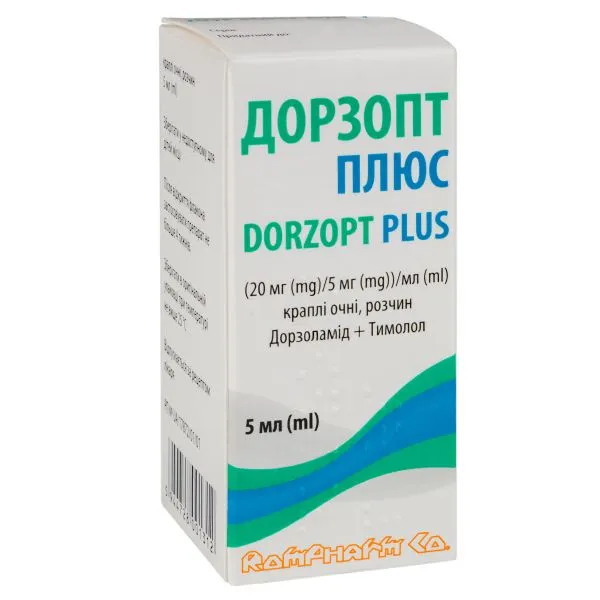
Table of Contents
INSTRUCTIONS FOR MEDICAL USE OF THE MEDICINAL PRODUCT DORZOPT PLUS
Composition:
Active substances: dorzolamide, timolol;
1 ml of eye drops solution contains 20 mg dorzolamide in the form of 22.26 mg dorzolamide hydrochloride and 5 mg timolol in the form of 6.84 mg timolol maleate;
Excipients: hydroxyethylcellulose; citric acid monohydrate; sodium hydroxide 1 M solution; mannitol (E 421); benzalkonium chloride; 1 M solution of sodium hydroxide or hydrochloric acid; purified water.
Pharmaceutical form. Eye drops, solution.
Main physicochemical properties: clear, slightly viscous solution free from mechanical impurities.
Pharmacotherapeutic group. Medicinal products used in ophthalmology. Antiglaucoma preparations and miotics. Beta-adrenergic receptor blockers.
ATC code S01E D51.
Pharmacological properties.
Pharmacodynamics.
The medicinal product contains two active substances: dorzolamide hydrochloride and timolol maleate. Each of these components reduces elevated intraocular pressure by decreasing the secretion of intraocular fluid, but through different mechanisms of action.
Dorzolamide hydrochloride is a potent inhibitor of carbonic anhydrase type II. Inhibition of carbonic anhydrase in the ciliary body leads to a reduction in intraocular fluid secretion by slowing the formation of bicarbonate ions, which in turn results in decreased transport of sodium and fluid.
Timolol maleate is a non-selective beta-adrenergic receptor blocker. The exact mechanism by which timolol reduces intraocular pressure is not fully understood. Fluorometric and tonographic studies indicate that the effect of timolol is primarily due to reduced secretion of aqueous humor. Additionally, timolol may enhance outflow of fluid.
The combined action of the two components results in a greater reduction of intraocular pressure than monotherapy with either agent alone.
Following topical administration, DORZOPT PLUS reduces intraocular pressure regardless of whether the elevation is associated with glaucoma. Elevated intraocular pressure plays a significant role in the pathogenesis of optic nerve damage and visual field loss in glaucoma.
DORZOPT PLUS reduces intraocular pressure without inducing the side effects typical of miotic agents, such as night blindness, accommodative spasm, or pupillary constriction.
Pharmacodynamic effects
Clinical effects
Clinical studies of up to 15 months duration were conducted to compare the effect on intraocular pressure reduction of a fixed-combination medicinal product containing dorzolamide hydrochloride and timolol maleate administered twice daily (with specific morning and evening doses) versus 0.5% timolol and 2.0% dorzolamide administered separately and in combination, in patients with glaucoma or ocular hypertension for whom combination therapy was considered appropriate and necessary in these studies. The studies included both untreated patients and patients inadequately controlled on monotherapy with timolol. Most patients had been receiving treatment with a topical beta-blocker as monotherapy prior to enrollment. In the analysis of combined studies, the effect of the fixed-combination medicinal product containing dorzolamide hydrochloride and timolol maleate administered twice daily on reducing intraocular pressure was greater than that of monotherapy with 2% dorzolamide administered three times daily or 0.5% timolol administered twice daily. The effect of the fixed-combination medicinal product containing dorzolamide hydrochloride and timolol maleate administered twice daily on reducing intraocular pressure was equivalent to that of concomitant therapy with dorzolamide and timolol each administered twice daily. The effect of the fixed-combination medicinal product containing dorzolamide hydrochloride and timolol maleate administered twice daily on reducing intraocular pressure was observed at various time points throughout the day and was maintained during long-term administration.
Paediatric population
A three-month controlled study was conducted with the primary objective of investigating and confirming the safety of 2% ophthalmic solution of dorzolamide hydrochloride in children under 6 years of age. In this study, 30 patients aged 2 to 6 years whose intraocular pressure was not adequately controlled on monotherapy with dorzolamide or timolol received the fixed-combination medicinal product containing dorzolamide hydrochloride and timolol maleate in the open-label phase of the study. Efficacy in these patients has not been established. In this small group, the fixed-combination medicinal product containing dorzolamide hydrochloride and timolol maleate administered twice daily was generally well tolerated by 19 patients who completed the treatment period, while 11 patients discontinued treatment due to surgical intervention, change of medication, or other reasons.
Pharmacokinetics.
Dorzolamide hydrochloride.
Unlike oral carbonic anhydrase inhibitors, topical administration of dorzolamide hydrochloride allows the active substance to exert its effect directly in the eye at significantly lower doses and, therefore, with less systemic exposure. In clinical studies, this resulted in reduction of intraocular pressure without acid-base imbalances or electrolyte changes typical of oral carbonic anhydrase inhibitors.
After topical administration, dorzolamide enters the systemic circulation. To assess the potential for systemic carbonic anhydrase inhibition following topical administration, concentrations of the active substance and its metabolite were measured in erythrocytes (RBCs), as well as inhibition of carbonic anhydrase in blood plasma. With chronic administration, dorzolamide accumulates in erythrocytes due to binding to carbonic anhydrase type II, maintaining very low concentrations of free drug in plasma. Through metabolism, dorzolamide forms a single N-desethyl metabolite, which is less potent in inhibiting carbonic anhydrase type II compared to the parent compound and also inhibits carbonic anhydrase type I, a less active isoenzyme. The metabolite also accumulates in erythrocytes, where it binds primarily to carbonic anhydrase type I. Approximately 33% of dorzolamide is plasma protein-bound. Dorzolamide is excreted in urine unchanged and as metabolite. After discontinuation of the drug, dorzolamide is eliminated non-linearly from erythrocytes, characterized by an initial rapid decline in concentration followed by a prolonged elimination phase with a half-life of approximately 4 months.
When dorzolamide was administered orally to simulate maximum systemic exposure following chronic topical ophthalmic use, steady state was reached within 13 weeks. At steady state, there was virtually no free active substance or metabolite in plasma; inhibition of carbonic anhydrase in erythrocytes was less than that expected to be necessary for pharmacological effects on renal or respiratory function. Similar pharmacokinetic results were obtained after chronic topical administration of dorzolamide hydrochloride. However, in some elderly patients with impaired renal function (creatinine clearance [CrCl] defined as 30–60 mL/min), higher concentrations of the metabolite in erythrocytes (RBCs) were observed, although significant differences in carbonic anhydrase inhibition and clinically significant systemic adverse effects were not directly associated with this finding.
Timolol maleate. After topical ocular administration, timolol is systemically absorbed. Systemic exposure to timolol was determined after topical administration of a 0.5% ophthalmic solution twice daily. Peak plasma concentration after the morning dose was 0.46 ng/mL and after the evening dose was 0.35 ng/mL.
Clinical characteristics.
Indications.
Indicated for the treatment of elevated intraocular pressure in patients with open-angle glaucoma or pseudoexfoliative glaucoma when topical use of beta-blockers alone is insufficient.
Contraindications.
The drug is contraindicated in patients with:
- reactive respiratory diseases, including bronchial asthma or a history of bronchial asthma, or severe chronic obstructive pulmonary disease (COPD);
- sinus bradycardia, sick sinus syndrome, sinoatrial block, second- or third-degree atrioventricular block not controlled by a pacemaker, severe heart failure, or cardiogenic shock;
- severe renal impairment (creatinine clearance (CrCl) < 30 mL/min) or hyperchloremic acidosis;
- hypersensitivity to one or both active substances, or to any component of the drug, as well as during pregnancy or breastfeeding.
The above-mentioned conditions are based on information regarding individual active components and are not specific to the combination.
Interaction with other medicinal products and other forms of interaction.
No specific studies on the interaction of DORZOPT PLUS with other medicinal products have been conducted.
In clinical studies, this drug was administered concomitantly with the following systemically acting medicinal products without evidence (unconfirmed) of adverse drug interactions: angiotensin-converting enzyme (ACE) inhibitors, calcium channel blockers, diuretics, nonsteroidal anti-inflammatory drugs (NSAIDs), including acetylsalicylic acid, and hormones (e.g., estrogen, insulin, thyroxine).
There is a risk of additive effects leading to arterial hypotension and/or marked bradycardia when ophthalmic beta-blocker solutions are used concomitantly with oral calcium channel blockers, catecholamine-depleting agents, or beta-adrenergic blockers, antiarrhythmic drugs (including amiodarone), digitalis glycosides, parasympathomimetics, guanethidine, narcotics, and monoamine oxidase inhibitors (MAOIs).
Potentiation of systemic beta-blockade (e.g., reduced heart rate, depression) has been reported during combined therapy with CYP2D6 inhibitors (e.g., quinidine, fluoxetine, paroxetine) and timolol.
Although DORZOPT PLUS as monotherapy has minimal or no effect on pupil size, miosis has occasionally been reported with concomitant use of ophthalmic beta-blockers and adrenaline (epinephrine).
Beta-blockers may enhance the hypoglycemic effect of antidiabetic agents.
Oral beta-adrenergic blockers may provoke rebound arterial hypertension upon discontinuation of clonidine.
Special precautions for use.
Cardiovascular and respiratory system reactions
Like other topically applied ophthalmic agents, timolol is absorbed systemically. Since timolol is a beta-blocker, adverse reactions affecting the cardiovascular and respiratory systems, similar to those seen with systemic administration of such agents, may occur. The incidence of systemic adverse reactions after topical administration of ophthalmic agents is lower than with systemic administration. For measures to reduce systemic absorption, see section "Dosage and administration".
Cardiac disorders
Patients with cardiovascular diseases (e.g., ischemic heart disease (IHD), vasospastic angina/Prinzmetal's angina, and heart failure) and arterial hypotension should be carefully evaluated before initiating beta-blocker therapy, and alternative active substances should be considered. Patients with cardiovascular disorders should be closely monitored for signs of worsening of these conditions and for adverse reactions.
Due to their negative effect on impulse conduction time, beta-blockers should be used cautiously in patients with first-degree atrioventricular block.
Vascular disorders
Patients with severe peripheral circulatory disturbances (i.e., severe forms of Raynaud's disease or Raynaud's syndrome) should be treated with caution.
Respiratory system disorders
Cases of respiratory reactions, including fatal outcomes due to bronchospasm, have been reported in asthmatic patients after administration of certain ophthalmic beta-blockers.
DORZOPT PLUS should be used with caution in patients with mild to moderate chronic obstructive pulmonary disease (COPD) and only if the expected benefit outweighs the potential risk.
Hepatic function impairment
The use of this medicinal product in patients with hepatic function impairment has not been studied; therefore, it should be used with caution in such patients.
Immunological and hypersensitivity reactions
Like other topically applied ophthalmic agents, this medicinal product may be systemically absorbed. Dorzolamide, like sulfonamides, contains a sulfonamide group. Therefore, adverse reactions observed with systemic administration of sulfonamide-containing drugs may occur with topical use, including severe reactions such as Stevens-Johnson syndrome and toxic epidermal necrolysis. If signs of serious reactions or hypersensitivity occur, the drug should be discontinued.
Local ocular adverse reactions similar to those observed with dorzolamide hydrochloride ophthalmic solutions have been reported during treatment with this medicinal product. If such reactions occur, discontinuation of the drug should be considered.
Patients with atopy or a history of severe anaphylactic reactions to multiple allergens may be more sensitive to allergen re-exposure during anaphylactic reactions when taking beta-blockers and may not respond to usual doses of adrenaline.
Concomitant therapy
The effect on intraocular pressure or the known systemic effects of beta-blockers may be potentiated when timolol is used in patients already receiving systemic beta-blockers. These patients should be carefully monitored for treatment response. The use of two topical beta-adrenergic blockers is not recommended (see section "Interaction with other medicinal products and other forms of interaction").
The concomitant use of dorzolamide and oral carbonic anhydrase inhibitors is not recommended.
Discontinuation of therapy
As with systemic beta-blockers, ophthalmic timolol should be withdrawn gradually when discontinuation is necessary in patients with IHD.
Additional effects of beta-blockers
Hypoglycemia/diabetes
Beta-blockers should be used with caution in patients prone to spontaneous hypoglycemia or in patients with labile diabetes, as beta-blockers may mask the symptoms of hypoglycemia.
Beta-blockers may also mask signs of hyperthyroidism. Abrupt withdrawal of beta-blockers may lead to worsening of symptoms.
Corneal disorders
Ophthalmic beta-blockers may cause dry eyes. Patients with corneal disorders should be treated with caution.
Anesthesia for surgical procedures
Ophthalmic beta-blockers may block the systemic effects of beta-agonists, such as adrenaline. The anesthesiologist must be informed that the patient is receiving timolol.
Beta-blocker therapy may exacerbate symptoms in myasthenia gravis.
Additional effects of carbonic anhydrase inhibition
Treatment with oral carbonic anhydrase inhibitors has been associated with the development of urolithiasis due to disturbances in acid-base balance, particularly in patients with a history of nephrolithiasis. Although acid-base disturbances have not been observed with this medicinal product, rare cases of urolithiasis have been reported. Since carbonic anhydrase inhibitors are systemically absorbed even with topical application, patients with a history of nephrolithiasis may have an increased risk of developing urolithiasis when using DORZOPT PLUS.
Other considerations
Treatment of patients with acute angle-closure glaucoma requires additional therapeutic measures beyond intraocular pressure-lowering agents. The use of this medicinal product in patients with acute angle-closure glaucoma has not been studied.
Corneal edema and irreversible corneal decompensation have been reported with dorzolamide use in patients with pre-existing chronic corneal disorders and/or a history of intraocular surgery. Corneal edema is highly likely in patients with a low number of endothelial cells. Precautions should be taken when prescribing DORZOPT PLUS to such patients.
Cases of ciliary body detachment have been reported following filtration procedures when aqueous suppressants (e.g., timolol, acetazolamide) were used.
As with other antiglaucoma agents, reduced responsiveness to ophthalmic timolol maleate has been reported in some patients after prolonged treatment. However, in clinical studies involving 164 patients monitored for at least three years, no significant difference in mean intraocular pressure was observed after initial pressure stabilization.
Contact lens use
This medicinal product contains the preservative benzalkonium chloride, which may cause eye irritation. Contact lenses should be removed before instillation of the drops and at least 15 minutes should elapse before reinserting them. Benzalkonium chloride is known to discolor soft contact lenses.
Use during pregnancy or breastfeeding.
Pregnancy
The drug should not be used during pregnancy.
Dorzolamide
There are no clinical data on the effects of dorzolamide during pregnancy. Dorzolamide has shown teratogenic effects in pregnant rabbits.
Timolol
There are insufficient data on the use of timolol during pregnancy. Timolol should not be used during pregnancy unless clearly necessary. For reduction of systemic absorption, see section "Dosage and administration".
Epidemiological studies have not provided evidence of an increased risk of intrauterine growth retardation associated with the use of oral beta-blockers during pregnancy. However, newborns have shown signs of beta-blockade (e.g., bradycardia, hypotension, respiratory distress syndrome, and hypoglycemia) when beta-blockers were administered before delivery. If this product is used before delivery, newborns should be closely monitored during the first few days after birth.
Breastfeeding
It is unknown whether dorzolamide is excreted in human breast milk. In rats administered dorzolamide, reduced weight gain in offspring was observed. Beta-blockers are excreted in breast milk. However, when timolol eye drops are used at therapeutic doses, it is unlikely that sufficient amounts will be present in breast milk to cause clinical signs of beta-blockade in the infant. Information on reducing systemic absorption is provided in the section "Dosage and administration".
If use of DORZOPT PLUS is necessary, breastfeeding is not recommended.
Ability to affect reaction speed when driving or operating machinery.
No studies on the effect of the drug on the ability to drive or operate machinery have been conducted. Adverse reactions such as blurred vision may negatively affect the ability of some patients to drive vehicles or operate machinery.
Method of Administration and Dosage
Dosage
DORZOPT PLUS should be administered as 1 drop into the conjunctival sac of the affected eye(s) twice daily.
If another topical ophthalmic agent is used simultaneously, the interval between instillation of DORZOPT PLUS and the other medication should be at least 10 minutes.
Patients should wash their hands before applying the medication and avoid contact of the dropper tip with the surface of the eye or eyelids.
Patients should be advised that ophthalmic solutions may become contaminated with common bacteria known to cause ocular infections if not properly handled. Use of contaminated solutions may lead to serious eye damage and subsequent vision loss.
Instructions for Use
Patients should carefully follow the instructions for using DORZOPT PLUS. Hands should be thoroughly washed before applying the eye drops.
-
Before first use, ensure that the protective strip on the outside of the bottle is intact and undamaged.
-
To open the bottle, unscrew the cap by turning it until the safety ring is detached.
-
Tilt the head backward and pull the lower eyelid downward to create a space between the eyelid and the eye.
-
Invert the bottle and gently press with the thumb or index finger on the specially marked area of the bottle to release one drop into the eye. DO NOT TOUCH THE SURFACE OF THE EYE OR EYELIDS WITH THE BOTTLE TIP.
-
Repeat steps 3 and 4 for both eyes, if prescribed by the physician.
-
Close the bottle by replacing the cap and turning it until it is securely closed. For confirmation of proper closure, the arrow on the left side of the cap should align with the arrow on the left side of the bottle label. Do not overtighten the cap, as this may damage the bottle or cap.
-
After administering all required doses, some medication may remain in the bottle. Since the bottle contains an additional amount of the drug, this ensures that patients receive the full prescribed volume of DORZOPT PLUS. Do not attempt to remove excess medication from the bottle.
Use of nasolacrimal occlusion or eye closure for 2 minutes after instillation reduces systemic absorption. This may result in reduced systemic adverse effects and increased local activity.
Children
The efficacy of use in children has not been established.
The safety of use in children under 2 years of age has not been established (see section "Pharmacodynamics" for information on safety in children aged ≥ 2 to < 6 years).
Overdose
There are no data on overdose following accidental or intentional ingestion of the medication.
Symptoms
There have been reports of accidental overdose with ophthalmic timolol maleate solution, which may result in systemic effects such as dizziness, headache, dyspnea, bradycardia, bronchospasm, and cardiac arrest—effects similar to those observed with systemic beta-blocker overdose. The most common expected symptoms following dorzolamide overdose include electrolyte imbalances, development of acidosis, and possible effects on the central nervous system.
Limited data are available on overdose in humans following accidental or intentional ingestion of the medication. Drowsiness has been reported after oral ingestion. With topical use, nausea, dizziness, headache, weakness, unusual dreams, and dysphagia (difficulty swallowing) have been reported.
Treatment
Treatment is symptomatic and supportive. Serum electrolyte levels (particularly potassium) and blood pH should be monitored. Studies have shown that timolol is not completely removed by dialysis.
Adverse Reactions
In clinical studies of the medicinal product containing two active substances — dorzolamide hydrochloride and timolol maleate — the adverse reactions observed were consistent with those previously reported with dorzolamide hydrochloride and/or timolol maleate.
During clinical trials, 1035 patients received treatment with the medicinal product containing dorzolamide hydrochloride and timolol maleate. Approximately 2.4% of all patients discontinued treatment due to the occurrence of local ocular adverse reactions, and approximately 1.2% of all patients discontinued treatment due to local adverse reactions manifesting as allergy or hypersensitivity (specifically, blepharitis and conjunctivitis).
Like other ophthalmic medicinal products administered locally, timolol is absorbed into the systemic circulation. This may cause systemic effects similar to those observed with systemic beta-blockers. The frequency of systemic adverse reactions after topical ophthalmic administration is lower than with systemic administration.
The adverse reactions listed below have been reported during the use of DORZOPT PLUS or one of its components.
Frequency: very common (≥1/10), common (≥1/100 to <1/10), uncommon (≥1/1,000 to <1/100), rare (≥1/10,000 to <1/1,000), frequency not known (cannot be estimated from the available data).
Immune system disorders
DORZOPT PLUS
Rare: symptoms of systemic allergic reactions, including angioedema, urticaria, pruritus, rash, anaphylactic reaction.
Timolol maleate, ophthalmic solution
Rare: symptoms of allergic reactions, including angioedema, urticaria, localized and generalized rash, anaphylactic reaction.
Frequency not known**: pruritus.
Metabolism and nutrition disorders
Timolol maleate, ophthalmic solution
Frequency not known**: hypoglycemia.
Psychiatric disorders
Timolol maleate, ophthalmic solution
Uncommon: depression*.
Rare: insomnia*, nightmares*, memory loss.
Frequency not known**: hallucinations.
Nervous system disorders
Dorzolamide hydrochloride, ophthalmic solution
Common: headache*.
Rare: dizziness*, paresthesia* (skin sensory disturbances).
Timolol maleate, ophthalmic solution
Common: headache*.
Uncommon: dizziness*, syncope*.
Rare: paresthesia*, worsening of signs and symptoms of myasthenia gravis, decreased libido (sex drive)*, cerebrovascular disorders*, cerebral ischemia.
Eye disorders
DORZOPT PLUS
Very common: burning and stinging.
Common: conjunctival injection, blurred vision, corneal erosion, ocular pruritus, lacrimation.
Dorzolamide hydrochloride, ophthalmic solution
Common: blepharitis*, eyelid irritation*.
Uncommon: iridocyclitis*.
Rare: eye irritation, including redness*, eye pain*, eyelid scaling*, transient myopia (resolves upon discontinuation of treatment), corneal edema*, intraocular pressure reduction*, retinal detachment (with subsequent filtering surgery)*.
Frequency not known: foreign body sensation in the eye.
Timolol maleate, ophthalmic solution
Common: symptoms of eye irritation, including blepharitis*, keratitis*, decreased corneal sensitivity, dry eyes*.
Uncommon: visual disturbances, including refractive changes (in some cases due to discontinuation of miotics)*.
Rare: ptosis, diplopia, retinal detachment with subsequent filtering surgery* (see section "Special precautions for use").
Frequency not known**: pruritus, lacrimation, redness, blurred vision, corneal erosion.
Ear and labyrinth disorders
Timolol maleate, ophthalmic solution
Rare: tinnitus*.
Cardiac disorders
Timolol maleate, ophthalmic solution
Uncommon: bradycardia*.
Rare: chest pain*, palpitations*, edema*, arrhythmia*, congestive heart failure*, cardiac arrest*, heart block.
Frequency not known**: atrioventricular block, heart failure.
Dorzolamide hydrochloride, ophthalmic solution
Frequency not known: tachycardia, palpitations.
Vascular disorders
Timolol maleate, ophthalmic solution
Rare: arterial hypotension*, claudication, Raynaud's phenomenon*, coldness in hands and feet*.
Dorzolamide hydrochloride, ophthalmic solution
Frequency not known: hypertension.
Respiratory, thoracic and mediastinal disorders
DORZOPT PLUS
Common: sinusitis.
Rare: dyspnea, respiratory failure, rhinitis, rarely bronchospasm.
Dorzolamide hydrochloride, ophthalmic solution
Rare: epistaxis*.
Frequency not known: dyspnea.
Timolol maleate, ophthalmic solution
Uncommon: dyspnea (difficulty breathing)*.
Rare: bronchospasm (predominantly in patients with pre-existing bronchospastic disease)*, respiratory failure, cough*.
Gastrointestinal disorders
DORZOPT PLUS
Very common: dysgeusia (altered taste sensation).
Dorzolamide hydrochloride, ophthalmic solution
Common: nausea*.
Rare: throat irritation, dry mouth*.
Timolol maleate, ophthalmic solution
Uncommon: nausea*, dyspepsia*.
Rare: diarrhea, dry mouth*.
Frequency not known**: dysgeusia (altered taste sensation), abdominal pain, vomiting.
Skin and subcutaneous tissue disorders
DORZOPT PLUS
Rare: contact dermatitis, Stevens-Johnson syndrome, toxic epidermal necrolysis.
Dorzolamide hydrochloride, ophthalmic solution
Rare: rash*.
Timolol maleate, ophthalmic solution
Rare: alopecia*, psoriatic rash or exacerbation of psoriasis.
Frequency not known**: skin rash.
Musculoskeletal and connective tissue disorders
Timolol maleate, ophthalmic solution
Rare: systemic lupus erythematosus.
Frequency not known**: myalgia.
Renal and urinary disorders
DORZOPT PLUS
Uncommon: urolithiasis.
Reproductive system and breast disorders
Timolol maleate, ophthalmic solution
Rare: Peyronie's disease*, decreased libido.
Frequency not known**: sexual dysfunction.
General disorders and administration site conditions
Dorzolamide hydrochloride, ophthalmic solution
Common: asthenia/weakness*.
Timolol maleate, ophthalmic solution
Uncommon: asthenia/weakness*.
_________________________
* Adverse reaction reported after use of dorzolamide with timolol in therapy.
** Additional adverse reaction reported after use of ophthalmic beta-blockers and which may likely occur after use of dorzolamide with timolol.
Reporting of suspected adverse reactions
Reporting suspected adverse reactions after marketing authorization is important. It allows continued monitoring of the benefit-risk balance of the medicinal product. Healthcare professionals and patients, as well as their legal representatives, are encouraged to report all suspected adverse reactions and lack of efficacy through the Automated Pharmacovigilance Information System at: https://aisf.dec.gov.ua.
Shelf life. 3 years.
After opening the bottle, do not use the product for more than 4 weeks.
Storage conditions.
Store in the original packaging at a temperature not exceeding 25°C.
Keep out of the reach of children.
Packaging.
5 ml in a dropper bottle, with a cardboard carton.
Prescription status.
Prescription only.
Manufacturer.
K.T. ROMPHARM COMPANY S.R.L.
Manufacturer's address and location of its business operations.
Str. Eroilor No. 1A, Otopeni, 075100, Ilfov County, Romania – Rompharm 1 and Rompharm 2 buildings.