Dorzamed
Ukraine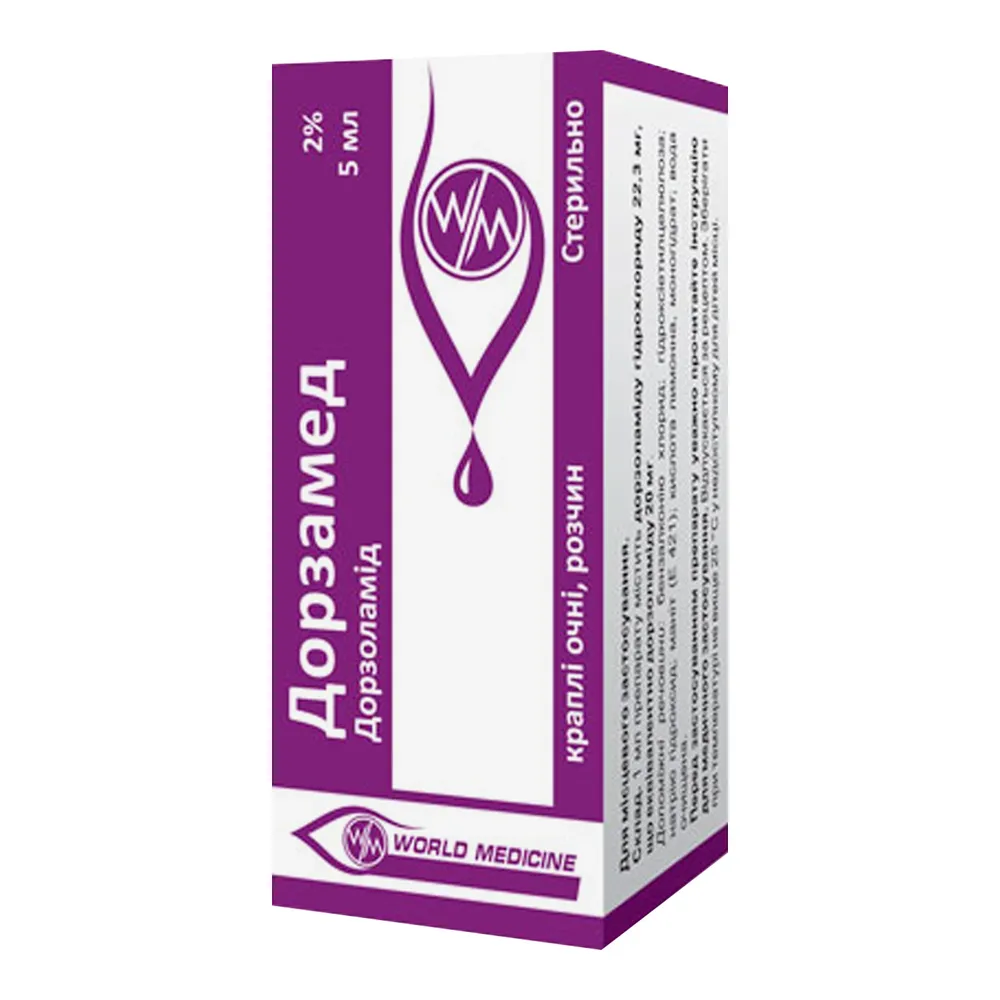
Table of Contents
INSTRUCTION FOR MEDICAL USE OF THE MEDICINAL PRODUCT DORZAMED (DORZAMED)
Composition:
Active substance: dorzolamide;
1 ml of the preparation contains dorzolamide hydrochloride 22.3 mg, equivalent to dorzolamide 20 mg;
Excipients: benzalkonium chloride; hydroxyethylcellulose; sodium hydroxide; mannitol (E 421); citric acid monohydrate; purified water.
Pharmaceutical form. Eye drops, solution.
Main physicochemical properties: clear solution without visible particles.
Pharmacotherapeutic group.
Antiglaucoma preparations and miotics. Carbonic anhydrase inhibitors. Dorzolamide.
ATC code S01E C03.
Pharmacological Properties
Pharmacodynamics
Dorzolamide is a potent inhibitor of human carbonic anhydrase II (CA-II). When administered topically, it reduces elevated intraocular pressure, whether associated with glaucoma or not. Elevated intraocular pressure is a major risk factor in the pathogenesis of optic nerve damage and glaucomatous visual field loss.
Reduction of intraocular pressure with dorzolamide does not lead to the widespread adverse reactions typical of miotics, such as night blindness, accommodative spasm, and pupillary constriction. Dorzolamide has no effect or only a minimal effect on arterial blood pressure and pulse rate.
Unlike oral carbonic anhydrase inhibitors, dorzolamide acts directly in the eye when administered topically at substantially lower concentrations, resulting in less systemic activity.
The efficacy of dorzolamide has been confirmed in clinical studies when administered either as monotherapy three times daily (baseline intraocular pressure ≥ 23 mmHg) or twice daily as adjunctive therapy to topical beta-adrenergic blockers (baseline intraocular pressure ≥ 22 mmHg) in patients with glaucoma or ocular hypertension. Whether used as monotherapy or in combination with beta-blockers, dorzolamide reduced intraocular pressure throughout the day, and this effect was maintained over prolonged periods. The efficacy of dorzolamide with long-term monotherapy was comparable to that of betaxolol and only slightly less than that of timolol. When dorzolamide was used as adjunctive therapy to topical beta-blockers, additional reduction in intraocular pressure was observed, similar to that achieved with 2% pilocarpine administered four times daily.
Pharmacokinetics
After topical administration, dorzolamide enters the systemic circulation.
It is moderately bound to plasma proteins (approximately 33%). With chronic administration, dorzolamide accumulates in erythrocytes due to selective binding to CA-II, while free active drug concentrations in plasma remain extremely low. Dorzolamide forms one N-desethylated metabolite, which inhibits CA-II to a lesser extent than the parent compound but also inhibits the less active isoenzyme CA-I. The metabolite also accumulates in erythrocytes, where it binds predominantly to CA-I.
Dorzolamide is excreted primarily unchanged in the urine; the metabolite is also excreted in the urine. After discontinuation of treatment, non-linear elimination of dorzolamide from erythrocytes occurs, initially resulting in a rapid decline in dorzolamide concentrations, followed by a slower elimination phase with a half-life of approximately 4 months.
Clinical characteristics.
Indications.
-
Adjunctive therapy in the treatment with topical beta-blockers.
-
Monotherapy when treatment with topical beta-blockers is insufficiently effective or contraindicated.
-
Treatment of elevated intraocular pressure in:
- ocular hypertension;
- open-angle glaucoma;
- pseudoexfoliative glaucoma.
Contraindications.
- Hypersensitivity to the active substance or to any of the excipients.
- Severe renal impairment (creatinine clearance less than 30 mL/min).
- Hyperchloremic acidosis.
Interaction with other medicinal products and other forms of interactions.
Specific studies on the interaction of dorzolamide with other agents have not been conducted.
In clinical trials, dorzolamide was used concomitantly with timolol and betaxolol in the form of eye drops, and with systemically acting drugs: angiotensin-converting enzyme (ACE) inhibitors, calcium channel blockers, diuretics, and nonsteroidal anti-inflammatory drugs (NSAIDs), including acetylsalicylic acid, as well as with hormonal agents (e.g., estrogens, insulin, thyroxine), without the occurrence of drug interactions.
An increased systemic effect of carbonic anhydrase inhibitors may occur in patients who are concurrently receiving oral carbonic anhydrase inhibitors and dorzolamide. Concomitant use of dorzolamide and oral carbonic anhydrase inhibitors has not been studied and is not recommended.
The interaction of dorzolamide with miotics and adrenergic agents during glaucoma treatment has not been sufficiently studied.
Special precautions for use
Dorzolamide contains a sulfonamide group and, although administered locally, is subject to systemic absorption. Therefore, when used as eye drops, adverse reactions typical of sulfonamides may occur, including Stevens-Johnson syndrome and toxic epidermal necrolysis (Lyell's syndrome). If serious adverse reactions or signs of hypersensitivity occur, the drug should be discontinued.
If allergic reactions (such as conjunctivitis or eyelid reactions) develop, discontinuation of the drug should be considered.
The use of dorzolamide in patients with impaired liver function has not been studied. This drug should be used with caution in such patients.
Corneal edema and irreversible corneal decompensation have been observed in patients with previously diagnosed chronic corneal defects and/or a history of intraocular surgery during treatment with dorzolamide. Dorzolamide should be used with caution in these patients.
The use of oral carbonic anhydrase inhibitors has been associated with the development of urinary tract stones due to fluid and electrolyte disturbances, particularly in patients with a history of nephrolithiasis. Although fluid and electrolyte disturbances have not been observed with dorzolamide, rare cases of ureterolithiasis have been reported. Since dorzolamide is a locally acting carbonic anhydr游戏副本ase inhibitor that reaches systemic circulation, patients with a history of nephrolithiasis are considered to be at increased risk of ureterolithiasis associated with dorzolamide use.
Cases of choroidal detachment have been observed during the use of agents that reduce aqueous humor production following filtration procedures.
In the treatment of patients with acute angle-closure glaucoma, in addition to medications that reduce intraocular pressure, other therapeutic measures should be implemented. The use of dorzolamide in patients with acute angle-closure glaucoma has not been studied.
The product contains the preservative benzalkonium chloride, which may cause eye irritation and discoloration of soft contact lenses. Contact lenses should be removed before administration of the drug and reinserted no sooner than 15 minutes after instillation.
Use during pregnancy or breastfeeding
Adequate and well-controlled studies of dorzolamide use in pregnant women are lacking. The drug is not recommended during pregnancy.
It is not known whether dorzolamide is excreted in human breast milk. If use of the drug is necessary, breastfeeding should be discontinued.
Ability to affect driving or operating machinery
Studies on the effect of dorzolamide on the ability to drive or operate machinery have not been conducted. During treatment with the drug, adverse reactions such as dizziness and visual disturbances may occur, which may affect the ability to drive or operate machinery.
Method of Administration and Dosage
The product is intended for ophthalmic use only.
Monotherapy
Administer 1 drop into the affected eye(s) three times daily.
Adjunctive Therapy
Administer 1 drop into the affected eye(s) twice daily.
If dorzolamide is to replace another topical anti-glaucoma medication, discontinue therapy with the previous medication and begin dorzolamide the following day.
When using multiple topical ophthalmic agents, administer them at least 10 minutes apart.
Before administration, wash hands thoroughly and avoid any contact between the dropper tip and the eye or skin during instillation. Improper handling may result in contamination of the eye drops with common bacteria, which may cause ocular infections. Use of contaminated eye drops may lead to serious eye damage and subsequent vision loss.
Application of nasolacrimal occlusion or eyelid closure for 2 minutes reduces systemic absorption. This may reduce systemic adverse effects and increase local activity.
Children
Clinical data on the use of dorzolamide in children are limited. The product is not recommended for use in pediatric patients.
Overdose
Symptoms
Data regarding dorzolamide overdose in humans are limited. Symptoms observed include: somnolence after oral ingestion; nausea, dizziness, headache, fatigue, unusual dreams, and dysphagia following topical administration. Electrolyte imbalances, asthenia, and symptoms related to the central nervous system may also occur.
Treatment
In case of overdose, symptomatic and supportive therapy should be administered. Plasma electrolyte concentrations (particularly potassium) and blood pH should be monitored.
Adverse reactions
The adverse reactions listed below have been reported during clinical trials and post-marketing surveillance with dorzolamide.
Adverse reactions are categorized by frequency as follows: very common (≥ 1/10); common (≥ 1/100, < 1/10); uncommon (≥ 1/1000, < 1/100); rare (≥ 1/10,000, < 1/1000); very rare (< 1/10,000); not known (frequency cannot be estimated from available data).
Nervous system disorders:
Common – headache; rare – paraesthesia, dizziness.
Eye disorders:
Very common – burning and stinging; common – superficial punctate keratitis, lacrimation, conjunctivitis, blepharitis, eye pruritus, eye irritation, blurred vision; uncommon – iridocyclitis; rare – irritation including redness, pain, eyelid sticking together, transient myopia (resolving after discontinuation of treatment), corneal edema, ocular hypotony, choroidal detachment following filtration procedures; not known – sensation of foreign body in the eye.
Respiratory, thoracic and mediastinal disorders:
Rare – epistaxis; not known – dyspnoea.
Cardiac disorders:
Not known – palpitations, tachycardia.
Vascular disorders:
Not known – hypertension.
Gastrointestinal disorders:
Common – nausea, bitter taste; rare – throat irritation, dry mouth.
Skin and subcutaneous tissue disorders:
Rare – contact dermatitis, Stevens-Johnson syndrome, toxic epidermal necrolysis (Lyell's syndrome).
Renal and urinary disorders:
Rare – nephrolithiasis.
General disorders:
Common – asthenia/fatigue; rare – hypersensitivity reactions, including palpebral reactions, angioneurotic edema, urticaria, pruritus, rash, dyspnoea, bronchospasm.
Reporting suspected adverse reactions
Reporting suspected adverse reactions after authorization of the medicinal product is important. It allows continued monitoring of the benefit-risk balance of the medicinal product. Healthcare professionals are encouraged to report any suspected adverse reactions via the national reporting system.
Shelf life. 2 years.
After opening the bottle, eye drops should be used within 4 weeks.
Storage conditions.
Store at temperatures not exceeding 25 °C, in a place inaccessible to children.
Packaging.
5 ml in a dropper bottle, 1 dropper bottle in a cardboard box.
Prescription status.
Prescription only.
Manufacturer.
S.C. „Rompharm Company S.R.L.“
Manufacturer's address and place of business.
Otopeni city, Eroilor str. № 1A, 075100, jud. Ilfov, Romania.
Marketing Authorization Holder.
WORLD MEDICINE, LLC, Ukraine.