Dolaren
Ukraine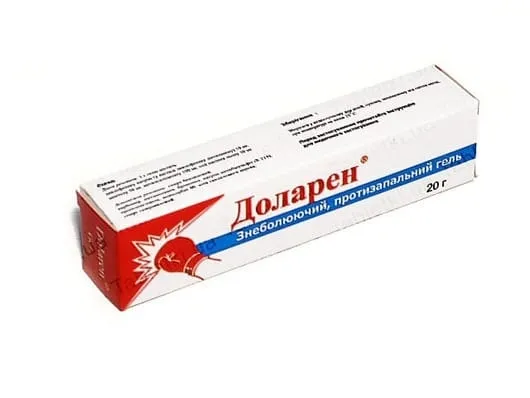
Table of Contents
INSTRUCTIONS FOR MEDICAL USE OF THE MEDICINAL PRODUCT DOLAREN® (DOLAREN)
Composition:
Active substances: diclofenac, menthol, methyl salicylate;
1 g of gel contains: 10 mg of diethylamine diclofenac equivalent to sodium diclofenac, 50 mg of menthol, 100 mg of methyl salicylate;
Excipients: benzyl alcohol, linseed oil, carbomer 940, diethanolamine, propylene glycol, disodium edetate, sodium methylparaben, sodium bisulfite, butylated hydroxytoluene, butylated hydroxyanisole, hypromellose, purified water.
Pharmaceutical form. Gel.
Main physicochemical properties: soft consistency gel, from white to yellowish color, with a characteristic odor.
Pharmacotherapeutic group.
Topically applied non-steroidal anti-inflammatory agents.
ATC code M02A A15.
Pharmacological properties.
Pharmacodynamics.
The action of Diagel Dolarren® is due to the components contained in its formulation.
Diclofenac is a nonsteroidal anti-inflammatory agent with pronounced antirheumatic, analgesic, anti-inflammatory, and antipyretic effects. Its main mechanism of action is the inhibition of prostaglandin biosynthesis.
In inflammation caused by injuries or rheumatic diseases, the use of diclofenac helps reduce pain, tissue swelling, and shortens the recovery period of functions in damaged joints, ligaments, tendons, and muscles.
Menthol stimulates cold receptors. This is accompanied by narrowing and reduced permeability of capillaries at the site of application, as well as a sensation of coolness. Menthol produces a local counterirritant and moderately expressed analgesic effect.
Methyl salicylate is a derivative of salicylic acid and exerts a local irritant effect. By stimulating skin receptors, methyl salicylate induces the formation and release into the blood of a large number of biologically active substances that regulate pain sensitivity. Substance P is released from neurons. Reduction of substance P accumulation in nerve endings leads to decreased pain sensation. In addition, methyl salicylate, which belongs to the group of nonsteroidal anti-inflammatory drugs (NSAIDs), inhibits prostaglandin synthesis by suppressing cyclooxygenase, thereby reducing edema and infiltration of inflamed tissues.
Pharmacokinetics.
The effect of Dolarren® gel begins within a few minutes after application to the skin. The maximum effect is reached within 20–30 minutes. With topical application, less than 5% of the dose is absorbed, so the systemic effect of the drug is minimal.
Clinical characteristics.
Indications.
For local treatment of pain and inflammation of joints, lower back, muscles, ligaments, and tendons of rheumatic or traumatic origin.
Contraindications.
- Hypersensitivity to diclofenac or to any other components of the medicinal product.
- History of bronchial asthma, urticaria, acute rhinitis, or angioedema induced by acetylsalicylic acid or other NSAIDs.
- Epidermal damage, open wounds in the area of application.
- Third trimester of pregnancy.
- Active gastric or duodenal ulcer.
- Do not apply directly to or immediately after cardiac surgery.
- Children under 14 years of age.
Interaction with other medicinal products and other forms of interactions.
Since systemic absorption following topical application of the medicinal product is very low, the likelihood of interactions is minimal. However, possible interactions characteristic of oral diclofenac formulations should still be considered.
Although adequate controlled interaction studies have not been conducted, excessive use of topical salicylates may potentially enhance the effects of coumarin anticoagulants and antiplatelet agents. Therefore, caution should be exercised in patients receiving coumarin anticoagulants and antiplatelet agents, including acetylsalicylic acid. When used concomitantly with anticoagulants, coagulation parameters should be monitored, as NSAIDs, including diclofenac, may promote gastrointestinal bleeding.
It should be noted that sodium diclofenac may potentiate the specific effects of corticosteroids, particularly their ulcerogenic action, increase blood lithium concentration, and reduce the efficacy of diuretics and saluretics of the thiazide group and furosemide.
Methyl salicylate in gel form may enhance the effect of warfarin. Bleeding, bruising, and/or increased international normalized ratio (INR) have been observed with both high and low doses of methyl salicylate.
Caution is advised when using the gel concomitantly with oral nonsteroidal anti-inflammatory drugs, including acetylsalicylic acid, due to the risk of mutual potentiation of toxic effects, particularly systemic adverse reactions.
Alcohol increases the risk of gastrointestinal bleeding when taken concomitantly with NSAIDs.
Diclofenac may potentiate the effects of medicinal products that induce photosensitization. Patients should minimize or avoid exposure to natural or artificial sunlight on treated areas, as animal studies have shown that topical treatment with diclofenac leads to earlier onset of skin tumors induced by ultraviolet radiation. The potential effects of topical diclofenac gel on human skin under ultraviolet exposure are unknown. Photosensitivity reactions following topical application of diclofenac should always be considered in patients working outdoors, which may lead to skin lesions such as erythematous and scaly plaques with vesicles and yellow crusts.
Special precautions for use
Use only as a topical agent.
Use with caution when used concomitantly with oral nonsteroidal anti-inflammatory drugs (NSAIDs). NSAIDs may cause gastrointestinal bleeding. The risk increases with dose and duration of treatment and is higher in elderly patients, patients with a history of peptic ulcer, coagulation disorders, and patients taking anticoagulants, glucocorticoids, or other NSAIDs, as well as in those consuming alcohol.
The likelihood of developing systemic adverse effects with topical application of diclofenac is low compared to oral formulations; however, the risk increases when the drug is applied over relatively large skin areas for prolonged periods.
Do not use Dolaren® gel with other products containing diclofenac.
The medicinal product should be used with caution in patients with active peptic ulcer of the stomach or duodenum or a history thereof, hepatic/renal dysfunction, blood dyscrasias, nasal mucosal polyps, asthma, gastrointestinal disorders, arterial hypertension, fluid retention, and in patients taking diuretics or coumarin anticoagulants.
Dolaren® gel should be applied only to intact skin areas, avoiding contact with inflamed, damaged, or infected skin. Contact of the medicinal product with eyes and mucous membranes should be avoided. The product must not be ingested.
The medicinal product may cause serious allergic reactions, particularly in patients allergic to acetylsalicylic acid. Symptoms may include urticaria, facial swelling, asthma (wheezing), shock, skin redness, rash, or blisters. If any of these symptoms occur, patients should discontinue use and seek immediate medical attention.
NSAIDs increase the risk of serious cardiovascular thrombotic events, myocardial infarction, and stroke, especially in patients with cardiovascular disease or risk factors for such conditions. This risk increases with higher doses and longer duration of use. NSAIDs should be used cautiously in patients with cardiovascular disease.
Salicylates have been associated with Reye’s syndrome.
Due to the potential for photosensitivity, exposure to direct sunlight and visits to solariums should be avoided during treatment and for 2 weeks after discontinuation of therapy. Patients should minimize or avoid exposure of treated areas to natural or artificial sunlight.
The medicinal product contains salicylates, which are aspirin-like substances; therefore, the same precautions applicable to acetylsalicylic acid should be observed.
Dolaren® gel contains propylene glycol, which may cause skin irritation.
Dolaren® gel contains butylated hydroxyanisole (E 320) and butylated hydroxytoluene (E 321), which may cause local skin reactions (e.g., contact dermatitis) or irritation of the eyes and mucous membranes.
If any skin rash develops, treatment with the product should be discontinued. Do not apply Dolaren® gel under occlusive dressings or with heating compresses. In case of ligament sprain, the affected area may be bandaged with a bandage.
If symptoms persist, worsen, or new adverse symptoms appear, discontinue use of the medicinal product and consult a physician.
Use during pregnancy or breastfeeding
Pregnancy. Clinical data on the use of diclofenac during pregnancy are lacking. Even though systemic effects are lower compared to oral administration, it is unknown whether the systemic exposure to diclofenac achieved after topical application could be harmful to the embryo/fetus. During the first and second trimesters of pregnancy, the product should not be used unless clearly necessary. If used, the dose should be as low as possible and the duration of treatment as short as possible.
During the third trimester of pregnancy, systemic use of prostaglandin synthesis inhibitors, including diclofenac, may cause cardiopulmonary toxicity (pulmonary hypertension and/or premature closure of the ductus arteriosus) and renal toxicity in the fetus. At late stages of pregnancy, prolonged bleeding may occur in both mother and child, and labor may be delayed. Therefore, Dolaren® gel is contraindicated during the third trimester of pregnancy (see section "Contraindications").
Breastfeeding period. Dolaren® gel may be used during breastfeeding only on medical advice and when there are strong medical reasons, when, in the physician’s opinion, the expected benefit outweighs the potential risk.
The gel should not be applied to the mammary glands or large skin areas and should not be used for prolonged periods (more than 1 week).
Fertility. There are no available data on the effect of topical diclofenac on human fertility.
Ability to affect reaction speed when driving or operating machinery
No data available.
Method of Administration and Dosage
For topical use only!
For adults and children aged 14 years and older, apply a thin layer of 2–4 g of gel (a 4–8 cm strip) 2–3 times daily to the skin and gently rub in. The average daily dose is 10 g of gel, corresponding to 100 mg of sodium diclofenac. The medicinal product should be applied to intact skin. Avoid contact with eyes and mucous membranes. Do not apply the gel to open wounds.
After application, hands should be washed unless the hands themselves are the area being treated.
The duration of treatment should be determined by a physician depending on the nature and course of the disease and the treatment response.
The recommended duration of treatment is 7–14 days for injuries and soft tissue rheumatism, after which therapy should be reviewed.
For treatment of osteoarthritis of superficial joints, such as the knee joint, therapy should be reviewed after 21 days.
Elderly patients do not require dose adjustment.
Children.
Contraindicated in children under 14 years of age. When using the medicinal product in children aged 14 years and older for longer than 7 days, or if symptoms worsen, medical advice should be sought.
Overdose.
Overdose is unlikely due to the low systemic absorption of diclofenac following topical application.
In case of accidental ingestion, note that one 100 g tube of the medicinal product contains the equivalent of 1 g of sodium diclofenac; systemic adverse reactions may occur.
In most patients with acute NSAID overdose, there are either no symptoms or only mild gastrointestinal symptoms that resolve without medical intervention. However, in some patients, moderate to severe clinical complications have been reported, including seizures, metabolic acidosis, coma, hypotension, hypothermia, rhabdomyolysis, electrolyte imbalance, cardiac arrhythmia, and acute renal failure. Drowsiness, confusion, nystagmus, visual disturbances, diplopia, headache, auditory hallucinations, and tinnitus have been reported following overdose of ibuprofen, diclofenac, naproxen, and mefenamic acid. These symptoms are generally associated with ingestion of higher oral doses. Ingestion of a significant dose of NSAIDs may lead to multi-organ failure and death. Topical application of diclofenac results in lower systemic exposure compared to oral administration.
Acute overdose of menthol may cause abdominal pain, nausea, vomiting, dizziness, coordination disturbances, and drowsiness.
Overdose of methyl salicylate following topical application may lead to salicylic acid intoxication. Symptoms may include nausea, vomiting, confusion, dizziness, delirium, psychosis, stupor, and coma. Fatal outcome is possible.
In case of accidental ingestion of the medicinal product, the stomach should be emptied immediately and an adsorbent administered. Symptomatic treatment is indicated, with therapeutic measures appropriate for poisoning with nonsteroidal anti-inflammatory agents. The patient should seek immediate medical attention.
Symptomatic treatment should be initiated if signs of complications develop, such as elevated blood pressure, renal failure, seizures, respiratory depression, or gastrointestinal complications.
Adverse reactions.
Dolaren gel is generally well tolerated. Adverse reactions include mild transient skin reactions at the site of application. Allergic reactions may occur rarely.
The adverse reactions listed below are categorized according to frequency: very common (≥ 1/10), common (≥ 1/100, < 1/10), uncommon (≥ 1/1,000, < 1/100), rare (≥ 1/10,000, < 1/1,000), very rare (< 1/10,000).
Infections and infestations: very rare — pustular eruptions.
Skin and subcutaneous tissue disorders: uncommon — rash, pruritus, erythema, eczema, exanthema, erythema, burning sensation, swelling and vesicles, papules, pustules, scaling and dry skin, dermatitis (including contact dermatitis), skin edema, burning or stinging sensation; rare — bullous dermatitis; very rare — photosensitivity reactions, generalized skin eruptions, skin burning sensation.
Immune system disorders: very rare — hypersensitivity reactions (including urticaria), angioneurotic edema, dyspnea.
Respiratory system disorders: very rare — bronchial asthma, bronchospasm.
If adverse reactions occur, treatment should be discontinued and a physician should be consulted.
When the gel is used in high doses or applied to large areas of skin, systemic adverse reactions as well as hypersensitivity reactions such as angioedema and dyspnea cannot be excluded.
Patients should be advised to discontinue use of the medicinal product and consult a physician if any adverse effects or other unusual reactions occur.
Shelf life. 3 years.
After first opening of the tube – 6 months.
Storage conditions.
Store in the original packaging at a temperature not exceeding 25 °C.
Keep out of reach of children.
Do not freeze.
Packaging.
20 g or 50 g in a tube. One tube per cardboard box.
Availability.
Over-the-counter (without prescription).
Manufacturer.
Nabros Pharma Pvt. Ltd.
Manufacturer's address and location of business operation.
Survey No. 110/A/2 Amit Pharma, Jayn Udyog, near Coca Cola Factory, NH No. 8, Kajipura – 387411, Kheda, India.