Doxorubicin fares
Ukraine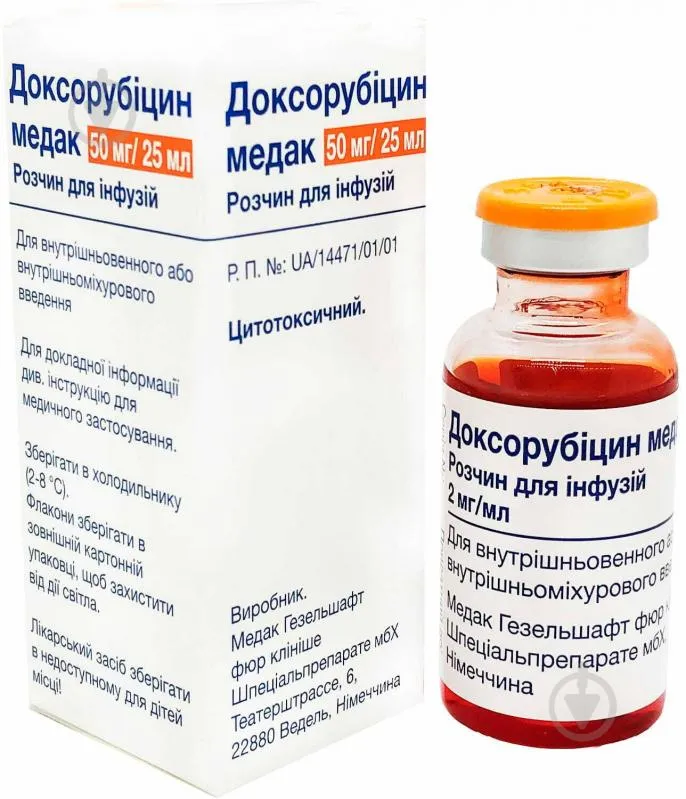
Table of Contents
INSTRUCTIONS FOR MEDICAL USE OF THE MEDICINAL PRODUCT DOXORUBICIN PHARES (DOXORUBICIN PHARES)
Composition:
Active substance: doxorubicin hydrochloride;
1 ml of solution contains 2 mg of doxorubicin hydrochloride;
Excipients: sodium chloride, concentrated hydrochloric acid, water for injections.
Pharmaceutical form. Solution for injection.
Main physicochemical properties: clear red solution, free from visible particles.
Pharmacotherapeutic group. Antineoplastic agents. Anthracyclines and related compounds. ATC code L01D B01.
Pharmacological properties.
Pharmacodynamics.
Doxorubicin is a cytotoxic anthracycline antibiotic isolated from the culture of Streptomyces peucetius var. caesius.
Doxorubicin is an antineoplastic agent. The antitumor effect of doxorubicin is likely related to the drug's influence on nucleic acid synthesis, although the exact mechanism of action has not been fully elucidated.
The following mechanisms of action are proposed: intercalation into DNA (resulting in inhibition of DNA, RNA, and protein synthesis), formation of highly reactive free radicals and superoxides, chelation of divalent cations, inhibition of Na-K ATPase, and binding of doxorubicin to certain components of cell membranes (particularly membrane lipids, spectrin, and cardiolipin). The highest concentrations of the drug are achieved in the lungs, liver, spleen, kidneys, heart, small intestine, and bone marrow. Doxorubicin does not cross the blood-brain barrier.
Pharmacokinetics.
After intravenous administration, the plasma elimination curve of doxorubicin is triphasic, with elimination half-lives of 12 minutes, 3.3 hours, and 30 hours. The relatively prolonged terminal half-life of doxorubicin reflects its distribution into a deep tissue compartment. Only about 33–50% of the administered drug (or its metabolites), whether fluorescently or tritium-labeled, was detected in urine, bile, and feces within 5 days after intravenous administration. The remainder of doxorubicin and its metabolites apparently remains in body tissues for a prolonged period.
In cancer patients, doxorubicin is reduced to doxorubicinol—a cytotoxic active compound. This reduction is presumably catalyzed by cytoplasmic NADPH-dependent aldo-keto reductases present in all tissues and plays an important role in determining the overall pharmacokinetics of doxorubicin.
Microsomal glycosidases, present in most tissues, cleave doxorubicin and doxorubicinol to inactive aglycones. The aglycones may undergo O-demethylation followed by conjugation with sulfate or glucuronide and are excreted in bile.
Clinical characteristics.
Indications.
Treatment of a broad spectrum of neoplastic diseases, including acute leukemia, lymphoma, soft tissue sarcomas and osteosarcomas, malignant tumors in children, and solid tumors in adults, particularly breast and lung carcinomas.
Doxorubicin is frequently used in combination with other cytotoxic agents as part of combined chemotherapy regimens. Doxorubicin must not be used as an antibacterial agent.
Contraindications.
Hypersensitivity to doxorubicin or any of the excipients, other anthracyclines, or anthracenediones.
For intravenous administration:
- Persistent myelosuppression;
- Severe hepatic impairment;
- Severe myocardial dysfunction;
- Recent myocardial infarction;
- Severe arrhythmia;
- Prior treatment with maximum cumulative doses of doxorubicin, daunorubicin, epirubicin, idarubicin, and/or other anthracyclines and anthracenediones.
Special safety precautions.
When handling antineoplastic agents, the following safety measures must be observed:
- Personnel must be trained in proper reconstitution and handling procedures;
- Pregnant staff must not handle the drug;
- Personnel must wear personal protective equipment: goggles, gowns, masks, and disposable gloves;
- A designated area for drug reconstitution must be provided (preferably under a laminar flow hood). The work surface must be protected with absorbent plastic-backed paper;
- All materials used for drug administration or cleaning, including gloves, must be placed in high-risk waste containers designated for high-temperature incineration;
- In case of spillage or leakage, contaminated materials must be soaked in 1% sodium hypochlorite solution, then rinsed with water;
- In case of skin contact, the affected area must be thoroughly washed with soap and water or sodium bicarbonate solution. Scrubbing with a brush is not recommended;
- In case of eye contact, the eyelid must be held open and the eye irrigated with water for 15 minutes. Medical advice should be sought immediately afterward;
- Hands must always be washed after removing gloves;
- All cleaning materials must be disposed of as described above.
Proper disposal procedures for cytostatic agents must always be followed.
Interaction with other medicinal products and other forms of interaction.
Doxorubicin is a substrate of cytochrome P450 enzymes CYP3A4 and CYP2D6, as well as of P-glycoprotein (P-gp). Clinically significant interactions have been observed with inhibitors of CYP3A4, CYP2D6, and/or P-gp (e.g., verapamil), leading to increased doxorubicin concentration and clinical effect. Doxorubicin concentrations may be reduced by inducers of CYP3A4 (e.g., phenobarbital, phenytoin, St. John’s wort) and P-gp inducers.
Combination of cyclosporine with doxorubicin may increase the area under the concentration–time curve (AUC) for both doxorubicin and doxorubicinol, likely due to reduced clearance of the parent compound and decreased metabolism of doxorubicinol. Studies indicate that combining cyclosporine with doxorubicin results in more pronounced and prolonged hematological toxicity compared to doxorubicin monotherapy. Cases of coma and seizures have also been reported with concomitant administration of cyclosporine and doxorubicin.
High doses of cyclosporine increase serum levels of doxorubicin and myelotoxicity.
Doxorubicin is used in combination with antineoplastic chemotherapy. Additive toxicity most commonly manifests as effects on bone marrow, other hematopoietic organs, and the gastrointestinal tract (see section "Special precautions for use"). The use of the medicinal product Doxorubicin Pharos in combined chemotherapy with other potentially cardiotoxic agents, as well as concomitant use with other cardioactive drugs (e.g., calcium channel blockers), requires continuous monitoring of cardiac function throughout the treatment period. Changes in liver function caused by concomitant therapy may affect doxorubicin metabolism, pharmacokinetics, therapeutic efficacy, and/or toxicity.
If paclitaxel is administered prior to doxorubicin infusion, increased concentrations of doxorubicin and/or its metabolites may occur. Some data suggest lower increases in concentrations when doxorubicin is administered before paclitaxel.
The use of trastuzumab in combination with anthracyclines (such as doxorubicin) is associated with a high risk of cardiotoxicity. Cardiotoxic drugs (e.g., trastuzumab) and anthracyclines should not be administered concurrently, except in well-controlled clinical trials with cardiac monitoring (see section "Special precautions for use").
Concomitant use with sorafenib at a dose of 400 mg twice daily has been associated with a 21% increase in AUC. The clinical significance of these findings is unknown.
Special precautions for use.
Treatment with doxorubicin should be administered under the supervision of an experienced oncologist experienced in the use of cytotoxic agents.
Prior to initiating doxorubicin therapy, patients should have recovered from acute toxicities (e.g., stomatitis, neutropenia, thrombocytopenia, and generalized infections) resulting from previous cytotoxic therapy.
In patients with excess body weight (>130% of ideal body weight), systemic clearance of doxorubicin is reduced (see section "Method of administration and dosage").
Cardiac function. There is a risk of developing acute or delayed manifestations of cardiotoxicity associated with anthracycline therapy.
Early (acute) cardiotoxicity. Early cardiotoxicity of doxorubicin primarily involves sinus tachycardia and/or electrocardiographic abnormalities such as non-specific ST-T segment changes. Tachyarrhythmias, including premature ventricular contractions and ventricular tachycardia, bradycardia, as well as atrioventricular block and bundle branch block, may also occur. These manifestations generally do not predispose to the development of late cardiotoxicity; they are rarely clinically significant and are generally not considered a reason for discontinuation of doxorubicin therapy.
Late (delayed) cardiotoxicity. Late cardiotoxicity usually develops at the end of the treatment course or within 2–3 months after completion of therapy, although later manifestations have been observed from several months to several years after treatment cessation. Late cardiomyopathy manifests as a reduction in left ventricular ejection fraction (LVEF) and/or signs and symptoms of congestive heart failure such as dyspnea, pulmonary edema, peripheral edema, cardiomegaly, and hepatomegaly, oliguria, ascites, pleuritis, and gallop rhythm. Subacute manifestations such as pericarditis/myocarditis have also been reported. Life-threatening congestive heart failure is the most severe form of anthracycline-induced cardiomyopathy and represents a cumulative dose-limiting toxicity of the drug.
Cardiac function should be assessed prior to initiation of doxorubicin therapy, and regular monitoring should be performed during treatment to minimize the risk of severe cardiac complications. This risk can be reduced by regular monitoring of LVEF throughout the treatment course, with immediate discontinuation of the drug at the first signs of cardiac dysfunction. The optimal quantitative methods for regular assessment of cardiac function (evaluation of left ventricular ejection fraction) are multigated radionuclide angiography (MUGA) or echocardiography (ECHO). Baseline cardiac evaluation using ECG, MUGA, or ECHO is recommended, especially in patients with risk factors for increased cardiotoxicity. LVEF should be regularly monitored by MUGA or ECHO, particularly when high cumulative doses of anthracyclines are administered. Regular monitoring of cardiac function using these methods should be performed throughout the entire treatment course.
The probability of developing congestive heart failure is estimated at approximately 1–2% at a cumulative dose of 300 mg/m² and gradually increases with increasing total cumulative dose up to 450–550 mg/m². Beyond this, the risk of congestive heart failure increases sharply; therefore, it is recommended not to exceed the maximum cumulative dose of 550 mg/m².
Risk factors for cardiotoxicity include active or latent cardiovascular disease, previous or concurrent mediastinal/pericardial radiotherapy, prior therapy with anthracyclines or anthracenediones, concomitant use of drugs capable of depressing myocardial contractility or other cardiotoxic agents (e.g., trastuzumab), and age over 70 years. Anthracyclines, including doxorubicin, should not be administered in combination with other cardiotoxic agents unless cardiac function is monitored (see section "Interaction with other medicinal products and other forms of interaction"). Patients receiving anthracyclines after discontinuation of other cardiotoxic agents, particularly those with a long half-life such as trastuzumab, are also at increased risk of cardiotoxicity.
Trastuzumab has a half-life of approximately 28–38 days and may persist in the blood for up to 27 weeks. Therefore, physicians should, whenever possible, avoid initiating anthracycline therapy within 27 weeks after discontinuation of trastuzumab. If anthracyclines have been previously administered, careful monitoring of cardiac function is recommended.
Patients receiving high cumulative doses and those with the aforementioned risk factors should undergo careful monitoring of cardiac function. However, doxorubicin may cause cardiotoxic effects even at low cumulative doses or in the absence of risk factors.
The risk of late cardiotoxicity with doxorubicin therapy is higher in children and adolescents. The risk may also be higher in women than in men. Regular monitoring of cardiac function is recommended to detect possible development of cardiotoxicity.
The toxicity of doxorubicin and other anthracyclines and anthracenediones may be additive.
Hematological toxicity. Doxorubicin may cause myelosuppression. Therefore, complete blood counts including differential leukocyte counts should be performed before initiation of therapy and during each treatment cycle. Dose-dependent, reversible leukopenia and/or granulocytopenia (neutropenia) are the main manifestations of hematological toxicity and the most common dose-limiting toxicity of the drug. Leukopenia and neutropenia typically reach their nadir 10–14 days after drug administration; normalization of leukocyte and neutrophil counts usually occurs by day 21. Thrombocytopenia and anemia may also occur. Clinical consequences of severe myelosuppression include fever, infections, sepsis/septicemia, septic shock, hemorrhages, tissue hypoxia, or fatal outcomes.
Secondary leukemia. Cases of secondary leukemia, with or without a preceding pre-leukemic phase, have been observed with the use of anthracyclines (including doxorubicin). Secondary leukemia most commonly occurs when these agents are used in combination regimens with DNA-damaging antineoplastic agents, in combination with radiotherapy, in cases of complications from prior cytotoxic therapy, or with significant increases in anthracycline dose. This type of leukemia has a latency period of 1 to 3 years.
Carcinogenesis, mutagenesis, impairment of fertility. Doxorubicin demonstrated genotoxic and mutagenic properties in in vitro and in vivo tests.
In women, doxorubicin may cause infertility during treatment. Doxorubicin may cause amenorrhea. Ovulation and menstrual cycles may return to normal after completion of therapy, although premature menopause is possible.
Doxorubicin exhibits mutagenic properties and may cause chromosomal damage in human spermatozoa. Oligospermia or azoospermia may be permanent; however, recovery of sperm count has been reported in some cases. This recovery may occur several years after completion of therapy. Men undergoing doxorubicin therapy should use effective contraception.
Hepatic function. The primary route of doxorubicin elimination is via the hepatobiliary system. Serum bilirubin levels should be determined before and during doxorubicin therapy. Patients with elevated bilirubin levels have slower doxorubicin clearance, which is associated with increased overall toxicity. Dose reduction is recommended for treatment of such patients. Doxorubicin is contraindicated in patients with severe hepatic dysfunction (see section "Contraindications").
Other. Doxorubicin may potentiate the toxicity of other antineoplastic agents. Cases of exacerbated hemorrhagic cystitis induced by cyclophosphamide and enhanced hepatotoxic effects of 6-mercaptopurine have been observed. Radiation therapy may also have toxic effects on the myocardium, mucosa, skin, and liver.
As with other cytotoxic agents, thrombophlebitis and thromboembolic events (some fatal), including pulmonary embolism, may occasionally occur during doxorubicin therapy.
Extravasation. Extravasation of doxorubicin during intravenous injection may cause pain at the injection site, severe tissue damage (formation of bullae, severe subcutaneous inflammation), and necrosis. If signs or symptoms of extravasation occur during intravenous administration of doxorubicin, the infusion should be immediately discontinued.
Tumor lysis syndrome. Doxorubicin may cause hyperuricemia as a result of extensive purine catabolism accompanying rapid drug-induced lysis of neoplastic cells (tumor lysis syndrome). After initiation of therapy, serum levels of uric acid, potassium, phosphate, calcium, and creatinine should be monitored. To prevent hyperuricemia and minimize potential complications of tumor lysis syndrome, hydration, urine alkalinization, and prophylactic administration of allopurinol are recommended.
Vaccination
Administration of live or live attenuated vaccines to patients with immunosuppression due to chemotherapy, including doxorubicin, may lead to serious or fatal infections. Live vaccines should be avoided in patients receiving doxorubicin. Inactivated or killed vaccines may be administered, but the immune response may be suboptimal.
Use during pregnancy or breastfeeding.
Pregnancy
Doxorubicin exerts harmful pharmacological effects on pregnancy and the fetus/newborn. Due to the embryotoxic potential of doxorubicin, it should not be used during pregnancy except in cases of clear necessity. If a woman receives doxorubicin during pregnancy or becomes pregnant during treatment, she should be informed of the potential risk to the fetus.
Women of reproductive potential should use effective contraception during treatment (see section "Special precautions for use").
Breastfeeding period.
Doxorubicin is excreted in breast milk. Women should avoid breastfeeding during doxorubicin therapy.
Ability to influence reaction speed when driving vehicles or operating machinery.
The effect of doxorubicin on the ability to drive vehicles or operate machinery has not been established.
Method of administration and dosage.
Doxorubicin should be administered only under the supervision of qualified physicians experienced in cytotoxic therapy, either within healthcare institutions or in collaboration with them.
Due to the risk of fatal cardiomyopathy, the risks and benefits of doxorubicin therapy must be carefully weighed before each administration.
Note that the dosing of S-liposomal doxorubicin differs from that of conventional doxorubicin. The respective dosing recommendations must not be used interchangeably. Doxorubicin must not be used as an antibacterial agent.
The total dose of doxorubicin per cycle depends on the indication and whether it is used as monotherapy or as part of combination therapy.
Doxorubicin should be administered as an intravenous infusion over 3–10 minutes with free-flowing fluid. This method minimizes the risk of thrombophlebitis or perivenous hemorrhage, which may lead to serious local reactions such as subcutaneous inflammation, blistering, and tissue necrosis. Bolus injection is not recommended due to the risk of extravasation, which may occur even when adequate backflow of blood is observed upon aspiration through the needle.
Doxorubicin dosage is typically calculated based on body surface area (mg/m²). When using the medicinal product Doxorubicin PharEksak as monotherapy in adults, the recommended initial dose is 60–75 mg/m² of body surface area per cycle. The total initial dose per cycle may be administered as a single dose, divided over three consecutive days, or administered on days 1 and 8. If normal recovery from toxic effects (particularly bone marrow suppression and stomatitis) occurs, treatment cycles may be repeated every 3–4 weeks. In combination therapy with other cytotoxic agents having overlapping toxic potential, the recommended dose is 30–60 mg/m² of body surface area every 3 weeks.
Observations indicate that administering doxorubicin as a single dose every three weeks significantly reduces adverse toxic effects, including mucositis. However, some specialists believe that dividing the dose over three consecutive days (0.4–0.8 mg/kg or 20–25 mg/m² daily) provides greater efficacy, albeit with increased toxicity. If the dose is calculated based on body weight, administer
1.2–2.4 mg/kg of the drug as a single dose every three weeks.
Weekly administration of doxorubicin has been shown to be as effective as administration once every three weeks. The recommended dose is 20 mg/m² once weekly, although objective responses have been observed at 16 mg/m². Weekly administration reduces cardiotoxicity.
Dose reduction may be required for children, elderly patients, and patients with excessive body weight.
Patients who have previously undergone intensive treatment or patients with tumor infiltration of the bone marrow should receive reduced initial doses or longer intervals between treatment cycles.
Hepatic impairment
The dose should be reduced in patients with hepatic impairment, as shown in Table 1.
Table 1
| Serum bilirubin level |
Recommended dose |
| 1.2–3.0 mg/100 mL |
½ of the usual dose |
| >3.0 mg/100 mL |
¼ of the usual dose |
Doxorubicin should not be administered to patients with severe impairment of liver function (see section "Contraindications").
Children.
The drug can be used from birth. In children and adolescents, there is a higher risk of developing delayed cardiotoxicity following doxorubicin administration.
Overdose.
Single doses of 250 mg and 500 mg of doxorubicin have been reported to be fatal. Such doses of doxorubicin may cause acute heart failure within 24 hours, as well as severe myelosuppression (predominantly leukopenia and thrombocytopenia), which usually develops 10–15 days after administration. Treatment should be supportive during this period and may include blood transfusions and transfer of the patient to an aseptic environment. Doxorubicin is not dialyzable. There is no known specific antidote for doxorubicin.
Acute overdose of doxorubicin also leads to toxic effects on the gastrointestinal tract (predominantly mucositis). These symptoms usually develop early after drug administration, but most patients recover within three weeks.
Late-onset heart failure may occur up to six months after overdose. Patients should be carefully monitored, and if symptoms of heart failure appear, they should be treated according to standard guidelines.
Extravasation.
Paravenous injection causes local necrosis and thrombophlebitis. If the patient experiences a burning sensation at the infusion site, this indicates paravenous administration.
Treatment of extravasation.
Upon signs of extravasation, infusion or injection should be immediately stopped; the needle should initially be left in place, then removed after brief aspiration. Application of 99% dimethyl sulfoxide (DMSO) to the affected area, which should be twice the size of the lesion (4 drops per 10 cm² of body surface area), is recommended, repeated three times daily for at least 14 days. Wound debridement should be performed if necessary. Cooling of the affected skin area, for example to reduce pain, should be applied immediately after DMSO application (vasoconstriction versus vasodilation) due to their antagonistic mechanisms of action.
Adverse Reactions
The adverse reactions listed below occur in connection with the use of doxorubicin, classified by affected organ systems (MedDRA) and frequency: very common (≥1/10), common (≥1/100 to <1/10), uncommon (≥1/1000 to <1/100), rare (≥1/10,000 to <1/1000), very rare (<1/10,000), and not known (cannot be estimated from the available data).
| System organ class |
Frequency |
Adverse reactions |
| Infections and infestations |
Very common |
Infection |
| Common |
Sepsis/septicaemia |
|
| Benign, malignant and unspecified neoplasms (including cysts and polyps) |
Unknown |
Acute non-lymphocytic leukemia, acute myeloid leukemia |
| Blood and lymphatic system disorders |
Very common |
Leukopenia, neutropenia, anemia, thrombocytopenia |
| Very rare |
Septic shock, bleeding, tissue hypoxia or fatal outcome |
|
| Immune system disorders |
Unknown |
Anaphylactic reaction, anaphylactic shock |
| Metabolism and nutrition disorders |
Very common |
Decreased appetite |
| Unknown |
Dehydration, hyperuricemia, anorexia |
|
| Eye disorders |
Common |
Conjunctivitis |
| Unknown |
Keratitis, increased lacrimation |
|
| Cardiac disorders |
Common |
Congestive heart failure, cardiotoxicity which may manifest as tachycardia, including supraventricular tachycardia and ECG changes |
| Unknown |
Atrioventricular block, tachyarrhythmia, bundle branch block |
|
| Vascular disorders |
Uncommon |
Embolism |
| Unknown |
Shock, hemorrhage, thrombophlebitis, phlebitis, flushing |
|
| Gastrointestinal disorders |
Very common |
Mucositis/stomatitis, diarrhea, vomiting, nausea, colitis |
| Common |
Esophagitis, abdominal pain |
|
| Unknown |
Gastrointestinal hemorrhage, erosive gastritis, colitis, change in mucosal color |
|
| Skin and subcutaneous tissue disorders |
Very common |
Palmar-plantar erythrodysesthesia, alopecia |
| Common |
Urticaria, rash, local toxicity, skin and nail hyperpigmentation |
|
| Unknown |
Photosensitization, pruritus, skin hypersensitivity to radiation, skin inflammation |
|
| Renal and urinary disorders |
Unknown |
Chromaturiaa |
| Reproductive system and breast disorders |
Unknown |
Amenorrhea, oligospermia, azoospermia |
| General disorders and administration site conditions |
Very common |
Increased temperature, asthenia, fever |
| Common |
Administration site reactions |
|
| Unknown |
Discomfort, severe cellulitis |
|
| Investigations |
Very common |
ECG changes, transaminase level changes, weight gainb |
a Within 1-2 days after administration
b Observed in women with breast cancer who are receiving combination adjuvant therapy with doxorubicin.
Reporting of suspected adverse reactions.
It is important to report suspected adverse reactions after marketing authorization of the medicinal product. This allows ongoing monitoring of the benefit-risk balance of the medicinal product.
Shelf life.
2 years.
The product should be used immediately after opening the vial.
Infusion solution.
Chemical and physical in-use stability has been demonstrated for solutions diluted for use in sodium chloride 9 mg/mL (0.9%) or glucose 50 mg/mL (5%) solutions, stored in vials protected from light, for 48 hours when stored refrigerated and for 24 hours at room temperature.
From a microbiological standpoint, the ready-to-use infusion solution should be used immediately. If not used immediately, responsibility for the duration and conditions of storage of the ready-to-use solution lies with the user.
Storage conditions.
Store at 2–8 °C in the original packaging, protected from light, and keep out of reach of children.
Incompatibilities.
Doxorubicin should not be mixed with heparin, as their chemical incompatibility may lead to precipitation. Doxorubicin should not be mixed with other substances. Avoid contact with alkaline solutions, as this may lead to hydrolysis of doxorubicin.
Doxorubicin should not be mixed with fluorouracil (e.g., in the same infusion vial or Y-site of an infusion system) as incompatibility between these agents has been reported due to potential precipitate formation. If concomitant therapy with doxorubicin and fluorouracil is required, catheter flushing after administration of these agents is recommended.
Packaging.
5 mL, 10 mL, 25 mL, or 100 mL of solution in a vial; 1 vial per cardboard box.
Prescription status.
Prescription only.
Manufacturer.
Timoorgan Pharma GmbH.
Manufacturer's address and place of business.
Schiffgraben 23, Goslar, Niedersachsen, 38690, Germany.