Doxorubicin accord
Ukraine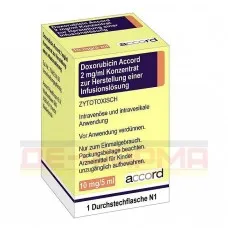
Table of Contents
INSTRUCTIONS FOR MEDICAL USE OF THE MEDICINAL PRODUCT DOXORUBICIN ACCORD (DOXORUBICIN ACCORD)
Composition:
Active substance: doxorubicin hydrochloride (doxorubicin hydrochloride);
1 ml of concentrate for infusion solution contains 2 mg of doxorubicin hydrochloride;
Excipients: sodium chloride, hydrochloric acid 37%, water for injections.
Pharmaceutical form. Concentrate for solution for infusion.
Main physicochemical properties: clear red-colored solution.
Pharmacotherapeutic group. Antineoplastic agents. Anthracyclines and related substances. ATC code L01D B01.
Pharmacological Properties
Pharmacodynamics
Doxorubicin is a cytostatic antibiotic of the anthracycline class, isolated from cultures of Streptomyces peuceticus var. caesius. The mechanism of action of doxorubicin is related to its ability to bind to DNA and inhibit the synthesis of nucleic acids. Cell culture studies have shown that the antibiotic penetrates into the cell, where it directly binds to perinuclear chromatin. Rapid inhibition of nucleic acid synthesis and mitotic activity, as well as the occurrence of chromosomal aberrations, are also observed.
Pharmacokinetics
Distribution
The volume of distribution of doxorubicin is considerably lower than the volume of total body water, resulting in substantial variability among patients, with reported values ranging from 500 to 2900 L/m² of body surface area. Consequently, following intravenous administration, doxorubicin rapidly distributes throughout the body. The highest concentrations in humans have been found in the liver, spleen, kidneys, lungs, and heart. The elimination half-life after intravenous administration is 12 minutes.
Plasma protein binding is approximately 75%.
Doxorubicin rapidly distributes into ascitic fluid, reaching concentrations exceeding those in plasma ("third space," increased toxicity risk).
The extent of penetration into cerebrospinal fluid appears to be so low that it can generally be disregarded; however, it increases in cases of brain metastases and leukemic involvement of the central nervous system.
Doxorubicin passes into breast milk.
Biotransformation (metabolism)
Metabolism occurs primarily in the liver. The most important metabolite is doxorubicinol, which also possesses cytotoxic activity. In addition, other inactive metabolites have been identified.
Elimination
Pharmacokinetic studies using radiolabeled doxorubicin administered intravenously indicate a rapid decline in plasma drug concentrations. The plasma concentration-time profile of unchanged doxorubicin is triphasic, with half-lives of 12 minutes, 3 hours, and 30 hours. The relatively long terminal elimination half-life reflects extensive tissue binding. Doxorubicin is primarily eliminated via bile. Biliary excretion over 7 days accounts for 40–50% of the administered dose. Residual amounts of doxorubicin and its metabolites appear to persist in tissues for prolonged periods. Impaired liver function or compromised biliary excretion leads to slower elimination of the drug and, consequently, results in its accumulation in plasma and tissues. Renal excretion accounts for approximately 2–10% of the administered dose.
Clinical characteristics.
Indications.
Doxorubicin as monotherapy and in combination therapy is indicated for systemic treatment of various types of malignant tumors:
- Breast cancer;
- Neoadjuvant and adjuvant therapy of osteosarcoma;
- Progressive soft tissue sarcoma in adults;
- Ewing's sarcoma;
- Small cell lung cancer (SCLC);
- Hodgkin's lymphoma (Hodgkin's disease);
- High-grade non-Hodgkin's lymphoma;
- Induction and consolidation therapy in acute lymphoblastic leukemia;
- Acute myeloblastic leukemia;
- Progressive or recurrent papillary/follicular thyroid cancer;
- Anaplastic thyroid cancer;
- Systemic treatment of locally advanced or metastatic bladder cancer;
- Intravesical prevention of recurrences of superficial bladder cancer after transurethral resection in patients at high risk of recurrence;
- Recurrent ovarian cancer;
- Wilms' tumor (Stage II in cases of high malignancy, all progressive stages [III–IV]);
- Progressive neuroblastoma.
Contraindications.
Hypersensitivity to doxorubicin or to any other components of the medicinal product, other anthracyclines or anthracenediones.
The use of doxorubicin during pregnancy and breastfeeding is contraindicated (see section "Use during pregnancy or breastfeeding").
Contraindications for intravenous administration
Doxorubicin is contraindicated:
- In patients with severe myelosuppression (including patients with increased predisposition to bleeding);
- In the presence of cardiac disorders in medical history (unstable angina pectoris, progressive heart failure, severe arrhythmias and conduction disorders, acute inflammatory heart diseases, myocardial infarction within the last 6 months, cardiomyopathy);
- In patients with severe renal and hepatic impairment;
- In patients previously treated with maximum cumulative doses of anthracyclines (e.g., epirubicin, idarubicin, or daunorubicin);
- In patients with acute infectious diseases.
Contraindications for intravesical administration:
- Proliferative tumors invading the muscular layer of the bladder wall;
- Urinary tract infections and cystitis;
- Hematuria.
Special safety precautions.
Due to the toxicity of the substance, the following safety measures are recommended for personnel:
• Personnel must be familiar with the techniques of dilution and administration of the medicinal product.
• Pregnant healthcare personnel must not handle the medicinal product.
• Protective clothing (protective goggles, gown, disposable gloves, and mask) must be worn.
• A designated work surface (preferably a laminar flow cabinet or a biological safety cabinet for handling cytotoxic agents) should be used for reconstitution and covered with a disposable absorbent liner made of liquid-impermeable material.
• All items used in the administration or cleaning of the medicinal product, including gloves, must be placed in high-risk waste containers designated for high-temperature incineration.
• In case of spillage or leakage, contaminated materials must be soaked in a 1% sodium hypochlorite solution, then rinsed with water.
• In case of contact with skin, the affected area should be thoroughly washed with soap and water or a sodium bicarbonate solution. Scrubbing the skin with a brush is not recommended.
• In case of contact with eyes, the eyelid should be held open and the eye irrigated with water for 15 minutes. Medical advice should be sought immediately. Hands must always be washed after removing gloves.
Proper disposal procedures for cytotoxic agents must be followed.
Interaction with other medicinal products and other forms of interaction.
Doxorubicin is a substrate of cytochrome P450 enzymes CYP3A4 and CYP2D6, as well as P-glycoprotein (P-gp). Clinically significant interactions have been reported with inhibitors of CYP3A4, CYP2D6, and/or P-gp (e.g., verapamil), leading to increased concentration and clinical effect of doxorubicin. The concentration of doxorubicin may be reduced by inducers of CYP3A4 (e.g., phenobarbital, phenytoin, St. John's wort) and P-gp inducers123.
Combination of cyclosporine with doxorubicin may lead to increased area under the concentration-time curve (AUC) for both doxorubicin and doxorubicinol, likely due to reduced clearance of the parent compound and decreased metabolism of doxorubicinol. Studies have shown that the combination of cyclosporine with doxorubicin causes more pronounced and prolonged hematological toxicity compared to doxorubicin monotherapy. Cases of coma and seizures have also been reported with concomitant administration of cyclosporine and doxorubicin.
Doxorubicin is used in combination with antineoplastic chemotherapy. Additive toxic effects are most commonly observed in the bone marrow, other hematopoietic organs, and gastrointestinal tract (see section "Special precautions for use"). The use of doxorubicin in combination chemotherapy with other potentially cardiotoxic agents, as well as concomitant use with other cardioactive drugs (e.g., calcium channel blockers), requires continuous monitoring of cardiac function throughout the treatment period.
Concomitant use with drugs affecting liver function may alter the metabolism, pharmacokinetics, and therapeutic efficacy of doxorubicin.
Doxorubicin suppresses bone marrow function. Therefore, in combination chemotherapy including agents with similar effects, additive myelosuppressive effects should be expected (see section "Special precautions for use").
Concomitant administration of cyclosporine and doxorubicin may lead to mutual reduction in metabolism and clearance of both agents, resulting in increased blood levels of various parameters. Dose adjustment may be necessary when doxorubicin and cyclosporine are used concomitantly.
Cimetidine, on one hand, reduces the plasma clearance of doxorubicin, and on the other, increases the AUC value of doxorubicin.
Conversely, phenobarbital reduces blood levels of doxorubicin and may therefore reduce the efficacy of the drug.
Doxorubicin enhances the effectiveness of radiotherapy. Even when administered a significant time after completion of radiotherapy, severe symptoms may occur in the corresponding body areas.
Doxorubicin is a potent radiosensitizing agent, and radiation recall phenomena induced by doxorubicin can be life-threatening. Any prior, concomitant, or subsequent radiotherapy may increase the cardiotoxicity and hepatotoxicity of doxorubicin.
If doxorubicin therapy is administered concurrently with cyclophosphamide treatment, in addition to increased cardiotoxicity, worsening symptoms of hemorrhagic cystitis may also occur.
Doxorubicin therapy may lead to elevated serum uric acid levels; therefore, dose adjustment of uric acid-lowering drugs may be required.
The absorption of antiepileptic drugs (e.g., carbamazepine, phenytoin, valproate) may be reduced following concomitant administration with doxorubicin hydrochloride.
Doxorubicin may reduce the oral absorption of digoxin. Therefore, plasma digoxin levels should be monitored regularly during doxorubicin therapy.
Administration of live vaccines or vaccines containing live attenuated microorganisms in patients with immune system impairment due to chemotherapy, including doxorubicin therapy, may lead to severe or potentially fatal infections. Therefore, patients undergoing doxorubicin therapy should avoid live vaccines. The use of inactivated or killed vaccines is permitted, although the immune response to these vaccines may be reduced. Patients receiving doxorubicin therapy should also avoid contact with individuals who have recently received the live polio vaccine.
Doxorubicin binds to heparin. Therefore, precipitation and loss of efficacy of both substances may occur when administered simultaneously.
The use of trastuzumab in combination with anthracyclines such as doxorubicin is associated with a high risk of cardiotoxicity. Concomitant use of trastuzumab and anthracyclines is not recommended unless under well-controlled clinical trials with cardiac function monitoring.
In patients who initiate anthracycline therapy after completing treatment with other cardiotoxic agents (particularly those with long half-lives, such as trastuzumab), a high risk of cardiotoxicity may also occur. The reported half-life of trastuzumab is approximately 28–38 days, and the substance may remain in the blood for up to 27 weeks. Therefore, physicians should initiate anthracycline-based therapy no earlier than 27 weeks after the end of trastuzumab treatment, if possible. If anthracyclines have been previously administered, careful monitoring of cardiac function is required.
The combination of doxorubicin with amphotericin B should be avoided, as it may lead to severe nephrotoxicity.
Increased serum levels of doxorubicin have been reported with concomitant use of ritonavir.
When used concomitantly with sorafenib at a dose of 400 mg twice daily, increases in AUC by 21–47% as well as cases of no change in AUC have been observed. The clinical significance of these data is unknown.
Cases of necrotizing colitis, sometimes with severe infectious consequences, have been reported with the combination of doxorubicin and cytarabine.
If paclitaxel was administered prior to the initiation of doxorubicin, this may lead to increased serum concentrations of doxorubicin and/or its metabolites. Some data suggest less pronounced concentration increases when doxorubicin is administered before paclitaxel.
Special precautions for use.
Before initiating doxorubicin therapy, patients should have recovered from acute toxicity (e.g., stomatitis, neutropenia, thrombocytopenia, and systemic infections) resulting from prior cytotoxic therapy.
Careful monitoring of the patient's clinical condition and laboratory parameters is required during doxorubicin treatment. Liver and kidney function should be monitored before and during therapy (see section "Dosage and administration"). Serum uric acid levels should also be monitored, and appropriate therapy should be initiated if hyperuricemia occurs.
Prior to starting treatment, appropriate measures should be taken to control potential systemic infections. Doxorubicin must be administered exclusively by intravenous injection, as extravasation or paravenous injection may lead to local necrosis and thrombophlebitis.
Systemic clearance of doxorubicin is reduced in patients with excess body weight (>130% of ideal body weight) (see section "Dosage and administration").
Heart
The risk of myocardial toxicity may be increased following concurrent or prior mediastinal-pericardial radiotherapy or treatment with other potentially cardiotoxic agents, as well as in patients with pre-existing disease-related conditions such as anemia, leukemic pericarditis, and/or myocarditis.
A thorough cardiac function assessment should be performed before initiating treatment, and careful monitoring should be maintained during therapy to reduce the risk of cardiotoxicity, as described for other anthracycline compounds. Pre-existing heart disease, prior anthracycline therapy at high cumulative doses, or prior treatment with other potentially cardiotoxic agents represent additional risk factors for doxorubicin-induced cardiotoxicity. Children and adolescents are at increased risk of delayed-onset cardiotoxicity. Women have been found to be at higher risk than men. Additional cardiac evaluations are recommended to monitor for this drug effect.
Cardiotoxicity may manifest in two distinct forms:
Acute (early) cardiotoxicity is dose-independent and characterized by non-specific ECG changes (ST segment depression, sinus tachycardia, supraventricular and ventricular extrasystoles). There are also reports of tachyarrhythmias, including premature ventricular contractions and ventricular tachycardia, bradycardia, atrioventricular block, and bundle branch block. These manifestations generally do not predispose to late cardiotoxicity, are rarely clinically significant, and usually do not require discontinuation of doxorubicin therapy.
Late (delayed) cardiotoxicity is dose-dependent and typically occurs at the end of the treatment course or within 2–3 months after therapy completion. Cases of even later onset, occurring several months to several years after therapy, have also been reported. It primarily manifests as left-sided heart failure and/or signs and symptoms of congestive heart failure such as dyspnea, pulmonary edema, cardiomegaly, hepatomegaly, oliguria, ascites, pleuritis, and gallop rhythm. Subacute manifestations such as pericarditis/myocarditis have also been observed. Life-threatening congestive heart failure is the most severe form of anthracycline-induced cardiomyopathy and represents a cumulative dose-limiting toxicity of the drug.
Since there is currently no reliable method to predict the onset of acute heart failure, anthracycline-induced cardiomyopathy is associated with a persistent reduction in QRS voltage, an increase in systolic time interval (pre-ejection period/left ventricular ejection time ratio) beyond normal limits, and a decrease in left ventricular ejection time compared to baseline values before treatment initiation. Electrocardiography, echocardiography, multigated radionuclide angiography, and measurement of left ventricular ejection time should be performed before and during treatment. Early clinical diagnosis of myocardial damage caused by doxorubicin is considered an essential component of management. In appropriate cases, treatment with digitalis, diuretics, a low-salt diet, and bed rest may be indicated.
The probability of developing congestive heart failure is estimated at approximately 1–2% at a cumulative dose of 300 mg/m² and increases gradually with increasing total cumulative dose up to 450–550 mg/m². Beyond this point, the risk of congestive heart failure increases sharply; therefore, exceeding the maximum cumulative dose of 550 mg/m² is not recommended.
Additional risk factors for cardiotoxicity include active or latent cardiovascular diseases, prior or concurrent radiotherapy to the mediastinal or pericardial region, prior treatment with other anthracyclines or anthracenediones, concomitant use of agents that may depress myocardial contractility (e.g., trastuzumab), and age over 70 years. Patients receiving anthracycline therapy after prior treatment with other cardiotoxic agents, particularly those with long half-lives such as trastuzumab, may also have an increased risk of cardiotoxicity. The half-life of trastuzumab has been reported to vary. Trastuzumab may remain in the circulatory system for up to 7 months. Therefore, physicians should avoid prescribing anthracycline therapy within 7 months after discontinuation of trastuzumab, if possible. If this is not feasible, careful monitoring of cardiac function is required. In such cases, the total cumulative dose in adults should not exceed 400 mg/m². Careful cardiac monitoring is necessary in patients receiving high cumulative doses or those with identifiable risk factors. However, doxorubicin may cause cardiotoxicity even at low total doses and in the absence of any identifiable risk factors.
The toxicity of doxorubicin and other anthracyclines and anthracenediones is likely additive.
Bone marrow
Like other cytotoxic agents, doxorubicin may cause bone marrow suppression. Therefore, complete blood counts, including differential leukocyte count, should be performed before initiating treatment and before each treatment cycle. Dose-dependent, reversible leukopenia and/or granulocytopenia (neutropenia) are the main manifestations of hematological toxicity and the most common dose-limiting toxicities of the drug. Leukopenia and neutropenia typically reach their nadir 10–14 days after drug administration; leukocyte and neutrophil counts usually return to normal by day 21. Thrombocytopenia and anemia may also occur. Clinical consequences of severe myelosuppression include fever, infections, sepsis/septicemia, septic shock, hemorrhage, tissue hypoxia, or death.
Secondary leukemia, with or without a preceding preleukemic phase, has been observed in patients treated with anthracyclines (including doxorubicin). Secondary leukemia most commonly occurs when these agents are used in combination with DNA-damaging antineoplastic agents, in combination with radiotherapy, following complications from prior cytotoxic therapy, or with significantly increased anthracycline doses. This type of leukemia has a latency period of 1 to 3 years.
Gastrointestinal tract
Doxorubicin has emetogenic properties. Mucositis/stomatitis may occur early in treatment and, in severe cases, may progress over several days to mucosal ulceration. These manifestations usually resolve by the third week of treatment.
Liver function
The primary route of doxorubicin elimination is via the hepatobiliary system. Serum bilirubin levels should be determined before and during doxorubicin therapy. Patients with elevated bilirubin levels exhibit slower doxorubicin clearance, which is associated with increased overall toxicity. Dose reduction is recommended for treating such patients. Doxorubicin is contraindicated in patients with severe hepatic dysfunction (see section "Contraindications").
Skin reactions at injection site
Phlebosclerosis may occur following injection into small-diameter veins or repeated injections into the same vein. Strict adherence to recommended injection techniques can help minimize the risk of phlebitis/thrombophlebitis at the injection site (see section "Dosage and administration").
Extravasation of doxorubicin during intravenous injection may cause local pain, severe tissue damage (vesicle formation, severe inflammation of loose connective tissue), necrosis, and thrombophlebitis.
A burning sensation at the needle insertion site indicates paravenous administration. If signs of extravasation occur during intravenous administration of doxorubicin, the injection should be stopped immediately. The needle should be left in place initially, then withdrawn after brief aspiration. It is recommended to administer intravenous dexrazoxane within 6 hours of extravasation (for dosing and further information, refer to the dexrazoxane product information). When dexrazoxane is contraindicated, topical application of 99% dimethyl sulfoxide (DMSO) to an area twice the size of the affected area (4 drops per 10 cm² of skin surface) is recommended, repeated 3 times daily for at least 14 days. Debriding of necrotic tissue may be required in appropriate cases. To achieve the opposite effect, sequential cooling of the affected area (e.g., to reduce pain) should be applied, using dimethyl sulfoxide (vasoconstriction counteracting vasodilation). Other interventions are considered controversial and inconclusive in the literature.
Other
Doxorubicin may enhance the toxicity of other antineoplastic agents. Cases of exacerbated cyclophosphamide-induced cystitis and enhanced hepatotoxicity of 6-mercaptopurine have been observed. Radiation therapy may also exert toxic effects on the myocardium, mucosa, skin, and liver.
Toxic reactions (affecting myocardium, mucosa, skin, and liver) to radiation therapy have also been reported.
As with other cytotoxic agents, thrombophlebitis and thromboembolic events (including fatal cases), including pulmonary embolism, may occasionally occur during doxorubicin therapy. Due to purine catabolism accompanying rapid lysis of malignant cells (tumor lysis syndrome), doxorubicin treatment may cause hyperuricemia. After initial treatment, monitoring of serum uric acid, potassium, calcium phosphate, and creatinine levels is required. Hydration, urine alkalinization, and prophylaxis with allopurinol to prevent hyperuricemia may minimize the risk of complications associated with tumor lysis syndrome.
Additional precautions and safety measures for other routes of administration
Intravesical administration
Intravesical administration of doxorubicin may cause symptoms of chemical cystitis (e.g., dysuria, polyuria, nocturia, painful urination, hematuria, bladder discomfort, bladder wall necrosis) and bladder spasm. Special attention should be paid to catheterization issues such as urethral obstruction due to bladder tumors.
Embryo-fetal toxicity
Doxorubicin may cause genotoxicity. Male and female patients should use reliable contraception during and for a certain period after doxorubicin treatment. Patients wishing to have children after therapy completion should be advised to seek genetic counseling, if appropriate and feasible (see sections "Use during pregnancy or breastfeeding").
Sodium
This medicinal product contains 0.15 mmol (3.5 mg) of sodium per mL. Caution is advised when administering to patients on a sodium-restricted diet. The sodium content in various package sizes of this medicinal product is as follows:
Doxorubicin Accord, 5 mL in a vial, contains less than 1 mmol sodium (23 mg), i.e., practically sodium-free.
Doxorubicin Accord, 10 mL in a vial, contains 35.42 mg sodium, equivalent to 1.77% of the WHO recommended maximum daily sodium intake for adults (2 g).
Doxorubicin Accord, 25 mL in a vial, contains 88.55 mg sodium, equivalent to 4.43% of the WHO recommended maximum daily sodium intake for adults (2 g).
Doxorubicin Accord, 50 mL in a vial, contains 177.10 mg sodium, equivalent to 8.85% of the WHO recommended maximum daily sodium intake for adults (2 g).
Doxorubicin Accord, 100 mL in a vial, contains 354.20 mg sodium, equivalent to 17.71% of the WHO recommended maximum daily sodium intake for adults (2 g).
Use during pregnancy or breastfeeding.
Pregnancy
Doxorubicin has shown teratogenic and embryotoxic effects in rats. Doxorubicin must not be used during pregnancy.
Females of reproductive potential/Contraception in males and females
Females of reproductive potential should avoid pregnancy and use effective contraception during doxorubicin therapy and for at least 6 months and 10 days after the last dose. Males with female partners of reproductive potential should be advised to use effective contraception during doxorubicin therapy and for at least 3 months and 10 days after the last dose.
Breastfeeding
Doxorubicin is excreted in breast milk (see section "Pharmacokinetics"). Due to the potential for serious adverse reactions in breastfed infants, women should avoid breastfeeding during doxorubicin therapy and for at least 10 days after the last dose.
Fertility
Doxorubicin may cause amenorrhea and infertility in women during treatment. Ovulation and menstruation usually normalize after treatment ends, but premature menopause has also been reported. Animal studies have shown toxic effects of doxorubicin on male reproductive organs (testicular atrophy, diffuse degeneration of seminiferous tubules, and hypospermia). Doxorubicin has been shown to be mutagenic and may cause chromosomal damage in human sperm. Oligospermia or azoospermia may be irreversible. In some cases, parameters normalize, sometimes years after therapy completion. Men receiving doxorubicin therapy should use effective contraception.
Both men and women should seek consultation regarding fertility preservation before starting treatment.
Ability to affect reaction speed when driving or operating machinery.
The ability to actively participate in traffic or operate machinery may be impaired.
Administration and Dosage
Doxorubicin must be prescribed exclusively by physicians experienced in the use of cytostatic agents. Dosage is usually calculated based on body surface area.
The total dose of doxorubicin per cycle depends on the indication and whether it is used as monotherapy or as part of combination therapy.
Oral, subcutaneous, intramuscular, and intrathecal administration of doxorubicin are contraindicated!
Doxorubicin in an injection vial is not an infusion vial; a sterile needle and syringe must be used to withdraw its contents. For specific handling instructions, see section "Special Precautions".
Note that the dosing of S-liposomal doxorubicin differs from that of conventional doxorubicin. The respective dosing recommendations must not be used interchangeably.
Intravenous Administration
Doxorubicin is usually administered intravenously. The solution should be injected into the tubing of an intravenous infusion line with free flow (0.9% sodium chloride solution or 5% glucose solution). Administration should last from 3 to 20 minutes to minimize the risk of thrombosis or perivenous extravasation. Direct injection is not recommended due to the risk of extravasation, which exists even when adequate backflow of blood is observed during aspiration.
Standard Initial Dosing
For monotherapy, the recommended initial standard dose in adults is 60–75 mg/m² body surface area per cycle. The total initial dose per cycle may be given as a single dose, divided over three consecutive days, or administered on days 1 and 8. If recovery from toxic effects (particularly bone marrow suppression and stomatitis) is adequate, treatment cycles may be repeated every 3–4 weeks. Weekly administration at doses of 10–20 mg/m² body surface area has also proven effective.
In combination therapy with other cytotoxic agents having overlapping toxic potential, the recommended dose is 30–60 mg/m² body surface area per cycle.
Based on extensive clinical experience, the following dose reductions are recommended:
a) Based on blood analysis:
| Leukocytes | Thrombocytes | Doxorubicin dose | |------------|--------------|------------------| | > 5000 | > 150,000 | 100% | | 4000–5000 | 100,000–150,000 | 75% | | 3000–4000 | 75,000–100,000 | 50% | | 2000–3000 | 50,000–75,000 | 25% | | < 2000 | < 50,000 | 0% |
b) Based on liver and kidney function:
In patients with elevated serum levels:
- Bilirubin 1.2–3 mg/dL: ½ initial dose
- Bilirubin > 3–5 mg/dL: ¼ initial dose
Doxorubicin is not recommended in patients with severe hepatic impairment (bilirubin > 5 mg/dL) (see section "Contraindications").
In renal insufficiency with glomerular filtration rate (GFR) < 10 mL/min, 75% of the calculated dose should be administered.
For treatment of superficial bladder cancer and prevention of tumor recurrence after transurethral resection, intravesical instillation of doxorubicin may be prescribed. It is recommended to instill 30–50 mg in 25–50 mL of saline solution. In cases of local toxicity (chemical cystitis), the dose should be administered in 50–100 mL of saline. Instillations may be repeated at weekly or monthly intervals.
To prevent undesirable dilution of the drug by urine, patients should avoid fluid intake for 12 hours before instillation, thereby reducing urine production to approximately 50 mL per hour. During in situ action of the drug, the patient should be rotated 90°. The recommended dwell time is 1 hour. After this period, the patient should void. Intravesical administration is not indicated for proliferative tumors invading the muscular layer of the bladder wall.
Special Patient Groups
Reduced initial doses or longer intervals between treatment cycles are required for patients who have previously undergone intensive therapy, pediatric patients, elderly patients, patients with excessive body weight, or those with tumor infiltration of the bone marrow (see section "Special Precautions").
Doxorubicin is not recommended for patients with severe hepatic impairment (see section "Contraindications").
Route of Administration
Indicated for intravenous and intravesical administration.
Children. Dose reduction may be necessary. Children have a higher risk of developing delayed cardiotoxicity following doxorubicin administration. The maximum cumulative total dose in children is 400 mg/m².
Overdose
Very high single doses of the drug may cause acute myocardial damage, including angina, coronary insufficiency, and myocardial infarction within 24 hours; severe bone marrow suppression (particularly leukopenia and thrombocytopenia) within 10–14 days; and gastrointestinal toxicity (primarily mucositis). If myocardial weakness occurs, treatment with doxorubicin must be discontinued. In cases of severe bone marrow suppression, general supportive measures may be required, such as blood transfusions, antibiotic therapy, and placement of the patient in an aseptic environment. Doxorubicin is not dialyzable. There is no known specific antidote for doxorubicin.
Chronic overdose with a cumulative dose exceeding 550 mg/m² increases the risk of cardiomyopathy and may lead to heart failure, which should be treated by conventional methods. Delayed heart failure may occur within 6 months after overdose.
Adverse reactions.
Below is a classification of adverse effects associated with the use of doxorubicin, organized by affected organ system classes (MedDRA) and frequency. The following frequency criteria were used in assessing adverse reactions: very common (≥1/10), common (from ≥1/100 to <1/10), uncommon (from ≥1/1,000 to <1/100), rare (from ≥1/10,000 to <1/1,000), very rare (≤1/10,000), frequency not known (cannot be estimated from available data).
Infections and infestations:
very common: infection;
common: sepsis/septicaemia;
uncommon: septic shock.
Benign, malignant and unspecified neoplasms (including cysts and polyps):
uncommon: acute lymphoblastic leukaemia, acute myeloid leukaemia.
Blood and lymphatic system disorders:
very common: myelosuppression, leucopenia, neutropenia, anaemia, thrombocytopenia, tissue hypoxia or death, febrile neutropenia;
uncommon: secondary leukaemias.
Immune system disorders:
rare: angioneurotic oedema of eyelids and tongue with respiratory disturbances;
very rare: anaphylaxis;
frequency not known: anaphylactic reactions.
Metabolism and nutrition disorders:
very common: anorexia;
uncommon: dehydration;
very rare: hyperuricaemia;
frequency not known: tumour lysis syndrome (see section "Special precautions").
Eye disorders:
common: conjunctivitis;
frequency not known: keratitis, increased lacrimation.
Cardiac disorders:
common: cardiotoxicity, which may manifest as cardiomyopathy, sinus tachycardia, tachyarrhythmia, bradycardia, congestive heart failure;
very rare: atrioventricular block, bundle branch block.
Vascular disorders:
very common: thrombophlebitis;
common: phlebitis, haemorrhage;
uncommon: thromboembolism;
very rare: shock;
frequency not known: flushing.
Respiratory, thoracic and mediastinal disorders:
rare: respiratory disturbances, mucosal oedema of the nose, tachypnoea and dyspnoea, radiation pneumonitis.
Gastrointestinal disorders:
very common: nausea/vomiting, mucositis, stomatitis, diarrhoea;
common: oesophagitis, abdominal pain or burning sensation;
uncommon: gastrointestinal haemorrhage, erosive gastritis, necrotic colitis, sometimes with severe consequences in the form of infections when doxorubicin is combined with cytarabine;
very rare: erosions, change in colour of oral mucosa.
Skin and subcutaneous tissue disorders:
very common: local toxicity, onycholysis, exanthema, erythema, photosensitisation, palmar-plantar erythrodysesthesia, alopecia;
common: pruritus, skin hypersensitivity to radiation, hyperpigmentation of skin and nails, urticaria;
very rare: acral erythema.
Musculoskeletal and connective tissue disorders:
very rare: generalised muscle weakness;
frequency not known: joint pain.
Renal and urinary disorders:
common: after intravesical administration: cystitis with dysuria, pollakiuria, haematuria, polyuria, nocturia, strangury; necrosis and spasms of the urinary bladder;
frequency not known: red discoloration of urine within 1–2 days after administration, acute renal function impairment.
Reproductive system and breast disorders:
very rare: amenorrhoea, oligospermia, azoospermia.
General disorders and administration site conditions:
very common: pyrexia, asthenia, chills;
common: reactions at the site of administration;
very rare: general malaise/weakness;
frequency not known: phlebosclerosis (see section "Special precautions").
Investigations:
very common: asymptomatic decrease in left ventricular ejection time, ECG changes, changes in transaminase levels, weight gain.
a In patients with early-stage breast cancer who received adjuvant therapy with doxorubicin (study B-15 of the National Adjuvant Breast and Bowel Project, USA).
The adverse effects of doxorubicin therapy described above are usually reversible.
Reporting of suspected adverse reactions.
Reporting of suspected adverse reactions after marketing authorization is important. It allows continued monitoring of the benefit-risk balance of the medicinal product. Healthcare professionals, as well as patients or their legal representatives, should report any suspected adverse reactions and lack of efficacy via the Automated Information System for Pharmacovigilance at: http://aisf.dec.gov.ua.
Shelf life.
Shelf life of the unopened vial: 18 months.
Proposed shelf life (after first opening of packaging/container).
Prepared infusion solutions:
Chemical and physical stability after opening the vial has been demonstrated for the following periods:
- up to 28 days – stored at 2°C to 8°C in 0.9% sodium chloride solution;
- up to 7 days – stored at 25°C in 5% glucose injection solution,
provided the solution is prepared in glass containers and protected from light.
From a microbiological standpoint, the product should be used immediately. If not used immediately, the responsibility for storage duration and conditions lies with the user; typically, storage should not exceed 24 hours at 2°C to 8°C, except when dilution is performed under controlled and validated aseptic conditions.
Proposed shelf life (after reconstitution/dilution).
Opened vials: the product should be used immediately after opening the vial.
Storage conditions. Store in the original packaging, protected from light, at 2°C to 8°C. Keep out of reach of children.
Incompatibilities.
Doxorubicin should not be mixed with other substances. Avoid contact with alkaline solutions, as this may lead to hydrolysis of doxorubicin.
Due to chemical incompatibility, doxorubicin should not be mixed with heparin.
Doxorubicin should not be mixed with fluorouracil (e.g., in the same infusion bottle or Y-site of an infusion set), as these medicinal products are incompatible and may form a precipitate when combined. If concomitant therapy with doxorubicin and fluorouracil is required, it is recommended to flush the intravenous infusion system between administrations of the two medicinal products.
Packaging.
5 ml, 10 ml, 25 ml, 50 ml, or 100 ml of concentrate for infusion solution in a glass vial (Type I). The vial is stoppered with a chlorobutyl rubber stopper and sealed with an aluminium cap.
1 vial per cardboard box.
Prescription category. Prescription only.
Manufacturer.
Accord Healthcare Limited or Accord Healthcare Polska Sp. z o.o. Skład Importera / Accord Healthcare Polska Sp. z o.o. Magazyn Importera.
Manufacturer's address and place of business.
Ground Floor, Sage House, 319 Pinner Road, Harrow, HA1 4HF, United Kingdom or ul. Lutomierska 50, Pabianice, 95-200, Poland.
Marketing Authorisation Holder. Accord Healthcare Polska Sp. z o.o. / Accord Healthcare Polska Sp. z o.o.
Inquiries regarding poor quality of the medicinal product, safety concerns, improper use, or complaints are accepted 24/7 via phone: +380993100335 or by email: [email protected].
Address of the Marketing Authorisation Holder. 7 Tasmowa St., Warsaw, 02-677, Poland.