Doxepin-zn
Ukraine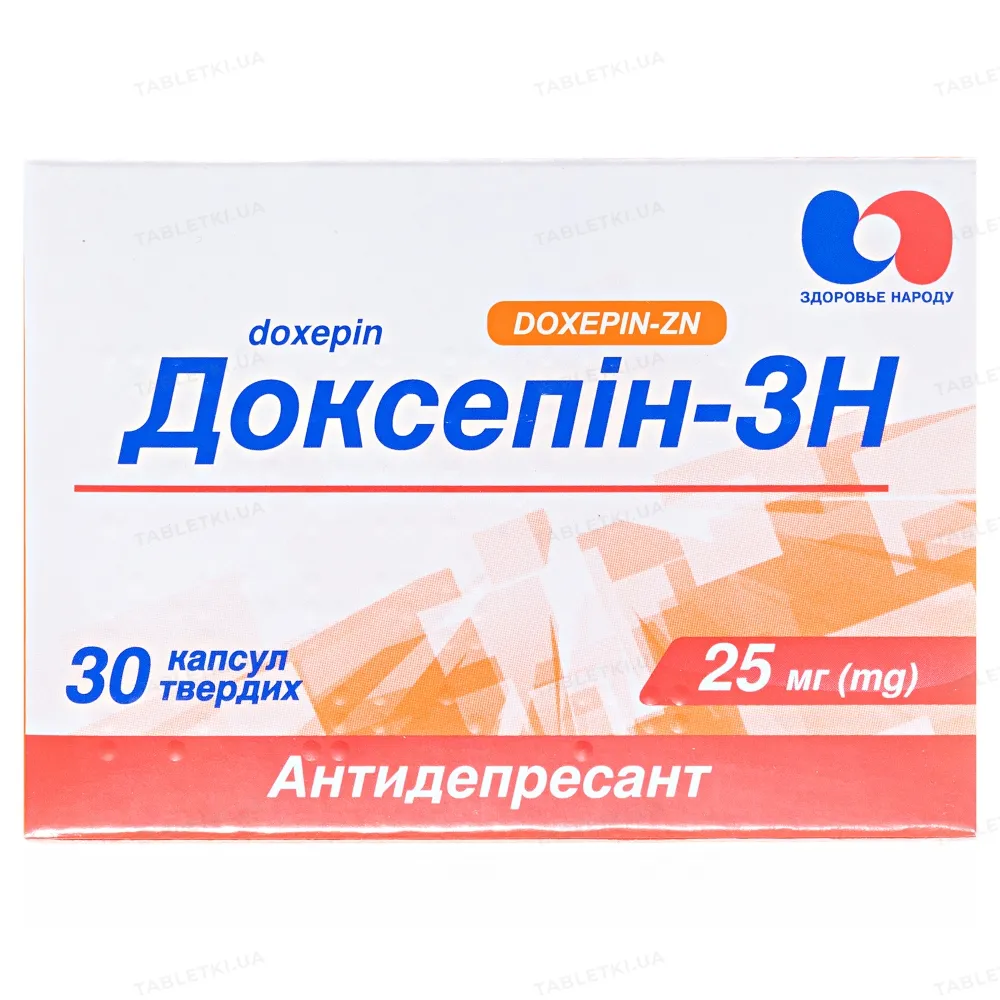
Table of Contents
INSTRUCTION FOR MEDICAL USE OF THE MEDICINAL PRODUCT DOXEPIN-ZN (DOXEPIN-ZN)
Composition:
Active substance: doxepin hydrochloride;
1 hard capsule contains doxepin hydrochloride equivalent to 25 mg of doxepin;
Excipients: pregelatinized starch (granulated), magnesium stearate, sodium lauryl sulfate, gelatin, quinoline yellow (E 104), erythrosine (E 127), titanium dioxide (E 171).
Pharmaceutical form. Hard capsules.
Main physicochemical properties: hard gelatin capsules size №3 with white body and yellow cap, with hemispherical ends. The capsule contents are a nearly white powder.
Pharmacotherapeutic group.
Antidepressants. Non-selective inhibitors of neuronal monoamine reuptake.
ATC code N06A A12.
Pharmacological properties.
Pharmacodynamics.
Doxepin hydrochloride belongs to the group of tricyclic antidepressants (TCAs). Its antidepressant effect is combined with anxiolytic and sedative actions.
Doxepin hydrochloride inhibits the reuptake of biogenic amines (norepinephrine and serotonin) in synaptic structures. It also exerts antihistaminic, anticholinergic, and α1-adrenergic blocking effects. It does not cause euphoria or psychomotor agitation.
Pharmacokinetics.
Doxepin hydrochloride is well absorbed from the gastrointestinal tract and rapidly reaches maximum plasma concentration within 2–4 hours after administration. A stable therapeutic blood concentration is achieved approximately 2 weeks after starting treatment.
Doxepin hydrochloride is metabolized in the liver, primarily via demethylation, forming the main active metabolite—desmethyldoxepin (nordoxepin). Plasma protein binding of doxepin and its metabolites is approximately 76%. The volume of distribution is about 20 L/kg. The elimination half-life of doxepin ranges from 8 to 24 hours, while that of the main active metabolite is 33 to 80 hours. Doxepin hydrochloride crosses the placenta and the blood-brain barrier and penetrates into breast milk.
Clinical characteristics.
Indications.
- Neurotic disorders with symptoms of depression or anxiety.
- Organic neuroses associated with insomnia.
- Depressive and anxiety states in alcoholism.
- Depression and anxiety states associated with somatic disorders and diseases.
- Depression accompanied by fear and anxiety in the context of psychoses, including involutional depression and the depressive phase of bipolar disorders.
Contraindications.
- Hypersensitivity to doxepin, tricyclic antidepressants (TCAs), or any of the excipients;
- Manic state;
- Severe hepatic impairment;
- Breastfeeding period;
- Glaucoma;
- Predisposition to urinary retention;
- Concomitant use with monoamine oxidase inhibitors (MAOIs) or use of MAOIs within two weeks prior to initiation of doxepin therapy.
Interaction with other medicinal products and other forms of interaction.
Drugs metabolized by CYP2D6: biochemical activity of the cytochrome P450 (CYP) 2D6 isoenzyme (debrisoquin hydroxylase) is reduced in a subgroup of the Caucasian population (approximately 7–10% of Caucasians are so-called "poor metabolizers"); reliable estimates of the prevalence of reduced CYP2D6 isoenzyme activity among Asian, African, and other populations are still lacking. "Poor metabolizers" have higher-than-expected plasma concentrations of TCAs when receiving standard doses. Depending on the fraction of the drug metabolized by CYP2D6, the increase in plasma concentration may be minor or substantial (up to an 8-fold increase in TCA AUC in plasma).
Moreover, certain drugs inhibit the activity of this isoenzyme and convert "normal metabolizers" into phenocopies of "poor metabolizers." A stable TCA dose for a patient may suddenly become toxic when one of these inhibiting drugs is added as concomitant therapy. Drugs that inhibit CYP2D6 include some that are not metabolized by the enzyme (quinidine, cimetidine) and many that are substrates for CYP2D6 (many other antidepressants, phenothiazines, and class 1C antiarrhythmics such as propafenone and flecainide). Although all selective serotonin reuptake inhibitors (SSRIs), e.g., citalopram, escitalopram, fluoxetine, sertraline, and paroxetine, inhibit CYP2D6, they may differ in the degree of inhibition. The extent of SSRI-TCA interaction may cause clinical problems and will depend on the degree of inhibition and the pharmacokinetics of the SSRIs involved. Nevertheless, caution is advised when co-administering TCAs with any SSRI, as well as when switching from one class to another. It is particularly important that sufficient time elapses before initiating TCA treatment in a patient discontinuing fluoxetine, considering the long elimination half-life of the active substance and its active metabolite (at least 5 weeks may be required).
Concomitant use of TCAs with drugs that may inhibit CYP2D6 may require lower doses than usually prescribed for TCAs or the other drug. Furthermore, whenever one of these other drugs is withdrawn from combination therapy, an increase in TCA dose may be necessary. It is advisable to monitor plasma levels of TCAs whenever a TCA is planned to be used concomitantly with another drug known to be a CYP2D6 inhibitor.
Doxepin is primarily metabolized by CYP2D6 (and CYP1A2 and CYP3A4 as secondary isoenzymes). Inhibitors or substrates of CYP2D6 (i.e., quinidine, SSRIs) may increase plasma concentrations of doxepin when used concomitantly. The extent of interaction depends on the variability of the effect on CYP2D6. The clinical significance of this interaction with doxepin has not been systematically evaluated.
MAO inhibitors: Serious adverse effects and even death have been reported after concomitant use of certain drugs with MAO inhibitors. Therefore, MAO inhibitors should be discontinued at least two weeks before cautiously initiating therapy with this medicinal product. The exact duration may vary and depends on the specific MAOI used, duration of treatment, and dose.
Serotonergic medicinal products, such as buprenorphine, when used concomitantly with doxepin, may increase the risk of serotonin syndrome, a potentially life-threatening condition (see section "Special precautions for use").
Cimetidine: Cimetidine has been reported to cause clinically significant fluctuations in steady-state serum concentrations of various TCAs. Severe anticholinergic symptoms (i.e., severe dry mouth, urinary retention, and blurred vision) have been associated with increased serum TCA levels at the beginning of cimetidine therapy. Furthermore, higher-than-expected TCA levels have been observed in patients already receiving cimetidine. In patients who were reported to respond well to TCA therapy and were receiving concomitant cimetidine, discontinuation of cimetidine was reported to reduce established steady-state serum TCA levels and impair their therapeutic effect.
Alcohol: It should be borne in mind that alcohol consumption may increase the risk associated with any intentional or unintentional overdose of the medicinal product. This is particularly important for patients who may excessively consume alcohol.
Tolazamide: A case of severe hypoglycemia has been reported in a patient with type II diabetes mellitus who was receiving tolazamide (1 g/day) 11 days after the addition of doxepin (75 mg/day).
Special precautions for use.
Patients with concomitant diseases or those taking other medicinal products should receive a single daily dose regimen. This also applies to patients receiving drugs with anticholinergic activity.
Elderly patients should also receive this dosing regimen, and dosage adjustments should be made cautiously. These patients are prone to developing adverse reactions such as anxiety, confusion, and orthostatic hypotension. Therefore, the initial dose should be administered with caution and under close monitoring of the patient's condition and response to the drug. For adequate clinical effect, half the dose of doxepin may be sufficient.
Patients should be warned that drowsiness may occur during treatment, and alcohol consumption may potentiate the drug's effects.
If symptoms of psychosis or manic episodes worsen during doxepin treatment, a reduction in doxepin dosage or addition of tranquilizers (neuroleptics) to the treatment regimen may be required.
Although doxepin has less effect on the cardiovascular system than other tricyclic antidepressants (TCAs), it should be used with caution in patients with severe cardiovascular disorders (heart block, cardiac arrhythmia, or recent myocardial infarction).
Doxepin should be used cautiously in patients with impaired renal or hepatic function and in patients with a history of epileptic seizures.
Serotonin syndrome.
Concomitant use of doxepin and other serotonergic agents, such as buprenorphine, may lead to serotonin syndrome, a potentially life-threatening condition (see section "Interaction with other medicinal products and other forms of interaction").
Suicide/suicidal thoughts or clinical worsening.
In patients with major depression, there is a risk of suicidal thoughts and behaviors, which may persist until significant remission is achieved. Since improvement may not occur during the first few weeks of treatment or even longer, patients require careful monitoring until their condition improves. Clinical experience shows that the risk of suicidal thoughts or behaviors may increase in the early stages of treatment.
Other psychiatric conditions for which doxepin is prescribed are also associated with an increased risk of suicide. Moreover, these conditions may be comorbid with major depressive disorder. Therefore, the same precautions applied in the treatment of major depressive disorder should be followed when treating patients with other psychiatric disorders.
Careful monitoring throughout the entire treatment period is required for patients with a history of suicidal thoughts or suicide attempts, or those with a significant level of suicidal ideation prior to starting treatment.
Close monitoring of patients, especially those at high risk, should be combined with appropriate pharmacological treatment, particularly in the early stages, with dosage adjustments as necessary. Patients (and caregivers) should be informed about the need to monitor for any clinical worsening, suicidal behavior or thoughts, or unusual changes in behavior, and to seek immediate medical help if such symptoms occur.
A meta-analysis of placebo-controlled studies of antidepressants in adult patients with psychiatric disorders showed an increased risk of suicidal behavior in patients under 25 years of age compared to placebo.
Urinary retention may be exacerbated in patients with moderate severity benign prostatic hyperplasia.
Use during pregnancy or breastfeeding.
Reproductive studies in animals have not shown any adverse effects on the fetus; however, adequate and well-controlled studies in pregnant women have not been conducted. Therefore, this medicinal product should be used during pregnancy only if the expected benefit to the mother outweighs the potential risk to the fetus.
Doxepin-ZN passes into breast milk; therefore, breastfeeding should be discontinued during treatment with this drug.
Ability to affect reaction speed when driving or operating machinery.
Driving vehicles or operating machinery requiring high concentration of attention is not recommended during doxepin treatment, as doxepin may cause drowsiness and prolong reaction time.
Method of administration and dosage.
Administer orally. The dosage of the medicinal product should be individually adjusted depending on the severity of symptoms and the therapeutic effect.
The dose of doxepin is 30–300 mg per day. A dose of up to 00 mg may be administered as a single dose or divided. Doses exceeding 100 mg should be administered in three divided doses. The maximum single dose is 100 mg (usually administered at bedtime).
For moderate or severe symptoms, the usual initial dose is 75 mg daily.
In most patients, this dose is satisfactory. In severe cases of the disease, the daily dose may be increased up to 300 mg (in three divided doses).
In patients with insomnia, the total daily dose should be distributed so that the highest dose is taken in the evening. If insomnia is reported as an adverse reaction, this dosing regimen may also be applied or the dose should be reduced.
After achieving a satisfactory therapeutic effect, the dose of the drug should be adjusted to the minimum maintenance dose.
Anxiety symptom relief occurs earlier than the antidepressant effect. The antidepressant effect becomes apparent after 2–3 weeks of treatment.
For elderly patients with moderate symptoms, half of the usual recommended dose of doxepin is recommended (10–50 mg daily). Satisfactory clinical effects have been achieved with doxepin doses of 30–50 mg daily. The dosage should be individually adjusted depending on the patient's clinical response.
Patients with impaired liver function should receive reduced doses.
Children.
The safety and efficacy of doxepin in children have not been established.
Overdose.
Symptoms: drowsiness, visual disturbances, stupor, dry mouth.
If such symptoms occur, administration of the drug should be discontinued and the patient should be examined.
Supportive therapy should be administered if necessary.
In cases of severe overdose, the following may occur: drowsiness, respiratory depression, decreased/increased arterial pressure, coma, seizures, arrhythmia, tachycardia, urinary retention (bladder atony), decreased peristalsis (functional intestinal obstruction), hyperthermia (or hypothermia), dilated pupils, hyperactive reflexes. Fatal cases of doxepin overdose have been reported, both with doxepin alone and in combination with other medicinal products or alcohol.
Treatment: discontinue the drug, gastric lavage, artificial ventilation of the lungs, cardiovascular monitoring, administration of sedatives. If necessary, intravenous administration of physostigmine salicylate 1–3 mg. In cases of seizures, standard anticonvulsant therapy may be required. However, barbiturates may enhance respiratory depression. Hemodialysis and forced diuresis are ineffective.
Side effects.
Doxepin-ZN is generally well tolerated. Most adverse reactions are mild, occur at the beginning of treatment, and disappear during continued administration of the drug or upon dose reduction, if necessary. Some of the adverse reactions listed below are not specific to doxepin; however, the possibility of their occurrence should be considered due to the similarity of its pharmacological properties to other tricyclic agents.
Adverse reactions are categorized by frequency of occurrence: very common (≥ 1/10), common (≥ 1/100, < 1/10), uncommon (≥ 1/1000, < 1/100), rare (≥ 1/10,000, < 1/1000), very rare (< 1/10,000), unknown (frequency cannot be determined from available data).
Central nervous system and psychiatric disorders.
Very common: drowsiness.
Uncommon: headache, dizziness, insomnia, nightmares, confusion, disorientation, agitation, numbness or tingling (paresthesia), tremor (usually of moderate severity). Extrapyramidal symptoms, including tardive dyskinesia, may occur with high doses (especially in elderly patients).
Rare: hallucinations, ataxia (generally when multiple central nervous system-acting drugs are used), convulsions (in patients predisposed to seizures due to brain injury or alcohol and drug use).
Unknown: suicidal thoughts and behavior.
Eye disorders.
Very rare: visual disturbances (blurred vision).
Ear and labyrinth disorders.
Rare: tinnitus.
Vascular disorders.
Rare: orthostatic hypotension, facial flushing.
Cardiac disorders.
Very rare: tachycardia, ECG abnormalities (QRS complex widening, PR interval prolongation).
Immune system disorders.
Uncommon: allergic reactions, including skin rashes, facial swelling, increased photosensitivity, itching, urticaria.
During treatment with TCAs, exacerbation of bronchial asthma is possible.
Skin and subcutaneous tissue disorders.
Rare: increased sweating, skin allergic reactions as mentioned above.
Very rare: alopecia.
Blood and lymphatic system disorders.
Rare: eosinophilia and bone marrow dysfunction with symptoms such as agranulocytosis, leukopenia, thrombocytopenia, purpura, and hemolytic anemia.
Gastrointestinal disorders.
Very common: dryness of mucous membranes of the mouth and nose, constipation.
Rare: nausea, vomiting, dyspepsia, taste disturbances, diarrhea, anorexia, aphthous stomatitis.
Endocrine disorders.
Rare: disturbances in antidiuretic hormone secretion, gynecomastia, breast enlargement, galactorrhea in women.
Very rare: increased or decreased libido, testicular swelling, increased or decreased blood glucose levels.
Renal and urinary disorders.
Rare: urinary retention (in men whose condition is due to prostate hyperplasia, symptoms may worsen).
Hepatobiliary disorders.
Rare: jaundice.
General disorders.
Very common: fatigue, weakness, weight gain, chills, hyperpyrexia (in patients taking chlorpromazine concurrently).
Discontinuation of doxepin.
Abrupt discontinuation of TCAs may lead to withdrawal symptoms in newborns whose mothers took TCAs during the third trimester, including respiratory depression, convulsions, and hyperreflexia.
Reporting of adverse reactions.
Reporting of adverse reactions after drug registration is important. It enables ongoing monitoring of the benefit-risk balance of the drug. Medical and pharmaceutical professionals, as well as patients or their legal representatives, should report all suspected adverse reactions and lack of drug efficacy via the Automated Pharmacovigilance Information System at: https://aisf.dec.gov.ua.
Shelf life.
2 years.
Storage conditions.
Store in the original packaging at a temperature not exceeding 25 °C.
Keep out of reach of children.
Packaging.
10 capsules per blister; 3 blisters per cardboard box.
Prescription status.
Prescription only.
Manufacturer.
Limited liability company "Kharkiv Pharmaceutical Enterprise "Zdorov'ya Narodu".
Manufacturer's address and location of business activity.
41 Kuilikivska Street, Kharkiv, Kharkiv Oblast, 61002, Ukraine.