Dobutamine admeda
Ukraine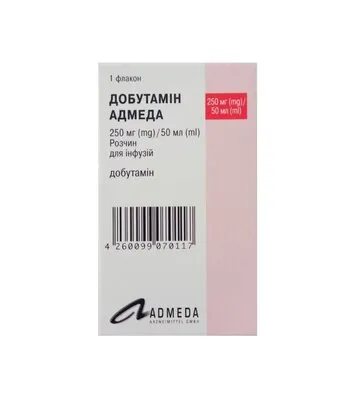
Table of Contents
INSTRUCTIONS FOR MEDICAL USE OF THE MEDICINAL PRODUCT DOBUTAMIN ADMEDA (DOBUTAMIN ADMEDA)
Composition:
Active substance: dobutamine;
50 ml of solution contain 280 mg of dobutamine hydrochloride (equivalent to 250 mg of dobutamine);
Excipients: L-cysteine hydrochloride monohydrate, sodium chloride, citric acid monohydrate, sodium hydroxide, water for injections.
Pharmaceutical form. Infusion solution.
Main physicochemical characteristics: colorless or slightly yellowish clear solution.
Pharmacotherapeutic group.
Cardiac drugs. Adrenergic and dopaminergic agents. ATC code C01CA07.
Pharmacological properties.
Pharmacodynamics.
Dobutamine is a direct-acting inotropic agent whose primary activity is due to stimulation of cardiac β1-adrenergic receptors, as well as α1-adrenergic receptors of the heart. It also induces an indirect positive chronotropic effect via peripheral vasodilation.
The drug has the following pharmacological effects:
- enhances myocardial contraction, increasing stroke volume and cardiac output;
- stimulates peripheral β2-adrenergic receptors and, to a lesser extent, α2-adrenergic receptors, thereby potentially causing a positive chronotropic effect, although this effect is less pronounced than with catecholamines;
- induces dose-dependent hemodynamic changes: increases cardiac output, primarily due to increased stroke volume; increases heart rate, especially when high doses are administered; reduces left ventricular filling pressure and systemic vascular resistance, and at high doses also reduces pulmonary vascular resistance;
- enhances atrioventricular conduction and sinus node automaticity;
- transiently reduces platelet aggregation;
- increases myocardial oxygen demand, but the increase in cardiac minute volume and, consequently, coronary blood flow usually compensates for these effects, resulting in a tendency toward a more favorable oxygen balance compared to other positive inotropic agents;
- does not affect dopaminergic receptors and (unlike, for example, dopamine) does not influence the release of endogenous adrenaline;
- has no direct dopaminergic effect on renal perfusion;
- may induce arrhythmias.
In heart failure associated with acute or chronic myocardial ischemia, dobutamine should be administered at doses that do not cause a significant increase in heart rate and/or arterial pressure, since otherwise (especially in cases of relatively preserved ventricular function) progression of ischemia cannot be excluded.
Pharmacological tolerance may develop after continuous infusion for 72 hours, possibly due to decreased adenylate cyclase system activity.
Pharmacokinetics.
The effect of the drug begins within 1–2 minutes after the start of infusion; however, a steady-state plasma concentration of dobutamine is achieved only after 10–12 minutes of continuous administration. Plasma dobutamine levels increase linearly in relation to dose and infusion rate. The elimination half-life is 2–3 minutes.
Dobutamine is metabolized predominantly in tissues and the liver, forming conjugated glucuronides and pharmacologically inactive 3-O-methyldobutamine, and is excreted mainly in the urine.
Clinical characteristics.
Indications.
Heart failure with low cardiac output associated with myocardial infarction, cardiomyopathies, infectious-allergic shock, cardiogenic shock, and cardiac surgery.
Contraindications.
Hypersensitivity to dobutamine and to other components of the drug.
Mechanical obstruction to ventricular filling and/or ejection, such as cardiac tamponade, constrictive pericarditis, hypertrophic obstructive cardiomyopathy, severe aortic stenosis; hypovolemic states; concomitant use of monoamine oxidase inhibitors (MAOIs).
Dobutamine stress echocardiography: hypersensitivity to dobutamine in medical history; concomitant use of MAOIs. When using atropine, contraindications to its use must be taken into account.
Dobutamine must not be used for diagnostic testing of myocardial ischemia as part of echocardiographic examination in the following cases: recent myocardial infarction (within 30 days after myocardial infarction); unstable angina; left main coronary artery stenosis; hemodynamically significant left ventricular outflow tract obstruction, including hypertrophic obstructive cardiomyopathy; hemodynamically significant valvular heart disease; severe heart failure (NYHA class III or IV); predisposition to arrhythmias or documented clinically significant or chronic arrhythmias in medical history, especially recurrent sustained ventricular tachycardia; significant conduction disturbances; acute pericarditis, myocarditis or endocarditis; aortic dissection; aortic aneurysm; poor ultrasound imaging; inadequate treatment or control of elevated arterial pressure; ventricular filling obstruction (constrictive pericarditis, pericardial tamponade); hypovolemia.
Interaction with other medicinal products and other forms of interactions.
Concomitant or prior administration of β-adrenergic blockers may reduce the positive inotropic effect of dobutamine. In such cases, the predominant effect on α-adrenergic receptors may lead to peripheral vasoconstriction and, as a result, increased arterial pressure. The extent of this interaction depends on the type and duration of β-adrenergic receptor blockade.
When α-adrenergic receptor blockers are used concomitantly, the predominant effect on β-adrenergic receptors may lead to additional enhancement of tachycardia and peripheral vasodilation. Concomitant use of dobutamine with vasodilating agents acting mainly on veins (e.g., nitrates, sodium nitroprusside) results in increased cardiac output, more pronounced reduction in peripheral vascular resistance and ventricular filling pressure, compared to administration of these drugs alone.
Concomitant use of angiotensin-converting enzyme inhibitors (e.g., captopril) and high doses of dobutamine may lead to increased cardiac output accompanied by increased myocardial oxygen consumption. In such cases, chest pain and development of arrhythmias have been observed.
In contrast to monotherapy, combined administration of dobutamine with dopamine leads (proportionally to the dose of dopamine) to a more significant increase in arterial pressure and reduction (or no change) in ventricular filling pressure.
Administration of dobutamine in patients with diabetes mellitus may increase the patient's insulin requirement. Therefore, in diabetic patients, blood glucose levels should be monitored at the beginning of dobutamine therapy, when changing the infusion rate or discontinuing the infusion, and insulin dosage should be adjusted accordingly.
Concomitant use with MAO inhibitors is contraindicated, as it may result in life-threatening adverse effects such as hypertensive crisis, cardiovascular failure, arrhythmias, and intracerebral hemorrhage.
Dobutamine Admeda must not be added to 5% sodium bicarbonate solution or other alkaline solutions. Due to possible physico-chemical incompatibility, Dobutamine Admeda is not recommended to be mixed in the same solution with other medicinal products.
Dobutamine Admeda is known to be physically and chemically incompatible with aminophylline, alteplase, acyclovir, bretylium, verapamil, heparin, hydrocortisone sodium succinate, dacarbazine, diazepam, digoxin, ethacrynic acid (sodium salt), insulin, potassium chloride, calcium chloride, calcium gluconate, magnesium sulfate, penicillin, streptokinase, furosemide, phenytoin, cephalothin sodium, cefamandole formate.
When solutions of atropine and dobutamine are co-administered at maximum doses of both drugs, the risk of adverse reactions is increased.
Special precautions for use
Hypovolemia should be corrected prior to initiating dobutamine therapy.
During administration of the drug, careful monitoring of heart rate, arterial pressure, diuresis, infusion rate, and, if possible, cardiac output, central venous pressure, and pulmonary capillary wedge pressure is required.
In case of undesirable increase in heart rate and arterial pressure, or progression of arrhythmia, the dose of dobutamine should be reduced or infusion temporarily discontinued.
Patients with atrial fibrillation and rapid ventricular conduction should be treated with digitalis preparations prior to initiation of dobutamine infusion.
Dobutamine treatment in patients with severe ischemic heart disease may be associated with worsening of clinical symptoms, especially in the presence of tachycardia and/or elevated arterial pressure. The decision to administer dobutamine in patients with myocardial ischemia should be made individually.
During dobutamine stress echocardiography, angina pectoris, tachycardia, bradycardia, arterial hypertension/hypotension have been observed. In isolated cases, serious adverse effects such as transmural ischemia, myocardial infarction, and cardiac arrest may occur.
Dobutamine is not contraindicated in patients with impaired renal function.
Dobutamine stress echocardiography
Dobutamine Admeda, solution for infusion, may be used during diagnosis of ischemia and vital organ function only by a physician experienced in management of cardiac emergencies and only when emergency resuscitation equipment is available, due to potentially life-threatening complications that may occur under certain circumstances.
Stress cardiomyopathy (Takotsubo syndrome) is a possible severe complication of dobutamine use during stress echocardiography (see section "Adverse reactions"). Dobutamine for stress echocardiography should be administered only by a physician experienced in performing this procedure. The physician must remain vigilant during the procedure and recovery period and be prepared to provide appropriate medical intervention. If stress cardiomyopathy (Takotsubo syndrome) occurs, dobutamine infusion must be stopped immediately.
Continuous echocardiographic monitoring of all segments of the myocardial wall, together with ECG and arterial pressure parameters, is required. Equipment for monitoring and emergency intervention (e.g., defibrillator, intravenous β-blocker receptor antagonists, nitrates) must be available, and experienced personnel must be ready to perform resuscitation measures.
Additionally, close attention must be paid to final drug concentrations and duration of administration. If severe complications occur during diagnosis with Dobutamine Admeda, infusion should be stopped immediately and adequate oxygenation and lung ventilation ensured.
At the first signs of angina or life-threatening tachycardia, intravenous administration of short-acting β-blocker receptor antagonists or other antiarrhythmic agents should be considered. In case of angina, sublingual nitrates and/or β-blockers may be used if necessary.
Precautions for use
Intraarterial administration is not recommended, as a potential vasoconstrictive effect with risk of tissue damage cannot be excluded.
With continuous infusion lasting 72 hours or longer, tolerance may develop, requiring higher doses to maintain the initial therapeutic effect.
During dobutamine therapy, regional increases or decreases in venous blood flow have been reported, which may alter myocardial oxygen consumption. Patients with severe ischemic heart disease may experience worsening of clinical status, particularly if dobutamine treatment is associated with pronounced increases in heart rate and/or arterial pressure. In individual cases of ischemic heart disease, caution should be exercised when prescribing dobutamine in combination with any medicinal products having positive inotropic effects.
If undesirable increases in heart rate, systolic arterial pressure, or development or worsening of arrhythmia occur, dose reduction or temporary discontinuation of the drug is indicated. Since slight decreases in serum potassium levels may occur, monitoring of potassium levels is recommended.
Dobutamine may interfere with chloramphenicol during high-performance liquid chromatography (HPLC), potentially leading to inaccurate measurement results.
One vial of dobutamine contains approximately 155 mg of sodium cations in 50 mL of infusion solution. This should be taken into account for patients on a sodium-restricted diet.
Use during pregnancy or breastfeeding
Due to insufficient experience with the use of Dobutamine Admeda during pregnancy, it should be administered to pregnant women only if clearly indicated.
If use of the drug is necessary, breastfeeding should be discontinued for the entire duration of treatment.
Ability to affect driving or operating machinery
Dobutamine Admeda is administered under hospital conditions. After hospital discharge, there is no expected effect of the drug on the ability to drive or operate machinery.
Administration and Dosage
The dose of dobutamine must be individually adjusted. The rate and duration of administration depend on the patient's response to treatment and the occurrence of adverse effects. In cases of continuous administration for more than 72 hours, tolerance to the drug may develop, necessitating an increase in dose.
When discontinuing the infusion, the dose should be gradually reduced.
Adults. Most patients respond to doses between 2.5 and 10 mcg/kg/min.
In individual cases, the dose of dobutamine may reach up to 40 mcg/kg/min.
Children. Dobutamine can be used to treat children of any age. Initial infusion should start at a dose of 2.5–5 mcg/kg/min, gradually increasing up to a maximum of 15 mcg/kg/min depending on the therapeutic effect.
Evidence suggests that the minimum effective dose in children is higher, while the maximum tolerated dose is lower than in adults. Therefore, caution is required when administering high doses to pediatric patients. Most adverse effects, particularly tachycardia, occur when dobutamine is administered at doses exceeding 7.5 mcg/kg/min. Given the narrow therapeutic dose range, the required dose of dobutamine in children should be carefully titrated.
Route of administration. Dobutamine Admeda in the form of 50 mL infusion solution (1 vial) may be administered undiluted when using continuous infusion pumps. If necessary, the drug may be further diluted prior to administration with 5% glucose solution, 0.9% sodium chloride solution, or lactated Ringer's solution.
Dobutamine Admeda must be administered only as an intravenous infusion. Because dobutamine has a short elimination half-life, intravenous administration must be continuous. After dilution, the drug is administered via an intravenous needle or catheter using an infusion set for drip infusion or another dose-measuring device. To ensure accurate dosing, high concentrations of dobutamine should be administered only through an infusion pump.
The following tables indicate the infusion rates of dobutamine for various solution concentrations.
Table 1.
| Doses for infusion pumps (1 vial containing 250 mg of dobutamine in 50 ml of infusion solution) |
||||
| Dosage range |
Infusion rate in ml/h (ml/min) |
|||
| Patients body weight |
||||
| 50 kg |
70 kg |
90 kg |
||
| Low 2.5 mcg/kg per min Medium 5 mcg/kg per min High 10 mcg/kg per min |
ml/h (ml/min) ml/h (ml/min) ml/h (ml/min) |
1.5 (0.025) 3.0 (0.05) 6.0 (0.10) |
2.1 (0.035) 4.2 (0.07) 8.4 (0.14) |
2.7 (0.045) 5.4 (0.09) 10.8 (0.18) |
| Doses for infusion systems (250 mg of dobutamine in 500 ml of solvent) |
||||
| Dosing range |
Infusion rate in ml/h* (drops/min)* |
|||
| Body weight of patient |
||||
| 50 kg |
70 kg |
90 kg |
||
| Low 2.5 mcg/kg per min Medium 5 mcg/kg per min High 10 mcg/kg per min |
ml/h (drops/min) ml/h (drops/min) ml/h (drops/min) |
15 (5) 30 (10) 60 (20) |
21 (7) 42 (14) 84 (28) |
27 (9) 54 (18) 108 (36) |
- If the concentration is doubled (e.g., 500 mg of dobutamine in 500 mL of solution or 250 mg of dobutamine in 250 mL of solution), the infusion rate must be halved.
Note.
Dobutamine should also be used to assess viable myocardium in the detection of myocardial ischemia as part of an echocardiographic study (dobutamine stress echocardiography) when patients are unable to perform physical exercise or when physical exercise does not provide sufficient information.
Dobutamine Stress Echocardiography
During stress testing, the infusion rate should be gradually increased.
The most commonly used regimen involves an initial loading dose of dobutamine of 5 µg/kg/min.
The dose is increased every 3 minutes to 10, 20, 30, and 40 µg/kg/min until the diagnostic endpoint is reached.
At higher titration stages, an additional 0.25 mg of atropine is administered as a fractionated dose starting from the fourth minute, and every minute thereafter until a total atropine dose of 1 mg is achieved.
Alternative dosing regimens depend on the maximum dose of dobutamine (up to 50 µg/kg/min), maximum dose of atropine (up to 2 mg), and timing of atropine administration.
Dobutamine Admeda, solution for infusion, should be used for diagnosing ischemia and vital organ function only by physicians experienced in managing cardiac emergencies and in the presence of emergency resuscitation equipment due to potentially life-threatening complications that may occur under certain circumstances. Continuous monitoring using echocardiography of all segments of the myocardial wall, along with ECG and arterial blood pressure parameters, is required. Dobutamine stress testing as part of ischemia diagnostic evaluation must be discontinued if any of the following symptoms occur:
- New wall motion abnormalities in >1 segment (16-segment model);
- When heart rate reaches [(220 – age) × 85%];
- Increased end-systolic volume;
- Progressive arrhythmias (e.g., paired beats, ventricular ectopy);
- Progressive conduction disturbances;
- Progressive repolarization abnormalities (ischemia associated with horizontal ST-segment depression >0.2 mV, progressive or monophasic ST-segment elevation);
- Decrease in systolic blood pressure (>20 mm Hg);
- Progressive excessive increase in blood pressure (e.g., >220 mm Hg systolic, >120 mm Hg diastolic);
- Progressive angina;
- Progressive dyspnea;
- Progressive dizziness;
- Severe complications (see section "Adverse Reactions").
Children.
Dobutamine Admeda may be used for treatment in children of any age.
Overdose.
Symptoms of overdose are generally due to excessive stimulation of β-adrenergic receptors.
Symptoms: nausea, vomiting, loss of appetite, tremor, anxiety, tachycardia, headache, angina, and non-specific chest pain. The positive inotropic and chronotropic cardiac effects of the drug may lead to arterial hypertension, myocardial ischemia, supraventricular and ventricular tachyarrhythmias, and ventricular fibrillation. Arterial hypotension may also occur due to peripheral vasodilation.
Treatment: Temporarily discontinue dobutamine infusion, as the drug's duration of action is short (elimination half-life is 2–3 minutes). If necessary, initiate immediate resuscitation measures to support vital organ function. Serum electrolyte and blood gas balance should be carefully monitored and maintained. Lidocaine or β-adrenergic blockers (e.g., propranolol) may be used to treat severe ventricular arrhythmias.
In cases of arterial hypertension, reducing or discontinuing the infusion is usually sufficient.
The extent of dobutamine absorption via the oral cavity or gastrointestinal tract after oral ingestion is difficult to predict. If the drug is accidentally ingested orally, administration of activated charcoal may reduce absorption and is often more effective than emetics or gastric lavage.
The effectiveness of forced diuresis, peritoneal dialysis, hemodialysis, or hemoperfusion with activated charcoal in dobutamine overdose has not been established.
Adverse Reactions
Undesirable side effects can be classified by their frequency of occurrence: very common (≥ 1/10), common (≥ 1/100, < 1/10), uncommon (≥ 1/1000, < 1/100), rare (≥ 1/10,000, < 1/1000), very rare (< 1/10,000), and not known (cannot be estimated due to lack of data).
Blood system disorders:
Common – eosinophilia, inhibition of platelet aggregation (only when infusion lasts several days).
Allergic reactions:
Uncommon – hypersensitivity reactions such as skin rash, fever, bronchospasm.
Metabolic disorders:
Very rare – dopamine may reduce serum potassium levels, potentially leading to hypokalemia.
Nervous system disorders:
Common – headache.
Cardiovascular system disorders:
Very common – when usual therapeutic doses are administered, heart rate increases by 5–15 beats/min in most patients. In clinical trials, heart rate increased by up to 30 beats/min in 10% of patients; systolic arterial pressure increases by 10–20 mm Hg in most patients. In clinical studies, arterial pressure increased by up to 50 mm Hg in 7.5% of patients. Significant increases in arterial pressure may be expected in patients with arterial hypertension; common – decreased blood pressure, ventricular arrhythmias, dose-dependent ventricular extrasystoles, ventricular tachycardia in patients predisposed to atrial fibrillation. Such patients should be treated with cardiac glycosides prior to dobutamine administration; vasoconstriction, particularly in patients previously treated with beta-blockers; anginal pain, palpitations; uncommon – ventricular tachycardia, ventricular fibrillation; reports of sudden and marked decrease in blood pressure, which usually rapidly returned to baseline after dose reduction or discontinuation of infusion. In some cases, symptomatic therapy may be required; very rare – bradycardia, myocardial ischemia, myocardial infarction, cardiac arrest, angina pectoris; not known – decreased pulmonary capillary pressure; second-degree atrioventricular block.
Dobutamine slows atrioventricular conduction and may increase ventricular rate in patients with atrial fibrillation; therefore, such patients should be digitalized prior to dobutamine infusion.
Children: increases in heart rate and/or arterial pressure may be more pronounced, while reduction in pulmonary capillary pressure may be less pronounced compared to adults.
Increased pulmonary capillary pressure has been reported, particularly in children under 1 year of age.
Dobutamine stress echocardiography
Cardiovascular system:
Very common – substernal anginal discomfort, ventricular extrasystoles occurring at a frequency of > 6 per minute; common – supraventricular extrasystoles, ventricular tachycardia; uncommon – ventricular fibrillation, myocardial infarction; very rare – secondary development of atrioventricular block, coronary artery spasm; decompensated arterial hypertension/hypotension, intracavitary gradient obstruction, palpitations; not known – stress-induced cardiomyopathy (Takotsubo syndrome) (see section "Special Warnings and Precautions for Use").
Respiratory system:
Common – dyspnea, bronchospasm.
Gastrointestinal disorders:
Common – nausea.
Skin disorders:
Common – exanthema; very rare – hemorrhagic petechiae.
Musculoskeletal system:
Common – chest pain.
Urinary system:
Common – increased urine output at high doses.
General disorders and administration site conditions:
Common – fever, phlebitis at the infusion site. In case of accidental extravasation, local inflammation may occur; very rare – skin necrosis.
Other possible adverse effects include restlessness, nausea, headache, paresthesia, tremor, increased diuresis, sometimes with imperative urges; palpitations, myoclonic spasms.
Shelf life. 18 months.
Storage conditions.
Store at a temperature not exceeding 25 °C in a dry, light-protected place. Do not freeze.
Since Dobutamine Admeda is not intended for multiple administrations from the same vial, it contains no preservatives. The stability data for Dobutamine Admeda in solutions provided below refer only to its physicochemical properties and do not take into account microbiological aspects. Dobutamine Admeda must always be prepared for administration under optimal hygienic (aseptic) conditions.
Physical and chemical stability during storage
| Dobutamine Admeda |
|
| Storage at 2-8 °C with sodium chloride solution* |
stable for 14 days |
| Storage at 2-8 °C with glucose solution* |
stable for 14 days |
| Storage at 2-8 °C with Ringer's lactate solution* |
stable for 14 days |
| Storage at room temperature with sodium chloride solution* |
24 hours |
| Storage at room temperature with glucose solution* |
24 hours |
| Storage at room temperature with Ringer's lactate solution* |
24 hours |
* Composition of the mixture: contents of 1 vial per 500 ml of infusion solution.
Keep out of reach of children.
Incompatibility.
Do not use solvents not specified in the section "Dosage and administration" (see sections "Dosage and administration" and "Interaction with other medicinal products and other forms of interaction").
Packaging.
Each glass vial containing 50 ml of infusion solution is packed in a hard cardboard box.
Prescription status. Prescription only.
Manufacturer.
Solupharm Pharmazeutische Erzeugnisse GmbH
Address of manufacturer and location of its business operations.
Industriestrasse 3, 34212, Melsungen, Germany
Marketing Authorization Holder.
Admeda Arzneimittel GmbH.
Address of Marketing Authorization Holder.
Thonsfeldstrasse 16, 22763 Hamburg, Germany.