Diazepam-farmak
Ukraine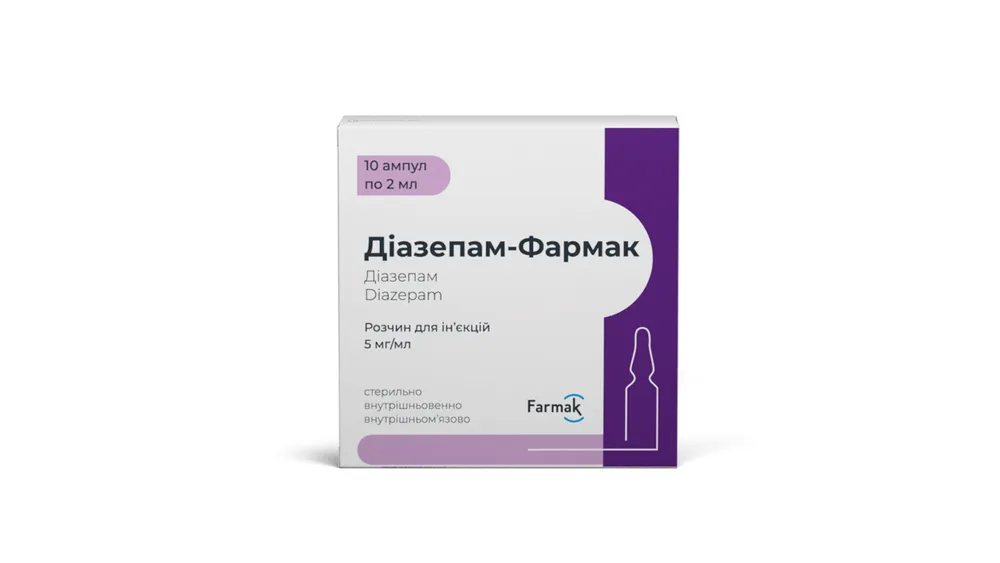
Table of Contents
INSTRUCTIONS FOR MEDICAL USE OF THE MEDICINAL PRODUCT DIAZEPAM-FARMAK (DIAPAM-FARMAK)
Composition:
Active substance: diazepam;
1 ml of injection solution contains 5 mg of diazepam;
Excipients: propylene glycol, 96% ethanol, sodium benzoate (E 211), benzyl alcohol, benzoic acid (E 210), diluted hydrochloric acid, sodium hydroxide, water for injections.
Pharmaceutical form. Injection solution.
Main physicochemical characteristics: clear solution, colorless to yellow or yellow with a greenish tint.
Pharmacotherapeutic group. Psycholeptic agents. Anxiolytics. Benzodiazepine derivatives. ATC code N05BA01.
Pharmacological Properties.
Pharmacodynamics.
Diazepam belongs to the group of benzodiazepine tranquilizers, which have anxiolytic, sedative, muscle relaxant, anticonvulsant, and amnestic properties. Its effects are enhanced by the formation of active metabolites (primarily desmethyldiazepam). The action of benzodiazepines on the central nervous system (CNS) occurs due to enhancement of GABAergic neurotransmission at inhibitory synapses. In the presence of benzodiazepines, the affinity of the GABAergic receptor for the neurotransmitter increases through positive allosteric modulation, resulting in an enhanced effect of released GABA on chloride ion flux across the postsynaptic membrane.
Pharmacokinetics.
Absorption
After intramuscular injection, complete absorption occurs. The rate of absorption varies and depends on the site and depth of injection.
With daily administration, diazepam levels reach steady state in approximately 5 days; it takes approximately twice as long for desmethyldiazepam to reach steady state. Mean concentrations of diazepam at steady state following once-daily administration are approximately twice the peak concentrations of the active substance after the first dose.
During treatment, the elimination half-life of diazepam may increase by 50% due to reduced hepatic clearance. Reports on changes in plasma levels during long-term therapy are conflicting. On one hand, significant decreases in diazepam levels occurred during prolonged treatment, possibly due to metabolic autoinduction; on the other hand, plasma concentrations of both diazepam and its desmethyl metabolite in other studies did not depend on the duration of therapy.
Distribution
Despite high plasma protein binding (98–99%, primarily to albumin and to a lesser extent to α1-acid glycoprotein), diazepam is widely distributed into tissues. After intravenous administration, a pronounced distribution phase in plasma is observed, with a half-life of up to 3 hours. The volume of distribution at steady state, measured based on plasma concentrations, averages between 0.88 and 1.1 L/kg. Both the degree of plasma protein binding and the volume of distribution of desmethyldiazepam are similar to those of diazepam.
The high level of plasma protein binding limits diazepam penetration into cerebrospinal fluid (CSF). The level in CSF in humans after single or multiple dosing is close to the level of free active substance in plasma. After multiple doses, significant accumulation of desmethyldiazepam, but not diazepam, may occur in CSF. Studies in humans and experimental animal studies have shown that diazepam is rapidly absorbed into brain tissue and quickly reaches equilibrium, with steady-state concentrations in the brain exceeding those in plasma. In male mice, the time course of receptor occupancy correlated well with the time course of total concentrations of diazepam and its metabolites in the brain.
Metabolism
Diazepam is metabolized primarily into pharmacologically active metabolites, such as desmethyldiazepam, via N-demethylation, which accounts for 50–60% of total diazepam clearance; 3-hydroxylation (27% of total diazepam clearance) is slower and results in only low plasma levels of oxidative products, temazepam and oxazepam. Temazepam and oxazepam are further conjugated with glucuronides. After multiple doses of diazepam, the plasma concentration ratios were desmethyldiazepam/diazepam = 1.1 ± 0.2, temazepam/diazepam = 0.11 ± 0.05, and oxazepam/diazepam = 0.09 ± 0.03.
Oxidation of diazepam occurs via cytochrome P450 isoenzymes: formation of desmethyldiazepam primarily involves CYP2C19 and CYP3A, while 3-hydroxydiazepam (temazepam) and oxazepam formation involves CYP3A. Since CYP2C19 is polymorphic, rapid metabolizers (RMs) and poor metabolizers (PMs) of diazepam can be distinguished. In PMs, diazepam clearance after a single dose was significantly lower (12 vs. 26 mL/min) and the elimination half-life longer (88 hours vs. 41 hours) than in RMs. Additionally, PMs showed lower clearance, higher area under the plasma concentration-time curve (AUC), and prolonged elimination half-life of desmethyldiazepam after a single dose (5–10 mg). This polymorphism appears to exhibit ethnic differences.
Excretion
The elimination curve of diazepam is biphasic, consisting of an initial distribution phase with a half-life of up to 3 hours and a terminal elimination phase. Typical half-life values range from 24 to 48 hours for diazepam and 40 to 100 hours for the active metabolite desmethyldiazepam. Diazepam clearance is 20–40 mL/min.
Diazepam is excreted unchanged only in small amounts, indicating that the active substance is almost completely metabolized before excretion. In urine, oxazepam glucuronide is the main metabolite.
Pharmacokinetics in Special Patient Groups
Hepatic Impairment
The distribution of diazepam and desmethyldiazepam is altered in liver disease. In acute viral hepatitis, the elimination half-life of diazepam increases approximately twofold but gradually returns to normal after recovery. In patients with alcohol-induced cirrhosis, the prolongation of the elimination half-life is more pronounced (increased 2–5 times). These changes are primarily due to impaired hepatic metabolism; altered distribution due to changes in plasma protein binding may also contribute. Reduced clearance of diazepam and desmethyldiazepam leads to increasing accumulation with prolonged use, which in turn is associated with enhanced sedation.
Renal Impairment
In chronic renal failure, diazepam elimination according to clearance of unbound active substance is similar to that in healthy volunteers; therefore, the average steady-state concentration of unbound diazepam at any daily dose in patients with renal insufficiency should not differ from that in healthy individuals. Due to changes in plasma protein binding and tissue distribution of diazepam, its elimination half-life decreased from (mean ± deviation in hours) 92 ± 23 hours in the control group to 37 ± 7 hours in patients with renal insufficiency.
Pregnancy
Diazepam and desmethyldiazepam readily cross the placental barrier. N-demethylation of diazepam may also occur in the fetus. Prolonged treatment leads to accumulation of both compounds, with high concentrations in the fetal heart, lungs, and brain.
Plasma protein binding of diazepam decreases during pregnancy, particularly in the third trimester, partly due to reduced serum albumin concentration. After urgent administration, pharmacological effects may be intensified.
Elderly Patients
The unbound fraction of diazepam positively correlates with age and is higher in elderly patients than in younger patients. With age, the liver's capacity for N-demethylation and 3-hydroxylation of diazepam decreases. Age-dependent reduction in clearance of unbound active substance explains the observed 2–4 fold increase in elimination half-life in elderly patients, with this effect being more pronounced in men than in women. Therefore, the extent of accumulation of unbound pharmacologically active diazepam administered in multiple doses is higher in elderly patients than in younger adults.
Elimination of desmethyldiazepam is slowed in elderly men but not in women.
Children and Adolescents
On the first day of life, a sudden doubling of unbound fractions of diazepam and desmethyldiazepam was observed compared to values at birth. Subsequently, values slowly decreased again, reaching the range of control values by the end of the first week of life. These changes resemble those in free fatty acid concentrations.
Newborns and premature infants metabolize diazepam more slowly than older children and adults, leading to prolonged elimination half-life (especially in premature infants), except when there has been external exposure to inducing agents before or immediately after birth. The capacity of newborns for metabolic processes involved in diazepam biotransformation—such as hydroxylation, demethylation, and glucuronide conjugation—is limited until about the fifth month of life, after which hepatic enzymes develop activity similar to or even higher than that in adults.
Diazepam and its metabolites are excreted in breast milk. However, breast milk contains only 10% of the diazepam concentration in maternal blood. The amount transferred to the infant, normalized by body weight, is approximately 5% of the mother's dose. However, after repeated intake of more than 10 mg per day, the amount absorbed by the infant may be sufficiently high under certain circumstances to produce an effect (see "Breastfeeding").
Clinical characteristics.
Indications.
Basic sedation prior to therapeutic procedures or interventions affecting the psyche, such as endoscopy, cardioversion, cardiac catheterization, radiological examinations, minor surgical procedures, reduction of dislocations and fractured bones, biopsy, dressing changes for burn wounds, in order to alleviate anxiety, fear, or acute stress reactions and to reduce the impression of treatment.
Preoperative pharmacological therapy for anxious and tense patients.
Psychiatric indications
Treatment of agitation associated with acute anxiety states and panic attacks, in cases of motor restlessness and delirium tremens.
Anticonvulsant action
Treatment of epileptic status and other convulsive conditions.
Gynecology and obstetrics
Treatment of eclampsia when magnesium sulfate is contraindicated, ineffective, or unavailable.
Muscle relaxation
As an adjunct to relieve reflex muscle spasms (including tetanic spasms) in local injuries (trauma, inflammation), and to overcome spastic states following injury to spinal and supraspinal interneurons; such changes may occur, for example, in cerebral-origin spasms and paraplegia, as well as in athetosis and muscle rigidity syndrome.
Contraindications.
Diagnosed hypersensitivity to benzodiazepines or to any of the excipients of the medicinal product.
Severe respiratory insufficiency, serious hepatic dysfunction, since benzodiazepines may induce hepatic encephalopathy, sleep apnea syndrome, and myasthenia. Benzodiazepines are not recommended for primary treatment of psychotic disorders. Benzodiazepines must not be used alone in the treatment of depression or anxiety associated with depression, as such patients are prone to suicide.
Interaction with other medicinal products and other forms of interaction.
Pharmacokinetic interaction
The metabolism of diazepam and its main metabolite desmethyldiazepam depends on cytochrome P450 isoenzymes CYP3A4 and CYP2C19. Modulators of these enzymes may lead to changes in the intensity and effect of diazepam. When compounds simultaneously affect both oxidative pathways of diazepam metabolism, a strong interaction is observed; in contrast, the effect is only moderate even with potent inhibitors if they affect only one of the metabolic pathways of diazepam breakdown.
Inhibitors of CYP3A4 and CYP2C19 slow down metabolic degradation and may lead to increased concentrations of diazepam and desmethyl metabolite, thereby enhancing or prolonging the sedative and anxiolytic effects. Such changes may intensify the effect of diazepam in patients with increased sensitivity, for example due to age, impaired liver function, or treatment with other drugs affecting oxidation. Inducers of CYP3A4 and CYP2C19 may produce lower-than-expected concentrations, thus the medicinal products may not achieve the desired effect. Dose adjustment may be required to achieve the desired outcome.
Effect of other substances on the pharmacokinetics of diazepam
Enzyme inhibitors
Grapefruit juice contains potent inhibitors of CYP3A4. When diazepam was administered with grapefruit juice instead of water, the effect of diazepam significantly increased (AUC – 3.2 times; Cmax – 1.5 times), and the time to reach Cmax was prolonged.
Azole antifungal agents slow down both CYP3A4 and CYP2C19 metabolic pathways and increase the effect of diazepam (relative bioavailability AUC-ratio of diazepam is 2.5 for fluconazole, 2.2 for voriconazole) and prolong the elimination half-life of diazepam (from 31 hours to 73 hours for fluconazole, from 31 hours to 61 hours for voriconazole). The effect of antifungal agents on diazepam levels was observed only 4 hours after administration and thereafter. Itraconazole, as established in psychomotor performance tests, showed a milder effect without clinically significant interaction with diazepam.
The serotonin reuptake inhibitor fluvoxamine, which is also an inhibitor of both diazepam degradation pathways, not only increases the effect of diazepam by 180% and prolongs its elimination half-life from 51 hours to 118 hours, but also increases the effect and prolongs the time to reach steady-state concentrations of desmethyl metabolites. Fluoxetine had a milder effect on AUC values for diazepam (approximately 50% increase) and did not affect psychomotor response, since combined concentrations of diazepam and desmethyldiazepam with and without fluoxetine were similar.
Combined hormonal contraceptives reduce the clearance of diazepam (by 40%) and increase its elimination half-life (by 47%). Psychomotor impairments caused by diazepam in women taking contraceptives may be greater during the 7-day menstrual break, when the corresponding hormonal preparation is not taken, compared to the period of contraceptive use. There is some evidence that benzodiazepines may increase the frequency of breakthrough bleeding in women using hormonal contraceptives. No drug interaction leading to pregnancy has been observed.
The proton pump inhibitor omeprazole, an inhibitor of CYP2C19 and CYP3A4, when administered at a dose of 20 mg once daily, causes a 40% increase in diazepam AUC and a 36% prolongation of elimination half-life. At a dose of 40 mg once daily, omeprazole increases diazepam AUC by 122% and elimination half-life by 130%. The elimination of desmethyldiazepam was also reduced. The effect of omeprazole was observed only in rapid, but not in slow, CYP2C19 metabolizers. Esomeprazole (but not lansoprazole or pantoprazole) is capable of inhibiting diazepam metabolism to the same extent as omeprazole.
Cimetidine, a histamine H2-receptor antagonist that inhibits several CYP isoenzymes, including CYP3A4 and CYP2C19, reduces the clearance of diazepam and desmethyldiazepam by 40–50%. The effect after single-dose and long-term administration of cimetidine is similar and leads, after a single dose of diazepam, to a greater effect compared to diazepam and its main metabolite and prolonged elimination half-life, and after multiple doses of diazepam to higher steady-state concentrations. Enhanced sedation was observed when cimetidine was used concomitantly. Such pharmacokinetic interaction has not been established for other H2-antagonists (ranitidine and famotidine).
Disulfiram inhibits diazepam metabolism (mean reduction in clearance by 41%, prolongation of elimination half-life by 37%) and likely also further degradation of active diazepam metabolites. As a result, an enhanced sedative effect may occur.
Diazepam treatment may be altered during tuberculosis therapy. In the presence of isoniazid, AUC and elimination half-life of diazepam increased (on average by 33–35%), with the greatest changes observed in patients with the slow acetylator phenotype.
The calcium channel blocker diltiazem, a substrate of the same CYP isoenzymes as diazepam and a CYP3A4 inhibitor, increased AUC (by approximately 25%) and prolonged elimination half-life (by 43% in extensive CYP2C19 metabolizers) of diazepam, with minor differences between patients with different CYP2C19 phenotypes. In the presence of diltiazem, the effect relative to desmethyldiazepam also tended to increase.
The primary metabolite of idelalisib is a potent CYP3A4 inhibitor and increases serum diazepam concentration; therefore, dose reduction should be considered.
The psychostimulants modafinil and armodafinil induce CYP3A4 and inhibit CYP2C19, possibly prolonging diazepam elimination and causing excessive sedation.
Enzyme inducers
Rifampicin exerts a very strong inducing effect on CYP3A4 and also has a significant accelerating effect on the CYP2C19 pathway. At a dose of 600 mg daily for 7 days, diazepam clearance increased 4.3-fold and AUC decreased by 77%. Moreover, a significant reduction in effect relative to all diazepam metabolites was observed. Doubling the daily dose of rifampicin did not further enhance these effects.
Carbamazepine, a known CYP3A4 inducer, accelerated the elimination (increased clearance, reduced elimination half-life) of diazepam threefold, while desmethyldiazepam concentrations increased.
Food and antacid agents
Food and antacid agents may reduce the absorption rate of diazepam from tablets (reduction in Cmax by approximately 30%), but do not reduce AUC; this may lead to a diminished effect after a single dose. However, multiple doses during treatment do not affect steady-state concentrations.
Prokinetic agents, such as metoclopramide, may accelerate diazepam absorption. Intravenous, but not oral, metoclopramide accelerates diazepam absorption and increases Cmax reached after oral administration.
Narcotics (morphine, pethidine) reduce the absorption rate and Cmax of orally administered diazepam.
Effect of diazepam on the pharmacokinetics of other substances
No inducing or inhibiting effect of diazepam on metabolic enzymes has been established. However, certain interactions with other medicinal products occur where diazepam acts as a precipitant.
Phenytoin therapy combined with diazepam has been associated with increased concentration and enhanced phenytoin intoxication. However, some authors reported no interaction or even reduced plasma phenytoin concentration when used concomitantly with diazepam.
Pharmacodynamic interaction
Patients taking diazepam should avoid alcohol consumption (see section "Special precautions for use").
Advisories regarding other substances with CNS depressant effects, including alcohol, can also be found in the section "Overdose".
Enhanced adverse reactions, such as sedation and depression of cardiorespiratory function, may also occur when diazepam is used concomitantly with hypnotic-sedative agents, including alcohol.
There are several reports of severe hypotension, respiratory depression, or loss of consciousness in patients treated with clozapine in combination with benzodiazepines, including diazepam.
An enhanced CNS depressant effect should be expected when phenothiazines and benzodiazepines are combined; sedation, respiratory depression, and airway obstruction have been reported with combined use of levomepromazine and diazepam.
Olanzapine and diazepam enhance sedative effects and hypotension without pharmacokinetic interaction. Concomitant parenteral administration is not recommended.
Diazepam enhances the subjective opioid effect of methadone. It enhances methadone's effect on pupil diameter and sedation and causes significantly greater prolongation of reaction time compared to methadone alone. There is no pharmacokinetic interaction between the two medicinal substances.
In some patients, reversible loss of control over Parkinson's disease was observed with combined use of levodopa and diazepam. This may be due to reduced striatal dopamine levels.
Xanthines theophylline and caffeine partially counteract the sedative and possibly anxiolytic effects of diazepam by blocking adenosine receptors.
Prior treatment with diazepam alters the pharmacodynamics and pharmacokinetics of the anesthetic ketamine. N-demethylation of ketamine is slowed, leading to prolonged elimination half-life and ketamine-induced anesthesia duration. In the presence of diazepam, a lower concentration of ketamine is required to achieve adequate anesthesia.
Theophylline may inhibit the action of diazepam.
No interaction is known with commonly used antidiabetic agents, anticoagulants, and diuretics.
Rifampicin strongly induces enzyme activity in the liver, thereby enhancing hepatic metabolism of diazepam.
When combining diazepam with opioids that impair respiration, possible enhanced respiratory depression should be considered.
Special precautions for use.
Concomitant use of alcohol / substances with CNS depressant effects
The simultaneous use of diazepam and alcohol or other sedative-hypnotic substances should be avoided. Such concomitant use may enhance the clinical effect of diazepam, with possible consequences such as profound sedation, which may lead to coma or death, clinically significant respiratory and/or cardiovascular depression (see sections "Interaction with other medicinal products and other forms of interaction" and "Overdose").
History of alcohol and drug abuse
Diazepam should be used with extreme caution in patients with a history of alcohol, drug, or substance abuse. The use of diazepam should be avoided in patients with dependence on sedative-hypnotic substances, including alcohol.
An exception to the above is the treatment of symptoms of acute withdrawal. Patients should be warned against concomitant use of alcohol, as this combination may potentiate the adverse effects of both substances.
Impaired liver function
Benzodiazepines may precipitate episodes of hepatic encephalopathy in cases of severe impairment of liver function. Therefore, diazepam should be used with particular caution in patients with mild to moderate hepatic impairment (see section "Contraindications").
Psychiatric and "paradoxical" reactions
It is known that the use of benzodiazepines may lead to paradoxical reactions such as restlessness, agitation, irritability, aggression, anxiety, delirium, anger, nightmares, hallucinations, psychosis, attention-seeking behavior, and other behavioral disturbances. In such cases, the drug should be discontinued. These reactions are more frequently observed in children and elderly patients.
Amnesia
It should be noted that benzodiazepines may cause anterograde amnesia. Anterograde amnesia may occur even with therapeutic doses, and the risk increases with higher doses. Amnestic effects may be accompanied by attention-seeking behavior.
Development of tolerance
After prolonged and repeated use of diazepam, some loss of responsiveness to the effects of benzodiazepines may occur.
Children and newborns
The safety and efficacy of diazepam in children under 6 months of age have not been established. In this age group, diazepam should be used with great caution and only in the absence of other treatment alternatives.
Elderly patients
Lower doses should be used in elderly and debilitated patients.
Respiratory insufficiency
Caution is recommended in patients with diagnosed cardiorespiratory insufficiency, as sedative agents such as diazepam may exacerbate existing respiratory depression.
As with any substance possessing sedative-hypnotic and/or muscle-relaxant properties, particular caution should be exercised when prescribing diazepam to patients with myasthenia gravis due to pre-existing muscle weakness (see section "Contraindications").
Intravenous injections of diazepam should be administered with special care. Apnea or cardiac arrest has been reported, primarily in elderly, critically ill patients, and in patients with cardiac or respiratory insufficiency.
Benzyl alcohol contained in diazepam ampoules may cause irreversible harm to newborns, especially preterm infants. Therefore, ampoules should be used in these patients only when no alternative treatment is available.
Very small veins should not be used for injection. Intra-arterial injection or extravasation should be avoided as much as possible, since rapid intravenous injection may lead to venous thrombosis, phlebitis, local irritation, swelling, and less frequently, vascular changes.
Caution should be exercised when using diazepam in ampoules in patients with sleep apnea, as this may exacerbate existing respiratory depression.
Dependence
The use of benzodiazepines may lead to psychological and physical dependence. This risk is increased with long-term use, high doses, and in patients with a history of alcohol and/or drug/substance abuse. Cases of multiple drug abuse by patients have been reported. Diazepam-Farmak should be used with particular caution in patients with a history of alcohol or drug abuse. Withdrawal symptoms occur primarily after abrupt discontinuation and, in milder cases, are limited to tremor, restlessness, sleep disturbances, intense fear, tension, headache, diarrhea, muscle pain, confusion, irritability, and difficulty concentrating. However, symptoms such as increased sweating, muscle and abdominal cramps, perceptual disturbances, and rarely delirium and seizures may also occur. In severe cases, symptoms may include loss of reality, depersonalization, hyperacusis, sensations of numbness and tingling in the extremities, hypersensitivity to light, noise, and physical touch, and hallucinations.
The onset of withdrawal symptoms may vary from several hours to a week or more after discontinuation, depending on the duration of action of the substance.
To minimize the risk of dependence, benzodiazepines should be prescribed only after careful evaluation of indications and used for the shortest possible duration (e.g., as a hypnotic, generally no longer than four weeks). The need for continued treatment should be reviewed periodically. Longer-term treatment is indicated only for certain patients (e.g., in panic disorders), where benefit versus risk is less clear.
To prevent withdrawal symptoms, gradual dose reduction is recommended in every case. If withdrawal symptoms occur, regular medical supervision and patient support are required.
When switching from one benzodiazepine to another with a significantly shorter elimination half-life, withdrawal symptoms may occur.
Rebound syndrome
This refers to a transient psychotic disorder characterized by the exacerbation of symptoms that led to diazepam treatment. It may occur upon discontinuation of treatment and may be accompanied by other reactions such as mood changes, fear, sleep disturbances, and restlessness.
Since the risk of withdrawal symptoms and rebound syndrome increases after abrupt discontinuation of treatment, gradual dose reduction is recommended.
Excipients
Diazepam-Farmak contains 0.34 mmol (or 7.8 mg)/ml of sodium. Caution is advised when using this medicinal product in patients on a sodium-restricted diet.
This medicinal product contains benzyl alcohol and therefore should not be used in preterm infants and newborns. It may cause toxic and allergic reactions in infants and children under 3 years of age.
This product contains 860 mg of propylene glycol per ampoule, equivalent to 430 mg/ml. Concomitant use with alcohol dehydrogenase substrates, such as ethanol, may cause serious adverse reactions in children under 5 years of age.
This medicinal product contains benzoic acid (E 210) and sodium benzoate (E 211), which may increase the risk of jaundice in newborns.
This medicinal product contains 10 vol. % ethanol (alcohol), i.e., 80 mg/ml, equivalent to 2 ml of beer or 0.8 ml of wine per ml. It is harmful for patients with alcoholism. Caution is advised when used in pregnant and breastfeeding women, children, patients with liver disease, and patients with epilepsy.
Use during pregnancy or breastfeeding.
Pregnancy
If the drug is prescribed to a woman of reproductive age, she should consult her physician about discontinuing the drug if she intends to become pregnant or suspects she may be pregnant.
Diazepam-Farmak should not be used during pregnancy except when absolutely necessary.
Diazepam and its metabolites cross the placental barrier.
Prolonged use of benzodiazepines during pregnancy may cause hypotonia, respiratory insufficiency, and hypothermia in the newborn (see "Pharmacokinetics in special patient groups"). Evidence indicates that neonates exposed to this class of drugs may sometimes experience withdrawal symptoms. If diazepam is used during labor and delivery, particular caution is required, as large single doses may lead to fetal arrhythmias and cause hypotonia, weak sucking reflex, hypothermia, and moderate respiratory depression ("floppy infant" syndrome) in the newborn. It should be noted that the enzyme system involved in the metabolism of diazepam is incompletely developed in newborns (especially preterm infants).
Breastfeeding
Diazepam and its metabolites are excreted in breast milk. If the use of diazepam during breastfeeding is unavoidable, breastfeeding should be discontinued.
Ability to influence reaction speed when driving or operating machinery.
Diazepam has a pronounced effect on the ability to drive or operate machinery. Patients should be warned not to drive or operate machinery until they have recovered. The physician must determine when such activities can be resumed.
In addition, patients should be warned against concomitant alcohol consumption, as this combination may potentiate adverse reactions from both substances. If sleep duration is insufficient or alcohol is consumed, the likelihood of attention impairment may increase (see section "Interaction with other medicinal products and other forms of interaction").
Method of Administration and Dosage
Approximately one week after initiating treatment, it is advisable to assess whether the dose of the drug can be reduced.
To achieve maximum benefit, the dose must be carefully individualized.
The usual daily doses listed below are sufficient for most patients, although higher doses may be required in some cases.
For adults and adolescents, the usual recommended parenteral doses range from 2 to 20 mg administered intramuscularly or intravenously, depending on body weight, indication, and severity of symptoms being treated. In certain indications (e.g., tetanus), higher doses may be required depending on circumstances. Elderly patients and patients with impaired liver function should receive reduced doses (see "Special Dosage Instructions").
At the beginning of treatment, these patients should be under regular supervision so that the dosage can be reduced and/or the dosing interval extended if necessary, to prevent overdose due to accumulation.
Intravenous injection of diazepam should be administered slowly (approximately 0.5–1 mL per minute), as rapid administration may cause apnea; resuscitation equipment should always be readily available.
Special Dosage Instructions
Anesthesiology
Premedication and Induction of Anesthesia
Premedication: 10–20 mg (in children 0.1–0.2 mg per kg of body weight) administered intramuscularly, one hour before anesthesia induction.
Induction of anesthesia: 0.2–0.5 mg per kg of body weight administered intravenously.
Basic Sedation Prior to Therapeutic Procedures, Examinations, and Interventions Affecting the Psyche
10–30 mg (in children 0.1–0.2 mg per kg of body weight) administered intravenously.
The optimal method for individual dose selection is to administer an initial injection of 5 mg = 1 mL (or in children 0.1 mg per kg of body weight), followed by repeated doses of 2.5 mg (or in children 0.05 mg per kg of body weight) at 30-second intervals until eyelid closure occurs.
Gynecology and Obstetrics
Eclampsia: in cases of existing seizures or imminent threat of seizures when magnesium sulfate is contraindicated or unavailable: 10–20 mg administered intravenously; further administration as needed intravenously or via continuous infusion (up to 100 mg within 24 hours). In seizures persisting despite magnesium sulfate administration, diazepam may be administered intravenously at a dose of 5–10 mg.
Tetanus
0.1–0.3 mg per kg of body weight administered intravenously at intervals of 1–4 hours, or via continuous infusion (3–4 mg per kg of body weight over 24 hours). Under certain circumstances, equivalent doses may also be administered orally via a nasogastric tube.
Status Epilepticus
0.15–0.25 mg per kg of body weight administered intravenously; repeatable after 10–15 minutes if necessary; continuous infusion may also be used (maximum dose: 3 mg per kg of body weight within 24 hours).
Agitated States
Acute anxiety states, motor restlessness, delirium tremens: initial dose of 0.1–0.2 mg per kg of body weight administered intravenously; repeated every eight hours until acute symptoms subside, followed by continuation of treatment orally.
Intravenous Administration
Evidence indicates that diazepam may adsorb onto infusion bags and infusion systems made of synthetic materials, particularly those containing PVC, thereby reducing diazepam concentration by 50% or more—especially if the prepared bag is stored for 24 hours or longer under warm ambient conditions, when using long tubing sets, or at slow infusion rates. Whenever possible, infusion bags and systems containing PVC should be avoided for diazepam administration (see "Other Warnings"). Caution should be exercised when switching from PVC-containing infusion systems to those made of alternative materials during diazepam administration.
Patients with Impaired Liver Function
Patients with severe impairment of liver function should not be treated with diazepam tablets (see section "Contraindications"). Patients with mild or moderate liver dysfunction should receive the lowest possible dose.
Elderly Patients
The lowest possible dose should be used in elderly patients. At the beginning of treatment, these patients should be under regular supervision so that the dosage can be reduced and/or the dosing interval extended if necessary, to prevent overdose due to accumulation (see "Pharmacokinetics in Special Patient Populations"). The pharmacological effect of benzodiazepines is stronger in elderly patients than in younger patients, even at equal plasma concentrations of the benzodiazepine. This can be explained by age-related changes in drug-receptor interactions, post-receptor mechanisms, and organ function.
Children and Adolescents
0.1–0.3 mg per kg of body weight per day.
Children
Benzodiazepines should not be used in children without careful evaluation of indications; treatment duration should be as short as possible.
Neonates
Use in these patients only when no alternative treatment is available (see section "Special Warnings").
Overdose
Symptoms
In overdose, benzodiazepines commonly cause somnolence, ataxia, dysarthria, and nystagmus. Overdose with diazepam is rarely life-threatening when taken alone, but may lead to areflexia, apnea, arterial hypotension, depression of cardiorespiratory function, and coma. When coma occurs, it generally lasts several hours but may be prolonged and cyclic, especially in elderly patients. In patients with respiratory disorders, the respiratory depressant effects of benzodiazepines are more pronounced.
Benzodiazepines potentiate the effects of other substances with CNS depressant activity, including alcohol.
Treatment
Monitor vital functions and provide appropriate supportive measures depending on the patient's clinical condition. In particular, patients may require symptomatic treatment for effects on cardiovascular, respiratory, and CNS functions.
Further absorption should be prevented using appropriate methods, such as activated charcoal administered within 1–2 hours. If activated charcoal is used in patients with impaired consciousness, airway protection is mandatory. Gastric lavage may be considered in cases of mixed overdose, but should not be routinely performed.
If CNS depression is severe, consider using flumazenil, a benzodiazepine antagonist. However, administration must be performed under continuous supervision. The drug has a short elimination half-life (approximately 1 hour), so patients receiving flumazenil must remain under observation after its effects wear off. Caution is recommended when using flumazenil in epileptic patients receiving benzodiazepine therapy. Flumazenil should be used with extreme caution after ingestion of drugs that lower the seizure threshold (e.g., tricyclic antidepressants). For additional information on the proper use of flumazenil, refer to the product information.
Side effects.
The most commonly reported side effects are numbness and muscle weakness; these are usually dose-dependent. These manifestations occur mainly at the beginning of therapy and usually disappear with prolonged use.
Studies. With intravenous administration, increased blood alkaline phosphatase levels may occur; very rarely, elevated transaminases and irregular pulse.
Nervous system disorders. Ataxia, dysarthria, slurred speech, headache, tremor, dizziness, decreased attention.
Anterograde amnesia may occur when therapeutic doses are used, with risk increasing as the dose increases. Amnesia may be accompanied by inappropriate behavior.
Eye disorders. Double vision, blurred vision.
Psychiatric disorders. Paradoxical reactions such as restlessness, agitation, irritability, disorientation, aggression, nervousness, hostility, anxiety, delirium, anger, nightmares, unusual dreams, hallucinations, psychosis, hyperactivity, inappropriate behavior, and other undesirable behavioral effects. In such cases, the drug should be discontinued. The likelihood of such reactions is higher in children and elderly patients.
Confusion, mental and emotional disturbances, depression, changes in libido.
Prolonged use (even at therapeutic doses) may lead to physical dependence: discontinuation of treatment may result in withdrawal symptoms or drug withdrawal syndrome (see "History of alcohol and drug abuse" and "Dependence").
Abuse of benzodiazepines has been reported among individuals with a history of multiple drug abuse (see section "Special precautions"/"Dependence").
Musculoskeletal system disorders. Muscle weakness. There have been numerous reports of falls and fractures in patients taking benzodiazepines. The risk is increased when sedatives (including alcoholic beverages) are used concomitantly, and also in elderly patients.
Gastrointestinal disorders. Nausea, abdominal pain, dry mouth or increased salivation (hypersalivation), diarrhea, constipation, and other gastrointestinal disturbances.
Hepatobiliary disorders. Very rarely – jaundice.
Cardiovascular disorders. Arterial hypotension, circulatory depression, irregular pulse, cardiac failure, including cardiac arrest.
Renal and urinary disorders. Urinary incontinence, urinary retention.
Skin and subcutaneous tissue disorders. Rash.
Ear and labyrinth disorders. Dizziness.
Respiratory system disorders. Respiratory depression, including respiratory arrest.
General disorders and administration site conditions. Thrombophlebitis, phlebitis, irritation at injection site, local swelling, or less frequently, vascular changes, especially after rapid intravenous injection. Small veins should not be used for injection; intra-arterial injection or extravasation must be strictly avoided. Intramuscular injection may cause local irritation; erythema at the injection site may occur in some cases. Tenderness to pressure is relatively common.
Reporting suspected adverse reactions
Reporting of suspected adverse reactions after drug authorization is highly important. It allows continued monitoring of the benefit-risk balance of the medicinal product. Healthcare professionals and pharmacists, as well as patients or their legal representatives, should report all suspected adverse reactions and lack of drug efficacy via the Automated Pharmacovigilance Information System at: https://aisf.dec.gov.ua.
Shelf life. 2 years.
Do not use after the expiry date stated on the packaging.
Storage conditions.
Store in the original packaging, protected from light, at a temperature not exceeding 25 °C.
After dilution, store for up to 24 hours at a temperature not exceeding 25 °C.
From a microbiological standpoint, this medicinal product should be used immediately, unless dilution has been carried out under controlled and validated aseptic conditions.
Keep out of reach of children.
Incompatibilities.
Diazepam-Farmak can be diluted with the following infusion solutions: 0.9% sodium chloride, 5% glucose, or 10% glucose.
The use of containers and infusion systems containing PVC may result in a reduction of diazepam concentration (see "Special instructions for dosage").
Packaging. 2 ml in a vial made of light-protective glass; 5 vials in a blister; 2 blisters in a carton.
Prescription status. Prescription only.
Manufacturer. JSC "Farmak".
Manufacturer's address and location of business activity.
74, Kyrylivska Street, Kyiv, 04080, Ukraine.