Diaglycid®
Ukraine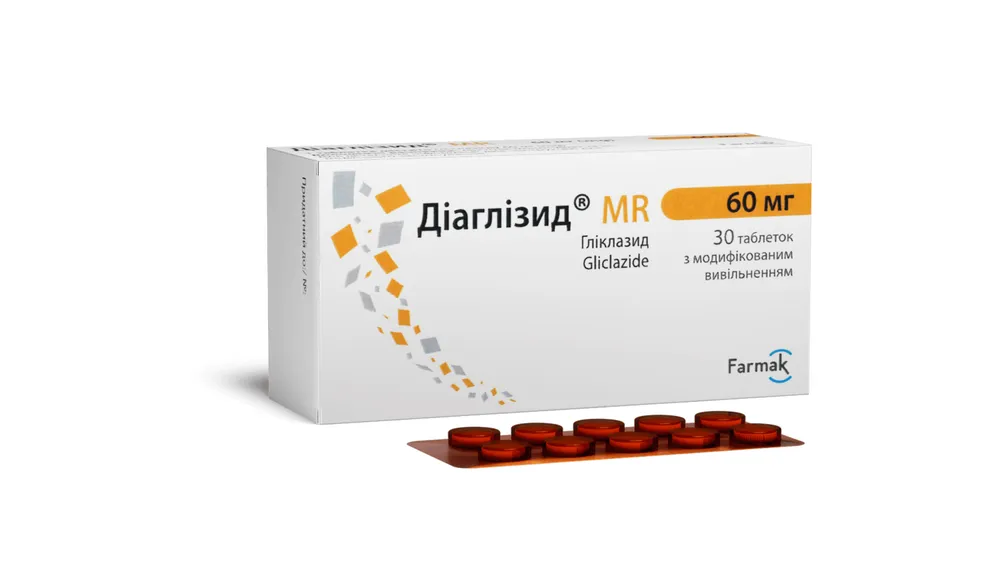
Table of Contents
INSTRUCTIONS FOR MEDICAL USE OF THE MEDICINAL PRODUCT DIAGLIZIDE® (DIAGLIZIDE)
Composition:
Active substance: gliclazide;
One tablet contains 80 mg of gliclazide, calculated as 100% substance;
Excipients: lactose monohydrate, microcrystalline cellulose, povidone, calcium stearate, talc.
Pharmaceutical form. Tablets.
Main physico-chemical properties: tablets of white or white with cream shade color, with flat surface, a score line and beveled edges.
Pharmacotherapeutic group.
Antihyperglycemic agents, excluding insulins. Sulfonamides, urea derivatives. Gliclazide. ATC code A10BB09.
Pharmacological Properties
Pharmacodynamics
Gliclazide is a derivative of sulfonylurea and belongs to the class of synthetic oral hypoglycemic agents of the second generation. The drug restores the early peak of insulin secretion and affects calcium transport in the β-cells of the pancreas. The specific chemical structure of second-generation agents determines their higher affinity for the sulfonylurea receptor on the membrane of β-cells. This action is realized through the following mechanism: reduction of membrane permeability to potassium ions → membrane depolarization → influx of calcium ions through voltage-dependent channels → increased intracellular calcium concentration → release of insulin from cytoplasmic granules. Gliclazide selectively, with high affinity and reversibly, binds to the regulatory subunit of KATP channels in pancreatic β-cells. Gliclazide enhances insulin action and reduces insulin resistance by increasing glucose utilization and accumulation in muscles and decreasing its production in the liver. The drug enhances insulin-stimulated glucose metabolism, accelerates glucose transport into tissues, and activates muscle glycogen synthase. The hypoglycemic effect of gliclazide is mediated by stimulation of endogenous insulin secretion. The glucose-lowering effect is moderate.
Gliclazide prevents the development of diabetic vascular complications, including microangiopathies and atherosclerotic macroangiopathies. This effect is achieved by reducing platelet adhesion and aggregation, normalizing prostaglandin metabolism (which is impaired in diabetes mellitus), and enhancing vascular fibrinolytic activity. In addition, the drug is a potent scavenger of free radicals (whose production is significantly increased in diabetes mellitus), normalizes vascular permeability, and prevents the development of microthrombosis and atherogenesis. Gliclazide reduces the severity of oxidative stress. It also reduces lipid deposition leading to atherosclerotic plaque formation. The drug contributes to body weight reduction and normalizes lipid metabolism (reduces plasma concentrations of cholesterol, triglycerides, and free fatty acids).
Pharmacokinetics
Gliclazide is rapidly absorbed in the gastrointestinal tract. Food intake and its composition do not affect the rate or extent of its absorption. After oral administration of 80 mg gliclazide to patients with non-insulin-dependent diabetes mellitus who had been receiving this dose for one week, maximum plasma concentration of 6–8 μg/mL was reached within 2–3 hours. In healthy individuals, maximum drug concentration of 2–4 μg/mL is achieved within 4 hours after a single 80 mg dose. 87–95% of gliclazide is bound to plasma proteins. The drug is almost completely metabolized, primarily in the liver. The elimination half-life of gliclazide ranges from 10 to 12 hours. Three to six hours after administration, metabolites of the drug appear in the intestine. Plasma clearance is approximately 13 mL/min; 60–70% of the drug is excreted in urine, and 10–20% in feces.
Clinical characteristics.
Indications.
Type II (non-insulin-dependent) diabetes mellitus in adults when blood glucose levels cannot be controlled by diet, physical exercise, or weight reduction alone.
Contraindications.
- Hypersensitivity to gliclazide, other sulfonylurea derivatives, or to any of the excipients;
- Type I diabetes (insulin-dependent);
- Severe ketoacidosis, precomatose state, or diabetic coma;
- Severe renal impairment;
- Severe hepatic impairment;
- Therapy with miconazole;
- Treatment with quinolones;
- Breastfeeding period.
Interaction with other medicinal products and other forms of interaction.
When using drugs that, when administered concomitantly, may cause hypoglycemia or hyperglycemia, patients should be warned about the necessity of careful monitoring of blood glucose levels during treatment. Adjustment of the dose of the antidiabetic agent may be required during and after treatment with these drugs.
Medicinal products whose concomitant administration may increase the risk of hypoglycemia:
Contraindicated concomitant use.
Miconazole (for systemic use, oral gel) enhances the hypoglycemic effect, potentially leading to hypoglycemic symptoms and even coma.
Quinolones enhance the hypoglycemic effect, potentially causing severe, profound, persistent hypoglycemia that is difficult to control, or even coma, particularly in elderly patients with renal impairment.
Concomitant use not recommended.
Phenylbutazone (for systemic use) enhances the hypoglycemic effect of sulfonylurea derivatives (by displacing their plasma protein binding and/or reducing their elimination). It is recommended to use alternative nonsteroidal anti-inflammatory drugs or to warn the patient and emphasize the importance of self-monitoring of blood glucose. If necessary, the dose of the antidiabetic agent may be adjusted during and after phenylbutazone treatment.
Alcohol increases the risk of hypoglycemic reactions (due to inhibition of compensatory mechanisms), which may lead to hypoglycemic coma. Consumption of alcohol and alcohol-containing products should be avoided.
Combinations requiring caution.
Concomitant use with any of the following medicinal products may in some cases lead to hypoglycemia due to enhanced hypoglycemic effect: other antidiabetic agents (insulin, acarbose, biguanides, metformin, thiazolidinediones, dipeptidyl peptidase-4 inhibitors, glucagon-like peptide-1 (GLP-1) receptor agonists), β-blockers, fluconazole, ACE inhibitors (captopril, enalapril), H2-receptor antagonists, MAO inhibitors, sulfonamides, nonsteroidal anti-inflammatory drugs, clarithromycin.
Medicinal products whose concomitant administration may increase the risk of hyperglycemia:
Concomitant use not recommended.
Danazol has a diabetogenic effect. If concomitant use cannot be avoided, patients should be warned and the importance of self-monitoring of blood and urine glucose emphasized. If necessary, the dose of the antidiabetic agent may be adjusted during and after danazol treatment.
Combinations requiring caution.
Chlorpromazine (neuroleptic) when used in high doses (over 100 mg daily) increases blood glucose levels (due to reduced insulin release). Patients should be warned and the importance of self-monitoring of blood glucose emphasized. If necessary, the dose of the antidiabetic agent may be adjusted during and after neuroleptic treatment.
Glucocorticoids (for systemic and local use: intra-articular, topical, rectal preparations) and tetracosactide – increase blood glucose levels with possible development of ketoacidosis (reduced carbohydrate tolerance). Patients should be warned and the importance of self-monitoring of blood glucose emphasized, especially at the beginning of treatment. If necessary, the dose of the antidiabetic agent may be adjusted during and after glucocorticoid treatment.
Ritodrine, salbutamol, terbutaline (intravenous) – may increase blood glucose levels due to β2-agonist effects.
Hypericum perforatum (St. John's wort) preparations reduce gliclazide concentrations. The importance of monitoring blood glucose levels should be emphasized.
Combinations to be considered.
Anticoagulants (e.g., warfarin): concomitant use with sulfonylurea derivatives may potentiate the anticoagulant effect. If necessary, the dose of anticoagulants may be adjusted.
Special precautions.
Hypoglycemia. This medication should only be prescribed if the patient is able to adhere to regular meals (including breakfast). Regular intake of carbohydrates is very important. Delayed meals, insufficient food intake, or a diet low in carbohydrates increase the risk of hypoglycemia.
Hypoglycemia is more likely to occur with low-calorie or irregular eating patterns, prolonged or intense physical exercise, alcohol consumption, or concomitant use of other hypoglycemic agents.
Hypoglycemia may occur during treatment with sulfonylurea drugs. In some cases, hypoglycemia can be severe and prolonged. In such cases, hospitalization and administration of glucose for several days may be required.
To reduce the risk of hypoglycemic episodes, individual patient characteristics must be taken into account, clear instructions provided, and dosage carefully adjusted.
Risk factors that increase the likelihood of hypoglycemia:
- Patient refusal or inability to follow physician recommendations (particularly relevant in elderly patients);
- Inadequate or irregular nutrition, periods of fasting, or dietary changes;
- Imbalance between physical activity and carbohydrate intake;
- Alcohol consumption;
- Renal impairment;
- Severe hepatic impairment;
- Drug overdose;
- Certain endocrine disorders: thyroid dysfunction, hypopituitarism, and adrenal insufficiency;
- Concomitant use of certain medications (see section "Drug interactions").
Renal and hepatic impairment: The pharmacokinetics and/or pharmacodynamics of gliclazide may be altered in patients with hepatic impairment or severe renal impairment. Hypoglycemic episodes in such patients may be prolonged and therefore require appropriate management.
Patient information. The patient and family members should be informed about risk factors and conditions that may predispose to hypoglycemia, symptoms of hypoglycemia, and methods of its management. Patients should be advised about the importance of adhering to dietary recommendations, regular physical activity, and routine blood glucose monitoring.
Worsening glycemic control in patients receiving hypoglycemic agents may be triggered by: St. John's wort (Hypericum perforatum) or any concomitant therapy that may affect gliclazide metabolism, infection, fever, trauma, or surgical intervention. In some cases, insulin therapy may become necessary. The hypoglycemic efficacy of any oral antidiabetic agent, including gliclazide, may diminish over time, due either to disease progression or reduced response to treatment. This phenomenon is known as secondary failure, which differs from primary failure, where the drug is ineffective from the start of treatment. Before concluding that secondary failure has occurred, the appropriateness of the prescribed dose and the patient's adherence to dietary recommendations should be verified.
Abnormalities in blood glucose concentration, including hypoglycemia and hyperglycemia, have been observed in patients with diabetes mellitus, particularly elderly patients, receiving concomitant treatment with fluoroquinolones. Close monitoring of blood glucose levels is recommended in all patients receiving Diaglizid® and fluoroquinolones simultaneously.
Laboratory tests: To assess glycemic control, measurement of glycated hemoglobin (HbA1c) or fasting blood glucose levels is recommended.
In patients with glucose-6-phosphate dehydrogenase (G6PD) deficiency, treatment with sulfonylurea agents may induce hemolytic anemia. Gliclazide should be used with caution in such patients, and alternative therapy should be considered.
The formulation contains lactose. Therefore, this medication is not recommended for patients with congenital galactose intolerance, glucose-galactose malabsorption syndrome, or Lapp-type lactase deficiency.
Use during pregnancy or breastfeeding.
Pregnancy. Oral antidiabetic agents (including Diaglizid®) should not be used during pregnancy. Experience with gliclazide use in pregnancy is limited (fewer than 300 cases reported in pregnant women), and data on other sulfonylureas are also limited. Animal studies have not shown teratogenic effects of gliclazide.
Gliclazide use during pregnancy should be avoided.
Glycemic control should be achieved before pregnancy is planned to reduce the risk of abnormalities associated with uncontrolled diabetes. When pregnancy is planned or confirmed, women should be switched from oral antidiabetic agents to insulin therapy.
Breastfeeding. There are no data on the passage of gliclazide or its metabolites into breast milk. Diaglizid® is contraindicated during breastfeeding due to the potential risk of neonatal hypoglycemia. A risk to newborns and infants cannot be excluded.
Fertility. Preclinical studies have not shown any effect of gliclazide on fertility or reproductive performance in male or female rats.
Ability to affect reaction speed when driving or operating machinery.
Diaglizid® may have a minor influence on the ability to drive vehicles or operate machinery.
Patients should be aware of the symptoms of hypoglycemia, be able to recognize them, and refrain from driving or operating machinery if such symptoms occur.
Method of Administration and Dosage
Administer orally to adults.
Like all antidiabetic agents, Diaglizid® requires individual dose adjustment based on the patient's individual response to treatment. For patients whose glucose levels are usually well controlled by diet alone but experience temporary loss of glucose control, Diaglizid® may be prescribed for short-term use.
Initial dose.
For patients under 65 years of age – 1 tablet (80 mg gliclazide) per day.
For patients aged 65 years and older, treatment should be initiated at 40 mg once daily (use gliclazide formulations allowing such dosing).
Dose escalation should be performed at intervals of not less than 14 days, with careful monitoring of blood glucose levels.
Average daily dose – 1–3 tablets of Diaglizid® (80 mg tablets) administered in two divided doses.
Standard dose – 2 tablets per day in two divided doses.
Maximum daily dose – 4 tablets per day in two divided doses.
Other high-risk patients.
In patients with inadequate or irregular nutrition, or significant deterioration in general condition, as well as in patients with renal or hepatic impairment, treatment should be initiated at the lowest possible dose, and dose escalation recommendations must be strictly followed to avoid the risk of hypoglycemic reactions.
Patients previously receiving other oral antidiabetic drugs:
As with other sulfonylurea antidiabetic agents, this drug may be initiated without a transition period when switching from another oral antidiabetic agent. When switching from another sulfonylurea with a longer elimination half-life (e.g., chlorpropamide), the patient should be closely monitored (for more than several weeks) to avoid an additive effect of the two drugs and the development of hypoglycemia.
Children.
The safety and efficacy of Diaglizid® in children have not been established; therefore, the drug should not be used in this patient population.
Overdose.
Overdose of sulfonylurea agents may cause hypoglycemia.
Symptoms of moderate hypoglycemia (without loss of consciousness and without neurological symptoms) should be managed by administration of carbohydrates (sugar), adjustment of the antidiabetic drug dose, and/or dietary correction. Close monitoring of the patient should continue until the physician is confident that the patient is no longer at risk.
Severe hypoglycemia leading to coma, seizures, or other neurological disturbances requires emergency medical intervention with immediate hospitalization.
In cases of diagnosed hypoglycemic coma or suspected coma, the patient should receive a rapid intravenous injection of 50 mL of concentrated glucose solution (20–30%), followed by continuous infusion of a less concentrated glucose solution (10%) at a rate sufficient to maintain blood glucose levels above 1 g/L. Continuous monitoring of the patient is essential. The physician will determine further management based on the patient’s condition.
Gliclazide is highly protein-bound, so dialysis is ineffective.
Side effects.
Based on the experience with gliclazide and other sulfonylurea derivatives, the following adverse effects may occur.
Hypoglycemia. As with other sulfonylurea drugs, gliclazide may cause hypoglycemia, particularly in cases of irregular eating habits or when a meal is missed. Hypoglycemia may be accompanied by characteristic symptoms such as headache, intense hunger, nausea, vomiting, fatigue, sleep disturbances, restlessness, agitation, aggression, difficulty concentrating and reacting, depression, confusion, visual and speech disturbances, aphasia, tremor, paresis, sensory disturbances, dizziness, weakness, loss of self-control, delirium, seizures, shallow breathing, bradycardia, drowsiness, and loss of consciousness, which may progress to coma and potentially result in death.
In addition, signs of adrenergic counter-regulation may occur, including increased sweating, clammy skin, anxiety, tachycardia, arterial hypertension, palpitations, angina attacks, and arrhythmias.
Typically, symptoms of hypoglycemia resolve after ingestion of carbohydrates (sugar). However, sugar substitutes are ineffective. Experience with other sulfonylurea drugs indicates that hypoglycemic episodes may recur, even if initial treatment measures were effective.
If a hypoglycemic episode is severe or prolonged, the patient requires immediate medical attention or hospitalization, even if symptoms are temporarily controlled by sugar intake.
Other adverse effects.
Gastrointestinal disorders: abdominal pain, nausea, vomiting, dyspepsia, diarrhea, and constipation. Adhering to the recommendation to take the drug during breakfast may help prevent or minimize these symptoms.
Less frequently observed adverse effects.
Skin and subcutaneous tissue disorders: rash, pruritus, urticaria, erythema, maculopapular rash, bullous eruption, Stevens-Johnson syndrome, toxic epidermal necrolysis, angioneurotic edema; in isolated cases – drug reaction with eosinophilia and systemic symptoms (DRESS).
Blood and lymphatic system disorders (rare): anemia, thrombocytopenia, leukopenia, granulocytopenia. These effects usually resolve after discontinuation of the drug.
Hepatobiliary disorders: increased levels of liver enzymes (ALT, AST, alkaline phosphatase), hepatitis (isolated cases). If jaundice occurs, treatment with the drug should be discontinued.
The aforementioned adverse effects usually resolve after discontinuation of the drug.
Eye disorders: transient visual disturbances may occur, especially at the beginning of treatment, due to changes in blood glucose levels.
Metabolic disturbances: hyponatremia.
Disorders that may occur with any sulfonylurea drug: cases of erythrocytopenia, agranulocytosis, hemolytic anemia, pancytopenia, and allergic vasculitis. With sulfonylurea drugs, there have also been reports of elevated liver enzymes and even liver dysfunction (e.g., with cholestasis and jaundice) and hepatitis, which improved after discontinuation of the drug, but in isolated cases led to life-threatening liver failure.
Shelf life.
3 years.
Do not use the drug after the expiry date stated on the packaging.
Storage conditions.
Store at a temperature not exceeding 25 °C. Keep out of reach of children.
Packaging. 10 tablets in a blister. 3 or 6 blisters per carton.
Prescription status. Prescription only.
Manufacturer.
JSC "Farmak".
Manufacturer's name and address of the place of business.
74, Kyrylivska Street, Kyiv, 04080, Ukraine.