Diaglycid® mr
Ukraine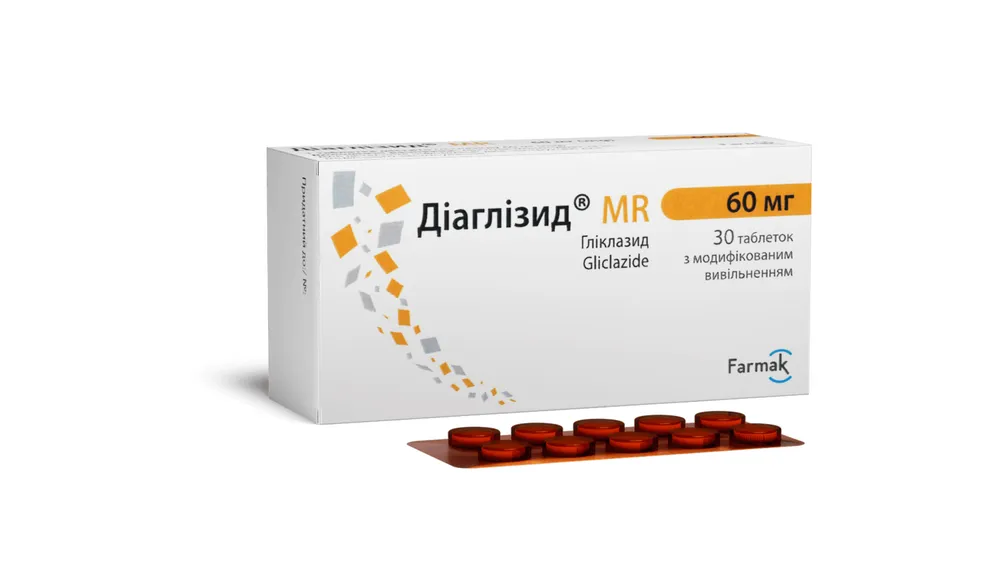
Table of Contents
INSTRUCTIONS FOR MEDICAL USE OF THE MEDICINAL PRODUCT DIAGLIZID® MR (DIAGLIZID® MR)
Composition:
Active substance: gliclazide;
One tablet contains gliclazide 60 mg;
Excipients: hypromellose, lactose monohydrate, copovidone, colloidal anhydrous silicon dioxide, magnesium stearate.
Pharmaceutical form. Modified-release tablets.
Main physicochemical characteristics: white or almost white with a slight yellowish tinge, round, flat tablets with a score line and bevelled edge. Marbling on the tablet surface is permissible.
Pharmacotherapeutic group. Antidiabetic agents. Oral hypoglycemic agents, excluding insulin. Sulphonamides, urea derivatives. Gliclazide. ATC code A10BB09.
Pharmacological properties.
Pharmacodynamics.
Mechanism of action. The active substance, gliclazide, is an oral hypoglycemic agent belonging to the sulfonylurea derivative class and differs from other agents in this class by the presence of a heterocyclic ring containing nitrogen and having endocyclic bonds.
Gliclazide reduces glucose levels in blood plasma by stimulating insulin secretion from pancreatic β-cells of the islets of Langerhans. Elevated postprandial insulin levels and C-peptide secretion are maintained even after 2 years of treatment. In addition to these metabolic properties, gliclazide also has haemovascular properties.
Pharmacodynamic effects.
Effect on insulin secretion. In patients with type 2 diabetes, gliclazide restores the early peak of insulin secretion in response to glucose intake and enhances the second phase of insulin secretion. Increased insulin release occurs in proportion to food intake or glucose load.
Haemovascular properties. Gliclazide reduces microthrombosis through two mechanisms that may be involved in the development of diabetic complications:
- partially inhibits platelet aggregation and adhesion, and reduces levels of platelet activation markers (β-thromboglobulin, thromboxane B2);
- affects endothelial fibrinolytic activity (increases tPA activity).
Pharmacokinetics.
Absorption. Plasma concentration of gliclazide progressively increases during the first 6 hours after administration, then reaches a plateau level maintained from 6 to 12 hours post-dose. Individual variability is minimal. Gliclazide is completely absorbed in the gastrointestinal tract. Food intake does not affect the rate or extent of absorption.
Distribution. Plasma protein binding of gliclazide is approximately 95%. The volume of distribution is about 30 L. A single daily dose of 60 mg gliclazide provides effective plasma concentrations for 24 hours.
Biotransformation. Gliclazide is primarily metabolized in the liver and excreted in urine; less than 1% of the active substance is excreted unchanged in urine. Active metabolites are not present in plasma.
Elimination. The elimination half-life of gliclazide is approximately 12–20 hours.
Linearity/non-linearity. A linear relationship between administered dose and plasma concentration is observed with doses up to 120 mg.
Special patient groups.
Elderly patients. No clinically significant changes in pharmacokinetics of the drug have been observed in elderly patients.
Clinical characteristics.
Indications.
Type 2 diabetes mellitus in adults:
- reduction and control of blood glucose when glucose levels cannot be normalized by diet, physical exercise, and weight reduction alone;
- prevention of complications of type 2 diabetes: reduction in the risk of macro- and microvascular complications, including new onset or worsening of nephropathy in patients with type 2 diabetes treated according to an intensive glycemic control strategy.
Contraindications.
- Hypersensitivity to gliclazide or to other sulfonylurea drugs, sulfonamides, or to any component of the medicinal product;
- type 1 diabetes mellitus;
- diabetic precoma or coma, diabetic ketoacidosis (in such cases insulin therapy is recommended);
- severe hepatic or renal insufficiency;
- concomitant treatment with miconazole;
- breastfeeding period.
Interaction with other medicinal products and other forms of interaction.
When prescribing drugs that may cause hypoglycemia or hyperglycemia when used concomitantly (see below), patients must be warned about the need for careful monitoring of blood glucose levels during treatment. Adjustment of the dose of the antidiabetic agent may be necessary during and after treatment with these drugs.
Medicinal products whose concomitant use may increase the risk of hypoglycemia.
Contraindicated concomitant use
Miconazole (for systemic use, oral gel) enhances the hypoglycemic effect, possibly leading to symptoms of hypoglycemia and even coma.
Not recommended concomitant use
Phenylbutazone (for systemic use) enhances the hypoglycemic effect of sulfonylurea drugs (by displacing their binding to plasma proteins and/or reducing their elimination).
Alcohol increases the risk of hypoglycemic reactions (due to inhibition of compensatory mechanisms), which may lead to hypoglycemic coma. Alcohol consumption and use of medicinal products containing alcohol should be avoided.
Combinations requiring caution
Concomitant use with any of the following medicinal products may in some cases lead to hypoglycemia due to enhanced hypoglycemic effect: other antidiabetic agents (insulins, acarbose, metformin, thiazolidinediones, dipeptidyl peptidase-4 inhibitors, glucagon-like peptide-1 (GLP-1) receptor agonists), β-blockers, fluconazole, ACE inhibitors (captopril, enalapril), H2-receptor antagonists, MAO inhibitors, sulfonamides, clarithromycin, and nonsteroidal anti-inflammatory drugs (NSAIDs).
Medicinal products whose concomitant use may increase the risk of hyperglycemia
Not recommended concomitant use
Danazol exerts a diabetogenic effect.
Combinations requiring caution
Chlorpromazine (neuroleptic) when used in high doses (over 100 mg per day) increases blood glucose levels (due to reduced insulin release).
Glucocorticoids (for systemic and local use: intra-articular, topical, rectal preparations) and tetracosactide increase blood glucose levels with possible development of ketoacidosis (due to reduced carbohydrate tolerance).
Intravenous: ritodrine, salbutamol, terbutaline increase blood glucose levels via β2-agonist effect.
Hypericum perforatum (St. John's wort) preparations reduce gliclazide concentration. Emphasis should be placed on the importance of blood glucose monitoring.
Medicinal products that may cause dysglycemia.
Combinations requiring caution
Fluoroquinolones. When used concomitantly with Diaglizide MR 60 mg, patients should be warned about the risk of dysglycemia and the importance of monitoring blood glucose levels.
Combinations to be considered
Anticoagulants (e.g., warfarin, etc.). When used concomitantly with anticoagulants, sulfonylurea drugs may potentiate the anticoagulant effect. If necessary, the dose of anticoagulants may be adjusted.
Special precautions for use.
Hypoglycemia. This medication should only be prescribed to patients who are able to eat regularly (including breakfast). It is important to regularly consume carbohydrates, as the risk of hypoglycemia increases when meals are delayed, inadequate in quantity, or low in carbohydrate content. Hypoglycemia is more likely to occur during low-calorie diets, prolonged or intense physical exertion, alcohol consumption, or concomitant use of hypoglycemic agents.
Hypoglycemia may occur during treatment with sulfonylurea drugs (see section "Adverse reactions"). Occasionally, hypoglycemia may be severe and prolonged. In such cases, hospitalization and administration of glucose for several days may be required.
To reduce the risk of hypoglycemic episodes, individual patient characteristics must be considered, clear instructions provided, and the dose carefully selected.
Factors that increase the risk of hypoglycemia:
- Patient refuses or is unable to follow medical advice (particularly relevant for elderly patients);
- Inadequate or irregular nutrition, missed meals, periods of fasting, or dietary changes;
- Imbalance between physical activity and carbohydrate intake;
- Renal impairment;
- Severe hepatic impairment;
- Drug overdose;
- Certain endocrine disorders: thyroid dysfunction, hypopituitarism, and adrenal insufficiency;
- Concomitant use of certain medications (see section "Interaction with other medicinal products and other forms of interaction").
Renal and hepatic impairment. The pharmacokinetics and/or pharmacodynamics of gliclazide may be altered in patients with hepatic impairment or severe renal impairment. Hypoglycemic episodes in such patients may be prolonged and therefore require appropriate treatment.
Patients and their family members should be informed about risk factors and conditions that may predispose to hypoglycemia, symptoms of hypoglycemia (see section "Adverse reactions"), and methods for their management.
Patients should be informed about the importance of adhering to dietary recommendations, regular physical activity, and routine monitoring of blood glucose levels.
Deterioration of glycemic control in patients receiving antidiabetic medications may be triggered by St. John's wort (Hypericum perforatum), infection, fever, trauma, or surgery. In some cases, insulin therapy may become necessary.
The hypoglycemic efficacy of any oral antidiabetic agent, including gliclazide, may change over time. This may result from progression of disease severity or reduced response to treatment. This phenomenon is known as secondary failure, which differs from primary failure, where the drug is ineffective from the start of treatment. Before concluding that secondary failure has developed, the appropriateness of the prescribed dose and patient adherence to dietary recommendations should be verified.
Disglycemia.
Alterations in blood glucose levels, including hypoglycemia and hyperglycemia, have been reported in patients (particularly elderly) with diabetes receiving concomitant treatment with fluoroquinolones. All patients receiving gliclazide and fluoroquinolones concomitantly should be closely monitored for blood glucose levels.
Laboratory tests. Glycated hemoglobin levels (or fasting blood glucose) are recommended for assessing glycemic control. Self-monitoring of blood glucose by patients may also be beneficial.
In patients with glucose-6-phosphate dehydrogenase (G6PD) deficiency, treatment with sulfonylurea agents may induce hemolytic anemia. Since gliclazide belongs to the sulfonylurea class of chemically derived drugs, caution is advised, and alternative therapy from a different class should be considered for patients with G6PD deficiency.
The product contains lactose; therefore, it is not recommended for patients with rare hereditary conditions such as galactose intolerance, the Lapp lactase deficiency, or glucose-galactose malabsorption syndrome.
Use during pregnancy or breastfeeding.
Pregnancy. Oral antidiabetic agents (including Diaglizid® MR) should not be used during pregnancy. Experience with gliclazide use during pregnancy is limited (fewer than 300 cases reported in pregnant women), and data on use of other sulfonylurea agents are also limited. Animal studies have shown that gliclazide has no teratogenic effects. Gliclazide use during pregnancy should be avoided.
Glycemic control should be achieved before pregnancy is planned to reduce the risk of abnormalities associated with uncontrolled diabetes. Upon planning pregnancy or immediately after pregnancy is confirmed, women should be switched from oral antidiabetic agents to insulin therapy.
Breastfeeding. There are no data on the passage of gliclazide or its metabolites into breast milk. Diaglizid® MR is contraindicated during breastfeeding due to the potential risk of neonatal hypoglycemia. Risk to newborns and infants cannot be ruled out.
Fertility. No effects on fertility or reproductive performance in male or female rats were observed in preclinical studies.
Ability to affect reaction speed when driving or operating machinery.
Diaglizid® MR may have a minor influence on the ability to drive or operate machinery. Patients should be aware of the symptoms of hypoglycemia, know how to recognize them, and exercise caution when driving or operating machinery, especially at the beginning of treatment.
Dosage and Administration
For oral use. To be prescribed only to adults.
The daily dose may range from 30 to 120 mg. The daily dose should be taken once daily with breakfast.
Tablets should be swallowed whole (do not crush or chew).
If a patient forgets to take a tablet, the dose should not be doubled the next day.
As with all antidiabetic agents, Diaglizid® MR requires individual dose adjustment based on the patient's response to treatment (blood glucose levels, glycated hemoglobin HbA1c).
Initial dose and dose titration
The recommended initial dose is 30 mg (1 Diaglizid® MR 30 mg tablet) once daily. If adequate glycemic control is achieved, treatment may continue at this dose. If enhanced glycemic control is needed, the daily dose may be gradually increased to 60 mg, 90 mg, or 120 mg. Dose increases should be made gradually, at intervals of 1 month, except in cases where no reduction in blood glucose levels is observed within 2 weeks of treatment. In such cases, the dose may be increased at the end of the second week of treatment.
Maximum recommended daily dose – 120 mg (2 tablets).
Diaglizid® MR tablets must not be divided.
Switching patients from other oral antidiabetic drugs to Diaglizid® MR
Diaglizid® MR may be prescribed as a replacement for another oral antidiabetic agent. The dosage and half-life of the previous agent should be taken into account. A transition period is usually not required. Treatment should be initiated at a dose of 30 mg (Diaglizid® MR 30 mg) with subsequent dose adjustments (see "Initial dose and dose titration").
When switching from sulfonylurea hypoglycemic agents with a longer half-life than Diaglizid® MR, a treatment-free interval of several days may be necessary to avoid a cumulative effect of the two drugs and the development of hypoglycemia. Treatment with Diaglizid® MR should be initiated at a dose of 30 mg (Diaglizid® MR 30 mg tablet) once daily, with subsequent dose adjustments as described above.
Concomitant use with other antidiabetic agents
Diaglizid® MR may be used in combination with biguanides, alpha-glucosidase inhibitors, and insulin. If adequate glycemic control is not achieved in patients taking Diaglizid® MR, concomitant insulin therapy may be initiated under close medical supervision.
For elderly patients (aged 65 years and older), the dosing regimen for Diaglizid® MR is the same as for patients under 65 years of age.
For patients with mild to moderate renal impairment, the dosing regimen for Diaglizid® MR is the same as for patients with normal renal function; however, such patients should be closely monitored.
For patients at risk of hypoglycemia (see section "Special precautions" and "Interaction with other medicinal products and other forms of interaction"), a minimal initial dose of 30 mg daily (Diaglizid® MR 30 mg tablet) is recommended.
For patients with severe vascular disease (ischemic heart disease, severe carotid artery disease, diffuse vascular disease), a minimal initial dose of 30 mg daily (Diaglizid® MR 30 mg tablet) is recommended.
Prevention of complications in type 2 diabetes
An intensive glycemic control strategy involves gradual dose escalation of Diaglizid® MR up to 120 mg daily. Dose increases should be guided by HbA1c levels, adherence to dietary and exercise recommendations, and monitoring for hypoglycemia risk. Additional antidiabetic agents such as metformin, acarbose, thiazolidinediones, or insulin may also be added.
Children
Diaglizid® MR is not recommended for use in children due to lack of data on safety and efficacy in this patient population.
Overdose
Overdose with sulfonylurea agents may lead to hypoglycemia.
Symptoms of moderate hypoglycemia (without loss of consciousness or neurological symptoms) should be managed by carbohydrate intake (sugar), dose adjustment of the antidiabetic agent, and/or dietary changes. Close monitoring of the patient should continue until the physician is confident the patient is no longer at risk.
Severe hypoglycemia resulting in coma, seizures, or other neurological disturbances requires immediate medical intervention and urgent hospitalization.
In cases of diagnosed hypoglycemic coma or suspected coma, the patient should receive an immediate intravenous injection of 50 mL of concentrated glucose solution (20%–30%), followed by continuous infusion of a less concentrated glucose solution (10%) at a rate sufficient to maintain blood glucose levels above 1 g/L. Continuous monitoring of the patient is essential. The physician will determine the need for further monitoring based on the patient's condition.
Gliclazide is highly protein-bound, so dialysis is ineffective.
Adverse Reactions
The most common adverse reaction associated with gliclazide use is hypoglycemia. As with other sulfonylurea drugs, gliclazide may cause hypoglycemia, particularly in cases of irregular eating habits or especially when meals are skipped. Hypoglycemia may be accompanied by characteristic symptoms such as headache, intense hunger, nausea, vomiting, fatigue, sleep disturbances, agitation, aggression, reduced concentration and attention, slowed reactions, depression, confusion, impaired consciousness, visual disturbances and speech disorders, aphasia, tremor, paralysis, sensory disturbances, dizziness, weakness, loss of self-control, delirium, seizures, shallow breathing, bradycardia, drowsiness, and loss of consciousness, which may progress to coma and potentially fatal outcomes.
In addition, adrenergic system disturbances may occur: sweating, clammy skin, anxiety, tachycardia, arterial hypertension, palpitations, chest pain, and arrhythmia.
Symptoms of hypoglycemia usually resolve after carbohydrate intake (sugar). However, sugar substitutes are ineffective in such cases. Clinical experience with other sulfonylurea drugs indicates that even after effective intervention, hypoglycemia may recur.
If a hypoglycemic episode is severe or prolonged and the patient's condition is only temporarily controlled by sugar intake, emergency medical assistance or even hospitalization is required.
Gastrointestinal disorders, including abdominal pain, nausea, vomiting, dyspepsia, diarrhea, and constipation. Adhering to the recommendation to take the drug during breakfast may help prevent or minimize these effects.
The less common adverse effects listed below have also been observed.
Skin and subcutaneous tissue disorders: rash, pruritus, urticaria, angioedema, erythema, maculopapular eruptions, bullous reactions (such as Stevens-Johnson syndrome and toxic epidermal necrolysis), and very rarely, drug rash with eosinophilia and systemic symptoms (DRESS).
Blood and lymphatic system disorders: hematological disorders are rare and may include anemia, thrombocytopenia, leukopenia, and granulocytopenia. These effects usually resolve upon discontinuation of the drug.
Hepatobiliary disorders: elevated liver enzymes (ALT, AST, alkaline phosphatase), hepatitis (isolated cases). If cholestatic jaundice occurs, treatment with the drug should be discontinued. These adverse effects are generally reversible upon drug withdrawal.
Eye disorders: transient visual disturbances may occur due to changes in blood glucose levels, particularly at the beginning of treatment.
Reactions typical of the sulfonylurea class: cases of erythrocytopenia, agranulocytosis, hemolytic anemia, pancytopenia, allergic vasculitis, hyponatremia, elevated liver enzymes, and even liver function impairment (e.g., with cholestasis and jaundice), hepatitis with regression after discontinuation of sulfonylureas, or in isolated cases, progressive liver failure with life-threatening consequences.
Clinical trials. Serious adverse reactions were monitored during the ADVANCE trial. In the group of patients with type 2 diabetes treated according to an intensive glycemic control strategy, no previously unreported adverse reactions were identified. Several patients experienced severe hypoglycemia. Most episodes of hypoglycemia occurred in patients receiving concomitant insulin therapy.
Reporting of suspected adverse reactions. It is important to report suspected adverse reactions after drug registration. This enables continued monitoring of the benefit-risk balance. Healthcare professionals are encouraged to report suspected adverse reactions through the national reporting system.
Shelf life. 2 years.
Do not use the medicinal product after the expiry date stated on the packaging.
Storage conditions.
Store at a temperature not exceeding 25 °C.
Keep out of the reach of children.
Packaging.
10 tablets per blister. 3 or 6 blisters per carton.
Prescription category. Prescription only.
Manufacturer.
JSC "Farmak".
Manufacturer's address and place of business.
74, Kyrylivska Street, Kyiv, 04080, Ukraine.