Desirett
Ukraine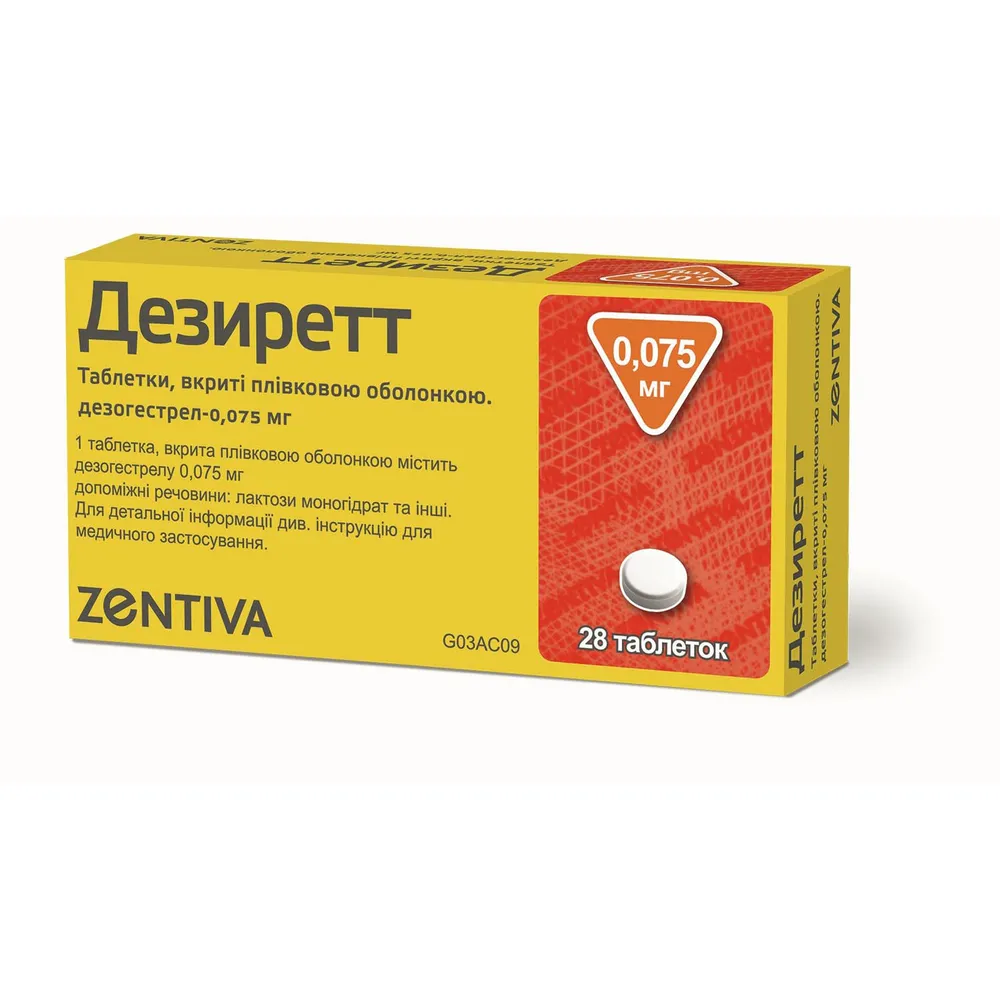
Table of Contents
INSTRUCTIONS FOR MEDICAL USE OF THE MEDICINAL PRODUCT DESIRETT (DESIRETT)
Composition:
Active substance: desogestrel;
1 tablet contains 0.075 mg of desogestrel;
Excipients: lactose monohydrate, maize starch, povidone, α-tocopherol, colloidal anhydrous silicon dioxide, colloidal aqueous silicon dioxide, stearic acid;
coating: hypromellose, polyethylene glycol, titanium dioxide (E 171).
Pharmaceutical form. Film-coated tablets.
Main physicochemical properties: white, round, smooth tablets.
Pharmacotherapeutic group. Hormonal contraceptives for systemic use.
ATC code G03A C09.
Pharmacological properties.
Pharmacodynamics.
Mechanism of action
DESIRETT is a progestogen-only contraceptive containing desogestrel. Like other progestogen-only contraceptives, DESIRETT can be used by women who cannot or do not wish to use estrogens. Unlike conventional progestogen-only contraceptives, the contraceptive effect of DESIRETT is primarily achieved through suppression of ovulation. Additional effects include increased viscosity of cervical mucus.
Pharmacokinetics.
Absorption. After oral administration, desogestrel is rapidly absorbed and converted into its biologically active metabolite, etonogestrel. At steady state, peak serum concentration is reached approximately 1.8 hours after tablet intake. Absolute bioavailability of etonogestrel is approximately 70%.
Distribution. Etonogestrel is 95.5–99% bound to serum proteins (primarily albumin), and to a lesser extent, to sex hormone-binding globulin.
Metabolism. Desogestrel is metabolized via hydroxylation and dehydrogenation into the active metabolite etonogestrel. Etonogestrel is primarily metabolized by the cytochrome P450 3A (CYP3A) isoenzyme, followed by conjugation to form sulfate and glucuronide conjugates.
Elimination. The elimination half-life of etonogestrel is approximately 30 hours, both after single and multiple doses. Steady-state plasma levels are reached within 4–5 days. Serum clearance after intravenous administration of etonogestrel is approximately 10 liters per hour. Etonogestrel and its metabolites are excreted in urine and feces (in a ratio of 1.5:1), both as free steroid and as conjugates. In lactating women, etonogestrel is excreted into breast milk at a milk-to-plasma ratio of 0.37–0.55. Based on these data and an estimated milk intake of 150 mL/kg/day, the infant may receive 0.01–0.05 micrograms of etonogestrel.
Special patient groups
Patients with renal impairment
The effect of renal disease on the pharmacokinetics of desogestrel has not been studied.
Patients with hepatic impairment
The effect of liver disease on the pharmacokinetics of desogestrel has not been studied. However, in women with impaired liver function, metabolism of sex hormones may be reduced.
Ethnic groups
Pharmacokinetic studies in ethnic groups have not been conducted.
Clinical characteristics.
Indications.
Oral contraception.
Contraindications.
Hypersensitivity to any component of the medicinal product.
Established or suspected pregnancy.
Current or past history of venous thromboembolic disorders.
Severe hepatic disease (current or in the past, until liver function tests have normalized).
Known or suspected malignancies sensitive to sex hormones.
Vaginal bleeding of unknown etiology.
Interaction with other medicinal products and other forms of interaction.
Notice
Carefully read the package leaflet of any concomitant medication to identify possible interactions.
Interactions between hormonal contraceptives (HC) and other medicinal products may result in breakthrough bleeding and/or reduced contraceptive efficacy. The following interactions have been reported (mainly with combined oral contraceptives (COCs), but occasionally also with progestogen-only contraceptives).
Hepatic metabolism
Interactions may occur with medicinal or herbal products that induce microsomal enzymes, particularly cytochrome P450 (CYP) enzymes, leading to increased clearance of sex hormones and potentially reducing the efficacy of oral contraceptives (OCs), including the medicinal product DESIREE. Such agents include phenytoin, phenobarbital, primidone, bosentan, carbamazepine, rifampicin, oxcarbazepine, topiramate, felbamate, griseofulvin, certain HIV protease inhibitors (e.g., ritonavir), non-nucleoside reverse transcriptase inhibitors (e.g., efavirenz), and herbal preparations containing St John's wort (Hypericum perforatum).
Enzyme induction may occur within a few days of starting treatment. Maximum enzyme induction is usually observed within several weeks. After discontinuation of the inducing agent, enzyme induction may persist for approximately 28 days.
Concomitant use of OCs with many combinations of HIV protease inhibitors (e.g., nelfinavir) and non-nucleoside reverse transcriptase inhibitors (e.g., nevirapine), as well as combinations with drugs used to treat hepatitis C virus (e.g., boceprevir, telaprevir), may increase or decrease plasma concentrations of progestins, including etonogestrel, the active metabolite of desogestrel. The net effect of these changes may be clinically significant in some cases. Therefore, information on prescribing concomitant medications for HIV or hepatitis C infection should be consulted to evaluate potential interactions and obtain appropriate recommendations. In case of any doubt, women receiving treatment with a protease inhibitor or a non-nucleoside reverse transcriptase inhibitor should use an additional barrier method of contraception.
Women taking any of these enzyme-inducing medicinal or herbal products should be aware that the efficacy of DESIREE may be reduced. During treatment with enzyme-inducing agents, a barrier method should be used in addition to DESIREE throughout the entire duration of treatment with the enzyme-inducing agent and for 28 days after its discontinuation.
For long-term treatment with enzyme-inducing drugs, consideration should be given to using an alternative contraceptive method not affected by these agents.
Concomitant use of DESIREE with strong (e.g., ketoconazole, itraconazole, clarithromycin) or moderate (e.g., fluconazole, diltiazem, erythromycin) CYP3A4 inhibitors may lead to increased serum concentrations of progestins, including etonogestrel, the active metabolite of desogestrel.
The use of activated charcoal may reduce the absorption of the steroid contained in the tablet, potentially reducing the contraceptive efficacy of the product. In such cases, follow the recommendations for missed tablets (see "What to do if a tablet is missed").
Hormonal contraceptives may affect the metabolism of other medicinal products. Consequently, plasma and tissue concentrations of other drugs may be increased (e.g., cyclosporine) or decreased (e.g., lamotrigine).
Special precautions.
Medical examination
A gynecological examination should be performed before initiating the drug in order to exclude pregnancy. The cause of menstrual cycle disorders (oligomenorrhea and amenorrhea) should be determined prior to prescribing. The frequency of follow-up examinations should be determined individually by the physician for each patient. If during treatment there is a potential impact on the course of latent or overt disease (see section "Special precautions"), appropriate regular monitoring examinations should be scheduled.
Despite regular intake of the drug, dysfunctional bleeding may occur. If bleeding occurs very frequently and irregularly, consideration should be given to switching to another method of contraception. If symptoms persist, functional disorders should be ruled out.
Treatment of amenorrhea during contraceptive use depends on adherence to the instructions for tablet use and may include a pregnancy test. If pregnancy is confirmed, the drug should be discontinued.
Women should be informed that DESIREE does not protect against HIV infection (AIDS) or other sexually transmitted diseases.
Warning
If any of the conditions or risk factors listed below occur, the benefits of using a progestogen versus the possible risks should be weighed for each individual woman, and this should be discussed with her before she decides to start taking DESIREE. If any condition worsens, recurs, or appears for the first time, the woman should consult her physician regarding possible discontinuation of the drug.
The risk of breast cancer generally increases with age. During use of hormonal contraceptives (HC), the risk of diagnosed breast cancer is somewhat increased. This increased risk gradually disappears within 10 years after discontinuation of HC use. It is not related to the duration of prior use, but depends on the woman's age at the time of using HC. For relevant age groups, the expected number of diagnosed cases of breast cancer among 10,000 women who used combined hormonal contraceptives (during the period up to 10 years after discontinuation) compared to women who have never used them (over the same time period) has been calculated. The number of such cases is shown in Table 1.
Table 1
| Age group |
Expected number of cases among women using hormonal contraceptives |
Expected number of cases among women not using hormonal contraceptives |
| 16 - 19 years |
4.5 |
4 |
| 20 - 24 years |
17.5 |
16 |
| 25 - 29 years |
48.7 |
44 |
| 30 - 34 years |
110 |
100 |
| 35 - 39 years |
180 |
160 |
| 40 - 44 years |
260 |
230 |
The risk in women using progestogen-only hormonal contraceptives (HC) may be comparable to the risk associated with combined hormonal contraceptives. However, data on progestogen-only contraceptives are not conclusive. The risk of breast cancer associated with the use of hormonal contraceptives, compared to the overall lifetime risk of breast cancer, is small. Breast cancer diagnosed in women who have used hormonal contraceptives may be less aggressive than cancer diagnosed in women who have never used hormonal contraceptives. The increased risk in women using hormonal contraceptives may be due to earlier diagnosis, the biological effects of the drug, or a combination of these two factors.
- Since a biological effect of progestogens on liver cancer cannot be ruled out, the individual risk-benefit ratio should be considered in women with liver cancer.
- In case of acute or chronic liver function disorders, women should consult a healthcare professional for evaluation and advice.
- If persistent arterial hypertension develops during treatment with DESIRETT, or if significant elevation in blood pressure does not respond adequately to antihypertensive therapy, discontinuation of the drug should be considered.
- Epidemiological studies have shown an association between the use of combined hormonal contraceptives and an increased risk of venous thromboembolism (VTE, deep vein thrombosis and pulmonary embolism). Although the clinical significance of these data for desogestrel used as a non-estrogen-containing contraceptive is unknown, the use of DESIRETT should be discontinued in case of thrombosis. Discontinuation should also be considered during prolonged immobilization due to surgery or illness. Women with a history of thromboembolic disorders should be warned about the possibility of recurrence.
- Although progestogens may affect insulin resistance and glucose tolerance, there is no evidence that therapy needs to be changed in diabetic patients using progestogen-only "pills". However, diabetic women should be closely monitored during the first month of use.
- Use of DESIRETT leads to a reduction in serum estradiol levels to those typical of the early follicular phase. It is currently unknown whether this reduction has any clinically significant effect on bone mineral density.
- Prevention of ectopic pregnancy with traditional progestogen-only "pills" is less effective than with combined oral contraceptives, as ovulation often occurs during use of traditional progestogen-only pills. Despite the fact that DESIRETT effectively inhibits ovulation, ectopic pregnancy should be ruled out in cases of amenorrhea and abdominal pain during differential diagnosis.
- Chloasma may occasionally occur, particularly in women with a history of chloasma. Women predisposed to chloasma should avoid exposure to sunlight or ultraviolet radiation during treatment with DESIRETT.
- Mood disturbances and depression are well-known adverse reactions during use of hormonal contraceptives (see section "Adverse Reactions"). Depression can be severe and is a known risk factor for suicidal behavior and suicide. Women should consult a physician if mood changes or depressive symptoms occur, including shortly after starting treatment.
- Conditions occurring both during pregnancy and during use of hormonal contraceptives have been reported: jaundice and/or pruritus associated with cholelithiasis; gallstone formation; porphyria; systemic lupus erythematosus; hemolytic uremic syndrome; Sydenham's chorea; herpes gestationis; hearing loss associated with otosclerosis; hereditary angioedema; however, a causal relationship with the use of progestogens has not been established.
- The efficacy of DESIRETT may be reduced in case of missed tablet intake, gastrointestinal disorders, or concomitant use of drugs that reduce plasma concentrations of etonogestrel, the active metabolite of desogestrel.
- DESIRETT contains 55 mg of lactose. Women with rare hereditary problems of galactose intolerance, total lactase deficiency, or glucose-galactose malabsorption should not take this medicine.
Reduced efficacy
The efficacy of progestogen-only pills may be reduced in case of missed tablet intake (see "What to do if a tablet is missed"), gastrointestinal disorders (see "Recommendations in case of gastrointestinal disturbances"), or concomitant use with other medicinal products (see section "Interaction with other medicinal products and other forms of interaction").
Worsening of menstrual cycle control
Irregular bleeding (spotting or breakthrough bleeding) may occur during use of hormonal contraceptives, especially during the first months of use. Therefore, evaluation of any irregular bleeding may only be appropriate after an adaptation period of approximately three cycles.
If irregular bleeding persists or occurs after previously regular cycles, non-hormonal causes should be considered and appropriate diagnostic measures, including curettage, should be performed to rule out pregnancy or malignancy.
In some women, withdrawal bleeding may not occur during the tablet-free interval. If hormonal contraceptives have been taken according to the instructions in the section "Method of administration and dosage", the likelihood of pregnancy is low. However, if deviations from these instructions occurred before the first missed withdrawal bleeding during the tablet-free interval, or if withdrawal bleeding is absent for two consecutive cycles, pregnancy should be ruled out before continuing use of hormonal contraceptives.
Laboratory tests
Data indicate that contraceptive steroids may influence the results of certain laboratory tests, including biochemical parameters of liver, thyroid, adrenal, and kidney function, plasma protein levels (e.g., corticosteroid-binding globulin), lipid/lipoprotein fractions, carbohydrate metabolism parameters, and coagulation and fibrinolysis parameters. Changes are usually within normal limits. It is unknown to what extent this applies to progestogen-only contraceptives.
Use during pregnancy or breastfeeding
Pregnancy
DESIRETT is contraindicated during pregnancy. If pregnancy occurs during use of the drug, further intake should be discontinued.
Animal studies indicate that very high doses of progestogen may cause fetal masculinization.
However, results of epidemiological studies do not indicate an increased risk of congenital malformations in children born to women who used combined oral contraceptives (COCs) prior to pregnancy, nor do they indicate teratogenic effects from unintentional use of COCs in early pregnancy. Pharmacovigilance data collected on various combined oral contraceptives containing desogestrel also do not suggest an increased risk.
Breastfeeding period
Based on study data, the medicinal product DESIRETT does not affect the production or quality of breast milk (protein, lactose, or fat concentration). However, rare post-marketing reports indicate decreased breast milk production during use of DESIRETT. A small amount of etonogestrel is excreted into breast milk. As a result, the infant may receive 0.01–0.05 µg of etonogestrel per kg body weight per day (based on an estimated milk intake of 150 ml/kg/day). Like other progestogen-only products, DESIRETT can be used during breastfeeding.
Data from long-term follow-up are limited for children whose mothers started using DESIRETT 4–8 weeks after delivery. Follow-up of infants breastfed for 7 months continued until 1.5 years (n=32) or 2.5 years (n=14). Assessment of growth, physical, and psychomotor development showed no differences compared to infants breastfed by mothers using a copper IUD. Based on available data, DESIRETT may be used during lactation. However, careful monitoring of the development and growth of the breastfed infant whose mother uses DESIRETT is recommended.
Reproductive function
The drug is intended to prevent pregnancy. Information on the recovery of reproductive function (ovulation) is provided in the section "Pharmacological properties".
Ability to affect reaction speed when driving or operating machinery
Based on the pharmacodynamic profile of the drug, DESIRETT is considered to have no effect or a negligible effect on the ability to drive a vehicle or operate machinery.
Method of Administration and Dosage
The tablets should be taken in the order indicated on the package, daily at approximately the same time, with a small amount of liquid if necessary. One tablet should be taken every day for 28 days. The next pack should be started immediately after finishing the previous one.
How to Start Taking DESIRETT
In the absence of prior hormonal contraception (within the last month)
Tablet intake should begin on day 1 of the menstrual cycle (the first day of menstrual bleeding). Starting between days 2–5 is acceptable; however, in this case, a barrier method of contraception is recommended during the first 7 days of tablet intake in the first cycle.
After first-trimester abortion
It is recommended to start taking the medication immediately after a first-trimester abortion; no additional contraceptive method is required.
After childbirth or second-trimester abortion
Women should be advised to start taking the medication on days 21–28 after childbirth or second-trimester abortion. If the medication is started later, a barrier method should be used additionally during the first 7 days of tablet intake. However, if a woman has already resumed sexual activity after childbirth or second-trimester abortion before starting DESIRETT, pregnancy should first be ruled out, or she should wait for the first menstrual period before starting the medication.
How to Start Taking DESIRETT When Switching from Other Contraceptive Methods
Switching from combined hormonal contraceptives (CHC), vaginal ring, or transdermal patch
It is recommended that a woman start taking DESIRETT the day after taking the last active tablet (the last tablet containing active ingredients), or the day after removing the vaginal ring or patch. In these cases, no additional contraception is required.
If the medication is started more than one day after the last active CHC tablet or removal of the vaginal ring or patch, the woman should use an additional barrier method for the first 7 days of tablet intake.
Switching from progestogen-only contraceptives ("mini-pill", injections, or intrauterine system releasing progestogen [IUS])
A woman may switch to DESIRETT on any day after discontinuing the "mini-pill" (in the case of an implant, on the day of removal; in the case of an injection, instead of the next scheduled injection). No additional contraceptive method is required.
Instructions in Case of Missed Tablets
Contraceptive protection may be reduced if the interval between taking two tablets exceeds 36 hours. If a tablet is taken less than 12 hours late, it should be taken as soon as remembered, and the next tablet should be taken at the usual time. If the delay in taking a tablet is more than 12 hours, an additional contraceptive method should be used for the following 7 days. If tablets were missed during the first week of use and sexual intercourse occurred in the week preceding the missed dose, pregnancy should be considered a possibility.
Recommendations in Case of Gastrointestinal Disorders
In case of severe gastrointestinal disturbances, absorption may be incomplete, so additional contraceptive measures should be taken. If vomiting occurs within 3–4 hours after taking a tablet, absorption may be incomplete. In this case, follow the recommendations for missed tablets as described in the relevant section (see "Instructions in Case of Missed Tablets").
Children
DESIRETT is not indicated for use in children.
Overdose
No serious harmful effects have been reported following overdose. Possible symptoms include nausea, vomiting, and slight vaginal bleeding in young girls. There is no antidote; treatment should be symptomatic.
Adverse reactions
The most commonly reported adverse reaction during use of the medicinal product was menstrual disorder, since DESIREEET suppresses ovulation by approximately 100%. In 20–30% of women, bleeding may become more frequent, whereas in another 20%, bleeding may become less frequent or cease altogether. Vaginal bleeding may also be prolonged. After several months of use, bleeding episodes become less frequent. Information, counselling, and a diary recording all bleeding episodes will help women appropriately understand the characteristics of bleeding patterns.
The most commonly observed adverse effects (>2.5%) were: menstrual disorder, acne, mood changes, breast pain, nausea, and weight gain. The adverse reactions listed below in Table 2 were assessed by investigators as having a certain, probable, or possible relationship to treatment. All adverse events are listed by system organ classes and frequency of occurrence: common (≥1/100), uncommon (≥1/1000 to <1/100), rare (<1/1000), and frequency not known (cannot be estimated from available data).
Table 2
| System organ class (MedDRA)* |
Frequency of adverse reactions |
|||
| Common (≥1/100) |
Uncommon (<1/100, ≥1/1000) |
Rare (<1/1000) |
Frequency not known |
|
| Infections and infestations |
Vaginal infection |
|||
| Immune system disorders |
Hypersensitivity reactions, including angioedema and anaphylaxis |
|||
| Psychiatric disorders |
Mood deterioration, decreased libido |
|||
| Nervous system disorders |
Headache |
|||
| Eye disorders |
Intolerance to contact lenses |
|||
| Gastrointestinal disorders |
Nausea |
Vomiting |
||
| Skin and subcutaneous tissue disorders |
Acne |
Alopecia |
Skin rashes, urticaria, nodular erythema |
|
| Reproductive system and breast disorders |
Breast pain, irregular menstruation, amenorrhea |
Dysmenorrhea, ovarian cyst |
||
| General disorders |
Fatigue |
|||
| Investigations |
Weight increased |
|||
* MedDRA (Medical Dictionary for Regulatory Activities), version 9.0.
The following adverse reactions may occur: galactorrhea, very rarely ectopic pregnancy, as well as changes in appetite, fluid retention, depression, gynecomastia, hirsutism, somnolence, insomnia, hyperthermia, premenstrual syndrome, hepatic function disorders, allergic reactions, anaphylaxis, anaphylactic reactions, and changes in plasma lipid levels.
Angioedema and/or exacerbation of hereditary angioedema may occur. In women using combined oral contraceptives, serious adverse reactions such as venous and arterial thromboembolic disorders, hormone-dependent tumors (e.g., breast cancer), and chloasma have been observed; some of these are described in more detail in the section "Special Warnings and Precautions for Use".
Interaction between oral contraceptives and other medicinal products (enzyme inducers) may lead to breakthrough bleeding and/or reduced contraceptive efficacy.
Reporting suspected adverse reactions
Reporting of suspected adverse reactions after authorization of the medicinal product is important. It allows continued monitoring of the benefit-risk balance of the medicinal product. Healthcare professionals are asked to report any suspected adverse reactions.
Shelf life. 3 years.
Storage conditions.
No special storage conditions required.
Keep out of reach of children.
Packaging.
28 tablets in a blister pack; 1 or 3 blisters per cardboard box.
Prescription category. Prescription only.
Manufacturer.
Laboratorios Leon Farma, S.A.
Manufacturer's address and location of operations.
C/La Vallina s/n, Polígono Industrial Navatejera, Villacilambre, 24193 León, Spain.