Depos
Ukraine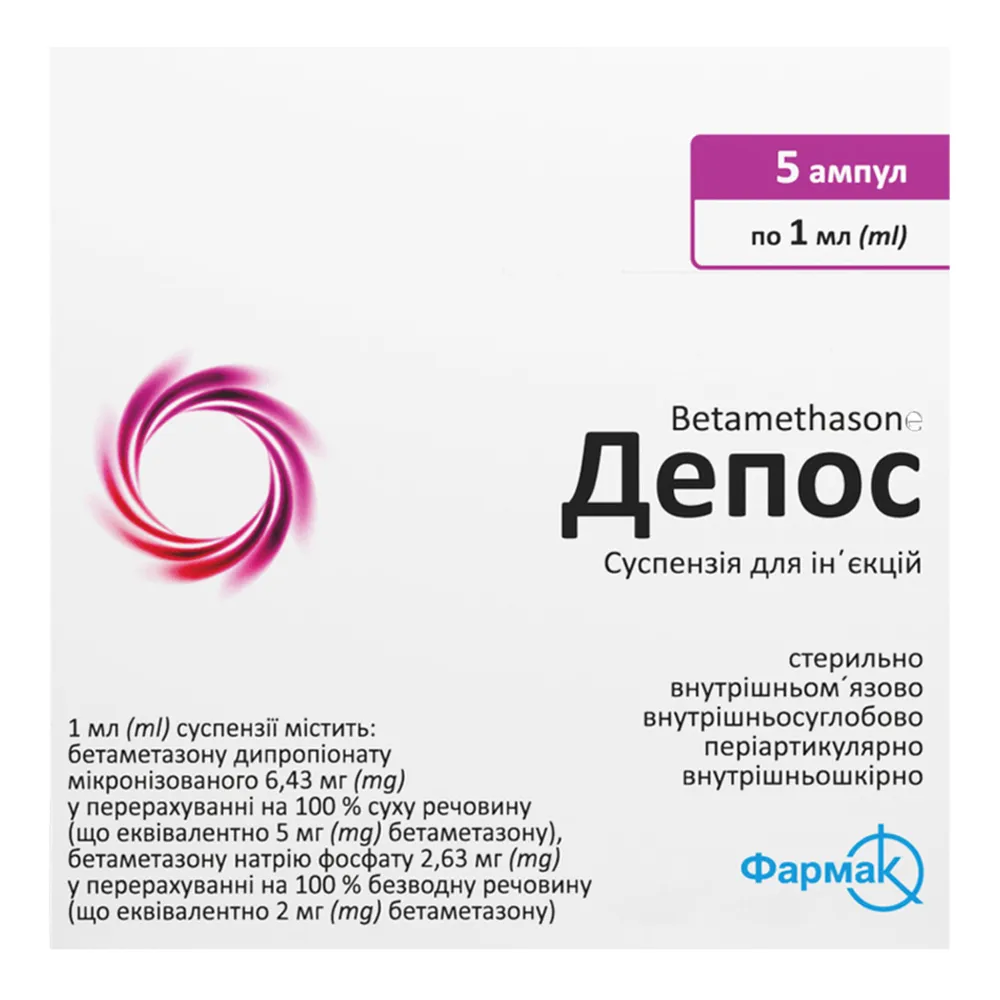
Table of Contents
FOR MEDICAL USE OF THE MEDICINAL PRODUCT DEPOS (DEPOS)
Composition:
Active substance: betamethasone;
1 ml of suspension contains micronized betamethasone dipropionate 6.43 mg calculated as 100% dry substance (equivalent to 5 mg of betamethasone), betamethasone sodium phosphate 2.63 mg calculated as 100% anhydrous substance (equivalent to 2 mg of betamethasone);
Excipients: methylparaben (E 218), propylparaben (E 216), benzyl alcohol, sodium chloride, anhydrous sodium hydrogen phosphate, disodium edetate, sodium carboxymethylcellulose, polysorbate 80, polyethylene glycol 4000, water for injections.
Pharmaceutical form. Injection suspension.
Main physicochemical properties: a clear colorless or slightly yellowish, slightly viscous liquid containing white or almost white particles which are easily suspended.
Pharmacotherapeutic group.
Corticosteroids for systemic use.
ATC code H02A B01.
Pharmacological properties.
Pharmacodynamics.
DepoC is a combination of soluble and poorly soluble esters of betamethasone for intramuscular, intra-articular, periarticular, intrasynovial, and intradermal injections, as well as for direct administration into the lesion site. DepoC has high glucocorticosteroid activity and negligible mineralocorticosteroid activity.
Betamethasone exerts a potent anti-inflammatory, antiallergic, and immunosuppressive effect.
Glucocorticosteroids diffuse through cell membranes and form complexes with specific cytoplasmic receptors. These complexes then penetrate the cell nucleus, bind to DNA (chromatin), and stimulate transcription of messenger RNA and subsequent synthesis of various enzyme proteins. These enzymes will ultimately be responsible for the effects observed with systemic administration of glucocorticoids. In addition to their significant influence on inflammatory and immune processes, glucocorticoids also affect carbohydrate, protein, and lipid metabolism, as well as the cardiovascular system, skeletal muscles, and central nervous system.
Effects on inflammatory and immune processes.
The therapeutic use of glucocorticoids is based precisely on their anti-inflammatory, immunosuppressive, and antiallergic properties. The main aspects of these properties include reduction of immune-active cells at the site of inflammation, reduction of vasodilation, stabilization of lysosomal membranes, inhibition of phagocytosis, and decreased production of prostaglandins and related compounds.
The anti-inflammatory effect is approximately 25 times greater than that of hydrocortisone and 8–10 times greater than that of prednisolone (on a weight basis).
Effects on carbohydrate and protein metabolism.
Glucocorticoids stimulate protein catabolism. In the liver, the released amino acids are converted into glucose and glycogen via the process of gluconeogenesis. Glucose absorption in peripheral tissues is reduced, leading to hyperglycemia and glucosuria, particularly in patients predisposed to diabetes.
Effects on lipid metabolism.
Glucocorticoids have a lipolytic effect. This lipolysis is more pronounced in the extremities. Additionally, they promote lipogenesis, which manifests particularly in the trunk, neck, and head. The combined actions of glucocorticoids result in redistribution of fat deposits.
The maximum pharmacological effect of corticosteroids occurs later than the peak plasma concentrations, indicating that the primary action of these drugs is not due to direct pharmacological activity, but rather to modification of enzyme activity.
Pharmacokinetics.
Betamethasone sodium phosphate – a readily soluble component that is rapidly absorbed from the injection site, ensuring a rapid onset of therapeutic effect.
Betamethasone dipropionate micronized – a poorly soluble component that is slowly absorbed from the depot formed at the injection site, resulting in prolonged drug action.
| Blood concentration |
Intramuscular injection |
|
| betamethasone |
||
| sodium phosphate |
micronized dipropionate |
|
| Maximum plasma concentration Plasma half-life after single dose Excretion Biological half-life |
1 hour after administration 3 to 5 hours 24 hours 36–54 hours |
Slow absorption Progressive metabolism More than 10 days |
Plasma protein binding – 62.5%. Metabolized in the liver. Excreted predominantly by the kidneys, a minor part is eliminated with bile.
Clinical Characteristics.
Indications.
Dermatological diseases
Atopic dermatitis (nummular eczema), neurodermatitis, contact dermatitis, severe solar dermatitis, urticaria, lichen planus, insulin-induced lipodystrophy, alopecia areata, discoid lupus erythematosus, psoriasis, keloid scars, pemphigus vulgaris, herpetic dermatitis, cystic acne.
Rheumatic diseases
Rheumatoid arthritis, osteoarthritis, bursitis, tenosynovitis, tendinitis, peritendinitis, ankylosing spondylitis, epicondylitis, radiculitis, coccydynia, sciatica, lumbago, torticollis, ganglion cyst, exostosis, fasciitis, acute gouty arthritis, synovial cysts, Morton's disease, cuboiditis, foot disorders, bursitis associated with hard corn, heel spurs, hallux rigidus.
Allergic conditions
Bronchial asthma, status asthmaticus, hay fever, severe allergic bronchitis, seasonal and perennial allergic rhinitis, angioneurotic edema, contact dermatitis, atopic dermatitis, serum sickness, hypersensitivity reactions to drugs or insect bites.
Collagen diseases
Systemic lupus erythematosus, scleroderma, dermatomyositis, polyarteritis nodosa.
Oncological diseases
Palliative therapy of leukemia and lymphomas in adults; acute leukemia in children.
Other diseases
Adrenogenital syndrome. Ulcerative colitis, Crohn's disease, sprue. Hematological disorders requiring corticosteroid therapy. Nephritis, nephrotic syndrome.
Primary and secondary adrenal insufficiency (mineralocorticoids must be administered concomitantly).
Contraindications.
Hypersensitivity to betamethasone, other components of the drug, or to other glucocorticosteroids. Systemic fungal infections. Intramuscular administration in patients with idiopathic thrombocytopenic purpura.
Interaction with other medicinal products and other forms of interaction.
Concomitant use of phenobarbital, rifampicin, phenytoin, or ephedrine may enhance the metabolism of the drug, thereby reducing its therapeutic activity.
Vaccination against smallpox should not be administered to patients undergoing treatment with glucocorticosteroids. Other immunizations should not be performed in patients receiving corticosteroids (especially in high doses) due to the risk of developing neurological complications and poor immune response (lack of antibody formation). Immunization may be possible in patients receiving replacement therapy (e.g., in Addison's disease).
Combination with diuretics such as thiazides may increase the risk of glucose intolerance.
Concomitant use of glucocorticosteroids and estrogens may require dose adjustment due to the risk of overdose.
Simultaneous use of DepoC and potassium-depleting diuretics increases the likelihood of hypokalemia. Concomitant use of glucocorticosteroids and cardiac glycosides increases the risk of arrhythmias or digitalis toxicity (due to hypokalemia). DepoC may enhance potassium loss induced by amphotericin B. In all patients receiving any of these drug combinations, careful monitoring of serum electrolytes, particularly serum potassium, is required.
Concomitant use of DepoC and indirect anticoagulants may alter blood coagulation speed, necessitating dose adjustment.
Combined use of glucocorticosteroids with nonsteroidal anti-inflammatory drugs or ethanol and ethanol-containing preparations may increase the frequency or severity of erosive-ulcerative gastrointestinal lesions.
Glucocorticosteroids may reduce plasma salicylate concentrations when used concomitantly. Patients should be monitored for possible salicylate poisoning when corticosteroid dosage is reduced or treatment is discontinued. Combination of corticosteroids with salicylates may increase the frequency and severity of gastrointestinal ulcers.
In diabetic patients, dosage adjustment of oral antidiabetic agents or insulin may be necessary due to the hyperglycemic effect of corticosteroids.
Concomitant administration of glucocorticosteroids and somatotropin may slow the absorption of the latter. Betamethasone doses exceeding 300–450 mcg (0.3–0.45 mg) per 1 m² body surface area per day should be avoided during somatotropin therapy.
Interaction with laboratory tests.
Corticosteroids may interfere with the nitroblue tetrazolium reduction test and produce false-negative results.
The use of corticosteroids should be taken into account when interpreting biological parameters and test results (skin tests, thyroid hormone levels, and others).
Special precautions for use.
Serious neurological complications, some of which were fatal, have been reported following epidural injection of corticosteroids. Among other adverse events, there have been reports of spinal cord infarction, paraplegia, quadriplegia, cortical blindness, and stroke. These serious neurological complications have occurred both with and without fluoroscopic guidance. Since the safety and efficacy of epidural administration have not been established, corticosteroids are not recommended for epidural use.
Depo-Medrol suspension is intended for intravenous or subcutaneous administration.
Strict adherence to aseptic techniques is mandatory when administering the drug.
Any administration of the drug (into soft tissues, lesion site, intra-articular, etc.) may result in systemic effects along with pronounced local effects.
Sudden withdrawal or dose reduction after prolonged use (especially at very high doses, even after a short treatment period) or during periods of increased demand for corticosteroids (due to stress: infection, trauma, surgery) may precipitate adrenal insufficiency. In such cases, the dose should be tapered gradually. During stress situations, corticosteroid therapy may need to be reinstituted or the dose increased. Dose reduction must be performed under strict medical supervision, and patient monitoring may be required for up to one year after discontinuation of prolonged therapy or high-dose treatment.
Rare cases of anaphylactoid reactions have been observed in patients receiving parenteral corticosteroids; therefore, appropriate precautionary measures should be taken before drug administration, especially if the patient has a history of allergy to any component of the preparation.
During prolonged corticosteroid therapy, a transition from parenteral to oral administration should be considered after evaluating potential benefits and risks.
Intramuscular injections of glucocorticosteroids must be administered deeply into the muscle to prevent local tissue atrophy.
Intra-articular injections should be performed only by medical personnel. Analysis of synovial fluid is necessary to exclude septic processes. The drug must not be administered if intra-articular infection is present. Marked increase in pain, swelling, elevated temperature of surrounding tissues, and further limitation of joint mobility suggest septic arthritis. If diagnosis is confirmed, antibacterial therapy must be initiated. Glucocorticosteroids must not be injected into unstable joints, infected areas, or intervertebral spaces. Repeated intra-articular injections in osteoarthritis may increase the risk of joint destruction. Corticosteroid injections directly into tendons should be avoided, as minor ruptures may occur subsequently. After successful intra-articular therapy, patients should avoid overloading the joint.
Injection of corticosteroids into soft tissues or lesion sites and around joints may cause both systemic and local effects.
Special patient groups
Betamethasone may be used in diabetic patients only for a short duration and under strict medical supervision, due to its glucocorticoid properties (conversion of proteins into glucose).
Enhanced effects of glucocorticosteroids are observed in patients with hypothyroidism or hepatic cirrhosis. The use of Depo-Medrol should be avoided in patients with herpes simplex eye infections (due to the risk of corneal perforation).
Psychiatric disturbances may occur during treatment with this drug (particularly in patients with emotional instability or predisposition to psychosis).
Precautions are necessary in the following conditions: nonspecific ulcerative colitis, risk of perforation, abscess or other pyogenic infections; diverticulitis; intestinal anastomoses; gastric and duodenal ulcers; renal insufficiency; arterial hypertension; osteoporosis; severe myasthenia; glaucoma; acute psychosis; viral and bacterial infections; growth retardation; tuberculosis; Cushing's syndrome; diabetes; cardiac failure; complicated epilepsy; predisposition to thromboembolism or thrombophlebitis; and during pregnancy.
Patients receiving a course of glucocorticosteroid therapy must not be vaccinated against smallpox. Other immunizations should not be administered to patients receiving corticosteroids (especially at high doses), due to the risk of neurological complications and poor immune response (lack of antibody formation). Immunization may be possible in cases of replacement therapy (e.g., Addison’s disease).
Patients, particularly children, receiving Depo-Medrol at immunosuppressive doses should avoid contact with individuals infected with chickenpox or measles.
Corticosteroids may mask some signs of infectious disease. Due to decreased resistance, new infections may develop during treatment.
Administration of the drug in active tuberculosis is possible only in rapidly progressive or disseminated forms, and only in combination with adequate antituberculosis therapy. If corticosteroids are administered to patients with latent tuberculosis or those who are tuberculin-positive, close monitoring is required, as reactivation of the disease may occur. Patients undergoing prolonged corticosteroid therapy should also receive chemoprophylaxis. If rifampicin is used in the chemoprophylaxis regimen, dose adjustment of corticosteroids may be necessary due to enhanced metabolism of the drug induced by rifampicin.
Prolonged use of glucocorticosteroids may lead to the development of posterior subcapsular cataracts (especially in children), glaucoma with possible optic nerve damage, and may promote secondary eye infections (fungal or viral). Regular ophthalmological examinations are necessary, especially for patients receiving Depo-Medrol for more than six weeks.
Moderate to high doses of corticosteroids may cause elevated blood pressure, fluid and sodium retention, and increased potassium excretion (manifesting as edema and cardiac arrhythmias). A low-salt diet and potassium supplementation are recommended.
Acetylsalicylic acid should be used with caution in combination with this drug in patients with hypoprothrombinemia due to the potential for increased bleeding.
Secondary adrenal insufficiency may develop several months after discontinuation of therapy and should also be considered.
Cases of pheochromocytoma crisis, including fatal outcomes, have been reported. Corticosteroids should be administered to patients with diagnosed or suspected pheochromocytoma only after careful benefit-risk assessment.
Changes in sperm motility and count may occur during glucocorticosteroid therapy.
This medicinal product contains less than 1 mmol (23 mg)/dose of sodium, i.e., essentially "sodium-free".
The excipients methylparaben (E 218) and propylparaben (E 216) may cause allergic reactions (possibly delayed) and, in rare cases, bronchospasm.
Use during pregnancy or breastfeeding.
Due to the lack of controlled safety studies of the drug in pregnant women, it should be prescribed to pregnant women, nursing mothers, and women of reproductive age only after careful assessment of benefit to the mother versus potential risk to the fetus/child.
In some cases, a course of corticosteroid therapy may be necessary during pregnancy, or even dose escalation (e.g., in corticosteroid replacement therapy).
Intramuscular administration of betamethasone significantly reduces the incidence of fetal dyspnea when administered more than 24 hours before delivery (up to 32 weeks of gestation).
Corticosteroids should not be used to treat hyaline membrane disease after birth.
In the prevention of hyaline membrane disease in premature infants, corticosteroids should not be administered to pregnant women with pre-eclampsia, eclampsia, or placental disorders.
Studies have shown an increased risk of neonatal hypoglycemia following short antenatal courses of betamethasone in women at risk of late preterm delivery.
Infants born to mothers who received significant doses of corticosteroids during pregnancy should be closely monitored (to detect early signs of adrenal insufficiency).
Corticosteroids cross the placental barrier and are excreted in breast milk.
Because corticosteroids cross the placenta, newborns and infants whose mothers received corticosteroids during a significant part or any part of pregnancy should be carefully examined for possible congenital cataracts.
If administration of Depo-Medrol is necessary during lactation, the decision whether to discontinue breastfeeding or the therapy should be made, taking into account the importance of the treatment for the mother (due to potential adverse effects in infants).
Women who received corticosteroids during pregnancy require monitoring during labor to detect any adrenal insufficiency caused by the stress of childbirth.
Ability to affect reaction speed when driving or operating machinery.
Depo-Medrol generally does not affect a patient's reaction speed when driving or operating machinery.
However, in isolated cases, muscle weakness, convulsions, visual disturbances, dizziness, headache, mood changes, depression (with pronounced psychotic reactions), and increased irritability may occur; therefore, it is recommended to refrain from driving or operating machinery during treatment with this drug.
Method of Administration and Dosage
Depo-Medrone is recommended for intramuscular administration when systemic delivery of a glucocorticosteroid is required; directly into the affected soft tissue or as intra-articular and periarticular injections in arthritis; as intradermal injections in various skin disorders; and as local injections into the lesion site in certain foot conditions.
The dosage regimen and route of administration are determined individually by a physician depending on the indication, severity of the disease, and the patient's response to treatment. The dose should be the lowest possible, and the duration of treatment should be as short as feasible.
The dose should be adjusted to achieve a satisfactory clinical effect. If a satisfactory clinical response is not observed within a certain period, treatment with the drug should be discontinued by gradually reducing the dose, and alternative appropriate therapy should be initiated.
With a favorable response, the appropriate maintenance dose should be established by gradually tapering the initial dose at acceptable intervals until the lowest effective dose providing adequate clinical control is reached.
Depo-Medrone suspension is not intended for intravenous or subcutaneous administration.
Systemic Use
The initial dose of the drug is generally 1–2 mL. Repeat injections may be administered as needed, depending on the patient's condition. The drug should be administered by deep intramuscular injection into the gluteal muscle:
- In severe conditions (e.g., systemic lupus erythematosus and asthmatic status) requiring emergency intervention, the initial dose may be 2 mL;
- In various dermatological conditions, 1 mL of the drug is usually sufficient;
- In respiratory diseases, the effect of the drug begins within several hours after intramuscular injection. In bronchial asthma, hay fever, allergic bronchitis, and allergic rhinitis, significant clinical improvement is achieved after administration of 1–2 mL of the drug;
- In acute and chronic bursitis, the intramuscular dose is 1–2 mL. Repeated injections may be necessary if required.
Local Use
Concomitant use of a local anesthetic agent is required only in isolated cases (the injection is practically painless). If co-administration of a local anesthetic is desired, 1% or 2% solutions of procaine hydrochloride, lidocaine, or similar local anesthetics should be used, selecting formulations that do not contain parabens. Anesthetics containing methylparaben, propylparaben, phenol, or similar substances are not permitted. When using an anesthetic in combination with Depo-Medrone, first draw the required dose of the drug from the vial into the syringe, then add the required amount of local anesthetic from an ampoule into the same syringe and gently shake the syringe briefly to mix.
In acute bursitis (subdeltoid, subscapular, olecranon, and prepatellar), injection of 1–2 mL of Depo-Medrone into the bursa may relieve pain and fully restore mobility within several hours.
Treatment of chronic bursitis should be performed with lower doses of the drug after resolution of the acute episode.
In acute tenosynovitis, tendinitis, and peritendinitis, a single injection of Depo-Medrone may relieve symptoms; in chronic cases, the injection may be repeated depending on the response. Direct injection of the drug into tendons should be avoided.
In rheumatoid arthritis and osteoarthritis, intra-articular injection of Depo-Medrone at a dose of 0.5–2 mL reduces joint pain, tenderness, and stiffness within 2–4 hours after administration. The duration of therapeutic effect varies significantly and may last 4 weeks or longer.
Recommended doses for intra-articular injection: large joints – 1–2 mL; medium joints – 0.5–1 mL; small joints – 0.25–0.5 mL.
In dermatological conditions, intradermal injection of the drug directly into the lesion site is effective. Administer 0.2 mL/cm² of Depo-Medrone intradermally (not subcutaneously) using a tuberculin syringe and a needle with a diameter of approximately 0.9 mm. The total volume injected at any single site should not exceed 1 mL.
In foot disorders responsive to corticosteroids, subcorneal bursitis may be treated with two consecutive injections of 0.25 mL each. In conditions such as hallux rigidus, tailor’s bunion, and acute gouty arthritis, relief may occur very rapidly.
Recommended single doses of Depo-Medrone (with intervals of 1 week between injections): for plantar keratosis – 0.25–0.5 mL; for heel spur – 0.5 mL; for hallux rigidus – 0.5 mL; for tailor’s bunion – 0.5 mL; for synovial cyst – 0.25–0.5 mL; for tenosynovitis – 0.5 mL; for cuboid bone inflammation – 0.5 mL; for acute gouty arthritis – 0.5–1 mL. A tuberculin syringe with a needle of approximately 1 mm diameter is recommended for administration.
In the event of stress or stress risk (unrelated to the underlying disease), an increase in the dose of the drug may be necessary.
After prolonged therapy, discontinuation of the drug should be carried out gradually by tapering the dose. Monitoring of the patient should continue for at least one year after the end of prolonged therapy or after high-dose treatment.
Children.
There are insufficient clinical data on the use of the drug in children; therefore, its use in this age group is not recommended (due to the risk of growth retardation and development of secondary adrenal insufficiency).
Overdose.
Acute overdose of betamethasone does not typically result in life-threatening situations. Administration of high doses of glucocorticosteroids over several days generally does not lead to adverse consequences (except in cases of very high doses or in patients with diabetes mellitus, glaucoma, active peptic ulcer disease, or in those concurrently receiving cardiac glycosides, indirect anticoagulants, or potassium-depleting diuretics).
Treatment. Careful medical monitoring of the patient is required. Adequate fluid intake should be maintained, and electrolyte levels in plasma and urine should be monitored (particularly sodium and potassium balance). Appropriate therapy should be initiated if an electrolyte imbalance is detected.
Adverse Reactions
Unwanted effects, as with other glucocorticosteroids, are dose- and duration-dependent. These reactions are usually reversible and may be reduced by lowering the dose.
Electrolyte and fluid imbalance: sodium retention, increased potassium excretion, hypokalemic alkalosis, increased calcium excretion, fluid retention in tissues.
Cardiovascular system: congestive heart failure in predisposed patients; arterial hypertension.
Musculoskeletal system: muscle weakness, myopathy, loss of muscle mass, worsening of myasthenic symptoms in severe pseudoparalytic myasthenia, osteoporosis sometimes associated with severe bone pain and spontaneous fractures (vertebral compression fractures), aseptic necrosis of femoral or humeral heads, pathological fractures of long bones, tendon ruptures, joint instability (after repeated injections).
Gastrointestinal system: hiccups, erosive-ulcerative lesions of the stomach with possible perforation and hemorrhage, esophageal ulceration, pancreatitis, abdominal distension, intestinal perforation, nausea, vomiting.
Skin and subcutaneous tissue: impaired wound healing, skin atrophy, thinning and weakening of the skin, petechiae and ecchymoses, bruising, facial erythema, increased sweating, skin reactions such as allergic dermatitis, urticaria, angioedema.
Nervous system: convulsions, increased intracranial pressure with papilledema (pseudotumor cerebri), usually occurring after discontinuation of therapy, dizziness, headache, migraine, euphoria, mood changes, personality changes, severe depression, increased irritability, insomnia, psychotic reactions—particularly in patients with psychiatric history, depression.
Endocrine disorders: menstrual irregularities, clinical features of Cushing's syndrome, fetal or childhood growth retardation, impaired carbohydrate tolerance, manifestation of latent diabetes mellitus, increased requirement for insulin or oral antidiabetic agents in diabetic patients.
Eye disorders: posterior subcapsular cataract, increased intraocular pressure, glaucoma, exophthalmos.
Metabolic disorders: negative nitrogen balance due to protein catabolism; lipomatosis, including mediastinal and epidural lipomatosis, which may lead to neurological complications; weight gain.
Immune system: corticosteroids may suppress skin test reactivity, mask signs of infection, activate latent infections, and reduce resistance to infections, particularly to mycobacteria, Candida albicans, and viruses.
Lymphatic system: anaphylactic reaction or hypersensitivity reaction to drug administration, and hypotensive response.
General and administration site conditions: rare cases of blindness following local administration in the face and head area, hyper- or hypopigmentation, subcutaneous and dermal atrophy, sterile abscesses, post-injection flare (intra-articular injection), and Charcot arthropathy. Secondary suppression of the pituitary and adrenal cortex under stress conditions (trauma, surgery, or illness).
Repeated intra-articular injections may lead to joint damage. There is a risk of infection.
Shelf life.
2 years.
Do not use the medication after the expiry date stated on the packaging.
Storage conditions.
Store in the original packaging at a temperature not exceeding 25 °C. Do not freeze.
Keep out of reach of children.
Incompatibilities. The drug may be mixed in the same syringe with local anesthetics (see section "Instructions for Use and Dosage"); however, compatibility must always be verified.
Packaging.
1 ml in a vial. 1 or 5 vials in a blister. 1 blister per carton. 1 ml in a pre-filled syringe. 1 pre-filled syringe with 2 needles in a blister. 1 blister per carton.
Prescription status. Prescription only.
Manufacturer.
JSC "Pharmak".
Manufacturer's name and address of manufacturing site.
74, Kyrylivska Street, Kyiv, 04080, Ukraine.