Delax
Ukraine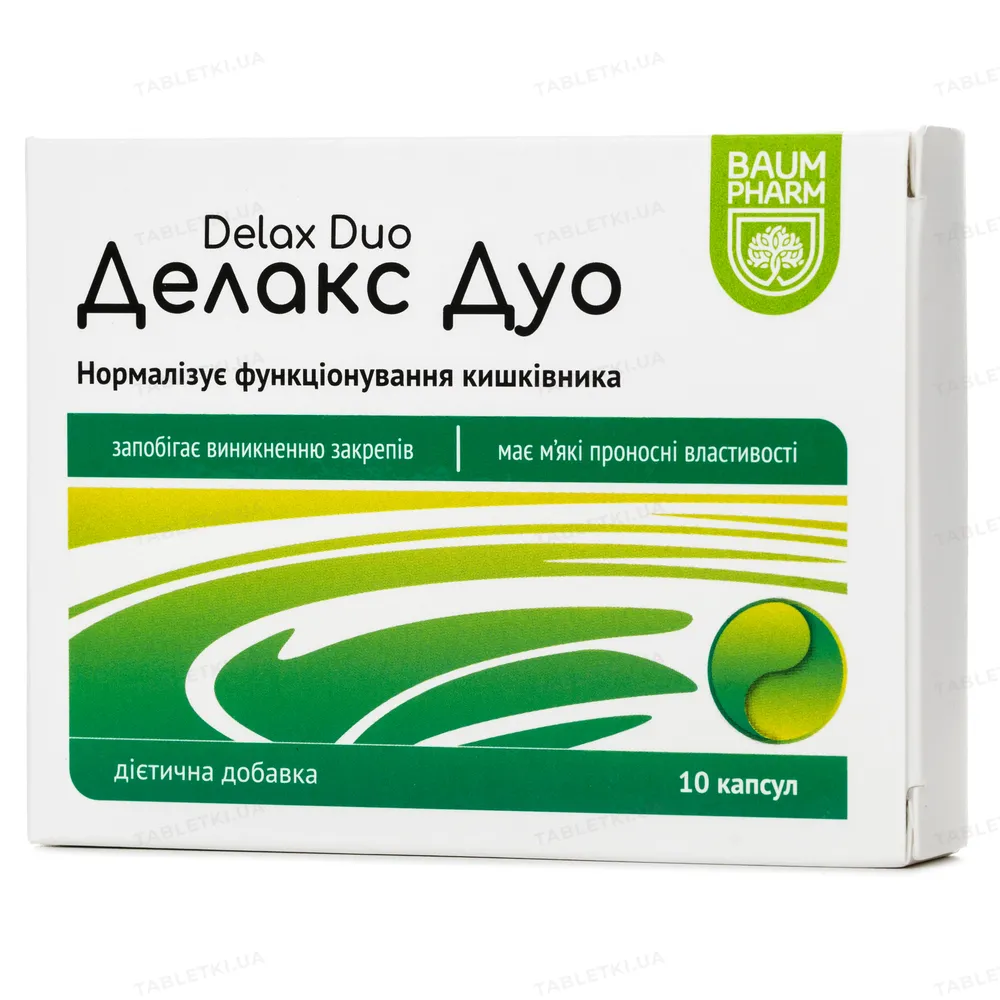
Table of Contents
INSTRUCTIONS FOR MEDICAL USE OF THE MEDICINAL PRODUCT Delax (Delax)
Composition:
Active substances: 1 capsule contains: sodium picosulfate 7.5 mg; dried leaf extract of senna (Cassiae folium extractum siccum) (4–6 : 1) (extraction solvent — methanol 60% v/v) (filler — spray-dried glucose, 1–30%) 10 mg;
Excipients: corn starch, povidone K-25, lactose monohydrate, magnesium stearate;
Hard gelatin capsule: gelatin, titanium dioxide (E 171), iron oxide red (E 172).
Pharmaceutical form. Capsules.
Main physicochemical properties: hard two-piece capsules with red-brown cap and body, containing a light grey to dark grey powder with visible dark particles.
Pharmacotherapeutic group. Stimulant laxatives. ATC code A06AB58.
Pharmacological Properties
Pharmacodynamics.
Delax is a combined stimulant laxative. Sodium picosulfate is a locally acting laxative of the triarylmethane group, which, after bacterial cleavage in the colon, stimulates the mucosa, accelerates peristalsis, and promotes accumulation of water and electrolytes within the lumen of the colon. As a result, defecation is stimulated, intestinal transit time is reduced, and stool is softened.
Anthraglycosides of senna inhibit fluid absorption and stimulate intestinal wall peristalsis.
Pharmacokinetics.
After oral administration, sodium picosulfate reaches the colon without significant absorption. The drug usually begins to act within 6–12 hours after intake, depending on the release of the active metabolite. After oral administration, only a negligible amount of the drug can be detected in organs and body systems.
The laxative effect of the drug does not correlate with the plasma concentration of the active metabolite.
Clinical Characteristics.
Indications.
Constipation or conditions requiring facilitation of defecation.
Like other laxatives, Delax should not be used daily or for prolonged periods without determining the cause of constipation.
Contraindications.
- Hypersensitivity to the active substances, other triarylmethanes, or to any of the excipients of the medicinal product;
- dynamic or mechanical intestinal obstruction, intestinal obstruction, abdominal pain of unknown origin, acute surgical diseases of abdominal organs (e.g., acute appendicitis, nonspecific ulcerative colitis), acute inflammatory bowel diseases;
- acute abdominal pain accompanied by nausea and vomiting, which may indicate the aforementioned acute conditions, postoperative state following gastrointestinal surgery;
- Crohn’s disease, peritonitis, gastric and duodenal peptic ulcer, gastrointestinal hemorrhage;
- hemorrhoids, anal fissures;
- spastic colitis, hepatitis and organic liver damage, pancreatitis, diverticulitis;
- metrorrhagia;
- severe disturbances of water-electrolyte balance (severe dehydration);
- hereditary fructose intolerance;
- nephrosis-nephritis, cystitis;
- incarcerated hernia.
Delax should be administered under medical supervision in conditions associated with disturbances in fluid and electrolyte balance (e.g., severe renal function impairment).
Special safety precautions.
In patients with chronic constipation, a full diagnostic evaluation should be performed to determine the underlying cause if unknown.
Discontinuation of Delax may result in recurrence of symptoms. If Delax has been used for chronic constipation over a prolonged period, any recurrence of symptoms may be more pronounced.
The medicinal product is intended for occasional use. Prolonged and excessive use may lead to disturbances in fluid or electrolyte balance, hypokalemia, and increased intestinal atony.
Cases of dizziness and/or syncope temporally associated with the administration of sodium picosulfate have been reported. Available data suggest that these events may correspond to defecation syncope (associated with Valsalva maneuver) or be related to vasovagal response to abdominal pain.
Interaction with other medicinal products and other forms of interaction.
A possible reduction in serum levels of active substances may occur when concomitantly administered with sulfate quinidine (an antiarrhythmic agent), due to competitive properties with anthraquinone laxatives.
Concomitant use with cardiac glycosides may lead to cardiac arrhythmia due to hypokalemia. When used simultaneously with antiarrhythmic agents, diuretics, corticosteroids, and licorice root, muscle weakness may develop and the risk of electrolyte imbalance increases, potentially leading to increased sensitivity to cardiac glycosides.
Prolonged use or use in high doses may impair absorption of tetracyclines. The drug reduces the efficacy of medicinal products that are slowly absorbed in the gastrointestinal tract. Concomitant administration with antibiotics may diminish the laxative effect of the medicinal product.
Special precautions for use
Delax should be used only when normalization of bowel movements cannot be achieved by dietary changes; the minimum effective dose required to restore normal bowel function should be taken.
Patients taking cardiac glycosides, antiarrhythmic agents, drugs that prolong the QT interval, diuretics, corticosteroids, or licorice root-based preparations should consult a physician before starting this medication.
If the cause of constipation is unknown or if there are gastrointestinal complaints (abdominal pain, nausea, and vomiting), a physician must determine the cause of constipation before initiating laxative therapy, as these symptoms may indicate the presence or development of intestinal obstruction.
Delax is intended for episodic use; therefore, caution and prior consultation with a physician are advised if treatment exceeds one week, since prolonged use of stimulant laxatives may lead to increased intestinal atony.
To avoid dependence, Delax should be alternated with other laxatives, and treatment duration should be limited to one week.
The drug should be used with caution in patients with liver or kidney disease, or chronic inflammatory bowel disorders (see section "Contraindications").
Delax should not be taken within 2 hours after other medicinal products or in doses exceeding the recommended ones.
Adults with fecal incontinence should avoid prolonged contact of skin with feces by changing absorbent pads (linens) regularly during treatment with this product.
Delax contains lactose and glucose; therefore, patients with diagnosed intolerance to certain sugars should consult a physician before taking this medicinal product.
If symptoms do not resolve during treatment with Delax, a physician should be consulted.
Use during pregnancy or breastfeeding
There are insufficient studies in pregnant women. For safety reasons, and based on experimental data indicating genotoxic risk associated with several anthranoids, such as emodin and aloe-emodin, use during pregnancy is not recommended.
Breastfeeding should be discontinued during treatment, as components of the medicinal product may pass into breast milk and cause frequent diarrhea in the infant. However, with appropriate dosing, the occurrence of adverse effects in the infant is unlikely.
Studies on the effect on fertility have not been conducted.
Ability to influence reaction rate while driving or operating machinery
No studies have been conducted on the effect of Delax on the ability to drive vehicles or operate machinery. However, patients should be warned about the possibility of developing adverse reactions such as dizziness and/or syncope due to vasovagal reactions (particularly abdominal cramps). If abdominal cramps occur, patients should avoid potentially hazardous activities, including driving vehicles or operating machinery.
Dosage and Administration.
For adults and children aged 12 years and older, take 1 capsule once daily at bedtime to ensure bowel movement the following morning.
Delax should not be used daily or for prolonged periods without identifying the underlying cause of constipation.
Children.
Do not administer this medicinal product to children under 12 years of age.
Overdose.
Symptoms: overdose may lead to loose stools (diarrhea), intestinal spasms, and clinically significant loss of fluids, potassium, and other electrolytes.
Treatment: symptomatic. Rehydration may be required. Electrolyte levels, especially potassium, should be monitored. This is particularly important in elderly patients. Antispasmodic agents may be used.
In acute overdose, adverse effects may be minimized or prevented by induced emesis or gastric lavage performed shortly after Delax intake.
Chronic overdose of medicinal products containing anthranoids may lead to toxic hepatitis. Cases of ischemic colitis have been reported with high doses of sodium picosulfate, substantially exceeding the doses usually recommended for constipation.
Like other laxatives, prolonged overdose of Delax may result in chronic diarrhea and abdominal pain, hypokalemia, secondary hyperaldosteronism, and kidney stone formation. With long-term abuse of laxatives, tubular kidney damage, metabolic alkalosis, and muscle weakness due to hypokalemia have been reported.
Adverse Reactions
Adverse reactions are listed by frequency of occurrence: very common (≥ 1/10), common (≥ 1/100 – < 1/10), uncommon (≥ 1/1,000 – < 1/100), rare (≥ 1/10,000 – < 1/1,000), very rare (< 1/10,000), frequency not known (cannot be estimated from the available data).
Immune system disorders: frequency not known — allergic reactions.
Skin and subcutaneous tissue disorders: frequency not known — hypersensitivity reactions, including angioneurotic edema, skin rashes, urticaria, pruritus; localized and generalized exanthema, drug-induced toxicoderma.
Gastrointestinal disorders: frequency not known — anorexia, vomiting, nausea, flatulence, diarrhea, abdominal spasms and pain, pain in the anal area, particularly in patients with irritable bowel. However, these symptoms may also occur as a result of individual overdose. In such cases, dosage reduction is required. Prolonged use may cause pigmentation of the intestinal mucosa (intestinal pseudomelanosis), which usually resolves when the patient discontinues the drug. With prolonged use/abuse, colonic atony and digestive disturbances are also possible.
Fluid and electrolyte balance disorders: frequency not known — dehydration, hypokalemia, hypocalcemia. Prolonged and excessive use of the medicinal product may lead to fluid loss, potassium, and other electrolytes. This may result in muscle weakness and impaired cardiac function, especially when the medicinal product is used concomitantly with diuretics or corticosteroids.
Renal and urinary system disorders: frequency not known — change in urine color (red or brown depending on pH, which has no clinical significance); with prolonged use/abuse — albuminuria, hematuria.
Nervous system disorders: frequency not known — dizziness, syncope. The likelihood of dizziness and syncope is associated with vasovagal reactions (such as abdominal spasm or defecation) (see section "Special Precautions").
Endocrine system disorders: frequency not known — hyperaldosteronism.
Other: frequency not known — cardiac disturbances, increased fatigue, fainting, somnolence, muscle weakness, cramps.
Reporting suspected adverse reactions after medicinal product authorization is important. It allows continuous monitoring of the benefit-risk balance of the medicinal product. Healthcare and pharmaceutical professionals, as well as patients or their legal representatives, should report all suspected adverse reactions and lack of efficacy via the Automated Pharmacovigilance Information System at: https://aisf.dec.gov.ua.
Shelf life. 3 years.
Do not use the medicinal product after the expiry date stated on the packaging.
Storage conditions. Store in the original packaging at a temperature not exceeding 25 °C. Keep out of reach of children.
Packaging. 10 capsules in a blister; 1 blister per pack.
Category of supply. Over-the-counter.
Manufacturer. LLC "DKP "Pharmaceutical Factory".
Manufacturer's address. 4, Korolova St., Stanishivka, Zhytomyr district, Zhytomyr region, 12430, Ukraine.
Marketing Authorization Holder. Limited Liability Company "Baum Pharm GmbH Representation".
Address of the Marketing Authorization Holder. 66, Shyrokа St., Lviv, 79052, Ukraine.