Decamevit®
Ukraine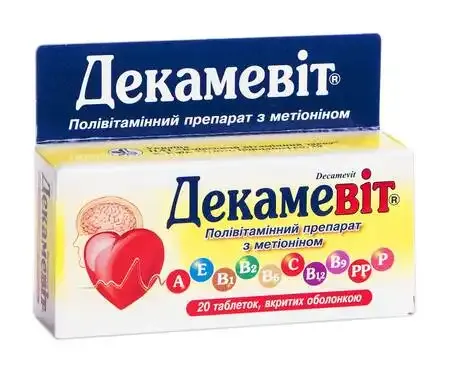
Table of Contents
INSTRUCTIONS FOR MEDICAL USE OF THE MEDICINAL PRODUCT DEKAMEVIT® (DECAMEVIT)
Composition:
Active substances:
1 tablet contains
vitamin A 6600 IU,
vitamin E (α-tocopherol acetate)
or dry vitamin E 50% 10 mg,
vitamin B1 (thiamine hydrochloride) 20 mg,
vitamin B2 (riboflavin) 10 mg,
vitamin B6 (pyridoxine hydrochloride) 20 mg,
vitamin C (ascorbic acid) 200 mg,
folic acid (vitamin Bc) 2 mg,
nicotinamide (vitamin PP) 50 mg,
rutin (vitamin P) 20 mg,
methionine 200 mg,
vitamin B12 (cyanocobalamin) 0.1 mg;
Excipients: sodium croscarmellose, mannitol (E 421), magnesium stearate;
Coating: coating mixture Opadry AMB II White: partially hydrolyzed polyvinyl alcohol, talc, titanium dioxide (E 171), glycerol monocaprylocaprate, sodium lauryl sulfate; coating mixture Opadry II Yellow: polydextrose, talc, quinoline yellow aluminum lake (E 104), hypromellose, maltodextrin, medium-chain triglycerides, titanium dioxide (E 171).
Pharmaceutical form. Film-coated tablets.
Main physico-chemical properties: yellow, round, biconvex film-coated tablets with a characteristic odor.
Pharmacotherapeutic group. Polyvitamin preparations with various additives.
ATC code A11AB.
Pharmacological Properties
Pharmacodynamics
A multivitamin medicinal product whose properties are determined by the vitamins contained in its composition, which actively participate in virtually all biochemical reactions in the body. The rationally selected composition contributes to a more pronounced and diverse biological effect of the medicinal product.
Vitamin A (retinyl acetate) is necessary for the development of epithelial cells and the synthesis of visual pigment.
Vitamin E (α-tocopheryl acetate) is a fat-soluble vitamin with pronounced antioxidant and radioprotective effects. It participates in the biosynthesis of heme and proteins, cell proliferation, and other vital cellular metabolic processes. It improves tissue oxygen uptake and exerts an angioprotective effect by influencing vascular tone and permeability, and stimulates the formation of new capillaries.
Vitamin B1 (thiamine hydrochloride) normalizes the functional activity of the nervous, cardiovascular, and digestive systems.
Vitamin B2 (riboflavin) plays an important role in protein, lipid, and carbohydrate metabolism, participates in maintaining normal visual acuity, and normalizes skin functions.
Vitamin B6 (pyridoxine hydrochloride) is necessary for the regeneration of skin and liver cells, restoration of nervous system function, and improves lipid metabolism in atherosclerosis.
Vitamin C (ascorbic acid) plays an important role in regulating redox processes and carbohydrate metabolism, blood coagulation, tissue regeneration, normal capillary permeability, synthesis of steroid hormones and connective tissue components, and enhances the body's resistance to infectious diseases.
Vitamin Bc (folic acid), in addition to its anti-anemic effect during pregnancy, protects the fetus from teratogenic factors and participates in the metabolism and synthesis of amino acids and nucleic acids.
Vitamin PP (nicotinamide) is a specific anti-pellagric agent and improves carbohydrate metabolism.
Vitamin P (rutin) is a water-soluble, vitamin-like flavonoid compound. Rutin interacts with ascorbic acid, participates in the regulation of collagen formation in connective tissue, prevents depolymerization of hyaluronic acid by hyaluronidase, and activates tissue respiration.
The essential amino acid methionine plays a role in the synthesis of various biologically important compounds, enhances the effects of hormones, vitamins, and enzymes, and detoxifies toxic metabolites.
Vitamin B12 (cyanocobalamin) influences the normal maturation processes of all body cells, particularly blood and liver cells, and has a positive effect on the function of the nervous system and liver.
Pharmacokinetics
Fat-soluble vitamins contained in the medicinal product (vitamins A and E) are capable of accumulating in tissues. Water-soluble vitamins (vitamins B1, B2, B6, B12, C, and PP) are converted into coenzymes, which, upon binding with apoenzymes, become components of complex enzymes. Since the lifespan of enzymes is limited, coenzymes break down and are excreted from the body as various metabolites. Fat-soluble vitamins are also subject to catabolism and are eliminated from the body, although more slowly than water-soluble vitamins.
Clinical characteristics.
Indications.
As a therapeutic agent in hypovitaminosis and avitaminosis, and in conditions associated with increased vitamin requirements:
- during physical and mental exhaustion;
- in elderly patients for optimization of metabolism;
- during convalescence in the postoperative period, after severe illnesses, including intoxications of various origins;
- during prolonged antibiotic therapy.
Contraindications.
Hypersensitivity to any component of the medicinal product; severe renal function impairment; gout; hyperuricemia; erythremia; erythrocytosis; thromboembolism; fructose intolerance; hypervitaminosis A and E; thyrotoxicosis; chronic glomerulonephritis; chronic heart failure; history of sarcoidosis; active peptic ulcer of the stomach and duodenum; disorders of iron or copper metabolism; thrombosis; predisposition to thrombosis; thrombophlebitis; urolithiasis; untreated cobalamin deficiency; malignant anemias; malignant neoplasms.
Interaction with other medicinal products and other forms of interaction.
The medicinal product is not recommended to be administered together with other multivitamins, as it may lead to vitamin overdose.
High doses of the medicinal product reduce the effectiveness of tricyclic antidepressants, phenothiazine-derived neuroleptics, tubular reabsorption of amphetamine, and impair renal excretion of mexiletine.
Due to the risk of developing hypervitaminosis A, concomitant use of this medicinal product with other vitamin A-containing products or oral retinoids is not recommended.
Retinol reduces the anti-inflammatory effect of glucocorticoids. Concurrent use with nitrates and cholestyramine is contraindicated, as they impair retinol absorption.
Medicinal products containing iron inhibit the action of vitamin E. Vitamin E should not be used concomitantly with iron-containing products, silver-containing products, alkaline agents (such as sodium bicarbonate, trisamin), or indirect-acting anticoagulants (such as dicoumarol, neodicoumarol). Alpha-tocopherol acetate enhances the effect of steroid and non-steroidal anti-inflammatory medicinal products (such as sodium diclofenac, ibuprofen, prednisolone).
Thiamine hydrochloride, by affecting polarization processes at neuromuscular junctions, may weaken the curare-like effect of muscle relaxants.
Pyridoxine hydrochloride reduces the effect of levodopa and prevents or diminishes toxic manifestations of isoniazid and other antituberculosis medicinal products.
When short-acting sulfonamides are used together with ascorbic acid, the risk of crystalluria increases. Concurrent administration enhances the effect of penicillin, increases iron absorption, reduces the effectiveness of heparin and indirect anticoagulants, and enhances aluminum absorption (this should be considered when treating concomitantly with antacids containing aluminum). Absorption of ascorbic acid is reduced when used simultaneously with oral contraceptives, fruit or vegetable juices, or alkaline drinks. Ascorbic acid should be administered only 2 hours after deferoxamine injection. Long-term use of high doses of ascorbic acid reduces the effectiveness of disulfiram treatment. Ascorbic acid increases the total clearance of ethanol. Quinolone group medicinal products, calcium chloride, salicylates, tetracyclines, and corticosteroids reduce ascorbic acid stores in the body when used long-term. Ascorbic acid enhances oxalate excretion in urine and increases the risk of crystalluria during salicylate therapy.
Riboflavin is incompatible with streptomycin and reduces the effectiveness of antibacterial agents (oxytetracycline, doxycycline, erythromycin, tetracycline, and lincomycin). Tricyclic antidepressants, imipramine, and amitriptyline inhibit riboflavin metabolism, particularly in cardiac tissue.
Folic acid reduces plasma concentrations of phenytoin and other antiepileptic agents, including phenobarbital, resulting in mutual reduction of clinical efficacy.
Ethanol, cycloserine, glutethimide, and methotrexate may affect folate metabolism.
Absorption of folic acid is reduced when used concomitantly with analgesics, anticonvulsants, antacids, sulfonamides, antibiotics, and cytostatics. Reduced or altered absorption may occur when cholestyramine and folic acid are used together. Therefore, the product should be taken 1 hour before or 4–6 hours after cholestyramine administration. Concurrent use with mineral acids or reducing agents is contraindicated, as inactivation of folic acid occurs.
Special precautions for use
Women who have used high doses of retinol (over 10,000 IU) should not plan pregnancy earlier than 6–12 months thereafter. This is due to the risk of fetal developmental abnormalities caused by high levels of vitamin A in the body during this period.
Yellow discoloration of urine may occur, which is completely harmless and attributable to the presence of riboflavin in the medicinal product.
Use with caution in patients with kidney disorders, severe liver damage, history of peptic ulcer of the stomach and duodenum, acute nephritis, decompensated cardiac function, gallstone disease, chronic pancreatitis, ischemic heart disease, diabetes mellitus, and in conditions associated with calcium loss from the body.
The medicinal product should be prescribed with caution in patients with neoplastic diseases (except in cases associated with megaloblastic anemia).
The medicinal product should be prescribed cautiously in patients with anemias of unknown etiology, as folic acid may interfere with the diagnosis of pernicious anemia by improving hematological parameters, while allowing neurological complications to progress.
There is also a risk of developing neuropsychiatric disorders (such as depression, anxiety, and mood changes).
When high doses are used or the medicinal product is administered for prolonged periods, blood pressure levels should be monitored. Concurrent use of the medicinal product with alkaline beverages reduces the absorption of ascorbic acid; therefore, it should not be taken with alkaline mineral water. Absorption of ascorbic acid may also be impaired in intestinal dyskinesia, enteritis, and achylia. Use with caution in the treatment of patients with glucose-6-phosphate dehydrogenase deficiency. Ascorbic acid may affect laboratory test results, for example, in determining blood levels of glucose, bilirubin, and activities of transaminases and lactate dehydrogenase.
High doses of the medicinal product should not be prescribed to patients with increased blood coagulability.
Since ascorbic acid enhances iron absorption, its use in high doses may be hazardous in patients with hemochromatosis, thalassemia, polycythemia, leukemia, and sideroblastic anemia. Patients with high iron levels in the body should use the medicinal product at minimal doses.
Due to the mild stimulating effect of ascorbic acid, it is not recommended to administer the medicinal product late in the day.
Use during pregnancy or breastfeeding
The medicinal product is not used during pregnancy.
The dose of vitamin A should not exceed 5,000 IU in pregnant women and women planning pregnancy.
During breastfeeding, use only upon physician's recommendation.
High doses of retinol (over 10,000 IU) should not be used by women during breastfeeding due to the risk of developing hypervitaminosis A in breastfed infants.
Ability to affect reaction speed when driving or operating machinery
Drivers and operators of complex machinery should be aware of the potential for adverse effects such as dizziness and somnolence.
Dosage and Administration
The medicinal product should be prescribed to adults. Take orally, after meals, 1 tablet 1–2 times daily. The usual treatment course is 20 days. Depending on clinical indications, repeated courses with 2–3 month intervals between them are possible.
Children
Due to lack of safety and efficacy data, the medicinal product should not be used in children.
Overdose
Symptoms. In case of overdose, dyspeptic symptoms (nausea, vomiting, diarrhea, epigastric pain), allergic reactions (itching, skin rashes), skin and hair changes, hepatic function disorders, headache, drowsiness, lethargy, facial hyperemia, irritability, increased central nervous system excitability which may lead to seizures, may occur.
Treatment. Discontinue the medicinal product. Symptomatic therapy.
Prolonged use in high doses may suppress pancreatic islet apparatus function, requiring monitoring of the latter. Overdose may alter renal excretion of ascorbic and uric acids during urine acidification, with risk of precipitation of oxalate calculi.
Side effects.
The medicinal product is usually well tolerated, but adverse reactions may occasionally occur, mainly when used in large doses.
Immune system disorders: allergic reactions are possible in individuals with increased sensitivity, including anaphylactic shock, angioedema, hyperthermia; rarely – bronchospasm in individuals hypersensitive to vitamins A, C, and B-complex.
Endocrine system disorders: damage to the islet apparatus of the pancreas (hyperglycemia, glucosuria) and impaired glycogen synthesis up to the development of diabetes mellitus.
Skin and subcutaneous tissue disorders: rash, urticaria, pruritus, skin redness, eczema.
Cardiovascular system disorders: arterial hypertension/hypotension, myocardial dystrophy.
Nervous system disorders: headache, dizziness, increased excitability, fatigue, sleep disturbances, drowsiness, sensation of warmth, depression, anxiety, and mood changes.
Gastrointestinal disorders: dyspeptic symptoms, heartburn, bitter taste in the mouth, nausea, vomiting, diarrhea, anorexia; rarely – increased gastric juice secretion may occur.
Renal and urinary system disorders: damage to the renal glomerular apparatus, crystalluria, formation of urate, cystine and/or oxalate calculi in the kidneys and urinary tract, renal failure.
Metabolism and nutrition disorders: disturbances in zinc and copper metabolism.
Blood and lymphatic system disorders: thrombocytosis, hyperprothrombinemia, thrombus formation, erythrocytopenia, neutrophilic leukocytosis; in patients with glucose-6-phosphate dehydrogenase deficiency of erythrocytes, hemolysis of red blood cells and hemolytic anemia may occur.
Other: possible yellow discoloration of urine, sweating, visual disturbances.
With prolonged use of the medicinal product in high doses, the following may occur: gastrointestinal mucosa irritation, paresthesia, hyperuricemia, transient increase in aspartate aminotransferase, lactate dehydrogenase, and alkaline phosphatase activity, decreased glucose tolerance, hyperglycemia, impaired kidney function, dryness and cracking of palms and soles, hair loss, seborrheic eruptions, tachycardia, arrhythmia.
Shelf life. 2 years.
Storage conditions.
Store in the original packaging at a temperature not exceeding 25 °C.
Keep out of reach of children.
Packaging. 10 tablets in a blister; 2 blisters per carton.
Availability. Over-the-counter.
Manufacturer. JSC "KYIV VITAMIN PLANT".
Manufacturer's address and location of business activity.
38 Kopilivska Street, Kyiv, 04073, Ukraine.
Web-site: www.vitamin.com.ua