Daptomycin-vista
Ukraine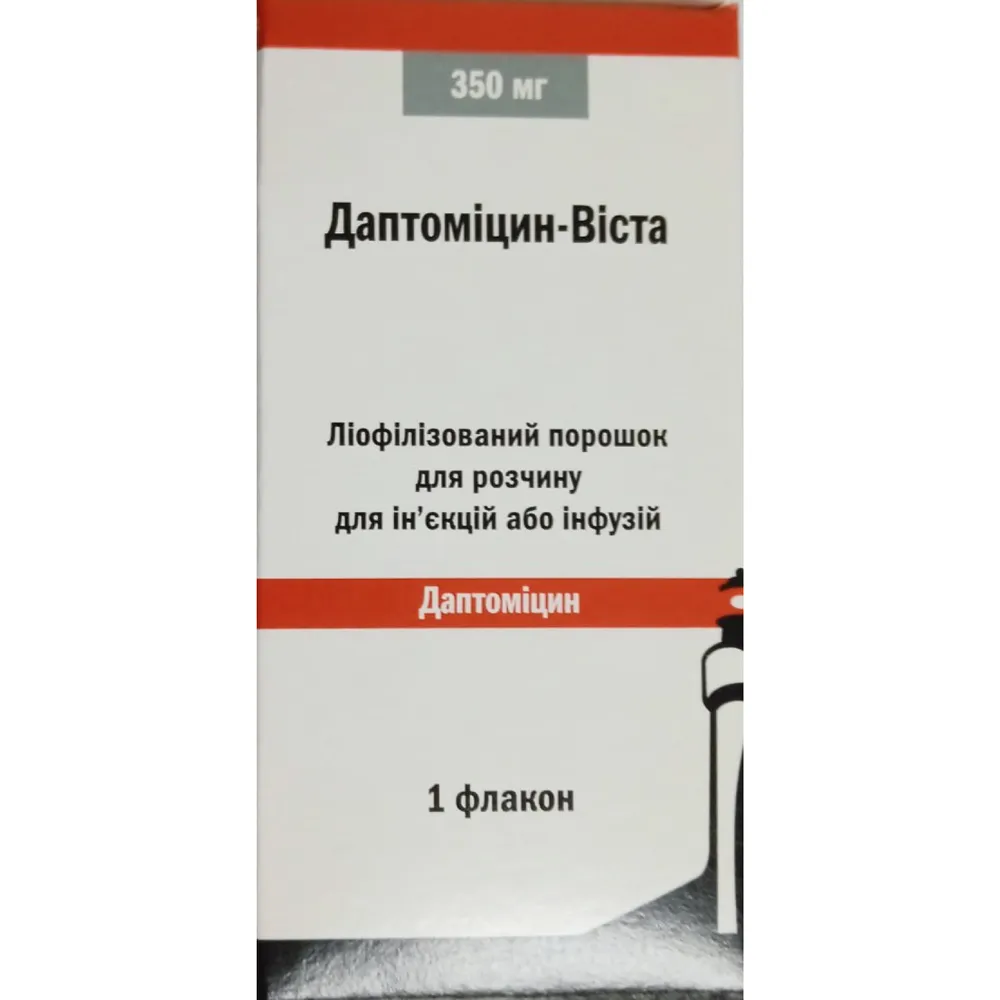
Table of Contents
INSTRUCTIONS for medical use of the medicinal product Daptomycin-Vista (Daptomycin-Vista)
Composition:
active substance: daptomycin;
1 vial contains 350 mg or 500 mg of daptomycin;
excipient: sodium hydroxide.
Pharmaceutical form. Lyophilized powder for solution for injection or infusion. Main physicochemical characteristics: lyophilized powder of light yellow to light brown color.
Pharmacotherapeutic group
Antibacterials for systemic use. Other antibacterials. ATC code J01X X09.
Pharmacological Properties
Pharmacodynamics
Mechanism of action
Daptomycin is a natural product belonging to the class of cyclic lipopeptides, exhibiting activity only against Gram-positive bacteria. Daptomycin binds (in the presence of calcium ions) to bacterial cell membranes and causes rapid depolarization of the membrane potential in both growing and stationary phase cells. This loss of membrane potential leads to inhibition of protein, DNA, and RNA synthesis, resulting in bacterial cell death with minimal lysis.
Pharmacokinetic/pharmacodynamic relationship
Daptomycin has demonstrated rapid, concentration-dependent bactericidal activity against Gram-positive microorganisms in vitro and in in vivo animal models. In animal models, AUC/minimum inhibitory concentration (MIC) and Cmax/MIC ratios correlate with efficacy and predicted bacterial cell killing in vivo at single doses equivalent to human doses of 4 and 6 mg/kg once daily.
Mechanisms of resistance
Strains with reduced susceptibility to daptomycin have been observed, particularly in patients with difficult-to-treat infections and/or following prolonged administration of the drug. Cases of treatment failure in patients with infections caused by Staphylococcus aureus, Enterococcus faecalis, or Enterococcus faecium, including patients with bacteremia, have been reported, accompanied by selection of microorganisms with reduced susceptibility or pronounced resistance to daptomycin during therapy. The mechanism(s) of resistance to daptomycin have not yet been fully elucidated.
Breakpoints
The minimum inhibitory concentration (MIC) breakpoints established by the European Committee on Antimicrobial Susceptibility Testing (EUCAST) for Staphylococcus species and Streptococcus (excluding S. pneumoniae) are: susceptible at ≤ 1 mg/L and resistant at > 1 mg/L.
Susceptibility
The prevalence of resistant species may vary geographically and over time for individual species; therefore, local resistance data are desirable, especially when treating severe infections. Expert advice should be sought if local prevalence of resistant species raises doubts about the appropriateness of using the medicinal product, at least for the treatment of certain types of infections.
Commonly susceptible species:
Staphylococcus aureus*;
Staphylococcus haemolyticus.
Coagulase-negative staphylococci:
Streptococcus agalactiae;
Streptococcus dysgalactiae, subspecies equisimilis;
Streptococcus pyogenes.
Group G streptococci:
Clostridium perfringens;
Peptostreptococcus spp.
Microorganisms intrinsically resistant:
Gram-negative microorganisms.
*Species for which activity has been adequately demonstrated during clinical trials.
Clinical efficacy in adults
In two clinical trials involving adult patients with complicated skin and soft tissue infections, 36% of patients receiving daptomycin met criteria for systemic inflammatory response syndrome (SIRS). The most common type of infection was wound infection (38% of patients), and large abscesses were present in 21% of patients. This limited patient population studied should be taken into account when making decisions regarding the use of daptomycin. Data are available from a randomized, controlled, open-label study involving 235 patients with Staphylococcus aureus bacteremia (defined as at least one positive blood culture for Staphylococcus aureus prior to the first dose). Among these, 19 out of 120 patients receiving daptomycin met diagnostic criteria for right-sided infective endocarditis (RIE). Of these 19 patients, 11 were infected with methicillin-susceptible and 8 with methicillin-resistant Staphylococcus aureus strains. The success rates in RIE patients are presented in Table 1.
Table 1
| Patient groups |
Daptomycin |
Comparator drug |
Difference in outcomes |
| n/N (%) |
n/N (%) |
Rates (95% CI) |
|
| Intention-to-treat population |
|||
| Right-sided infective endocarditis |
8/19 (42.1%) |
7/16 (43.8%) |
|
| Per-protocol treatment |
|||
| Right-sided infective endocarditis |
6/12 (50%) |
4/8 (50.0%) |
0.0% (–44.7; 44.7) |
It has been reported that treatment failure due to persistent or relapsing Staphylococcus aureus infection was observed in 19 of 120 (15.8%) patients in the daptomycin treatment group, in 9 of 53 (16.7%) patients in the vancomycin treatment group, and in 2 of 62 (3.2%) patients receiving a semisynthetic penicillin with anti-staphylococcal activity. Among patients who experienced treatment failure, 6 patients in the daptomycin group and 1 in the vancomycin group were infected with Staphylococcus aureus exhibiting increased daptomycin MIC during or after therapy. The majority of patients who experienced treatment failure due to persistent or relapsing Staphylococcus aureus infection had deeply seated infection sites and did not receive necessary surgical intervention.
Clinical efficacy in pediatric patients
Data are available from study DAP-PEDS-07-03, which evaluated the safety and efficacy of daptomycin in pediatric patients aged 1 to 17 years with complicated skin and soft tissue infections (cSSTI) caused by gram-positive pathogens.
Patients were enrolled in a stepwise manner into clearly defined age groups and received age-dependent doses once daily for 14 days:
- Age group 1 (n = 113) – aged 12 to 17 years: received daptomycin 5 mg/kg or a standard comparator agent;
- Age group 2 (n = 113) – aged 7 to 11 years: received daptomycin 7 mg/kg or a standard comparator agent;
- Age group 3 (n = 125) – aged 2 to 6 years: received daptomycin 9 mg/kg or a standard comparator agent;
- Age group 4 (n = 45) – aged 1 to <2 years: received daptomycin 10 mg/kg or a standard comparator agent.
The primary objective of the study was to assess treatment safety. The secondary objective was to evaluate the efficacy of intravenous administration of age-dependent doses of daptomycin compared to standard therapy. A total of 389 patients were included in the study, including 256 patients who received daptomycin and 133 patients who received standard therapy.
In all populations, clinical efficacy rates were comparable between the daptomycin treatment group and the standard therapy group, confirming the primary efficacy analysis in the "intent-to-treat" (ITT) population (all randomized patients who received at least one dose of investigational drug).
Table 2
Brief description of clinical results as reported by the sponsor
| Overall clinical efficacy rate a in children with ABSSSI |
|||
| daptomycin n/N (%) |
standard comparator agent n/N (%) |
% difference |
|
| Intention-to-treat |
227/257 (88.3%) |
114/132 (86.4%) |
2 |
| Modified intention-to-treat |
186/210 (88.6%) |
92/105 (87.6%) |
0.9 |
| Clinically evaluable |
204/207 (98.6%) |
99/99 (100%) |
|
| Microbiologically evaluable |
164/167 (98.2%) |
78/78 (100%) |
|
The overall therapeutic response rate for daptomycin and standard therapy was similar in the treatment of infections caused by MRSA, MSSA, and Streptococcus pyogenes (see Table 3; microbiologically evaluable population); response rates exceeded 94% in both treatment groups for these common pathogens.
Table 3
Summary of therapeutic response by baseline pathogen type (ME population)
| Pathogen |
Overall clinical efficacy a in children with ABSSSI |
|
| Daptomycin |
Comparator agent |
|
| Methicillin-susceptible Staphylococcus aureus (MSSA) |
68/69 (99 %) |
28/29 (97 %) |
| Methicillin-resistant Staphylococcus aureus (MRSA) |
63/66 (96 %) |
34/34 (100 %) |
| Streptococcus pyogenes |
17/18 (94 %) |
5/5 (100 %) |
a The number of patients achieving both clinical success (clinical response of "Cured" or "Improved") and microbiological success (pathogen response of "Eradicated" or "Presumed Eradicated") was determined as the measure of overall clinical efficacy.
There are data from study DAP-PEDBAC-11-02, which evaluated the safety and efficacy of daptomycin in children aged 1 to 17 years with bacteremia caused by Staphylococcus aureus.
Patients were randomized in a 2:1 ratio into the following age groups and received age-adjusted daily doses for 42 days:
- Age Group 1 (n = 21) – aged 12 to 17 years: received daptomycin at a dose of 7 mg/kg or standard comparator antibiotic;
- Age Group 2 (n = 28) – aged 7 to 11 years: received daptomycin at a dose of 9 mg/kg or standard comparator antibiotic;
- Age Group 3 (n = 32) – aged 1 to 6 years: received daptomycin at a dose of 12 mg/kg or standard comparator antibiotic.
The primary objective of the study was to evaluate the safety of intravenous daptomycin compared to standard antibiotic therapy. Secondary endpoints included: clinical outcome based on blinded expert assessment of clinical response; improvement during follow-up evaluation; and microbiological response based on determination of baseline pathogen eradication at the time of outcome assessment.
In all populations, clinical efficacy rates were comparable between the daptomycin group and the standard therapy group.
A total of 81 subjects were enrolled in the study, including 55 subjects who received daptomycin and 26 subjects who received standard therapy. Patients aged 1 to 2 years were not included in the study. In all populations, clinical success rates were comparable between the daptomycin group and the standard comparator treatment group.
Table 4
Summary of clinical efficacy assessment based on blinded expert evaluation at the end of treatment
| Clinical efficacy in children with ABSSSI |
|||
| Daptomycin n/N (%) |
Comparator agent n/N (%) |
Difference in percentages |
|
| Modified intent-to-treat patients |
46/52 (88.5 %) |
19/24 (79.2 %) |
9.3 % |
| Microbiologically evaluable patients |
45/51 (88.2 %) |
17/22 (77.3 %) |
|
| Clinically evaluable patients |
36/40 (90.0 %) |
9/12 (75.0 %) |
15.0 % |
Microbiological efficacy based on cure assessment for patients treated with daptomycin and standard therapy in infections caused by MRSA and MSSA is presented in Table 5 (microbiologically modified ITT population).
Table 5
| Pathogen |
Microbiological efficacy level in children with cSSTI n/N (%) |
|
| Daptomycin |
Comparator drug |
|
| Methicillin-susceptible Staphylococcus aureus (MSSA) |
43/44 (97.7%) |
19/19 (100%) |
| Methicillin-resistant Staphylococcus aureus (MRSA) |
6/7 (85.7%) |
3/3 (100%) |
Pharmacokinetics
The pharmacokinetics of daptomycin are generally linear and dose-independent over the range of 4 to 12 mg/kg when administered once daily as a 30-minute intravenous infusion for up to 14 days in healthy volunteers. Steady-state therapeutic concentrations are achieved by day 3.
Daptomycin administered as a 2-minute intravenous injection also demonstrates dose-proportional pharmacokinetics within the approved therapeutic dose range of 4 to 6 mg/kg. Comparable exposure (AUC and Cmax) has been demonstrated in healthy adults following administration of daptomycin as either a 30-minute intravenous infusion or a 2-minute intravenous injection.
Animal studies have shown that daptomycin is not significantly absorbed following oral administration.
Distribution
The volume of distribution at steady state for daptomycin is approximately 0.1 L/kg in healthy adult volunteers and is independent of dose. Tissue distribution studies in rats have shown that daptomycin penetrates minimally across the blood-brain and placental barriers following both single and multiple doses.
Daptomycin reversibly binds to plasma proteins in a concentration-independent manner. In healthy volunteers and patients receiving daptomycin, protein binding averages approximately 90%, including in patients with renal impairment.
Biological Transformation
In vitro studies have demonstrated that daptomycin is not metabolized by human liver microsomes. In vitro studies have also shown that daptomycin does not induce or inhibit the activity of the following human CYP isoforms: 1A2, 2A6, 2C9, 2C19, 2D6, 2E1, and 3A4. It is unlikely that daptomycin will inhibit or induce the metabolism of drugs metabolized by the CYP450 system.
Following infusion of radiolabeled 14C-daptomycin to healthy volunteers, plasma radioactivity levels corresponded to concentrations determined by microbiological assay. Inactive metabolites were identified in urine by the difference between total radioactivity and microbiologically active compound concentrations. In a separate study, no metabolites were detected in plasma; a small amount of three oxidized metabolites and one unidentified compound were found in urine. The site of metabolism has not been identified.
Elimination
Daptomycin is primarily eliminated by the kidneys. Concomitant administration of probenecid and daptomycin does not affect the pharmacokinetics of daptomycin in humans, indicating minimal or no active tubular secretion of daptomycin.
After intravenous administration, the plasma clearance of daptomycin is approximately 7 to 9 mL/h/kg, and renal clearance is 4 to 7 mL/h/kg.
When radiolabeled daptomycin was used, 78% of the administered dose was excreted in urine, with approximately 50% of the active substance excreted unchanged. Approximately 5% of the administered dose was excreted in feces.
Special Populations
Elderly Patients
After administration of a single 30-minute intravenous dose of daptomycin 4 mg/kg, the mean total clearance of daptomycin was approximately 35% lower, and AUC0–∞ was approximately 58% higher in elderly individuals (≥75 years) compared to healthy young subjects (18 to 30 years). No differences in Cmax were observed. These differences are most likely due to the normal age-related decline in renal function observed in the geriatric population. Dose adjustment is not required in elderly patients. However, renal function should be assessed and dosage reduced if there is evidence of severe renal impairment.
Pediatric Patients (1 to 17 years of age). The pharmacokinetics of daptomycin in pediatric patients have been evaluated in three pharmacokinetic studies. After a single 4 mg/kg dose of daptomycin, total body clearance normalized by body weight and elimination half-life in adolescents (12–17 years of age) with gram-positive infections were similar to those in adults. After a single 4 mg/kg dose, total clearance in children aged 7 to 11 years with gram-positive infections was higher and half-life shorter compared to adolescents. After a single dose of 4, 8, or 10 mg/kg, total clearance and elimination half-life in children aged 2–6 years were similar across doses; total clearance was higher and half-life shorter than in adolescents. After a single 6 mg/kg dose, clearance and half-life in children aged 13–24 months were similar to those in children aged 2–6 years receiving single doses of 4–10 mg/kg. Based on results from these studies, AUC in pediatric patients receiving any therapeutic dose is generally lower than in adults receiving comparable doses.
Pediatric Patients with cSSTI
Phase 4 study data (DAP-PEDS-07-03) are available, which evaluated the safety, efficacy, and pharmacokinetics of daptomycin in pediatric patients (1 to 17 years of age inclusive) with cSSTI caused by gram-positive pathogens. The pharmacokinetics of daptomycin in these patients, based on the study results, are summarized in Table 6. After multiple dosing, the effect of daptomycin was similar across different age groups following dose adjustment based on body weight and age. Plasma concentrations achieved with these doses were comparable to those achieved in adult cSSTI studies (following 4 mg/kg once daily).
Table 6
Mean (standard deviation) pharmacokinetic parameters of daptomycin in pediatric patients with cSSTI (1 to 17 years of age) from study DAP-PEDS-07-03
| Age |
12–17 years (N = 6) |
7–11 years (N = 2)a |
2–6 years (N = 7) |
1 to < 2 years (N = 30)b |
| Dose/infusion duration |
5 mg/kg 30 minutes |
7 mg/kg 30 minutes |
9 mg/kg 60 minutes |
10 mg/kg 60 minutes |
| AUC0-∞ (μg•h/mL) |
387 (81) |
438 |
439 (102) |
466 |
| Cmax (μg/mL) |
62.4 (10.4) |
64.9; 74.4 |
81.9 (21.6) |
79.2 |
| Apparent half-life (hours) |
5.3 (1.6) |
4.6 |
3.8 (0.3) |
5.04 |
| Weight-normalized clearance (Cl/wt) (mL/h/kg) |
13.3 (2.9) |
16 |
21.4 (5) |
21.5 |
Note: Pharmacokinetic parameters were determined by non-compartmental analysis.
a Individual values reported from data of only two patients in this age group for whom pharmacokinetic samples were available to allow pharmacokinetic analysis; AUC, t1/2, and Cl/wt could be determined for only one of the two patients.
b Pharmacokinetic analysis performed using a pooled pharmacokinetic profile with mean concentrations across patients at each time point.
Children with bacteremia caused by Staphylococcus aureus
Based on data from a Phase 4 study (DAP-PEDBAC-11-02) conducted to evaluate the safety, efficacy, and pharmacokinetics of daptomycin in children (aged 1 to 17 years inclusive) with bacteremia caused by Staphylococcus aureus, the pharmacokinetics of daptomycin were summarized (see Table 7). After administration of multiple doses, the effect of daptomycin was similar across different age groups following dose adjustment based on body weight and age. Plasma concentrations achieved with these doses corresponded to those achieved in a study in adults with bacteremia caused by Staphylococcus aureus (following administration of 6 mg/kg once daily).
Table 7
| Age range |
12–17 years (N = 13) |
7–11 years (N = 19) |
1–6 years (N = 19)* |
| Dose/infusion duration |
7 mg/kg 30 minutes |
9 mg/kg 30 minutes |
12 mg/kg 60 minutes |
| AUC0-24h (μg•h/mL) |
656 (334) |
579 (116) |
620 (109) |
| Cmax (μg/mL) |
104 (35.5) |
104 (14.5) |
106 (12.8) |
| Apparent half-life (h) |
7.5 (2.3) |
6.0 (0.8) |
5.1 (0.6) |
| Clearance/weight (Cl/wt) (mL/h/kg) |
12.4 (3.9) |
15.9 (2.8) |
19.9 (3.4) |
* Mean values (standard deviations) were calculated for patients aged 2–6 years, as the study did not include patients aged 1 to <2 years. Using simulations based on a population pharmacokinetic model, it has been demonstrated that the steady-state AUC (area under the pharmacokinetic curve at steady state) of daptomycin in pediatric patients aged 1 to <2 years receiving 12 mg/kg once daily is comparable to that in adult patients receiving 6 mg/kg once daily.
Patients with increased body weight
Compared to patients without obesity, systemic exposure to daptomycin increased by 28% in patients with moderate excess body weight (body mass index (BMI) 25–40 kg/m²) and by 42% in patients with extreme excess body weight (BMI >40 kg/m²). However, dose adjustment based on the patient's excess body weight is not required.
Sex
No significant differences in daptomycin pharmacokinetics related to patient sex were observed.
Renal impairment
After a single 30-minute intravenous infusion of daptomycin at doses of 4 or 6 mg/kg in adult patients with varying degrees of renal impairment, total daptomycin clearance decreased and AUC increased as renal function (creatinine clearance) declined. Based on pharmacokinetic data and modeling, the AUC of daptomycin on Day 1 after administration of a 6 mg/kg dose in patients undergoing hemodialysis or chronic ambulatory peritoneal dialysis was twice as high as in patients with normal renal function receiving the same dose. On Day 2 after administration of 6 mg/kg in patients undergoing hemodialysis or chronic ambulatory peritoneal dialysis, the AUC of daptomycin was approximately 1.3 times higher than in patients with normal renal function after the second 6 mg/kg dose. Because of this, it is recommended that patients undergoing hemodialysis or chronic ambulatory peritoneal dialysis receive daptomycin once every 48 hours at the dose recommended for treatment of the corresponding type of infection (see section "Dosage and administration"). The dosing regimen of daptomycin in pediatric patients with renal impairment has not been established.
Hepatic impairment
Dose adjustment of daptomycin is not required in patients with mild to moderate hepatic impairment (Child-Pugh class B). There are no data available in patients with severe hepatic impairment (Child-Pugh class C). Therefore, daptomycin should be used with caution in these patients.
Clinical characteristics
Indications
The medicinal product Daptomycin-Vista is indicated for the treatment of the following infections (see sections "Pharmacological properties" and "Special precautions for use"):
- complicated skin and soft tissue infections (cSSTI) in adults and children (aged 1 to 17 years);
- right-sided infective endocarditis (IE) in adults caused by Staphylococcus aureus; when deciding on the use of daptomycin, the susceptibility of microorganisms to antimicrobial agents should be taken into account, and the decision should be based on expert recommendations (see sections "Pharmacological properties" and "Special precautions for use");
- Staphylococcus aureus bacteremia in adults and children (aged 1 to 17 years): in adults, use for bacteremia should be associated with right-sided IE or complicated cSSTI, whereas in children, only with complicated cSSTI.
Daptomycin is active only against Gram-positive bacteria (see section "Pharmacological properties"). In cases of mixed infections with suspected Gram-negative and/or certain types of anaerobic bacteria, the medicinal product Daptomycin-Vista should be used in combination with appropriate antibacterial agents. Instructions for medical use of antibacterial medicinal products should be taken into account.
Contraindications
Hypersensitivity to daptomycin or to any of the excipients of the medicinal product.
Interaction with other medicinal products and other types of interactions
Daptomycin is practically not subject to metabolism mediated by cytochrome P450 (CYP 450). It is unlikely that daptomycin will inhibit or stimulate the metabolism of medicinal products metabolized by the P450 system.
Interactions between daptomycin and aztreonam, tobramycin, warfarin, and probenecid have been studied. Daptomycin does not affect the pharmacokinetics of warfarin or probenecid, and these medicinal products also did not alter the pharmacokinetics of daptomycin. The pharmacokinetics of daptomycin were not significantly altered by aztreonam. Although minor changes in the pharmacokinetics of daptomycin and tobramycin were observed when administered concomitantly as a 30-minute intravenous infusion with daptomycin at a dose of 2 mg/kg, the changes were not statistically significant. The interaction between daptomycin and tobramycin at the approved dose of daptomycin is unknown. Caution should be exercised when daptomycin is used concomitantly with tobramycin. Experience with concomitant use of daptomycin and warfarin is limited. Studies on the use of daptomycin with other anticoagulants, apart from warfarin, have not been conducted. During the first few days after initiation of daptomycin therapy, monitoring of anticoagulant activity should be performed in patients receiving both daptomycin and warfarin. Experience with concomitant use of daptomycin with other medicinal products that may cause myopathy (e.g., HMG-CoA reductase inhibitors) is limited. However, increased levels of creatine phosphokinase (CPK) and cases of rhabdomyolysis have occasionally been reported in patients receiving one of these medicinal products during daptomycin therapy. It is recommended, if possible, to temporarily discontinue other medicinal products capable of causing myopathy during daptomycin treatment, except when the benefit of concomitant use outweighs the risk. If concomitant use cannot be avoided, CPK levels should be monitored more frequently than once a week, and patients should closely watch for any signs or symptoms suggestive of myopathy.
Daptomycin is primarily eliminated by renal filtration; therefore, its plasma levels may be increased when used concomitantly with medicinal products that reduce renal filtration (e.g., nonsteroidal anti-inflammatory drugs and cyclooxygenase-2 inhibitors). In addition, pharmacodynamic interactions due to additive effects on the kidneys may occur with concomitant use. Therefore, caution is recommended when using daptomycin with any other medicinal product capable of reducing renal filtration.
During post-marketing surveillance, cases of interaction between daptomycin and certain reagents used in some methods for determining prothrombin time/international normalized ratio (PT/INR) have been reported. This interaction led to false results—prolonged PT and elevated INR. If unexplained deviations from normal PT/INR values are observed in patients taking daptomycin, the possibility of in vitro interaction during laboratory testing should be considered. The likelihood of false results can be minimized by collecting samples for PT or INR determination at approximately the time of the lowest plasma concentration of daptomycin.
Special Warnings and Precautions for Use
General
If, after initiation of daptomycin therapy, another site of infection is identified in the body apart from complicated skin and soft tissue infections or right-sided infective endocarditis, consideration should be given to using an alternative antibacterial therapy effective for the treatment of such infection.
Anaphylaxis/Hypersensitivity Reactions
Anaphylactic reactions/hypersensitivity reactions have been reported with daptomycin. If an allergic reaction to daptomycin occurs, administration should be discontinued and appropriate therapy initiated.
Pneumonia. Clinical studies have shown that daptomycin is not effective in the treatment of pneumonia. Therefore, daptomycin is not indicated for the treatment of pneumonia.
Right-sided infective endocarditis (IE) caused by Staphylococcus aureus Clinical data on the use of daptomycin for the treatment of right-sided infective endocarditis (IE) caused by Staphylococcus aureus are limited to only 19 adult patients. The safety and efficacy of daptomycin in children under 18 years of age with right-sided infective endocarditis caused by Staphylococcus aureus have not been established. The efficacy of daptomycin in patients with prosthetic valve infections or left-sided infective endocarditis caused by Staphylococcus aureus has not been demonstrated. Deep-seated infections
Patients with deep-seated infections should receive necessary surgical intervention as soon as possible (wound debridement, removal of prostheses, surgical valve replacement).
Infections caused by enterococci
There is insufficient evidence of the potential clinical efficacy of daptomycin against infections caused by enterococci, including Enterococcus faecalis and Enterococcus faecium. Furthermore, dosing regimens of daptomycin that may be suitable for the treatment of enterococcal infections with or without bacteremia have not been established. Cases of ineffective treatment of enterococcal infections with daptomycin have been reported, mostly associated with bacteremia. In some cases, treatment failure was associated with the isolation of microorganisms with reduced susceptibility or pronounced resistance to daptomycin.
Insensitive microorganisms
The use of antibiotics may lead to the development of microorganisms resistant to daptomycin. If superinfection occurs during therapy, appropriate measures should be taken.
Clostridium difficile-associated diarrhea
Clostridium difficile-associated diarrhea (CDAD) has been reported during daptomycin therapy (see section "Adverse Reactions"). If Clostridium difficile-associated diarrhea is suspected or confirmed, daptomycin may need to be discontinued and appropriate therapy initiated based on clinical judgment.
Effect of the medicinal product on laboratory test results
Falsely prolonged aPTT and increased INR have been observed when certain recombinant thromboplastin reagents are used for analysis.
Creatine phosphokinase and myopathy
Elevations in plasma levels of creatine phosphokinase (CK, MM isoenzyme) associated with muscle pain and/or weakness have been reported, as well as cases of myositis, myoglobinemia, and rhabdomyolysis. Marked increases in plasma CK levels exceeding five times the upper limit of normal (ULN), without muscle symptoms, were more frequently observed during clinical trials in patients receiving daptomycin (1.9%) than in those receiving comparator agents (0.5%).
It is recommended:
- to measure plasma CK levels before starting treatment and regularly at consistent intervals (at least once weekly) during therapy in all patients;
- to measure CK levels more frequently (e.g., every 2–3 days, at least during the first two weeks of treatment) in patients at increased risk of developing myopathy. For example, patients with any degree of renal impairment (creatinine clearance < 80 mL/min), including those on hemodialysis or chronic ambulatory peritoneal dialysis, and patients receiving other medicinal products known to cause myopathy (e.g., HMG-CoA reductase inhibitors, fibrates, and cyclosporine).
It cannot be excluded that patients with baseline CK levels more than five times above ULN may have an increased risk of further CK elevation during daptomycin use. This should be considered when initiating daptomycin therapy; if daptomycin is used, monitoring of CK levels in these patients should be performed more frequently than once weekly.
Daptomycin should not be used in patients receiving other medicinal products capable of causing myopathy, except when the expected benefit to the patient outweighs the potential risk.
Patients should be regularly examined during treatment for any signs or symptoms that may indicate myopathy.
CK levels should be checked every 2 days in all patients who develop unexplained muscle pain, tenderness, weakness, or spasms. Daptomycin should be discontinued in the presence of unexplained muscle symptoms if CK levels exceed five times the ULN.
Peripheral neuropathy
Patients should be carefully monitored during treatment for symptoms of neuropathy, and the need to discontinue daptomycin should be assessed.
Children
Daptomycin should not be administered to children under 1 year of age due to the risk of potential effects on the muscular, neuromuscular, and/or nervous systems (peripheral and/or central) observed in neonatal dogs.
Eosinophilic pneumonia
Cases of eosinophilic pneumonia have been reported in patients receiving daptomycin. In most cases associated with daptomycin use, patients developed fever, dyspnea with hypoxic respiratory failure, and diffuse lung infiltrates. Most cases occurred after more than 2 weeks of daptomycin treatment, with improvement following daptomycin discontinuation and initiation of steroid therapy. Recurrences of eosinophilic pneumonia have been reported upon re-exposure to the drug. Patients developing such symptoms during daptomycin therapy require immediate medical evaluation, including, if necessary, bronchoalveolar lavage, to exclude other causes (e.g., bacterial infection, fungal infection, parasites, other medicinal products). Daptomycin should be discontinued immediately, and systemic steroid therapy initiated if necessary.
Severe skin adverse reactions
Severe skin adverse reactions, including drug reaction with eosinophilia and systemic symptoms (DRESS) and vesiculobullous rash with or without mucosal involvement (Stevens-Johnson syndrome or toxic epidermal necrolysis), which may be life-threatening or fatal, have been reported during daptomycin use (see section "Adverse Reactions"). Patients receiving daptomycin should be informed about the signs and symptoms of severe skin reactions and closely monitored. If signs or symptoms suggestive of these reactions occur, daptomycin should be discontinued immediately and alternative treatment considered. If a patient develops a severe skin adverse reaction while receiving daptomycin, daptomycin therapy should be discontinued and not re-administered to that patient.
Tubulointerstitial nephritis
Tubulointerstitial nephritis (TIN) has been reported in post-marketing experience with daptomycin. Patients who develop fever, rash, eosinophilia, and/or renal impairment or worsening of existing renal impairment during daptomycin therapy should undergo medical evaluation. If TIN is suspected, daptomycin should be discontinued immediately, appropriate therapy initiated, and appropriate measures taken.
Renal impairment
Cases of renal function impairment have been reported during daptomycin treatment. Severe renal impairment itself may also lead to increased daptomycin levels, potentially increasing the risk of myopathy (see above). Dose interval adjustment of daptomycin is required in patients with creatinine clearance < 30 mL/min. The safety and efficacy of dose interval adjustment have not been evaluated in controlled clinical trials, and recommendations are primarily based on pharmacokinetic modeling data. Daptomycin should be used in such patients only when the expected clinical benefit outweighs the potential risk. Caution is recommended when using daptomycin if creatinine clearance is < 80 mL/min prior to treatment initiation. Regular monitoring of renal function is recommended. Regular monitoring of renal function is also recommended during concomitant use of potentially nephrotoxic medicinal products, regardless of the patient's prior renal function status.
Obesity
In patients with obesity and BMI > 40 kg/m² but creatinine clearance > 70 mL/min, the AUC0-∞ of daptomycin was significantly increased (on average 42% higher) compared to matched patients with normal body weight. Information on the safety and efficacy of daptomycin in patients with significant obesity is limited; therefore, caution is advised. However, currently there is no evidence to support dose reduction.
Important information on excipients
This medicinal product contains less than 1 mmol (23 mg)/dose of sodium, i.e., essentially "sodium-free".
Use during pregnancy or breastfeeding
Pregnancy. There are no clinical data on the effects of daptomycin during pregnancy. Animal studies do not indicate direct or indirect harmful effects on pregnancy, embryonal/fetal development, delivery, or postnatal development. Daptomycin should not be used during pregnancy except when clearly necessary, i.e., only if the potential benefit outweighs the possible risk.
Breastfeeding. In a study, daptomycin 500 mg daily was administered for 28 days to a breastfeeding woman, and milk samples were collected on day 27 over 24 hours. The highest measured concentration of daptomycin in breast milk was low, at 0.045 µg/mL. Therefore, until more data are available, breastfeeding should be discontinued during daptomycin use in breastfeeding women. Fertility. Clinical data on fertility for daptomycin are lacking. Animal studies do not indicate direct or indirect harmful effects on fertility.
Ability to influence the ability to drive and use machines
No studies on the ability to drive or operate machinery have been conducted.
Given the reported adverse reactions to daptomycin, it is unlikely that it will affect the ability to drive or operate machinery.
Administration and Dosage
In clinical studies, patients were administered a 30-minute infusion of daptomycin. There is no clinical experience with administering daptomycin as an injection over more than 2 minutes in patients. This method of administration has been studied only in healthy volunteers. However, compared to intravenous administration of the same dose over 30 minutes, there were no clinically significant differences in the pharmacokinetics and safety profile of daptomycin.
Dosage
For adults and children with complicated SSTIs, daptomycin should be administered at 4 mg/kg once daily for 7–14 days or until resolution of infection. For adults and children with complicated SSTIs associated with bacteremia caused by Staphylococcus aureus, daptomycin should be administered at 6 mg/kg every 24 hours. Dose adjustment regimens for patients with renal impairment are provided below. The duration of therapy may exceed 14 days depending on the anticipated risk of complications in each individual patient. For adults with right-sided infective endocarditis (IE) caused by Staphylococcus aureus, daptomycin should be administered at 6 mg/kg once daily. Dose adjustment regimens for patients with renal impairment are provided below. The duration of therapy should follow current official guidelines. Daptomycin should be administered intravenously in 0.9% sodium chloride solution. Daptomycin should not be administered more frequently than once daily.
CK levels should be measured prior to initiation of therapy and at regular intervals (at least weekly) during treatment.
Patients with Renal Impairment
Daptomycin is primarily eliminated via the kidneys.
Due to limited clinical experience (see Table 8), daptomycin may be used in adult patients with any degree of renal impairment (creatinine clearance (CrCl) < 80 mL/min) only if the anticipated clinical benefit outweighs the potential risk. Efficacy of treatment, renal function, and CK levels should be closely monitored in all patients with any degree of renal impairment. The dosing regimen for daptomycin in pediatric patients with renal impairment has not been established.
Table 8
Dose adjustment in adult patients with renal impairment according to indication and creatinine clearance
| Indications |
Creatinine clearance |
Recommended dose |
| Complicated skin and soft tissue infections |
≥ 30 mL/min |
4 mg/kg once daily |
| ≤ 30 mL/min |
4 mg/kg every 48 hours* |
|
| Right-sided endocarditis caused by Staphylococcus aureus |
≥ 30 mL/min |
6 mg/kg once daily |
| ≤ 30 mL/min |
6 mg/kg every 48 hours* |
* Safety and efficacy of the recommended dose have not been evaluated in controlled clinical trials, and the recommendation is based on pharmacokinetic studies and modeling. Such dose adjustments, based on pharmacokinetic data in volunteers, including results of pharmacokinetic modeling, are recommended for patients undergoing hemodialysis or continuous ambulatory peritoneal dialysis. If possible, daptomycin should be administered after completion of dialysis on dialysis days.
Hepatic impairment
Dose adjustment of Daptomycin-Vista is not required in patients with mild to moderate hepatic impairment (Child-Pugh class B). There are no data available in patients with severe hepatic impairment (Child-Pugh class C). Therefore, daptomycin should be used with caution in these patients.
Elderly patients
Recommended doses should be used in elderly patients, except for those with severe renal impairment.
Children (aged 1 to 17 years)
Table 9
Recommended dosing regimens for children according to age and condition
| Age |
Indications |
|||
| Complicated skin and soft tissue infections without bacteremia |
Complicated skin and soft tissue infections associated with bacteremia caused by Staphylococcus aureus |
|||
| Dosing regimen |
Duration of treatment |
Dosing regimen |
Duration of treatment |
|
| 12 to 17 years |
5 mg/kg every 24 hours, administered over 30 minutes |
up to 14 days |
7 mg/kg every 24 hours, administered over 30 minutes |
** |
| 7 to 11 years |
7 mg/kg every 24 hours, administered over 30 minutes |
up to 14 days |
9 mg/kg every 24 hours, administered over 30 minutes |
** |
| 2 to 6 years |
9 mg/kg every 24 hours, administered over 60 minutes |
up to 14 days |
12 mg/kg every 24 hours, administered over 60 minutes |
** |
| 1 to < 2 years |
10 mg/kg every 24 hours, administered over 60 minutes |
up to 14 days |
12 mg/kg every 24 hours, administered over 60 minutes |
** |
** The minimum duration of daptomycin treatment in children with bacteremia caused by Staphylococcus aureus should correspond to the anticipated risk of complications for an individual patient. The duration of daptomycin treatment may exceed 14 days, taking into account the potential risks of complications in an individual patient. In a study of children with bacteremia caused by Staphylococcus aureus, the mean duration of intravenous daptomycin administration was 12 days, with a range from 1 to 44 days.
The duration of therapy should follow current official recommendations. Daptomycin should be administered intravenously in 0.9% sodium chloride solution. Daptomycin should not be administered more frequently than once daily.
Creatine phosphokinase (CPK) levels should be measured before initiating therapy and at regular intervals (at least weekly) during treatment.
Daptomycin should not be administered to children under 1 year of age due to the risk of potential effects on the muscular, neuromuscular, and/or nervous system (peripheral and/or central).
Administration method
In adults, daptomycin should be administered by intravenous infusion over 30 minutes or by intravenous injection over 2 minutes.
For patients aged 7 to 17 years, the medicinal product should be administered by intravenous infusion over 30 minutes; for children aged 1 to 6 years, by intravenous infusion over 60 minutes.
In adults, daptomycin may be administered intravenously either as an infusion over 30 minutes or as an injection over 2 minutes.
Daptomycin should not be administered as a 2-minute injection to children. For children aged 7 years and older receiving a dose of 9–12 mg/kg, daptomycin should be administered over 60 minutes. Daptomycin should be administered as an intravenous infusion over 30 minutes. Preparation of the infusion solution requires additional dilution, as described below.
Daptomycin administered as a 30- or 60-minute intravenous infusion
A 50 mg/mL daptomycin solution from the 350 mg vial is obtained by reconstituting the vial contents with 7 mL of 9 mg/mL (0.9%) sodium chloride injection solution. A 50 mg/mL daptomycin solution from the 500 mg vial is obtained by reconstituting the vial contents with 10 mL of 9 mg/mL (0.9%) sodium chloride injection solution. Approximately 15 minutes are required to dissolve the lyophilized product. The fully reconstituted product should be clear and may contain a few small bubbles or foam at the edge of the vial.
Preparation of injection and infusion solution from daptomycin powder (350 mg vial)
Reconstitution of lyophilized daptomycin must be performed under aseptic conditions.
To prepare a 350/500 mg daptomycin solution for intravenous infusion, follow these instructions:
- Remove the polypropylene cap so that the center of the rubber stopper is exposed. Draw 7 mL (for 350 mg daptomycin) or 10 mL (for 500 mg daptomycin) of 9 mg/mL (0.9%) sodium chloride injection solution into a syringe and slowly inject through the center of the rubber stopper into the vial, directing the needle toward the vial wall.
- Gently rotate the vial to ensure complete wetting of the medicinal product, then allow it to stand for 10 minutes.
- Then gently rotate/invert the vial for several minutes until a clear reconstituted solution is obtained. Avoid vigorous shaking or agitation to prevent foaming of the medicinal product.
- Inspect the reconstituted solution carefully to ensure the medicinal product has fully dissolved and visually check for the absence of particulate matter before administration. The color of the reconstituted daptomycin solution may range from pale yellow to light brown.
- Dilute the reconstituted solution with 0.9% sodium chloride solution (standard volume 50 mL).
- Invert the vial to allow the solution to flow to the stopper. Using a new syringe, insert the needle into the inverted vial. While drawing the solution into the syringe, with the vial held inverted, position the tip of the needle in the lowest part of the solution in the vial. Before removing the needle from the vial, pull the plunger back to the end of the syringe to withdraw all solution from the inverted vial.
- Replace the needle with a new one for intravenous infusion.
- Remove air, large bubbles, and any excess solution to obtain the required dose.
- Administer the reconstituted and diluted solution by intravenous infusion over 30 minutes.
The infusion solution containing daptomycin is compatible with the following medicinal products: aztreonam, ceftazidime, ceftriaxone, gentamicin, fluconazole, levofloxacin, dopamine, heparin, and lidocaine.
Daptomycin-Vista vials are intended for single use only.
From a microbiological standpoint, the medicinal product should be used immediately after reconstitution. Any unused medicinal product and all waste materials should be disposed of in accordance with local requirements.
Daptomycin administered as a 2-minute intravenous injection (adults only)
Do not use water for injection to reconstitute daptomycin. Daptomycin should only be dissolved with 9 mg/mL (0.9%) sodium chloride solution.
A 50 mg/mL daptomycin powder solution (350 mg) for injection is obtained by reconstituting the lyophilized product with 7 mL of 9 mg/mL (0.9%) sodium chloride injection solution.
A 50 mg/mL daptomycin powder solution (500 mg) for injection is obtained by reconstituting the lyophilized product with 10 mL of 9 mg/mL (0.9%) sodium chloride injection solution.
Approximately 15 minutes are required to dissolve the lyophilized product. The fully reconstituted product will be clear and may contain a few small bubbles or foam at the edge of the vial.
To prepare 350/500 mg daptomycin for 2-minute intravenous injection, follow these instructions:
- Remove the polypropylene cap so that the center of the rubber stopper is exposed. Draw 7 mL (for 350 mg daptomycin) or 10 mL (for 500 mg daptomycin) of 9 mg/mL (0.9%) sodium chloride injection solution into a syringe and slowly inject through the center of the rubber stopper into the vial, directing the needle toward the vial wall.
- Gently rotate the vial to ensure complete wetting of the medicinal product, then allow it to stand for 10 minutes.
- Then gently rotate/invert the vial for several minutes until a clear reconstituted solution is obtained. Avoid vigorous shaking or agitation to prevent foaming of the medicinal product.
- Inspect the reconstituted solution carefully to ensure the medicinal product has fully dissolved and visually check for the absence of particulate matter before administration. The color of the reconstituted daptomycin solution may range from pale yellow to light brown.
- Dilute the reconstituted solution with 9 mg/mL (0.9%) sodium chloride solution (standard volume 50 mL).
- Invert the vial to allow the solution to flow to the stopper. Using a new syringe, insert the needle into the inverted vial. While drawing the solution into the syringe, with the vial held inverted, position the tip of the needle in the lowest part of the solution in the vial. Before removing the needle from the vial, pull the plunger back to the end of the syringe to withdraw all solution from the inverted vial.
- Replace the needle with a new one for intravenous injection.
- Remove air, large bubbles, and any excess solution to obtain the required dose.
- Administer the reconstituted and diluted solution by intravenous injection over 2 minutes.
Daptomycin-Vista vials are intended for single use.
From a microbiological standpoint, the product should be used immediately after reconstitution. Any unused medicinal product or waste materials should be disposed of in accordance with local requirements.
Children
Daptomycin is indicated in children aged 1 to 17 years with complicated skin and soft tissue infections (cSSTI), and in children aged 1 to 17 years with bacteremia caused by Staphylococcus aureus associated with cSSTI. Dosing and administration are based on age ranges. The safety and efficacy of daptomycin in children under 18 years of age have not been established for other indications.
Overdose
In case of overdose, supportive therapy is recommended. Daptomycin is slowly eliminated from the body by hemodialysis (approximately 15% of the administered dose is removed over 4 hours) or by peritoneal dialysis (approximately 11% of the administered dose is removed over 48 hours).
Adverse Reactions
Overview of Safety Profile
Daptomycin was administered to 2011 patients in clinical trials. During these trials, 1221 participants received a daily dose of 4 mg/kg, including 1108 patients and 113 healthy volunteers; 460 patients received a daily dose of 6 mg/kg, including 304 patients and 156 healthy volunteers. In pediatric studies, 372 patients received daptomycin, of whom 61 received a single dose and 311 received the drug under a therapeutic regimen for complicated skin and skin structure infections (cSSSI) and bacteremia caused by Staphylococcus aureus (daily doses ranged from 4 to 12 mg/kg). Adverse reactions (i.e., those considered by the investigator as probably, possibly, or definitely related to the medicinal product) were observed at a similar frequency with daptomycin and the comparator drug.
The most commonly observed adverse reactions (i.e., those occurring at a frequency of ≥ 1/100 and < 1/10) are: fungal infections, urinary tract infections, candidal infections, anemia, anxiety, insomnia, dizziness, headache, arterial hypertension, arterial hypotension, gastrointestinal and abdominal pain, nausea, vomiting, constipation, diarrhea, flatulence, bloating and abdominal distension, abnormal liver function tests (elevated levels of alanine aminotransferase (ALT), aspartate aminotransferase (AST), or alkaline phosphatase (ALP)), rash, pruritus, limb pain, elevated serum creatine phosphokinase (CPK) levels, infusion site reactions, pyrexia, asthenia.
Less common but more serious adverse reactions include hypersensitivity reactions, eosinophilic pneumonia, drug rash with eosinophilia and systemic symptoms (DRESS), angioedema, and rhabdomyolysis.
Table 10 lists adverse reactions observed during the treatment and follow-up periods, along with their frequencies: very common (≥ 1/10); common (≥ 1/100 and < 1/10); uncommon (≥ 1/1,000 and < 1/100); rare (≥ 1/10,000 and < 1/1,000); very rare (< 1/10,000); frequency not known (cannot be estimated based on available data).
Within each frequency category, adverse reactions are listed in order of decreasing severity.
Table 10
Adverse Reactions from Clinical Studies and Post-Marketing Experience
| System Organ Classes |
Frequency |
Adverse Reactions |
| Infections and infestations |
common |
fungal infections, urinary tract infections, Candida fungal infections |
| uncommon |
fungaemia |
|
| frequency unknown * |
Clostridium difficile- associated diarrhea** |
|
| Blood and lymphatic system disorders |
common |
anemia |
| uncommon |
thrombocytosis, eosinophilia, increased MCH, leukocytosis |
|
| rare |
prolonged PT |
|
| frequency unknown * |
thrombocytopenia |
|
| Immune system disorders |
frequency unknown * |
hypersensitivity**, reported in isolated spontaneous reports, including but not limited to: angioedema, drug rash with eosinophilia and systemic symptoms (DRESS), pulmonary eosinophilia, vesiculobullous rash with or without mucosal involvement, and sensation of swelling in mouth and throat; anaphylaxis**; infusion reactions, including symptoms such as tachycardia, dyspnea (wheezing), fever, chills, systemic hyperemia, vertigo, loss of consciousness, and metallic taste in mouth |
| Metabolism and nutrition disorders |
uncommon |
decreased appetite, hyperglycemia, electrolyte imbalance |
| Psychiatric disorders |
common |
anxiety, insomnia |
| Nervous system disorders |
common |
dizziness, headache |
| uncommon |
paraesthesia, taste disturbance, tremor, eye irritation |
|
| frequency unknown * |
peripheral neuropathy** |
|
| Ear and labyrinth disorders |
uncommon |
vertigo |
| Cardiac disorders |
uncommon |
supraventricular tachycardia, extrasystoles |
| Vascular disorders |
common |
arterial hypertension, arterial hypotension |
| uncommon |
flushing |
|
| Respiratory, thoracic and mediastinal disorders |
frequency unknown * |
eosinophilic pneumonia1**, cough |
| Gastrointestinal disorders |
common |
gastrointestinal and abdominal pain, nausea, vomiting, constipation, diarrhea, flatulence, bloating and feeling of abdominal distension |
| uncommon |
dyspepsia, glossitis |
|
| Hepatobiliary disorders |
common |
abnormal liver function tests2 (elevated ALT, AST or ALP levels) |
| rare |
jaundice |
|
| Skin and subcutaneous tissue disorders |
common |
rash, pruritus |
| uncommon |
urticaria |
|
| frequency unknown * |
acute generalized exanthematous pustulosis; drug reaction with eosinophilia and systemic symptoms (DRESS)**, vesiculobullous rash with or without mucosal involvement** |
|
| Musculoskeletal and connective tissue disorders |
common |
limb pain, elevated serum CPK2 levels |
| uncommon |
myositis, elevated myoglobin levels, muscle weakness, myalgia, arthralgia, elevated serum LDH levels, muscle spasms |
|
| frequency unknown * |
rhabdomyolysis3** |
|
| Renal and urinary disorders |
uncommon |
renal failure, including renal dysfunction and renal decompensation, increased serum creatinine levels |
| frequency unknown * |
tubulointerstitial nephritis (TIN)** |
|
| Reproductive system and breast disorders |
uncommon |
vaginitis |
| General disorders and administration site conditions |
common |
administration site reactions, pyrexia, asthenia |
| uncommon |
fatigue, pain |
* Based on post-marketing reports. Since these reports are spontaneous from a population of unknown size, it is not possible to reliably estimate their frequency; therefore, they are categorized as having unknown frequency.
** See section "Special precautions".
1 As the frequency of daptomycin-associated eosinophilic pneumonia is unknown, the current level of spontaneous reports is very low (< 1/10000).
2 In some cases of myopathy with elevated CK and muscle symptoms, increased transaminase levels were also observed in patients. This transaminase elevation was likely associated with effects on skeletal muscle. Transaminase elevations were predominantly grade 1–3 toxicity and resolved after discontinuation of therapy.
3 Based on available clinical data, approximately 50% of cases occurred in patients with pre-existing renal impairment or in those receiving concomitant medications capable of causing rhabdomyolysis.
Data on the safety of administering daptomycin via a two-minute intravenous injection were obtained from two pharmacokinetic studies in healthy adult volunteers. Based on these results, both administration methods—two-minute intravenous injection and 30-minute intravenous infusion—had a similar safety and tolerability profile. No relevant differences were observed in local tolerability or in the nature and frequency of adverse reactions.
Reporting suspected adverse reactions
Reporting of adverse reactions after medicinal product authorization is important. It allows ongoing monitoring of the benefit-risk balance of the medicinal product. Medical and pharmaceutical professionals, as well as patients or their legal representatives, should report all suspected adverse reactions and lack of efficacy via the Automated Pharmacovigilance Information System at the following link: https://aisf.dec.gov.ua.
Shelf life
24 months.
After reconstitution: chemical and physical stability of the reconstituted solution in the vial is maintained for up to 12 hours at 25 °C and up to 48 hours at 2–8 °C.
Chemical and physical stability of the diluted solution in infusion bags is maintained for up to 12 hours at 25 °C or 24 hours at 2–8 °C.
For 30-minute intravenous infusion, the total storage duration (reconstituted solution in vial and diluted solution in infusion bag) should not exceed 12 hours at 25 °C (or 24 hours at 2–8 °C).
For two-minute intravenous injection, the storage duration of the reconstituted solution in the vial should not exceed 12 hours at 25 °C (or 48 hours at 2–8 °C).
Storage conditions
Store in the original packaging at 2–8 °C. Keep out of reach and sight of children.
Incompatibilities
The medicinal product Daptomycin-Vista is incompatible with solvents containing glucose.
Packaging
1 vial per carton.
Prescription status
Prescription only.
Manufacturer
Medichem, S.A.
Manufacturer's address and location of operations
Narcís Monturiol, 41 A, Sant Joan Despí, Barcelona, 08970, Spain.