Dalacin c phosphate
Ukraine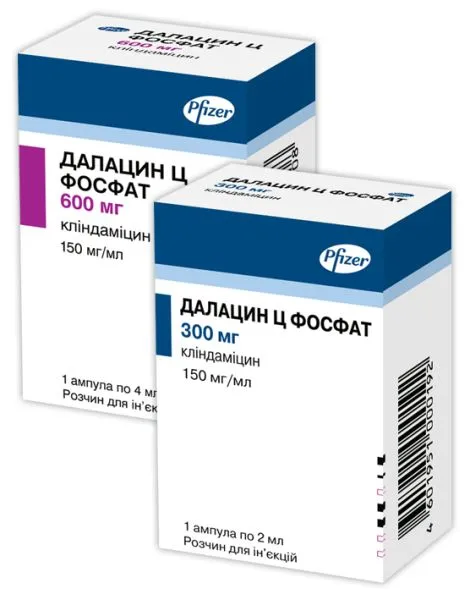
Table of Contents
INSTRUCTIONS FOR MEDICAL USE OF THE MEDICINAL PRODUCT DALLACIN C PHOSPHATE (DALACIN C PHOSPHATE)
Composition:
Active substance: clindamycin;
1 ml of solution contains clindamycin phosphate 150 mg (equivalent to clindamycin base);
Excipients: benzyl alcohol, disodium edetate, water for injections.
Pharmaceutical form. Injection solution.
Main physicochemical properties: clear, colorless solution.
Pharmacotherapeutic group. Antibacterial agents for systemic use. Macrolides, lincosamides and streptogramins. ATC code J01F F01.
Pharmacological Properties.
Pharmacodynamics.
The active ingredient of Dalacin C Phosphate is clindamycin – a semi-synthetic antibiotic derived from lincomycin by substitution of the 7-(R)-hydroxyl group with a 7-(S)-chloro group.
Mechanism of action.
Clindamycin binds to the 50S subunit of the bacterial ribosome and inhibits protein synthesis.
Clindamycin may exert either bactericidal or bacteriostatic effects depending on the susceptibility of the organism and the concentration of the antibiotic.
Mechanisms of resistance.
Complete cross-resistance exists between clindamycin and lincomycin. Resistance in staphylococci and streptococci most commonly arises due to methylation of specific nucleotides in the 23S ribosomal RNA of the 50S ribosomal subunit, which may confer cross-resistance to macrolides and streptogramin B (MLSB phenotype). Macrolide-resistant isolates of these organisms should be tested for inducible resistance to lincomycin/clindamycin using the D-test.
Staphylococcus aureus strains susceptible to methicillin are generally susceptible to clindamycin. Clindamycin demonstrates significant activity against many methicillin-resistant Staphylococcus aureus (MRSA) strains. However, due to the presence of a substantial number of clindamycin-resistant MRSA strains, the use of this agent for treatment of infections caused by these organisms cannot be recommended without prior susceptibility testing. In vitro, some erythromycin-resistant staphylococcal strains may rapidly develop resistance to clindamycin.
The following microorganisms are typically resistant:
- aerobic Gram-negative bacilli;
- Enterococcus faecalis;
- species of Nocardia;
- Neisseria meningitidis;
- Haemophilus influenzae strains (in regions where antibiotic resistance is common).
Breakpoints.
The following are the susceptibility breakpoints for clindamycin according to the classification of the European Committee on Antimicrobial Susceptibility Testing (EUCAST) from 2014.
- Staphylococcus species: susceptible ≤ 0.25 mg/L, resistant > 0.5 mg/L.
- Streptococcus groups A, B, C, G: susceptible ≤ 0.5 mg/L, resistant > 0.5 mg/L.
- Streptococcus pneumoniae: susceptible ≤ 0.5 mg/L, resistant > 0.5 mg/L.
- Anaerobic Gram-positive microorganisms (except Clostridium difficile): susceptible ≤ 4 mg/L, resistant > 4 mg/L.
- Anaerobic Gram-negative microorganisms: susceptible ≤ 4 mg/L, resistant > 4 mg/L.
Prevalence of acquired resistance.
The prevalence of acquired resistance in specific species may vary geographically and over time; therefore, local resistance data should be obtained, especially when treating severe infections. Expert advice should be sought if resistance levels in a given region are such that the utility of the agent is questionable, at least for certain types of infections. In particular, microbiological diagnosis with identification of the causative agent and its susceptibility to lincomycin/clindamycin is recommended in cases of severe infections or treatment failure.
The data below for clindamycin are based on European surveillance studies from 2013.
Typically susceptible organisms.
- Aerobic Gram-positive microorganisms:
Actinomyces israelii;
Staphylococcus aureus (methicillin-susceptible);
Streptococcus agalactiae;
Viridans group streptococci.
- Anaerobic microorganisms:
species of Bacteroides a (except B. fragilis);
species of Fusobacterium a;
species of Peptococcus a;
species of Prevotella;
species of Veillonella a.
- Other microorganisms:
Chlamydia trachomatis a;
Chlamydophila pneumoniae a;
Gardnerella vaginalis a;
Mycoplasma hominis a.
Microorganisms with acquired resistance that may pose clinical problems.
- Aerobic Gram-positive microorganisms:
Staphylococcus aureus (methicillin-resistant) b;
Staphylococcus epidermidis b;
Staphylococcus haemolyticus;
Staphylococcus hominis;
Streptococcus pneumoniae (in some European countries resistance rates are 20–49%).
- Aerobic Gram-negative microorganisms:
Moraxella catarrhalis c.
- Anaerobic microorganisms:
Bacteroides fragilis;
Clostridium perfringens (higher resistance rates in Spain (10–20%));
species of Peptostreptococcus (higher resistance rates in Spain (10–20%));
species of Propionibacterium.
Naturally resistant microorganisms.
- Aerobic Gram-positive microorganisms:
species of Enterococcus;
Listeria monocytogenes.
- Aerobic Gram-negative microorganisms:
Escherichia coli;
species of Klebsiella;
Neisseria gonorrhoeae;
Pseudomonas aeruginosa.
- Anaerobic microorganisms:
Clostridium difficile.
- Other microorganisms:
Mycoplasma pneumoniae;
Ureaplasma urealyticum.
a Updated information not available.
b Resistance rate exceeding 50% has been documented in at least one European region.
c Most isolates have intrinsic intermediate resistance.
An antagonistic effect between clindamycin, erythromycin, and closely related macrolides has been demonstrated. No antagonistic effect has been demonstrated between clindamycin and penicillins.
Although clindamycin hydrochloride is active in vivo and in vitro, clindamycin phosphate and clindamycin palmitate are inactive in vitro. However, both compounds are rapidly hydrolyzed in vivo to the active parent compound.
Pharmacokinetics.
Absorption.
One to three hours after an intramuscular injection of 600 mg clindamycin phosphate, peak serum clindamycin levels reached 9 µg/mL. At the end of a 10-minute intravenous infusion of 300 mg and a 20-minute infusion of 600 mg, peak serum levels of 7 µg/mL and 10 µg/mL were achieved, respectively.
Table 1 shows mean serum levels of clindamycin phosphate following administration. Serum clindamycin concentrations may remain above the minimum inhibitory concentrations (MICs) in vitro for the most susceptible organisms when clindamycin phosphate is administered every 8–12 hours in adults or every 6–8 hours in children via continuous intravenous infusion. Steady-state concentrations are achieved after the third dose.
Table 1
| Dose |
Clindamycin, mcg/mL |
Clindamycin phosphate, mcg/mL |
| Adults (after reaching steady state) |
||
| 300 mg IV over 10 minutes every 8 hours |
7 |
15 |
| 600 mg IV over 20 minutes every 8 hours |
10 |
23 |
| 600 mg IV over 30 minutes every 6 hours |
10.9 |
|
| 600 mg IV over 30 minutes every 8 hours |
10.8 |
|
| 900 mg IV over 30 minutes every 8 hours |
14.1 |
|
| 900 mg IV over 30 minutes every 12 hours |
11 |
29 |
| 1200 mg IV over 45 minutes every 12 hours |
14 |
49 |
| 300 mg IM every 8 hours |
6 |
3 |
| 600 mg IM every 12 hours |
9 |
3 |
| Children (first dose)1 |
||
| 5–7 mg/kg IV over 1 hour |
10 |
|
| 3–6 mg/kg IM |
4 |
|
| 5–7 mg/kg IM |
8 |
|
1 Patients in this group received treatment for existing infections.
Distribution.
Protein binding ranges from 40–90% of the administered dose. Accumulation was not observed following oral administration.
Clindamycin readily penetrates into most body fluids and tissues. In bone tissue, drug concentration is approximately 40% (20–75%) of the level achieved in blood serum; in maternal milk – 50–100%; in synovial fluid – 50%; in sputum – 30–75%; in peritoneal fluid – 50%; in fetal blood – 40%; in pus – 30%; in pleural fluid – 50–90%. However, clindamycin does not penetrate into cerebrospinal fluid, even in cases of meningitis.
Biotransformation.
The elimination half-life of clindamycin is approximately 1½–3½ hours. This period is somewhat prolonged in patients with significantly impaired liver or kidney function. However, dosage adjustment is not required in cases of moderate impairment of liver or kidney function.
Clindamycin is relatively extensively metabolized.
In vitro studies in human liver and intestinal microsomes have shown that clindamycin is primarily oxidized by CYP3A4, with minor contribution from CYP3A5, forming clindamycin sulfoxide and the minor metabolite N-desmethylclindamycin.
Excretion.
Excretion is 10–20% in urine and approximately 4% in feces in microbiologically active form. The remainder is excreted as biologically inactive metabolites.
Excretion occurs predominantly via bile and feces.
Obese pediatric patients aged 2 to 18 years and obese adults aged 18 to 20 years.
Analysis of pharmacokinetic data in obese patients – children aged 2 to 18 years and adults aged 18 to 20 years – demonstrated that clindamycin clearance and volume of distribution, normalized by total body weight, are comparable to those in patients with normal body weight.
Clinical characteristics.
Indications.
Clindamycin is indicated for the treatment of serious infections caused by clindamycin-susceptible strains of gram-positive aerobic microorganisms such as streptococci, pneumococci, and staphylococci, or by susceptible anaerobic bacteria (see section "Pharmacodynamics").
- Infections of the upper respiratory tract: chronic sinusitis caused by anaerobic strains. Clindamycin may be used for the treatment of certain cases of chronic suppurative otitis media or as adjunctive therapy in combination with antibiotics active against aerobic gram-negative microorganisms. The indication does not extend to infections caused by H. influenzae (see section "Pharmacological properties"). Clindamycin may also be used for the treatment of recurrent pharyngotonsillitis.
- Lower respiratory tract infections, including infectious exacerbations of chronic bronchitis and pneumonia.
- Severe skin and soft tissue infections caused by susceptible microorganisms.
- Bone and joint infections, including osteomyelitis and septic arthritis.
- Severe gynecological infections, including pelvic inflammatory disease. Monotherapy with clindamycin may also be used in cervicitis caused by Chlamydia trachomatis.
- Intra-abdominal infections, including peritonitis and abdominal abscesses.
- Septicemia and endocarditis. In selected cases of septicemia and/or endocarditis caused by susceptible microorganisms, adequate response to clindamycin has been observed. However, bactericidal agents are generally preferred for the treatment of these infections.
- Dental infections, including periodontal abscess and periodontitis.
- Toxoplasmic encephalitis in AIDS patients. In patients intolerant to standard therapy, clindamycin may be used in combination with pyrimethamine.
- Pneumocystis jirovecii pneumonia in AIDS patients. In patients intolerant to standard therapy, clindamycin may be used in combination with primaquine.
- Severe malaria.
- Prophylaxis of endocarditis in patients with allergy/hypersensitivity to penicillin.
- Prevention of wound infection during surgical procedures in the head and neck area. Clindamycin phosphate, dissolved in physiological saline, may be used for intraoperative irrigation of the surgical site.
- Prevention of peritonitis and intra-abdominal abscesses following perforation and post-traumatic contamination when used concomitantly with aminoglycoside antibiotics (gentamicin or tobramycin).
As with all antibiotics, prior to prescribing clindamycin, information regarding the prevention of local resistance development and official recommendations for antibiotic use should be consulted.
Contraindications.
Hypersensitivity to the active substance, lincomycin, or to any of the excipients listed in the section "Composition".
Infectious meningitis (see section "Special precautions for use").
Interaction with other medicinal products and other forms of interaction.
An antagonistic effect between clindamycin, erythromycin, and chemically related macrolides has been demonstrated.
Clindamycin administered by injection has been shown to possess neuromuscular blocking properties, which may potentiate the effect of other neuromuscular blocking agents in the body. Therefore, clindamycin should be used with caution in patients receiving such agents as vecuronium, rocuronium, gentamicin, rapacuronium (with magnesium), or pancuronium. A synergistic effect of other antibiotics combined with clindamycin on neuromuscular blockers has been reported. Therefore, the use of antibiotics together with muscle relaxants requires special attention, as the synergistic action resulting from such a combination may cause deeper muscle relaxation and delay recovery.
Clindamycin is primarily metabolized by CYP3A4 and to a lesser extent by CYP3A5, forming the major metabolite clindamycin sulfoxide and the minor metabolite N-desmethylclindamycin. Therefore, inhibitors of CYP3A4 and CYP3A5 (such as ritonavir, lopinavir, indinavir, cobicistat, ketoconazole, itraconazole, voriconazole, posaconazole, clarithromycin, telithromycin, grapefruit juice, nefazodone) may reduce clindamycin clearance, while inducers of these isoenzymes may increase clindamycin clearance. Monitoring for loss of efficacy should be performed in the presence of strong CYP3A4 inducers such as rifampicin.
In vitro studies show that clindamycin is not an inhibitor of CYP1A2, CYP2C9, CYP2C19, CYP2E1, or CYP2D6 and only moderately inhibits CYP3A4. Therefore, clinically significant interactions between clindamycin and drugs metabolized by these CYP enzymes are unlikely when used concomitantly.
Vitamin K antagonists.
Elevated coagulation parameters (prothrombin time/international normalized ratio) and/or bleeding have been reported in patients receiving clindamycin in combination with vitamin K antagonists (e.g., warfarin, acenocoumarol, and fluindione). Therefore, such patients should undergo frequent monitoring of coagulation parameters.
Special precautions for use.
Clindamycin phosphate must not be administered by undiluted intravenous bolus injection. The drug should be given by infusion over at least
10–60 minutes (see section "Method of administration and dosage").
Severe hypersensitivity reactions have been reported in patients receiving clindamycin therapy, including serious skin reactions such as drug reaction with eosinophilia and systemic symptoms (DRESS syndrome), Stevens-Johnson syndrome, toxic epidermal necrolysis, and acute generalized exanthematous pustulosis. If a hypersensitivity reaction or serious skin reaction occurs, clindamycin should be discontinued immediately and appropriate therapy initiated (see sections "Contraindications" and "Adverse reactions").
Dalacin C Phosphate contains benzyl alcohol (9.45 mg/mL). Benzyl alcohol may cause anaphylactoid reactions.
Intravenous administration of the preservative benzyl alcohol has been associated with serious adverse reactions and fatal outcomes in children, including neonates. These events are characterized by central nervous system depression, metabolic acidosis, gasping respiration, cardiovascular collapse, and hematological abnormalities (gasping syndrome). Although usual therapeutic doses of this medicinal product contain amounts of benzyl alcohol significantly lower than those associated with gasping syndrome, the minimal quantity of benzyl alcohol that may cause toxicity is unknown. The product should be used only when necessary and if no alternative options are available. High doses should be administered with caution and preferably for short-term treatment in patients with hepatic or renal impairment due to the risk of accumulation and toxicity (metabolic acidosis). Premature infants and low-birth-weight neonates may be more susceptible to toxicity. Medicinal products containing benzyl alcohol should not be used for treatment of premature or full-term neonates unless absolutely necessary. Benzyl alcohol may cause toxic and allergic reactions in infants and children under 3 years of age.
Antibacterial therapy may disrupt the normal gut flora of the large intestine, leading to overgrowth of Clostridium difficile. This has been reported during treatment with nearly all antibacterial agents, including clindamycin. The severity of this reaction may range from mild diarrhea to fatal colitis. C. difficile produces toxins A and B, which contribute to the development of Clostridium difficile-associated diarrhea and are the primary cause of antibiotic-associated colitis. Hyper-toxin-producing C. difficile strains may lead to increased morbidity and mortality, as these infections may be resistant to antimicrobial therapy and may require colectomy. This form of colitis is characterized by profuse watery diarrhea, which may progress to severe chronic diarrhea, leukocytosis, fever, and severe abdominal cramps, sometimes accompanied by blood or mucus in the stool. Without further treatment, peritonitis, shock, and toxic megacolon may develop. Antibiotic-associated colitis may occur 2–3 weeks after completion of clindamycin therapy. A careful medical history is essential, as cases of C. difficile-induced diarrhea have been reported more than two months after antibacterial agent administration.
All patients who develop diarrhea following antibiotic use should be evaluated for possible C. difficile-induced diarrhea. It may progress to colitis, including pseudomembranous colitis (see section "Adverse reactions"), with severity ranging from mild to fatal. If antibiotic-associated diarrhea or antibiotic-associated colitis is suspected or confirmed, antibacterial therapy, including clindamycin, should be discontinued immediately and appropriate therapeutic measures initiated promptly. In moderate to severe cases, consideration should be given to administration of fluids and electrolytes, protein supplementation, and antibacterial agents effective against Clostridium difficile-induced colitis. Antiperistaltic agents are contraindicated in this situation. Diagnosis of antibiotic-associated colitis is usually based on clinical symptoms. The diagnosis may be confirmed by endoscopy showing pseudomembranous colitis or by detection of Clostridium difficile and its toxins in stool.
The use of medicinal products that inhibit intestinal peristalsis should be avoided.
Clindamycin should be administered with caution to patients with a history of gastrointestinal disorders, particularly colitis. Antibiotic-associated colitis and diarrhea occur more frequently and in more severe forms in debilitated patients and/or elderly patients.
Since clindamycin does not adequately penetrate into cerebrospinal fluid, it should not be used for the treatment of meningitis (see section "Contraindications").
In vitro studies have demonstrated antagonism between clindamycin and erythromycin. Due to the potential clinical significance of this interaction, these agents should not be used concomitantly (see section "Interaction with other medicinal products and other forms of interaction").
Liver and kidney function tests should be performed during prolonged therapy.
Acute kidney injury, including acute renal failure, has been rarely reported. In patients with pre-existing renal dysfunction and in patients receiving concomitant nephrotoxic drugs, monitoring of renal function should be considered (see section "Adverse reactions").
Use of clindamycin phosphate may lead to overgrowth of resistant organisms, including fungal organisms.
Clindamycin may possess neuromuscular blocking properties, which could potentiate the effects of other neuromuscular blocking agents. Therefore, clindamycin should be administered with caution to patients receiving such agents (see section "Interaction with other medicinal products and other forms of interaction").
Clindamycin phosphate should be administered with caution to patients with a history of hypersensitivity.
Clindamycin should be used with caution in patients with severe renal and/or hepatic impairment associated with severe metabolic conditions. If high doses are required, serum clindamycin levels should be monitored (see section "Method of administration and dosage").
This medicinal product contains less than 1 mmol (23 mg)/dose of sodium, i.e., essentially "sodium-free".
Use during pregnancy or breastfeeding.
Pregnancy.
Data on the use of clindamycin in pregnant women during the first trimester are limited. Clindamycin crosses the placenta. Clinical studies in pregnant women have not shown an increased frequency of congenital anomalies with systemic administration of Dalacin C Phosphate during the second and third trimesters of pregnancy. Animal studies have not demonstrated any direct or indirect harmful effects on reproductive function.
Benzyl alcohol is able to cross the placenta (see section "Special precautions for use").
As a precautionary measure, use of Dalacin C Phosphate should be avoided during the first trimester of pregnancy. The decision to use the drug during the second and third trimesters of pregnancy may be made by a physician after establishing an appropriate diagnosis.
Breastfeeding. Clindamycin has been detected in human breast milk at concentrations of 0.7–3.8 µg/mL following oral or parenteral administration. Due to the potential for serious adverse reactions in breastfed infants, clindamycin should not be used in women who are breastfeeding (see section "Special precautions for use").
Ability to affect reaction speed when driving or operating machinery.
Clindamycin has no effect or has a negligible effect on the ability to drive vehicles or operate machinery.
Method of Administration and Dosage.
Dosage.
The method of administration and dosage should be determined according to the severity of infection, patient's condition, and the sensitivity of the causative microorganism.
Clindamycin phosphate for intramuscular administration must be used undiluted.
Clindamycin phosphate must be diluted prior to intravenous administration (see "Method of Administration. Dilution and Infusion Rate for Intravenous Administration" below).
Adults (intravenous or intramuscular). For the treatment of intra-abdominal infections, pelvic infections in women, and other severe infections, the standard daily dose of clindamycin phosphate is 2400–2700 mg (administered in 2, 3, or 4 equal doses) and is generally used in combination with an appropriate antibiotic active against gram-negative aerobic microorganisms.
For less complicated infections caused by more susceptible microorganisms, therapeutic response may be observed with lower doses: 1200–1800 mg per day (administered in 3 or 4 equal doses).
Doses up to 4800 mg daily have been successfully used in adults.
A single intramuscular dose exceeding 600 mg is not recommended.
Treatment of inflammatory pelvic diseases: clindamycin phosphate 900 mg intravenously every 8 hours in combination with an appropriate antibiotic active against gram-negative microorganisms (e.g., gentamicin, 2 mg/kg as the first dose, followed by 1.5 mg/kg every 8 hours) in patients with normal renal function. This treatment should be continued for at least 4 days. After clinical improvement is observed, treatment should be continued for an additional 2 days. Then switch to oral clindamycin hydrochloride at a dose of 1800 mg per day (in several divided doses) until completion of the full treatment course of 10–14 days.
Children.
Clindamycin dosage should be based on total body weight, regardless of obesity.
The maximum daily dose should not exceed the adult dose.
Children aged 1 month and older (intravenous or intramuscular). The drug is administered at a dose of 20–40 mg/kg per day in 3 or 4 equal doses.
Use of Dalacin C Phosphate in children under 3 years of age is indicated only when absolutely necessary (see section "Special Warnings and Precautions for Use").
Patients with renal and/or hepatic impairment. Dose adjustment is not required in patients with renal impairment. Hemodialysis and peritoneal dialysis are ineffective in removing clindamycin from the blood.
In patients with moderate to severe hepatic impairment, an extended elimination half-life of clindamycin has been observed. When clindamycin is administered every 8 hours, accumulation occurs only in isolated cases. Therefore, dose reduction is not considered necessary.
Dosing for Specific Indications.
Toxoplasmic encephalitis in AIDS patients.
Dalacin C Phosphate should be administered at a dose of 600–1200 mg every 6 hours for 2 weeks, followed by 300–600 mg orally in capsule form every 6 hours. Typically, the full course of treatment lasts 8 to 10 weeks. Pyrimethamine should be administered orally at a dose of 25–75 mg per day for 8–10 weeks. Folic acid at a dose of 10–20 mg per day should be used concomitantly with high-dose pyrimethamine.
Pneumocystis jirovecii pneumonia in AIDS patients.
The drug is administered by intravenous infusion at a dose of 600–900 mg every 6 hours or 900 mg every 8 hours for 21 days in combination with oral primaquine at a dose of 15–30 mg per day for 21 days.
Severe malaria.
Adults. Quinine gluconate: loading dose of 10 mg/kg intravenously over 1–2 hours, followed by continuous infusion at 0.02 mg/kg/min for at least 24 hours (an alternative dosing regimen is provided in the quinine medicinal product instructions). When parasitemia drops below 1% and the patient is able to take oral medication, treatment should be supplemented with oral quinine at the dose specified above and oral clindamycin at 20 mg active ingredient/kg/day (divided into 3 daily doses for 7 days).
If the patient cannot take oral medication, administer a loading dose of clindamycin 10 mg active ingredient/kg intravenously, followed by 5 mg active ingredient/kg intravenously every 8 hours. Rapid intravenous injection should be avoided. Switch to oral clindamycin (oral dose as specified above) as soon as the patient is able to take oral medication. The treatment course lasts 7 days.
Children. Quinine gluconate: same mg/kg dose and recommendations as for adults, and oral clindamycin: 20 mg active ingredient/kg/day (divided into 3 daily doses for 7 days). If the patient cannot take oral medication, administer a loading dose of clindamycin 10 mg active ingredient/kg intravenously, followed by 5 mg active ingredient/kg intravenously every 8 hours. Avoid rapid intravenous administration. Switch to appropriate oral formulation of clindamycin (oral dose as specified above) as soon as the patient is able to take oral medication. The treatment course lasts 7 days.
Prophylaxis of endocarditis in penicillin-allergic patients.
As an alternative therapy when parenteral administration is required: 600 mg clindamycin phosphate administered intravenously 1 hour prior to the procedure.
Prophylaxis of infections during head and neck surgery.
900 mg clindamycin phosphate, dissolved in 1000 ml of physiological saline, should be used for irrigation of the surgical site during head and neck surgery prior to wound closure.
Method of Administration.
Dilution and Infusion Rate for Intravenous Administration.
The concentration of clindamycin in the diluted solution must not exceed 18 mg/mL, and the infusion rate must not exceed 30 mg/min (see section "Adverse Reactions"). Standard infusion rates are listed below:
| Dose |
Amount of diluent |
Infusion time |
| 300 mg |
50 ml |
10 min |
| 600 mg |
50 ml |
20 min |
| 900 mg |
100 ml |
30 min |
| 1200 mg |
100 ml |
40 min |
It is not recommended to administer intravenous infusions at doses exceeding 1200 mg per hour.
Unused medicinal product or waste material must be disposed of in accordance with local requirements.
Children.
Do not use in premature infants and newborns, since Dalacin C Phosphate contains benzyl alcohol (see section "Special precautions").
Do not use for longer than 1 week in children under 3 years of age, unless otherwise directed by a physician.
Appropriate monitoring of organ and system functions is advisable during administration of the drug to children (under 16 years of age).
Overdose.
Clindamycin toxicity is not dose-dependent. Overdose does not cause specific symptoms. Hemodialysis and peritoneal dialysis are ineffective in removing clindamycin from blood serum.
Side effects.
The following are adverse reactions identified during clinical trials and post-marketing surveillance, listed by system organ class and frequency. Adverse reactions identified after marketing are indicated in italics. Frequency is defined as follows: very common (≥ 1/10), common (≥ 1/100, < 1/10), uncommon (≥ 1/1000, < 1/100), rare (≥ 1/10000, < 1/1000), very rare (< 1/10000), and frequency not known (cannot be estimated from available data). Within each frequency grouping, adverse reactions are listed in descending order of severity.
Infections and infestations.
Common: Pseudomembranous colitis (see section “Special precautions”); Clostridium difficile-induced colitis.
Frequency not known: Vaginal infections.
Blood and lymphatic system disorders.
Frequency not known: Eosinophilia, agranulocytosis, neutropenia, thrombocytopenia, leukopenia.
Immune system disorders.
Very rare: Anaphylactic shock.
Frequency not known: Anaphylactoid reaction, anaphylactic reaction, hypersensitivity. Nervous system disorders.
Uncommon: Dysgeusia.
Cardiac disorders.
Uncommon: Respiratory and cardiac arrest**.
Vascular disorders.
Common: Thrombophlebitis.
Uncommon: Arterial hypotension**.
Gastrointestinal disorders.
Uncommon: Diarrhea, nausea.
Very rare: Colitis.
Frequency not known: Abdominal pain, vomiting.
Hepatobiliary disorders.
Common: Abnormal liver function tests.
Frequency not known: Jaundice.
Skin and subcutaneous tissue disorders.
Common: Maculopapular rash.
Uncommon: Urticaria, erythema multiforme, pruritus.
Frequency not known: Toxic epidermal necrolysis, Stevens-Johnson syndrome, drug reaction with eosinophilia and systemic symptoms (DRESS syndrome), angioneurotic edema, acute generalized exanthematous pustulosis, exfoliative dermatitis, bullous dermatitis, scarlatiniform rash.
Renal and urinary disorders.
Frequency not known: Acute renal failure#.
General disorders and administration site conditions.
Uncommon: Pain*, abscess*.
Frequency not known: Injection site irritation*.
*This reaction can be minimized by administering intramuscular injections deeply and avoiding prolonged catheterization of the same vein.
**Rare cases have been reported following too rapid intravenous administration (see section “Dosage and administration”).
#See section “Special precautions”.
Treatment should be discontinued if diarrhea occurs during therapy.
In the event of severe anaphylactoid reactions, immediate measures should be taken, including administration of epinephrine (adrenaline), oxygen, and intravenous corticosteroids. Mechanical ventilation, possibly via intubation, should be used if necessary.
Use of clindamycin phosphate may lead to overgrowth of non-susceptible microorganisms, including fungal organisms.
Reporting of suspected adverse reactions.
Reporting of suspected adverse reactions after drug authorization is important. It allows continuous monitoring of the benefit-risk balance of the medicinal product. Healthcare and pharmacy professionals, as well as patients or their legal representatives, should report all suspected adverse reactions and lack of efficacy through the Automated Pharmacovigilance Information System at: https://aisf.dec.gov.ua.
Shelf life. 2 years.
Storage conditions.
Store at temperatures not exceeding 25 °C in a place inaccessible to children.
Incompatibility.
The following drugs are physically incompatible with clindamycin phosphate injection solution: ampicillin, sodium phenytoin, barbiturates, aminophylline, calcium gluconate, magnesium sulfate, ceftriaxone sodium, and ciprofloxacin.
Compatibility.
Clindamycin phosphate solutions in 5% dextrose in water and in sodium chloride solution, to which the following antibiotics have been added at standard concentrations, remain stable for at least 24 hours: amikacin sulfate, aztreonam, cefamandole nafate, cefazolin sodium, cefotaxime sodium, cefoxitin sodium, ceftazidime sodium, ceftriaxone sodium, cefotetan sodium, gentamicin sulfate, netilmicin sulfate, piperacillin, and tobramycin.
Compatibility and stability of these mixtures may vary depending on concentration and other conditions.
Packaging.
2 ml or 4 ml of solution in a vial. One vial per blister (or without blister) in a cardboard box.
Prescription status. Prescription only.
Manufacturer.
Pfizer Manufacturing Belgium NV /
Pfizer Manufacturing Belgium NV.
Manufacturer's address and place of business.
Rijksweg 12, Puurs-Sint-Amands, 2870, Belgium /
Rijksweg 12, Puurs-Sint-Amands, 2870, Belgium.