Bupinekain
Ukraine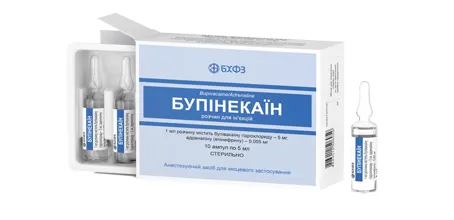
Table of Contents
INSTRUCTIONS FOR MEDICAL USE OF THE MEDICINAL PRODUCT BUPINECAINE (BUPINECAINE)
Composition:
Active substances: bupivacaine, adrenaline (epinephrine);
1 ml of the preparation contains bupivacaine hydrochloride monohydrate (calculated as 100% dry substance) – 5 mg, adrenaline (epinephrine) (calculated as 100% dry substance) – 0.005 mg;
Excipients: sodium chloride, sodium metabisulfite, 0.1 M hydrochloric acid solution, water for injections.
Pharmaceutical form. Injection solution.
Main physicochemical properties: clear, colorless liquid.
Pharmacotherapeutic group. Local anesthetics. Amides. Bupivacaine, combinations. ATC code N01BB51.
Pharmacological properties.
Pharmacodynamics.
Bupinecaine is a combination drug, whose pharmacological properties are determined by its active ingredients – bupivacaine and epinephrine.
Bupivacaine is an amide-type local anesthetic. Its mechanism of action is based on stabilization of neuronal membranes and prevention of the generation and conduction of nerve impulses, elevation of the excitability threshold of nerve fibers, and reduction of the action potential magnitude. It reversibly blocks impulse conduction along nerve fibers by affecting sodium channels. The degree of anesthesia depends on the diameter, myelination, and conduction velocity of the specific nerve fiber.
When entering systemic circulation, bupivacaine affects the cardiovascular system and the central nervous system (CNS). CNS effects may manifest as depression of medullary centers, including the respiratory center (potentially leading to respiratory depression and coma), or as a stimulatory effect on the cerebral cortex, resulting in psychomotor agitation and tremor, which may progress to generalized seizures.
Epinephrine is an adrenomimetic agent that exerts direct stimulatory effects on alpha- and beta-adrenergic receptors. It is used to prolong the action of bupivacaine and reduce the risk of systemic adverse reactions (due to decreased likelihood of bupivacaine entering systemic circulation). Thus, the addition of a vasoconstrictor reduces the rate of anesthetic absorption, thereby enhancing and prolonging the drug's effect.
The duration of postoperative anesthesia is 7–14 hours with intercostal block and 3–4 hours with epidural block.
Pharmacokinetics.
Systemic absorption of the drug depends on the route of administration and vascularity of the injection site. Pharmacokinetic parameters are influenced by renal and/or hepatic impairment, urine pH, renal blood flow, administered dose, and patient age. After injection, peak plasma concentration of bupivacaine is observed within 30–45 minutes and gradually declines over the next 3–6 hours. The elimination half-life of bupivacaine is 2.7 hours, and plasma protein binding is 96%. A small amount of bupivacaine passes into breast milk. It may significantly penetrate well-perfused tissues such as the brain, myocardium, liver, kidneys, and lungs. It crosses the cerebrospinal fluid and the placental barrier. Bupivacaine is metabolized in the liver via conjugation with glucuronic acid. It is primarily excreted by the kidneys as metabolites, with 5% excreted unchanged. In elderly patients, the elimination half-life is prolonged.
Epinephrine, when administered parenterally, is rapidly degraded by monoamine oxidase (MAO) and catechol-O-methyltransferase in liver, kidney, and gastrointestinal tract cells. Time to maximum concentration after subcutaneous and intramuscular administration is 3–10 minutes. It crosses the placenta but does not cross the blood-brain barrier. It is metabolized in the blood and liver into inactive metabolites. The elimination half-life is 1–2 minutes. It is excreted by the kidneys as metabolites.
Clinical characteristics.
Indications.
Various types of local anesthesia (pain relief in trauma, surgical procedures, and painful diagnostic and therapeutic interventions):
- Lumbar epidural anesthesia;
- Caudal epidural anesthesia;
- Peripheral nerve block.
Contraindications.
- Hypersensitivity to bupivacaine, adrenaline (epinephrine), or other components of the drug (particularly sodium metabisulfite);
- Hypersensitivity to any amide-type local anesthetic;
- Intravenous regional anesthesia (Bier block);
- Paracervical block anesthesia during labor;
- Pyogenic skin infections at or near the puncture site, septicemia.
Additional contraindications for epidural anesthesia include:
- Active central nervous system (CNS) diseases such as meningitis, poliomyelitis, intracranial hemorrhage, demyelinating diseases, increased intracranial pressure;
- Space-occupying cerebral lesions, tumor, cyst, or abscess, which may disrupt circulation of cerebrospinal fluid or cerebral blood flow upon sudden changes in intracranial pressure;
- Spinal stenosis and active spinal diseases (e.g., arthritis, spondylitis, tumors/metastatic lesions, tuberculosis), recent spinal trauma, and other conditions precluding spinal puncture;
- Subacute combined degeneration of the spinal cord in pernicious anemia;
- Severe arterial hypotension, e.g., in cardiogenic or hypovolemic shock;
- Coagulation disorders or anticoagulant therapy.
Additional contraindications for solutions containing adrenaline:
- Decompensated thyrotoxicosis and severe cardiovascular diseases, particularly those associated with tachycardia, tachyarrhythmia, ventricular fibrillation, hypertrophic obstructive cardiomyopathy, severe aortic stenosis, or marked cerebral atherosclerosis;
- Pheochromocytoma, closed-angle glaucoma, shock (except anaphylactic);
- General anesthesia with halogenated hydrocarbon anesthetics (including chloroform, halothane, cyclopropane, trichloroethylene);
- Use of the drug in areas supplied by terminal arteries (fingers, nose, auricle, penis) or in areas with impaired blood supply due to any cause.
Interaction with other medicinal products and other forms of interaction.
Caution should be exercised when using bupivacaine together with other local anesthetics (e.g., tocainide) or drugs structurally similar to amide-type local anesthetics, such as antiarrhythmic agents like lidocaine and mexiletine, since their systemic toxic effects are additive.
Specific studies on interactions between local anesthetics and class III antiarrhythmic agents (e.g., amiodarone) have not been conducted, but caution is recommended when using such combinations.
Anticoagulants (ardeparin, dalteparin, enoxaparin, heparin, warfarin) increase the risk of bleeding.
When bupivacaine is used with opioid analgesics during epidural anesthesia, an additive effect occurs, but respiratory depression may be enhanced.
Barbiturates potentiate the action of anesthetics.
Sympathomimetics: Solutions containing adrenaline should not be used simultaneously with other sympathomimetics due to the risk of additive effects and increased toxicity.
Alpha-adrenergic blockers (phentolamine): counteract the vasoconstrictive and hypertensive effects of adrenaline. This may be beneficial in cases of adrenaline overdose.
Beta-adrenergic blockers (including ophthalmic formulations): Severe arterial hypertension and reflex bradycardia may occur when used with non-selective beta-blockers such as propranolol, due to alpha-mediated vasoconstriction. Beta-blockers, especially non-selective ones, may also counteract the cardiac and bronchodilatory effects of adrenaline.
Calcium channel blockers: May increase the cardiotoxic effect of bupivacaine.
General anesthetics (halothane, enflurane): Administration of adrenaline-containing solutions during general anesthesia with halogenated hydrocarbon anesthetics, which increase myocardial excitability and possibly myocardial sensitivity to adrenaline, may lead to arrhythmias, including ventricular extrasystoles, tachycardia, or fibrillation.
Antihypertensive agents: Adrenaline specifically interferes with the antihypertensive effects of clonidine and sympatholytics such as guanethidine, increasing the risk of severe arterial hypertension. Adrenaline increases blood pressure and may counteract the effects of other antihypertensive drugs.
Tricyclic antidepressants, maprotiline, MAO inhibitors: Risk of developing severe, prolonged arterial hypertension and cardiac arrhythmias. If concomitant therapy cannot be avoided, careful monitoring of vital functions is required.
Phenothiazines and butyrophenones: May weaken or completely suppress the pressor effect of adrenaline, potentially leading to hypotensive reactions and tachycardia.
Cardiac glycosides: Increased risk of arrhythmias.
Antihistamines (e.g., dimenhydrinate, astemizole, terfenadine), thyroid hormones: Possible potentiation of adrenaline effects, particularly on heart rhythm and rate, and prolongation of the QT interval on ECG.
Histamine H2-receptor blockers (cimetidine, ranitidine): Studies on the influence of H2-antagonists on the pharmacokinetics of bupivacaine have yielded conflicting results. A possible reduction in bupivacaine clearance and increased plasma levels may occur.
Dopaminergic agents such as entacapone, levodopa, respiratory stimulants (doxapram), ergot derivatives, oxytocin: Solutions containing adrenaline may cause sustained elevation of arterial pressure, with possible cardiovascular complications and cerebrovascular events.
Corticosteroids, diuretics, aminophylline, theophylline: Potentiation of adrenaline-induced hypokalemia, increasing the risk of arrhythmias.
Adrenaline-induced hyperglycemia may lead to loss of glycemic control in diabetic patients receiving insulin or oral hypoglycemic agents.
Nitrates: Weakening of their therapeutic effect.
Phenoxybenzamine: Enhanced hypotensive effect and tachycardia.
Phenytoin: Sudden dose- and infusion rate-dependent reduction in arterial pressure and bradycardia.
Ciapride: QT interval prolongation on ECG.
Diatrizoates, iotalamic or ioxaglic acids: Enhanced neurological effects.
When the injection site of Bupivacaine is treated with disinfectant solutions containing heavy metals, the risk of local reactions such as pain and swelling increases.
Special precautions for use.
Regional and local anesthesia should be administered by experienced specialists who are proficient in the techniques of performing anesthesia, familiar with the diagnosis and management of adverse effects, acute systemic toxicity, and other complications of the drug, and who work in appropriately equipped facilities with immediate access to equipment and medications necessary for cardiopulmonary monitoring and resuscitation. Intravenous access for drug administration should be established prior to initiating anesthesia.
Skin testing with local anesthetics is indicated in individuals with a history of confirmed allergic reactions to these agents. Particular caution is required when testing local anesthetics containing adrenaline (epinephrine) due to an increased risk of false-negative results. Provocation testing is recommended if skin tests yield negative results. Testing of patients with confirmed allergic reactions to local anesthetics should be performed only by allergists experienced in the diagnosis and management of drug allergies.
Appropriate precautionary measures must be taken to prevent excessive increases in plasma drug concentrations, avoid overdose, and prevent intravascular or intrathecal injection. This includes careful aspiration tests, test doses, and the use of incremental (fractionated) dosing.
When administering large volumes of solutions containing adrenaline, there is a risk of systemic adrenaline effects.
Patients scheduled for extensive peripheral nerve blocks or high-dose anesthetic administration should be in optimal condition. An intravenous catheter must be placed before performing the block. The physician must be adequately trained and experienced in diagnosing and managing adverse effects, systemic toxicity, and other complications (see section "Overdose").
Performing extensive peripheral nerve blocks may involve the administration of large volumes of local anesthetic, often in highly vascular areas and near major blood vessels, increasing the risk of accidental intravascular injection and/or systemic absorption of a large drug dose, potentially leading to high plasma concentrations.
Like other local anesthetics, bupivacaine may cause acute toxic reactions involving the central nervous and cardiovascular systems when high plasma concentrations are reached (see sections "Adverse Reactions", "Overdose").
Ventricular arrhythmias, ventricular fibrillation, sudden cardiovascular collapse, cardiac arrest, and fatal outcomes have been reported following the use of bupivacaine for epidural anesthesia or peripheral nerve blocks. These events most commonly occur after accidental intravascular injection or when the injection site is highly vascularized. In cases of cardiac arrest, prolonged resuscitation efforts may be required to achieve a successful outcome. Sometimes resuscitation may be difficult or impossible despite adequate preparation and appropriate therapy.
Accidental intrathecal injection of local anesthetics may result in high spinal anesthesia, leading to severe arterial hypotension, loss of consciousness, and apnea.
Although regional anesthesia is often the optimal anesthetic method, certain patient groups require special attention to minimize the risk of serious adverse effects:
- Patients receiving class III antiarrhythmic agents (e.g., amiodarone), other local anesthetics, or drugs structurally similar to amide-type anesthetics should be under close observation and continuous ECG monitoring due to an increased risk of additive cardiac adverse effects;
- Elderly and debilitated patients should receive lower doses adjusted to their physical condition;
- Patients with conduction disturbances, partial or complete heart block, as local anesthetics may depress myocardial conduction;
- Patients with epilepsy;
- Patients with liver disease or reduced hepatic blood flow (e.g., due to beta-blocker therapy, shock, heart failure), since bupivacaine is metabolized in the liver;
- Patients with impaired renal function;
- Patients in late stages of pregnancy.
Hypoxia and hyperkalemia increase the risk of bupivacaine cardiotoxicity, which may necessitate dose adjustments. Acidosis increases the free fraction of bupivacaine and thus may enhance its neurologic and cardiac toxicity. Similarly, patients with severe renal insufficiency are at increased risk of bupivacaine toxicity due to acidosis associated with this condition.
Certain types of local anesthesia may be associated with serious adverse reactions regardless of the specific local anesthetic used.
- Epidural anesthesia, particularly in the presence of hypovolemia, may lead to arterial hypotension, bradycardia, and cardiovascular depression. Caution is advised when administering the drug to patients with cardiovascular disorders. This risk can be reduced by intravenous administration of crystalloid or colloid solutions. Hypotension should be corrected promptly, e.g., by intravenous administration of 5–10 mg ephedrine, repeated as needed.
- Epidural anesthesia may cause paralysis of intercostal muscles and impaired respiration in patients with pleural effusion.
- Patients with sepsis have an increased risk of developing intraspinal abscesses, especially in the postoperative period. Sepsis is a contraindication for epidural anesthesia.
- Retrobulbar injections may accidentally deliver the drug into the cranial subarachnoid space, causing transient blindness, apnea, seizures, cardiovascular collapse, and other adverse effects. These complications must be promptly diagnosed and treated.
- Retrobulbar and peribulbar administration of local anesthetics carries a small risk of persistent ocular muscle dysfunction. The main causes may include traumatic injury and/or local toxic effects on muscles and/or nerve fibers. The severity of such reactions depends on the degree of trauma, the concentration of the local anesthetic, and the duration of tissue exposure. Vasoconstrictors may exacerbate tissue-related adverse reactions and should be used only when clinically indicated.
- Accidental intravascular injection during nerve blocks in the head or neck region—even at low doses—may cause immediate and serious cerebral symptoms.
- Post-marketing reports have described cases of chondrolysis in patients who received prolonged intra-articular infusions of local anesthetics after surgical procedures. Most reported cases of chondrolysis involved the shoulder joint. Due to multiple etiological factors and conflicting data in the scientific literature regarding the mechanism of action, a causal relationship has not been established. Prolonged intra-articular infusions are not an approved indication for this drug.
The lowest effective dose providing adequate anesthesia should be used. Prolonged or repeated administration of bupivacaine hydrochloride may lead to significant increases in blood concentration due to gradual drug accumulation, resulting in cumulative toxicity and tachyphylaxis. Tolerance to elevated plasma anesthetic levels depends on the patient's physical condition.
Most local anesthetics are potential triggers for malignant hyperthermia. It is unknown whether amide-type local anesthetics induce malignant hyperthermia.
If a patient is being treated with monoamine oxidase inhibitors (MAOIs), it is recommended to discontinue them at least 10 days before administering Bupinecaine.
Patients with allergies to ester-type local anesthetics have not shown cross-sensitivity to amide-type local anesthetics such as bupivacaine.
Solutions containing adrenaline should be used with caution in patients with arterial hypertension, ischemic heart disease, cerebrovascular insufficiency, arrhythmias, thyrotoxicosis, diabetes mellitus (due to possible hyperglycemia requiring higher insulin or sulfonylurea doses), or any other conditions that may be exacerbated by adrenaline's effects.
Serious cardiac arrhythmias may occur when adrenaline-containing drugs are used in patients under general anesthesia with halogenated hydrocarbon anesthetics (including chloroform, halothane, cyclopropane, trichloroethylene); therefore, their concomitant use is contraindicated.
Prolonged use of adrenaline may lead to severe metabolic acidosis due to increased blood lactate levels and peripheral vasoconstriction, potentially resulting in tissue necrosis or gangrene.
Monitoring of serum potassium concentration, arterial pressure, diuresis, ECG, central venous pressure, and pulmonary artery pressure is recommended.
Bupinecaine contains sodium metabisulfite, which may cause anaphylactic-type allergic reactions and asthmatic episodes, even life-threatening ones, in certain sensitive individuals. The overall prevalence of sulfite sensitivity in the general population is unknown but likely low. Sulfite sensitivity occurs more frequently in patients with bronchial asthma.
Use during pregnancy or breastfeeding.
Bupinecaine should be used during pregnancy only in exceptional cases when the benefit to the mother clearly outweighs the potential risk to the fetus.
Use of Bupinecaine during childbirth (e.g., cesarean section, labor analgesia) is permitted only via epidural anesthesia. Its use in paracervical block anesthesia is contraindicated.
If Bupinecaine must be administered to a breastfeeding woman, breastfeeding should be discontinued.
Ability to affect reaction speed when operating vehicles or machinery.
Depending on the dose and route of administration, Bupinecaine may temporarily impair motor coordination. Therefore, patients should refrain from driving vehicles or operating machinery until full recovery of nervous system function.
Administration and Dosage
Skin tests with local anesthetics should be performed in individuals with documented reactions to these agents, according to evidence-based guidelines. Particular caution is required when testing local anesthetics containing adrenaline (epinephrine), due to an increased risk of false-negative results. Provocation testing is recommended if skin tests yield negative results. Testing of patients with confirmed allergic reactions to local anesthetics should be performed only by allergologists experienced in the diagnosis and management of drug allergies.
Prior to initiating anesthesia, intravenous access must be established. Continuous ECG monitoring is required.
To reduce the risk of potentially serious adverse reactions, appropriate measures should be taken to stabilize the patient’s condition before the procedure.
Extreme caution, including frequent and careful test aspirations before and during injection, must be exercised to prevent accidental intravascular or intrathecal administration.
For epidural anesthesia, prior to administering the main dose and following test aspiration, a test dose of 3–5 mL of Bupinecaine (administered via the same route as the main dose) should be given to rapidly detect accidental intravascular or intrathecal injection. If epinephrine enters the bloodstream, within 45 seconds an increase in heart rate and/or systolic blood pressure, as well as perioral cyanosis, may be observed. Accidental intrathecal injection may be recognized by signs of subarachnoid block (paresthesia in the legs, decreased sensation in the buttocks, or, in sedated patients, absence of the knee reflex).
After administering the test dose, verbal contact with the patient must be maintained for at least 5 minutes, heart rate should be monitored, and ECG monitoring is recommended.
In patients receiving beta-blockers chronically, a significant increase in heart rate may not occur; therefore, changes in systolic blood pressure should be closely observed.
A test dose should be administered before each new dose, as catheter migration within the epidural space or damage to the vascular wall or dura mater may occur. It should be remembered that a negative aspiration test and a negative test dose do not exclude the possibility of accidental intravascular or subarachnoid injection during administration of the main dose. Systemic toxic effects and high spinal effects may also occur during test dosing.
The main dose should be administered slowly at a rate of 25–50 mg/min, in fractions of 3–5 mL, with sufficient time intervals between injections to allow timely detection of accidental intravascular or intrathecal administration. Continuous verbal contact with the patient and careful monitoring of vital signs are mandatory. If signs of intoxication occur, administration must be stopped immediately.
The dose of any local anesthetic depends on the route of administration, the body area requiring anesthesia, tissue vascularity, the number of neural segments to be blocked, the required intensity of block and muscle relaxation, the desired duration of anesthesia, and the patient’s individual tolerance and physical condition.
Typically, the dose of a local anesthetic containing epinephrine corresponds to the dose of the anesthetic without epinephrine.
The lowest recommended effective dose should always be used to achieve adequate anesthesia.
The following doses are provided for the average adult (including the test dose):
- For lumbar epidural anesthesia: 10–20 mL of 0.5% solution;
- For caudal epidural anesthesia: 15–30 mL of 0.5% solution;
- For peripheral nerve blocks: from 5 mL of 0.5% solution up to the required maximum, but not exceeding the maximum recommended doses.
These doses are initial doses and may be repeated every 2–3 hours as needed. The initial injection dose should not exceed 150 mg. However, elderly patients, debilitated patients, and patients with concomitant cardiovascular disease or hypovolemia may require significantly lower doses, especially with repeated injections.
For most indications, the duration of anesthesia with bupivacaine is such that a single dose is usually sufficient for successful blockade.
Maximum Recommended Doses
The maximum dose should be determined after evaluating the patient’s physical status, age, and condition, taking into account the typical rate of systemic absorption from the specific injection site.
The maximum recommended single dose should not exceed 2 mg/kg body weight, calculated as bupivacaine.
The maximum recommended daily dose is 400 mg.
When multiple anesthetic techniques are used simultaneously, the total dose of bupivacaine should not exceed 150 mg.
When bupivacaine is used in combination with opioids, the dose of bupivacaine should be reduced.
The solution should be used immediately after opening the ampoule. Opened ampoules should not be stored. The solution is intended for single use only.
Children
There is no experience with the use of Bupinecaine in children.
Overdose
Systemic toxic reactions are primarily related to effects on the central nervous system (CNS) and cardiovascular system, and are caused by high blood concentrations of local anesthetics due to accidental intravascular injection, overdose, or exceptionally rapid absorption from highly vascularized areas. CNS reactions are similar for all amide-type local anesthetics, whereas cardiac effects vary both quantitatively and qualitatively depending on the specific agent.
Accidental intravascular injection of a local anesthetic may cause immediate (within seconds to minutes) systemic toxic reactions. In cases of overdose, signs of intoxication appear later (15–60 minutes after injection) due to a gradual increase in blood concentration of the local anesthetic.
Symptoms.
Manifestations of CNS toxicity develop progressively with increasing severity. Initial symptoms typically include mild dizziness, perioral paresthesia, tongue numbness, hyperacusis, tinnitus, and visual disturbances. Dysarthria and muscle twitching/tremor are more serious signs and precede generalized seizures. These symptoms should not be mistaken for neurotic behavior. Subsequently, loss of consciousness and generalized tonic-clonic seizures may occur, lasting from several seconds to several minutes. During seizures, hypoxia and hypercapnia develop rapidly due to increased muscular activity and impaired respiration. In severe cases, apnea may develop. Acidosis, hyperkalemia, hypocalcemia, and hypoxia increase and prolong the toxic effects of local anesthetics.
Recovery occurs due to redistribution of the drug away from the CNS, followed by metabolism and excretion. Resolution of toxic reactions may be rapid, except after administration of very high doses.
Cardiovascular manifestations of intoxication occur in severe cases of overdose. Cardiovascular toxicity is usually preceded by signs of CNS toxicity. However, in patients under deep sedation with benzodiazepines or barbiturates, under general anesthesia, or with high systemic concentrations of local anesthetic, prodromal CNS symptoms may be absent.
High systemic concentrations of the drug cause cardiovascular toxic effects due to depression of the cardiac conduction system, leading to reduced cardiac output, arterial hypotension, AV block, bradycardia, and occasionally ventricular arrhythmias, including ventricular tachycardia, ventricular fibrillation, and cardiac arrest. Rarely, cardiac arrest may occur without preceding CNS toxic effects. Myocardial depression may even be the first sign of intoxication.
Treatment.
Equipment and medications necessary for monitoring and emergency resuscitation must be immediately available.
Upon signs of acute systemic toxicity, administration of the local anesthetic must be stopped immediately. Treatment should focus on maintaining airway patency, ensuring adequate ventilation with assisted or mechanical ventilation if needed, optimizing oxygenation, controlling seizures, and supporting hemodynamics, while simultaneously correcting acidosis. If seizures do not cease spontaneously within 15–20 seconds, intravenous anticonvulsants should be administered: 1–4 mg/kg thiopental rapidly terminates seizures; alternatively, 0.1 mg/kg diazepam (which acts more slowly) or 0.05 mg/kg midazolam may be used. In cases of recurrent seizures, succinylcholine should be administered, which rapidly terminates muscle twitching, but requires tracheal intubation and mechanical ventilation.
In cases of cardiovascular depression (arterial hypotension, bradycardia), intravenous fluids, vasopressors (e.g., 5–10 mg ephedrine or 5–10 mcg/kg epinephrine, repeatable after 2–3 minutes), and inotropic agents should be administered. For bradycardia, intravenous atropine should be given.
Ventricular arrhythmias should be treated with defibrillation. In case of circulatory arrest, immediate cardiopulmonary resuscitation must be initiated. Cardiac arrest induced by bupivacaine may be resistant to electrical defibrillation, and prolonged resuscitation efforts may be required.
Adverse reactions.
The adverse reaction profile of the drug is the same as that of other long-acting local anesthetics. Factors affecting plasma protein binding—namely acidosis, conditions associated with reduced protein levels, and the influence of other medicinal products—may increase the body's sensitivity to bupivacaine.
The most common adverse effects requiring intervention are dose-dependent effects involving the central nervous and cardiovascular systems.
Adverse reactions caused by the drug itself may be difficult to distinguish from the physiological effects of nerve block (such as arterial hypotension, bradycardia, transient urinary retention), from events directly caused by the procedure (e.g., nerve injury), or from complications secondary to puncture (e.g., epidural abscess, hematoma).
Neurological injury is a rare but well-recognized consequence of regional and, particularly, epidural anesthesia, which may be associated with several causes—for example, direct trauma to the spinal cord or spinal nerves, anterior spinal artery syndrome (epidural hematoma), injection of irritant substances (chemical injury due to preservatives (metabisulfite), detergents), or loss of sterility during the procedure. This may result in localized paresthesia or anesthesia, motor weakness, loss of sphincter control, or paraplegia. Occasionally, these impairments may be permanent.
Nervous system: paresthesia, restlessness, anxiety, nervousness, sleep disturbances (including somnolence), dizziness, headache, signs of toxicity (chills, convulsions (risk of convulsions increases with hypercapnia and acidosis), perioral paresthesia, tongue numbness, hyperacusis, visual disturbances, loss of consciousness, tremor, dizziness, tinnitus, dysarthria, muscle twitching), neuropathy, peripheral nerve injury, arachnoiditis, paralysis, paraplegia, cauda equina syndrome, muscle twitching. In patients with Parkinson’s disease, increased rigidity and tremor may occur. High sympathetic blockade is possible following epidural injection.
Psychiatric disorders: psychoneurotic disorders, psychomotor agitation, disorientation, memory impairment, aggressive or panic behavior, schizophrenia-like disorders, paranoia.
Cardiovascular system: myocardial depression, reduced cardiac output, bradycardia, cardiac arrest, arrhythmias (e.g., AV block, ventricular arrhythmias, including ventricular tachycardia, ventricular fibrillation, asystole), arterial hypotension/hypertension, collapse, peripheral vasodilation, chest pain, angina, ECG changes (including reduced T-wave amplitude).
Eye organs: diplopia, strabismus, nystagmus, miosis.
Immune system: allergic reactions, including skin rashes, urticaria, pruritus, skin hyperemia, angioneurotic edema (including laryngeal edema), tachycardia, sneezing, nausea, vomiting, dizziness, syncope, increased sweating, elevated body temperature, erythema multiforme, anaphylactic reactions/shock.
Respiratory system: respiratory depression, bronchospasm.
Gastrointestinal tract: nausea, vomiting, anorexia.
Urinary system: difficult and painful urination (in case of prostatic hyperplasia), urinary retention, involuntary urination.
Hepatobiliary system: reversible increases in AST, ALT, alkaline phosphatase, and bilirubin have been observed after repeated injections or prolonged infusions of bupivacaine. If signs of liver dysfunction occur, the drug should be discontinued.
Other: prolonged anesthesia beyond the expected duration, reduced skin and mucous membrane sensitivity in the perineal area, involuntary defecation, back pain, hypokalemia, hyperglycemia, thermoregulatory disturbances (feeling of cold or heat), cold extremities. With repeated injections of adrenaline, necrosis may occur due to its vasoconstrictive effect (including necrosis of the liver or kidneys).
Accidental subarachnoid injection of the drug may lead to very high spinal anesthesia, possibly accompanied by apnea and severe arterial hypotension.
Serious systemic adverse reactions are rare but may occur in cases of overdose or unintentional intravascular administration.
Shelf life. 3 years.
Do not use after the expiry date stated on the packaging.
Storage conditions.
Store in the original packaging at a temperature between 8 °C and 15 °C.
Keep out of reach of children.
Incompatibilities.
Bupivacaine is incompatible with alkaline solutions, as bupivacaine is poorly soluble at pH above 6.5, leading to precipitate formation and epinephrine degradation.
Do not mix with other medicinal products in the same syringe.
Since epinephrine is unstable, solutions containing it should not be sterilized.
Avoid contact of the local anesthetic solution containing adrenaline (low pH) with metallic surfaces due to the risk of accelerated adrenaline degradation and development of allergic reactions at the injection site.
Packaging.
5 ml in ampoules, 5 ampoules in a cassette, 1 or 2 cassettes in a carton.
Prescription status. Prescription only.
Manufacturer.
Public Joint-Stock Company "Scientific and Production Center "Borshchagovskiy Chemical and Pharmaceutical Plant".
Manufacturer’s address and place of business.
17 Myru Street, Kyiv, 03134, Ukraine.