Budesonide isihaler
Ukraine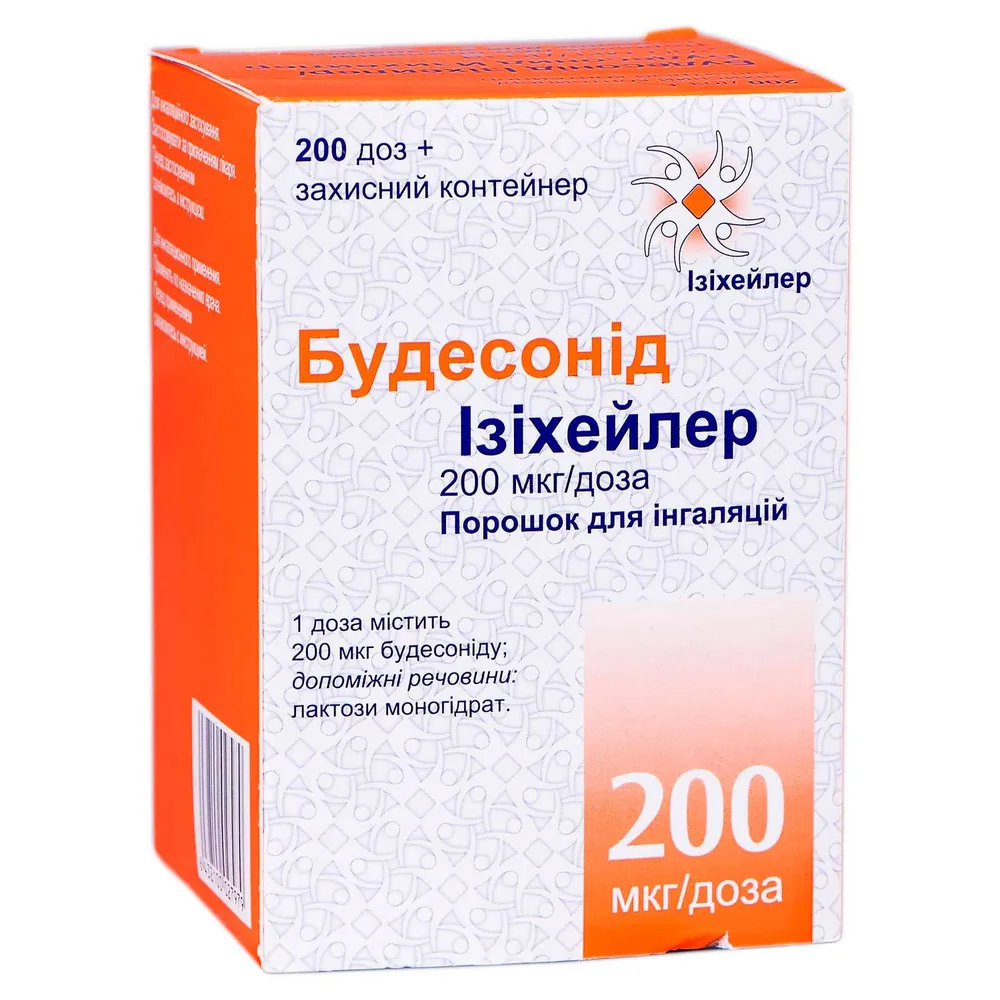
Table of Contents
INSTRUCTIONS FOR MEDICAL USE OF THE MEDICINAL PRODUCT BUDISONIDE ISYHALER (BUDESONIDE ASYHALER)
Composition:
Active substance: budesonide;
One dose contains 200 mcg of budesonide;
Excipient: lactose monohydrate.
Pharmaceutical form. Powder for inhalation.
Main physicochemical properties: white or almost white powder.
Pharmacotherapeutic group.
Other inhaled agents used in the treatment of obstructive airway diseases. Glucocorticoids. ATC code R03BA02.
Pharmacological Properties.
Pharmacodynamics.
Budesonide is a glucocorticosteroid with potent local anti-inflammatory action.
Local anti-inflammatory effect.
The precise mechanism of action of glucocorticosteroids in the treatment of bronchial asthma has not been fully elucidated. The anti-inflammatory effect is likely to be important, such as inhibition of mediator release in inflammation and inhibition of cytokine-mediated immune response.
Onset of effect.
Improvement in lung function occurs within several hours after a single inhaled dose of budesonide administered via a dry powder inhaler. With therapeutic use of inhaled budesonide via a dry powder inhaler, improvement in lung function has been demonstrated within 2 days of starting treatment, although up to 4 weeks may be required to achieve maximum effect.
Airway reactivity
It has also been demonstrated that budesonide reduces airway reactivity to histamine and methacholine in hyperreactive patients.
Exercise-induced bronchial asthma
Inhaled budesonide is effective in the prevention of exercise-induced bronchial asthma.
Hypothalamus–pituitary–adrenal (HPA) axis function
Studies in healthy volunteers have shown a dose-dependent effect of the medicinal product Budesonide Isihaler on cortisol levels in plasma and urine. When used at recommended doses, budesonide has less effect on adrenal function than prednisolone 10 mg, as demonstrated by ACTH stimulation tests.
Children
Limited long-term data indicate that most children and adolescents treated with inhaled budesonide eventually achieve the expected adult height. However, an initial slight, transient slowing of growth (approximately 1 cm) has been observed. This generally occurs during the first year of treatment.
Examinations using slit lamps were performed in 157 children aged 5–16 years who received a mean daily dose of 504 mcg for 3–6 years. Results were compared with those in 111 children with bronchial asthma of the same age group. Inhaled budesonide was not associated with an increased incidence of posterior subcapsular cataracts.
Pharmacokinetics.
The activity of the medicinal product Budesonide Isihaler is determined by the active substance budesonide, which is a mixture of two epimers (22R and 22S). In receptor affinity studies, the 22R form has twice the activity of the 22S epimer. These two forms of budesonide do not interconvert. The terminal elimination half-life for both epimers is the same (2–3 hours). In patients with bronchial asthma, approximately 15–25% of the budesonide dose administered via the Isihaler inhaler reaches the lungs. The majority of the drug is deposited in the oropharynx and swallowed if the mouth is not rinsed after inhalation.
Absorption
After oral administration of budesonide, maximum plasma concentration (Cmax) is reached in approximately 1–2 hours, and absolute systemic bioavailability is 6–13%. In plasma, 85–95% of budesonide is protein-bound. After inhalation, Cmax is reached in approximately 30 minutes. Most of the budesonide delivered to the lungs is absorbed into the systemic circulation.
Distribution
The volume of distribution is approximately 3 L/kg. Plasma protein binding is approximately 85–90%.
Metabolism and elimination
Budesonide is eliminated primarily through metabolism. Budesonide is rapidly and extensively metabolized in the liver by the cytochrome P450 3A4 system, forming two major metabolites. The corticosteroid activity of these metabolites in vitro is less than 1% of the parent compound. Minimal metabolic inactivation of budesonide has been observed in human lungs and serum.
Budesonide is excreted in urine and feces as conjugated and unconjugated metabolites.
Linearity
The pharmacokinetics of budesonide are dose-proportional with respect to dosing.
Children
In children aged 4–6 years with bronchial asthma, systemic clearance of budesonide is approximately 0.5 L/min per kg body weight. Clearance per kg body weight is approximately 50% higher in children than in adults. In children with bronchial asthma, the terminal elimination half-life of budesonide after inhalation is approximately 2.3 hours (approximately the same as in healthy adults).
Special patient groups
In patients with liver disease, the bioavailability of budesonide may increase.
Clinical characteristics.
Indications.
Persistent asthma of mild, moderate, and severe severity.
Budesonide Easyhaler is not intended for the treatment of acute asthma attacks.
Contraindications.
Hypersensitivity to budesonide or to lactose (which contains small amounts of milk proteins).
Interaction with other medicinal products and other types of interactions.
Budesonide metabolism is primarily mediated by the CYP3A4 isoenzyme. Therefore, inhibitors of this enzyme, such as itraconazole, ketoconazole, ritonavir, nelfinavir, cyclosporine, ethinylestradiol, cobicistat, and troleandomycin, may increase the systemic effect of budesonide several-fold.
This increase has minimal clinical significance during short-term treatment (1–2 weeks), but should be taken into account during long-term therapy.
Concomitant use with medicinal products containing cobicistat is considered to increase the risk of systemic adverse effects. Such combinations should be avoided unless the benefit outweighs the increased risk of systemic adverse reactions associated with corticosteroid use; in such cases, patients should be monitored for the development of systemic adverse reactions related to corticosteroid therapy.
Since there are no data available on appropriate dose adjustment in such cases, combinations of these medicinal products with budesonide should be avoided. If avoidance is not possible, the interval between administration of these drugs should be maximized, and consideration should be given to reducing the budesonide dose.
Limited data indicate a significant increase in plasma budesonide levels (on average 4-fold) following a single high inhaled dose of budesonide (1000 mcg) administered concomitantly with itraconazole 200 mg.
Increased plasma concentrations and enhanced effects of corticosteroids have been observed in women receiving estrogens and steroid contraceptives concomitantly with corticosteroids; however, no such effect has been observed during budesonide therapy with concomitant use of low-dose combined oral contraceptives. Due to the potential for adrenal suppression, an ACTH stimulation test in the diagnosis of pituitary insufficiency may yield false-negative results (low values).
Special precautions for use
Budesonide Easyhaler is not intended for the treatment of acute breathlessness or status asthmaticus. For treatment of these conditions, inhalation of short-acting bronchodilators is required.
Patients should be reminded that Budesonide Easyhaler inhalation powder is a prophylactic medication, and therefore must be used regularly to ensure optimal effect, even when symptoms of bronchial asthma are absent. Treatment should not be stopped abruptly.
In patients who have required emergency treatment with high doses of corticosteroids or who have undergone prolonged treatment with the highest recommended doses of inhaled corticosteroids, adrenal cortex function may be impaired. These patients may exhibit signs and symptoms of adrenal insufficiency under stress. Additional treatment with systemic corticosteroids should be considered during periods of stress or before planned surgery.
Patients with a history of dependence on oral corticosteroids due to prolonged systemic corticosteroid therapy may develop impaired adrenal cortex function. Recovery of this function after discontinuation of oral corticosteroids may require a considerable time. Therefore, when switching such patients from oral corticosteroids to budesonide, the risk of adrenal cortex dysfunction may persist for a prolonged period. In such cases, regular monitoring of the hypothalamic-pituitary-adrenal (HPA) axis function is required.
When switching from oral to inhaled budesonide, symptoms previously suppressed by systemic glucocorticosteroid therapy—such as allergic rhinitis, eczema, or musculoskeletal pain—may reappear. These symptoms should be managed with appropriate specific treatments in addition to ongoing therapy.
In some patients, non-specific general malaise may occur after discontinuation of systemic corticosteroids, despite maintained or even improved respiratory function. In such cases, patients should be strongly advised to continue using inhaled budesonide and discontinue oral corticosteroids, even if clinical signs suggesting adrenal insufficiency are present.
As with other inhaled therapies, paradoxical bronchospasm may occur, characterized by immediate worsening of wheezing and breathlessness after inhalation of the dose. Paradoxical bronchospasm should be treated immediately with fast-acting inhaled bronchodilators. Budesonide must be discontinued immediately, the patient should be evaluated, and alternative treatment options considered if necessary.
Patients should be advised to consult a physician if the overall therapeutic effect diminishes, as repeated inhalations during severe asthma attacks should not delay initiation of other essential treatments. In case of sudden worsening of symptoms, treatment should be supplemented with a short course of oral corticosteroids.
During transition from oral corticosteroid therapy to Budesonide Easyhaler, previous symptoms such as muscle and joint pain may reappear. In such cases, a temporary increase in the dose of oral corticosteroids may be required. If (in rare cases) symptoms such as increased fatigue, headache, nausea, vomiting, or similar occur, steroid insufficiency should be suspected in most cases.
If an episode of acute dyspnea occurs despite proper treatment control, a fast-acting inhaled bronchodilator should be used and the current treatment regimen reassessed. If asthma symptoms cannot be adequately controlled despite maximum doses of inhaled corticosteroids, patients may require a short course of systemic corticosteroids. In such situations, inhaled corticosteroid therapy should be supplemented with systemic agents.
Systemic effects of inhaled corticosteroids may occur, particularly with long-term use of high doses, although they are much less likely than with oral corticosteroids. Possible systemic effects include Cushing's syndrome, Cushingoid appearance, adrenal suppression, growth retardation in children and adolescents, decreased bone mineral density, cataract, glaucoma, and, more rarely, various psychological and behavioral disturbances such as psychomotor hyperactivity, sleep disturbances, anxiety, depression, or aggression (especially in children). Therefore, it is important to maintain the inhaled corticosteroid dose at the lowest level that provides effective asthma control.
In children receiving long-term inhaled corticosteroid therapy, regular monitoring of height is recommended. If growth retardation occurs, the treatment regimen should be reviewed with the aim of reducing the inhaled corticosteroid dose to the lowest possible level that maintains effective control of bronchial asthma. In addition, referral to a pediatric pulmonologist should be considered.
Oropharyngeal candidiasis may occur during treatment with inhaled corticosteroids. To reduce the risk of oropharyngeal candidiasis and hoarseness, patients should rinse their mouth thoroughly or brush their teeth after each inhalation of the corticosteroid. Oropharyngeal candidiasis may require treatment with appropriate antifungal agents, and some patients may even need to discontinue inhaled corticosteroid therapy.
Exacerbations of bronchial asthma may be associated with acute bacterial respiratory tract infections, which may require treatment with appropriate antibiotics. In such cases, the dose of inhaled budesonide may need to be increased temporarily, and a short course of oral corticosteroids may be necessary. Fast-acting inhaled bronchodilators should be used as emergency treatment for acute asthma attacks.
Before initiating treatment with Budesonide Easyhaler, patients with active or inactive pulmonary tuberculosis should receive appropriate specific treatment to ensure control of the disease. Similarly, patients with fungal, viral, or other respiratory tract infections should be carefully monitored and receive specific therapy, and the Budesonide Easyhaler inhaler should only be used if adequate treatment of these infections is ensured.
Patients with excessive mucus secretion in the airways may require a short course of oral corticosteroid therapy.
Impaired liver function reduces corticosteroid elimination, decreasing clearance and increasing systemic exposure. Therefore, patients with hepatic impairment should be monitored regularly for hypothalamic-pituitary-adrenal (HPA) axis function.
Concomitant use of ketoconazole, itraconazole, HIV protease inhibitors, and other potent inhibitors of the CYP3A4 isoenzyme should be avoided. If coadministration is unavoidable, the intervals between administration of interacting drugs should be maximized.
Visual disturbances
Visual disturbances have been reported with both systemic and local use of corticosteroids. If a patient develops symptoms such as blurred vision or other visual disturbances, they should be referred to an ophthalmologist for evaluation of possible causes, including cataract, glaucoma, or rare conditions such as central serous chorioretinopathy, which has been reported after systemic and local corticosteroid use.
This medication is contraindicated in patients with rare hereditary conditions of lactose intolerance, lactase deficiency (Lapp syndrome), or glucose-galactose malabsorption.
Lactose—a pharmaceutical excipient—contains small amounts of milk proteins and may therefore cause allergic reactions.
Use during pregnancy or breastfeeding
Pregnancy
Most prospective epidemiological studies and worldwide post-marketing data have not demonstrated an increased risk of adverse fetal or neonatal outcomes with inhaled budesonide use during pregnancy. Adequate asthma control during pregnancy is important for both the mother and the fetus. As with any medication used during pregnancy, the benefit to the mother should outweigh the potential risk to the fetus.
Animal studies have shown that glucocorticosteroids may cause developmental abnormalities; however, these findings are not considered relevant to humans when used at recommended doses.
Animal studies have also shown that excess prenatal glucocorticoids may lead to delayed intrauterine development, cardiovascular disease in adulthood, and permanent changes in glucocorticoid receptor density, neurotransmitter metabolism, and behavior, even at doses below teratogenic levels.
The lowest effective dose of budesonide required to maintain adequate asthma control should be used.
Breastfeeding period
Budesonide is excreted in breast milk. However, no adverse effects on the breastfed infant are expected with therapeutic doses of budesonide. Budesonide Easyhaler may be used during breastfeeding.
Effect on ability to drive and use machines
No effect.
Method of Administration and Dosage
Method of administration: by inhalation. To ensure optimal response to treatment, the Budenosid Izikheiler inhalation powder should be used regularly. The therapeutic effect begins several days after initiation of treatment and reaches maximum after several weeks of therapy.
When switching patients from other inhalers to Budenosid Izikheiler, the treatment regimen should be selected individually, taking into account the previous active substance, dosage, and method of administration of the medication.
Bronchial Asthma
The dosage of Budenosid Izikheiler should be individually adjusted.
The dose should always be reduced to the lowest level necessary to maintain effective control of bronchial asthma.
Dosage Twice Daily
Adults (including elderly patients) and adolescents aged 12 years and older: At the beginning of therapy, in cases of severe asthma, during dose reduction, or when discontinuing oral glucocorticosteroids, the dose is 200–1600 mcg per day, divided into two inhalations.
Mild or moderate asthma: The dose is 200–800 mcg per day, divided into two inhalations. During periods of severe asthma, the daily dose may be increased to 1600 mcg, divided into two inhalations.
Children aged 5–12 years: The dose is 200–800 mcg per day, divided into two inhalations. During periods of severe asthma, the daily dose may be increased to 800 mcg.
Dosage Once Daily
Adults (including elderly patients) and adolescents aged 12 years and older: The dose is 200–800 mcg per day for mild to moderate bronchial asthma in patients who have not previously received inhaled glucocorticosteroids.
For patients whose asthma has already been controlled with inhaled steroids (e.g., budesonide or beclomethasone dipropionate) administered twice daily, the dose may be increased up to 800 mcg per day.
Children aged 5–12 years: The dose is 200–400 mcg per day for mild to moderate bronchial asthma in patients who have not previously received inhaled glucocorticosteroids or in whom asthma has already been controlled with inhaled steroids (e.g., budesonide or beclomethasone dipropionate) administered twice daily.
Patients should be switched to once-daily inhalation of the drug at the same total daily dose (taking into account the characteristics of the drug and method of administration). Thereafter, the dose should be reduced to the lowest level necessary to maintain effective control of bronchial asthma. Patients should be instructed to take the medication once daily in the evening. It is important that administration be consistent and occur at the same time each evening.
There are insufficient data to provide recommendations for switching patients who have not previously received inhaled glucocorticosteroids to once-daily Budenosid Izikheiler.
Patients receiving the drug once daily should be advised that, in case of worsening asthma symptoms (e.g., increased use of bronchodilators or persistent respiratory symptoms), they should double their corticosteroid dose by switching to twice-daily inhalation. In such cases, patients should be advised to contact their physician as soon as possible.
In patients for whom enhanced therapeutic effect is desired, increasing the dose of Budenosid Izikheiler is generally preferred over combined therapy with oral corticosteroids, as the risk of systemic adverse effects is lower with Budenosid Izikheiler.
Patients should always have fast-acting inhaled bronchodilators available for relief of acute asthma attacks.
Patients Receiving Oral Steroids
When switching from oral steroids to Budenosid Izikheiler, the patient should be in a relatively stable condition. For 10 days, a high dose of Budenosid Izikheiler should be administered in combination with the previously used dose of oral steroid. After this period, the oral steroid dose should be gradually reduced, for example, by 2.5 mg of prednisolone or equivalent per month, to the lowest possible level. Often, oral steroid therapy can be completely discontinued.
There is no experience with treating patients with impaired liver or kidney function. Since budesonide is primarily eliminated via hepatic metabolism, an enhanced effect may be expected in patients with severe liver cirrhosis.
Instructions for Use and Maintenance
The Izikheiler inhaler is activated by the airflow during inhalation. This means that when the patient inhales through the mouthpiece, the medication is delivered into the airways along with the inhaled air.
Important points to emphasize to the patient:
- Carefully read the instructions for use.
- After opening the laminated pouch, it is recommended to store the device in its protective case to protect it from impact and ensure reliable performance.
- Shake the device and activate it before each inhalation.
- Inhale deeply and forcefully through the mouthpiece while sitting or standing to ensure optimal delivery of the medication to the lungs.
- Do not exhale through the mouthpiece, as this may reduce the delivered dose. If this occurs, tap the inhaler gently on a hard surface or the palm of the hand to remove powder from the mouthpiece, then repeat the inhalation procedure.
- Do not activate the device more than once without inhaling the powder. If this occurs, the patient should tap the inhaler on a hard surface or the palm of the hand to remove powder from the mouthpiece, then repeat the inhalation procedure.
- Always replace the dust cap and close the protective case after use to prevent accidental dispersion of powder (which could lead to either overdose or insufficient dose at the next use).
- Rinse the mouth with water or brush teeth after inhalation to minimize the risk of oropharyngeal candidiasis and hoarseness.
- Clean the mouthpiece regularly with a dry wipe. Water should not be used for cleaning, as the powder is hygroscopic.
- Replace the Budenosid Izikheiler inhaler when the counter displays zero, even if some powder remains visible inside the device.
Children
Do not use in children under 5 years of age.
Overdose
Symptoms of overdose
The frequency of acute toxic reactions to budesonide is low. With prolonged use of excessively high doses, systemic glucocorticosteroid effects may develop, such as increased susceptibility to infections, hypercorticism, and adrenal suppression. Adrenal cortical atrophy may occur, and the ability to adapt to stress may be impaired.
Treatment of overdose
Acute overdose, even with excessive doses, is not expected to cause clinical problems. Treatment with budesonide inhalations should continue at the recommended dose for controlling bronchial asthma. The hypothalamic–pituitary–adrenal (HPA) axis function recovers within several days.
In stressful situations, prophylactic administration of corticosteroids (e.g., high-dose hydrocortisone) may be required. Patients with adrenal cortical atrophy are considered steroid-dependent and should receive adequate supportive systemic corticosteroid therapy until their condition stabilizes.
Adverse Reactions
Possible adverse reactions are listed by system organ classes and categorized according to frequency of occurrence: very common (≥1/10), common (≥1/100, <1/10), uncommon (≥1/1000, <1/100), rare (≥1/10000, <1/1000), very rare (<1/10000), frequency not known (cannot be estimated from available data).
Infections and infestations
Common: Oropharyngeal candidiasis.
Immune system disorders
Rare: Immediate and delayed hypersensitivity reactions (including rash, contact dermatitis, urticaria, angioedema, and anaphylactic reaction).
Endocrine system disorders
Rare: Hypocortisolism, hypercortisolism, signs and symptoms of systemic corticosteroid effects, including adrenal suppression and growth retardation*.
Psychiatric disorders
Rare: Behavioral changes (mainly in children), restlessness, nervousness.
Uncommon: Anxiety**, depression**.
Frequency not known: Psychomotor hyperactivity, sleep disorders, aggression, irritability, psychosis.
Eye disorders
Very rare: Glaucoma.
Uncommon: Cataract***, blurred vision*** (see also section "Special precautions for use").
Respiratory, thoracic and mediastinal disorders
Common: Cough, throat irritation.
Rare: Hoarseness, dysphonia, bronchospasm.
Gastrointestinal disorders
Common: Dysphagia.
Skin and subcutaneous tissue disorders
Rare: Pruritus, erythema, hematoma, bruising.
Musculoskeletal and connective tissue disorders
Uncommon: Muscle spasms, osteoporosis (with long-term use).
Very rare: Decreased bone mineral density.
Nervous system disorders
Uncommon: Tremor.
Inhaled budesonide may cause candidiasis of the pharynx and oral cavity. Clinical experience shows that the risk of developing candidiasis is lower when inhalation is performed before meals and/or the mouth is rinsed after inhalation. In most cases, local antifungal treatment is effective, and inhaled budesonide therapy does not need to be discontinued.
Occasionally, signs or symptoms of systemic glucocorticosteroid effects may occur with inhaled glucocorticosteroids, likely depending on dose, duration of exposure, concomitant and prior corticosteroid exposure, and individual sensitivity. Possible systemic adverse effects include: adrenal suppression, growth retardation in children and adolescents, decreased bone mineral density, cataract, glaucoma, and increased susceptibility to infections. The ability to adapt to stress may be impaired. However, the likelihood of developing such systemic adverse effects with inhaled budesonide is considerably lower than with oral corticosteroids.
*Children. Due to the risk of growth retardation in children and adolescents, patient height should be monitored regularly.
** In pooled clinical trials, 13,119 patients received inhaled budesonide and 7,278 patients received placebo. The incidence of anxiety was 0.52% with inhaled budesonide and 0.63% with placebo; the incidence of depression was 0.67% with inhaled budesonide and 1.15% with placebo.
*** Cataract has also been reported as an uncommon adverse effect in the placebo group in placebo-controlled studies.
Shelf life. 3 years in the laminated pouch.
Use within 6 months after opening the laminated pouch.
Storage conditions.
Prior to opening the laminated pouch, the product requires no special storage conditions.
After opening the laminated pouch, store at a temperature not exceeding 30°C in a dry place protected from moisture. Keep out of reach of children.
Packaging.
200 doses (200 µg/dose) in an inhaler with a protective cap, in a laminated pouch.
One laminated pouch in a cardboard box.
200 doses (200 µg/dose) in an inhaler with a protective cap, in a laminated pouch.
One laminated pouch and a protective container for the inhaler in a cardboard box.
Prescription status. Prescription only.
Manufacturer. Orion Corporation.
Manufacturer's address.
Orionintie 1, 02200 Espoo, Finland.