Budenefalk
Ukraine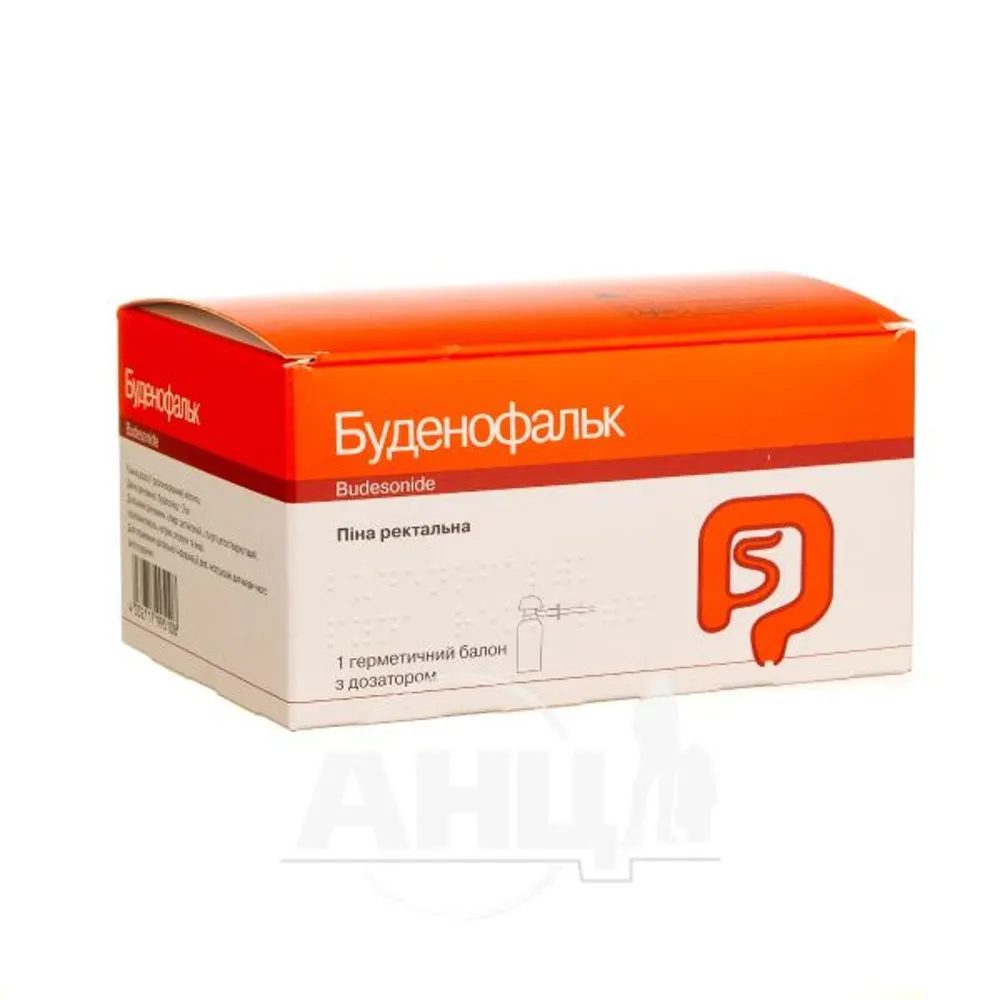
Table of Contents
INSTRUCTIONS FOR MEDICAL USE OF THE MEDICINAL PRODUCT BUDENOFALK (BUDENOFALK®)
Composition:
Active substance: budesonide;
each dose (1 spray) contains 2 mg of budesonide;
Excipients: cetyl alcohol, cetostearyl alcohol, polysorbate 60, purified water, disodium edetate, stearic acid macrogol ester, propylene glycol, citric acid monohydrate, propane/n-butane/isobutane.
Pharmaceutical form. Rectal foam.
Main physicochemical characteristics. White or pale white dense foam of greasy consistency.
Pharmacotherapeutic group. Anti-inflammatory agents used in intestinal disorders. Locally acting corticosteroids. ATC code A07EA06.
Pharmacological properties.
Pharmacodynamics.
The exact mechanism of action of budesonide in the treatment of ulcerative colitis/proctosigmoiditis is not fully understood. Data obtained from pharmacological studies and controlled clinical trials clearly indicate that the action of budesonide is primarily based on local effects in the intestine. Budesonide is a glucocorticosteroid with high anti-inflammatory activity. At a dose of 2 mg administered rectally, budesonide has practically no suppressive effect on the hypothalamic-pituitary-adrenal cortex axis.
Rectal foam Budenofalk, studied at daily doses up to 4 mg of budesonide, has virtually no effect on blood cortisol levels.
Pharmacokinetics.
Absorption
Following oral administration, the systemic availability of budesonide is approximately 10%. After rectal administration, the area under the concentration-time curve is approximately 1.5 times higher than that observed in previous controls with oral administration, when an identical dose of oral budesonide is used. Peak concentrations are reached on average 2–3 hours after rectal administration of Budenofalk 2 mg rectal foam.
Distribution
Budesonide has a large volume of distribution (approximately 3 L/kg). Plasma protein binding is 85–90%.
Biotransformation
Budesonide undergoes extensive biotransformation in the liver (approximately 90%) into metabolites with low glucocorticosteroid activity. The glucocorticosteroid activity of the main metabolites, 6ß-hydroxybudesonides and 16α-hydroxyprednisolone, is less than 1% of that of budesonide.
Elimination
The mean elimination half-life is approximately 3–4 hours. The mean clearance rate is approximately 10–15 L/min for budesonide, as determined by HPLC methods.
Distribution
A scintigraphic study using technetium-labeled Budenofalk rectal foam 2 mg/dose in patients with ulcerative colitis showed that the foam spreads throughout the entire sigmoid colon.
Specific patient populations (liver disease)
Depending on the type and severity of liver disease, the metabolism of budesonide may be reduced.
Clinical characteristics.
Indications.
For the treatment of active ulcerative proctitis limited to the rectum and sigmoid colon.
Contraindications.
Budenofalk, rectal foam, 2 mg/dose, should not be used in patients with:
- hypersensitivity to budesonide or to any of the excipients;
- hepatic cirrhosis.
Interaction with other medicinal products and other forms of interactions.
Pharmacodynamic interactions
- Cardiac glycosides
The effect of glycosides may be enhanced in the presence of potassium deficiency.
- Diuretics
Potassium excretion may be increased.
Pharmacokinetic interactions
Cytochrome P450 3A (CYP3A)
CYP3A inhibitors
Concomitant use with CYP3A inhibitors, including drugs containing cobicistat, is expected to increase the risk of systemic adverse effects. Such combinations should be avoided unless the benefit outweighs the increased risk of systemic corticosteroid side effects. When these drugs are used concomitantly, patients should be monitored for the occurrence of systemic corticosteroid side effects.
Concomitant administration with oral ketoconazole 200 mg once daily increases plasma concentrations of budesonide (single 3 mg dose) by approximately 6-fold. When ketoconazole was administered 12 hours after budesonide, plasma concentrations increased by approximately 3-fold. Due to insufficient data to provide dosing recommendations, such combination should be avoided.
Other potent CYP3A4 inhibitors, such as ritonavir, itraconazole, clarithromycin, and grapefruit juice, may also cause a marked increase in budesonide plasma concentrations. Therefore, concomitant use with budesonide should be avoided.
CYP3A inducers, such as carbamazepine and rifampicin, may reduce both systemic and local effects of budesonide on the intestinal mucosa. Dose adjustment of budesonide may be required.
CYP3A substrates, such as ethinylestradiol, inhibit budesonide metabolism. If the competing CYP3A substrate has higher affinity, this may lead to increased budesonide plasma concentrations. If budesonide has higher affinity for CYP3A, this may increase plasma concentrations of the competing substrate. Dose adjustment of budesonide or the competing substrate may be necessary.
Increased plasma concentrations and enhanced effects of glucocorticoids have been reported in women also receiving estrogens or oral contraceptives; however, such effects have not been observed with low-dose oral contraceptives.
Since adrenal function may be suppressed due to budesonide use, an adrenocorticotropic hormone (ACTH) stimulation test for diagnosing pituitary insufficiency may yield false-negative results (low values).
Special precautions for use
Treatment with rectal foam Budenofalk provides lower systemic steroid levels compared to systemic oral glucocorticoid therapy. Transitioning from other glucocorticoid therapies may lead to recurrence of symptoms related to changes in systemic steroid levels. Medical monitoring is required for patients with any of the following conditions: tuberculosis, arterial hypertension, diabetes mellitus, osteoporosis, peptic ulcers, glaucoma, cataracts, family history of diabetes or glaucoma, or any other condition where glucocorticoid use may cause adverse reactions.
Systemic effects of glucocorticoids may occur, particularly with high doses and prolonged use. These effects may include Cushing's syndrome, adrenal suppression, growth retardation, decreased bone mineral density, cataracts, glaucoma, and a broad range of psychiatric/behavioral effects (see section "Adverse reactions").
Infections
Suppression of inflammatory and immune responses increases susceptibility to infections and their severity. The risk of worsening bacterial, fungal, amoebic, and viral infections should be considered during glucocorticoid therapy. Clinical manifestations may often be atypical, and serious infections such as sepsis and tuberculosis may remain masked and progress to advanced stages before recognition.
Varicella
Particular attention should be paid to varicella (chickenpox), as this disease may be severe or even fatal in immunocompromised patients. Patients without a history of varicella should be advised to avoid close contact with individuals who have chickenpox or herpes zoster (shingles). If exposure occurs, medical observation is required. Passive immunization with varicella-zoster immunoglobulin is recommended for non-immunized patients receiving systemic glucocorticoids or who have received them within the previous 3 months. Immunization should be administered within 10 days of exposure to varicella. Confirmed varicella infection requires immediate treatment and specialist attention. Glucocorticoid therapy should not be discontinued; dose increase may be necessary.
Measles
Immunocompromised patients exposed to measles should receive normal immunoglobulin immediately.
Vaccines
Live vaccines should not be administered to individuals on long-term glucocorticoid therapy. Antibody response to other (inactivated) vaccines may be reduced.
Patients with hepatic impairment
Based on experience in patients with advanced primary biliary cholangitis (PBC) and liver cirrhosis, increased systemic availability of budesonide is expected in all patients with severe hepatic impairment. However, budesonide at oral daily doses of 9 mg has been shown to be safe and well tolerated in patients with liver disease without cirrhosis. There is no evidence that dose adjustment is required for patients with non-cirrhotic liver disease or mild hepatic impairment.
Visual disturbances
Visual disturbances may occur with systemic and topical corticosteroid use. If a patient experiences symptoms such as blurred vision or other visual disturbances, they should be referred to an ophthalmologist for evaluation of possible causes, including cataract, glaucoma, or rare conditions such as central serous chorioretinopathy (CSC), which has been reported after systemic and topical corticosteroid use.
Others
Rectal foam Budenofalk may suppress the hypothalamic-pituitary-adrenal (HPA) axis and reduce the response to stress. If a patient undergoes surgery or other stressful conditions, supplemental systemic glucocorticoid therapy is recommended.
Concomitant use of ketoconazole or other CYP3A inhibitors should be avoided, as inhibition of budesonide's oxidative biotransformation may lead to increased plasma budesonide levels.
It should also be noted that systemic adverse effects similar to those of glucocorticoids may occur with doses exceeding the recommended ones.
This medicinal product contains cetyl alcohol and propylene glycol, which may cause local skin reactions (e.g., contact dermatitis).
Use during pregnancy or breastfeeding
Pregnancy
The use of this product during pregnancy should be avoided except when there are compelling reasons for treatment with Budenofalk. There are limited data on pregnancy outcomes following oral administration of budesonide in humans. Although data from large numbers of pregnant women using inhaled budesonide do not indicate adverse outcomes, it should be expected that plasma concentrations of budesonide will be higher with rectal foam Budenofalk than with inhaled budesonide. Budesonide, like other glucocorticoids, causes developmental abnormalities in the fetus in animal studies. The relevance of this finding to humans has not been established.
Breastfeeding
Budesonide is excreted in breast milk (data are available after inhaled administration). However, after administration of Budenofalk rectal foam at therapeutic doses, only minimal effects on the breastfed infant are expected. A decision should be made whether to discontinue breastfeeding or to discontinue/forego budesonide therapy, taking into account the benefit of breastfeeding for the infant and the benefit of therapy for the mother.
Fertility
There are no data on the effect of budesonide on human fertility. Animal studies showed no effect of budesonide treatment on fertility.
Ability to influence reaction speed when driving or operating machinery
No studies have been conducted on the effect on the ability to drive or operate machinery.
Method of administration and dosage.
For adults:
One spray containing 2 mg of budesonide per day.
Administration method
For rectal use only.
Shake well before use.
Budenofalk rectal foam may be administered in the morning or evening.
Budenofalk rectal foam should be used at room temperature. First, attach the applicator to the container, then shake vigorously for approximately 15 seconds. Insert the applicator into the rectum as deeply as possible. It should be noted that the dose can be delivered accurately only when the pump cap is positioned downward in the most vertical position possible. To administer the dose of Budenofalk rectal foam, press the pump cap fully down and then release it very slowly. After activation, the applicator should be held in place for 10–15 seconds before removal from the rectum. The used applicator is not suitable for reuse and must be placed into the special plastic disposal bag provided in the cardboard box.
Optimal results are achieved if bowel cleansing is performed prior to administration of Budenofalk rectal foam.
Duration of use
The duration of treatment should be determined by a physician. Acute episodes usually resolve within 6–8 weeks. Budenofalk rectal foam should not be used beyond the prescribed period.
Children
Budenofalk foam should not be used in children (under 18 years of age) due to insufficient experience with use in this age group.
Overdose
There have been no reports of budesonide overdose to date.
Side effects.
The assessment of the frequency of adverse reactions is based on the following conventional criteria:
very common (≥ 1/10)
common (from ≥ 1/100 to < 1/10)
uncommon (from ≥ 1/1000 to < 1/100)
rare (from ≥ 1/10000 to < 1/1000)
very rare (< 1/10000)
unknown (cannot be estimated from the available data).
| System organ class |
Frequency according to MedDRA |
Adverse reactions |
| Metabolism and nutrition disorders |
Common |
Cushing's syndrome: moon face, obesity, decreased glucose tolerance, diabetes mellitus, hypertension, sodium retention leading to edema, increased potassium excretion, suppression and/or atrophy of the adrenal cortex, striae, steroid acne, disturbances in sex hormone secretion (e.g. amenorrhea, hirsutism, impotence) |
| Very rare |
Impaired growth in children |
|
| Eye disorders |
Uncommon |
Glaucoma, cataract, blurred vision (see also section "Special precautions") |
| Gastrointestinal disorders |
Common |
Dyspepsia |
| Uncommon |
Peptic ulcer of the stomach or duodenum |
|
| Uncommon |
Pancreatitis |
|
| Very rare |
Constipation |
|
| Immune system disorders |
Common |
Increased risk of infections |
| Musculoskeletal and connective tissue disorders |
Common |
Muscle and joint pain, muscle weakness and twitching, osteoporosis |
| Uncommon |
Osteonecrosis |
|
| Nervous system disorders |
Common |
Headache |
| Very rare |
Pseudotumor cerebri with optic disc edema in adolescents |
|
| Psychiatric disorders |
Common |
Depression, irritability, euphoria |
| Uncommon |
Psychomotor hyperactivity, anxiety |
|
| Uncommon |
Aggression |
|
| Skin and subcutaneous tissue disorders |
Common |
Allergic exanthema, petechiae, delayed wound healing, contact dermatitis |
| Uncommon |
Ecchymosis |
|
| Vascular disorders |
Very rare |
Increased risk of thrombosis, vasculitis (withdrawal syndrome after prolonged therapy) |
| General disorders and administration site conditions |
Common |
Burning sensation in the rectum and pain |
| Very rare |
Malaise, fatigue |
In clinical studies, the following additional adverse reactions were reported with the use of Budenofalk rectal foam (frequency – uncommon): increased appetite, elevated erythrocyte sedimentation rate, leukocytosis, nausea, abdominal pain, flatulence, paresthesia in the abdominal area, anal fissure, aphthous stomatitis, frequent urge to defecate, rectal bleeding, increased transaminase levels (GOT, GPT), increased cholestasis markers (GGT, AP), elevated amylase levels, changes in cortisol levels, urinary tract infections, dizziness, impaired sense of smell, insomnia, increased sweating, asthenia, weight gain.
Most of the adverse effects described in this medical instruction for the medicinal product may also be expected with the use of other glucocorticoids.
Adverse effects typical of systemically acting glucocorticosteroids may occur. The adverse effects listed below depend on dosage, duration of treatment, concomitant or prior use of other glucocorticosteroids, and individual sensitivity.
Some of these adverse effects have been observed after prolonged oral use of budesonide.
Due to its local action, the risk of adverse effects with the use of Budenofalk rectal foam is considerably lower than with systemically acting glucocorticoids.
Exacerbation or recurrence of extraintestinal manifestations (particularly of the skin and joints) may occur when switching a patient from a systemically acting glucocorticoid to locally acting budesonide.
Shelf life. 2 years.
Do not use after the expiry date stated on the packaging. The contents of the canister should be used within 4 weeks after the first actuation.
Storage conditions.
Store at temperatures not exceeding 25 °C. Keep out of the reach and sight of children.
Do not refrigerate or freeze!
Packaging.
A pressurized canister with a dispenser, supplied with 14 foam applicators in a plastic tray and 14 plastic bags for hygienic disposal of the applicators, packed in a cardboard box. Each canister contains at least 14 doses of 1.2 g of rectal foam.
Prescription status.
Prescription only.
Manufacturer.
Dr. Falk Pharma GmbH.
Manufacturer's address and place of business.
Leinenweberstrasse 5, 79108 Freiburg im Breisgau, Germany