Budenofalk
Ukraine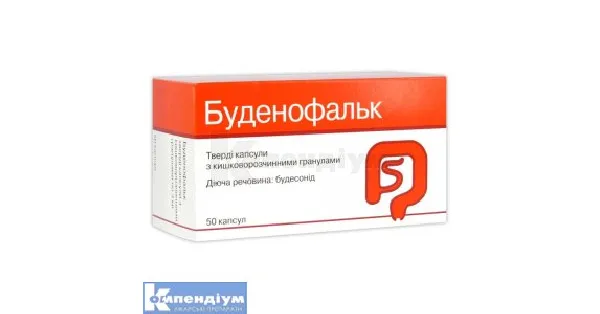
Table of Contents
INSTRUCTIONS FOR MEDICAL USE OF THE MEDICINAL PRODUCT BUDENOFALK (BUDENOFALK®)
Composition:
Active substance: budesonide;
One hard capsule with enteric-coated granules contains 3 mg of budesonide;
Excipients: sugar spheres, lactose monohydrate, povidone K 25, copolymer of methacrylic acid and methyl methacrylate (1 : 1) [e.g. Eudragit L], copolymer of methacrylic acid and methyl methacrylate (1 : 2) [e.g. Eudragit S], ammonium methacrylate copolymer type B [e.g. Eudragit RS], ammonium methacrylate copolymer type A [e.g. Eudragit RL], triethyl citrate, talc, capsule shell: gelatin, titanium dioxide (E 171), erythrosine (E 127), iron oxide red (E 172), iron oxide black (E 172), sodium lauryl sulfate.
Pharmaceutical form. Hard capsules with enteric-coated granules.
Main physicochemical properties:
Pink capsules (size 1) containing white, round granules.
Pharmacotherapeutic group. Anti-inflammatory agents used in intestinal diseases. Locally acting corticosteroids. ATC code A07EA06.
Pharmacological Properties.
Pharmacodynamics.
The exact mechanism of action of budesonide in the treatment of Crohn’s disease has not been fully elucidated. Clinical pharmacological and other controlled clinical studies clearly indicate that the mechanism of action of budesonide is primarily based on local effects in the intestine. Budesonide is a glucocorticoid with high local anti-inflammatory activity. At doses clinically equivalent to systemic glucocorticoids, budesonide causes significantly less suppression of the hypothalamic-pituitary-adrenal (HPA) axis and has a smaller impact on inflammatory markers.
Budenofalk exerts a dose-dependent effect on plasma cortisol levels, which, at the recommended dose of 3 × 3 mg budesonide/day, is substantially lower than that observed with equipotent doses of systemic glucocorticoids.
Clinical Efficacy and Safety
Clinical Study in Patients with Crohn’s Disease
In a randomized, double-blind, double-dummy study in patients with mild to moderate Crohn’s disease (200 < CDAI < 400), with involvement of the terminal ileum and/or ascending colon, the efficacy of 9 mg budesonide as a single daily dose (9 mg OD) was compared with treatment using budesonide 3 mg three times daily (3 mg TID).
The primary efficacy endpoint was the proportion of patients in remission (CDAI < 150) at week 8.
A total of 471 patients were included in the study (full analysis set, FAS), and 439 patients comprised the per-protocol (PP) analysis set. There were no significant differences in baseline characteristics between the two treatment groups. In the confirmatory analysis, 71.3% of patients were in remission in the 9 mg OD group and 75.1% in the 3 mg TID group (PP) (P : 0.01975), demonstrating non-inferior efficacy of 9 mg budesonide OD compared to 3 mg budesonide TID.
No serious adverse events related to the study drug were reported.
Microscopic Colitis
Clinical Studies of Induction of Remission in Collagenous Colitis
The efficacy and safety of budesonide for induction of remission in collagenous colitis were evaluated in two prospective, double-blind (DB), randomized, placebo-controlled, multicenter studies involving patients with active collagenous colitis.
In one study, 30 patients were randomized to receive 9 mg budesonide per day, 25 patients received 3 g mesalazine per day, and 37 patients received placebo. The primary efficacy variable was the number of patients achieving clinical remission, defined as ≤ 3 bowel movements per day. Remission was achieved by 80% of patients receiving budesonide, 44% of those receiving mesalazine, and 59.5% in the placebo group (budesonide vs. placebo – p = 0.072). According to another definition of clinical remission, which also considered stool consistency—i.e., a mean of < 3 bowel movements per day and a mean of < 1 watery stool per day during the last 7 days before the final dose—80% of patients in the budesonide group, 32.0% in the mesalazine group, and 37.8% in the placebo group achieved remission (budesonide vs. placebo: p < 0.0006). Budesonide was safe and well tolerated. No adverse events in the budesonide group were considered related to the study drug.
In another study, 14 patients were randomized to receive 9 mg budesonide per day and 14 to receive placebo. The primary efficacy variable was clinical response, defined as a reduction to ≤ 50% of baseline disease activity, with disease activity assessed as the number of bowel movements over the previous 7 days. Clinical response was achieved by 57.1% of patients in the budesonide group and 21.4% in the placebo group (p = 0.05). Budesonide was safe and well tolerated. No serious adverse reactions were observed in the budesonide group.
Clinical Study of Maintenance of Remission in Collagenous Colitis
The clinical efficacy and safety of budesonide for maintenance of remission in collagenous colitis were evaluated in a prospective, double-blind (DB), randomized, placebo-controlled, multicenter study involving patients with collagenous colitis in remission.
The primary endpoint was the proportion of patients maintaining clinical remission over 52 weeks. Remission was defined as a mean of < 3 bowel movements per day, with a mean of < 1 watery stool per day during the week before the final visit, and absence of relapse over 1 year. Relapse was defined as a mean of ≥ 3 bowel movements per day, including ≥ 1 watery stool per day, during the preceding week.
A total of 92 patients were randomized in the DB phase (44 received budesonide, 48 received placebo) and received at least one dose of the study drug (full analysis set, FAS). The dosing regimen was 6 mg budesonide/day alternating with 3 mg budesonide/day (corresponding to an average daily dose of 4.5 mg budesonide). In the final analysis, significantly more patients in the budesonide group (61.4%) compared to the placebo group (16.7%) achieved the primary endpoint, indicating superiority of budesonide over placebo (p < 0.001).
Clinical Study of Induction of Remission in Lymphocytic Colitis
The clinical efficacy and safety of budesonide for induction of remission in lymphocytic colitis were evaluated in a prospective, double-blind (DB), randomized, placebo-controlled, multicenter study involving patients with active lymphocytic colitis.
The primary endpoint was the rate of clinical remission, defined as no more than 21 bowel movements, of which no more than 6 were watery, during the last 7 days before the final visit.
A total of 57 patients were randomized (19 patients each in the budesonide, mesalazine, and placebo groups) and received at least one dose of the study drug (budesonide: 9 mg orally; mesalazine: 3 g orally). The treatment duration was 8 weeks.
In the confirmatory analysis, a significantly higher proportion of patients in the budesonide group (78.9%) compared to the placebo group (42.1%) achieved the primary endpoint, indicating superiority of budesonide over placebo (p = 0.010). Remission was achieved by 63.2% of patients in the mesalazine group (p = 0.097).
Clinical Studies in Autoimmune Hepatitis
The safety and efficacy of budesonide were studied over 6 months in 46 pediatric patients (11 boys and 35 girls) aged 9 to 18 years. For induction of remission, 19 patients received budesonide (9 mg) and 27 patients received prednisone (initial dose 40 mg). Subsequently, patients were switched to open-label budesonide treatment for 6 months.
The proportion of patients achieving complete response (i.e., normalization of AST and ALT levels without steroid-specific adverse events) was significantly lower in the group of patients ≤ 18 years compared to adults. However, after an additional 6 months of budesonide treatment, differences between age groups became considerably smaller. No significant differences were observed between patients initially treated with prednisone and budesonide regarding the proportion achieving complete response.
Pharmacokinetics.
General Properties of Budesonide
Absorption
Due to the specific gastric-resistant coating of the granules in Budenofalk 3 mg hard capsules, there is a lag phase of 2–3 hours. After a single dose of one enteric-coated Budenofalk 3 mg capsule taken before a meal, the mean peak plasma concentration of budesonide, reaching 1–2 ng/mL, was observed in healthy subjects and in patients with Crohn’s disease approximately 5 hours after administration. Maximum drug release occurred in the terminal ileum and cecum, the primary sites of inflammation in Crohn’s disease.
Concomitant food intake may delay gastrointestinal transit by approximately 2–3 hours. In such cases, absorption delay is about 4–6 hours. This does not affect the rate of absorption.
Distribution
Budesonide has a high volume of distribution (approximately 3 L/kg). Plasma protein binding is 85–90%.
Biotransformation
Budesonide undergoes extensive first-pass metabolism in the liver (approximately 90%) to metabolites with low glucocorticosteroid activity. The glucocorticosteroid activity of the main metabolites, 6β-hydroxybudesonide and 16α-hydroxyprednisolone, formed via CYP3A4, is less than 1% that of budesonide.
Elimination
The mean elimination half-life after oral administration is approximately 3–4 hours. Systemic bioavailability in healthy volunteers and in patients with inflammatory bowel disease under fasting conditions is about 9–13%. The clearance of budesonide is approximately 10–15 L/min. Only a negligible amount of budesonide is excreted unchanged by the kidneys.
Specific Patient Populations (Patients with Hepatic Impairment)
A significant portion of budesonide is metabolized in the liver. Systemic exposure to budesonide may be increased in patients with hepatic impairment due to reduced CYP3A4-mediated metabolism of budesonide. This effect depends on the type and severity of liver disease.
Pediatric Patients
The pharmacokinetics of budesonide were evaluated in 12 pediatric patients aged 5 to 15 years with Crohn’s disease. After multiple doses of budesonide (3 × 3 mg budesonide for one week), the mean AUC of budesonide over the dosing interval was approximately 7 ng·h/mL, and Cmax was about 2 ng/mL. The distribution of orally administered budesonide (3 mg, single dose) in pediatric patients was similar to that in adults.
Clinical characteristics.
Indications.
- Crohn's disease
Induction of remission in patients with mild to moderate Crohn's disease localized in the terminal ileum (part of the small intestine) and/or ascending colon (part of the large intestine).
- Microscopic colitis.
- Autoimmune hepatitis.
Contraindications.
Budenofalk must not be used in:
- hypersensitivity to budesonide or to any component of the medicinal product;
- liver cirrhosis.
Interaction with other medicinal products and other forms of interaction.
Pharmacodynamic interactions
- Cardiac glycosides
The effect of glycosides may be potentiated by potassium deficiency.
- Diuretics
Potassium excretion may be enhanced.
Pharmacokinetic interactions
- Cytochrome P450 3A (CYP3A4)
CYP3A4 inhibitors. Concomitant treatment with CYP3A4 inhibitors, including products containing cobicistat, is expected to increase the risk of systemic adverse effects. Combinations of budesonide with cobicistat should be avoided unless the benefit outweighs the risk of systemic corticosteroid side effects. If the benefit of budesonide treatment outweighs this risk, patients should be monitored for the development of systemic corticosteroid adverse effects.
Oral administration of ketoconazole 200 mg once daily increases plasma concentrations of budesonide (single 3 mg dose) approximately 6-fold when administered concomitantly. When ketoconazole is administered approximately 12 hours after budesonide, the concentration of the latter increases approximately 3-fold. Due to insufficient data on recommended doses, such combination should be avoided.
Other potent CYP3A4 inhibitors, such as ritonavir, itraconazole, clarithromycin, and grapefruit juice, may also cause a marked increase in budesonide plasma concentration. Therefore, their concomitant use should be avoided.
CYP3A4 inducers, such as carbamazepine and rifampicin, may reduce both systemic and local effects of budesonide on the intestinal mucosa. Dose adjustment of budesonide may be required.
CYP3A4 substrates, such as ethinylestradiol, compete with budesonide for metabolism. If the competing compound has higher affinity for CYP3A4, this may lead to increased plasma concentrations of budesonide. Conversely, if budesonide has higher binding affinity to CYP3A4, plasma levels of the competing compound may rise. In such cases, dose adjustment of either budesonide or the competing substance may be necessary.
Increased plasma concentrations and enhanced effects of corticosteroids have been reported in women taking estrogens or oral contraceptives. These interactions have not been observed with combined low-dose oral contraceptives.
Concomitant administration of cimetidine and budesonide may cause a slight, but clinically insignificant, increase in budesonide plasma levels. Omeprazole does not affect the pharmacokinetics of budesonide.
Potential interactions with steroid-binding resins, such as cholestyramine and antacids, cannot be excluded. When taken concomitantly with Budenofalk, such interactions may lead to reduced efficacy of budesonide. Therefore, these agents should be taken separately with an interval of at least 2 hours.
Since adrenal function may be suppressed during treatment with budesonide, an adrenocorticotropic hormone (ACTH) stimulation test for diagnosing pituitary insufficiency may yield false-negative results (low values).
Special precautions for use.
Treatment with Budenofalk is associated with lower systemic steroid levels compared to conventional oral steroid therapy. Transitioning from therapy with other steroids may cause symptoms related to changes in systemic steroid levels.
Particular medical supervision is required for patients with one or more of the following conditions: tuberculosis, arterial hypertension, diabetes mellitus, osteoporosis, peptic ulcer (gastric or duodenal), glaucoma, cataract, family history of diabetes or glaucoma, or any other condition in which glucocorticoids may produce undesirable effects.
This medication is not suitable for patients suffering from Crohn's disease of the upper gastrointestinal tract.
Due to the predominantly local action of the drug, favorable effects should not be expected in patients with extraintestinal symptoms (e.g., those manifesting in the skin, eyes, or joints).
Systemic corticosteroid effects may occur, especially when the drug is administered in high doses and over prolonged periods. Such effects may include Cushing's syndrome, adrenal suppression, growth retardation, decreased bone mineral density, cataract, glaucoma, and a broad range of psychiatric/behavioral disorders (see also section "Side effects").
Infections
Suppression of the inflammatory response and immune system increases susceptibility to infection and severity of its course. The risk of bacterial, fungal, amoebic, and viral infections during glucocorticoid therapy should be carefully evaluated. Clinical manifestations may be atypical, and serious infections such as sepsis and tuberculosis may be masked and progress to an advanced stage before being recognized.
Chickenpox
Chickenpox deserves special attention because this disease may be severe and sometimes fatal in immunocompromised patients. Patients who have not had this disease should avoid close personal contact with individuals suffering from chickenpox or herpes zoster (shingles). If such contact occurs, the patient should seek urgent medical consultation. Similar recommendations should be provided to parents of pediatric patients. Non-immunized patients receiving systemic corticosteroids or who have received them within the previous 3 months require passive immunization with varicella-zoster immunoglobulin after exposure to herpes zoster. Passive immunization should be administered within 10 days after exposure to chickenpox. If chickenpox is confirmed, the disease requires immediate specific treatment.
Corticosteroid therapy should not be discontinued and may even require dose escalation.
Measles
In case of exposure to measles, immunocompromised patients should receive an injection of normal immunoglobulin as early as possible after exposure.
Vaccines
Live vaccines should not be administered to patients on long-term glucocorticoid therapy. Antibody response to other vaccines may be reduced.
Patients with hepatic impairment
Based on experience in patients with late-stage primary biliary cirrhosis (PBC) and cirrhosis of the liver, increased systemic bioavailability of budesonide is expected in all patients with severely impaired liver function.
However, in patients with liver disease without cirrhosis, budesonide at a daily dose of 9 mg was safe and well tolerated. There are no data indicating the need for specific dosage recommendations in patients with non-cirrhotic liver disease or mild hepatic impairment.
Patients with visual disturbances
Visual disturbances may occur with both systemic and local administration of corticosteroids. If a patient experiences symptoms such as blurred vision or other visual disturbances, they should consult an ophthalmologist to evaluate possible causes, which may include cataract, glaucoma, or rare conditions such as central serous chorioretinopathy (CSC), reported after systemic and local corticosteroid use.
Others
Corticosteroids may lead to suppression of the hypothalamic-pituitary-adrenal (HPA) axis and reduced stress response. Patients undergoing surgery or other stress conditions should be considered for supplemental systemic glucocorticoid therapy.
Concomitant use of ketoconazole or other CYP3A4 inhibitors should be avoided.
Budenofalk 3 mg contains lactose and sucrose.
The medication should not be taken by patients with rare hereditary conditions of galactose intolerance, fructose intolerance, sucrase-isomaltase deficiency, glucose-galactose malabsorption, or generalized lactase deficiency.
Patients with autoimmune hepatitis should have transaminase levels (alanine aminotransferase, aspartate aminotransferase (ALT, AST)) in serum monitored regularly (every 2 weeks during the first month of treatment and at least every 3 months thereafter) to allow possible dose adjustment of budesonide.
Administration of Budenofalk 3 mg may result in positive doping test results.
Use during pregnancy or breastfeeding.
Pregnancy
Budenofalk should not be used during pregnancy unless clearly necessary. Data on the effects of oral budesonide on human pregnancy are limited. Data from use of inhaled budesonide in a large number of pregnant women indicate no adverse effects; however, the maximum plasma concentration of budesonide is expected to be higher with Budenofalk 3 mg compared to inhaled budesonide. In animal studies, budesonide, like other glucocorticoids, has been shown to cause fetal developmental abnormalities. The extent to which such effects may occur in humans has not been established. Women of childbearing potential should exclude possible pregnancy before initiating treatment with Budenofalk and must use appropriate contraceptive measures during treatment.
Breastfeeding
Budesonide is excreted in human breast milk (data exist on excretion after inhaled use). However, significant effects on the breastfed infant following Budenofalk 3 mg administration within the therapeutic range are not expected. The decision whether to discontinue breastfeeding or to discontinue budesonide therapy, or to refrain from treatment, should be made considering the benefits of breastfeeding to the infant and the benefits of therapy to the mother.
Fertility
There are no data on the effect of budesonide on human fertility. Treatment with budesonide did not affect fertility in animal studies.
Ability to influence the speed of reactions when driving or operating machinery.
No studies have been conducted on the effects on the ability to drive or operate machinery. However, since certain adverse effects may occur, caution is advised, and patients should assess their condition before driving or operating machinery.
Method of Administration and Dosage
Crohn's Disease
Induction of Remission
The recommended daily dose is 3 capsules once daily in the morning or 1 capsule (containing 3 mg of budesonide) 3 times daily (morning, afternoon, and evening), if this is more convenient for the patient (equivalent to a total daily dose of 9 mg budesonide).
Duration of Treatment
The usual duration of treatment is 8 weeks.
Microscopic Colitis
Induction of Remission
The recommended daily dose is 3 capsules once daily in the morning before breakfast (corresponding to a daily dose of 9 mg budesonide).
Maintenance of Remission
Maintenance therapy should only be initiated in patients with frequently recurring symptoms of microscopic colitis after successful induction therapy. Depending on individual patient needs, the following dosing regimens may be used: 2 capsules once daily in the morning (6 mg budesonide) or alternating between 2 capsules once daily in the morning and 1 capsule once daily in the morning (corresponding to an average daily dose of 4.5 mg budesonide). The lowest effective dose should be used.
Duration of Treatment
The usual duration of treatment for induction of remission is 8 weeks.
During maintenance therapy, the treatment effect should be regularly evaluated to determine whether continued treatment is necessary, no later than 12 months after initiation of maintenance therapy. Maintenance therapy may be continued beyond 12 months only if the benefit to the patient outweighs the risk.
Autoimmune Hepatitis
Induction of Remission
For induction of remission (i.e., normalization of elevated liver enzymes), the recommended daily dose is 1 hard capsule (containing 3 mg budesonide) 3 times daily (morning, afternoon, and evening), equivalent to a total daily dose of 9 mg budesonide.
Maintenance of Remission
After remission is achieved, the recommended daily dose is 1 hard capsule (containing 3 mg budesonide) twice daily (morning and evening), equivalent to a total daily dose of 6 mg budesonide. If during this treatment an increase in ALT and/or AST transaminase levels occurs, the dosage should be increased to 3 capsules per day, as for induction of remission (equivalent to a total daily dose of 9 mg budesonide).
In patients tolerating azathioprine, budesonide should be combined with this agent to maintain remission.
Duration of Treatment
For induction of remission, a total daily dose of 9 mg should be administered until remission is achieved. After that, a total daily dose of 6 mg budesonide should be administered for maintenance of remission. Maintenance treatment in autoimmune hepatitis should be continued for at least 24 months. It may be discontinued only if there is persistent biochemical remission and absence of signs of inflammation on liver biopsy.
Discontinuation of Treatment
Treatment with Budofalk 3 mg should not be stopped abruptly, but should be tapered gradually (by dose reduction). A gradual dose reduction over 2 weeks is recommended.
Patients with Renal Impairment
There are no specific dosage recommendations for patients with renal impairment.
Patients with Hepatic Impairment
Caution should be exercised in patients with mild to moderate hepatic impairment.
Method of Administration
The capsules should be taken approximately 30 minutes before a meal, swallowed whole with sufficient liquid (e.g., a glass of water).
Patients who have difficulty swallowing capsules may open them and take only the enteric-coated granules with sufficient liquid. This will not affect the efficacy of Budofalk 3 mg.
Children
Budofalk should not be used in children under 12 years of age due to insufficient experience and the probable increased risk of adrenal suppression in this age group.
Children Aged 12 to 18 Years
The safety and efficacy of Budofalk 3 mg in children aged 12 to 18 years have not been established. Available data in adolescents (aged 12–18 years) with Crohn's disease or hepatitis are provided in the sections "Adverse Reactions" and "Pharmacodynamics". However, dosage recommendations are lacking.
Overdose
There have been no reports of overdose with Budofalk to date. Given the properties of Budofalk 3 mg, overdose leading to toxic effects is unlikely.
Adverse reactions
The frequency of adverse reactions was assessed as follows:
very common: ≥ 1/10;
common: ≥ 1/100, < 1/10;
uncommon: ≥ 1/1000, < 1/100;
rare: ≥ 1/10000, < 1/1000;
very rare: < 1/10000, including single reports.
| System organ class |
Frequency according to MedDRA |
Adverse reactions |
| Metabolism and nutrition disorders |
Common |
Cushing's syndrome, moon face, obesity, decreased glucose tolerance, diabetes mellitus, increased blood pressure, sodium retention leading to edema formation, increased potassium excretion, suppression and/or atrophy of the adrenal cortex, striae rubrae, steroid acne, disturbances in sex hormone secretion (e.g. amenorrhea, hirsutism, impotence) |
| Very rare |
Impaired growth in children |
|
| Eye disorders |
Uncommon |
Glaucoma, cataract, blurred vision |
| Gastrointestinal disorders |
Common |
Dyspepsia, abdominal pain |
| Uncommon |
Peptic ulcer of stomach or duodenum |
|
| Rare |
Pancreatitis |
|
| Very rare |
Constipation |
|
| Immune system disorders |
Common |
Increased risk of infections |
| Musculoskeletal and connective tissue disorders |
Common |
Muscle and joint pain, muscle weakness and twitching, osteoporosis |
| Rare |
Osteonecrosis |
|
| Nervous system disorders |
Common |
Headache |
| Very rare |
Pseudotumor cerebri with optic disc edema in adolescents |
|
| Psychiatric disorders |
Common |
Depression, irritability, euphoria |
| Uncommon |
Psychomotor hyperactivity, anxiety |
|
| Rare |
Aggression |
|
| Skin and subcutaneous tissue disorders |
Common |
Allergic exanthema, petechiae, delayed wound healing, contact dermatitis |
| Rare |
Ecchymosis |
|
| Vascular disorders |
Very rare |
Increased risk of thrombosis, vasculitis (withdrawal syndrome after prolonged therapy) |
| General disorders |
Very rare |
Fatigue, malaise |
Most of the above-mentioned adverse reactions may also be expected when treating with other glucocorticosteroids.
Adverse effects typical for systemic glucocorticoids may occasionally occur. These adverse reactions depend on dosage, duration of treatment, concomitant or previous treatment with other glucocorticoids, and individual sensitivity.
Clinical studies conducted in patients with Crohn's disease have shown that the incidence of glucocorticoid-associated adverse effects with Budesonide 3 mg is lower with oral administration of budesonide than with oral administration of an equivalent dose of prednisolone.
Exacerbation or recurrence of extraintestinal manifestations (particularly of the skin and joints) may occur when switching a patient from systemic glucocorticoids to locally acting budesonide.
Adverse reactions observed in clinical trials in pediatric patients
Crohn's disease
In clinical trials of Budecort 3 mg capsules in 82 pediatric patients with Crohn's disease, the most commonly reported adverse effects were adrenal suppression and headache. Adverse effects typical of glucocorticosteroids were reported, as well as other rare reactions such as dizziness, nausea, vomiting, and hyperacusis (see section "Pharmacological properties").
Autoimmune hepatitis
Safety data from a clinical study involving 42 pediatric patients with autoimmune hepatitis showed that the reported adverse effects were not different in nature or frequency compared to those observed in adults in this study (see section "Pharmacological properties").
Shelf life. 3 years.
Do not use after the expiry date stated on the packaging.
Storage conditions. Store at temperatures not exceeding 25 °C. Keep out of reach of children.
Packaging. 10 capsules per blister, 5 or 10 blisters per cardboard box.
Prescription category. Prescription only.
Manufacturer.
Dr. Falk Pharma GmbH, Germany.
Manufacturer's address and place of business.
Leinenweberstrasse 5, 79108 Freiburg im Breisgau, Germany.