Brinex
Ukraine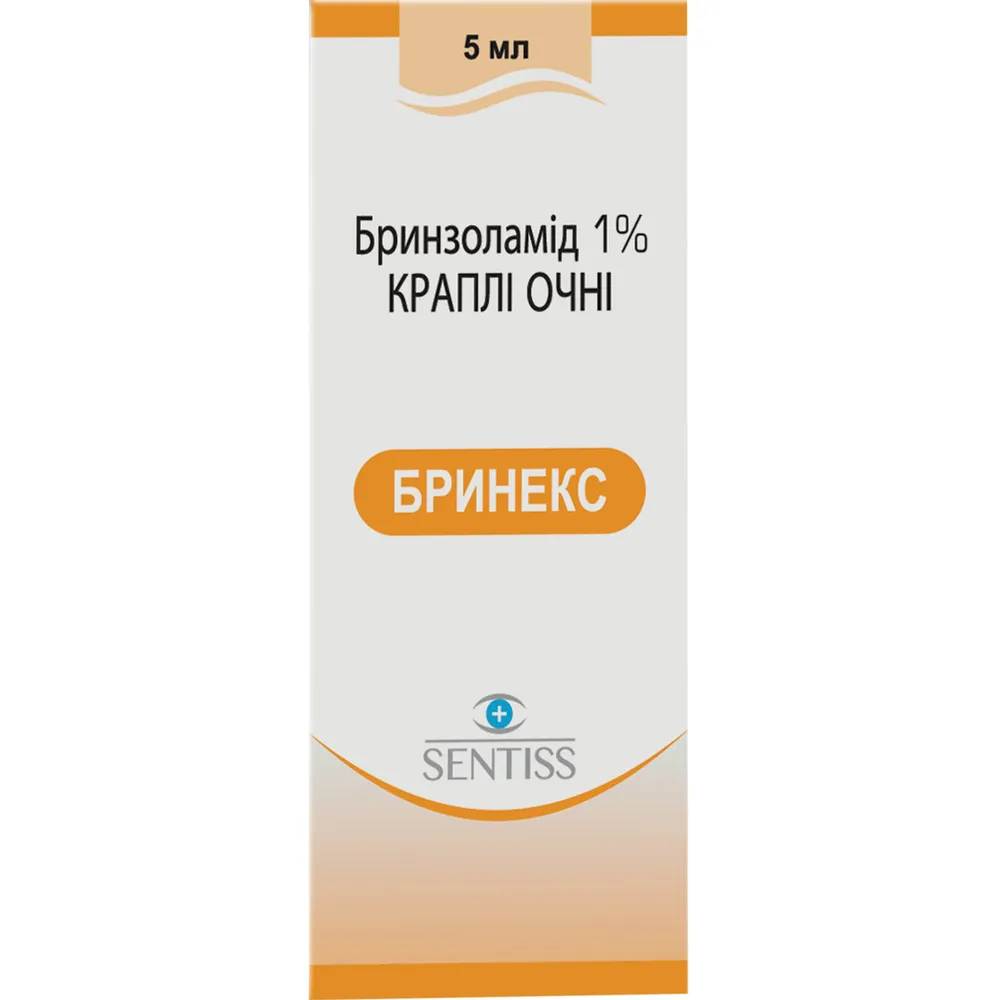
Table of Contents
INSTRUCTIONS FOR MEDICAL USE OF THE MEDICINAL PRODUCT BRINEX (BRINEX)
Composition:
Active substance: brinzolamide;
1 ml of suspension contains 10 mg of brinzolamide;
Excipients: benzalkonium chloride, sodium chloride, disodium edetate, carbomer 974P, mannite (E 421), tyloxapol, sodium hydroxide, hydrochloric acid, water for injections.
Pharmaceutical form. Eye drops, suspension.
Main physicochemical properties: white or almost white suspension.
Pharmacotherapeutic group. Medicinal products used in ophthalmology. Anti-glaucoma preparations and miotics. Carbonic anhydrase inhibitors.
ATC code S01E C04.
Pharmacological properties.
Pharmacodynamics.
Carbonic anhydrase (CA) is an enzyme found in many tissues of the human body, including ocular tissues. Carbonic anhydrase catalyzes the reversible reaction of carbon dioxide hydration and carbonic acid dehydration.
Inhibition of carbonic anhydrase in the ciliary body of the eye reduces the secretion of aqueous humor, primarily by slowing the formation of bicarbonate ions, followed by a decrease in sodium and fluid transport. As a result, intraocular pressure (IOP), which is a major risk factor in the pathogenesis of optic nerve damage and visual field loss in glaucoma, is reduced. Brinzolamide is a carbonic anhydrase II (CA-II) inhibitor, the predominant isoenzyme in the eye, with in vitro IC50 = 3.2 nM and Ki = 0.13 nM against CA-II.
The IOP-lowering effect was studied when the medicinal product Brinex was used in combination therapy with travoprost (a prostaglandin analog). After 4 weeks of travoprost treatment, patients with IOP ≥ 19 mmHg were additionally randomized to receive either brinzolamide or timolol. An additional reduction in mean diurnal IOP of 3.2–3.4 mmHg was observed in the brinzolamide group and 3.2–4.2 mmHg in the timolol group. In the brinzolamide/travoprost groups, the most commonly observed adverse reactions were non-serious ocular events, primarily related to local irritation. The adverse reactions were mild and did not affect the decision to continue participation in the study (see also section "Adverse reactions").
According to the results of preclinical safety studies on repeated-dose toxicity, genotoxicity, and carcinogenic potential, no specific risk for humans was identified with the use of brinzolamide.
In rabbit toxicity studies following oral administration of brinzolamide at doses up to 6 mg/kg/day (125 times higher than the recommended therapeutic dose for ophthalmic use), no effect on fetal development was observed despite significant maternal toxicity. Similar studies in rats revealed a slight reduction in fetal skull and sternum ossification in females receiving brinzolamide at 18 mg/kg/day (375 times higher than the recommended therapeutic dose for ophthalmic use), but this effect was not observed in females receiving 6 mg/kg/day. These results were obtained at doses causing metabolic acidosis, reduced maternal body weight gain, and reduced fetal weight. A dose-dependent reduction in fetal weight was observed in females receiving oral brinzolamide: approximately 5–6% reduction at 2 mg/kg/day and up to approximately 14% at 18 mg/kg/day. Regarding breastfeeding, the no-observed-adverse-effect level for the fetus was 5 mg/kg/day.
Pharmacokinetics.
After topical ocular administration, brinzolamide is absorbed into the systemic circulation. Due to its high affinity for CA-II, brinzolamide actively penetrates into red blood cells (erythrocytes) and demonstrates a prolonged elimination half-life from blood (on average approximately 24 weeks). In clinical practice, the metabolite N-desethylbrinzolamide has been observed, which also binds to CA and accumulates in erythrocytes. This metabolite binds primarily to CA-I in the presence of brinzolamide. Plasma concentrations of both brinzolamide and N-desethylbrinzolamide are low and generally below the limit of quantification (< 7.5 ng/mL).
Protein binding in plasma is incomplete (approximately 60%). Brinzolamide is primarily excreted by the kidneys (approximately 60%). Nearly 20% of the dose is recovered in urine as metabolite. Brinzolamide and N-desethylbrinzolamide are the predominant components excreted in urine, along with trace amounts (< 1%) of N-desmethylpropyl and O-desmethyl metabolites.
In pharmacokinetic studies, healthy volunteers received oral brinzolamide 1 mg capsules twice daily for 32 weeks. To assess the level of systemic CA inhibition, CA activity in erythrocytes was measured.
Saturation of erythrocyte CA-II by brinzolamide was achieved within 4 weeks (concentration approximately 20 µM). N-desethylbrinzolamide accumulated in erythrocytes until reaching a steady-state concentration ranging from 6 to 30 µM over 20–28 weeks. Steady-state inhibition of total erythrocyte CA-II activity was approximately 70–75%.
Patients with moderate renal impairment (creatinine clearance 30–60 mL/min) received 1 mg brinzolamide orally twice daily for 54 weeks. Four weeks after initiation, brinzolamide concentration in erythrocytes ranged from 20 to 40 µM. At steady state, concentrations of brinzolamide and its metabolite in erythrocytes ranged from 22 to 46.1 µM and 17.1 to 88.6 µM, respectively.
With decreasing creatinine clearance, N-desethylbrinzolamide concentration in erythrocytes increased, and total CA activity in erythrocytes decreased, while brinzolamide concentration in erythrocytes and CA-II activity remained unchanged. In patients with severe renal impairment, total CA activity inhibition was greater, although it remained below 90% at steady state.
In studies of topical ocular administration, the steady-state concentration of brinzolamide in erythrocytes was similar to that observed after oral administration, but the concentration of N-desethylbrinzolamide was lower. Carbonic anhydrase activity was approximately 40–70% of the pre-treatment level.
Clinical characteristics.
Indications.
Brinzex is indicated to reduce elevated intraocular pressure in:
- ocular hypertension,
- open-angle glaucoma;
as monotherapy in adult patients who are unresponsive to beta-blockers, or in adult patients for whom beta-blockers are contraindicated, or as adjunctive therapy to beta-blockers or prostaglandin analogs.
Contraindications.
- Hypersensitivity to the active substance or to any of the excipients.
- Hypersensitivity to sulfonamides (see also section "Special precautions").
- Severe renal impairment.
- Hyperchloremic acidosis.
Interaction with other medicinal products and other forms of interaction.
No specific studies on the interaction of Brinzex with other medicinal products have been conducted. In clinical trials, Brinzex was used in combination with prostaglandin analogs and timolol in the form of eye drops — no evidence of adverse interactions was observed. Interaction between Brinzex and miotics or adrenergic receptor agonists has not been evaluated during combination therapy for glaucoma.
Brinzex is a carbonic anhydrase inhibitor, and although it is administered locally, it is systemically absorbed. Disturbances in acid-base balance have been reported with oral administration of carbonic anhydrase inhibitors. This potential interaction should be considered in patients using Brinzex.
Cytochrome P450 isoenzymes responsible for brinzolamide metabolism are CYP3A4 (major), CYP2A6, CYP2C8, and CYP2C9. Inhibitors of CYP3A4 such as ketoconazole, itraconazole, clotrimazole, ritonavir, and troleandomycin are expected to inhibit CYP3A4-mediated metabolism of brinzolamide. Caution should be exercised when co-administering CYP3A4 inhibitors. Since brinzolamide is primarily eliminated via the kidneys, accumulation is unlikely. Brinzolamide is not an inhibitor of cytochrome P450 isoenzymes.
Special precautions for use.
Systemic effects
Brinzolamide, a carbonic anhydrase inhibitor, is a sulfonamide derivative and is systemically absorbed following topical administration. When administered topically, the same adverse reactions characteristic of sulfonamides may occur, including Stevens-Johnson syndrome (SJS) and toxic epidermal necrolysis (TEN). Patients should be informed about signs and symptoms of adverse reactions and the need for careful monitoring of skin reactions during treatment with Brinzolamide eye drops. If signs of serious adverse reactions or hypersensitivity occur, the drug should be discontinued immediately.
Disturbances in acid-base balance have been reported with oral administration of carbonic anhydrase inhibitors. Since there is a risk of metabolic acidosis, Brinzolamide should be used with caution in patients at risk of renal impairment (see section "Dosage and administration").
Oral carbonic anhydrase inhibitors may impair the ability to perform tasks requiring mental alertness and/or physical coordination in elderly patients. Since Brinzolamide is systemically absorbed, such effects may also occur with topical administration.
Concomitant use
In patients receiving oral carbonic anhydrase inhibitors and Brinzolamide, an increased risk of known systemic adverse reactions of carbonic anhydrase inhibitors may occur. Concomitant use of Brinzolamide and oral carbonic anhydrase inhibitors has not been studied and is therefore not recommended (see also section "Interaction with other medicinal products and other forms of interaction").
Brinzolamide has primarily been evaluated in combination with timolol in the combined treatment of glaucoma. In addition, the intraocular pressure (IOP)-lowering effect of Brinzolamide in combination with the prostaglandin analogue travoprost has been studied. However, long-term studies on the concomitant use of Brinzolamide and travoprost as combination therapy are lacking (see section "Pharmacodynamics").
Limited experience exists with the use of Brinzolamide in patients with pseudoexfoliative glaucoma and pigmentary glaucone. The drug should be prescribed with caution in such patients and intraocular pressure should be closely monitored. Studies on the use of Brinzolamide in patients with angle-closure glaucoma have not been conducted; therefore, its use in these patients is not recommended.
No studies have been conducted on the effect of brinzolamide on corneal endothelial function in patients with compromised corneas (particularly in patients with low endothelial cell counts). The effect of the drug has not been studied in patients wearing contact lenses. Careful monitoring is required when brinzolamide is used in such patients, as carbonic anhydrase inhibitors may affect corneal hydration, and the use of contact lenses in this context increases the risk of corneal damage. Careful monitoring is also recommended when Brinzolamide is used in patients with corneal damage, such as diabetic patients.
It has been reported that benzalkonium chloride, commonly used as a preservative in ophthalmic preparations, may cause punctate keratopathy and/or toxic ulcerative keratopathy. Since Brinzolamide contains benzalkonium chloride, careful monitoring is required during frequent or prolonged treatment of patients with dry eye or corneal damage.
The use of Brinzolamide in patients wearing contact lenses has not been studied. Brinzolamide contains benzalkonium chloride, which may cause ocular irritation and discoloration of soft contact lenses. Contact with soft contact lenses should be avoided. Patients should be advised to remove contact lenses before instilling Brinzolamide eye drops and to wait 15 minutes after instillation before reinserting contact lenses.
After discontinuation of Brinzolamide treatment, a reduction in intraocular pressure is expected to persist for 5–7 days, and a rebound effect may potentially occur.
Use during pregnancy or breastfeeding.
Pregnancy
Data on the ophthalmic use of brinzolamide in pregnant women are lacking or limited in number. Animal studies have demonstrated a toxic effect on reproductive function following systemic administration (see also section "Pharmacological properties"). Brinzolamide should not be administered to pregnant women or women of childbearing potential who are not using contraceptive measures.
Breastfeeding
It is not known whether brinzolamide or its metabolites are excreted in human milk following topical ophthalmic administration. Animal studies have shown that brinzolamide is excreted in minimal amounts in milk after oral administration.
A risk to newborns and breastfed infants cannot be excluded. A decision must be made whether to discontinue breastfeeding or to discontinue/abstain from treatment with Brinzolamide, taking into account the benefit of breastfeeding for the child and the benefit of therapy for the mother.
Reproductive function
No effects of brinzolamide on reproductive function were observed in animal studies. Studies on the potential effect of brinzolamide on human reproductive function following topical ophthalmic use have not been conducted.
Ability to affect reaction speed when driving or operating machinery.
Transient blurred vision or other visual disturbances may adversely affect the ability to drive or operate machinery (see also section "Special precautions for use"). If blurred vision occurs after instillation, patients should wait until vision clears before driving or operating machinery.
Patients, particularly elderly individuals (see sections "Special precautions for use" and "Adverse reactions"), should be aware that the drug may impair the ability to perform tasks requiring mental alertness and/or physical coordination.
Method of Administration and Dosage.
Dosage.
When using Brinzex as monotherapy or as adjunctive therapy, the dose is 1 drop (into the conjunctival sac of the affected eye) twice daily. In some patients, better results may be achieved by instilling 1 drop three times daily.
When switching from another ophthalmic anti-glaucoma medication to Brinzex, discontinue the other medication and start Brinzex the following day.
If more than one ophthalmic medication is used locally, the interval between administrations should be at least 5 minutes. Ophthalmic ointments should be applied last.
If a dose is missed, treatment should be continued by administering the next dose according to the prescribed regimen. The dose should not exceed 1 drop in the affected eye three times daily.
Method of Administration.
For ophthalmic use.
It is recommended to press gently on the lacrimal sac area and close the eyelids gently after instillation. This reduces systemic absorption of ophthalmic medications, thereby decreasing the likelihood of systemic adverse effects.
Before use, the eye drops should be shaken well. To prevent contamination of the dropper tip and the contents of the bottle, care should be taken to avoid touching the eyelids, surrounding areas, or other surfaces with the tip of the dropper bottle. The bottle should be kept tightly closed during storage.
Use in elderly patients.
No dosage adjustment is required for elderly patients.
Use in hepatic and renal impairment.
The use of Brinzex in patients with hepatic insufficiency has not been studied; therefore, the drug is not recommended for such patients.
Studies on the use of Brinzex in patients with severe renal impairment (creatinine clearance < 30 mL/min) or in patients with hyperchloremic acidosis have not been conducted. Since brinzolamide and its main metabolite are primarily excreted by the kidneys, Brinzex is contraindicated in the treatment of such patients (see also section "Contraindications").
Children.
The use of brinzolamide in premature neonates (less than 36 weeks of gestation) or in neonates under 1 week of age has not been studied.
The safety and efficacy of the medicinal product Brinzex in children (under 18 years of age) have not been established.
Brinzex is not administered to children (under 18 years of age).
Overdose.
No cases of overdose have been reported.
In the event of overdose, treatment should be symptomatic and supportive. Electrolyte imbalance and acidosis may occur, as well as possible effects on the nervous system. Serum electrolyte levels (especially potassium) and blood pH should be monitored.
Adverse Reactions
The adverse reactions listed below have been classified as follows: very common (≥1/10), common (≥1/100 to <1/10), uncommon (≥1/1000 to <1/100), rare (≥1/10000 to <1/1000), very rare (<1/10000), or frequency not known (cannot be estimated from available data).
When brinzolamide was administered as monotherapy or in combination therapy with timolol maleate 5 mg/mL, the most frequently reported adverse reactions related to the use of the medicinal product were dysgeusia (bitter or unusual taste, see below) and transient blurred vision after instillation, lasting from several seconds to several minutes (see also section "Effect on ability to drive and use machines").
| Body Systems |
Preferred MedDRA [Medical Dictionary for Regulatory Activities] Term |
| Infections and infestations |
Uncommon: rhinopharyngitis, pharyngitis, sinusitis Frequency unknown: rhinitis |
| Blood and lymphatic system disorders |
Uncommon: decreased red blood cell count, increased blood chloride levels |
| Immune system disorders |
Frequency unknown: hypersensitivity |
| Psychiatric disorders |
Uncommon: apathy, depression, depressed mood, decreased libido, nightmares, nervousness Sporadic: insomnia |
| Metabolism and nutrition disorders |
Frequency unknown: decreased appetite |
| Nervous system disorders |
Uncommon: impaired coordination, amnesia, dizziness, paraesthesia, headache Sporadic: memory impairment, somnolence Frequency unknown: tremor, hypoaesthesia, ageusia |
| Eye disorders |
Common: blurred vision, eye irritation, eye pain, foreign body sensation in the eye, eye hyperemia. Uncommon: corneal erosion, keratitis, punctate keratitis, keratopathy, eye precipitates, corneal pigmentation, corneal epithelial defect, corneal epithelial disorder, blepharitis, eye pruritus, conjunctivitis, eye swelling, meibomitis, photophobia, dry eyes, allergic conjunctivitis, pterygium, scleral pigmentation, asthenopia, discomfort sensation, abnormal eye sensitivity, dry keratoconjunctivitis, subconjunctival cyst, conjunctival hyperemia, eyelid pruritus, eye discharge, scaling along eyelid margins, increased lacrimation Sporadic: corneal edema, diplopia, reduced visual acuity, photopsia, eye hypoaesthesia, periorbital edema, increased intraocular pressure, increased optic disc excavation Frequency unknown: corneal disorder, visual disturbance, allergic eye reactions, madarosis, eyelid disorders, eyelid erythema |
| Ear and labyrinth disorders |
Sporadic: tinnitus Frequency unknown: vertigo |
| Cardiac disorders |
Uncommon: cardiopulmonary distress, bradycardia, rapid heartbeat Sporadic: angina pectoris, irregular heart rate Frequency unknown: arrhythmia, tachycardia, hypertension, elevated blood pressure, decreased blood pressure, increased heart rate |
| Respiratory, thoracic and mediastinal disorders |
Uncommon: dyspnea, epistaxis, oropharyngeal pain, pharyngeal and laryngeal pain, throat irritation, excessive nasopharyngeal mucus secretion, upper respiratory tract cough syndrome, rhinitis, sneezing Sporadic: bronchial hyperreactivity, upper respiratory tract congestion, mucosal swelling of paranasal sinuses, nasal congestion, cough, dry nose Frequency unknown: asthma |
| Gastrointestinal disorders |
Common: dysgeusia Uncommon: esophagitis, diarrhea, nausea, vomiting, dyspepsia, upper abdominal pain, abdominal discomfort, stomach discomfort, flatulence, increased intestinal peristalsis, gastrointestinal disturbances, oral hypoaesthesia, oral paraesthesia, dry mouth |
| Hepatobiliary disorders |
Frequency unknown: abnormal liver function test results |
| Skin and subcutaneous tissue disorders |
Uncommon: rash, maculopapular rash, skin induration Sporadic: urticaria, alopecia, generalized pruritus Frequency unknown: Stevens-Johnson syndrome (SJS)/toxic epidermal necrolysis (TEN) (see section "Special warnings and precautions for use"), dermatitis, erythema |
| Musculoskeletal and connective tissue disorders |
Uncommon: back pain, muscle cramps, myalgia Frequency unknown: arthralgia, limb pain |
| Renal and urinary disorders |
Uncommon: renal pain Frequency unknown: polyuria |
| Reproductive system and breast disorders |
Uncommon: erectile dysfunction |
| General disorders and administration site conditions |
Uncommon: chest pain, discomfort in the chest, fatigue, discomfort Sporadic: chest pain, feeling of anxiety, asthenia, irritability Frequency unknown: peripheral edema, malaise |
| Injury, poisoning and procedural complications |
Uncommon: foreign body sensation in the eye |
In limited short-term clinical studies, adverse reactions associated with brinzolamide use were observed in approximately 12.5% of pediatric patients, most of which were mild local ocular reactions such as conjunctival hyperemia, eye irritation, eye discharge, and increased lacrimation (see section "Pharmacodynamics").
In clinical trials with brinzolamide ophthalmic solution, a systemic adverse reaction of dysgeusia (bitter or unusual taste in the mouth after instillation) was frequently reported. This was likely caused by penetration of the eye drops into the nasopharynx through the nasolacrimal duct. Applying pressure to the lacrimal sac area or firmly closing the eyelids after instillation reduces the likelihood of this reaction (see also section "Dosage and Administration").
Brinzolamide is a carbonic anhydrase inhibitor and belongs to the class of systemically absorbed sulfonamides. Adverse reactions affecting the gastrointestinal, nervous, hematological, and renal systems, as well as metabolic disturbances, are generally associated with systemic carbonic anhydrase inhibitors. Adverse reactions typical of orally administered carbonic anhydrase inhibitors may also occur with topical application.
During combined therapy with brinzolamide ophthalmic solution and travoprost, no unexpected adverse reactions were observed. Adverse reactions reported during combination treatment were those previously observed with each individual agent.
Reporting of suspected adverse reactions
Reporting suspected adverse reactions after a medicinal product is authorized is important. It allows continued monitoring of the benefit-risk balance of the medicinal product. Medical and pharmaceutical professionals, as well as patients or their legal representatives, should report all suspected adverse reactions and lack of efficacy via the automated pharmacovigilance information system at the following link: https://aisf.dec.gov.ua.
Shelf life.
2 years.
Shelf life after first opening of the container — 42 days.
Storage conditions.
Store at temperatures not exceeding 30 °C in the original packaging. Do not freeze.
Keep out of reach of children.
Packaging.
5 ml or 10 ml in a bottle with a dropper cap and closure; 1 bottle in a box.
Prescription status.
Prescription only.
Manufacturer.
SENTISS PHARMA PVT. LTD., India / SENTISS PHARMA PVT. LTD., India.
Manufacturer's address and location of operations.
Village Khera Nihla, Tehsil Nalagarh, Distt. Solan, Himachal Pradesh, 174 101, India /
Village Khera Nihla, Tehsil Nalagarh, Distt. Solan, Himachal Pradesh, 174 101, India.
Marketing Authorization Holder.
SENTISS PHARMA PVT. LTD., India / SENTISS PHARMA PVT. LTD., India.
Phone numbers and email addresses of the Marketing Authorization Holder's Pharmacovigilance Contact Person (for reporting all cases of suspected adverse reactions and lack of efficacy, 24/7): 0681291858 (mobile), 0445850460 (tel/fax), [email protected].
Address of the Marketing Authorization Holder.
212/D-1, Ashirwad Commercial Complex, Green Park, New Delhi, 110016, India /
212/D-1, Ashirwad Commercial Complex, Green Park, New Delhi, 110016, India.