Brionit®
Ukraine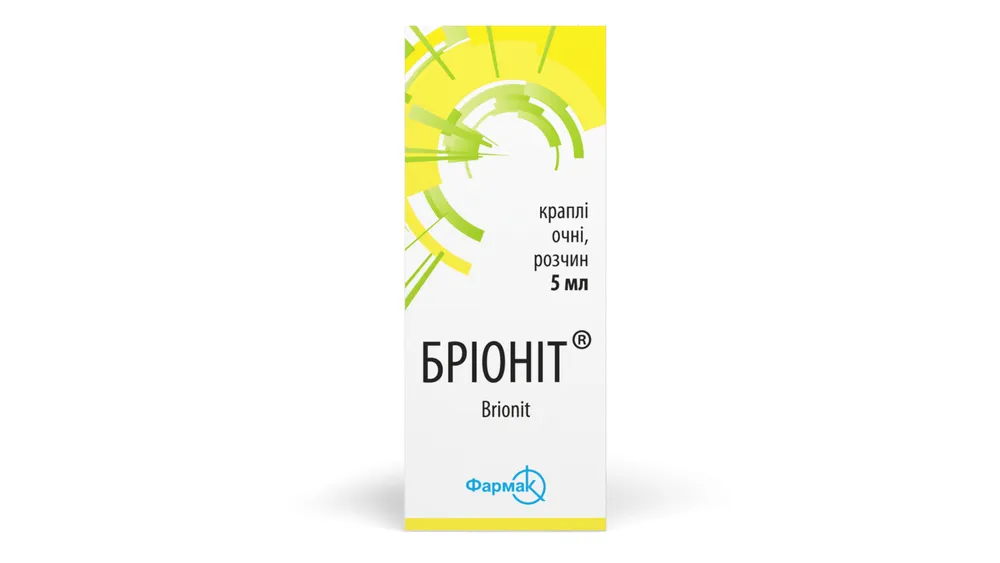
Table of Contents
INSTRUCTIONS FOR MEDICAL USE OF THE MEDICINAL PRODUCT BRIONIT® (BRIONIT)
Composition:
Active substances: brimonidine tartrate, timolol maleate;
1 ml of solution contains brimonidine tartrate 2.0 mg; timolol maleate 6.8 mg (equivalent to 5.0 mg timolol);
Excipients: benzalkonium chloride; sodium dihydrogen phosphate monohydrate; sodium hydrogen phosphate heptahydrate; hydrochloric acid diluted; sodium hydroxide; water for injections.
Pharmaceutical form. Eye drops, solution.
Main physicochemical properties: clear liquid, colorless to yellow.
Pharmacotherapeutic group. Medicinal products used in ophthalmology. Anti-glaucoma agents. Timolol, combinations. ATC code S01E D51.
Pharmacological Properties
Pharmacodynamics
Mechanism of action
Brimonite® contains two active substances: brimonidine tartrate and timolol maleate. Both components reduce elevated intraocular pressure (IOP) through a combined effect, resulting in a significantly greater hypotensive effect compared to each component used alone. Brimonite® acts rapidly.
Brimonidine tartrate is an alpha2-adrenergic agonist with approximately 1000-fold greater selectivity for alpha2-adrenergic receptors than for alpha1-adrenergic receptors. This selectivity is reflected in the absence of mydriasis and vasoconstriction in the microcirculatory vessels.
The hypotensive effect of brimonidine is believed to be mediated by increased uveoscleral outflow of aqueous humor and reduced aqueous humor production.
Timolol is a nonselective beta1- and beta2-adrenergic receptor blocker without intrinsic sympathomimetic activity, direct myocardial depressant effects, or local anesthetic (membrane-stabilizing) activity. Timolol reduces IOP by decreasing aqueous humor production. The exact mechanism of action is not fully established but may involve inhibition of cyclic adenosine monophosphate (cAMP) synthesis induced by endogenous stimulation of beta-adrenergic receptors.
Clinical efficacy
In three controlled, double-masked clinical trials, administration of brimonidine with timolol (twice daily) resulted in clinically significant additional reduction in mean diurnal IOP compared to treatment with timolol (twice daily) or brimonidine (two to three times daily) alone.
In a study involving patients whose IOP was inadequately controlled after a three-week run-in period with any IOP-lowering agent, additional reductions in mean diurnal IOP of 4.5, 3.3, and 3.5 mm Hg were observed over 3 months of treatment with brimonidine combined with timolol (twice daily), timolol (twice daily), and brimonidine (twice daily), respectively. In this study, statistically significant additional IOP reduction was demonstrated only compared to brimonidine, but not timolol, although a positive trend was observed at all time points. A pooled analysis of data from two other studies demonstrated a statistically significant advantage of brimonidine with timolol over timolol alone.
Furthermore, the IOP-lowering effect of brimonidine with timolol was not inferior to that achieved with concomitant therapy using brimonidine and timolol separately (both administered twice daily).
Sustained IOP-lowering effect of brimonidine with timolol over 12 months has been demonstrated in double-masked clinical trials.
Pharmacokinetics
Plasma concentrations of brimonidine and timolol were measured in healthy volunteers in a crossover study comparing the individual drugs with the fixed combination of brimonidine and timolol. There were no statistically significant differences in area under the concentration-time curve (AUC) values between the fixed combination and the individual components administered separately.
Mean maximum plasma concentrations (Cmax) of brimonidine and timolol after administration of the fixed combination were 0.0327 ng/mL and 0.406 ng/mL, respectively.
Brimonidine
Following ocular instillation of a 0.2% ophthalmic solution, plasma concentrations of brimonidine are very low. Brimonidine undergoes minimal metabolism in ocular tissues. Plasma protein binding is approximately 29%. The elimination half-life (T1/2) after topical administration averages about 3 hours. After oral administration, brimonidine is well absorbed and rapidly eliminated.
The majority of the drug (approximately 74% of the absorbed dose) is excreted in the urine as metabolites within 5 days; unchanged drug is not detected in urine. In vitro studies using liver cells from animals and humans indicate that aldehyde oxidase and cytochrome P450 enzymes are significantly involved in metabolism. Therefore, systemic elimination is primarily determined by hepatic metabolism. Brimonidine forms reversible binding to melanin in ocular tissues without causing adverse effects. Accumulation does not occur in the absence of melanin. Brimonidine is not significantly metabolized in ocular tissues.
Timolol
After topical administration of 0.5% ophthalmic solution to patients undergoing cataract surgery, the Cmax of timolol in ocular fluid was 898 ng/mL one hour after administration. The half-life (T1/2) of timolol in plasma is approximately 7 hours. Timolol binds minimally to plasma proteins. Timolol is partially metabolized in the liver, and both the active substance and its metabolites are excreted by the kidneys.
Preclinical safety data
The ocular and systemic safety profiles of the individual components are well characterized. Preclinical studies have not revealed any special hazard to humans in conventional safety pharmacology studies, repeated-dose toxicity, genotoxicity, or carcinogenicity studies of the individual components. Additional repeated-dose toxicity studies with the combination of brimonidine and timolol showed no additional risk to humans.
Brimonidine
Brimonidine tartrate did not show teratogenic effects in animals. However, it caused abortions in rabbits and reduced postnatal growth in rats at systemic doses approximately 37 and 134 times higher, respectively, than those administered to humans during therapy.
Timolol
In animal studies, beta-adrenergic blockers have demonstrated the ability to reduce umbilical blood flow, decrease fetal growth, delay ossification, and increase fetal and neonatal mortality, but without teratogenicity. Embryotoxicity (resorption) in rabbits and fetotoxicity (delayed ossification) in rats were observed with timolol at high maternal doses. Teratogenicity studies in mice, rats, and rabbits using oral doses of timolol up to 4200 times higher than the daily human dose of brimonidine with timolol showed no congenital abnormalities.
Clinical characteristics.
Indications.
Reduction of intraocular pressure (IOP) in patients with chronic open-angle glaucoma and ocular hypertension when topical beta-adrenergic blocking agents have not provided adequate response.
Contraindications.
- Hypersensitivity to any component of the drug.
- Increased airway reactivity, including bronchial asthma and episodes of bronchospasm, even in medical history, severe chronic obstructive pulmonary disease.
- Sinus bradycardia, sinoatrial node dysfunction syndrome, atrioventricular block, second- or third-degree atrioventricular block without implanted cardiac pacemaker, heart failure, cardiogenic shock.
- Concomitant therapy with monoamine oxidase inhibitors (MAOIs), antidepressants affecting noradrenergic transmission (tricyclic antidepressants and mianserin).
Interaction with other medicinal products and other forms of interaction.
Specific studies on the drug interaction between brimonidine and timolol have not been conducted. However, possible enhancement of the effect of drugs that depress the central nervous system (alcohol, barbiturates, opioid derivatives, sedatives or general anesthetics) should be considered during concomitant use with brimonidine and timolol.
Potentiation of effects has been reported with concomitant use of eye drops containing timolol and calcium channel blockers, beta-adrenergic blockers, antiarrhythmic drugs (including amiodarone), cardiac glycosides, parasympathomimetics, or guanethidine, manifesting as marked reduction in arterial blood pressure and/or pronounced bradycardia. Also, after brimonidine administration, reduction in arterial blood pressure has been reported very rarely (<1/10,000). Therefore, caution is required when using Brionit® with drugs having systemic hypotensive effects.
Concomitant use of ophthalmic beta-adrenergic blockers and adrenaline (epinephrine) may lead to development of mydriasis.
Beta-adrenergic blockers may enhance the hypoglycemic effect of antidiabetic drugs. They may also mask signs and symptoms of hypoglycemia (see section "Special precautions").
Hypertensive reaction following abrupt discontinuation of clonidine may be intensified during concomitant use of beta-adrenergic blockers.
Systemic effects of beta-blockers (reduction in heart rate, depression) may be enhanced when timolol is used concomitantly with CYP2D6 inhibitors (quinidine, fluoxetine, paroxetine).
Concomitant use of beta-adrenergic blockers with general anesthetic agents may mask compensatory tachycardia and increase the risk of arterial hypotension (see section "Special precautions"); therefore, the anesthesiologist must be informed about the patient's use of Brionit®.
Brionit® should be used with caution when administered concomitantly with iodine-containing radiographic contrast agents and during intravenous administration of lidocaine.
Cimetidine, hydralazine, and ethanol may increase plasma concentration of timolol.
Caution is required when using medicinal products affecting metabolism and uptake of circulating catecholamines (e.g., chlorpromazine, methylphenidate, reserpine), as there are no data on circulating catecholamines after administration of Brionit®.
Concomitant systemic medicinal products (regardless of pharmaceutical form) that may interact with alpha-adrenergic agonists or interfere with their activity (e.g., adrenergic receptor agonists or antagonists such as isoprenaline, prazosin) should be prescribed (or dose adjusted) with caution.
Although specific studies on drug interaction between brimonidine and timolol have not been conducted, there is a theoretical possibility of enhanced additive effect in reducing intraocular pressure when used concomitantly with prostamides, prostaglandins, carbonic anhydrase inhibitors, and pilocarpine.
Brimonidine is contraindicated during concomitant use of MAO inhibitors and with antidepressants affecting noradrenergic neurotransmission (e.g., tricyclic antidepressants and mianserin). Patients previously treated with MAO inhibitors may start therapy with Brionit® 14 days after discontinuation of the MAO inhibitor.
Special precautions for use.
To prevent eye infection and contamination of the eye drops, avoid contact between the dropper tip and any surfaces.
During clinical studies, ocular allergic reactions (allergic conjunctivitis and allergic blepharitis) were observed in some patients. Allergic conjunctivitis occurred in 5.2% of patients, typically beginning between 3 and 9 months. Overall, 3.1% of patients discontinued the medication. Allergic blepharitis was reported rarely (<1%). If an allergic reaction occurs, treatment with Brionit® should be discontinued.
Delayed-type hypersensitivity reactions have been reported with the use of 0.2% brimonidine tartrate solution, some cases of which were associated with increased intraocular pressure.
The use of Brionit® has not been studied in patients with closed-angle glaucoma.
Systemic effects.
Like all topically administered ophthalmic drugs, Brionit® may be absorbed systemically. There is no observed increase in systemic absorption of individual active substances. Due to the presence of the beta-adrenergic component timolol, the same types of adverse reactions as with systemic beta-blockers may occur. The frequency of systemic adverse reactions with topical administration is lower than with systemic administration. For information on reducing systemic absorption, see the section "Administration and dosage".
Cardiac disorders.
Cardiac disorders, including fatal cases associated with heart failure, have been rarely reported after treatment with timolol. Patients with cardiovascular diseases (e.g., ischemic heart disease, Prinzmetal's angina, and heart failure) and those undergoing antihypertensive therapy with beta-blockers should be carefully evaluated, and therapy with alternative active substances should be considered. Patients with cardiovascular diseases should be monitored for signs of worsening of these conditions and adverse reactions.
Due to the negative effect on conduction duration, beta-blockers should be used with caution in patients with first-degree heart block.
As with systemic beta-blockers, if discontinuation of Brionit® is necessary in patients with ischemic heart disease, therapy should be tapered gradually to avoid the development of arrhythmias, myocardial infarction, and sudden death.
Vascular disorders.
The drug should be used with caution in patients with severe peripheral circulatory disorders (e.g., severe forms of Raynaud's disease or Raynaud's syndrome).
Respiratory disorders.
Respiratory disorders, including a fatal case due to bronchospasm, have been observed in patients with bronchial asthma after administration of some ophthalmic beta-blockers.
Brionit® should be used with caution in patients with moderate to severe chronic obstructive pulmonary disease (COPD) and only if the expected benefit outweighs the potential risk.
Hypoglycemia/diabetes mellitus.
Beta-blockers should be used with caution in patients prone to spontaneous hypoglycemia or with labile diabetes mellitus, as beta-blockers may mask the signs and symptoms of acute hypoglycemia.
Hyperthyroidism.
Beta-blockers may mask the signs and symptoms of hyperthyroidism.
Brionit® should be used with caution in patients with metabolic acidosis and pheochromocytoma (without prior treatment).
Corneal disorders.
Ophthalmic beta-blockers may cause dry eye. The drug should be prescribed with caution to patients with corneal disorders.
Use with other beta-blockers.
The effect on intraocular pressure or known systemic effects of beta-blockers may be enhanced when timolol is used in patients already taking another systemic beta-blocker. The response to treatment in these patients should be carefully monitored. The use of two topical beta-blockers is not recommended.
Anaphylactic reactions.
In patients with atopy or a history of severe anaphylactic reactions to various allergens, treatment with beta-blockers may increase the reaction upon re-exposure to such allergens and may result in lack of response to adrenaline administered in usual doses.
Retinal detachment.
Cases of retinal detachment have been reported with drugs that reduce the accumulation of intraocular fluid (e.g., timolol, acetazolamide) after filtration surgery for glaucoma.
Anesthesia.
Ophthalmic beta-blockers may block the effects of beta-agonists, such as adrenaline. The anesthesiologist should be informed about timolol use prior to any planned surgery.
Hepatic/renal impairment.
The use of the drug in this patient group has not been sufficiently studied; therefore, caution is advised when administering it to patients with hepatic or renal impairment.
In patients with severe renal dysfunction undergoing hemodialysis, treatment with timolol has been associated with marked reduction in blood pressure.
Benzalkonium chloride.
The excipient benzalkonium chloride contained in Brionit® may cause irritation of the ocular mucosa, symptoms of dry eye, and may affect the tear film and corneal surface with prolonged use.
Contact lenses must be removed before instillation and may be reinserted 15 minutes after instillation.
Benzalkonium chloride is known to discolor soft contact lenses. Contact with soft contact lenses should be avoided.
Brionit® should be used with caution in patients with dry eye and in patients where the cornea may be damaged. Patients should be under medical supervision during prolonged use.
Phosphate buffer.
Brionit® contains phosphates, which in rare cases may lead to corneal deposits due to calcium accumulation during treatment.
Use during pregnancy or breastfeeding.
Pregnancy
Controlled studies on the use of brimonidine with timolol in pregnant women have not been conducted; therefore, the use of the drug during pregnancy is contraindicated.
Brimonidine tartrate.
There are no adequate data on the use of brimonidine tartrate in pregnant women. Animal studies have shown toxic effects on the reproductive system when high doses were administered to the mother. The potential risk to humans is unknown.
Timolol.
Animal studies have shown toxic effects on the reproductive system when doses significantly higher than those used in clinical practice were administered.
Epidemiological studies have not shown an effect on congenital malformations, but a risk of delayed intrauterine development has been demonstrated with oral beta-blockers. In addition, signs and symptoms of beta-blockade (such as bradycardia, hypotension, respiratory complications, and hypoglycemia) have been observed in newborns when beta-blockers were administered to mothers before delivery. If Brionit® is used until delivery, the newborn should be closely monitored during the first days of life.
Breastfeeding
Brimonidine tartrate.
It is unknown whether brimonidine passes into human breast milk, but it does pass into the milk of lactating rats.
Timolol.
Beta-blockers pass into breast milk. However, it is unlikely that the doses of timolol in eye drops are sufficient to result in passage into breast milk or cause clinical symptoms of beta-blockade in infants. For information on reducing systemic absorption, see the section "Administration and dosage".
Brionit® should not be used in women who are breastfeeding.
Ability to affect reaction speed when driving or operating machinery.
Brimonidine with timolol has a minor influence on the ability to drive or operate machinery. During treatment with Brionit®, transient visual disturbances (blurred vision), weakness, and drowsiness may occur, which may impair reaction speed. If these symptoms occur, activities requiring high attention should be avoided.
Method of Administration and Dosage
Recommended dosage for adults, including elderly patients
Instill 1 drop of Briunit® into the conjunctival sac of the affected eye twice daily, with an interval of 12 hours. If two or more ophthalmic agents are used, a 5-minute interval between instillations is required.
As with other ophthalmic drops, to reduce potential systemic absorption, it is recommended to apply brief digital pressure on the lacrimal sac at its projection site near the inner canthus of the eye, or to close the eyelids for 2 minutes.
This should be done immediately after instillation of each drop to minimize systemic side effects and enhance local action.
Children
The safety and efficacy of Briunit® in children have not been established; therefore, it should not be used in pediatric practice.
Overdose
Cases of overdose with brimonidine and timolol in humans are rarely reported and have not led to adverse reactions. Treatment of overdose includes supportive and symptomatic therapy. Maintenance of the patient's respiration should be ensured.
Brimonidine
Overdose with topical administration
Cases observed have already been described in the section "Adverse Reactions".
Overdose following accidental oral ingestion (adults)
Very limited information is available regarding accidental brimonidine overdose in adults. Only one case has been documented, resulting in arterial hypotension. A rebound hypertension following the episode of arterial hypot游戏副本
Adverse Reactions
The most commonly reported adverse effects were ocular conjunctival hyperemia (approximately 15% of patients) and burning sensation of the ocular mucosa (approximately 11% of patients), based on data from a 12-month clinical study. In most cases, these symptoms were mild in intensity; discontinuation of therapy was required in only 3.4% and 0.5% of cases, respectively.
The following adverse effects have been reported according to frequency of occurrence: very common (> 1/10); common (> 1/100, < 1/10); uncommon (> 1/1000, < 1/100); rare (> 1/10000, < 1/1000); very rare (< 1/10000).
Eye disorders:
Very common – ocular conjunctival hyperemia, burning sensation;
Common – acute burning or stinging eye pain, allergic conjunctivitis, corneal erosion, superficial keratitis, eyelid skin pruritus, conjunctival folliculosis, visual disturbance, blepharitis, epiphora, dry eye mucosa, eye discharge, eye pain, ocular mucosal irritation, foreign body sensation;
Uncommon – decreased visual acuity, conjunctival edema, follicular conjunctivitis, allergic blepharitis, conjunctivitis, floaters in the vitreous body, asthenopia, photophobia, hypertrophy of ocular papillary muscles, eyelid tenderness, conjunctival pallor, corneal edema, corneal infiltrates, vitreous body rupture.
Psychiatric disorders:
Common – depression.
Nervous system disorders:
Common – somnolence, headache;
Uncommon – dizziness, syncope.
Cardiovascular disorders:
Common – arterial hypertension;
Uncommon – congestive heart failure, cardiac arrhythmia.
Respiratory system disorders:
Uncommon – rhinitis, nasal mucosal dryness.
Gastrointestinal disorders:
Common – dryness of oral mucosa;
Uncommon – taste disturbance, nausea, diarrhea.
Skin and subcutaneous tissue disorders:
Common – eyelid edema, eyelid skin pruritus, eyelid erythema;
Uncommon – allergic contact dermatitis.
General disorders and administration site conditions:
Common – asthenia.
Additional adverse reactions reported during post-marketing surveillance of brimonidine with timolol are listed below:
Eye disorders:
Frequency unknown – blurred vision.
Cardiovascular disorders:
Frequency unknown – arrhythmia, bradycardia, tachycardia, arterial hypotension.
Skin disorders:
Frequency unknown – facial skin redness.
Adverse reactions observed during use of one of the active substances, which may also occur during use of Brionit®:
Brimonidine
Immune system disorders: hypersensitivity.
Eye disorders: iritis, iridocyclitis (anterior uveitis), miosis.
Psychiatric disorders: insomnia.
Respiratory disorders: upper respiratory tract inflammatory diseases, dyspnea.
Gastrointestinal disorders: gastrointestinal symptoms.
General disorders and administration site conditions: systemic allergic reactions.
Skin and subcutaneous tissue disorders: skin reactions, including facial skin redness, facial skin edema, pruritus, rash, and vasodilation.
In cases of brimonidine use in combination with other agents for treatment of congenital glaucoma, symptoms of brimonidine overdose have been reported, including loss of consciousness, lethargy, somnolence, arterial hypotension, hypotonia, bradycardia, hypothermia, cyanosis, pallor, respiratory depression, and apnea in newborns and children under 2 years of age.
High frequency and severe degree of somnolence have been reported in children aged 2 years and older, particularly in children aged 2–7 years and in children with body weight ≤ 20 kg.
Timolol
Like other topical ophthalmic preparations, Brionit® (brimonidine tartrate/timolol) may enter systemic circulation. Absorption of timolol may cause adverse effects similar to those observed with systemic use of other beta-adrenergic blocking agents. The frequency of systemic adverse effects after topical administration is lower than with systemic administration.
Additional adverse reactions observed with ophthalmic beta-adrenergic blockers, which may potentially occur during use of Brionit®, include:
Immune system disorders: systemic allergic reactions, including Quincke's edema (angioedema), urticaria, localized and generalized rashes, pruritus, anaphylactic reactions, systemic lupus erythematosus.
Endocrine disorders: hypoglycemia, masking of hypoglycemic symptoms in patients with diabetes mellitus.
Eye disorders: signs and symptoms of eye irritation (burning sensation, acute pain, pruritus, lacrimation, redness), blepharitis, blurred vision, dry eye sensation, keratitis, decreased corneal sensitivity, diplopia, ptosis, uveal rupture (after filtration surgery), corneal erosion, cystoid macular edema, pseudopemphigoid, conjunctivitis.
Psychiatric/Nervous system disorders: loss of consciousness, dizziness, headache, insomnia, nightmares, memory loss, cerebral circulation disorder, worsening of myasthenia gravis symptoms, paresthesia, cerebral ischemia, behavioral changes and psychiatric disorders, including confusion, hallucinations, restlessness, disorientation, nervousness.
Auditory disorders: tinnitus.
Cardiovascular disorders: bradycardia, palpitations, congestive heart failure, chest pain, atrioventricular heart block, heart failure, heart block, cardiac arrest, arrhythmia, cerebral ischemia, stroke, intermittent claudication, edema, pulmonary edema, worsening of angina pectoris, arterial hypotension, Raynaud's syndrome, cold extremities, loss of consciousness.
Respiratory disorders: bronchospasm (predominantly in patients with a history of bronchospastic disorders), dyspnea, cough, respiratory failure, nasal congestion, upper respiratory tract infections.
Gastrointestinal disorders: diarrhea, dysgeusia, nausea, dry mouth sensation, dyspepsia, vomiting, abdominal pain, anorexia.
Skin and subcutaneous tissue disorders: alopecia, psoriasiform rash or exacerbation of psoriasis, skin rashes.
Musculoskeletal, connective tissue and bone disorders: myalgia.
Renal and urinary disorders: Peyronie's disease, peripheral edema.
Reproductive system disorders: sexual dysfunction, decreased libido, retroperitoneal fibrosis.
Other: asthenia/increased fatigue.
Adverse reactions associated with eye drops containing phosphates.
Very rare cases of corneal calcification associated with the use of eye drops containing phosphates have been reported in patients with significantly damaged corneas.
Reporting suspected adverse reactions
Reporting of suspected adverse reactions after medicinal product authorization is of great importance. It allows continuous monitoring of the benefit-risk balance of the medicinal product. Healthcare and pharmacy professionals, as well as patients or their legal representatives, should report all suspected adverse reactions and lack of efficacy through the Automated Pharmacovigilance Information System at: https://aisf.dec.gov.ua.
Shelf life. 2 years.
Shelf life of the medicinal product after first opening of the primary packaging – 28 days.
Storage conditions.
No special storage conditions are required for this medicinal product. Store in the original packaging. Keep out of reach of children.
Packaging. 5 ml in a bottle. 1 or 3 bottles per carton.
Prescription status. Prescription only.
Manufacturer. JSC "Farmak".
Manufacturer's address and location of business activity.
74 Kyrylivska Street, Kyiv, 04080, Ukraine.