Brineura
Ukraine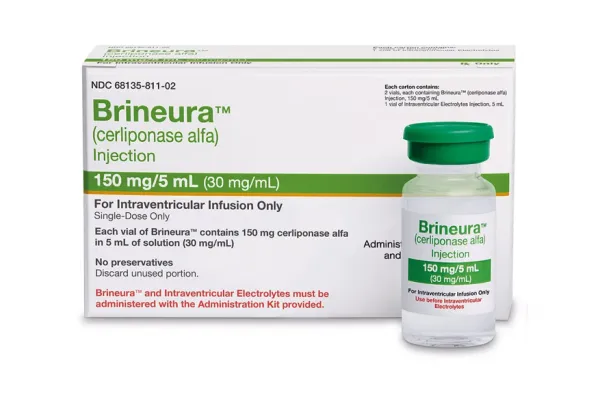
Table of Contents
INSTRUCTIONS for medical use of the medicinal product BRINEURA (BRINEURA)
Composition:
Active substance: cerliponase alfa;
1 ml of infusion solution contains 30 mg of cerliponase alfa;
1 vial contains 150 mg of cerliponase alfa;
Excipients: sodium hydrogen phosphate, heptahydrate; sodium dihydrogen phosphate, monohydrate; sodium chloride; potassium chloride; magnesium chloride, hexahydrate; calcium chloride, dihydrate; water for injections.
5 ml vial of flushing solution contains: sodium hydrogen phosphate, heptahydrate; sodium dihydrogen phosphate, monohydrate; sodium chloride; potassium chloride; magnesium chloride, hexahydrate; calcium chloride, dihydrate; water for injections.
Pharmaceutical form. Infusion solution.
Main physicochemical properties: liquid, from clear to slightly opalescent, colorless to pale yellow, practically free from particles; may contain endogenous protein particles observed as translucent fibers or opaque particles;
flushing solution: clear, colorless liquid, practically free from particles.
Pharmacotherapeutic group. Agents affecting gastrointestinal function and metabolism. Enzymes. ATC code A16AB17.
Pharmacological Properties.
Pharmacodynamics.
Mechanism of action
Cerliponase alfa is a recombinant form of human tripeptidyl-peptidase 1 (rhTPP1), produced in Chinese hamster ovary cells.
Cerliponase alfa is a proteolytic proenzyme (zymogen) that is inactive until activated within lysosomes. Cerliponase alfa is taken up by target cells and trafficked to lysosomes via the cation-independent mannose-6-phosphate receptor (CI-MPR, also known as the M6P/IGF2 receptor). The glycosylation profile of cerliponase alfa ensures stable cellular uptake and delivery to lysosomes for activation.
The activated proteolytic enzyme (rhTPP1) cleaves tripeptides from the N-terminus of the substrate protein with unknown substrate specificity. Deficient levels of TPP1 lead to neuronal ceroid lipofuscinosis type 2 (CLN2), resulting in neurodegeneration, loss of neurological function, and death in childhood.
Immunogenicity
Antidrug antibodies (ADA) were frequently detected in serum and cerebrospinal fluid (CSF). There were no observed indications of ADA affecting the pharmacokinetics, efficacy, or safety of the medicinal product. However, data are limited.
Clinical efficacy and safety
The safety and efficacy of Brineura were evaluated in three open-label clinical studies involving a total of 38 patients with CLN2 aged 1 to 9 years at baseline, compared with untreated CLN2 patients whose data were obtained from a historical natural course disease database (natural history control group). To assess disease progression (so-called ML-CLN2 Clinical Rating Scale score), these studies used a composite of motor and language domains of a disease-specific clinical assessment scale (see Table 1). Each domain has scores ranging from 3 (generally normal) to 0 (severe impairment), with a total possible score of 6; a decline in score corresponds to clinically significant loss of previously acquired abilities in walking and speaking.
Table 1. Motor and language assessment – CLN2 Clinical Rating Scale
| Domain |
Score |
Assessment |
| Motor function |
3 |
Generally normal gait. Marked ataxia and pathological falls are absent. |
| 2 |
Independent walking, defined as the ability to walk 10 steps without assistance. Obvious instability is present, and falls may occasionally occur. |
|
| 1 |
Requires external assistance for walking or can only crawl. |
|
| 0 |
No longer able to walk or crawl. |
|
| Speech |
3 |
Visibly normal speech. Clear and generally age-appropriate. No deviations observed so far. |
| 2 |
Speech becomes noticeably impaired: some words are unclear, the patient can form short sentences to describe events, questions, or needs. This score indicates a decline compared to the previous level of ability (from the maximum individual level previously achieved by the child). |
|
| 1 |
Difficult to understand. Isolated intelligible words. |
|
| 0 |
Absence of intelligible words or vocalizations. |
In the main study 190-201, a total of 24 patients aged 3 to 9 years at baseline received treatment with Brineura at a dose of 300 mg weekly. Of these, 23 patients received treatment for 48 weeks (1 patient withdrew after the first week due to inability to continue study procedures). The mean baseline ML score was 3.5 (standard deviation (SD) 1.20), with a range from 1 to 6; patients with advanced disease were excluded from the study (inclusion criteria – mild to moderate progression of CLN2 disease).
Overall, 20 out of 23 (87%) patients treated with Brineura for 48 weeks did not experience irreversible decline in ML score by 2 points compared to the predicted decline of 2 points over 48 weeks in the untreated patient group (p = 0.0002, binomial test with assumption p0 = 0.50). Overall, 15 out of 23 (65%) patients showed no decline in ML score regardless of baseline status, and in 2 of these 15 patients, the score increased by one point during the treatment period. Five patients experienced a decline of 1 point, and 3 patients experienced a decline of 2 points.
All 23 patients completed study 190-201 and continued into the extension study 190-202, receiving Brineura at a dose of 300 mg weekly, for a total duration of 288 weeks. Efficacy results from studies 190-201 and 190-202 were pooled and compared to a natural history control group consisting of patients who met the inclusion criteria for studies 190-201 and 190-202.
The median time to irreversible decline by 2 points or to ML score 0 in patients treated with Brineura (N = 23) was 272 weeks compared to 49 weeks in the natural history control group (N = 42) (hazard ratio 0.14, 95% CI: 0.06–0.33; p < 0.0001). The median time to ML score 0, indicating complete loss of ability to walk and speak, was not reached in patients treated with Brineura, compared to 109 weeks in the natural history control group (hazard ratio 0.01; 95% CI: 0.00–0.08; p < 0.0001).
An exploratory survival analysis showed that the mean age at death in the natural history control group was 10.4 years; 95% CI: 9.5–12.5 years. No deaths were reported during the study in the group of patients treated with Brineura; the mean (minimum, maximum) age at last assessment was 10.3 (7.8, 13.1) years (N = 23).
The mean rate of decline in disease score (rate of worsening) in patients treated with Brineura at 300 mg weekly was 0.38 points over 48 weeks. Compared to the calculated rate of worsening in the natural course of disease, which is 2.13 points over 48 weeks, the study results are statistically significant (p < 0.0001) (see Table 2). The observed treatment effect is considered clinically meaningful in the context of the natural course of untreated CLN2 disease.
Table 2. CLN2 Clinical Rating Scale for Motor and Language Function (0 to 6 points): Rate of Worsening over 48 Weeks (Intention-to-Treat (ITT) Population)
| Rate of decline (points/48 weeks)а |
Participants in studies 190-201/202 Total (n=23) |
Natural history control group (n = 42) |
p-valueb |
| Mean (SD) |
0.38 (0.499)c |
2.13 (0.952)c |
<0.0001 |
| Median |
0.30 |
2.08 |
|
| Min., max. |
0.00, 2.18 |
0.45, 4.27 |
|
| 95% CI limits |
0.16, 0.59 |
1.84, 2.43 |
a The rate of decline in patient scores over 48 weeks (initial CLN2 score – final CLN2 score) / (elapsed time in 48-week intervals).
b p-value based on comparison of the rate of decline with the value of 2 using a one-sample t-test.
c A positive value indicates clinical worsening; a negative value indicates clinical improvement.
The calculated mean change from baseline in patients treated with Brineura compared to the natural history control group (N=42 patients) demonstrated a slowing of disease progression and a sustained treatment effect up to the last assessment (week 321) (see Figure 1).
Figure 1. Mean change from baseline in the 0–6 point motor and language function score (natural history control group compared to patients treated with Brineura at a dose of 300 mg weekly)
Vertical bars in Figure 1 represent the standard error of the mean.
Solid line – Clinical studies 190-201 and 190-202.
Dashed line – Natural history control group 190-901.
MRI volumetry findings indicate slowed deterioration.
In study 190-203, a total of 14 patients with CLN2 aged 1 to 6 years at baseline (8 out of 14 patients were under 3 years of age) received treatment with Brineura for 142.6 weeks (1 patient withdrew from the study to receive treatment commercially), followed by 24 weeks of safety observation. The mean (SD) baseline ML score was 4.6 (1.69), with a range from 1 to 6.
Patients treated with Brineura were compared to age-, motor and language function score-, and combined genotype-matched patients from the natural history control group. The mean (± SD) rate of decline in ML score was 0.15 (0.243) points per 48 weeks for matched patients treated with Brineura (N = 12) and 1.30 (0.857) points per 48 weeks for matched patients in the natural history control group (N = 29). The mean difference in decline rate between groups was 1.15 points (standard error 0.174), 95% CI: 0.80, 1.50 points; p < 0.0001.
The median time to irreversible decline of 2 points or to a score of 0 in patients treated with Brineura was not reached by the last assessment (week 169), compared to 103 weeks in the natural history control group (hazard ratio 0.091; 95% CI: 0.021, 0.393; p < 0.0001). The median time to ML score 0 in patients treated with Brineura was not reached compared to 163 weeks in matched patients from the natural history control group (hazard ratio 0.00; 95% CI: 0.00, 0.00; p = 0.0032). Overall, in 10 out of 12 (83%) treated patients, a decline of less than 2 points in ML score from baseline to last assessment was observed. In 8 patients (67%), no clinical progression was observed on the ML scale, 2 (17%) lost 1 point, and 2 (17%) lost 2 points. None of the treated patients reached an ML score of 0, compared to 10 out of 29 (34%) matched patients in the natural history control group.
Among patients under 3 years of age, the mean (SD) rate of decline in ML score was 0.04 (0.101) points per 48 weeks in treated patients (N = 8), compared to 1.09 (0.562) points per 48 weeks in matched patients from the natural history control group (N = 20) (difference 1.05 points; p < 0.0001). In 7 of the treated patients under 3 years of age who had an ML score of 6 at baseline, the ML score remained at 6 at the time of last measurement, indicating generally normal gait and speech. In three of these 7 patients, no other CLN2 symptoms were observed at week 145, as determined by the CLN2 clinical rating scale, brain imaging, and adverse events, whereas all matched patients in the control group developed disease symptoms. In this patient population treated with Brineura, a delay in disease onset was observed.
Exceptional circumstances
This medicinal product is authorized under exceptional circumstances. This means that, due to the rarity of the disease, it has not been possible to obtain complete information about this medicinal product.
The European Medicines Agency will review any new information that becomes available each year and will update this product information as necessary.
Pharmacokinetics
The pharmacokinetics of cerliponase alfa were evaluated in CLN2 patients who received intracerebroventricular infusions of 300 mg over approximately 4.5 hours weekly.
All pharmacokinetic parameters were consistent after the initial infusion on Day 1 and after subsequent infusions at Week 5 and Week 13, indicating no apparent accumulation or time-dependent changes in the pharmacokinetics of cerliponase alfa in cerebrospinal fluid (CSF) or plasma following administration of 300 mg weekly. Pharmacokinetic parameters in CSF were determined in 17 patients; a summary is presented in Table 3. The pharmacokinetics of cerliponase alfa in blood plasma were assessed in 13 patients; the median Tmax was 12 hours (from the start of infusion), mean Cmax was 1.39 µg/mL, and mean AUC0-t was 24.1 µg·h/mL. No apparent effect of drug-related antibodies in serum or CSF on the pharmacokinetics of the drug in plasma or CSF was observed.
Table 3. Pharmacokinetic parameters after the first intracerebroventricular infusion (approximately 4 hours duration) of 300 mg cerliponase alfa in CSF
| Parameter |
SMR (N=17) Mean value (SD) |
| Tmax*, hours |
4.50 [4.25, 5.75] |
| Cmax, mcg/ml |
1490 (942) |
| AUC0-t, mcg-hour/ml |
9510 (4130) |
| Vz, ml |
435 (412) |
| CL, ml/hour |
38.7 (19.8) |
| t1/2, hours |
7.35 (2.90) |
*Tmax is expressed as time from the start of the ~4-hour infusion and is presented as median [min, max], corresponding to the first sampling time point after infusion.
Distribution
The calculated volume of distribution of cerliponase alfa following intracerebroventricular infusion of 300 mg (Vz = 435 mL) exceeds the typical cerebrospinal fluid (CSF) volume (100 mL), indicating distribution into tissues beyond the CSF. High CSF/plasma ratios for Cmax and AUC0-t (approximately 1000 and 400, respectively) suggest that the majority of administered cerliponase alfa is localized within the central nervous system (CNS). There is no basis to expect that intracerebroventricular administration of cerliponase alfa will achieve therapeutic concentrations in ocular tissues due to limited access from CSF to affected retinal cells and the presence of the hemato-retinal barrier.
Elimination
Cerliponase alfa is a protein, which is expected to undergo metabolic degradation via peptide hydrolysis. Therefore, hepatic impairment is not expected to influence the pharmacokinetics of cerliponase alfa.
Renal elimination of cerliponase alfa is considered negligible as a clearance pathway.
Children aged 0 to 3 years
Pediatric patients with CLN2 aged 1 to < 2 years (n = 2) and 2 to < 3 years (n = 6) received cerliponase alfa according to the recommended pediatric dosing regimen for up to 144 weeks. CSF exposure was within the range characterized as safe and effective in the pivotal study. Plasma exposure in younger patients tended to exceed the range observed in the pivotal study; however, higher plasma exposure was not associated with clear changes in the safety profile. Pharmacokinetic data in patients under 1 year of age are lacking.
Preclinical safety data
Limited preclinical safety data for cerliponase alfa were obtained from single-dose toxicity studies in non-human primates and repeat-dose toxicity studies in CLN2 disease model dogs (Dachshunds), which were used to model classical infantile neuronal ceroid lipofuscinosis type 2. This disease model was primarily used to investigate the pharmacodynamic and pharmacokinetic properties of cerliponase alfa, but also to assess the compound's toxicity. However, results from these Dachshund studies cannot reliably predict human safety, as the cerliponase alfa infusion regimen differed and varied considerably even within a single study due to difficulties in placing the intraventricular catheter and pronounced hypersensitivity reactions. Furthermore, these studies involved a very small number of animals, primarily assessed single-dose administration, and lacked adequate control groups. Thus, the preclinical studies do not allow definitive conclusions regarding the clinical safety of cerliponase alfa. Studies on genotoxicity, carcinogenicity, and reproductive toxicity have not been conducted.
Clinical characteristics.
Indications.
Brineura is indicated for the treatment of neuronal ceroid lipofuscinosis type 2 (CLN2), also known as tripeptidyl-peptidase 1 (TPP1) deficiency.
Contraindications.
Anaphylactic reaction, life-threatening, to the active substance or any of the excipients listed in the section “Composition”, if the rechallenge test is unsuccessful (see section “Special warnings and precautions for use”).
Ventriculo-peritoneal shunts in patients with CLN2.
Brineura must not be administered while signs of significant leakage from the intracerebroventricular access device, device malfunction, or device-related infection are present (see sections “Special warnings and precautions for use” and “Method of administration and dosage”).
Interaction with other medicinal products and other forms of interaction.
Interaction studies have not been conducted. Cerliponase alfa is a recombinant human protein, and its systemic exposure is limited due to the intracerebroventricular route of administration; therefore, interaction between cerliponase alfa and medicinal products metabolized by cytochrome P450 enzymes is unlikely.
Special precautions for use.
Traceability
In order to improve the traceability of biological medicinal products, the name and batch number of the administered product should be clearly documented.
Device-related complications
To reduce the risk of infection, Brineura should be administered under aseptic conditions. In patients treated with Brineura, device-related infections have been observed, including subclinical infections and meningitis (see section "Adverse reactions"). Meningitis may present with symptoms such as fever, headache, neck stiffness, photophobia, nausea, vomiting, and changes in mental status. Cerebrospinal fluid (CSF) samples should be regularly sent for analysis to detect subclinical, device-related infections. In clinical trials, antibiotics were administered, the intracerebroventricular access device was replaced, and Brineura treatment was continued.
Healthcare professionals should examine the patient's scalp for skin integrity before each infusion to ensure the proper function of the intracerebroventricular access device. Common signs of device leakage or malfunction include swelling, erythema of the scalp, fluid extravasation, or skin bulging at or around the site of intracerebroventricular access. However, these signs may also occur as symptoms of device-related infections.
Before initiating Brineura infusion, the infusion site and patency of the intracerebroventricular access device should be checked to detect leakage and/or malfunction (see sections "Contraindications" and "Method of administration and dosage"). Signs and symptoms of device-related infections may be subtle; therefore, CSF samples should be regularly sent for analysis to detect subclinical, device-related infections. Neurosurgical consultation may be required to confirm device integrity. Brineura treatment should be interrupted in case of device malfunction, and the access device may need to be replaced before the next infusion.
After prolonged use of the reservoir of the intracerebroventricular access device, significant deterioration may occur compared to previous results of control testing, as observed in clinical trials after approximately 4 years of reservoir use. In two clinical trials, the intracerebroventricular access device showed no signs of malfunction during infusion; however, upon removal, visible signs of device degradation were observed, consistent with control testing data of the intracerebroventricular access device. The access device was replaced, and the patient resumed Brineura treatment.
The intracerebroventricular access device should be replaced before completion of a 4-year period of regular Brineura administration; however, the device should always be used in accordance with the recommendations of the respective medical device manufacturer.
In case of device-related complications, additional instructions provided in the manufacturer's documentation should be consulted.
Caution should be exercised when treating patients predisposed to complications associated with intracerebroventricular administration of medicinal products, including patients with obstructive hydrocephalus.
Clinical and laboratory monitoring
Vital signs should be monitored at a medical facility before, periodically during, and after infusion. After completion of the infusion, a clinical assessment of the patient should be performed, and prolonged observation should be ensured if clinically indicated, particularly for patients under 3 years of age.
Electrocardiographic (ECG) monitoring during infusion is recommended for patients with a history of bradycardia, conduction disturbances, or structural heart disease, as conduction disturbances or heart disease may develop in some patients with CLN2. In patients with healthy hearts, routine 12-lead ECGs should be performed every 6 months.
CSF samples should be sent for routine analysis to detect subclinical, device-related infections (see section "Method of administration and dosage").
Pediatric patients
Data are limited in patients with advanced disease at the time of treatment initiation. There are also no clinical data in children under 1 year of age. Neonates may have a reduced integrity of the blood-brain barrier. In children under 3 years of age, the potential impact of increased peripheral exposure to the medicinal product has not been associated with a clearly altered safety profile (see sections "Pharmacokinetics" and "Adverse reactions").
Anaphylactic reactions
Anaphylactic reactions have been reported during the use of Brineura. As a precaution, emergency medical support should be available during Brineura administration. If anaphylactic reactions occur, immediately discontinue the infusion and initiate appropriate medical treatment. Patients should be closely monitored during and after Brineura infusion.
If anaphylaxis occurs, caution should be exercised when re-administering the product.
Sodium and potassium content
This medicinal product contains 17.4 mg of sodium per vial of Brineura and flushing solution, equivalent to 0.87% of the maximum daily intake of 2 g sodium for adults, as recommended by WHO.
This medicinal product contains potassium. Each vial contains less than 1 mmol (39 mg) of potassium, i.e., practically potassium-free.
Brineura and the flushing solution should be used immediately after thawing. The product should be drawn from a closed vial immediately before use. If immediate use is not possible, the closed vials of Brineura or flushing solution should be stored at 2–8°C and used within 24 hours.
Chemical and physical stability during use has been demonstrated for 12 hours at room temperature (19–25°C). From a microbiological standpoint, opened vials or drug product drawn into a syringe should be used immediately. The responsibility for storage conditions and duration of use of the product not used immediately lies with the user.
Use during pregnancy or breastfeeding.
Pregnancy
There are no data on the use of Brineura in pregnant women. Reproductive toxicity studies with Brineura in animals have not been conducted. It is unknown whether Brineura may cause harm to the fetus if administered to a pregnant woman or affect reproductive function. Brineura should be administered to pregnant women only if clearly needed.
Breastfeeding
There is insufficient information on the excretion of cerliponase alfa/metabolites in human breast milk. Risk to the newborn/infant cannot be excluded. Breastfeeding should be discontinued during treatment with Brineura.
Fertility
Studies on the effect of cerliponase alfa on fertility in animals or humans have not been conducted.
Ability to affect reaction speed when driving or operating machinery.
Studies on the effect of Brineura on the ability to drive or operate machinery have not been conducted.
Method of Administration and Dosage
Brineura should only be administered by a specially trained healthcare professional experienced in intracerebroventricular administration, and must be given under the conditions of a medical facility.
Dosage
The recommended dose is 300 mg of cerliponase alfa, administered once every two weeks (i.e., every 14 days) via intracerebroventricular infusion.
For patients under 2 years of age, lower doses are recommended (see section "Pediatric Patients").
Premedication with antihistamines with or without antipyretics is recommended 30–60 minutes prior to the start of infusion.
Long-term treatment requires regular clinical assessment of the benefit-risk ratio for each individual patient.
Dosage Adjustment
If a patient cannot tolerate the infusion, consideration should be given to dosage adjustment. The dose may be reduced by 50% and/or the infusion rate decreased.
If the infusion was interrupted due to a hypersensitivity reaction, it should be resumed at a rate approximately half of the initial infusion rate at which the hypersensitivity reaction occurred.
The infusion should be interrupted and/or the infusion rate reduced if, in the physician’s opinion, the patient may experience increased intracranial pressure during infusion, as indicated by symptoms such as headache, nausea, vomiting, or deterioration in level of consciousness. Such precautionary measures are particularly important for patients under 3 years of age.
Pediatric Patients
In clinical studies, Brineura treatment was initiated in children aged 1 to 9 years. Clinical data on use in children under 1 year of age are lacking (see section "Pharmacodynamics"). The proposed dosage for children under 2 years of age is based on brain weight. The decision to treat should be made by the physician based on an individual benefit-risk assessment. It is important to initiate treatment as early as possible.
Dosage selection for patients should be based on age at the time of treatment and adjusted accordingly (see Table 4).
Table 4. Dose and Volume of Brineura
| Age groups |
Total weekly administered dose (mg) |
Volume of Breyniera solution (ml) |
| From birth to < 6 months |
100 |
3.3 |
| From 6 months to < 1 year |
150 |
5 |
| From 1 year to < 2 years |
200 (first 4 doses) 300 (subsequent doses) |
6.7 (first 4 doses) 10 (subsequent doses) |
| 2 years and older |
300 |
10 |
Method of Administration
Intracerebroventricular administration.
Precautions to be taken before handling or administering this medicinal product
Strict aseptic techniques must be followed during preparation and administration of the product.
The drug Brineura and the flushing solution must be administered exclusively via the intracerebroventricular route. Each vial of Brineura and flushing solution is intended for single use only.
Brineura is administered into the cerebrospinal fluid (CSF) by infusion through a surgically implanted reservoir and catheter (an intracerebroventricular access device). An intracerebroventricular access device must be implanted prior to the first infusion. The implanted intracerebroventricular access device must be suitable for accessing the brain ventricles for administration of medicinal products.
After Brineura infusion, the calculated volume of flushing solution must be administered to flush the components of the infusion system, including the intracerebroventricular access device, to ensure complete delivery of Brineura and to maintain patency of the intracerebroventricular access device. The vials of Brineura and flushing solution must be thawed prior to administration. The infusion rate of Brineura and the flushing solution is 2.5 mL/hour. The total infusion time, including administration of Brineura and the required volume of flushing solution, is approximately 2–4.5 hours, depending on the dose and volume administered.
Intracerebroventricular infusion of Brineura
Brineura must be administered before the flushing solution.
- Label the infusion system as “For intracerebroventricular infusion only.”
- Connect the syringe containing Brineura to the extension tubing, if used, or directly to the infusion system. The infusion system must be equipped with an integrated 0.2-micron pore size filter (see Figure 2).
- Prime the components of the infusion system with Brineura.
- Examine the scalp for signs of leakage from the intracerebroventricular access device or device malfunction, and for possible signs of infection. Do not administer Brineura if there are signs of significant leakage from the intracerebroventricular access device, device malfunction, or symptoms of device-related infection (see sections “Contraindications” and “Special Warnings and Precautions”).
- Prepare the scalp area for intracerebroventricular infusion, following aseptic techniques according to institutional standards of care.
- Insert the access needle into the intracerebroventricular access device.
- Connect a separate empty sterile syringe (capacity not exceeding 3 mL) to the access needle. Withdraw 0.5–1 mL of CSF to verify patency of the intracerebroventricular access device.
- Do not return CSF to the intracerebroventricular access device. CSF samples should be sent to the microbiology laboratory routinely for infection monitoring (see section “Special Warnings and Precautions”).
- Connect the infusion system to the access needle (see Figure 2).
- Secure all components according to institutional standards of care.
- Place the syringe containing Brineura into the syringe pump and program the pump to deliver the drug at an infusion rate of 2.5 mL per hour.
- Program pump alarms to sound at the slightest deviation from pressure, flow rate, or volume limits. Refer to the manufacturer’s instructions for use for detailed information.
- Do not administer the drug as a bolus or manually.
- Begin Brineura infusion at a rate of 2.5 mL per hour.
- Monitor the infusion system periodically during infusion for signs of leakage or delivery problems.
- After completion of infusion, confirm that the Brineura syringe in the syringe pump is empty. Disconnect and remove the empty syringe from the pump and disconnect it from the tubing. Dispose of the empty syringe according to local requirements.
Figure 2. Infusion system setup
Intracerebroventricular infusion of the flushing solution
Administer the provided flushing solution after completion of Brineura infusion.
- Connect the syringe containing the calculated volume of flushing solution to the components of the infusion system.
- Place the syringe containing the flushing solution into the syringe pump and program the pump to deliver at an infusion rate of 2.5 mL per hour.
- Program pump alarms to sound at the slightest deviation from pressure, flow rate, or volume limits. Refer to the manufacturer’s instructions for use for detailed information.
- Do not administer the flushing solution as a bolus or manually.
- Begin infusion of the flushing solution at a rate of 2.5 mL per hour.
- Monitor the infusion system periodically during infusion for signs of leakage or delivery problems.
- After completion of infusion, confirm that the “Flushing solution” syringe in the syringe pump is empty. Disconnect and remove the empty syringe from the pump and disconnect it from the infusion system.
- Remove the access needle. Gently apply pressure and apply a dressing to the infusion site according to institutional standards of care.
- Dispose of the infusion system components, needles, unused solutions, and other waste according to local requirements.
Preparation of Brineura and flushing solution for administration
An infusion system with demonstrated chemical and physical compatibility with Brineura and the flushing solution must be used for administration. The following or equivalent CE-marked intracerebroventricular access devices and consumables should be used for administration of Brineura.
Intracerebroventricular access devices with demonstrated compatibility with Brineura include devices made with a silicone housing base of stainless steel or polypropylene, attached to a silicone catheter.
The following components, not included in the package, are required for proper preparation of Brineura and the flushing solution (see Figure 2). All components of the infusion system must be sterile. Brineura and the flushing solution are supplied and stored in a frozen state (see section “Storage Conditions”).
- A programmable syringe pump with appropriate delivery range, infusion rate accuracy, and alarms for incorrect administration or system occlusion. The pump must be programmable to deliver the medicinal product at a constant rate of 2.5 mL/h.
- Two single-use syringes compatible with the pump equipment. Recommended syringe volume: 10 to 20 mL.
- Two single-use hypodermic needles (21 G, 25.4 mm).
- One single-use infusion set. Extension tubing may be added if needed. Recommended length: 150 to 206 cm (not exceeding 400 cm), with an internal diameter of 0.1 cm.
- A required in-line filter with a 0.2-micron pore size. The in-line filter may be integrated into the infusion set. The in-line filter should be placed as close as possible to the access needle.
- An access needle specially treated to reduce the risk of lumen occlusion, with a gauge of 22 or smaller and a recommended length of 16 mm. Refer to the manufacturer’s recommendations for the intracerebroventricular access device for access needle selection.
- One empty sterile single-use syringe (for CSF withdrawal to verify system patency).
Thawing of Brineura and flushing solution
Allow vials of Brineura and flushing solution to thaw at room temperature for approximately 60 minutes. Do not thaw or heat the vials by any other method. Do not shake the vials. Condensation may occur during thawing. It is recommended to remove the vials from the cardboard box for thawing.
Brineura and the flushing solution must be completely thawed before immediate use.
Do not refreeze the vials, and do not freeze syringes containing Brineura or flushing solution.
Inspection of thawed vials of Brineura and flushing solution
Inspect the vials to ensure complete thawing. Brineura should be clear or slightly opalescent, colorless or pale yellow. Occasionally, vials of Brineura may contain transparent fibers or opaque particles. These naturally formed particles are cerliponase alfa. They are retained by the integrated 0.2-micron pore size filter without significant impact on the purity or activity of Brineura.
The flushing solution may contain particles that dissolve after complete thawing of the vial. The flushing solution should be clear and colorless.
Do not use the products if the solution color has changed or if foreign particulate matter is present in the solutions.
Preparation of Brineura
Label one unused sterile syringe as “Brineura” and attach a needle. Remove the green removable cap from both Brineura vials. Following aseptic techniques, withdraw the required dose volume of Brineura solution (see Table 4) into the sterile syringe labeled “Brineura.” Do not dilute Brineura. Do not mix Brineura with any other medicinal products. Dispose of the needle and empty vials according to local requirements.
Preparation of flushing solution
Determine the volume of flushing solution required to ensure complete delivery of Brineura into the brain ventricles. Calculate the volume of flushing solution by adding the fill volume of all components of the infusion system, including the intracerebroventricular access device.
Label one unused sterile syringe as “Flushing solution” and attach a needle. Remove the yellow removable cap from the flushing solution vial. Following aseptic techniques, withdraw the required volume of flushing solution from the vial into a new sterile syringe labeled “Flushing solution.” Dispose of the needle and the vial with residual solution according to local requirements.
Disposal
Any unused medicinal product or waste material should be disposed of in accordance with local requirements.
Children
In clinical studies, treatment with Brineura was initiated in children aged 1 to 9 years. Clinical data on use in children under 1 year of age are lacking (see section “Pharmacokinetics”). The dosing regimen proposed for children under 2 years of age is based on brain weight. The decision to treat should be made by the physician based on an individual benefit-risk assessment. Early initiation of treatment is important.
Overdose
Information not available.
Adverse reactions.
Summary of safety profile
The adverse reactions described in this section were evaluated in 38 patients with CLN2 who received at least one dose of Brineura in clinical studies of up to 309 weeks duration or during post-approval use. The most common (> 20%) adverse reactions observed during Brineura treatment in clinical studies were pyrexia, seizures, low cerebrospinal fluid protein, electrocardiogram abnormalities, vomiting, needle-related complications, device-related infections, and hypersensitivity. No patient required discontinuation of treatment due to adverse events.
Tabulated list of adverse reactions
Adverse reactions are listed by system organ class and frequency according to the Medical Dictionary for Regulatory Activities (MedDRA) frequency categories: very common (≥ 1/10); common (≥ 1/100 and < 1/10); uncommon (≥ 1/1000 and < 1/100); rare (≥ 1/10 000 and < 1/1000); very rare (< 1/10 000); frequency not known (cannot be estimated from available data).
Table 5. Frequency of adverse reactions observed during treatment with Brineura
| System Organ Class |
Adverse reactions (MedDRA preferred term) |
Frequency |
| Infections and infestations |
Device-related infection Meningitis |
Very common Unknown |
| Immune system disorders |
Hypersensitivity Anaphylactic reaction |
Very common Common |
| Psychiatric disorders |
Irritability |
Very common |
| Nervous system disorders |
Seizure-like events Headache Cerebrospinal fluid pleocytosis |
Very common Very common Very common |
| Cardiac disorders |
Bradycardia |
Common |
| Gastrointestinal disorders |
Vomiting Gastrointestinal disturbance |
Very common Common |
| Skin and subcutaneous tissue disorders |
Rash Urticaria |
Common Common |
| General disorders and administration site conditions |
Hyperthermia Feeling of discomfort Irritation at medical device implantation site |
Very common Common Common |
| Investigations |
Increased cerebrospinal fluid protein level Electrocardiogram abnormal Decreased cerebrospinal fluid protein level |
Very common Very common Very common |
| Product issues |
Device problem: needle problems device leakage device malfunction device occlusion device damage, device displacement |
Very common Very common Very common Common Common Unknown |
a Acne caused by Propionibacteria or Staphylococcus epidermidis.
b Atonic seizures, clonic seizures, sudden loss of consciousness, epilepsy, generalized tonic-clonic seizures, myoclonic epilepsy, partial seizures, minor epileptic seizure, seizure, cluster seizures and epileptic status.
c Hyperthermia, encompassing the terms predominantly used as "Hyperthermia" and "Increased body temperature".
d Displacement of the infusion needle.
e Catheter blockage.
f Device displacement was not observed in clinical studies.
Description of selected adverse reactions
Seizures
Seizures are a common manifestation of CLN2 disease and are expected to occur in such patients. In clinical studies, 31 out of 38 (82%) patients treated with cerliponase alfa experienced an event meeting the MedDRA standardized query criteria for seizures. The most frequent seizure events were seizure, epilepsy, and generalized tonic-clonic seizures. Only 4% of all seizure events were considered related to cerliponase alfa; their severity ranged from mild to severe (Grade 1–4 according to the Common Terminology Criteria for Adverse Events (CTCAE)). Seizures were manageable with standard antiepileptic medications and did not lead to the need for discontinuation of treatment with Brineura.
Hypersensitivity
Hypersensitivity reactions were observed in 19 out of 38 patients (50%) receiving Brineura treatment. Severe (Grade 3 according to the Common Terminology Criteria for Adverse Events (CTCAE)) hypersensitivity reactions occurred in 6 patients; none of the patients discontinued treatment. Hypersensitivity reactions were recorded in 5 out of 8 (63%) patients under 3 years of age compared to 14 out of 30 (47%) patients aged ≥3 years. The most common manifestations were hyperthermia with vomiting, pleocytosis, or irritability, which are not typical of a classical immune hypersensitivity reaction. These adverse reactions occurred during or within 24 hours after completion of Brineura infusion and did not impact treatment. Symptoms resolved over time or after administration of antipyretics, antihistamines, and/or glucocorticoids.
Reporting suspected adverse reactions
Reporting suspected adverse reactions after a medicinal product is authorized is important. It allows continued monitoring of the benefit-risk balance of the medicinal product. Healthcare professionals and patients, as well as their legal representatives, should report all suspected adverse reactions and lack of efficacy through the Automated Information System for Pharmacovigilance at the following link: https://aisf.dec.gov.ua.
Shelf life.
2 years.
Storage conditions.
Store in upright position in a freezer (from -25 °C to -15 °C).
Transport and dispense in frozen state (from -85 °C to -15 °C).
Store in original packaging to protect from light.
Keep out of reach of children.
Incompatibilities.
As compatibility studies have not been conducted, this medicinal product must not be mixed with other medicinal products.
Packaging.
5 ml of infusion solution in a clear glass vial (Type I glass), stoppered with a stopper (butyl rubber) with a fluoropolymer coating and sealed with an aluminum flip-off seal and a green plastic cap.
5 ml of flushing solution in a clear glass vial (Type I glass), stoppered with a stopper (butyl rubber) with a fluoropolymer coating and sealed with an aluminum flip-off seal and a yellow plastic cap.
2 vials of infusion solution and 1 vial of flushing solution per cardboard box.
Prescription status. Prescription only.
Manufacturer.
BioMarin International Limited.
Manufacturer's address and location of operations.
Shanbally, Ringaskiddy, Co. Cork, Ireland.