Brimica® genair®
Ukraine
Table of Contents
INSTRUCTIONS for medical use of the medicinal product Brimica® Genuair®
Composition:
Active substances: aclidinium bromide, formoterol fumarate dihydrate;
One delivered dose (dose exiting the mouthpiece) contains 396 µg of aclidinium bromide, equivalent to 340 µg of aclidinium, and 11.8 µg of formoterol fumarate dihydrate. This corresponds to a metered dose of 400 µg of aclidinium bromide, equivalent to 343 µg of aclidinium, and a metered dose of 12 µg of formoterol fumarate dihydrate;
Excipients: each metered dose contains 11.6 mg of lactose monohydrate.
Pharmaceutical form. Inhalation powder.
Main physicochemical properties: white or almost white, fine, free-flowing powder, without visible agglomerates or foreign particles.
Pharmacotherapeutic group. Medicinal products affecting the respiratory system. Medicinal products used in obstructive respiratory diseases. Adrenergic agents, inhalation. Adrenergic agents in combination with anticholinergic agents, including triple combinations with corticosteroids. Formoterol and aclidinium bromide. ATC code R03AL05.
Pharmacological Properties
Mechanism of Action
Brimica® Genuair® contains two bronchodilators: aclidinium, a long-acting muscarinic antagonist (also known as an anticholinergic agent), and formoterol, a long-acting β2-adrenergic agonist. The combination of these two agents with different mechanisms of action produces an additive effect compared to either component alone. Due to the differing densities of muscarinic receptors and β2-adrenergic receptors in central and peripheral airways, muscarinic antagonists are expected to be more effective in dilating central airways, whereas β2-adrenergic agonists are expected to more effectively dilate peripheral airways. The dilation of both central and peripheral airways with combination therapy is expected to positively affect lung function.
Aclidinium is a competitive, selective antagonist of muscarinic receptors with a longer residence time at M3 receptors than at M2 receptors. M3 receptors mediate smooth muscle contraction in the airways. Inhaled aclidinium bromide acts locally in the lungs as an antagonist at M3 receptors on airway smooth muscle, resulting in bronchodilation. Aclidinium has also been shown to benefit patients with COPD by reducing symptoms, improving disease-specific health status, decreasing the frequency of exacerbations, and increasing exercise tolerance. Aclidinium bromide is rapidly degraded in blood plasma, resulting in a low incidence of systemic anticholinergic adverse reactions.
Formoterol is a potent, selective β2-adrenergic agonist. Bronchodilation occurs due to direct relaxation of airway smooth muscle resulting from increased intracellular cyclic AMP levels, mediated by activation of adenylate cyclase. In addition to improving lung function, formoterol has also been shown to reduce disease symptoms and improve quality of life in patients with COPD.
Pharmacodynamics
Clinical efficacy studies demonstrated that Brimica® Genuair® provides clinically significant improvement in lung function (measured as forced expiratory volume in one second [FEV1]) for more than 12 hours after administration.
Brimica® Genuair® demonstrated a rapid onset of action within 5 minutes after the first inhalation compared to placebo (p < 0.0001). The onset of action of Brimica® Genuair® was similar to that of formoterol 12 μg, a short-acting β2-adrenergic agonist. Maximum bronchodilator effect (peak FEV1) relative to baseline was observed from day one (304 mL) and was maintained throughout the 6-month treatment period (326 mL).
Cardiac Electrophysiology
In a 6–12 month Phase III clinical trial involving 4000 COPD patients, Brimica® Genuair® showed no clinically significant effect on ECG parameters (including QT interval) compared to aclidinium, formoterol, or placebo. No clinically significant effect of Brimica® Genuair® on heart rate was observed during 24-hour Holter monitoring in a subgroup of 551 patients (114 of whom received Brimica® Genuair® twice daily).
Clinical Efficacy and Safety
The Phase III clinical development program included 4000 patients with a clinical diagnosis of COPD. This phase included two 6-month randomized, placebo-controlled studies with an active comparator (ACLIFORM-COPD and AUGMENT), a 6-month extension of the AUGMENT study, and an additional 12-month randomized, controlled trial. Patients were permitted to continue their usual therapy with inhaled corticosteroids, low-dose systemic corticosteroids, oxygen therapy (if used less than 15 hours/day), or methylxanthines, and use of salbutamol as rescue medication was allowed. Efficacy was assessed by lung function measurements, disease-specific symptomatic outcomes, rescue medication use, and exacerbation rates. In long-term safety studies, Brimica® Genuair® demonstrated sustained efficacy over more than one year, with no evidence of tachyphylaxis.
Effect on Lung Function
Brimica® Genuair® administered at 340 μg/12 μg twice daily provided consistent, clinically significant improvement in lung function (measured by FEV1, forced vital capacity, and peak expiratory flow) compared to placebo. In Phase III studies, clinically significant bronchodilation was observed within 5 minutes of the first dose and persisted throughout the dosing interval. A sustained effect was observed in both 6-month and 12-month Phase III studies. FEV1 at 1 hour post-dose and trough FEV1 (compared to 400 μg aclidinium and 12 μg formoterol, respectively) were established as co-primary endpoints in both 6-month pivotal Phase III studies to demonstrate the bronchodilator effects of formoterol and aclidinium in Brimica® Genuair®, respectively.
In the ACLIFORM-COPD study, Brimica® Genuair® demonstrated an increase in FEV1 at 1 hour post-dose compared to placebo and aclidinium: 299 mL and 125 mL, respectively (both p < 0.0001), and an increase in trough FEV1 compared to placebo and formoterol: 143 mL and 85 mL, respectively (both p < 0.0001). In the AUGMENT study, Brimica® Genuair® demonstrated an increase in FEV1 at 1 hour post-dose compared to placebo and aclidinium: 284 mL and 108 mL, respectively (both p < 0.0001), and an increase in trough FEV1 compared to placebo and formoterol: 130 mL (p < 0.0001) and 45 mL (p = 0.01), respectively.
Beneficial Effects on Symptom Reduction and Disease-Specific Health Status
Dyspnea and Other Symptoms
Brimica® Genuair® provided clinically significant reduction in dyspnea (assessed by the Transition Dyspnea Index [TDI]), with improvement in the TDI focal score after 6 months of treatment compared to placebo by 1.29 units in the ACLIFORM-COPD study (p < 0.001) and by 1.44 units in the AUGMENT study (p < 0.0001). The proportion of patients achieving a clinically significant improvement in the TDI focal score (defined as an increase of at least 1 unit) was higher in the Brimica® Genuair® group compared to placebo in the ACLIFORM-COPD study (64.8% vs. 45.5%; p < 0.001) and the AUGMENT study (58.1% vs. 36.6%; p < 0.0001). A pooled analysis of these two studies demonstrated that Brimica® Genuair® resulted in a statistically significant improvement in the TDI focal score compared to aclidinium (0.4 units, p = 0.016) or formoterol (0.5 units, p = 0.009). Additionally, the proportion of patients with clinically significant improvement in the TDI focal score was higher in the Brimica® Genuair® group compared to the aclidinium or formoterol groups (61.9% vs. 55.7% and 57.0%, respectively; p = 0.056 and p = 0.100, respectively). Brimica® Genuair® reduced daytime COPD symptoms such as dyspnea, "chest symptoms" (respiratory tract symptoms), cough, and sputum production (assessed by the total E-RS score), as well as overall nighttime symptoms, morning symptoms, and symptoms limiting morning activities, compared to placebo, aclidinium, and formoterol, although improvements were not always statistically significant. Aclidinium/formoterol did not significantly reduce, compared to placebo, the average number of nighttime awakenings due to COPD symptoms.
Health-Related Quality of Life
Brimica® Genuair® provided clinically significant improvement in health-related quality of life (assessed by the St. George's Respiratory Questionnaire [SGRQ]) in the AUGMENT study, where the improvement in total SGRQ score compared to placebo was -4.35 units (p < 0.0001). The proportion of patients in the AUGMENT study who achieved a clinically significant improvement in total SGRQ score compared to baseline (defined as a reduction of at least 4 units) was higher in the Brimica® Genuair® group than in the placebo group (58.2% vs. 38.7%; p < 0.001). In the ACLIFORM-COPD study, there was a non-significant reduction in total SGRQ score compared to placebo due to a pronounced placebo response (p = 0.598), and the proportion of patients achieving clinically significant improvement compared to baseline was 55.3% in the Brimica® Genuair® group and 53.2% in the placebo group (p = 0.669). In a pooled analysis of the two studies, Brimica® Genuair® demonstrated significant improvement in total SGRQ score compared to formoterol (-1.7 units; p = 0.018) or aclidinium (-0.79 units; p = 0.273). Additionally, a higher proportion of patients receiving Brimica® Genuair® achieved clinically significant improvement in total SGRQ score compared to those receiving aclidinium or formoterol (56.6% vs. 53.9% and 52.2%, respectively; p = 0.603 and p = 0.270, respectively).
Reduction in Frequency of COPD Exacerbations
A pooled analysis of efficacy from two 6-month Phase III studies demonstrated a significant (29%) reduction in the rate of moderate or severe exacerbations (requiring treatment with antibiotics or corticosteroids or resulting in hospitalization) with Brimica® Genuair® compared to placebo (exacerbation rate per patient per year: 0.29 vs. 0.42, respectively; p = 0.036).
Furthermore, Brimica® Genuair® delayed the time to first moderate or severe exacerbation compared to placebo (hazard ratio 0.70; p = 0.027).
Need for Rescue Medication
Brimica® Genuair® reduced the need for rescue medication over 6 months compared to placebo (by 0.9 inhalations per day [p < 0.0001]), aclidinium (by 0.4 inhalations per day [p < 0.001]), and formoterol (by 0.2 inhalations per day [p = 0.062]).
Lung Volume Function, Exercise Tolerance, and Physical Activity
The effect of Brimica® Genuair® on lung volume function, exercise endurance, and physical activity was evaluated over 8 weeks in a parallel-group, randomized, placebo-controlled clinical trial in COPD patients with lung hyperinflation (functional residual capacity [FRC] > 120%). After 4 weeks of treatment with Brimica® Genuair®, improvement in morning (trough) FRC prior to dosing relative to baseline (primary endpoint) was observed compared to placebo, although this difference was not statistically significant (-0.125 L; 95% confidence interval [CI] -0.259, 0.010; p = 0.069*).
* Since statistical significance was not achieved for the primary endpoint, analysis of all p-values for secondary endpoints was performed using a nominal significance level of 0.05, and no formal statistical conclusion can be drawn.
Treatment with Brimica® Genuair® resulted in improvement in lung volume function 2–3 hours after dosing compared to placebo (FRC: -0.366 L [95% CI -0.515, -0.216; p < 0.0001]; residual volume [RV]: -0.465 L [95% CI -0.648, -0.281; p < 0.0001]; and inspiratory capacity [IC]: 0.293 L [95% CI 0.208, 0.378; p < 0.0001]). Brimica® Genuair® also improved exercise endurance compared to placebo after 8 weeks of treatment (55 seconds [95% CI 5.6, 104.8; p = 0.0292]; baseline value 456 seconds). After 4 weeks of treatment with Brimica® Genuair®, an increase in daily step count compared to placebo was observed (731 steps/day; 95% CI 279, 1181; p = 0.0016) and a reduction in the proportion (%) of patients with low physical activity (< 6000 steps/day) [40.8% vs. 54.5%; p < 0.0001]. Patients receiving Brimica® Genuair® showed improved scores on the "PROactive" scale (p = 0.0002), a tool designed to assess physical activity in COPD patients. A lifestyle modification program was added to both treatment groups for an additional 4 weeks. The daily step count in the Brimica® Genuair® group remained unchanged at 510 steps/day compared to the placebo group (p = 0.1588); the proportion (%) of patients with low physical activity (< 6000 steps/day) decreased compared to placebo (41.5% vs. 50.4%; p = 0.1134).
Paediatric Population
The European Medicines Agency has waived the obligation to submit results of studies with Brimica® Genuair® in all paediatric subpopulations with COPD (see section "Posology and method of administration" for use in paediatrics).
Pharmacokinetics
When aclidinium and formoterol are administered together by inhalation, the pharmacokinetics of each substance showed no significant differences compared to administration of each substance alone.
Absorption
After inhalation of a single dose of Brimica® Genuair® 340 μg/12 μg, aclidinium and formoterol are rapidly absorbed, reaching peak plasma concentrations within 5 minutes in healthy volunteers and within 24 minutes in COPD patients. Peak plasma concentrations of aclidinium and formoterol at steady state, observed in COPD patients receiving Brimica® Genuair® twice daily for 5 days, were reached within 5 minutes after inhalation and were 128 pg/mL and 17 pg/mL, respectively.
Distribution
Approximately 30% of the total amount of aclidinium delivered via the Genuair® inhaler reaches the lungs. In vitro, binding of aclidinium to plasma proteins is likely due to metabolite binding, as aclidinium bromide is rapidly hydrolyzed in plasma; protein binding was 87% for the carboxylic acid metabolite and 15% for the alcohol metabolite. The main plasma protein binding aclidinium bromide is albumin. Formoterol binding to plasma proteins is 61–64% (34% primarily with albumin). No saturation of binding occurs at concentrations achieved with therapeutic dosing.
Biotransformation
Aclidinium bromide is rapidly and extensively hydrolyzed to its pharmacologically inactive alcohol and carboxylic acid derivatives. Plasma levels of the acid metabolite after inhalation are approximately 100 times higher than those of the alcohol metabolite and unchanged active substance. Both chemical (non-enzymatic) and enzymatic hydrolysis (mediated by esterases) occur. Butyrylcholinesterase is the primary esterase involved in hydrolysis in humans. The low absolute bioavailability of aclidinium bromide after inhalation (< 5%) is due to extensive systemic and presystemic hydrolysis in both the lungs and after oral administration. Metabolism by CYP450 enzymes plays a negligible role in the overall metabolic clearance of aclidinium bromide.
In vitro studies showed that aclidinium bromide or its metabolites at therapeutic doses do not inhibit or induce any cytochrome P450 (CYP450) enzymes and do not inhibit esterase activity (carboxylesterase, acetylcholinesterase, and butyrylcholinesterase). In vitro studies also showed that aclidinium bromide or its metabolites are not substrates or inhibitors of P-glycoprotein. Formoterol is primarily eliminated via metabolism. The main pathway is direct glucuronidation with O-demethylation followed by conjugation with glucuronic acid. Cytochrome P450 isoenzymes CYP2D6, CYP2C19, CYP2C9, and CYP2A6 are involved in O-demethylation of formoterol. Formoterol at therapeutic concentrations does not inhibit CYP450 enzymes.
Elimination
After inhalation of Brimica® Genuair® 340 μg/12 μg, the terminal half-life of aclidinium bromide, determined by plasma sampling over 24 hours after dosing, ranged from 11 to 33 hours, and for formoterol, from 12 to 18 hours. The mean effective half-life (half-life corresponding to drug accumulation under a known dosing regimen) for both aclidinium and formoterol is approximately 10 hours (calculated based on accumulation ratios).
After intravenous administration of radiolabeled aclidinium bromide (400 μg) to healthy volunteers, about 1% of the dose was excreted unchanged in urine. Up to 65% of the dose was excreted as metabolites in urine and up to 33% as metabolites in feces. After inhalation of 200 μg and 400 μg aclidinium bromide in healthy volunteers and COPD patients, a very small amount, approximately 0.1% of the administered dose, was excreted unchanged in urine, indicating that renal clearance plays a minor role in the overall clearance of aclidinium from plasma. The majority of administered formoterol is metabolized in the liver and subsequently excreted by the kidneys. After inhalation, 6–9% of the delivered dose of formoterol is excreted in urine as unchanged drug or as formoterol conjugates.
Special Patient Populations
Elderly Patients
Pharmacokinetic studies of aclidinium/formoterol in elderly patients have not been conducted. Dose adjustment is not required for elderly patients when aclidinium or formoterol is administered separately. Therefore, dose adjustment is not necessary when using aclidinium/formoterol.
Patients with Hepatic or Renal Impairment
Studies in patients with hepatic or renal impairment have not been conducted. Since dose adjustment is not required for either aclidinium or formoterol in patients with hepatic or renal impairment, dose adjustment is not necessary when using aclidinium/formoterol.
Race
In Japanese and Caucasian subjects, repeated inhalation of Brimica® Genuair® resulted in similar systemic exposure to aclidinium and formoterol (based on AUC values).
Preclinical Safety Data
Preclinical safety data based on conventional safety pharmacology, repeated-dose toxicity, genotoxicity, carcinogenicity, and reproductive toxicity studies revealed no special hazards for humans related to the use of aclidinium and formoterol. In preclinical studies, effects of aclidinium on reproductive organs (fetotoxic effects) and fertility (slight reduction in conception rate, number of corpora lutea, and pre- and post-implantation embryo loss) were observed only at doses significantly exceeding the maximum human dose, indicating limited relevance for clinical use. In formoterol studies, at high systemic exposure, reduced fertility (post-implantation embryo loss) in rats, as well as reduced postnatal survival and lower birth weight, were observed. In rats, a slight increase in uterine leiomyoma incidence was observed; this effect is considered specific to this rodent species following prolonged exposure to high-dose β2-adrenergic agonists. Preclinical studies evaluating the cardiovascular effects of aclidinium/formoterol demonstrated increased heart rate and arrhythmias at doses significantly exceeding the maximum human dose, indicating limited clinical relevance. These effects are known reactions to β2-adrenergic agonists.
Clinical characteristics.
Indications.
Maintenance bronchodilator therapy for symptomatic relief in adult patients with chronic obstructive pulmonary disease (COPD).
Contraindications.
Hypersensitivity to the active substances or to any of the excipients (see section "Special precautions for use").
Interaction with other medicinal products and other forms of interaction.
Medicinal products used for the treatment of COPD
Concomitant use of the medicinal product Briemica® Geneyair® with other anticholinergic medicinal products and/or long-acting β2-adrenergic agonists is not recommended, as it has not been studied. Although formal studies on drug interactions with Briemica® Geneyair® in vivo have not been conducted, it has been used concomitantly with other medicinal products intended for the treatment of COPD, including short-acting β2-adrenergic bronchodilators, methylxanthines, and inhaled corticosteroids, without occurrence of clinical signs of drug interaction.
Treatment of hypokalemia
Concomitant use with methylxanthine derivatives, steroids, or non-potassium-sparing diuretics may potentiate the potential hypokalemic effect of β2-adrenergic agonists; therefore, their combined use requires caution (see section "Special precautions for use").
β-adrenoblockers
β-adrenoblockers may attenuate the effect of β2-adrenergic agonists or exert antagonistic action. If β-adrenoblockers are required (including ophthalmic drops), cardioselective β-adrenoblockers are recommended, although they should also be used with caution.
Other pharmacodynamic interactions
Briemica® Geneyair® should be prescribed with caution to patients taking medicinal products that may prolong the QTc interval, such as monoamine oxidase inhibitors, tricyclic antidepressants, antihistamine medicinal products, or macrolides, since the cardiovascular effects of formoterol contained in Briemica® Geneyair® may be enhanced by these medicinal products. Medicinal products that may prolong the QTc interval are associated with an increased risk of ventricular arrhythmia.
Metabolic interactions
In vitro studies have demonstrated that aclidinium, at therapeutic doses or its metabolites, does not interact with medicinal products that are substrates of P-glycoprotein (P-gp), or with medicinal products metabolized by cytochrome P450 (CYP450) enzymes and esterases. Formoterol, at therapeutic concentrations, does not inhibit CYP450 enzymes (see section "Pharmacokinetics").
Special precautions for use.
Bronchial asthma
Brimica® Genuair® should not be used in patients with bronchial asthma, as clinical trials of Brimica® Genuair® have not been conducted in asthma patients.
Paradoxical bronchospasm
During clinical trials, paradoxical bronchospasm was not observed with the recommended dose of Brimica® Genuair®. However, paradoxical bronchospasm has been reported with other inhaled therapies. If such an event occurs, Brimica® Genuair® should be discontinued immediately and alternative therapy should be considered.
Not intended for emergency use
Brimica® Genuair® is not indicated for the treatment of acute bronchospasm attacks.
Cardiovascular effects
β2-adrenergic agonists may increase heart rate and blood pressure. Electrocardiograms (ECG) in some patients have shown flattened T waves, ST segment depression, and QTc interval prolongation. If such effects occur, discontinuation of the medicinal product may be necessary. Long-acting β2-adrenergic agonists should be used with caution in patients with a history of QTc interval prolongation, congenital long QT syndrome, or those receiving concomitant therapy affecting the QTc interval (see section "Interaction with other medicinal products and other forms of interaction").
Cardiac arrhythmias, including atrial fibrillation and paroxysmal tachycardia, have been observed following administration of Brimica® Genuair® (see section "Adverse reactions"). Therefore, Brimica® Genuair® should be used with caution in patients with cardiac arrhythmias, a history of cardiac arrhythmias, or risk factors for cardiac arrhythmias.
Systemic effects
Brimica® Genuair® should be used with caution in patients with severe cardiovascular disorders, seizure disorders, thyrotoxicosis, or phaeochromocytoma.
Metabolic effects such as hyperglycaemia and hypokalaemia may occur with high doses of β2-adrenergic agonists. In Phase III clinical trials, the incidence of notable increases in blood glucose levels with Brimica® Genuair® was low (0.1%) and similar to that observed with placebo. Hypokalaemia is usually transient and does not require replacement therapy. In patients with severe COPD, hypokalaemia may be exacerbated by hypoxia and concomitant therapy (see section "Interaction with other medicinal products and other forms of interaction"). Hypokalaemia may increase the risk of cardiac arrhythmias. Due to its anticholinergic activity, Brimica® Genuair® should be used with caution in patients with symptomatic benign prostatic hyperplasia, urinary retention, or narrow-angle glaucoma (although direct contact of the medicinal product with the eyes is highly unlikely). Dry mouth, commonly observed during anticholinergic therapy, may lead to dental caries during prolonged use.
Lactose
Brimica® Genuair® should not be administered to patients with rare hereditary conditions such as galactose intolerance, congenital lactase deficiency, or glucose-galactose malabsorption.
Use during pregnancy or breastfeeding.
Pregnancy
There are no data on the use of Brimica® Genuair® in pregnant women.
Animal studies have shown foetal toxicity only at doses significantly exceeding the maximum human dose of aclidinium. Adverse effects were also observed in reproductive function studies with formoterol at very high levels of systemic exposure (see section "Non-clinical safety data").
Brimica® Genuair® should be used during pregnancy only if the expected benefit outweighs the potential risk.
Breastfeeding
It is unknown whether aclidinium and/or its metabolites or formoterol are excreted in human breast milk. Animal studies have shown that small amounts of aclidinium and/or its metabolites and formoterol are excreted in milk. Therefore, the use of Brimica® Genuair® during breastfeeding should only be considered if the expected benefit to the mother outweighs any potential risk to the infant.
Fertility
Animal studies have shown a slight reduction in fertility only at doses significantly exceeding the maximum human dose of aclidinium and formoterol (see section "Non-clinical safety data"). It is considered unlikely that Brimica® Genuair®, when used at the recommended dose, would affect fertility in humans.
Effect on ability to drive and use machines
Brimica® Genuair® has no or negligible influence on the ability to drive or use machines. However, blurred vision or dizziness may affect the ability to drive or operate machinery.
Method of Administration and Dosage
The recommended dose is 1 inhalation of Brimica® Genuair® twice daily.
If a dose is missed, the next dose should be taken as soon as possible, and the subsequent dose should be taken at the usual time. However, if it is almost time for the next scheduled dose, the missed dose should not be administered.
Elderly Patients
Dose adjustment is not required in elderly patients (see section "Pharmacokinetics").
Renal Impairment
Dose adjustment is not required in patients with renal impairment (see section "Pharmacokinetics").
Hepatic Impairment
Dose adjustment is not required in patients with hepatic impairment (see section "Pharmacokinetics").
Paediatric Population
Experience with Brimica® Genuair® for the treatment of COPD in children and adolescents (under 18 years of age) is lacking.
Method of Administration
For inhalation use only.
Patients must be instructed on the correct use of the medicinal product, as the Genuair® inhaler may function differently from inhalers previously used. Patients should be advised to carefully read the instructions for medical use of Brimica® Genuair®.
Before first use, open the sealed package and remove the inhaler. The packaging and desiccant should be discarded.
Instructions for Use
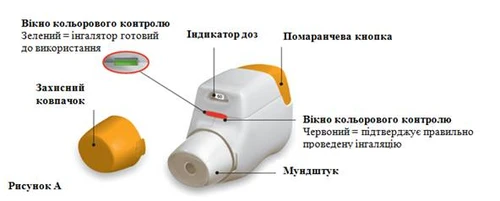
Familiarize yourself with the parts of the Genuair® inhaler (Figure A)
Before use:
- Before first use, open the packaging and remove the inhaler. Discard the packaging and desiccant.
- Do not press the orange button until ready to take the medication.
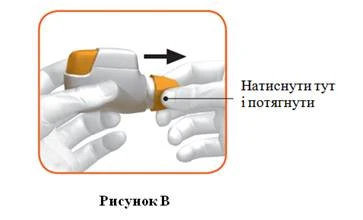
- Remove the cap by gently pressing the arrows on each side (Figure B).
Step 1: Prepare the Medication Dose
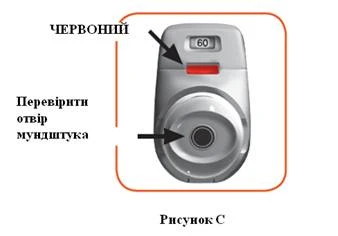
- Look into the mouthpiece opening and ensure it is not blocked (Figure C).
- Check the colour indicator window (should be red, Figure C).
- Hold the inhaler horizontally with the mouthpiece facing towards you and the orange button facing upwards (Figure D).
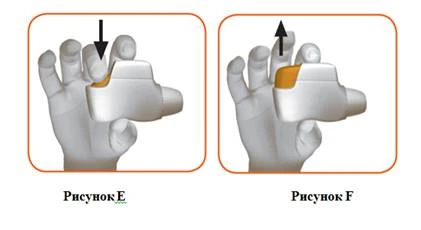
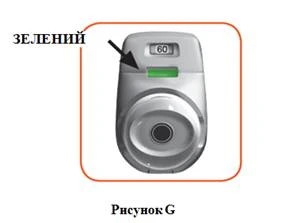
Stop and Check:
- Ensure that the colour indicator window turns green (Figure G).
The medication is now ready for inhalation.
Proceed to section "Step 2: Inhale the Medication"
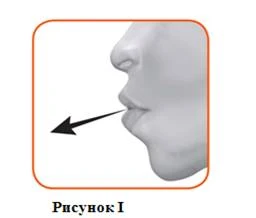
- With your head upright, place the mouthpiece between your lips and close your lips tightly around it (Figure J).
Do not hold the orange button down during inhalation.
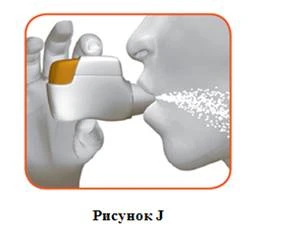
- Breathe in strongly and deeply through your mouth. Continue inhaling for as long as possible.
If the inhalation is performed correctly, a click will be heard. After hearing the click, continue inhaling for as long as possible. Some patients may not hear the click. Use the colour indicator window to confirm that the inhalation was performed correctly.
- Remove the inhaler from your mouth.
- Hold your breath for as long as possible.
- Breathe out slowly, but not into the inhaler.
- Hold your breath for as long as possible.
Some patients may feel a gritty sensation in the mouth or experience a weak sweet or bitter taste. Do not take an additional dose, even if you do not taste anything or feel no sensation after inhalation.
Stop and Check:
- Confirm that the colour indicator window turns red (Figure K). This indicates that the medication inhalation was performed correctly.
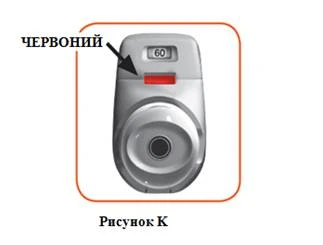
What to do if the colour indicator window remains green after inhalation (Figure L).
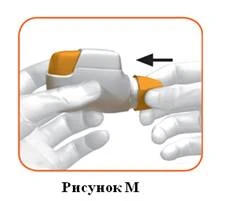
Additional Information
What to do if you accidentally prepared a dose?
Keep the inhaler with the protective cap in place until the next scheduled dose, then remove the cap and proceed to section 1.6.
How does the dose indicator work?
- The dose indicator shows the total number of doses remaining in the inhaler (Figure N).
- At first use, the inhaler contains at least 60 doses or at least 30 doses, depending on the pack size.
- Each time a dose is prepared by pressing the orange button, the dose indicator moves slightly towards the next number (50, 40, 30, 20, 10, or 0).
When do you need a new inhaler?
You need a new inhaler:
- If your inhaler is damaged or if you lose the cap, or
- When red stripes appear on the dose indicator, indicating that the last dose is approaching (Figure N), or
- When your inhaler is empty (Figure O).
The dose indicator moves gradually from 60 to 0: 60, 50, 40, 30, 20, 10, 0.
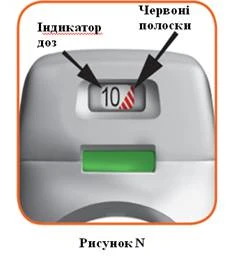
How to know when your inhaler is empty?
When the orange button does not return fully to its upper position and remains locked in the middle position, this indicates that the last dose has been prepared (Figure O). Even when the orange button is locked, you will still be able to take the final dose. After this, the inhaler cannot be used again, and you must start using a new inhaler.
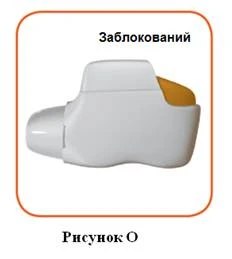
How to clean the inhaler?
NEVER use water to clean the inhaler, as this may damage the medication. The inhaler should not be washed. If necessary, the mouthpiece may be wiped with a dry cloth or paper tissue.
Children
Brimica® Genuair® is not recommended for use in children (under 18 years of age) due to insufficient clinical experience in this patient population with COPD.
Overdose
Data on treatment measures in case of overdose with Brimica® Genuair® are limited. High doses of aclidinium bromide may cause symptoms of anticholinergic and/or β2-adrenergic effects; the most common of these symptoms include blurred vision, dry mouth, nausea, muscle cramps, tremor, headache, palpitations, and arterial hypertension. In case of overdose, administration of Brimica® Genuair® should be discontinued. Supportive and symptomatic therapy is indicated.
Adverse reactions.
The safety profile is based on experience obtained with the medicinal product Brieky® Genair® and its individual components.
Overview of the safety profile
The safety experience covers the period of clinical studies of the medicinal product Brieky® Genair® at the recommended therapeutic dose for 12 months and post-marketing surveillance. Adverse reactions associated with the use of the medicinal product Brieky® Genair® were similar to those observed with its individual components. Since the medicinal product Brieky® Genair® contains aclidinium and formoterol, the type and severity of adverse reactions known for each component may also be expected for the medicinal product Brieky® Genair®.
The most commonly observed adverse reactions with the use of the medicinal product Brieky**®** Genair**®** are nasopharyngitis (7.9%) and headache (6.8%).
Table of adverse reactions
The clinical development program for the medicinal product Brieky® Genair® was conducted in patients with moderate to severe COPD. A total of 1222 patients received the medicinal product Brieky® Genair® 340 mcg/12 mcg. The frequencies of the adverse reactions listed below were determined based on overall incidence rates of adverse reactions associated with the use of the medicinal product Brieky**®** Genair**®** during the open analysis of randomized, placebo-controlled phase III clinical trials of at least 6 months' duration, or based on experience with its individual components, or from post-marketing studies.
The frequency of occurrence of adverse reactions is classified as follows: very common (≥ 1/10), common (≥ 1/100 to < 1/10), uncommon (≥ 1/1000 to < 1/100), rare (≥ 1/10,000 to < 1/1000), very rare (< 1/10,000); frequency not known (cannot be estimated from the available data).
| System organ classes |
Adverse reactions |
Frequency |
| Infections and parasitic diseases |
Nasopharyngitis Urinary tract infections Sinusitis Dental abscess |
Common |
| Immune system disorders |
Hypersensitivity reactions |
Uncommon |
| Angioedema Anaphylactic reaction |
Frequency not known |
|
| Metabolism and nutrition disorders |
Hypokalaemia Hyperglycaemia |
Uncommon |
| Psychiatric disorders |
Insomnia Anxiety |
Common |
| Agitation |
Uncommon |
|
| Nervous system disorders |
Headache Dizziness Tremor |
Common |
| Dysgeusia |
Uncommon |
|
| Eye disorders |
Blurred vision |
Uncommon |
| Cardiac disorders |
Cardiac arrhythmias, including atrial fibrillation and paroxysmal tachycardia Tachycardia QTc interval prolongation on electrocardiogram Palpitations Angina pectoris |
Uncommon |
| Respiratory, thoracic and mediastinal disorders |
Cough |
Common |
| Dysphonia Throat irritation |
Uncommon |
|
| Bronchospasm, including paradoxical |
Rare |
|
| Gastrointestinal disorders |
Diarrhoea Nausea Dry mouth |
Common |
| Stomatitis |
Uncommon |
|
| Skin and subcutaneous tissue disorders |
Rash Pruritus |
Uncommon |
| Musculoskeletal and connective tissue disorders |
Myalgia Muscle cramps |
Common |
| Renal and urinary disorders |
Urinary retention |
Uncommon |
| Investigations |
Increased blood creatine phosphokinase levels |
Common |
| Increased blood pressure |
Uncommon |
Reporting of suspected adverse reactions.
Reporting adverse reactions after the medicinal product has been registered is of great importance. It allows continuous monitoring of the benefit-risk balance of the medicinal product. Healthcare and pharmaceutical professionals, as well as patients or their legal representatives, should report all cases of suspected adverse reactions and lack of efficacy via the automated pharmacovigilance information system at the following link: https://aisf.dec.gov.ua.
Shelf life.
3 years. Use within 60 days after first opening.
Storage conditions.
No special storage conditions required. Store the inhaler in its original packaging until first use. Keep out of the reach of children.
Packaging.
60 doses of powder in an inhaler, 1 or 3 inhalers in an aluminum laminated pouch each together with a desiccant sachet in a cardboard box.
Prescription status. Prescription only.
Manufacturer.
Industrias Farmacéuticas Almirall S.A.
Manufacturer's address.
Ctra. de Martorell 41-61, 08740 Sant Andreu de la Barca (Barcelona), Spain.
Marketing Authorization Holder. Berlin-Chemie AG.
Address of the Marketing Authorization Holder. Glienicker Weg 125, 12489 Berlin, Germany.