Brexin
Ukraine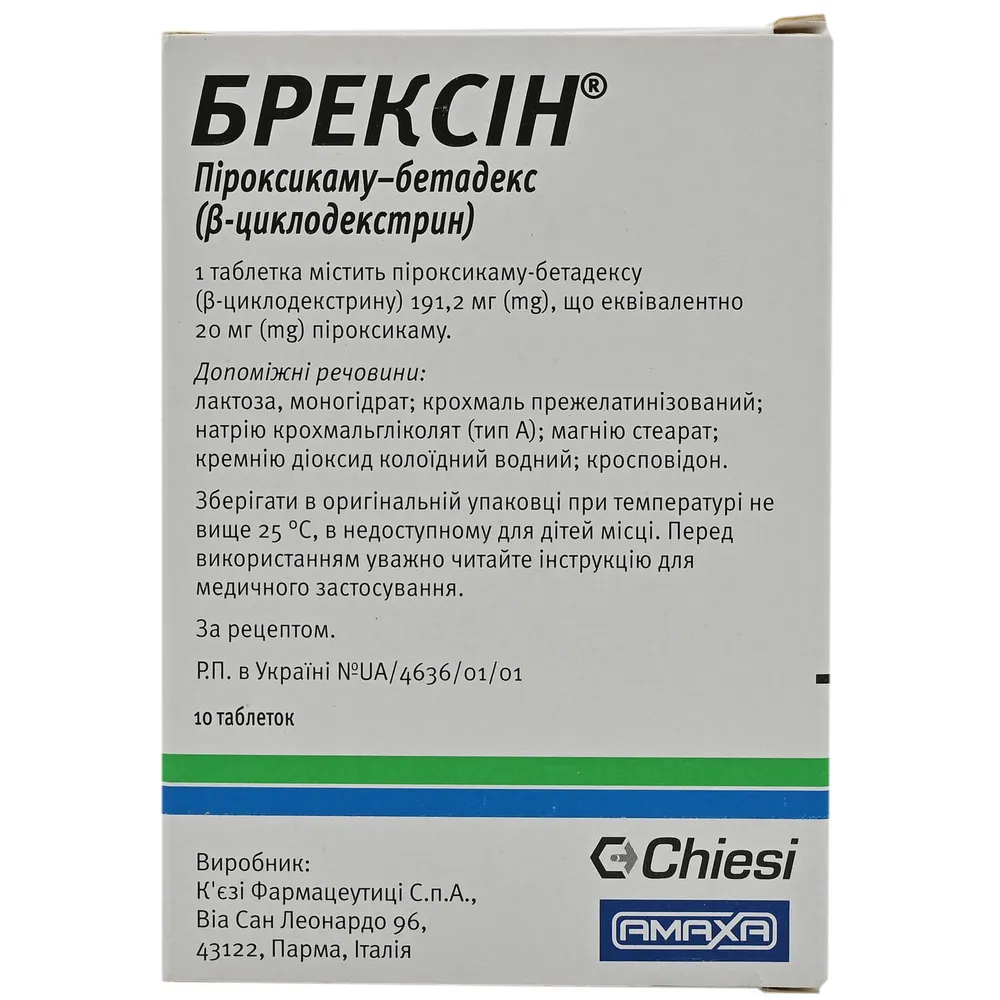
Table of Contents
INSTRUCTIONS FOR MEDICAL USE OF THE MEDICINAL PRODUCT BРЕXІN® (BREXIN®)
Composition:
Active substance: piroxicam;
1 tablet contains piroxicam-betadex 191.2 mg, equivalent to 20 mg of piroxicam;
Excipients: lactose monohydrate; pregelatinized starch; sodium starch glycolate (type A); magnesium stearate; colloidal hydrated silicon dioxide; crospovidone.
Pharmaceutical form. Tablets.
Main physico-chemical properties: pale-yellow, hexagonal tablets with a deep break line in the middle.
Pharmacotherapeutic group. Medicinal products affecting the musculoskeletal system. Non-steroidal anti-inflammatory and anti-rheumatic drugs. Oxicams. Piroxicam.
ATC code M01A C01.
Pharmacological properties.
Pharmacodynamics.
Piroxicam belongs to the oxicam group of NSAIDs, whose effective action is primarily based on inhibition of prostaglandin synthesis. Piroxicam exerts anti-inflammatory, analgesic, and antipyretic effects. β-Cyclodextrin is a cyclic, non-reducing, water-soluble oligosaccharide produced by enzymatic hydrolysis of starch. Due to its chemical structure, betadex (β-cyclodextrin) can form inclusion complexes—“molecular encapsulation”—with various drugs, thereby improving certain properties such as solubility, stability, and bioavailability.
Brexin® is piroxicam in the form of a complex with β-cyclodextrin (piroxicam-β-cyclodextrin) in a molar ratio of 1:2.5.
Brexin® dissolves very easily in water, is completely and more rapidly absorbed than pure piroxicam after oral administration, and therefore has a faster onset of therapeutic effect and improved gastrointestinal tolerability.
Pharmacokinetics.
Absorption and distribution. The piroxicam-β-cyclodextrin complex breaks down pre-systemically, and only free piroxicam—not the complex or β-cyclodextrin—is absorbed. Enhanced bioavailability leads to a rapid increase in plasma piroxicam levels, with maximum concentrations reached earlier (approximately within 30–60 minutes).
Metabolism and elimination. The elimination half-life is 50 (30–60) hours. Excretion of the main metabolite (5-hydroxy-piroxicam) in urine continues for more than 72 hours, accounting for approximately 10% of the administered dose.
In cases of hepatic insufficiency, an increased plasma level of piroxicam can be expected. Following reduction of the maximum recommended daily dose for adults from 40 mg to 20 mg based on available data, use in children under 15 years of age is no longer recommended due to lack of new pharmacokinetic data. The contraindication for use in children allows an additional conclusion: the dose of the drug should not be calculated based on body weight.
Clinical characteristics.
Indications.
Symptomatic treatment of:
- osteoarthritis;
- rheumatoid arthritis;
- Bechterew's disease (ankylosing spondylitis).
Due to its safety profile, piroxicam is not a first-line agent when other nonsteroidal anti-inflammatory drugs (NSAIDs) are indicated. The decision to prescribe piroxicam should be based on an assessment of the individual patient's overall risk.
Since a steady effective concentration of piroxicam is achieved only after 5–10 days of starting the usual daily dose, this medicinal product is not used as initial therapy for conditions requiring rapid onset of action.
Contraindications.
- Hypersensitivity to acetylsalicylic acid and to other nonsteroidal anti-inflammatory and anti-rheumatic agents (cross-sensitivity), when concomitant use has led to asthma, urticaria, rhinitis, or Quincke's edema.
- Hypersensitivity to the active substance or to excipients, previous skin reactions (regardless of severity) in response to piroxicam and other anti-rheumatic agents and nonsteroidal anti-inflammatory drugs (NSAIDs), or other medicinal products.
- History of gastrointestinal ulcers, bleeding, or perforations.
- Gastrointestinal disorders leading to bleeding, such as ulcerative colitis, Crohn’s disease, gastrointestinal cancer, or diverticulitis in history.
- Active peptic ulcer, inflammatory gastrointestinal diseases, or gastrointestinal bleeding.
- Concomitant use with other NSAIDs, including selective COX-2 inhibitors and acetylsalicylic acid at analgesic doses.
- Concomitant use with anticoagulants.
- Previous serious allergic reactions of any type to medicinal products, particularly skin reactions such as erythema multiforme, Stevens–Johnson syndrome, or toxic epidermal necrolysis.
- Coagulation disorders.
- Hemorrhagic diathesis.
- Cerebrovascular or other types of active bleeding.
- Severe renal and hepatic insufficiency.
- Severe heart failure.
Interaction with other medicinal products and other forms of interaction.
Acetylsalicylic acid and other NSAIDs. As with other NSAIDs, concomitant use of piroxicam with acetylsalicylic acid or other NSAIDs, including other formulations of piroxicam, should be avoided, since available data are insufficient to demonstrate that such combinations lead to greater improvement than monotherapy with piroxicam; furthermore, the likelihood of adverse reactions increases (see section "Special precautions for use").
Studies have shown that concomitant use of piroxicam and acetylsalicylic acid in humans reduces plasma piroxicam concentration by approximately 80% compared to monotherapy with piroxicam (see section "Contraindications").
Piroxicam interacts with acetylsalicylic acid, other nonsteroidal anti-inflammatory agents, and platelet aggregation inhibitors (see sections "Contraindications" and "Special precautions for use").
Corticosteroids. Increased risk of gastrointestinal ulcers or bleeding (see section "Special precautions for use").
Anticoagulants. NSAIDs, including piroxicam, may enhance the effect of anticoagulants such as warfarin. Therefore, concomitant use of piroxicam with anticoagulants such as warfarin is contraindicated (see sections "Contraindications").
Antithrombotic agents and selective serotonin reuptake inhibitors (SSRIs). Increased risk of gastrointestinal bleeding (see section "Special precautions for use").
Diuretics, ACE inhibitors, and angiotensin II receptor antagonists. NSAIDs may reduce the therapeutic effect of diuretics and other antihypertensive agents, possibly by inhibiting prostaglandin synthesis. In some patients with impaired renal function (e.g., dehydrated patients or elderly patients with renal impairment), concomitant use of ACE inhibitors or angiotensin II receptor antagonists together with cyclooxygenase inhibitors may lead to further deterioration of renal function, including acute renal failure, which is usually reversible. Such interactions should be considered in patients taking piroxicam concomitantly with ACE inhibitors or angiotensin II receptor antagonists.
Therefore, this combination should be used with caution, especially in elderly patients.
Patients should be adequately hydrated; renal function monitoring should be considered after initiation of concomitant therapy.
When taking potassium-containing preparations or potassium-sparing diuretics concomitantly, there is an additional risk of increased serum potassium concentration (hyperkalemia).
Lithium. Concomitant use of lithium and NSAIDs may increase plasma lithium concentration; therefore, lithium levels should be monitored at the beginning, during, and after piroxicam treatment. Piroxicam is highly protein-bound, so displacement of other highly protein-bound drugs is possible. Patients receiving piroxicam concomitantly with other agents with high protein binding should be closely monitored for possible dose adjustments. Absorption of piroxicam is slightly increased after administration of cimetidine. However, this increase has not been clinically significant.
Alcohol intake should be avoided, as it worsens tolerability of the medicinal product.
Piroxicam may reduce the effectiveness of intrauterine and emergency contraceptives.
Concomitant use with nonsteroidal anti-inflammatory drugs and quinolone derivatives is contraindicated.
Cyclosporine and tacrolimus. There is a potential for increased risk of nephrotoxicity when NSAIDs are used concomitantly with cyclosporine or tacrolimus.
Cardiac glycosides (digoxin). Increased blood levels of medicinal products may occur with concomitant use of NSAIDs; however, this interaction was not observed in studies with piroxicam.
Oral antidiabetic agents. Blood glucose levels may fluctuate; therefore, more frequent monitoring is recommended.
Phenytoin. Increased plasma phenytoin levels are possible; therefore, appropriate monitoring and dose adjustment are recommended when piroxicam therapy is initiated, and if necessary, regulation and discontinuation of use.
Probenecid, sulfinpyrazone. Slowed elimination of piroxicam.
Methotrexate. Administration of piroxicam before or after methotrexate treatment may increase methotrexate blood levels and, as a result, intensify adverse reactions to methotrexate (such combinations should be avoided).
Cyclophosphamide, vinca alkaloids. Administration of piroxicam before or after treatment with these medicinal products may enhance adverse reactions associated with these agents (such combinations should be avoided).
Cholestyramine accelerates elimination of piroxicam.
Special precautions for use.
Adverse reactions can be minimized by using the lowest effective dose for the shortest duration necessary to control symptoms.
The clinical benefit and tolerability should be reviewed periodically, and treatment should be discontinued immediately at the first appearance of skin reactions or clinically significant gastrointestinal reactions.
Gastrointestinal disorders, risk of gastrointestinal (GI) ulceration, bleeding, and perforation.
NSAIDs, including piroxicam, can cause serious gastrointestinal disorders such as bleeding, ulcers, and perforation of the stomach, small intestine, and colon, which may be fatal. These serious adverse reactions may occur at any time, with or without warning symptoms, in patients treated with NSAIDs.
Both short- and long-term use of NSAIDs increases the risk of serious GI events. Study data indicate that piroxicam use is associated with a higher risk of serious gastrointestinal toxicity compared to other NSAIDs.
Piroxicam should be prescribed to patients with significant risk factors for gastrointestinal disorders only after careful risk/benefit assessment (see section "Contraindications").
The necessity of concomitant therapy with gastroprotective agents (e.g., misoprostol or proton pump inhibitors) should be carefully considered (see section "Dosage and administration").
Serious gastrointestinal complications
Identification of at-risk patients
The risk of developing serious GI complications increases with patient age. Patients aged 70 years and older are at higher risk of complications. Use of the drug should be avoided in patients aged 80 years and above.
Patients concurrently taking oral corticosteroids, selective serotonin reuptake inhibitors (SSRIs), anticoagulants (e.g., warfarin), or antiplatelet agents (e.g., low-dose acetylsalicylic acid) have an increased risk of serious gastrointestinal complications (see section "Interaction with other medicinal products and other forms of interaction").
As with other NSAIDs, piroxicam may be used in at-risk patients in combination with gastroprotective agents (such as misoprostol or proton pump inhibitors).
During piroxicam treatment, patients and physicians should closely monitor for symptoms of gastrointestinal ulcers and/or bleeding. Patients should report any new or unusual abdominal symptoms during treatment. If gastrointestinal complications are suspected during treatment, piroxicam should be discontinued immediately, and further clinical evaluation and alternative treatment should be considered.
Cardiovascular and cerebrovascular effects.
Appropriate monitoring and patient counseling are required for patients with a history of hypertension and/or heart failure, as fluid retention and edema associated with NSAID therapy have been reported.
Clinical trials and epidemiological data suggest that use of certain nonsteroidal anti-inflammatory drugs (particularly at high doses and for prolonged periods) may be associated with a slight increase in the risk of arterial thrombotic events (e.g., myocardial infarction or stroke). There are no data to exclude such a risk with piroxicam. Piroxicam should be prescribed to patients with uncontrolled hypertension, congestive heart failure, established ischemic heart disease, peripheral arterial disease, and/or cerebrovascular disease only after careful benefit/risk assessment. Such evaluation is necessary before initiating long-term treatment in patients with potential cardiovascular risk factors (e.g., hypertension, hyperlipidemia, diabetes, smoking).
Piroxicam, like other NSAIDs, reduces platelet aggregation and prolongs coagulation time; these effects should be considered when performing blood tests and when patients are concurrently taking other platelet aggregation inhibitors.
Patients with impaired renal function should be monitored, as piroxicam-induced inhibition of prostaglandin synthesis may provoke a severe reduction in renal blood flow and lead to acute renal failure. Elderly patients and those receiving diuretic therapy are at particular risk.
Dehydrated patients are at risk of worsening renal function.
Caution should also be exercised when treating patients with impaired liver function. Periodic monitoring of clinical and laboratory parameters is recommended, especially during long-term therapy.
Due to the effect of the drug on arachidonic acid metabolism, bronchospasm and potentially shock and other allergic reactions may occur in patients with asthma or those predisposed to asthma.
Since some ocular changes have been observed during NSAID therapy, periodic ophthalmologic examinations are recommended during long-term treatment.
Furthermore, frequent monitoring of blood glucose levels is recommended in diabetic patients, and prothrombin time should be monitored in patients receiving concomitant anticoagulant therapy with dicoumarol derivatives.
Skin reactions. Observational study data indicate that piroxicam use may be associated with a higher risk of serious skin reactions compared to other NSAIDs not belonging to the oxicam class.
The following life-threatening skin reactions have been reported with piroxicam use: drug reaction with eosinophilia and systemic symptoms (DRESS), Stevens-Johnson syndrome (SJS), and toxic epidermal necrolysis (TEN).
Patients should be warned about symptoms associated with these adverse reactions, and careful monitoring for such skin reactions is required. The risk of Stevens-Johnson syndrome and toxic epidermal necrolysis is highest during the first weeks of treatment.
If symptoms or signs of SJS or TEN occur (e.g., progressive skin rashes, often with blisters or mucosal involvement), treatment with Braxin® should be discontinued.
Optimal outcomes in the treatment of SJS and TEN are observed with early diagnosis and prompt discontinuation of the drug associated with these reactions. Early withdrawal is associated with a better prognosis.
If a patient develops SJS or TEN during Braxin® treatment, this drug should not be re-administered to that patient, regardless of the time elapsed since previous use.
Women planning pregnancy should not use piroxicam or any other drugs known to inhibit prostaglandin synthesis/cyclooxygenase.
Piroxicam should be discontinued in women with fertility problems or undergoing fertility investigations.
Cases of fixed drug eruption have been reported with piroxicam use.
Piroxicam should not be re-administered to patients with a history of fixed drug eruption associated with piroxicam. Potential cross-reactivity with other oxicams may occur.
Acquired porphyria. Piroxicam may be used in patients with acquired porphyria only after careful risk/benefit assessment, as disease exacerbation is possible.
Renal impairment due to NSAID use. Rarely, nonsteroidal anti-rheumatic drugs may cause interstitial nephritis, glomerulonephritis, papillary necrosis, and nephrotic syndrome. NSAIDs inhibit the synthesis of renal prostaglandins, which support renal perfusion in patients with compromised renal circulation and reduced renal blood volume. Renal failure associated with NSAID therapy may occur in such patients and is usually reversible upon discontinuation of treatment. Patients at high risk include those with chronic heart failure, liver cirrhosis, nephrotic syndrome, and those in the immediate postoperative period following major surgery. Therefore, such patients should be closely monitored by a physician during NSAID therapy.
During prolonged use of analgesics, medication-overuse headache may develop, which cannot be resolved by increasing the drug dose. Patients should be informed about this.
Abrupt discontinuation of analgesics after prolonged use at high doses may cause complaints (headache, fatigue, nervousness), which usually resolve within a few days. Resumption of analgesic use should only be initiated with a physician's approval and in the absence of symptoms related to these adverse reactions.
Lactose. One Braxin® tablet contains 102.8 mg of lactose monohydrate. Braxin® is contraindicated in patients with rare hereditary galactose intolerance, Lapp lactase deficiency, or glucose-galactose malabsorption.
Sodium. This medicinal product contains less than 1 mmol (23 mg)/dose of sodium, i.e., essentially "sodium-free."
Use during pregnancy or breastfeeding.
Piroxicam is contraindicated in pregnant women, women planning pregnancy, and women who are breastfeeding.
Pregnancy.
Inhibition of prostaglandin synthesis may adversely affect pregnancy and/or fetal development. Epidemiological data indicate an increased risk of miscarriage and congenital malformations, including cardiac defects and gastroschisis, associated with the use of prostaglandin synthesis inhibitors in early pregnancy. The absolute risk of cardiac complications increases from less than 1% to approximately 1.5%. The risk is expected to increase with dose and duration of treatment.
Animal studies have shown reproductive toxicity. In animals, prostaglandin synthesis inhibitors have been associated with increased pre- and post-implantation loss and intrauterine fetal death. Additionally, an increased incidence of congenital malformations, including cardiovascular abnormalities, has been observed in animal studies when prostaglandin synthesis inhibitors were administered during organogenesis.
From the 20th week of pregnancy, NSAID use may cause oligohydramnios due to fetal renal dysfunction. This condition may occur soon after starting treatment and is usually reversible upon discontinuation of therapy. Furthermore, arterial duct constriction has been reported after second-trimester treatment, which in most cases resolves after treatment cessation.
During the third trimester of pregnancy, prostaglandin synthesis inhibitors may cause the following effects in the fetus:
- Cardio-pulmonary abnormalities (premature constriction/closure of the arterial duct and pulmonary hypertension);
- Renal functional disorders (see above).
Prostaglandin synthesis inhibitors may also pose the following risks to mother and fetus before delivery:
- Prolonged bleeding time due to platelet aggregation inhibition, even with very low doses;
- Inhibition of uterine contractions, leading to delayed or prolonged labor.
Breastfeeding.
Available data indicate that the amount of piroxicam excreted into breast milk is approximately 1% to 3% of its plasma concentration in the mother. Piroxicam is contraindicated during breastfeeding due to the lack of established safety for newborns.
Fertility.
Piroxicam impairs female fertility and is therefore not recommended for women wishing to become pregnant. For women experiencing difficulty conceiving or undergoing fertility investigations, discontinuation of piroxicam should be considered.
Ability to affect reaction speed when driving or operating machinery.
Piroxicam may impair concentration, which could negatively affect the ability to drive vehicles or operate machinery.
Method of Administration and Dosage
Brexin® should be administered once daily. The tablet is intended for oral administration. The division line on the tablet is intended only for splitting to facilitate swallowing, and not for dividing into equal doses. To split the tablet, place it on a flat surface with the score line facing upwards and press gently with the thumb.
Prescribing of piroxicam should be performed by a physician experienced in the diagnostic evaluation and treatment of patients with inflammatory or degenerative rheumatic diseases.
For adults, the maximum recommended daily dose is 20 mg. Adverse reactions can be minimized by using the lowest effective dose for the shortest duration necessary to control symptoms.
The benefit of treatment and drug tolerability should be assessed within 14 days. If continued treatment is deemed necessary, this reassessment should be performed more frequently. When prescribing piroxicam, it should be taken into account that its use carries a risk of gastrointestinal complications; therefore, the possible need for concomitant therapy with gastroprotective agents (such as misoprostol or proton pump inhibitors) should be considered, especially in elderly patients.
Elderly Patients
The physician should carefully determine the dosage for elderly patients, as a reduction of the above-mentioned doses may be required.
Children
The drug is not intended for use in children, since dosing and indications in pediatric patients have not been established.
Overdose
Symptoms of Overdose
The most commonly reported symptoms of overdose are headache, vomiting, drowsiness, dizziness, and loss of consciousness.
In the event of overdose, supportive and symptomatic treatment should be administered.
Although specific studies have not been conducted, hemodialysis is considered ineffective in promoting the elimination of piroxicam, due to the drug's high plasma protein binding.
Adverse Reactions
Edema, arterial hypertension, and heart failure have been reported during treatment with NSAIDs.
Clinical studies and epidemiological data confirm that the use of certain NSAIDs (particularly at high doses and with long-term treatment) may be associated with a moderate increase in the risk of arterial thromboembolic complications (e.g., myocardial infarction or stroke).
Regarding other substances with similar actions, increased blood urea levels have been observed in some patients; with continuous administration, levels do not rise beyond a certain point and return to normal after discontinuation of therapy.
The adverse reactions listed below are systematized by organs and systems according to frequency of occurrence: very common (≥1/10), common (≥1/100 to <1/10), uncommon (≥1/1,000 to <1/100), rare (≥1/10,000 to <1/1,000), very rare (<1/10,000), and unknown (cannot be estimated from available data).
Blood and lymphatic system disorders
Common: anemia
Rare: aplastic and hemolytic anemia, leukopenia, eosinophilia, thrombocytopenia, pancytopenia
Cardiac disorders
Uncommon: tachycardia
Unknown: heart failure, arterial thrombotic events
Aural and labyrinthine disorders
Common: tinnitus, vertigo
Unknown: hearing disturbances
Eye disorders
Uncommon: blurred vision
Rare: visual disturbances, eye irritation, eye swelling
Gastrointestinal disorders
Common: abdominal discomfort, abdominal pain, constipation, diarrhea, epigastric pain or discomfort, flatulence, nausea, vomiting, dyspepsia
Uncommon: ulcerative stomatitis
Unknown: gastritis, gastrointestinal hemorrhage, gastrointestinal perforation, hematemesis, peptic ulcer, pancreatitis, dry mouth, esophagitis, glossitis, heartburn, taste disturbances, indigestion
General disorders
Rare: edema
Unknown: malaise, asthenia, sweating
Hepatobiliary disorders
Rare: jaundice (rare cases of hepatitis with fatal outcome)
Unknown: hepatitis, hepatic failure
Immune system disorders
Rare: serum sickness, anaphylaxis, allergic edema (face and hands)
Unknown: hypersensitivity reactions
Investigations
Rare: increased liver function parameters
Unknown: elevated transaminases, weight gain, weight loss, positive antinuclear antibodies, abnormal blood parameters, decreased hemoglobin level, decreased hematocrit
Metabolism and nutrition disorders
Unknown: fluid retention, hypoglycemia, hyperglycemia, abnormal weight gain, decreased appetite, anorexia
Nervous system disorders
Common: headache
Uncommon: paresthesia, dizziness, somnolence
Unknown: aseptic meningitis, pathological dreams, tremor, convulsions, coma, meningitis, memory disorders, excitation
Psychiatric disorders
Unknown: anxiety, insomnia, depression, mood changes, nervousness, hallucinations, psychotic reactions, confusion, akathisia
Renal and urinary disorders
Rare: renal failure, nephrotic syndrome, interstitial nephritis, renal papillary necrosis
Very rare: bladder dysfunction
Unknown: hematuria, dysuria, proteinuria
Reproductive system and breast disorders
Unknown: decreased female fertility
Respiratory, thoracic and mediastinal disorders
Unknown: bronchospasm, epistaxis, pneumonia, dyspnea
Skin and subcutaneous tissue disorders
Common: skin rash, pruritus
Rare: photosensitivity reactions, urticaria, Quincke's edema, non-thrombocytopenic purpura, Schönlein-Henoch disease
Unknown: serious skin adverse reactions (DRESS syndrome, Stevens-Johnson syndrome, toxic epidermal necrolysis) (see section "Special precautions"), alopecia, skin desquamation, erythema multiforme, ecchymosis, abnormal nail growth, bullous eruptions, erythema, eczema, onycholysis, exfoliative dermatitis, fixed drug eruption (see section "Special precautions")
Vascular disorders
Unknown: vasculitis, shock (warning symptoms), hypertension
The most frequently reported adverse reactions are gastrointestinal. Peptic ulcers, gastrointestinal perforations, or hemorrhages, sometimes fatal, may occur, particularly in elderly patients.
There have been reports of colitis and exacerbation of Crohn's disease with piroxicam use.
Evidence suggests that the piroxicam-ß-cyclodextrin complex is better tolerated with regard to gastrointestinal effects than conventional piroxicam formulations; the short residence time of the active substance in the gastrointestinal lumen indeed reduces the level of contact irritation.
Treatment with piroxicam should be discontinued if clinical signs or symptoms of liver disorders occur. Cases of acute renal failure and fluid retention have been reported, which may manifest as peripheral edema, predominantly affecting the lower limbs, or disorders of the cardiocirculatory system (arterial hypertension, decompensation).
Reporting of suspected adverse reactions
It is important to report suspected adverse reactions after marketing authorization. This enables ongoing monitoring of the benefit-risk balance of the medicinal product. Healthcare professionals and pharmacists, as well as patients or their legal representatives, should report all suspected adverse reactions and lack of efficacy via the Automated Pharmacovigilance Information System at: https://aisf.dec.gov.ua.
Shelf life. 3 years.
Storage conditions. Store in the original packaging at a temperature not exceeding 25 °C, in a place inaccessible to children.
Packaging. 10 tablets per blister. 1, 2 or 3 blisters per cardboard package.
Prescription category. Prescription only.
Manufacturer.
Chiesi Farmaceutici S.p.A., Italy / Chiesi Farmaceutici S.p.A., Italy
Fine Foods & Pharmaceuticals N.T.M. S.p.A., Italy / Fine Foods & Pharmaceuticals N.T.M. S.p.A., Italy
Manufacturer's address and location of operations.
Via San Leonardo 96, 43122, Parma, Italy / Via San Leonardo 96 – 43122, Parma, Italy
Via Grignano, 43 - 24041 Brembate (BG), Italy / Via Grignano, 43 - 24041 Brembate (BG), Italy
Marketing Authorization Holder.
Chiesi Pharmaceuticals GmbH, Austria / Chiesi Pharmaceuticals GmbH, Austria
Address of Marketing Authorization Holder.
Gonzagagasse 16/16, 1010 Wien, Austria / Gonzagagasse 16/16, 1010 Wien, Austria