Bortero
Ukraine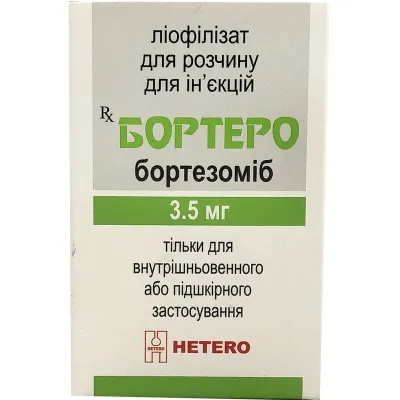
Table of Contents
INSTRUCTIONS FOR MEDICAL USE OF THE MEDICINAL PRODUCT BORTERO (BORTERO)
Composition:
Active substance: bortezomib;
1 vial contains 3.5 mg of bortezomib;
Excipient: mannitol (E 421).
Pharmaceutical form. Lyophilisate for solution for injection.
Main physicochemical characteristics: white or almost white lyophilized mass or powder.
Pharmacotherapeutic group. Antineoplastic agents.
ATC code L01X X32.
Pharmacological properties.
Pharmacodynamics.
Mechanism of action. Bortezomib is a proteasome inhibitor that inhibits the chymotrypsin-like activity of the 26S proteasome in mammalian cells. The 26S proteasome is a large protein complex involved in the degradation of key proteins. This pathway plays a central role in regulating the turnover of specific proteins, thereby maintaining cellular homeostasis. Inhibition of the 26S proteasome leads to suppression of proteolysis and a cascade of reactions resulting in apoptosis. Bortezomib is highly selective for the proteasome. At a concentration of 10 µM, bortezomib does not inhibit any of a large number of tested receptors and proteases and is more than 1500 times more selective for the proteasome than for other enzymes. The kinetics of proteasome inhibition were determined in vitro; bortezomib dissociated from the proteasome with a t½ of 20 minutes, indicating that proteasome inhibition by bortezomib is reversible. By inhibiting the proteasome, bortezomib affects cancer cells through multiple mechanisms, including (but not limited to) altering regulatory proteins controlling the cell cycle and activation of the nuclear transcription factor NF-kB. Proteasome inhibition leads to cell cycle arrest and apoptosis. NF-kB is a transcription factor whose activation is essential for many aspects of tumor development, including cell growth and survival, angiogenesis, cell-cell interactions, and metastasis. In myeloma, bortezomib affects the ability of myeloma cells to interact with the bone marrow microenvironment.
Studies have shown that bortezomib is cytotoxic to many types of cancer cells and that cancer cells are more susceptible to bortezomib-induced apoptosis than normal cells. In vivo, bortezomib causes a reduction in the growth of various experimental human tumors, including multiple myeloma.
Data from in vitro, ex vivo, and animal model studies indicate that bortezomib enhances osteoblast differentiation and activity and inhibits osteoclast function. These effects have been observed in patients with multiple myeloma who also had advanced-stage osteolytic disease and were treated with bortezomib.
Pharmacokinetics.
Absorption. After intravenous bolus administration of doses of 1.0 mg/m² and 1.3 mg/m² to patients with multiple myeloma and creatinine clearance values above 50 ml/min, the mean maximum plasma concentration after the first dose of bortezomib was 57 and 112 ng/ml, respectively. Following subsequent doses, mean maximum plasma concentrations of bortezomib ranged from 67 to 106 ng/ml at a dose of 1.0 mg/m² and from 89 to 120 ng/ml at a dose of 1.3 mg/m².
After intravenous bolus or subcutaneous administration at a dose of 1.3 mg/m² to patients with multiple myeloma, the total systemic exposure following repeated dosing (AUClast) was equivalent for subcutaneous and intravenous administration. Cmax after subcutaneous administration (20.4 ng/ml) was lower than after intravenous administration (223 ng/ml). The geometric mean ratio of AUClast was 0.99, and the 90% confidence interval was 80.18–122.80%.
Distribution. The mean volume of distribution of bortezomib ranges from 1659 liters to 3294 liters following single or multiple doses of 0.1 mg/m² or 1.3 mg/m² to patients with multiple myeloma. This indicates that bortezomib is extensively distributed into peripheral tissues. At bortezomib concentrations of 0.01–1.0 µg/ml, plasma protein binding is 82.9%. The fraction of bortezomib bound to plasma proteins is independent of concentration.
Metabolism. In vitro, bortezomib is primarily metabolized by cytochrome P450 enzymes 3A4, 2C19, and 1A2. The main metabolic pathway involves deboronation to two deboronated metabolites, which are subsequently hydroxylated into other metabolites. Deboronated bortezomib metabolites are inactive as inhibitors of the 26S proteasome.
Elimination. The mean elimination half-life (T½) of bortezomib after multiple dosing ranges from 40 to 193 hours. Bortezomib is eliminated more rapidly after the first dose compared to subsequent doses. Mean total clearance was 102 and 112 L/h after the first dose of 1.0 mg/m² and 1.3 mg/m², respectively, and ranged from 15 to 32 L/h and 18 to 32 L/h after subsequent doses of 1.0 mg/m² and 1.3 mg/m², respectively.
Special patient populations.
Hepatic impairment.
The effect of hepatic impairment on the pharmacokinetics of bortezomib was evaluated in a Phase I study during the first treatment cycle involving 61 patients, primarily with solid tumors and varying degrees of hepatic dysfunction; bortezomib doses ranged from 0.5 to 1.3 mg/m².
Mild hepatic impairment did not alter bortezomib AUC compared to normal hepatic function. Mean bortezomib AUC values increased by approximately 60% in patients with moderate and severe hepatic impairment. Dose adjustment and careful monitoring during treatment are recommended for these patients.
Renal impairment. Pharmacokinetic studies were conducted in patients with varying degrees of renal function, categorized by creatinine clearance (CrCL) into the following groups: normal (CrCL ≥ 60 ml/min/1.73m², n=12), mild impairment (CrCL = 40–59 ml/min/1.73m², n=10), moderate impairment (CrCL = 20–39 ml/min/1.73m², n=9), and severe impairment (CrCL < 20 ml/min/1.73m², n=3). Patients on dialysis who received bortezomib after dialysis were also included in the study (n=8). Patients received intravenous bortezomib doses of 0.7–1.3 mg/m² twice weekly. Bortezomib exposure (standardized AUC and Cmax) was comparable across all groups.
Age. Pharmacokinetic parameters of bortezomib were evaluated in 104 pediatric patients (2–16 years of age) with acute lymphoblastic leukemia or acute myeloid leukemia who received bortezomib 1.3 mg/m² twice weekly via intravenous bolus injection. According to population pharmacokinetic analysis, bortezomib clearance increases with increasing body surface area. The geometric mean (%CV) for clearance was 7.79 (25%) L/h/m², volume of distribution at steady state was 834 (39%) L/m², and elimination half-life was 100 (44%) hours. After adjusting for body surface area, other demographic factors such as age, body weight, and sex had no clinically significant effect on bortezomib clearance. Bortezomib clearance values in children, adjusted for body surface area, were comparable to those in adults.
Clinical characteristics.
Indications.
Treatment of multiple myeloma, in combination with melphalan and prednisone, in previously untreated patients who are not eligible for high-dose chemotherapy with hematopoietic stem cell transplantation (first-line therapy).
Treatment of relapsed multiple myeloma, as monotherapy or in combination with pegylated liposomal doxorubicin or dexamethasone, in patients who have received at least one prior therapy including hematopoietic stem cell transplantation or who are not candidates for transplantation (second-line therapy).
Treatment of multiple myeloma, in combination with dexamethasone or dexamethasone and thalidomide, in previously untreated patients who are eligible for high-dose chemotherapy with hematopoietic stem cell transplantation (induction therapy).
Treatment of mantle cell lymphoma, in combination with rituximab, cyclophosphamide, doxorubicin, and prednisone, in previously untreated patients who are not candidates for hematopoietic stem cell transplantation.
Contraindications.
Hypersensitivity to bortezomib, boron, or to any of the excipients of the medicinal product.
Acute diffuse infiltrative pulmonary and pericardial diseases.
When using bortezomib in combination with other medicinal products (see instructions for medical use of these medicinal products regarding additional contraindications).
Special precautions.
General warnings.
Bortezomib is a cytotoxic medicinal product. Therefore, caution should be exercised during its preparation and administration. The use of gloves and protective clothing is recommended to prevent skin contact.
Appropriate aseptic techniques must be strictly followed when handling BORTEZO, as the product does not contain preservatives.
Fatal outcomes have occurred due to accidental intrathecal administration of bortezomib. BORTEZO must be administered only intravenously or subcutaneously. DO NOT ADMINISTER BORTEZO INTRATHECALLY.
Instructions for solution preparation. Solution preparation must be performed only by qualified healthcare personnel.
For intravenous administration, the contents of the vial should be reconstituted carefully with 3.5 mL of 0.9% sodium chloride injection solution using a syringe of appropriate size, without removing the rubber stopper from the vial. The lyophilized powder dissolves in less than 2 minutes. After reconstitution, 1 mL of solution contains 1 mg of bortezomib. The resulting solution should be clear and colorless, with a pH of 4–7. The prepared solution should be visually inspected for the presence of particles and discoloration prior to administration. If particles are present or discoloration has occurred, the solution must not be used.
For subcutaneous administration, the contents of each vial should be reconstituted with 1.4 mL of 0.9% sodium chloride injection solution using a syringe of appropriate size, without removing the rubber stopper from the vial. Reconstitution occurs within less than 2 minutes. After reconstitution, 1 mL of solution contains 2.5 mg of bortezomib. The resulting solution should be clear and colorless, with a pH of 4–7. The prepared solution should be visually inspected for the presence of particles and discoloration prior to administration. If particles are present or discoloration has occurred, the solution must not be used.
Proper disposal procedure. For single use only. Any unused medicinal product or waste material must be disposed of in accordance with local requirements.
Interaction with other medicinal products and other forms of interaction.
In vitro studies have shown that bortezomib exhibits weak inhibitory properties towards cytochrome P450 isoenzymes 1A2, 2C9, 2C19, 2D6, and 3A4. Given the minor role of CYP2D6 in bortezomib metabolism (7%), altered overall disposition of the drug is not expected in individuals with low activity of this enzyme.
Drug interaction studies evaluating the effect of ketoconazole, a strong CYP3A4 inhibitor, on the pharmacokinetics of intravenously administered bortezomib demonstrated an average increase of 35% in bortezomib AUC. Therefore, careful monitoring is recommended in patients receiving bortezomib concomitantly with strong CYP3A4 inhibitors (such as ketoconazole, ritonavir).
Studies evaluating the effect of omeprazole, a strong CYP2C19 inhibitor, on the pharmacokinetics of intravenously administered bortezomib showed no significant impact on bortezomib pharmacokinetics.
Studies evaluating the effect of rifampicin, a strong CYP3A4 inducer, in 6 patients revealed an average reduction of 45% in bortezomib AUC (after intravenous administration). Therefore, concomitant administration of bortezomib with strong CYP3A4 inducers (such as rifampicin, carbamazepine, phenytoin, phenobarbital, and St. John’s wort extract) is not recommended, as the efficacy of bortezomib may be reduced.
In the same study, dexamethasone, a weak CYP3A4 inducer, did not significantly alter bortezomib pharmacokinetics based on data from 7 patients.
A drug interaction study evaluating the effects of melphalan and prednisone on the pharmacokinetics of intravenously administered bortezomib in 21 patients demonstrated an average increase of 17% in bortezomib AUC. This increase in bortezomib AUC is not considered clinically significant.
In patients with diabetes mellitus receiving oral antidiabetic agents, cases of hypoglycemia and hyperglycemia have been reported. Patients taking oral antidiabetic medications should have their blood glucose levels monitored during treatment with BORTEZO, and the dose of antidiabetic agents should be adjusted accordingly.
Special precautions for use.
If BORTERO is used in combination with other medicinal products, refer to the instructions for medical use of these medicinal products before initiating treatment. When thalidomide is used, particular attention must be paid to pregnancy diagnosis and contraceptive measures.
Intrathecal administration. Fatal cases due to accidental intrathecal administration of bortezomib have been reported. BORTERO must be administered only intravenously or subcutaneously. DO NOT ADMINISTER BORTERO INTRATHECALLY.
Gastrointestinal complications. Treatment with BORTERO may cause gastrointestinal toxicity, including nausea, diarrhea, constipation, and vomiting. Cases of intestinal obstruction (reported as uncommon in frequency) have been reported; therefore, patients with constipation should be under medical supervision.
Hematological complications. Hematological toxicity (thrombocytopenia, neutropenia, and anemia) is most commonly observed during BORTERO therapy. In studies of bortezomib treatment in patients with relapsed multiple myeloma and in combination therapy with rituximab, cyclophosphamide, doxorubicin, and prednisone (VcR-CAP regimen) in previously untreated mantle cell lymphoma patients, reversible thrombocytopenia was one of the most common hematological toxicity reactions. Platelet counts were typically lowest on day 11 of each bortezomib treatment cycle and returned to baseline levels before the start of the next cycle. No cumulative thrombocytopenia was observed. On average, the lowest measured platelet count was approximately 40% of the baseline level in studies of bortezomib monotherapy in multiple myeloma patients and 50% in studies in mantle cell lymphoma patients. In patients with progressive myeloma, the severity of thrombocytopenia was related to the pre-treatment platelet count: in 90% of 21 patients with baseline platelet counts < 75,000/µL, platelet counts fell to ≤ 25,000/µL during the study, including 14% with counts < 10,000/µL, whereas in patients with baseline platelet counts > 75,000/µL, only 14% of 309 patients had platelet counts ≤ 25,000/µL.
In patients with mantle cell lymphoma, thrombocytopenia of grade ≥ III severity occurred more frequently in the group receiving bortezomib (VcR-CAP) than in those receiving R-CHOP regimen (rituximab, cyclophosphamide, doxorubicin, vincristine, and prednisone). The overall incidence of bleeding events of all grades and of grade ≥ III severity was similar in both groups. In the VcR-CAP treatment group, 22.5% of patients required platelet transfusion compared to 2.9% in the R-CHOP group.
Cases of gastrointestinal and intracranial hemorrhage associated with bortezomib use have been reported. Therefore, platelet counts should be monitored before each dose of bortezomib. Treatment with bortezomib should be withheld if platelet counts fall below 25,000/µL during monotherapy or below ≤ 30,000/µL when used in combination with melphalan and prednisone. The benefit-risk ratio of bortezomib treatment should be evaluated, especially in cases of moderate or severe thrombocytopenia and risk factors for bleeding.
Complete blood counts, including white blood cell differential and platelet counts, should be frequently performed during bortezomib therapy. Platelet transfusion should be considered if clinically indicated.
Reversible neutropenia between treatment cycles has been observed in patients with mantle cell lymphoma; cumulative neutropenia was not observed. White blood cell counts were typically lowest on day 11 of each bortezomib treatment cycle and returned to baseline before the start of the next cycle. In a study of bortezomib in mantle cell lymphoma patients, 78% of patients in the VcR-CAP group and 61% in the R-CHOP group received colony-stimulating factor. Since patients with neutropenia have an increased risk of developing infections, they should be monitored for signs of infection and appropriate therapeutic measures taken. The use of granulocyte colony-stimulating factor should be considered for managing hematological toxicity. If initiation of a new treatment cycle is delayed several times, prophylactic use of granulocyte colony-stimulating factor should be considered.
Reactivation of Herpes zoster virus. Antiviral prophylaxis should be considered for patients receiving bortezomib. In phase III trials involving patients with previously untreated multiple myeloma, the overall incidence of Herpes zoster reactivation (shingles) was higher in the group receiving bortezomib + melphalan + prednisone (14%) compared to the group receiving melphalan + prednisone (4%).
Among patients with mantle cell lymphoma, the incidence of shingles was 6.7% in the VcR-CAP group and 1.2% in the R-CHOP group.
Reactivation and infection with hepatitis B virus (HBV).
Before initiating treatment with rituximab in combination with bortezomib, HBV testing should be performed in patients with risk factors. HBV carriers and patients with a history of hepatitis B should be closely monitored for clinical signs and laboratory parameters during and after combination therapy with rituximab and bortezomib. Antiviral prophylaxis should be considered.
Progressive multifocal leukoencephalopathy (PML). Very rare cases of John Cunningham (JC) virus infection leading to PML with fatal outcomes have been reported in patients treated with bortezomib. Patients diagnosed with PML had a history of or were concurrently receiving immunosuppressive therapy with bortezomib. Most PML cases were diagnosed within the first 12 months after starting bortezomib treatment. Patients should be regularly monitored for the emergence of new or worsening neurological symptoms that may indicate PML, which should be considered in the differential diagnosis of central nervous system (CNS) disorders. If PML is suspected, patients should be referred to a physician experienced in managing PML and appropriate diagnostic measures taken. Upon confirmation of PML diagnosis, bortezomib treatment should be discontinued.
Peripheral neuropathy. Treatment with BORTERO is very frequently associated with peripheral neuropathy, predominantly sensory. However, cases of severe motor neuropathy, with or without sensory peripheral neuropathy, have been reported. Typically, the incidence of peripheral neuropathy peaks during the fifth cycle of BORTERO treatment.
Careful monitoring of patients for symptoms of neuropathy such as burning sensation, hyperesthesia, hypoesthesia, paresthesia, discomfort, neuropathic pain, or weakness is recommended.
In a phase III trial comparing intravenous versus subcutaneous administration of bortezomib, the incidence of grade II peripheral neuropathy was 24% in the subcutaneous group and 41% in the intravenous group. Grade III peripheral neuropathy occurred in 6% of patients in the subcutaneous group and 16% in the intravenous group.
If peripheral neuropathy develops or worsens, patients should undergo a neurological examination; dose adjustment, change in administration schedule, or switching to subcutaneous administration may be necessary. Neuropathy should be managed with supportive measures.
Regular monitoring for treatment-emergent neuropathy symptoms and neurological examinations are recommended for patients receiving bortezomib in combination with other neurotoxic agents (e.g., thalidomide); dose reduction or discontinuation of treatment should be considered as needed.
In addition to peripheral neuropathy, autonomic neuropathy may contribute to certain adverse reactions such as orthostatic hypotension and acute constipation with intestinal obstruction. Information on autonomic neuropathy and its impact on these adverse reactions is limited.
Seizures. Rare cases of seizures have been observed in patients with a history of seizures or epilepsy. Particular caution is required when treating patients with any risk factors for seizures.
Hypotension. BORTERO therapy is frequently associated with postural/orthostatic hypotension. In most cases, it is mild to moderate in severity and occurs throughout treatment. Most patients who developed orthostatic hypotension during BORTERO treatment did not have symptoms of orthostatic hypotension prior to treatment. The majority of patients required treatment for orthostatic hypotension, and a smaller number experienced syncope. Orthostatic/postural hypotension was not clearly associated with bolus infusion of BORTERO. The mechanism of orthostatic hypotension is unknown but may be related to autonomic neuropathy. Autonomic neuropathy may be associated with bortezomib, and bortezomib may worsen underlying conditions, including exacerbating diabetic or amyloid neuropathy. Caution is advised when treating patients with a history of syncope, diabetic neuropathy, those taking antihypertensive medications, or those with dehydration due to diarrhea or vomiting. For orthostatic hypotension, hydration, glucocorticoids, and/or sympathomimetics are recommended; antihypertensive doses may need to be reduced if necessary. Patients should consult their physician if they experience dizziness, lightheadedness, or loss of consciousness.
Reversible posterior leukoencephalopathy syndrome (PRES). Cases of PRES have been reported in patients treated with the drug. PRES is a rare, reversible neurological disorder characterized by seizures, arterial hypertension, headache, lethargy, confusion, visual disturbances, and other neurological impairments. Brain imaging, preferably with magnetic resonance imaging (MRI), is required to confirm diagnosis. Bortezomib treatment should be discontinued if PRES occurs.
Heart failure. Acute congestive heart failure or worsening of pre-existing heart failure and/or reduced left ventricular ejection fraction have been observed with bortezomib use. Fluid retention may contribute to the development of signs and symptoms of heart failure. Patients with risk factors or pre-existing heart disease should be under medical supervision.
ECG monitoring. Isolated cases of QT interval prolongation have been observed in clinical trials; the cause has not been established.
Lung function disorders. Isolated cases of acute diffuse infiltrative lung diseases of unknown etiology, such as pneumonitis, pulmonary infiltration, and acute respiratory distress syndrome (ARDS), have been observed. Some of these cases were fatal. Chest X-ray is recommended before treatment initiation to establish baseline lung status for comparison in case of potential treatment-related lung dysfunction. Rapid diagnostic evaluation and appropriate treatment are required if new or worsening pulmonary symptoms (e.g., cough, dyspnea) occur. The benefit-risk of continuing BORTERO treatment should be carefully considered.
Concomitant use with high-dose cytarabine (2 g/m² daily) administered as continuous 24-hour infusion is not recommended.
In clinical trials, two out of two patients receiving high-dose cytarabine (2 g/m² daily) as continuous 24-hour infusion with daunorubicin and bortezomib for relapsed acute myeloid leukemia died from ARDS at the beginning of the treatment course. Therefore, this specific regimen of concomitant use with high-dose cytarabine (2 g/m² daily) as continuous 24-hour infusion is not recommended.
Renal function impairment. Renal function impairment is commonly observed in patients with multiple myeloma. Close monitoring of such patients is recommended.
Hepatic function impairment. Bortezomib is metabolized by hepatic enzymes. Bortezomib concentrations may increase in patients with moderate to severe hepatic impairment; these patients should be treated with reduced doses and closely monitored for signs of toxicity.
Hepatic reactions. Cases of acute liver failure have been reported in patients receiving multiple concomitant medications with bortezomib and in patients with serious underlying medical conditions. Cases of elevated liver enzymes, hyperbilirubinemia, and hepatitis that resolved after discontinuation of bortezomib have also been reported.
Tumor lysis syndrome. Since bortezomib is a cytotoxic agent capable of rapidly destroying tumor plasma cells, there is a potential risk of complications associated with tumor lysis syndrome. Patients with high tumor burden prior to treatment initiation are at highest risk. Close monitoring and appropriate preventive measures are required.
Warnings regarding concomitant use of other medicinal products. Patients should be closely monitored when bortezomib is combined with strong CYP3A4 inhibitors. Caution should be exercised when combining bortezomib with CYP3A4 or CYP2C9 substrates.
Hepatic function should be corrected if impaired before initiating treatment, and caution should be exercised when treating patients taking oral hypoglycemic agents.
Potential immune complex-mediated reactions. Immune complex-mediated reactions such as serum sickness, polyarthritis with rash, and proliferative glomerulonephritis have been reported infrequently. Bortezomib should be discontinued if serious reactions occur.
Use during pregnancy or breastfeeding.
Contraception in women and men.
Men and women of reproductive potential must use effective contraception during treatment and for 3 months after completion of treatment.
Pregnancy.
There are no clinical data on the use of BORTERO in pregnant women. The teratogenic properties of bortezomib have not been fully investigated. BORTERO is not recommended during pregnancy except in cases where the woman's clinical condition necessitates treatment with BORTERO. If BORTERO is used during pregnancy or if pregnancy occurs during BORTERO treatment, the patient should be informed of the potential harmful effects on the fetus.
Thalidomide is a medicinal product with known human teratogenic effects causing severe, life-threatening congenital malformations. Thalidomide is contraindicated during pregnancy and in women of reproductive potential. Patients receiving bortezomib in combination with thalidomide must comply with pregnancy prevention requirements. For additional information, refer to the thalidomide product information.
Breastfeeding.
It is unknown whether bortezomib is excreted in breast milk, but to prevent the development of serious adverse effects in the infant, breastfeeding is not recommended during BORTERO treatment.
Ability to influence reaction speed when driving or operating machinery.
Bortezomib has a moderate effect on the ability to drive or operate machinery. Bortezomib use is very frequently associated with fatigue, frequently with dizziness, orthostatic/postural hypotension, or visual disturbances, and infrequently with syncope. Therefore, patients should be cautious when driving or operating machinery and should avoid such activities if these symptoms occur.
Administration and Dosage
Treatment should be initiated under the supervision of a qualified physician experienced in the treatment of oncology patients, although BORTERO may be administered by a healthcare professional experienced in the use of antineoplastic agents. Solution preparation must be performed by qualified medical personnel.
Relapsed multiple myeloma (patients who have received at least one prior therapy)
Monotherapy
The recommended dose of bortezomib for adults is 1.3 mg/m² body surface area administered intravenously or subcutaneously twice weekly for 2 weeks (on days 1, 4, 8, and 11), followed by a 10-day rest period (days 12–21). This 3-week period constitutes one treatment cycle. Upon achieving a complete clinical response, administration of two additional treatment cycles is recommended. Patients with a partial response but not complete remission should continue BORTERO therapy, but not for more than 8 cycles in total. At least 72 hours must elapse between consecutive doses of BORTERO.
Dose modification and re-initiation recommendations for BORTERO as monotherapy
If any grade 3 non-hematologic toxicity or grade 4 hematologic toxicity (excluding neuropathies) occurs, BORTERO treatment must be withheld. After resolution of toxicity symptoms, treatment with BORTERO may be resumed at a dose reduced by 25% (reduce dose from 1.3 mg/m² to 1.0 mg/m²; reduce dose from 1.0 mg/m² to 0.7 mg/m²). If toxicity symptoms do not resolve or reappear upon administration of the reduced dose, discontinuation of BORTERO should be considered, unless the benefits of continued treatment outweigh the risks.
Neuropathic pain and/or peripheral neuropathy
The dose should be adjusted in the event of neuropathic pain and/or peripheral neuropathy (see Table 1). BORTERO should be used in patients with a history of severe neuropathy only after careful benefit-risk assessment.
Recommended* dose modifications for BORTERO-induced neuropathy
Table 1
| Severity of neuropathy |
Dose and administration frequency adjustment |
| Grade I (asymptomatic; loss of deep tendon reflexes or paresthesia) without pain or functional impairment |
No dose or administration schedule adjustment required |
| Grade I with pain or Grade II (moderate symptoms; limitation of instrumental activities of daily living)** |
Reduce dose to 1 mg/m² or change BORTEZO regimen to 1.3 mg/m² once weekly |
| Grade II with pain or Grade III (severe symptoms; limitation in self-care activities)*** |
Withhold BORTEZO until resolution of toxicity symptoms. Then resume treatment at a reduced dose of 0.7 mg/m² once weekly. |
| Grade IV (life-threatening consequences; requiring urgent intervention) and/or severe autonomic neuropathy |
Discontinue BORTEZO |
* Based on dose modifications observed in Phase II and III multiple myeloma studies and in the post-marketing period.
** Instrumental activities of daily living include cooking, shopping, using the telephone, etc.
*** Self-care activities of daily living include bathing, dressing/undressing, eating, using the toilet, taking medication, being out of bed, etc.
Combination therapy with pegylated liposomal doxorubicin.
The recommended dose of bortezomib for adults is 1.3 mg/m² body surface area administered intravenously or subcutaneously twice weekly for 2 weeks (Days 1, 4, 8, and 11), followed by a 10-day rest period (Days 12–21). This three-week period constitutes one treatment cycle. At least 72 hours should elapse between consecutive doses of BORTEZO.
Pegylated liposomal doxorubicin should be administered at a dose of 30 mg/m² on Day 4 of the BORTEZO treatment cycle via a one-hour intravenous infusion after BORTEZO injection.
Up to 8 cycles of this combination therapy should be administered provided the disease does not progress and patients tolerate treatment well. Patients who achieve a complete response may continue treatment for at least 2 additional cycles after achieving complete response, even if this requires administering more than 8 cycles. Patients whose paraprotein levels continue to decline after 8 cycles may also continue treatment as long as treatment remains tolerable and a response is observed.
Combination therapy with dexamethasone.
The recommended dose of bortezomib is 1.3 mg/m² body surface area administered intravenously or subcutaneously twice weekly for 2 weeks (Days 1, 4, 8, and 11), followed by a 10-day rest period (Days 12–21). This three-week period constitutes one treatment cycle. At least 72 hours should elapse between consecutive doses of BORTEZO.
Dexamethasone should be administered orally at a dose of 20 mg on Days 1, 2, 4, 5, 8, 9, 11, and 12 of the BORTEZO treatment cycle.
Patients who show a response to treatment or stable disease after four cycles may continue treatment with this combination for up to four additional cycles. For further information on dexamethasone, refer to the prescribing information for this medicinal product.
Dose modification recommendations for combination therapy in patients with relapsed multiple myeloma.
See dose modification recommendations for BORTEZO monotherapy described above.
Untreated multiple myeloma in patients not eligible for hematopoietic stem cell transplantation
Combination therapy with melphalan and prednisone.
BORTEZO (bortezomib) should be administered intravenously or subcutaneously in combination with oral melphalan and oral prednisone over nine 6-week treatment cycles (see Table 2). In Cycles 1–4, BORTEZO should be administered twice weekly (Days 1, 4, 8, 11, 22, 25, 29, and 32). In Cycles 5–9, BORTEZO should be administered once weekly (Days 1, 8, 22, and 29). At least 72 hours should elapse between consecutive doses of BORTEZO.
Melphalan and prednisone should be administered orally on Days 1, 2, 3, and 4 of the first week of each cycle.
Recommended dosing schedule for BORTEZO in combination with melphalan and prednisone
Table 2
| BORTEZO 2 times a week (1-4 cycles) |
|||||||||||||||||||
| Week |
1 |
2 |
3 |
4 |
5 |
6 |
|||||||||||||
| BORTEZO (1.3 mg/m²) |
Day 1 |
-- |
-- |
Day 4 |
Day 8 |
Day 11 |
Break |
Day 22 |
Day 25 |
Day 29 |
Day 32 |
Break |
|||||||
| M (9 mg/m²) P (60 mg/m²) |
Day 1 |
Day 2 |
Day 3 |
Day 4 |
-- |
-- |
Break |
-- |
-- |
-- |
-- |
Break |
|||||||
| BORTEZO once a week (5-9 cycles) |
|||||||||||||||||||
| Week |
1 |
2 |
3 |
4 |
5 |
6 |
|||||||||||||
| BORTEZO (1.3 mg/m²) |
Day 1 |
-- |
-- |
-- |
Day 8 |
Break |
Day 22 |
Day 29 |
Break |
||||||||||
| M (9 mg/m²) P (60 mg/m²) |
Day 1 |
Day 2 |
Day 3 |
Day 4 |
-- |
Break |
-- |
-- |
Break |
||||||||||
M − melphalan, P − prednisone.
Recommendations for dose adjustment and re-initiation of combination therapy with melphalan and prednisone.
Prior to starting a new treatment cycle:
- platelet count must be ≥ 70×10⁹/L and absolute neutrophil count must be ≥ 1.0×10⁹/L,
- non-hematological toxicity must have resolved to Grade 1 or baseline levels.
Dose adjustment during subsequent cycles of BORTEZO therapy in combination with melphalan and prednisone
Table 3
| Toxicity |
Dose modification or treatment discontinuation |
| Hematologic toxicity during cycle:
|
Consider reducing melphalan dose by 25% in the next cycle |
≤ 30×109/L or absolute neutrophil count ≤ 0.75×10⁹/L on the day of BORTEZO administration (except Day 1) |
Delay BORTEZO administration |
|
BORTEZO dose should be reduced by 1 level |
| Non-hematologic toxicity ≥ Grade III |
BORTEZO treatment should be delayed until symptoms improve to baseline level or Grade I severity. BORTEZO may then be restarted at a dose reduced by 1 level |
For additional information regarding melphalan and prednisone, see the package leaflets for these medicinal products.
Untreated multiple myeloma in patients eligible for hematopoietic stem cell transplantation (induction therapy)
Combination therapy with dexamethasone.
The recommended dose of bortezomib is 1.3 mg/m² body surface area administered intravenously or subcutaneously twice weekly for 2 weeks (on days 1, 4, 8, and 11), followed by a
10-day rest period (days 12–21). This three-week period is considered one treatment cycle. At least 72 hours must elapse between consecutive doses of BORTERO.
Dexamethasone should be administered orally at a dose of 40 mg on days 1, 2, 3, 4, 8, 9, 10, and 11 of the BORTERO treatment cycle.
Administer 4 treatment cycles with this combination.
Combination therapy with dexamethasone and thalidomide.
The recommended dose of bortezomib is 1.3 mg/m² body surface area administered intravenously or subcutaneously twice weekly for 2 weeks (on days 1, 4, 8, and 11), followed by a
17-day rest period (days 12–28). This four-week period is considered one treatment cycle. At least 72 hours must elapse between consecutive doses of BORTERO.
Dexamethasone should be administered orally at a dose of 40 mg on days 1, 2, 3, 4, 8, 9, 10, and 11 of the BORTERO treatment cycle.
Thalidomide should be administered orally at a dose of 50 mg daily on days 1–14 of the cycle; if tolerated, the dose should be increased to 100 mg daily on days 15–28 of the cycle. The dose may be further increased to 200 mg daily starting from the second cycle (see Table 4).
Administer 4 treatment cycles. Patients achieving at least a partial response to treatment are recommended to receive 2 additional cycles of therapy.
Recommended dosing regimen of BORTERO in combination with
dexamethasone and thalidomide for patients with untreated multiple myeloma who are
eligible for hematopoietic stem cell transplantation
Table 4
| BORTEZO + Dx |
Cycles 1-4 |
||||||
| Week |
1 |
2 |
3 |
||||
| BORTEZO (1.3 mg/m²) |
Day 1, 4 |
Day 8, 11 |
Break |
||||
| Dx (40 mg) |
Day 1, 2, 3, 4 |
Day 8, 9, 10, 11 |
- |
||||
| BORTEZO + Dx + T |
Cycle 1 |
||||||
| Week |
1 |
2 |
3 |
4 |
|||
| BORTEZO (1.3 mg/m²) |
Day 1, 4 |
Day 8, 11 |
Break |
Break |
|||
| T (50 mg) |
Daily |
Daily |
- |
- |
|||
| T (100 mg)a |
- |
- |
Daily |
Daily |
|||
| Dx (40 mg) |
Day 1, 2, 3, 4 |
Day 8, 9, 10, 11 |
- |
- |
|||
| Cycles 2-4b |
|||||||
| BORTEZO (1.3 mg/m²) |
Day 1, 4 |
Day 8, 11 |
Break |
Break |
|||
| T (200 mg)a |
Daily |
Daily |
Daily |
Daily |
|||
| Dx (40 mg) |
Day 1, 2, 3, 4 |
Day 8, 9, 10, 11 |
- |
- |
|||
Dx – dexamethasone; T – thalidomide.
a Increase thalidomide dose to 100 mg from week 3 of cycle 1 if the 50 mg dose is tolerated, and to 200 mg if the 100 mg dose is tolerated.
b Patients who achieve a partial response after 4 cycles of treatment may receive up to 6 cycles of treatment.
Dosing recommendations for patients eligible for transplantation.
For dose adjustments in case of neuropathy, refer to the dose adjustment recommendations when BORTEZO is used as monotherapy.
If BORTEZO is used in combination with other chemotherapeutic agents, refer to the respective product information for dose adjustment recommendations in case of toxicity.
Untreated mantle cell lymphoma
Combination therapy with rituximab, cyclophosphamide, doxorubicin, and prednisone (VcR-CAP regimen)
The recommended dose of bortezomib is 1.3 mg/m² body surface area administered intravenously or subcutaneously twice weekly for 2 weeks (on days 1, 4, 8, and 11), followed by a 10-day rest period (days 12–21). This three-week period constitutes one treatment cycle. At least 72 hours should elapse between consecutive doses of BORTEZO. Administer 6 treatment cycles. Patients who first demonstrate a response to treatment during cycle 6 should receive 2 additional cycles of therapy.
Medications administered by intravenous infusion on day 1 of each three-week BORTEZO treatment cycle: rituximab at 375 mg/m², cyclophosphamide at 750 mg/m², doxorubicin at 50 mg/m².
Prednisone should be administered orally at 100 mg/m² on days 1, 2, 3, 4, and 5 of each BORTEZO treatment cycle.
Dose adjustment recommendations for patients with untreated mantle cell lymphoma
Prior to starting a new treatment cycle:
- Platelet count must be ≥ 100,000 cells/µL and absolute neutrophil count must be ≥ 1,500 cells/µL;
- Platelet count must be ≥ 75,000 cells/µL in patients with bone marrow infiltration or splenic sequestration;
- Hemoglobin level ≥ 8 g/dL;
- Non-hematologic toxicity must have resolved to grade 1 or baseline levels.
BORTEZO treatment should be withheld in the event of any non-hematologic toxicity ≥ grade III severity (except neuropathy) related to BORTEZO administration, or hematologic toxicity ≥ grade III severity. Refer to Table 5 for dose adjustment recommendations.
Granulocyte colony-stimulating factors may be used to manage hematologic toxicity. If initiation of a new treatment cycle is delayed multiple times, consider prophylactic use of granulocyte colony-stimulating factor. Platelet transfusion should be considered as necessary for management of thrombocytopenia.
Dose adjustment during therapy for patients with untreated mantle cell lymphoma
Table 5
| Toxicity |
Dose modification or treatment interruption |
| Hematologic toxicity |
|
|
Treatment with BORTEZO should be interrupted for up to 2 weeks until the absolute neutrophil count recovers to ≥ 750 cells/μL and platelet count to ≥ 25,000 cells/μL.
|
|
Delay administration of BORTEZO dose. |
| Non-hematologic toxicity ≥ Grade III related to BORTEZO administration. |
Treatment with BORTEZO should be interrupted until symptoms resolve to Grade II severity or better. Then BORTEZO may be restarted at a reduced dose level (from 1.3 mg/m² to 1 mg/m² or from 1 mg/m² to 0.7 mg/m²). For BORTEZO-related neuropathic pain and/or peripheral neuropathy, hold and/or modify BORTEZO dose as specified in Table 1. |
If BORTERO is used in combination with other chemotherapeutic agents, refer to the instructions for use of these medicinal products for information on dose adjustments of these agents in the event of toxicity.
Special patient populations
Elderly patients
Currently, there are no data indicating the need for dose adjustment in patients aged 65 years and older.
There are no studies on the use of bortezomib in elderly patients with untreated multiple myeloma who are candidates for high-dose chemotherapy followed by hematopoietic stem cell transplantation. Therefore, no recommendations on dose adjustment can be provided for this patient group.
In a study of bortezomib use in patients with previously untreated mantle cell lymphoma, 42.9% of patients were aged 65–74 years and 10.4% were aged ≥75 years. Patients aged 75 years and older tolerated treatment less well in both treatment arms (VcR-CAP and R-CHOP regimens).
Patients with hepatic impairment
Dose adjustment is not required for patients with mild hepatic impairment. For patients with moderate and severe hepatic impairment, treatment with BORTERO should be initiated at a dose of 0.7 mg/m² during the first treatment cycle, with subsequent dose escalation to 1.0 mg/m² or reduction to 0.5 mg/m² based on patient tolerability.
Recommendations for initial dose modifications of BORTERO in patients with hepatic impairment
Table 6
| Hepatic impairment degree* |
Bilirubin level |
AST levels |
Initial dose adjustment |
| Mild |
≤ 1.0 x ULN |
> ULN |
Not required |
| > 1.0x - 1.5x ULN |
Any |
Not required |
|
| Moderate |
> 1.5x - 3x ULN |
Any |
Reduce BORTEZOMIB dose to 0.7 mg/m² in the first treatment cycle. Subsequent dose escalation to 1.0 mg/m² or reduction to 0.5 mg/m² depending on drug tolerability. |
| Severe |
> 3x ULN |
Any |
AST – aspartate aminotransferase; ULN – upper limit of normal.
* Based on the National Cancer Institute Organ Dysfunction Working Group classification of severity of liver function impairment (mild, moderate, and severe).
Patients with renal impairment.
Mild to moderate renal impairment (creatinine clearance > 20 ml/min/1.73 m²) does not affect the pharmacokinetics of bortezomib; therefore, dose adjustment is not required in this patient group. It is unknown whether severe renal impairment (creatinine clearance < 20 ml/min/1.73 m²) affects bortezomib pharmacokinetics. Since dialysis may reduce bortezomib concentrations, the drug should be administered after the dialysis procedure.
Method of administration.
BORTELO must be administered by intravenous or subcutaneous injection. Accidental intrathecal administration of the drug has resulted in fatal outcomes.
Intravenous.
The reconstituted solution should be administered as a 3–5 second intravenous bolus injection through a peripheral or central venous catheter immediately after preparation. After injection, the catheter should be flushed with 0.9% sodium chloride solution for injection. At least 72 hours must elapse between consecutive doses of BORTELO.
Subcutaneous.
The reconstituted solution should be administered immediately after preparation by subcutaneous injection at a 45–90° angle into the thigh (left or right) or abdomen (left or right). Injection sites should be rotated.
If adverse reactions occur at the injection site during subcutaneous administration, the solution of BORTELO may be administered subcutaneously at a lower concentration (1 mg/ml instead of 2.5 mg/ml) or BORTELO may be administered intravenously.
Children.
The safety and efficacy of BORTELO in children (under 18 years of age) have not been established. Current available data are insufficient to provide dosage recommendations for pediatric patients.
Overdose.
In patients, overdose exceeding the recommended dose by more than two-fold has been associated with acute drop in arterial pressure and thrombocytopenia resulting in fatal outcome.
There is no known specific antidote for bortezomib. In case of overdose, careful monitoring of hemodynamic parameters (infusion therapy, vasopressors and/or inotropic agents) and body temperature is recommended.
Adverse Reactions
Among severe adverse reactions during bortezomib treatment, cardiac arrest, tumor lysis syndrome, pulmonary hypertension, reversible posterior leukoencephalopathy syndrome (PRES), acute diffuse infiltrative pulmonary disorders, and rarely autonomic neuropathy have been infrequently reported. The most commonly observed adverse reactions during bortezomib therapy include nausea, diarrhea, constipation, vomiting, asthenia, pyrexia, thrombocytopenia, anemia, neutropenia, peripheral neuropathy (including sensory neuropathy), headache, paresthesia, decreased appetite, dyspnea, rash, herpes zoster, and myalgia.
Multiple Myeloma
The adverse reactions listed in Table 7 are considered related to the use of bortezomib. These adverse reactions are based on pooled data from 5476 patients, of whom 3996 received bortezomib at a dose of 1.3 mg/m². Overall, bortezomib was administered to 3974 patients for the treatment of multiple myeloma.
Adverse reactions are categorized by system organ class and frequency of occurrence. Frequencies are defined as: very common (>1/10), common (≥1/100 to <1/10), uncommon (≥1/1000 to <1/100), rare (≥1/10000 to <1/1000), very rare (<1/10000), and not known (cannot be estimated from available data). Within each group, adverse reactions are listed in decreasing order of severity. Also included are adverse reactions not observed during clinical studies but reported in the post-marketing period.
Table 7
| Organ systems |
Frequency |
Adverse reaction |
| Infections and infestations |
Common |
Herpes zoster (including disseminated and with ocular complications), pneumonia*, herpes simplex*, fungal infection* |
| Uncommon |
Infections*, bacterial infections*, viral infections*, sepsis (including septic shock)*, bronchopneumonia, herpesvirus infection*, herpetic meningoencephalitis#, bacteremia (including staphylococcal), hordeolum, influenza, cellulitis, device-related infections, skin infections*, ear infections*, staphylococcal infection, dental infection* |
|
| Rare |
Meningitis (including bacterial), Epstein-Barr virus infection, genital herpes, tonsillitis, mastoiditis, postviral fatigue syndrome |
|
| Benign, malignant and unspecified neoplasms (including cysts and polyps) |
Rare |
Malignant neoplasm, plasma cell leukemia, renal cell carcinoma, tumour proliferation, mycosis fungoides, benign neoplasm* |
| Blood and lymphatic system disorders |
Very common |
Thrombocytopenia*, neutropenia*, anemia* |
| Common |
Leukopenia*, lymphopenia* |
|
| Uncommon |
Pancytopenia*, febrile neutropenia, coagulopathy*, leukocytosis*, lymphadenopathy, hemolytic anemia# |
|
| Rare |
Disseminated intravascular coagulation syndrome, thrombocytosis*, hyperviscosity syndrome, thrombocytopathy, thrombotic microangiopathy (including thrombotic thrombocytopenic purpura), other blood and hematopoietic organ disorders, hemorrhagic diathesis, lymphocytic infiltration |
|
| Immune system disorders |
Uncommon |
Angioedema#, hypersensitivity* |
| Rare |
Anaphylactic shock, amyloidosis, type III immune complex-mediated reactions |
|
| Endocrine disorders |
Uncommon |
Cushing's syndrome*, hyperthyroidism*, syndrome of inappropriate antidiuretic hormone secretion |
| Rare |
Hypothyroidism |
|
| Metabolic and nutritional disorders |
Very common |
Decreased appetite |
| Common |
Dehydration, hypokalemia*, hyponatremia*, blood glucose disturbances*, hypocalcemia*, enzyme level disturbances* |
|
| Uncommon |
Tumor lysis syndrome, patient condition aggravatedª*, hypomagnesemia*, hypophosphatemia*, hyperkalemia*, hypercalcemia*, hypernatremia*, uric acid level disturbances*, diabetes mellitus*, fluid retention |
|
| Rare |
Hypermagnesemia*, acidosis, electrolyte imbalance*, hypervolemia, hypochloremia*, hypovolemia, hyperchloremia*, hyperphosphatemia*, metabolic disorders, vitamin B complex deficiency, vitamin B12 deficiency, gout, increased appetite, alcohol intolerance |
|
| Psychiatric disorders |
Common |
Mood disorders*, anxiety*, sleep disorders* |
| Uncommon |
Psychiatric disorder*, hallucinations*, psychotic disorder*, confusion*, agitation |
|
| Rare |
Suicidal ideation*, adjustment disorder, delirium, decreased libido |
|
| Nervous system disorders |
Very common |
Neuropathies*, peripheral sensory neuropathy, dysesthesia*, neuralgia* |
| Common |
Motor neuropathy*, loss of consciousness (including syncope), dizziness*, dysgeusia*, lethargy, headache* |
|
| Uncommon |
Tremor, sensorimotor peripheral neuropathy, dyskinesia*, coordination and balance disturbances*, memory impairment (without dementia)*, encephalopathy*, reversible posterior encephalopathy syndrome#, neurotoxicity, seizure disorders*, postherpetic neuralgia, speech disorders*, restless legs syndrome, migraine, sciatica, attention disorders, reflex disturbances*, parosmia |
|
| Rare |
Intracranial hemorrhage*, cerebral hemorrhage (including subarachnoid)*, brain edema, transient ischemic attack, coma, autonomic nervous system disorders, autonomic neuropathy, cranial nerve paralysis*, paralysis*, paresis*, presyncope, brainstem syndrome, cerebrovascular disorder, nerve root disorders, psychomotor hyperactivity, spinal cord compression, other cognitive disorders, motor dysfunctions, other nervous system disorders, radiculitis, hypersalivation, hypotonia, Guillain-Barré syndrome, demyelinating polyneuropathy |
|
| Eye disorders |
Common |
Eye swelling*, visual disturbances*, conjunctivitis* |
| Uncommon |
Ocular hemorrhage*, eyelid infections*, eye inflammation*, chalazion, blepharitis, diplopia, dry eyes*, eye irritation*, eye pain, increased lacrimation, eye discharge |
|
| Rare |
Corneal disorders*, exophthalmos, retinitis, scotoma, other eye (and eyelid) disorders, acquired dacryoadenitis, photophobia, photopsia, optic nerve neuropathy#, varying degrees of visual impairment (up to blindness)* |
|
| Ear and labyrinth disorders |
Common |
Vertigo* |
| Uncommon |
Dysacusis (including tinnitus)*, hearing impairment (up to deafness), ear discomfort* |
|
| Rare |
Ear hemorrhage, vestibular neuronitis, other ear disorders |
|
| Cardiac disorders |
Uncommon |
Cardiac tamponade#, cardiopulmonary shock*, cardiac fibrillation (including atrial), heart failure (including left and right ventricular)*, arrhythmia*, tachycardia*, palpitations, angina pectoris, pericarditis (including pericardial effusion), cardiomyopathy*, ventricular dysfunction*, bradycardia |
| Rare |
Atrial flutter, myocardial infarction*, atrioventricular block*, cardiovascular disorders (including cardiogenic shock), flutter-fibrillation, unstable angina, heart valve disorders*, coronary artery insufficiency, sinus node arrest |
|
| Vascular disorders |
Common |
Hypotension*, orthostatic hypotension, hypertension* |
| Uncommon |
Cerebrovascular disorder#, deep vein thrombosis*, hemorrhage*, thrombophlebitis (including superficial), vascular collapse (including hypovolemic shock), phlebitis, flushing*, hematoma (including paranephric)*, peripheral circulation disorders*, vasculitis, hyperemia (including ocular)* |
|
| Rare |
Peripheral vascular embolism, lymphedema, pallor, erythromelalgia, vasodilation, vessel discoloration, venous insufficiency |
|
| Respiratory, thoracic and mediastinal disorders |
Common |
Dyspnea*, epistaxis, lower/upper respiratory tract infections*, cough* |
| Uncommon |
Pulmonary embolism, pleural effusion, pulmonary edema (including acute), pulmonary alveolar hemorrhage#, bronchospasm, chronic obstructive pulmonary disease*, hypoxemia*, airway patency worsening*, hypoxia, pleuritis*, hiccups, rhinorrhea, dysphonia, wheezing |
|
| Rare |
Lung failure, acute respiratory distress syndrome, apnea, pneumothorax, lung collapse, pulmonary hypertension, hemoptysis, pulmonary hyperventilation, orthopnea, pneumonitis, respiratory alkalosis, tachypnea, pulmonary fibrosis, bronchial disorders*, hypocapnia*, interstitial lung disease, lung infiltration, throat tightness, dry throat, increased upper respiratory tract secretion, throat irritation, upper respiratory tract cough syndrome |
|
| Gastrointestinal disorders |
Very common |
Nausea and vomiting*, diarrhea*, constipation |
| Common |
Gastrointestinal hemorrhage (including mucosal)*, dyspepsia, stomatitis*, abdominal distension, oropharyngeal pain*, abdominal pain (including gastrointestinal and splenic region)*, oral cavity disorders*, flatulence |
|
| Uncommon |
Pancreatitis (including chronic)*, vomiting blood, lip swelling*, gastrointestinal obstruction (including small intestine obstruction, ileus)*, abdominal discomfort, oral ulcers*, enteritis*, gastritis*, gingival hemorrhage, gastroesophageal reflux disease*, colitis (including Clostridium difficile-induced)*, ischemic colitis#, gastrointestinal tract inflammation*, dysphagia, irritable bowel syndrome, other gastrointestinal disorders, coated tongue, gastrointestinal motility disorders*, salivary gland disorders* |
|
| Rare |
Acute pancreatitis, peritonitis*, tongue swelling*, ascites, esophagitis, cheilitis, fecal incontinence, anal sphincter atony, fecaloma*, gastrointestinal ulcers and perforations*, gingival hyperplasia, megacolon, rectal discharge, vesicle formation in oropharynx*, lip pain, periodontitis, anal fissure, altered defecation rhythm, proctalgia, abnormal defecation |
|
| Hepatobiliary disorders |
Common |
Liver enzyme level disturbances* |
| Uncommon |
Hepatotoxicity (including liver disorders), hepatitis*, cholestasis |
|
| Rare |
Liver failure, hepatomegaly, Budd-Chiari syndrome, cytomegalovirus hepatitis, hepatic hemorrhage, cholelithiasis |
|
| Skin and subcutaneous tissue disorders |
Common |
Rash*, pruritus*, erythema, dry skin |
| Uncommon |
Multiform erythema, urticaria, acute febrile neutrophilic dermatosis, toxic skin eruptions, toxic epidermal necrolysis#, Stevens-Johnson syndrome#, dermatitis*, hair disorders*, petechiae, ecchymosis, skin irritation, purpura, skin induration*, psoriasis, hyperhidrosis, night sweats, pressure ulcers#, acne*, blisters*, skin pigmentation disorders* |
|
| Rare |
Skin reactions, Jessner's lymphocytic infiltration, hand-foot erythrodysesthesia syndrome, subcutaneous hemorrhage, livedo reticularis, skin induration, papules, photosensitivity reactions, seborrhea, cold sweat, other skin disorders, erythrosis, skin ulcers, nail disorders |
|
| Musculoskeletal and connective tissue disorders |
Very common |
Musculoskeletal pain* |
| Common |
Muscle spasms*, limb pain, muscle weakness |
|
| Uncommon |
Muscle twitching, joint swelling, arthritis*, joint stiffness, myopathies*, feeling of heaviness |
|
| Rare |
Rhabdomyolysis, temporomandibular joint dysfunction, fistula, joint effusion, jaw pain, bone disorders, infections and inflammations of musculoskeletal system and connective tissue*, synovial cyst |
|
| Renal and urinary system disorders |
Common |
Renal failure* |
| Uncommon |
Acute renal failure, chronic renal failure*, urinary tract infections*, signs and symptoms of urinary tract disorders*, hematuria*, urinary retention, micturition disorders*, proteinuria, azotemia, oliguria*, polyuria |
|
| Rare |
Bladder irritation |
|
| Reproductive system and breast disorders |
Uncommon |
Vaginal bleeding, genital pain*, erectile dysfunction |
| Rare |
Testicular disorders*, prostatitis, breast disorders in women, epididymal tenderness, epididymitis, pelvic pain, vulvar ulcers |
|
| Congenital, familial and genetic disorders |
Rare |
Aplasia, gastrointestinal tract malformations, ichthyosis |
| General disorders and administration site conditions |
Very common |
Pyrexia*, fatigue, asthenia |
| Common |
Edema (including peripheral), chills, pain*, fever* |
|
| Uncommon |
General physical health deterioration*, facial swelling*, injection site reactions*, mucosal disorders*, chest pain, gait disturbance, feeling of cold, extravasation*, complications related to catheter placement*, thirst sensation*, chest discomfort, sensation of body temperature change*, pain related to injection* |
|
| Rare |
Fatal outcome (including sudden), multiple organ failure, hemorrhage at infusion site*, hernia (including hiatal)*, impaired healing*, inflammation, phlebitis at injection site*, pain, ulceration, irritation, non-cardiac substernal pain, catheter insertion site pain, foreign body sensation |
|
| Investigations |
Common |
Weight decreased |
| Uncommon |
Hyperbilirubinemia*, protein level abnormalities*, weight increased, blood test abnormalities*, increased C-reactive protein level |
|
| Rare |
Blood gas abnormalities*, electrocardiogram abnormalities (including QT interval prolongation)*, international normalized ratio abnormalities*, increased gastric acidity, increased platelet aggregation, increased troponin I level, virus identification in serological tests*, urine test abnormalities* |
|
| Procedural complications |
Uncommon |
Falls, confusion |
| Rare |
Transfusion reactions, fractures*, tremor*, facial injuries, joint injuries*, burns, skin laceration, procedural pain, radiation injuries* |
|
| Surgical and medical procedures |
Rare |
Macrophage activation |
* Grouping of more than one MedDRA term.
From post-marketing sources.
ª Patient deterioration – a general term defined as weight loss of more than 5%, decreased appetite, poor nutrition, and lack of physical activity, often associated with dehydration, depression, immune dysfunction, and low cholesterol levels. Patient deterioration is not a distinct disease or syndrome; rather, it represents nonspecific manifestations of an underlying physical, mental, or psychosocial condition.
Mantle cell lymphoma.
The safety profile of bortezomib in 240 patients with mantle cell lymphoma who received bortezomib at a dose of 1.3 mg/m² in combination with rituximab, cyclophosphamide, doxorubicin, and prednisone (VcR-CAP), and in 242 patients who received rituximab, cyclophosphamide, doxorubicin, and prednisone (R-CHOP), was generally similar to the safety profile observed in patients with multiple myeloma; the main differences are described below. Additional adverse reactions observed with bortezomib in combination therapy (VcR-CAP) included hepatitis B virus infection (<1%) and myocardial ischemia (1.3%). The similar incidence of these events in both treatment groups suggests that these adverse reactions may not be solely related to bortezomib. Administration of bortezomib in patients with mantle cell lymphoma was associated with ≥5% higher frequencies of hematological adverse reactions (neutropenia, thrombocytopenia, leukopenia, anemia, lymphopenia), peripheral sensory neuropathy, arterial hypertension, pyrexia, pneumonia, stomatitis, and hair disorders compared to administration in patients with multiple myeloma.
Adverse reactions with an incidence ≥1% and with similar or higher frequency in the VcR-CAP treatment group, which were possibly or probably related to the medicinal products included in the VcR-CAP combination regimen, are listed in Table 8. Also listed are adverse reactions observed in the VcR-CAP treatment group that, according to investigator assessment, were possibly or probably related to bortezomib, based on experience from studies in patients with multiple myeloma.
Adverse reactions are grouped by system organ class and frequency of occurrence. Frequency was defined as: very common (>1/10), common (≥1/100 to <1/10), uncommon (≥1/1000 to <1/100), rare (≥1/10,000 to <1/1,000), very rare (<1/10,000), and not known (cannot be estimated from available data). Within each group, adverse reactions are listed in order of decreasing severity.
Table 8
| Body systems |
Frequency |
Adverse reaction |
| Infections and infestations |
Very common |
Pneumonia* |
| Common |
Sepsis (including septic shock)*, herpes zoster (including disseminated and with ocular complications), herpesvirus infection*, bacterial infections*, upper/lower respiratory tract infections*, fungal infection*, herpes simplex* |
|
| Uncommon |
Hepatitis B, infections*, bronchopneumonia |
|
| Blood and lymphatic system disorders |
Very common |
Thrombocytopenia*, febrile neutropenia, neutropenia*, leukopenia*, anemia*, lymphopenia* |
| Uncommon |
Pancytopenia* |
|
| Immune system disorders |
Common |
Hypersensitivity* |
| Uncommon |
Anaphylactic reaction |
|
| Metabolism and nutrition disorders |
Very common |
Decreased appetite |
| Common |
Hypokalemia*, blood glucose abnormalities*, hyponatremia*, diabetes mellitus*, fluid retention |
|
| Uncommon |
Tumor lysis syndrome |
|
| Psychiatric disorders |
Common |
Sleep disorders* |
| Nervous system disorders |
Very common |
Peripheral sensory neuropathy, dysesthesia*, neuralgia* |
| Common |
Neuropathies*, motor neuropathy*, loss of consciousness (including syncope), encephalopathy*, dizziness*, dysgeusia*, autonomic neuropathy |
|
| Uncommon |
Autonomic nervous system disorders |
|
| Eye disorders |
Common |
Visual disturbances* |
| Ear and labyrinth disorders |
Common |
Dysesthesia (including tinnitus)* |
| Uncommon |
Vertigo*, hearing impairment (up to deafness) |
|
| Cardiac disorders |
Common |
Cardiac fibrillation (including atrial), arrhythmia*, heart failure (including left and right ventricular)*, myocardial ischemia, ventricular dysfunction* |
| Uncommon |
Cardiovascular disorders (including cardiogenic shock) |
|
| Vascular disorders |
Common |
Hypertension*, hypotension*, orthostatic hypotension |
| Respiratory, thoracic and mediastinal disorders |
Common |
Dyspnea*, cough*, hiccups |
| Uncommon |
Acute respiratory distress syndrome, pulmonary embolism, pneumonitis, pulmonary hypertension, pulmonary edema (including acute) |
|
| Gastrointestinal disorders |
Very common |
Nausea and vomiting*, diarrhea*, stomatitis*, constipation |
| Common |
Gastrointestinal hemorrhage (including mucosal)*, abdominal distension, dyspepsia, oropharyngeal pain*, gastritis*, oral ulcers*, abdominal discomfort, dysphagia, inflammation of gastrointestinal tract*, abdominal pain (including gastrointestinal and splenic region pain)*, oral cavity disorders* |
|
| Uncommon |
Colitis (including Clostridium difficile-induced)* |
|
| Hepatobiliary disorders |
Common |
Hepatotoxicity (including liver disorders) |
| Uncommon |
Liver failure |
|
| Skin and subcutaneous tissue disorders |
Very common |
Hair disorders* |
| Common |
Pruritus*, dermatitis*, rash* |
|
| Musculoskeletal and connective tissue disorders |
Common |
Muscle spasms*, musculoskeletal pain*, limb pain |
| Renal and urinary disorders |
Common |
Urinary tract infections* |
| General disorders and administration site reactions |
Very common |
Pyrexia*, fatigue, asthenia |
| Common |
Edema (including peripheral), chills, injection site reactions*, fever* |
|
| Investigations |
Common |
Hyperbilirubinemia*, protein level abnormalities*, weight decreased, weight increased |
* Grouping of more than one MedDRA term.
Description of selected adverse reactions.
Herpes zoster virus reactivation
Multiple myeloma.
Antiviral prophylaxis was administered in 26% of patients receiving bortezomib in combination with melphalan and prednisone. Herpes zoster was observed in 17% of patients who did not receive antiviral agents, compared to 3% of patients who received antiviral agents.
Mantle cell lymphoma.
Antiviral prophylaxis was administered in 57% of patients receiving bortezomib as part of combination therapy with the VcR-CAP regimen. Herpes zoster was observed in 10.7% of patients who did not receive antiviral agents, compared to 3.6% of patients who received antiviral agents.
Hepatitis B virus (HBV) reactivation and infection
Mantle cell lymphoma.
Cases of hepatitis B infection resulting in fatal outcomes were reported in 0.8% of patients (n=2) in the group receiving treatment with the R-CHOP regimen (rituximab, cyclophosphamide, doxorubicin, vincristine, and prednisone) and in 0.4% of patients (n=1) receiving bortezomib as part of combination therapy with the VcR-CAP regimen (rituximab, cyclophosphamide, doxorubicin, and prednisone). The overall incidence of hepatitis B cases was similar in both treatment groups (0.8% in the VcR-CAP group versus 1.2% in the R-CHOP group).
Peripheral neuropathy during combination therapy
Multiple myeloma.
Peripheral neuropathy was observed in studies where bortezomib was used as induction therapy in combination with dexamethasone (IFM-2005-01 study) and with dexamethasone-thalidomide (MMY-3010 study) (see Table 9).
Incidence of peripheral neuropathy (PN) during induction therapy
by toxicity grade and need for treatment interruption due to PN
Table 9
| Signs of peripheral neuropathy |
IFM-2005-01 |
MMY-3010 |
||
| VDDx (N=239) |
VcDx (N=239) |
TDx (N=126) |
VcTDx (N=130) |
|
| Frequency of PN (%) |
||||
| All grades of PN |
3 |
15 |
12 |
45 |
| ≥ Grade II PN |
1 |
10 |
2 |
31 |
| ≥ Grade III PN |
˂1 |
5 |
0 |
5 |
| Discontinuation due to PN (%) |
˂1 |
2 |
1 |
5 |
VDDx – vincristine, doxorubicin, dexamethasone; VcDx – bortezomib, dexamethasone; TDx – thalidomide, dexamethasone; VcTDx – bortezomib, thalidomide, dexamethasone.
Peripheral neuropathy includes peripheral neuropathy, peripheral motor neuropathy, peripheral sensory neuropathy, and polyneuropathy.
Mantle cell lymphoma.
The frequency of peripheral neuropathy events observed during the study of bortezomib in combination with rituximab, cyclophosphamide, doxorubicin, and prednisone is presented in Table 10.
Frequency of peripheral neuropathy (PN) in the bortezomib study
in patients with mantle cell lymphoma, by toxicity grade and need
for treatment interruption due to PN.
Table 10
| Peripheral neuropathy indicators |
VcR-CAP (N=240) |
R-CHOP (N=242) |
| Frequency of PN (%) |
||
| All grades PN |
30 |
29 |
| ≥ Grade II PN |
18 |
9 |
| ≥ Grade III PN |
8 |
4 |
| Treatment discontinuation due to PN (%) |
2 |
˂1 |
VcR-CAP – bortezomib, rituximab, cyclophosphamide, doxorubicin, and prednisone; R-CHOP – rituximab, cyclophosphamide, doxorubicin, vincristine, and prednisone.
Peripheral neuropathy includes: peripheral sensory neuropathy, peripheral neuropathy, peripheral motor neuropathy, and peripheral sensorimotor neuropathy.
Elderly patients with mantle cell lymphoma
In the VcR-CAP treatment group, 42.9% of patients were aged 65–74 years and 10.4% were ≥75 years. Although patients aged 75 years and older tolerated both treatment regimens less well, the rate of serious adverse reactions was 68% in the VcR-CAP group compared to 48% in the R-CHOP group.
Known differences in the safety profile of bortezomib when administered intravenously versus subcutaneously
In a Phase III study, in patients receiving subcutaneous bortezomib, the incidence of treatment-emergent adverse reactions of Grade III toxicity or higher was 13% lower compared to patients receiving intravenous bortezomib, and the rate of bortezomib treatment discontinuation was also 5% lower. The overall incidence of diarrhea, lower abdominal pain, abdominal pain, asthenic conditions, upper respiratory tract infections, and peripheral neuropathies was 12–15% lower in the subcutaneous group compared to the intravenous group. Additionally, the incidence of peripheral neuropathies of Grade III or higher was 10% lower, and the rate of treatment discontinuation due to peripheral neuropathy was 8% lower.
Injection site reactions occurred in 6% of patients, predominantly erythema. Symptoms resolved on average within 6 days, and dose modification was required in 2 patients. Serious injection site reactions occurred in two patients (1%): 1 case of pruritus and 1 case of erythema.
The rate of treatment-emergent fatal events was 5% in the subcutaneous group and 7% in the intravenous group. The rate of deaths due to disease progression was 18% in the subcutaneous group and 9% in the intravenous group.
Re-treatment of patients with relapsed multiple myeloma
In a study of bortezomib re-treatment involving 130 patients with relapsed multiple myeloma who had previously achieved at least a partial response to bortezomib-containing therapy, adverse reactions of all grades occurring in at least 25% of patients primarily included thrombocytopenia (55%), neuropathy (40%), anemia (37%), diarrhea (35%), and constipation (28%). Peripheral neuropathy of all grades and peripheral neuropathy ≥ Grade III were observed in 40% and 8.5% of patients, respectively.
Shelf life. 3 years.
Storage conditions. Store in the original packaging at a temperature not exceeding 25°C, in a place inaccessible to children.
Incompatibilities. This medicinal product should not be mixed with other medicinal products except those specified in the section “Instructions for use and dosage.”
Packaging. 1 vial per cardboard box.
Prescription status. Prescription only.
Manufacturer. Hetero Labs Limited, India.
Manufacturer's address and location of its business operations.
Unit-VI, TSIIC, Formulation SEZ, Sy No. 410 & 411, Polepally Village, Jadcherla Mandal, Mahaboobnagar-District, Telangana, Pin-509301, India.