Blis®
Ukraine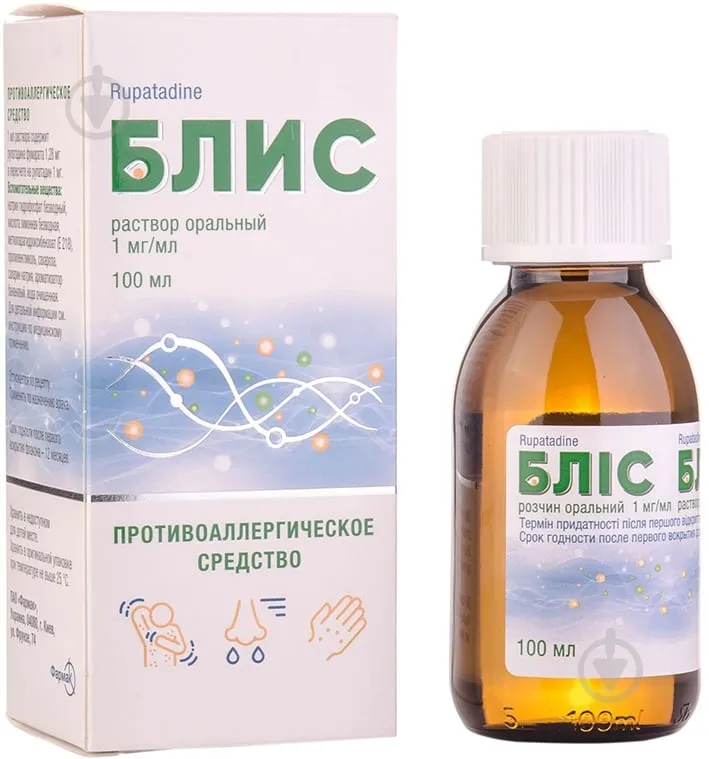
Instructions for Use
INSTRUCTIONS FOR MEDICAL USE OF THE MEDICINAL PRODUCT BLIS® (BLIS)
Composition:
Active substance: rupatadine fumarate;
1 ml contains rupatadine fumarate 1.28 mg, equivalent to 1 mg of rupatadine;
Excipients: sodium hydrogen phosphate anhydrous, citric acid anhydrous, methylparahydroxybenzoate (E 218), propylene glycol, sucrose, sodium saccharin, banana flavoring, purified water.
Pharmaceutical form. Oral solution.
Main physicochemical properties: clear, colorless or slightly yellow liquid with a banana odor.
Pharmacotherapeutic group. Other antihistamines for systemic use. ATC code R06AX28.
Pharmacological properties.
Pharmacodynamics.
Rupatadine belongs to the second generation of antihistamines and is a long-acting histamine antagonist with selective peripheral antagonistic activity at H1-receptors. Some of its metabolites (desloratadine and its hydroxylated metabolites) retain antihistaminic activity and may partially contribute to the overall efficacy of the drug.
In vitro studies of rupatadine at high concentrations have shown inhibition of mast cell degranulation induced by immunological and non-immunological stimuli, as well as release of cytokines, including TNF, from human mast cells and monocytes. The clinical significance of these observed experimental data remains to be confirmed.
The oral solution of rupatadine showed a similar pharmacokinetic profile in children aged 6 to 11 years as in adults and children aged 12 years and older: the pharmacodynamic effect (reduction in wheal area, antihistaminic effect) was observed up to 4 weeks after treatment.
Since rupatadine is capable of blocking the release of histamine and other inflammatory mediators, it is expected to be effective in treating symptoms of other types of urticaria, apart from chronic spontaneous urticaria.
Pharmacokinetics.
Children
In the subgroup of children aged 2–5 and 6–11 years, rupatadine was rapidly absorbed, with mean Cmax values of 1.9 ng/mL and 2.5 ng/mL, respectively, after repeated oral dosing. Regarding exposure, the mean total area under the curve (AUC) was 10.4 ng•h/mL in children aged 2–5 years and 10.7 ng•h/mL in children aged 6–11 years. All these values are similar to those observed in adults and adolescents.
The mean elimination half-life of rupatadine was 15.9 hours in children aged 2–5 years and 12.3 hours in children aged 6–11 years, which is longer than in adults and adolescents.
Effect of food
No food interaction studies have been conducted with the oral solution of rupatadine.
Food effect studies were conducted in adults and adolescents using 10 mg rupatadine tablets. Food intake increases systemic exposure to rupatadine (AUC) by approximately 23%. The maximum plasma concentration of rupatadine (Cmax) is not affected by food intake. These differences are not clinically significant.
Metabolism and elimination
In excretion studies conducted in adults, 34.6% of administered rupatadine was excreted in urine and 60.9% in feces over a 7-day period. Rupatadine undergoes extensive presystemic metabolism following oral administration. The unchanged active substance is found in urine and feces only in negligible amounts, indicating that rupatadine is almost completely metabolized. Overall, the active metabolites desloratadine and other hydroxylated derivatives accounted for 27% and 48%, respectively, of the total systemic exposure to active substances. In vitro metabolism studies in human liver microsomes showed that rupatadine is metabolized primarily via the cytochrome P450 enzyme system (CYP3A4).
Safety preclinical data
Preclinical data from standard repeated-dose toxicity, genotoxicity, and carcinogenicity studies do not indicate any special risk to humans.
Doses of rupatadine up to 100 times higher than the recommended clinical dose (10 mg) did not affect QTc and QRS intervals and did not cause arrhythmia symptoms in various animal species, such as rats, guinea pigs, and dogs. Rupatadine and its main human metabolite, 3-hydroxydesloratadine, did not affect the action potential in canine Purkinje fibers at concentrations at least 2000 times higher than the Cmax achieved with a 10 mg dose. In a study assessing the effect of rupatadine on the cloned gene of the specific cardiac potassium channel, inhibition of this channel occurred at a concentration 1685 times higher than the Cmax achieved with a 10 mg dose. Tissue distribution studies in rats using radiolabeled rupatadine showed no accumulation in cardiac tissues.
A significant reduction in fertility in both male and female rats was observed at a dose of 120 mg/kg/day, where the Cmax was 268 times higher than the Cmax in humans achieved with the therapeutic dose (10 mg/day). Teratogenic effects (developmental delay, incomplete ossification, minor skeletal developmental variations) were reported in rats at maternally toxic doses (25 and 120 mg/kg/day). In rabbits, developmental toxicity was observed at doses up to 100 mg/kg/day. The no-observed-adverse-effect level (NOAEL) was 5 mg/kg/day in rats and 100 mg/kg/day in rabbits, corresponding to Cmax values 45 and 116 times higher, respectively, than the concentration achieved with the therapeutic dose in humans (10 mg/day).
Clinical characteristics.
Indications.
Symptomatic treatment of allergic rhinitis (including persistent allergic rhinitis) and urticaria in children aged 2 to 11 years.
Contraindications.
Hypersensitivity to rupatadine or to any of the excipients of the medicinal product.
Interaction with other medicinal products and other forms of interaction.
Interaction studies with rupatadine oral solution in children have not been conducted.
Interaction studies have been performed only in adults and adolescents (aged 12 years and older) using rupatadine tablets 10 mg.
Effect of other medicinal products on rupatadine
Concomitant administration with strong CYP3A4 inhibitors (including itraconazole, ketoconazole, voriconazole, posaconazole, HIV protease inhibitors, clarithromycin, nefazodone) should be avoided. Caution should be exercised when co-administering with moderate CYP3A4 inhibitors (erythromycin, fluconazole, diltiazem).
Concomitant administration of rupatadine at a dose of 20 mg with ketoconazole or erythromycin increases systemic exposure to rupatadine by 10-fold and to the latter agents by 2–3 times. These combinations are not associated with changes in QT interval or increased incidence of adverse reactions compared to administration of the individual agents alone.
Interaction with grapefruit
Concomitant intake of rupatadine 10 mg tablets and grapefruit juice increases overall exposure to rupatadine by 3.5 times. This occurs because grapefruit juice contains one or more components that inhibit CYP3A4 and may thereby increase plasma concentrations of drugs whose metabolism is mediated by CYP3A4, such as rupatadine. In addition, grapefruit has been hypothesized to affect intestinal drug transport systems such as P-glycoprotein. Grapefruit juice should not be consumed simultaneously with the medicinal product.
Effect of rupatadine on other medicinal products
Caution should be exercised when rupatadine is administered concomitantly with other medicinal products that are metabolized and have a narrow therapeutic index, as data on the effect of rupatadine on other medicinal products are limited.
Interaction with alcohol
After alcohol intake, a 10 mg dose of rupatadine slightly affects performance in certain psychomotor tests, but this effect does not significantly differ from that of alcohol alone. A 20 mg dose enhanced the changes induced by alcohol.
Interaction with CNS depressants
As with other antihistamines, interaction with central nervous system (CNS) depressants cannot be excluded.
Interaction with statins
Asymptomatic increases in creatine phosphokinase have occasionally been observed during clinical trials of rupatadine. The risk of interaction with statins (some of which are also metabolized by the CYP3A4 isoenzyme of cytochrome P450) is unknown. Therefore, rupatadine should be used with caution when co-administered with statins.
Interaction with midazolam
Following administration of 10 mg rupatadine in combination with 7.5 mg midazolam, increased exposure (Cmax and AUC) of midazolam was observed. For this reason, rupatadine acts as a mild inhibitor of CYP3A4.
Special precautions for use.
The safety and efficacy of rupatadine in children under 2 years of age have not been established.
Concomitant use of rupatadine with strong CYP3A4 inhibitors should be avoided, and caution is advised when co-administering with moderate CYP3A4 inhibitors (see section "Interaction with other medicinal products and other forms of interaction").
Dosage adjustment of sensitive CYP3A4 substrates (e.g., simvastatin, lovastatin) and CYP3A4 substrates with a narrow therapeutic index (e.g., cyclosporine, tacrolimus, sirolimus, everolimus, cisapride) may be required, as rupatadine may increase plasma concentrations of these drugs (see section "Interaction with other medicinal products and other forms of interaction").
The effect of rupatadine 10 mg tablets on cardiac function was evaluated in a Thorough QT/QTc study in adults, in which rupatadine at a dose 10 times higher than the therapeutic dose did not affect ECG parameters and thus did not raise concerns regarding cardiac safety. However, rupatadine should be used with caution in patients with QT interval prolongation, in patients with uncorrected hypokalemia, and in patients with a persistent proarrhythmic condition such as clinically significant bradycardia or acute myocardial ischemia.
Elevations in creatine phosphokinase, alanine aminotransferase, aspartate aminotransferase, and changes in liver function test parameters have been reported as uncommon adverse reactions of rupatadine 10 mg tablets in adults.
Concomitant intake of rupatadine with grapefruit juice is not recommended (see section "Interaction with other medicinal products and other forms of interaction").
This medicinal product contains sucrose and therefore may be harmful to teeth. If you have been diagnosed with an intolerance to certain sugars, consult your doctor before taking this medicinal product.
The medicinal product contains methyl parahydroxybenzoate, which may cause allergic reactions (possibly delayed).
This product contains 200 mg of propylene glycol in each milliliter.
Concomitant use with any substrate for alcohol dehydrogenase, such as ethanol, may cause adverse reactions in children under 5 years of age.
Although propylene glycol has not been shown to impair reproductive function or fetal development in animals or humans, it may cross the placenta and has been detected in milk. Therefore, the need for administration of propylene glycol to pregnant or breastfeeding women should be considered on a case-by-case basis.
Patients with renal or hepatic impairment require medical monitoring, as various adverse reactions related to propylene glycol have been reported, such as renal dysfunction (acute tubular necrosis), acute renal failure, and hepatic dysfunction.
This product contains less than 1 mmol of sodium (23 mg) per 1 mL; caution should be exercised when administering to patients on a sodium-restricted diet.
Use during pregnancy or breastfeeding.
The medicinal product is used in children.
Pregnancy
Data from a limited number (2) of pregnancies exposed to rupatadine indicate no adverse effects of rupatadine on pregnancy or on fetal/neonatal health. Currently, there are no other relevant epidemiological data available. Animal studies have not shown any direct or indirect harmful effects on pregnancy, embryonic/fetal development, course of labor, or postnatal development. As a precautionary measure, it is recommended to avoid using the drug during pregnancy.
Breastfeeding
Rupatadine passes into animal milk. It is not known whether rupatadine passes into human breast milk. A decision on whether to discontinue breastfeeding or discontinue/abstain from rupatadine therapy should be made taking into account the benefits of breastfeeding for the child and the benefits of therapy for the mother.
Fertility
There are no clinical data on the effect of the drug on fertility. Animal studies have shown a significant reduction in fertility at exposure levels higher than those in humans at the maximum therapeutic dose.
Ability to influence reaction speed when driving or operating machinery.
The medicinal product is used in children.
Rupatadine at a dose of 10 mg had no effect on the ability to drive a vehicle or operate machinery in clinical studies conducted. However, patients should first assess their individual response to the treatment before driving or operating machinery.
Method of Administration and Dosage
To ensure accurate dosing, the package contains a dosing syringe.
Insert the dosing syringe into the bottle neck and measure the required amount of solution according to the child's age and body weight.
If the bottle contains an adapter placed in the neck, firmly insert the dosing syringe into the adapter neck, then turn the bottle upside down. Gently pull the plunger to draw the liquid into the dosing syringe up to the required mark. After drawing the required amount of solution, return the bottle to its original upright position and carefully remove the dosing syringe from the bottle.
After use, wash the parts of the dosing syringe with warm water.
Dosage
Children aged 2 to 11 years
With body weight from 10 to 25 kg: 2.5 mL (2.5 mg of rupatadine) of oral solution once daily, regardless of food intake.
With body weight from 25 kg: 5 mL (5 mg of rupatadine) of oral solution once daily, regardless of food intake.
Adults and children aged 12 years and older
In adults and children aged 12 years and older, it is preferable to use 10 mg rupatadine tablets.
Patients with renal or hepatic impairment
Due to lack of clinical experience with the use of the drug, it is not recommended for patients with impaired kidney or liver function.
Children
The medicinal product is intended for use in children aged 2 to 11 years.
Because of insufficient data on the use of the medicinal product in children under 2 years of age, its use is not recommended in this age group.
Overdose
There have been no reports of overdose with this drug in adults or children. In clinical safety studies, rupatadine was well tolerated at a daily dose of 100 mg for 6 days. The most commonly reported adverse reaction was somnolence. In case of accidental ingestion of very high doses, symptomatic treatment and appropriate supportive measures should be administered.
Adverse reactions.
The frequency of adverse reactions is defined as follows: common (≥ 1/100, < 1/10), uncommon (≥ 1/1000, < 1/100).
Blood and lymphatic system disorders: uncommon – eosinophilia, neutropenia.
Nervous system disorders: common – headache, somnolence; uncommon – dizziness.
Gastrointestinal disorders: uncommon – nausea.
Skin and subcutaneous tissue disorders: uncommon – eczema, night sweats.
Infections and infestations: uncommon – influenza, nasopharyngitis, upper respiratory tract infections.
General disorders: uncommon – fatigue.
Reporting of suspected adverse reactions
Reporting suspected adverse reactions after authorization of the medicinal product is important. It allows continued monitoring of the benefit-risk balance of the medicinal product. Healthcare professionals and patients, or their legal representatives, should report any suspected adverse reactions and lack of efficacy via the automated pharmacovigilance information system at the following link: https://aisf.dec.gov.ua.
Shelf life. 2 years.
Shelf life after first opening of the container – 12 months.
Do not use the medicinal product after the expiry date stated on the packaging.
Storage conditions.
Store in the original packaging at a temperature not exceeding 25 °C.
Keep out of the reach and sight of children.
Packaging. 100 ml in a bottle with or without adapter. 1 bottle with a dosing syringe in a carton.
Prescription status. Prescription only.
Manufacturer.
JSC "Farmak".
Address of the manufacturer and location of operations.
74, Kyrylivska Street, Kyiv, 04080, Ukraine.
Frequently Asked Questions
What is Blis® (BLIS) indicated for?
The drug is indicated for the symptomatic treatment of allergic rhinitis (including persistent) and urticaria in children aged 2 to 11 years.
How should children correctly take Blis® (BLIS)?
The dosage depends on the child's body weight: if the weight is between 10 and 25 kg, 2.5 ml of the solution should be taken once daily; if the weight is over 25 kg, 5 ml of the solution should be taken once daily. It can be taken regardless of food intake. For accurate measurement, use the included dosing syringe.
Who should not take this drug?
The drug should not be used in case of hypersensitivity to rupatadine or any other components of the composition. It is also not recommended for patients with renal or hepatic impairment, as well as for children under 2 years of age.
What are the possible side effects of Blis® (BLIS)?
Headache and drowsiness are the most common side effects. Dizziness, nausea, fatigue, night sweats, eczema, or upper respiratory tract infections are also observed infrequently.
Can grapefruit juice be consumed during treatment?
No, grapefruit juice should not be consumed simultaneously with the drug, as it may enhance its effect.
Does the drug interact with other medicines?
Caution should be exercised when co-administering with other medicines, especially potent CYP3A4 inhibitors (e.g., itraconazole, ketoconazole, clarithromycin) and certain statins. Interactions with CNS depressants and alcohol are also possible.
Does the drug affect teeth?
Since the product contains sucrose, it may be harmful to the teeth. Additionally, you should consult a doctor before use if you have an intolerance to certain types of sugars.
Similar Medications
-
Rupafin
Form: solution, oral
Active substance Dosage rupatadine 1 mg/ml Manufacturer: Italfarmaco, S.A.
This page has been machine-translated and may contain inaccuracies. The original data is available in the manufacturing country's language.
Last data check: July 21, 2026 · Data source: Державний реєстр лікарських засобів України